US National Debt is Ballooning

Super fact 76 : The current US national debt is a record 38.35 trillion dollars and growing despite it being peacetime and no recession. The expected GDP for 2025 is 30.6 trillion, which corresponds to a debt to GDP Ratio of 125 percent.

Hole that sucks a businessman and money | US National Debt is Ballooning
We are drowning in debt. Shutterstock Asset id: 335014478 by alphaspirit.it.

The federal government needs to borrow money to pay its bills when its ongoing spending activities and investments cannot be funded by federal revenues alone. That the national debt is growing in terms of dollars may not be shocking. There is inflation, the country is growing, and as the economy grows its ability to pay the debt increases. Therefore, the debt to GDP Ratio is a better measurement of the size of the problem as this metric relates to our ability to pay the debt back. When the debt to GDP Ratio is growing there is a real problem.

Wars and recessions tend to add to the federal debt. While debt spikes during crises, it historically receded after. The second World War is an example (see below). However, since 1980 US debt has grown without seeming to come back down. Not only does the current debt to GDP Ratio exceed the one after the Second World War, the current trends show persistent deficits even in peacetime, unlike post-WWII, making the long-term outlook scary.
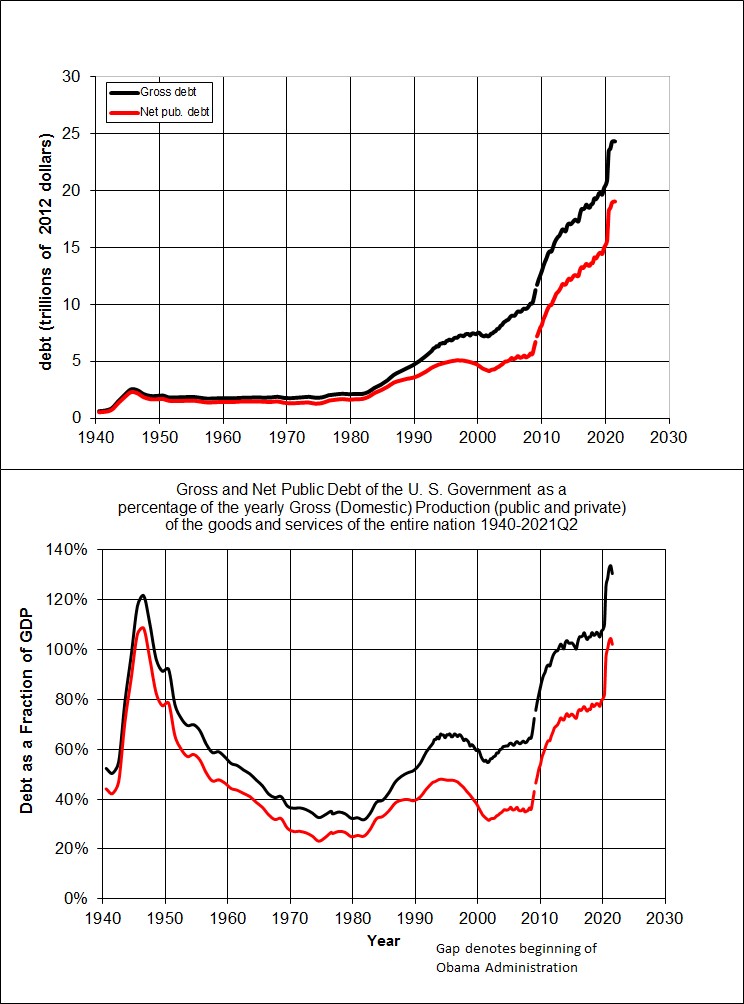
The graph shows two graphs, the US gross public debt and the net public debt as a debt to GDP Ratio. Both graphs show a spike during and after World War II followed by a recovery. Since 1980 the debt started growing again reaching higher than ever levels.
The top panel shows debt deflated to 2010 dollars; the second panel shows debt as a percentage of GDP. The US debt and the US debt to GDP Ratio is at a record high, exceeding that following the Second World War and we aren’t slowing down. Note the gross public debt includes all U.S. government debt, including money it owes itself (Social Security trust fund), while net public debt subtracts the government’s financial assets. The graph is from this Wikipedia article. en:User:O18, CC BY-SA 3.0 <https://creativecommons.org/licenses/by-sa/3.0&gt;, via Wikimedia Commons.

Below is an overview of the Federal Debt as percent of the GDP starting with 1965 to the beginning of 2025. The graph does not include most of the more than 2 trillion increases in debt during 2025, including a 1 trillion increase that happened in just two months toward the end of the year. So at the end there is a missing uptick. The graph below comes from this website.

US National Debt is Ballooning

In the past we used to discuss the national debt and the national deficit a lot, and it was viewed as an important and urgent problem to solve. It was a matter of intergenerational justice. There are some big problems that we have largely solved, for example, the sulfur dioxide pollution that created acid rain has fallen by 95 percent in the US, and the emissions of ozone-depleting gases have fallen by 99 Percent. As a result, we have mostly stopped talking about those problems. However, as the problem with national debt has grown, we have not increased but decreased our attention to the problem. The fact that the debt is now more than 38 trillion dollars, or $112,000 per person in US, and keeps rising despite no wars or recessions happening is probably a shock to many. It is true, it is an important fact, and it is surprising and perhaps shocking and therefore it is a super fact. To read more about the national debt click here.

Debt to GDP Presidents

One might be curious as to how the debt changed during specific Presidencies. I took the graph above and inserted lines representing the starting and ending years for the most recent Presidents. For example, Joe Biden’s Presidency started January 20, 2021, and ended January 20, 2025. I might not have gotten it exactly right so don’t read too much into it.
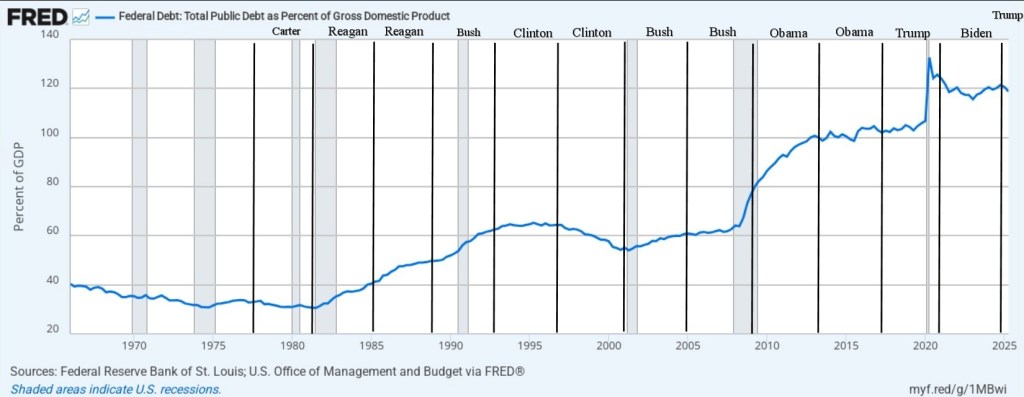
I added lines for Jimmy Carter, Ronald Reagan, H.W. Bush, Bill Clinton, George W. Bush, Barack Obama, Joe Biden, and Donald Trump.
I added the lines representing Presidents periods.

Below is a table I found online.

PresidentYears in OfficeDebt-to-GDP at StartDebt-to-GDP at EndChange (Percentage Points)
Franklin D. Roosevelt1933–1945~20%~112.9%+92.9 (WWII/Depression)
Harry S. Truman1945–1953112.9%~67.1%-45.8
Dwight D. Eisenhower1953–1961~67.1%~55.2%-11.9
Lyndon B. Johnson1963–1969~46.9%~38.6%-8.3
Jimmy Carter1977–1981~35.8%~32.5%-3.3
Ronald Reagan1981–1989~32.5%~53.1%+20.6
George H.W. Bush1989–1993~53.1%~66.1%+13.0
Bill Clinton1993–2001~66.1%~56.4%-9.7
George W. Bush2001–2009~56.4%~84.2%+27.8 (Wars/Recession)
Barack Obama2009–2017~84.2%~103.6%+19.4 (Great Recession aftermath)
Donald Trump2017–2021~103.6%~132.8% (peak in Q2 2020)+29.2 (Pandemic relief/tax cuts)
Joe Biden2021–Present~132.8% (at start of term, Q2 2020 peak)~124.3% (as of 2024)Fluctuation/slight decrease due to GDP recovery/inflation

Other Types of Debt

I should add that there are other types of debt not just federal debt / national debt (gross and net). American companies and financial institutions owe money and consumers have debt. As you can see in the graph below the debt to GDP ratio increase is true for those kinds of debts as well. We are a nation in debt. To read more about the graph below click here.
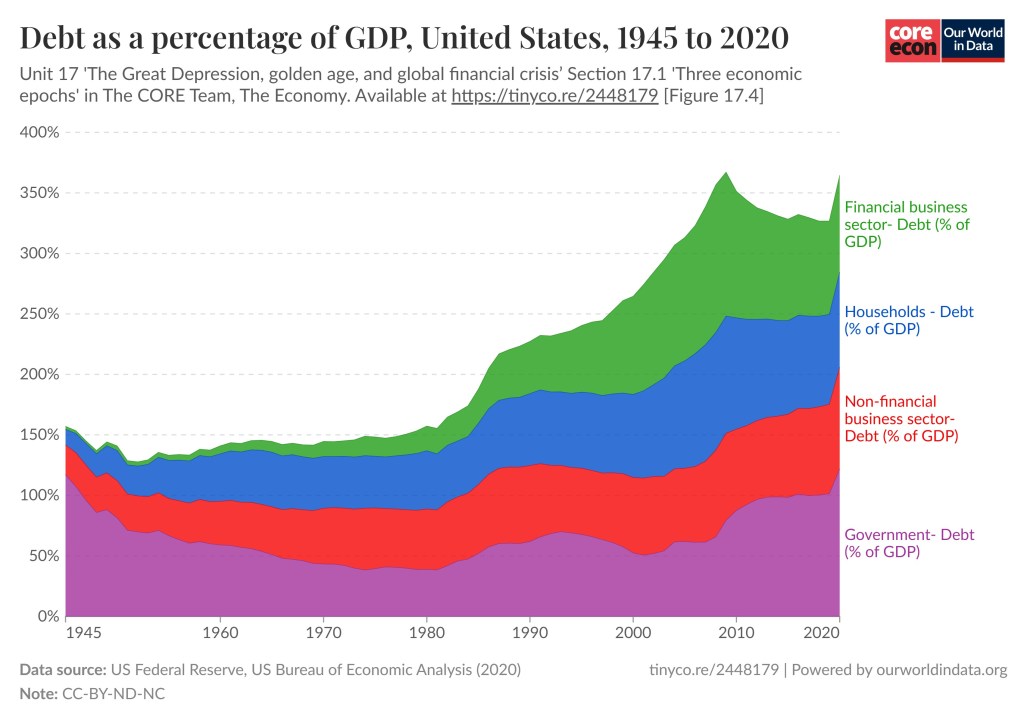
The graph shows four graphs representing Government (% of GDP) in purple, non-financial business sector-Debt (% of GDP) in red, Household - Debt (% of GDP) in blue, financial business sector (% of GDP) in green.
Debt as a percentage of GDP, United States, 1945 to 2020. Data source: US Federal Reserve, US Bureau of Economic Analysis (2020), tinyco.re/2448179 | Powered by ourWorldindata.org


To see the other Super Facts click here

Magnetars Super Magnets in the Sky

Super fact 75 : Magnetars are a type of neutron star with extremely powerful magnetic fields ranging from 10,000,000,000,000 Gauss to 1,000,000,000,000,000 Gauss. In comparison, Earth’s magnetic field varied from about 0.25 to 0.65 Gauss at the surface. In other words, the magnetar magnetic fields are from 20 or 40 Trillion times to 2 or 4 Quadrillion times stronger than Earth’s magnetic field at the surface.

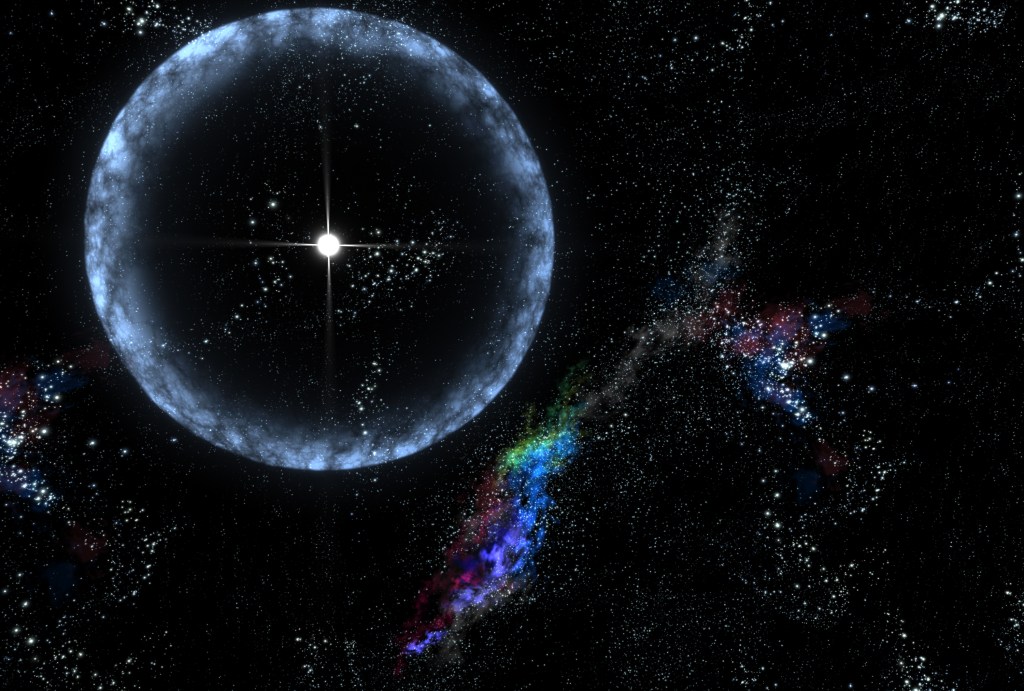
A bluish neutron star surrounded by impressive looking fields | rs Super Magnets in the Sky
Magnetar – neutron star in deep space. For use with projects on science, research, and education. 3D illustration. Shutterstock Asset id: 1138434620 by Jurik Peter

The magnetic fields of magnetars are trillions of times stronger than the sun’s magnetic field, which is 1 Gauss on a quiet sun surface and 2,000 to 4,000 Gauss in sunspots. The magnetic field of an MRI’s machine is also incredibly strong (2,000 Gauss to 100,000 Gauss). It is thousands to over a hundred thousand times stronger than Earth’s magnetic field. That’s why you should not have metals around an MRI machine. However, the magnetic field of a magnetar is still hundreds of millions to tens of billions of times stronger than the magnetic field of an MRI machine, and the magnetic field is not confined to a small machine but surrounds a neutron star and stretches far out into space.

If you placed a magnetar halfway to the moon from Earth (a magnetar is around 12 miles in diameter), it would erase all the credit cards on Earth (see video below). If you get close to a Magnetar (1000 kilometers) cars and other metal would float up in the air and the atoms in yourbody would stretch into rods making organic chemistry impossible and kill you. If you placed a steel beam on the surface of a magnetar the magnetic field would pulverize it and destroy the atoms.

In 2004 a magnetar named SGR 1806-20 located 50,000 light years from our solar system (700 million times farther than the planet Jupiter) had a starquake disturbing the magnetic field and sending out a gamma burst that disrupted radio communication on Earth. I consider the existence of magnetars a super fact because the existence of these super magnetic monsters is shocking and not well known amongst the public, and yet their existence has been confirmed.

The picture shows a bright magnetar surrounded by a bluish gamma ray burst and it is all set to a background of stars.
On 27 December 2004, a burst of gamma rays from SGR 1806−20 passed through the Solar System (artist’s conception shown). The burst was so powerful that it had effects on Earth’s atmosphere, at a range of about 50,000 light-years. U Harvard, Public domain, via Wikimedia Commons.

What Are Neutron Stars and Magnetars?

A neutron star is the gravitationally collapsed core of a massive supergiant star. The collapse causes it to become super compact and relatively small by volume. As the name implies the atoms are crushed, and protons and electrons merge into neutrons, making the neutron star mostly neutrons. The typical diameter of a neutron star ranges from 10 to 25 km (6 to 15 miles) depending on its mass. Neutron star material is extremely dense.

A normal-sized matchbox containing neutron-star material would have a weight of approximately 3 billion tons, the same weight as a 0.5-cubic-kilometer chunk of the Earth (a cube with edges of about 800 meters) from Earth’s surface, or a very large mountain. In addition, the gravity on a neutron star is immense, about 100 billion to 200 billion times stronger than Earth’s gravity.

Magnetars are neutron stars with extremely powerful magnetic fields. They have the universe’s most powerful magnetic fields (trillions of times stronger than Earth’s) that power intense X-ray/gamma-ray bursts as its field decays, often seen as highly variable pulsars. They were first theorized in 1992 to explain Soft Gamma Repeaters (SGRs) and Anomalous X-ray Pulsars (AXPs). As of July 2021, 24 magnetars have been confirmed. According to the video below 30 magnetars have been confirmed in the Milky Way. There might be 3,000 in our Galaxy.

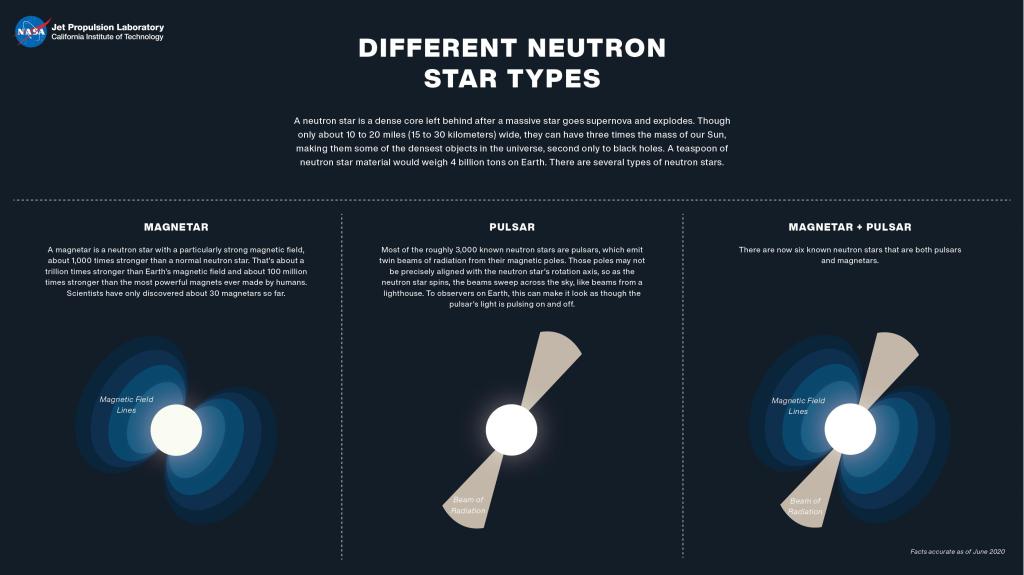
At top there is some text stating “A neutron star is a dense core left behind after a massive star goes supernova and explodes. Though only about 10 to 20 miles (15 to 30 kilometers) wide, they can have three times the mass of our Sun, making them some of the densest objects in the universe, second only to black holes. A teaspoon of neutron star material would weigh 4 billion tons on Earth. There are several types of neutron stars.” :  Below the text at the top there is a picture of a magnetar, a pulsar and a magnetar plus pulsar. The text for each picture says: Magnetar - A magnetar is a neutron star with a particularly strong magnetic field, about 1,000 times stronger than a normal neutron star. That's about a trillion times stronger than a normal neutron star. That's about a trillion times stronger than Earth's magnetic field and about 100 million times stronger than the most powerful magnets ever made by humans. Scientists have only discovered about 30 magnetars so far. Pulsar - Most of the roughly 3,000 known neutron stars ae pulsars, which emit twin beams of radiation from their magnetic poles. Those poles may not be precisely aligned with the neutron star's rotation axis, so as the neutron star spins, the beams sweep across the sky, like beams from a lighthouse. To observers on Earth, this can make it look as though the pulsar's light is pulsing on and off. Magnetar + Pulsar – there are about six known neutron stars that are both pulsars and magnetars. | Super Magnets in the Sky
Courtesy NASA/JPL-Caltech, Attribution, via Wikimedia Commons

Magnetar YouTube Video

Other extreme stellar objects

I wish all of you Happy Holidays and Happy New Year


To see the other Super Facts click here

Jesus was not born on Christmas

Super fact 74 : We celebrate the birth of Jesus on December 25th or December 24th, but it is quite unlikely that Jesus was born on those dates, and certainly not during the year zero.

This AI generated illustration feature baby Jesus in a crib, Mary and Joseph as well as some sheep. | Jesus was not born on Christmas
Jesus Mary and Joseph Birth – This content was generated by an Artificial Intelligence (AI) system. Shutterstock Asset id: 2560713955

I’ve come across many adults who seriously believe that Jesus was born on December 25th. To them it will come as a big surprise to find out that the date of Jesus’ birth is never mentioned in the Gospels, or elsewhere in the Bible, not in any of the non-canonical Gospels, nor in any known historical sources. In addition, Luke’s Gospel mentions (Luke 2:8) shepherds tending flocks outdoors at night, which is not consistent with the cold winter in Judea. Biblical scholars (see 4th and 5th paragraphs in link) suggest that the information in the Gospel of Luke regarding the vision of John the Baptists father, Zechariah, leads to the conclusion that Jesus was likely born in September.

When was Jesus Born?

Jesus was not born during the year zero, because there was no year zero. The year after 1 BC (or BCE) is 1 AD (or CE). This causes problems for various scientific disciplines such as astronomy, climate science and history. The Gospel of Matthew mentioned that the birth took place during the time of Herod the Great who died in the year 4 BCE. I can add that Herod the Great got his moniker “Great” because of his extensive construction of cities, palaces, fortresses, aqueducts, and theaters across Judea, as well as the expansion of the Jewish temple.

The Gospel of Luke (Luke 2:1-2) states that the birth of Jesus took place during the census of the Roman governor of Syria, Quirinius (Cyrenius), which was in the year 6 CE, ten years after the death of Herod. However, there were other census taken earlier and scholars suggest that perhaps Luke’s account is a misstatement and that Mathew’s is more realistic. They conclude that Jesus was most likely born between 6 BCE and 4 BCE.  As already mentioned it is very hard to pin down the time of the year when Jesus was born, but the month of September seems to be a likely candidate.

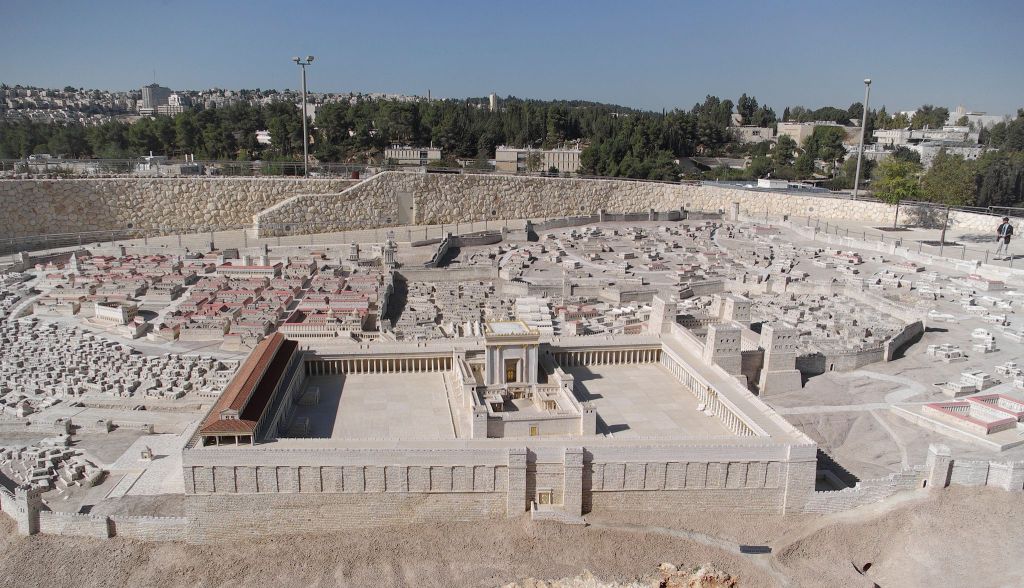
Herod's Temple as depicted on the Holyland Model of Jerusalem.
Herod was a builder and one of his projects was the expansion of the Temple. Herod’s Temple as depicted on the Holyland Model of Jerusalem. Berthold Werner, Public domain, via Wikimedia Commons.

Why is Christmas on December 25th?

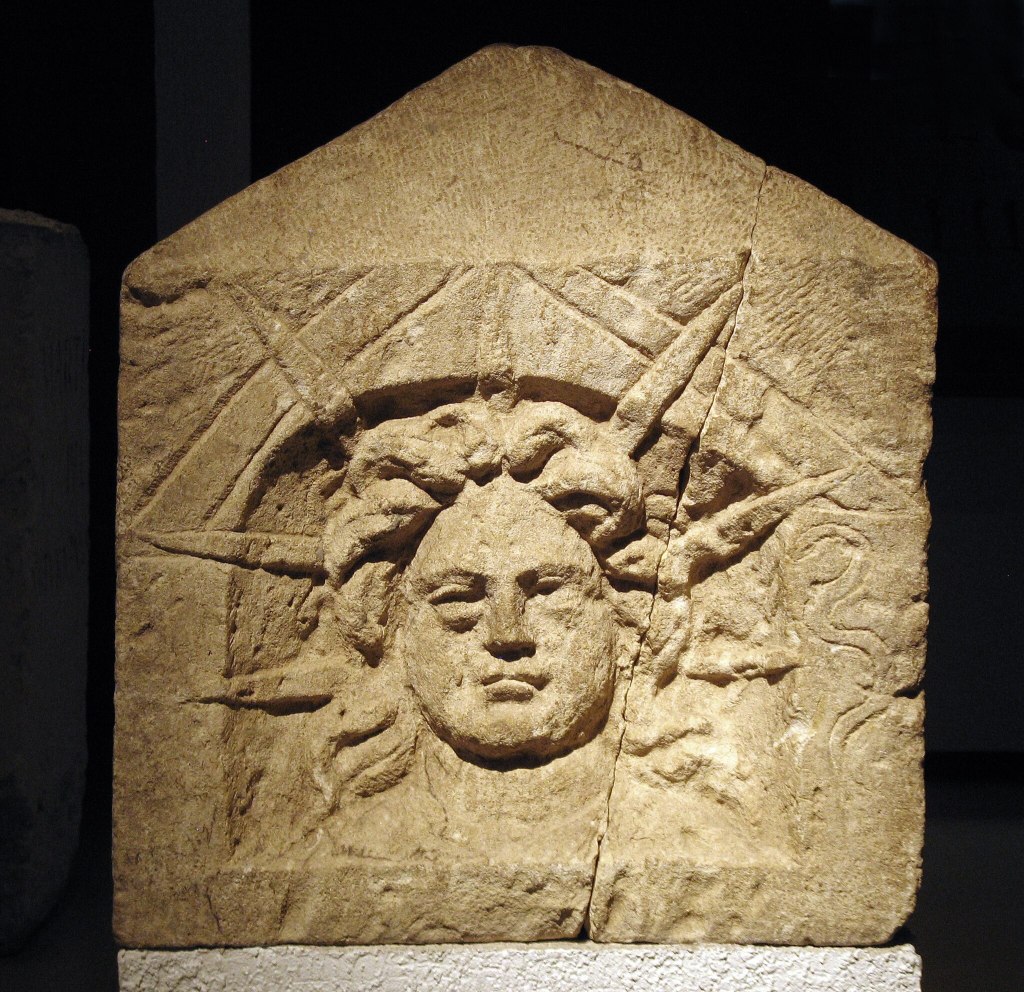
During the first few centuries after the birth of Jesus Christians did not celebrate his birth. The first mention of the birth of Christ on December 25 comes in the 3rd century CE by Hippolytus of Rome. The Roman festival Sol Invictus, celebrating the birth of the Sun God was Celebrated on December 25th. Many pre-Christian cultures marked the shortest day of the year, on December 21 or 22, as an important moment in the calendar, celebrating the “rebirth” of the sun. Germanic peoples celebrated Yule, and various Celtic and Mediterranean cultures held celebrations centered around the winter solstice. It is possible that December 25th was chosen as the day to celebrate the birth of Jesus so that people did not have to change the dates of their celebrations.

Relief in light brown stone featuring the face of the sun God. | A relief of Sol from Roman Lugdunum, 2nd–3rd century AD.
A relief of Sol from Roman Lugdunum, 2nd–3rd century AD. The Roman festival Sol Invictus was celebrated on December 25. Mark Landon, CC BY 4.0 <https://creativecommons.org/licenses/by/4.0&gt;, via Wikimedia Commons

Regarding Germanic peoples celebrating Yule. In my native country Sweden Christmas is referred to as “Jul” pronounced “Yool” / “Yuul”.  The word “Jul” directly comes from the Old Norse word “jól,” which referred to the pre-Christian midwinter festival (Yule in English). You can read about Scandinavian mythology here or here.

A Tomte wearing a red hat in a snowy winter forest.
Tomtar (plural of Tomte) or Nisse in Norwegian is a type of small magical people, or gnomes, related to Vitter folk. They are friendly and is an inspiration behind the Swedish version of Santa Claus. An illustration of a Tomte. Shutterstock ID: 2060057882 by PLIMPLUM.


Note this year Christmas Day is on 12/25/25


To see the other Super Facts click here

The Extinction Rate is Much Higher Than the Natural Baseline Rate

Super fact 71 : Based on the fossil record today’s extinction rate is hundreds, or even thousands, of times higher than the natural baseline rate.

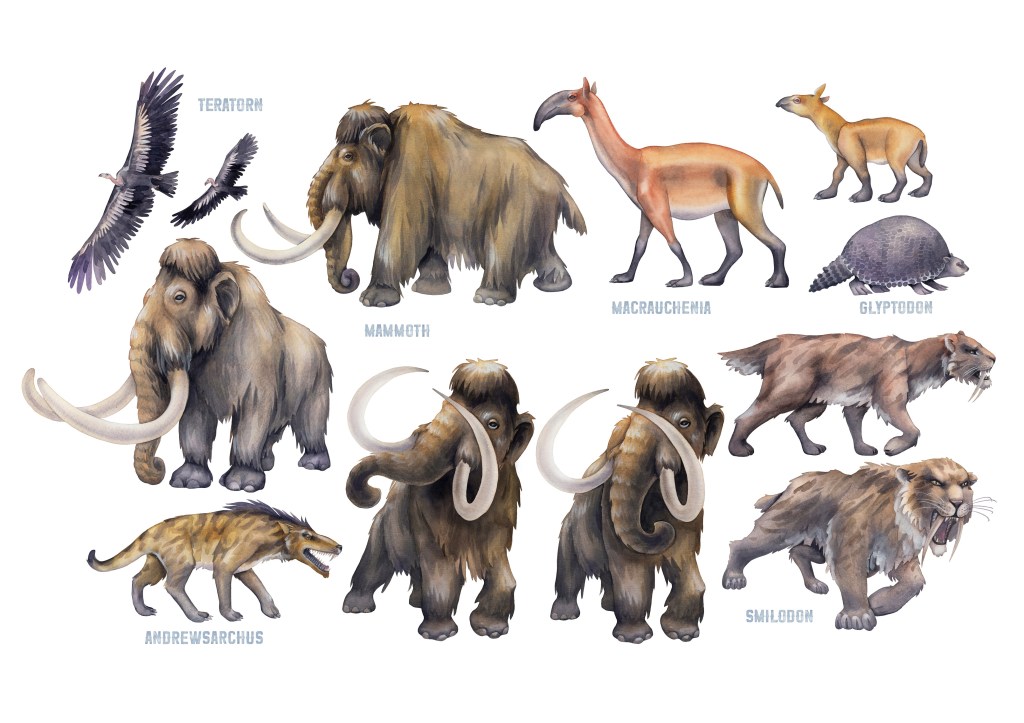
Animals included in the watercolor painting include Teratorm, Mammoth, Macrauchenia, Glyptodon, Smilodon, and Andrewsarchus. | The Extinction Rate is Much Higher Than the Natural Baseline Rate
Collection of watercolor prehistoric and now extinct animals isolated on a white background. Hand painted illustration of Ice Age. Asset id: 2169205593 by Ekaterina Glazkova

Estimating the extinction rate is a complicated task that requires some assumptions and estimations. This article from the National Library of Medicine use what it claims to be conservative estimates, which would tend to minimize evidence of an emerging mass extinction. Despite that fact the average rate of vertebrate species loss over the last century is up to 100 times higher than the extinction rate without/before humans (background rate). Other sources claim an extinction rate that is 1,000 or even 10,000 the background rate.

To put some specific numbers on what a high extinction rate means, scientists count 881 animal species are known to have gone extinct since around 1500. If we include animal species that scientists suspect might be extinct, that number shoots up to 1,473. You can read more on the issue here or here or here.

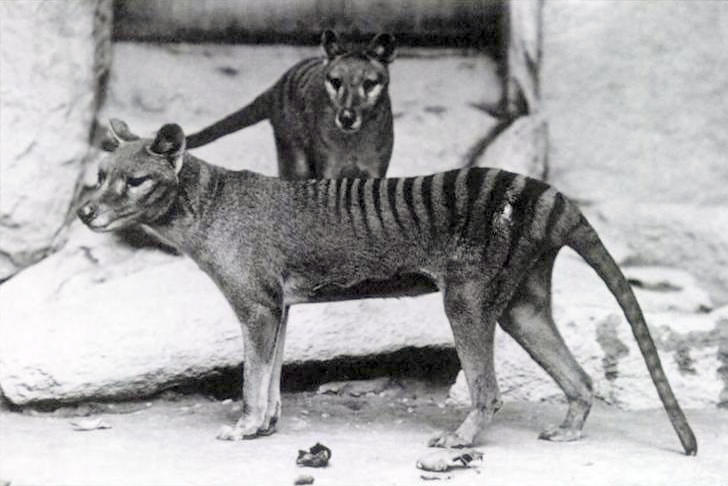
A black and white photo of Two Tasmanian Tigers. The Tasmanian Tigers had stripes on their back.
Two Tasmanian Tigers. The Tasmanian Tiger or Thylacine was hunted to extinction. Benjamin, the last Tasmanian Tiger, died in 1936 in the Beaumaris Zoo in Tasmania. Baker; E.J. Keller., Public domain, via Wikimedia Commons

What is clear is that the current extinction rate is much higher than what is typical and we humans are the cause. This came as a shock to me the first time I found out about it, and it is certainly an important topic, and therefore a super fact. It is true, surprising to many, and important.

Those who want to minimize the problem with the ongoing extinctions often point out that extinctions are a natural part of evolution and that throughout Earth’s history up to around 98% of all species that have ever existed are now extinct. In my opinion, that argument fails to consider the enormity of Earth’s four billion year natural history. A lot of evolution happened during that time.

Modern humans have only been around 300,000 years, or 0.0075% of that time, a tiny blip in time. Human civilization has only been around for 12,000 years, or 0.0003% of that time, an even tinier blip in time. Like comparing an ant head to a mile. Us having a large negative impact on the natural world in such an extremely short time is quite notable.

By considering the extinction rate you get a better idea of the scope of the problem. The fact that the extinction rate today is significantly higher than the expected natural rate and that the primary cause of modern extinctions is human impact as opposed to natural phenomena, makes it a case for concern. To read about a related issue, “The Wild Mammal Biomass Has Substantially Declined”, click here.

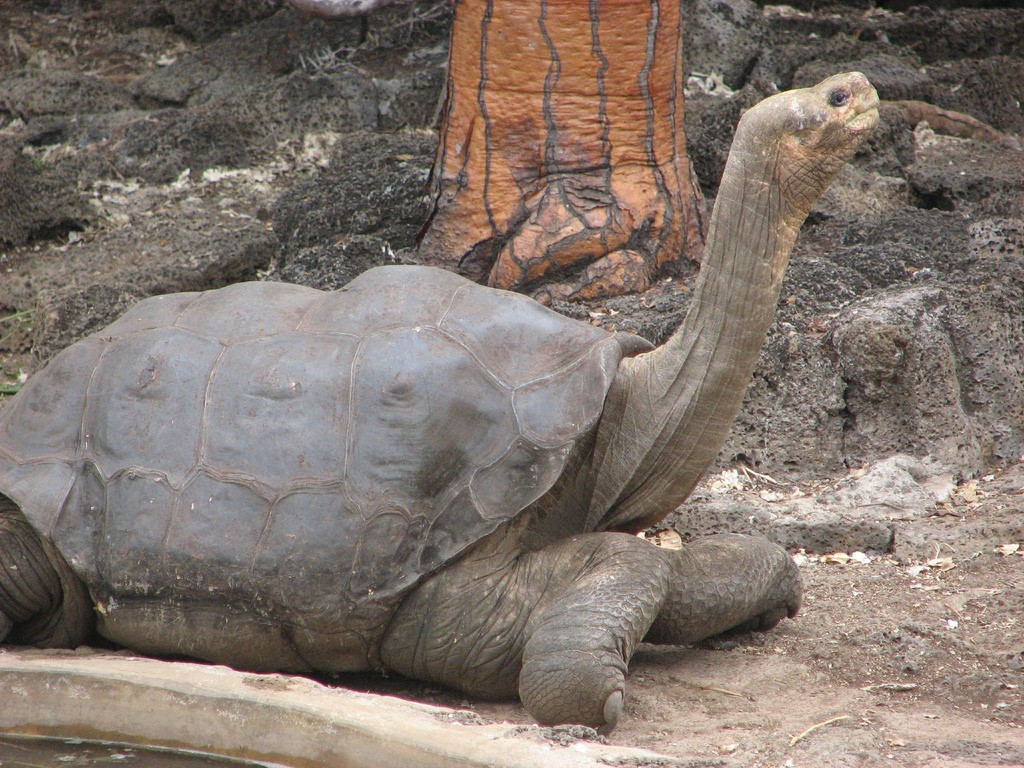
The color photo shows a close up of a giant tortoise. | The Extinction Rate is Much Higher Than the Natural Baseline Rate
Lonesome George at the Charles Darwin Research Station in 2006, the last known individual of his species of Galápagos tortoise. https://www.flickr.com/photos/mikeweston/, CC BY 2.0 <https://creativecommons.org/licenses/by/2.0&gt;, via Wikimedia Commons

The Five Past Mass Extinction Events

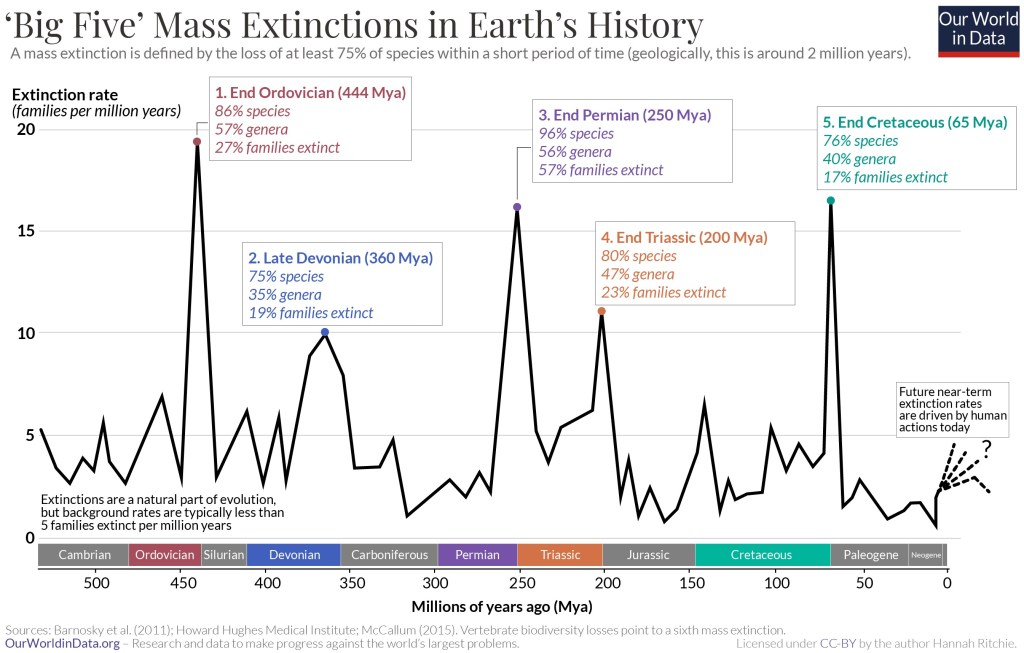
Over the last 440 million years life on Earth has experienced five so called mass extinctions. A mass extinction event is when at least 75% of the world’s species are lost during a short period of time – geologically speaking. This period is not clearly defined but often defined to be two million years. Two million years may seem like a long time, but geologically speaking, it is a short time.

3D illustration showing two carnivorous dinosaurs and two large herbivores looking up at a burning asteroid.
Extinction of the dinosaurs when a large asteroid hits earth 66 million years ago. It was the last mass extinction event. Asset id: 2196200279 by funstarts33

The five mass extinction events were:

Below is an overview of the five big mass extinctions in Earth’s history. The graph is from Our World in Data.

The graph shows extinction rates going up and down with five tall peaks representing mass extinction events.
The Big Five Mass Extinctions in Earth’s History. A mass extinction is defined by the loss of at least 75% of species within a short period of time (geologically, this is around 2 million years). Extinctions are a natural part of evolution, but background rates are typically less than 5 families extinct per million years. Sources Barnosky et al (2011). Howard Hughes Medical Institute: McCallum (2015). Vertebrate biodiversity losses point to a sixth mass extinction. From Our World in Data.
A stunning AI generated illustration of a woolly mammoth standing on a snowy landscape during a vibrant sunset with northern lights in the sky. | The Extinction Rate is Much Higher Than the Natural Baseline Rate
Are We in the Middle of a Sixth Mass Extinction ?
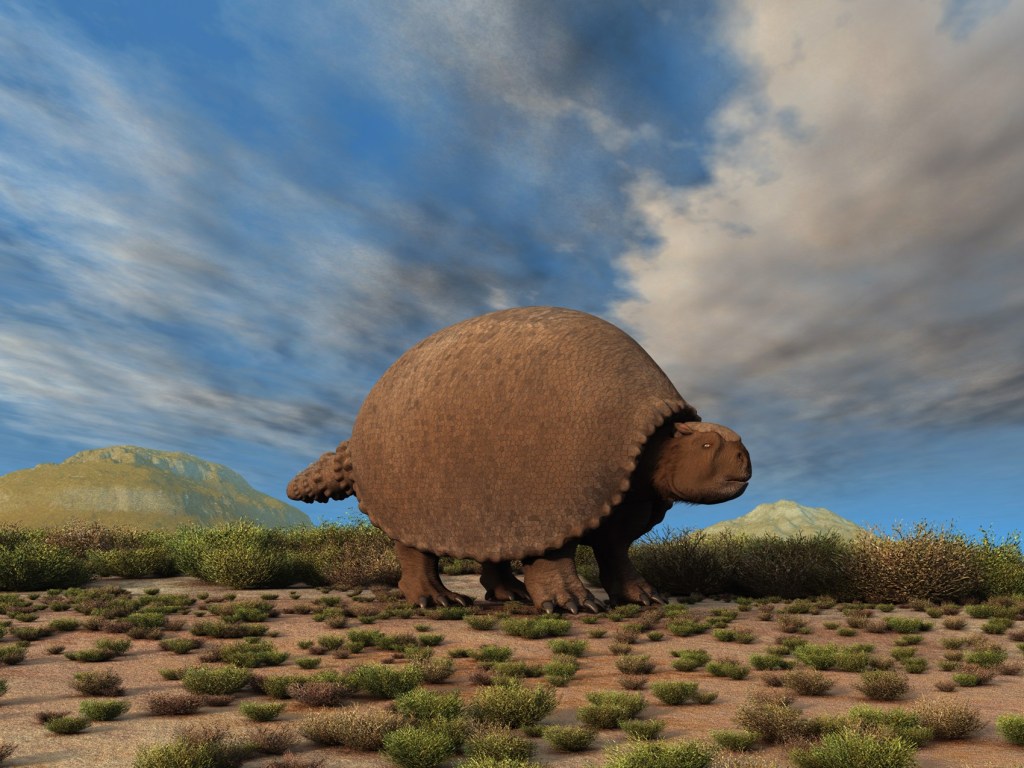
A Glyptodon walking across an empty prairie.
3D illustration of a Glyptodon, also extinct, Asset id: 495169627

Biodiversity experts have estimated that about 30% (uncertainty range: 16–50%) of species have been globally threatened or driven to extinction since the year 1500. 30% globally threatened or extinct is not 75% that are actually extinct, but in just 500 years that looks like a quick start on a mass extinction. It should be noted that 500 years is just 0.025% of two million years. Issues such as deforestation, chiefly the result of replacing forests with agriculture, overexploitation, and global warming / climate change are driving extinctions and represent big biodiversity threats in the near future.

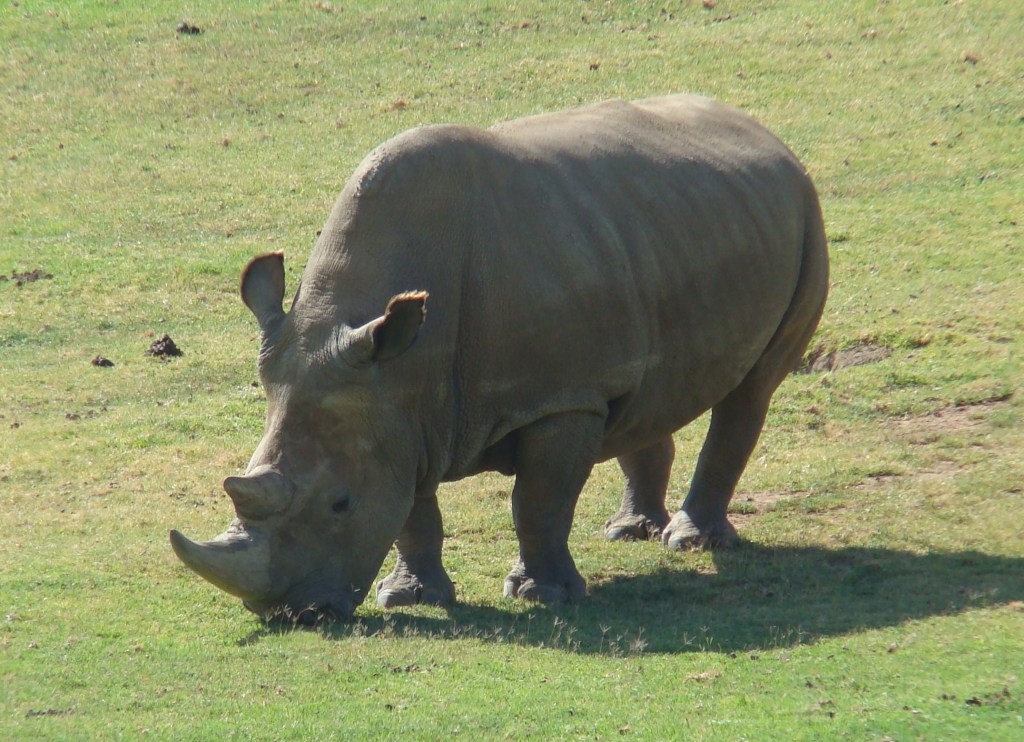
A northern white Rhino is grazing green grass at a zoo.
The Northern white rhino subspecies, the second-largest land mammal after elephants, has no hope of recovery after the last male died in 2018. Only a female and her daughter are left. The photo is of Angalifu, a male northern white rhinoceros at the San Diego Zoo Safari Park. Angalifu died of natural causes at the age of 44 on 14 December 2014. Sheep81, Public domain, via Wikimedia Commons.

This is why there is talk about the so called Holocene or Anthropocene extinction and it possibly being a sixth mass extinction, this one being human caused. It should be noted that there are credible sources that question whether we are at the cusp of a sixth mass extinction event.

Posting this on Thanksgiving Day may seem awkward. However, whether there will be a human caused sixth mass extinction or not depends on us, and it looks like more people want to protect our natural world. Many animals, such as the giant panda, bald eagle, the sea otter, black footed ferret, the Peregrine falcon, the blue whale, Rodrigues fruit bat, the Island night lizard, and the California condor, have been saved from extinction through conservation efforts like habitat restoration, anti-poaching laws, captive breeding programs, and reintroduction to the wild. Perhaps we are turning things around. We should give thanks to all who care.


To see the other Super Facts click here

Polar Nights Are Phenomenal and Cover a Large Area

Super fact 69 : Polar nights happen in the regions north of the Arctic Circle and south of the Antarctic Circle. Together the two polar regions cover an area double as large as the United States, and it includes a population of millions of people. During a polar night the sun does not rise for days, or months, up to six months.  The polar nights are special, not just for the daytime darkness, but for the spectacular aurora borealis, the starlit skies, the extremely clear air, and the fact that people often lose track of time during polar nights.

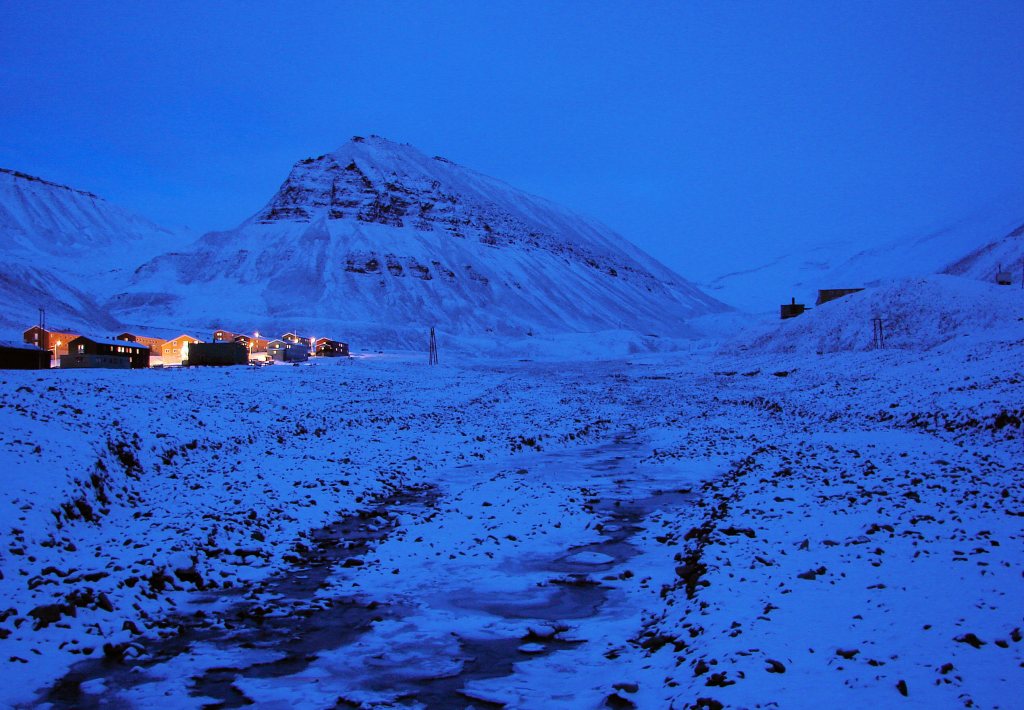
It should be noted that even though the sun never rises during the polar night it may not be totally dark during the entire polar night. Part of the time you may get some light in the middle of the day, what is called polar twilight (nautical twilight or astronomical twilight). Nautical twilight tends to be bluish as shown in the photo below.

Characteristic nautical (blue) polar twilight in Longyearbyen, Svalbard, Norway. Bjørn Christian Tørrissen, CC BY-SA 3.0
Characteristic nautical (blue) polar twilight in Longyearbyen, Svalbard, Norway. Bjørn Christian Tørrissen, CC BY-SA 3.0 <https://creativecommons.org/licenses/by-sa/3.0&gt;, via Wikimedia Commons

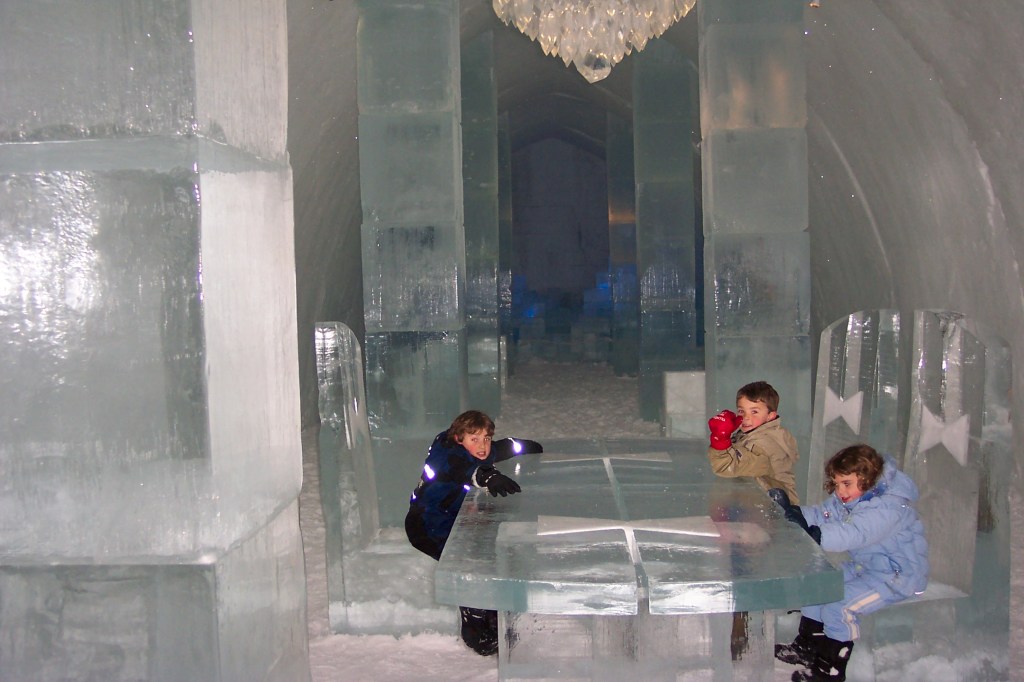
When our kids were young, we visited the Ice Hotel in Jukkasjärvi in northern Sweden. We went in March, during the American spring break, which was not during the polar night, so we did not experience it then. The polar night in Jukkasjärvi will begin December 5, 2025, or December 10, 2025, depending on how you count, and end at the beginning of January. However, the Ice Hotel was a fun way to experience a polar region. When I did my Swedish army service I spent the winter in the forest around that area, and even further north, and I experienced the Polar Night firsthand,

Photo is of a large ice table and ice chairs located in the middle of the lobby, which is filled with tall pillars made of ice at the ice hotel. Polar Nights Are Phenomenal and Cover a Large Area
The lobby of the ice hotel. Our kids are sitting around a table of ice. A chandelier of ice is hanging above the table. The light is from fiber optics, so the ice won’t melt.

During my army service we stayed in tents in the forest far away from villages and cities and we often did not use any lights. The result was that it was incredibly dark most of the time. It was so dark that I could not see my own hand if I held it right in front of my face. The upside was that the sky was filled with thousands of stars on a clear night. It is estimated that you can see between 2,500 to 5,000, even 10,000, stars in the sky with the naked eye if you have good vision and it is completely dark. You could also see the Milky Way Galaxy very clearly and easily, as well as the Andromeda Galaxy, meteors, comets, satellites, not to mention the most spectacular aurora borealis that you can see anywhere on earth. That certainly beats the 14 stars and 3 planets that you can see with the naked eye on a clear night here in Dallas, Texas, where I live now.

Stars in the sky. Blue night panorama, a universe full of stars, nebula and galaxies | Milky way sky on dark background, and a lot of stars.
Milky way sky on dark background, and a lot of stars. Asset id: 2524020369 by MR.PRAWET THADTHIAM

On one occasion I was standing guard outside the camp. We were pretending that we were at war with the Soviet Union. It was minus 40 degrees, and they forgot about me. I stood there alone in the darkness and the extreme cold for more than three hours. This was considered dangerous. The rule was no more than one hour out in the cold at a time. Once they discovered that I had been there for more than three hours they came to get me, and they apologized profusely. They were happy that I was not hurt. However, I did not mind, because my night sky view was spectacular. The night sky was so spectacular, it was to die for.

If it is cloudy and you are far from any civilization it may be pitch black in the afternoon. Even if it is not cloudy but the moon is not out it will be pitch black later in the afternoon. In addition, the air is very clear during the polar night, because the cold sunless Arctic air often contains almost no moisture and the visibility stretches for 100 miles. If you want to remain unseen in this situation it is very important to understand that even the tiniest light will be very visible, far away.  Our platoon did an experiment. Someone lit a cigarette about one mile away and we could very easily see the bright cigarette even through the forest. The lesson was, No Cigarettes, and No lights!

Stunning aurora borealis lights up the night sky with vibrant colors, creating a mesmerizing natural display in the Arctic wilderness. | Polar Nights Are Phenomenal and Cover a Large Area
Aurora Borealis are often spectacular in the polar regions, especially during the polar night. Asset id: 2499746583 by HappyVibeArt

I consider this a super fact because the polar night is a surprising phenomenon to those who do not know much about the arctic and my claims above are true and important since the polar regions are large and under threat from climate change / global warming.  The polar regions and thereby the polar night also cover an area that is not small, and four million people live there.

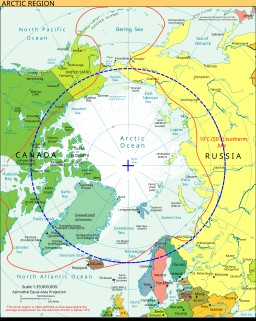
Partial map of the northern hemisphere focused on the polar circle.
The Arctic Circle, at roughly 66.5° north, is a commonly-accepted boundary of the Arctic waters and lands. CIA World Fact Book, Public domain, via Wikimedia Commons.

The Midnight Sun

I can add that in the summer (northern hemisphere) you have the opposite phenomenon with the midnight sun. Just like the polar night can cause people to lose track of time so can the midnight sun. When we visited northern Sweden with our niece Jessica for my brother’s wedding, we had what is called midnight sun. Jessica was nine years old at the time. A couple of hours after we had gone to sleep Jessica woke me up “wake up Thomas, it is time to go out and play”. I protested, no it is not, it is one a clock at night and we are going to sleep. Jessica protested, she said, “No the sun is up, it is morning it is time to play”.

So, I said “Jessica, let me explain something to you. This is northern Sweden in June and here the sun is up in the middle of the night, and we are not going outside to play in the middle of the night.” After that my wife went out to play with Jessica, but I refused to go out and play at one o clock at night.

Ice Hotel Photos

Finally, I just wanted to include a few of my photos from the Ice Hotel, just for fun.

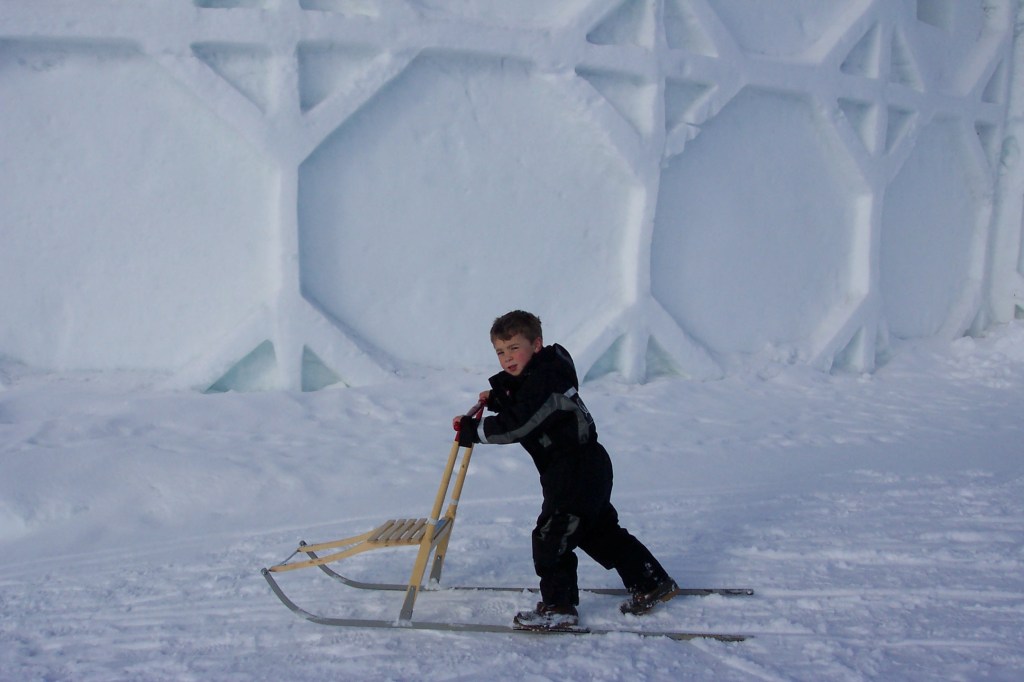
He is standing and kicking with his feet to move forward with the sled. He is passing in front of the ice theater. | Polar Nights Are Phenomenal and Cover a Large Area
Our son David with one of the kick sleds called “spark”.
A photo of an ice table and 7 instruments made of ice standing on an ice stage.
This is a photo of the ice instruments standing on the ice stage.
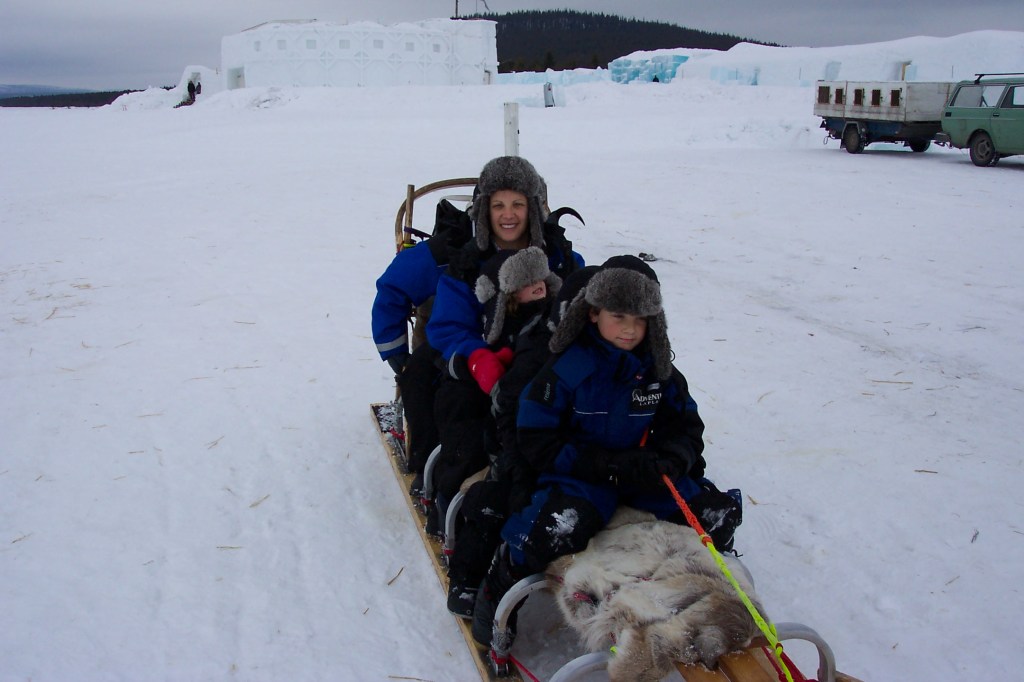
My wife and three children are sitting on a dog sled and looking into the camera.
We are going on a dogsled tour. The ice theater is in the background, and you can see part of the ice hotel on the right.
The kids had a lot of fun during the dogsled tour. | Polar Nights Are Phenomenal and Cover a Large Area
You can see ten dogs and the sled with us on top of it. On the left is a kåta, a movable Sami structure (indigenous arctic Scandinavian people). It is like a Tipi.


To see the other Super Facts click here