EVs are Replacing the Internal Combustion Engine

Superfact 107: Electric vehicles are rapidly replacing the internal combustion engine (ICE cars) and are becoming commonplace around the world. It is analogous to how cars once replaced the horse and buggy.

In Norway close to 100% of all new cars sold in 2025 were electric vehicles. Around the world a substantial percentage of new cars sold in 2025 were electric vehicles. This phenomenon is not as visible here in the US, where I live, but if you travel, you’ll notice.

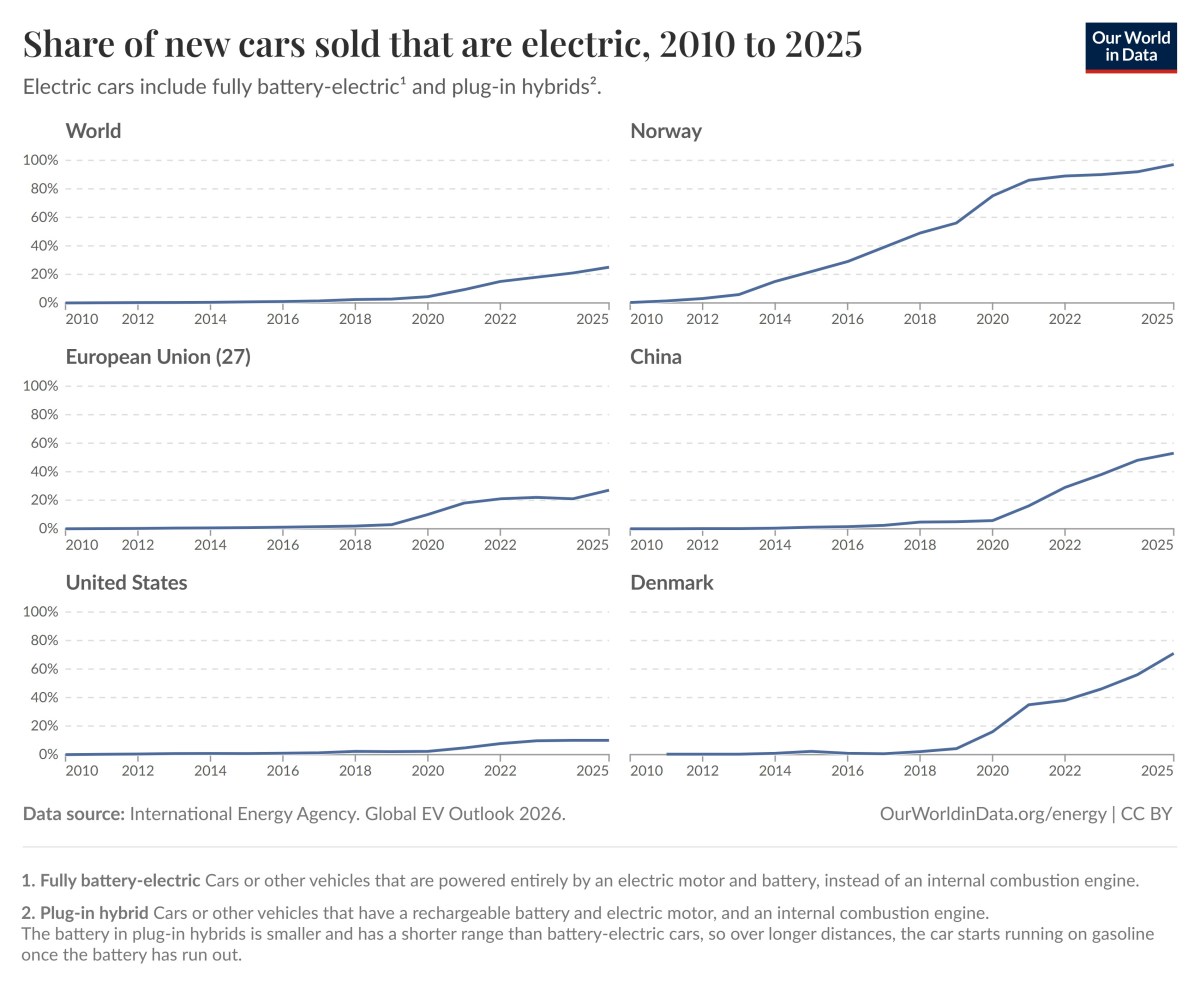
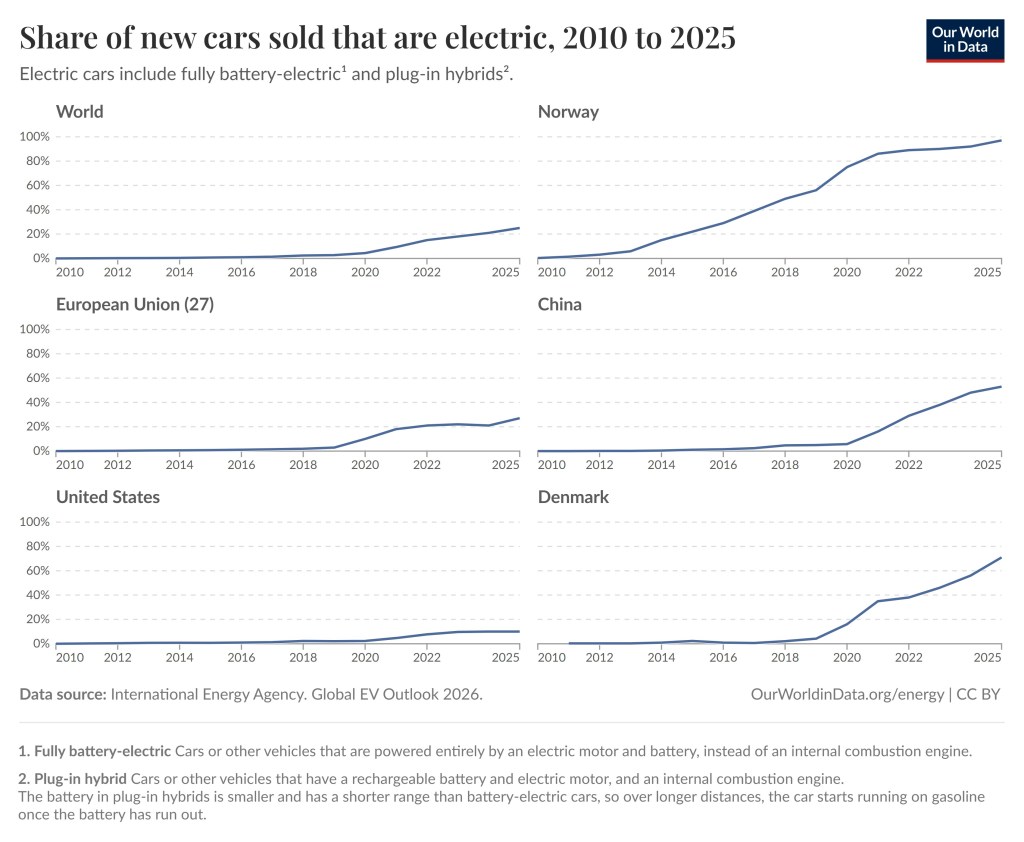
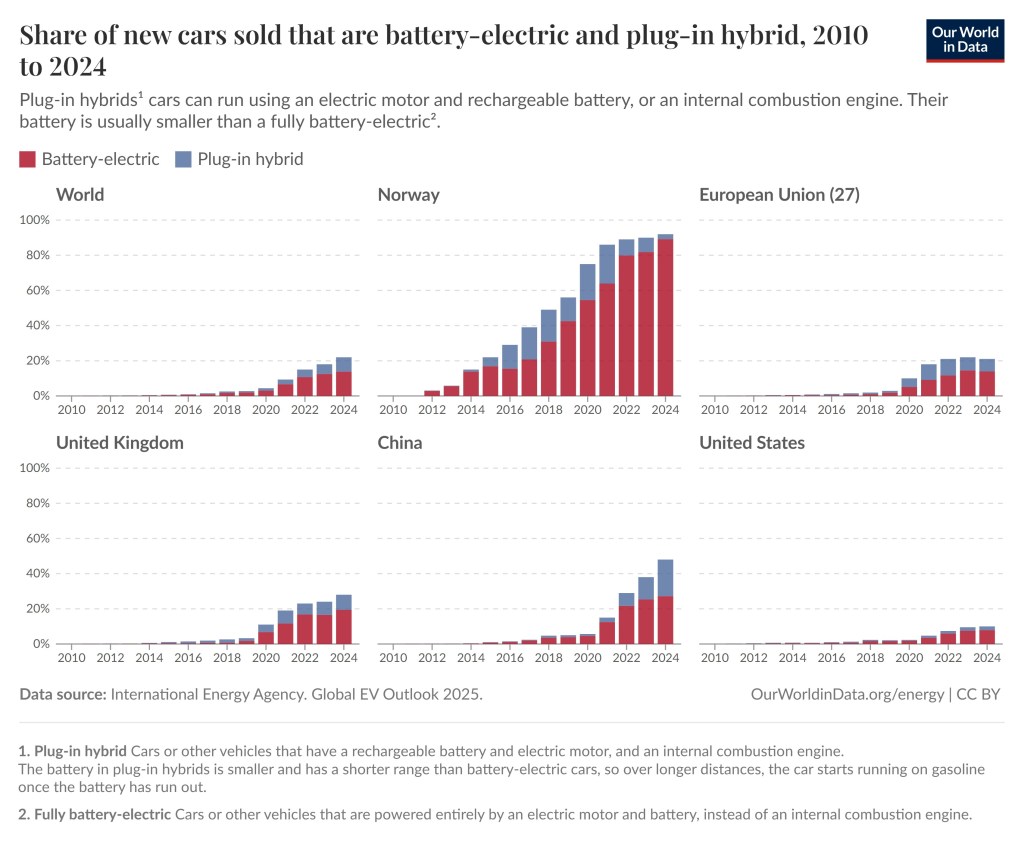
The graphs below show that the share of new cars that were sold in 2025 that were EVs was substantial, but more importantly there is a sharp upward slope of the curve(s). The share of new cars sold in 2025 that were electric was in respective region or country: Norway 97%, Denmark 71%, China 53%, European Union 27%, World 25%, the United States 10%. The graphs are taken from this page on the Our World in Data web page. I encourage you to play around with the interactive graphs. You can read more about new cars sales in Norway here.
EVs are Replacing the Internal Combustion Engine

It should be noted that electric cars include fully battery-electric and plug-in hybrids. With battery-electric cars is meant cars or other vehicles that are powered entirely by an electric motor and battery, instead of an internal combustion engine. With plug-in hybrid is meant cars or other vehicles that have a rechargeable battery and electric motor, and an internal combustion engine. The battery in plug-in hybrids is smaller and has a shorter range than battery-electric cars, so over longer distances, the car starts running on gasoline once the battery has run out.

This is a fact that is important, and that likely comes as a surprise to people living in countries that are lagging in this transition, such as the United States. Therefore, I consider it a super fact.

The Share of EVs

The sharp increase in the sale of electric cars is a recent phenomenon and therefore there are still a lot of ICE cars on the roads. Therefore, there is a significant difference between the share of electric vehicles on the road and the share of new cars sales being EVs. The share of electric cars on the roads in 2024 was in the United States 2.7%, in the world 4.5%, in China 11%, in Sweden 13% and in Norway 32%. See the graph below.
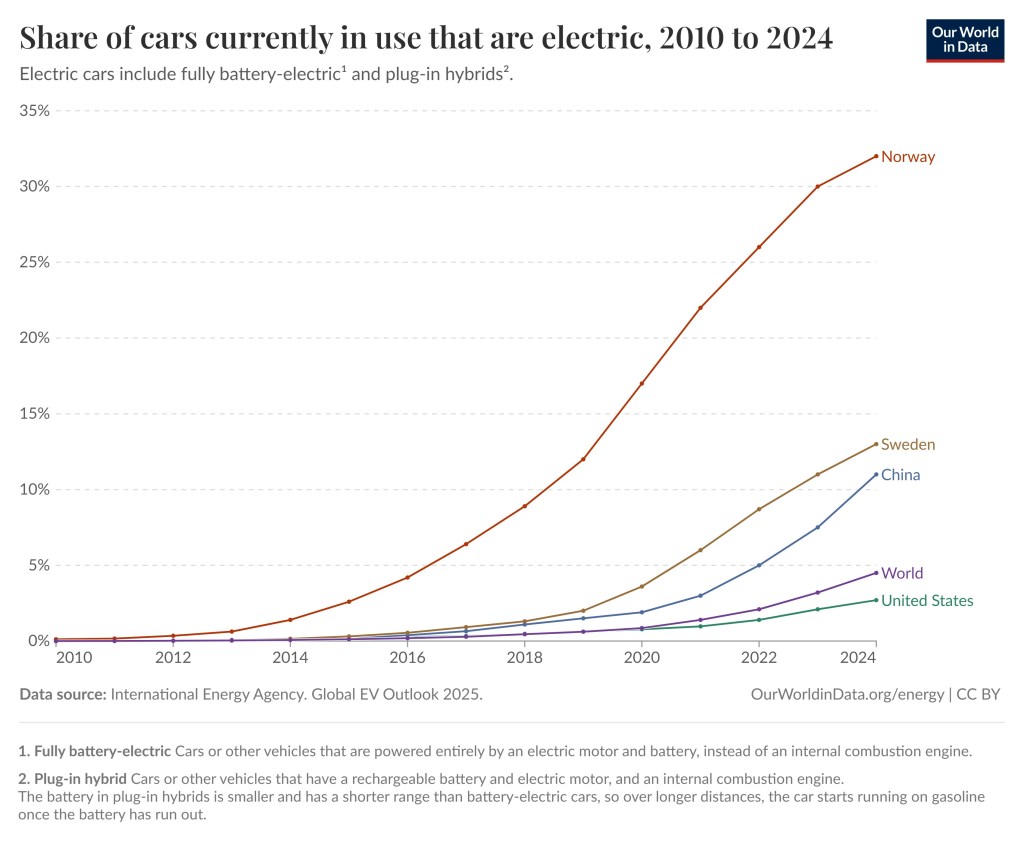
The graph shows the share of cars currently in use that are electric for the world, the United States, China, Sweden and Norway.
Share of cars currently in use that are electric, 2010 to 2024. Data source: International Energy Agency Global EV Outlook 2025.   OurWorldinData.org/energy | CC BY

The graph below illustrates the sales of fully battery-electric cars versus plug-in hybrids.
EVs are Replacing the Internal Combustion Engine

The bar graph below is an alternative illustration showing the share of  new cars sold that are electric in 2024 for the world and 8 countries.
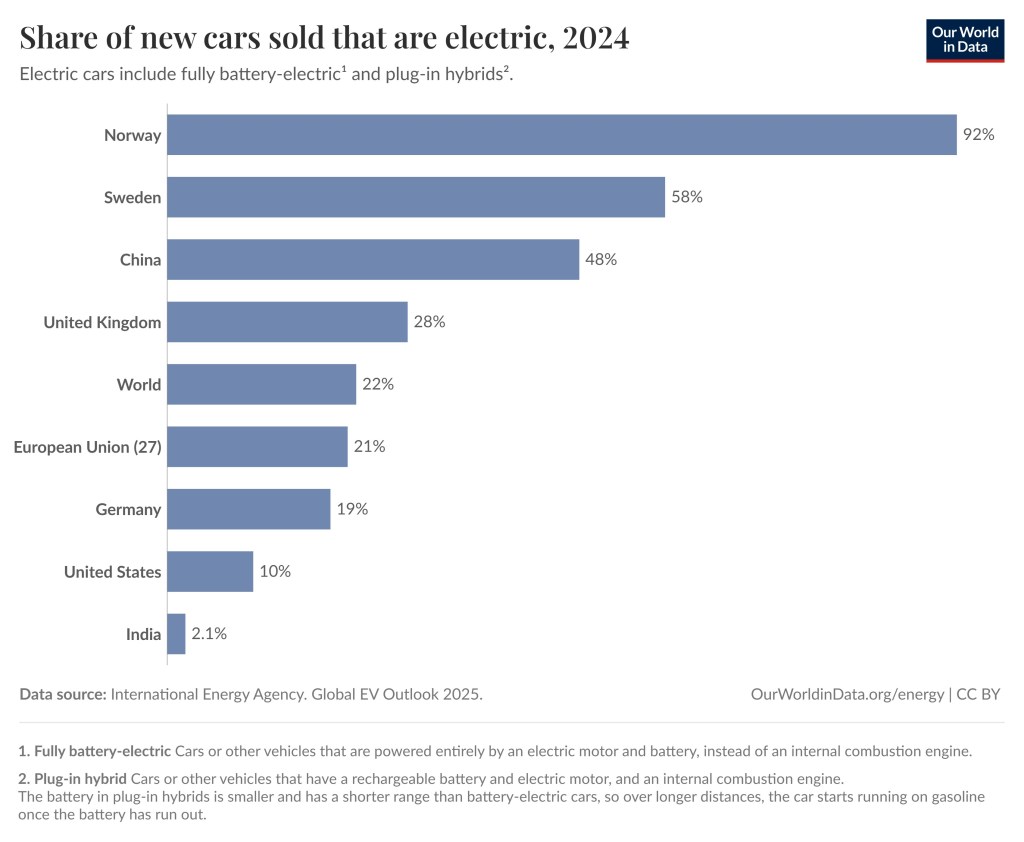
The bar graph shows the share of new cars sold that are electric in 2024 for the world and 8 countries. The numbers are India 2.1%, the United States 10%, Germany 19%, European Union 21%, United Kingdom 28%, China 48%. Sweden 58%, Norway 92%, and the World 22%
Share of new cars sold that are electric, 2024. Electric cars include fully battery-electric and plug-in hybrids. Data source: International Energy Agency  Global EV Outlook 2025.  OurWorldinData.org | CC BY

This article states that there are now more new electric cars sold in the EU than ICEs. However, it should be noted that they include hybrids (non-plug-in) in this number.

Are EVs cleaner than ICE cars ?

Yes, they are, for the most part. EV Cars emit less pollution than Internal Combustion Engine Cars, even considering manufacturing, disposal and EV Cars being charged by dirty grids. Basically, this is because burning oil to move a vehicle creates significantly more heat than motion.

It all depends on how dirty the grid is. This map shows the average EV as a gasoline MPG equivalent for the different grid networks in the United States in 2020. As you can see an average EV corresponds to a 76 mpg gas car in Texas (with the ERCOT) grid, which is much cleaner than almost any gasoline car. Also, the ERCOT grid has become cleaner since 2020. The average for the United States is 91 mpg. There are a couple of grids for which owning an EV may not be cleaner. I created another super fact post that explains the details called: super fact (29) EV Cars Indeed Emit Less Carbon Pollution. You can read more here.

There are concerns about the mining of minerals for EV cars, such as cobalt and lithium, which has an environmental impact. However, this environmental impact should be compared to the environmental impact caused by the drilling and transport of oil (and the burning of gas/oil). In general, the environmental impact of EVs is considered much less. In addition, EV batteries last a long time, and 95% to 98% of the valuable materials in EV batteries (lithium, cobalt, nickel, and copper.) can be recycled/recovered. You can read about other EV myths here. However, this is probably a topic for a future super-fact.


Craigavad a scientist and fellow blogger, wrote a very well balanced and insightful article on the issue of the carbon cost of electric vehicles. I encourage you to read it : “The Carbon Cost of Electric Cars: are they worth it?


To see the other Super Facts click here

IPCC Did Not Backtrack on Global Warming Being Human Caused

Superfact 106: IPCC likely retiring the RCP8.5 emissions scenario does not mean that the IPCC  backtracked on any climate science. It does not mean that climate change does not remain a serious and dangerous problem, and it definitely does not mean that global warming is not human caused.

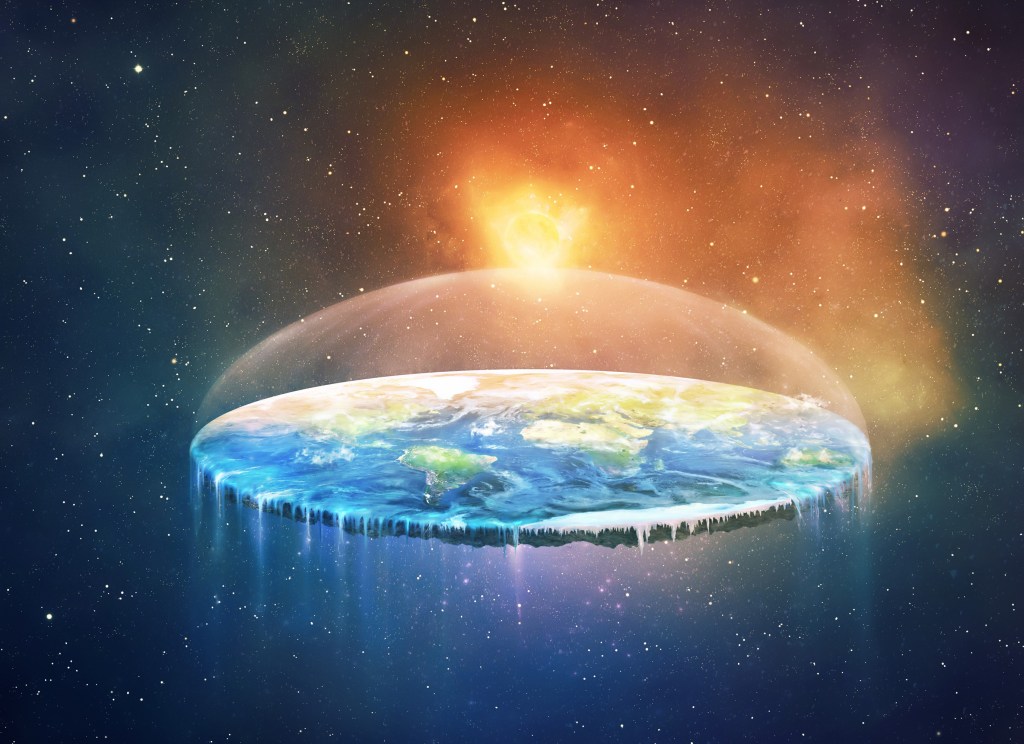
The photo below was recently taken by the International Space Station proving once and for all that Earth is flat like a pancake. NASA issued a statement on Thursday stating that Earth being closely spherical in shape is a long standing hoax created by leftwing extremists.

The picture shows a disk representing a flat Earth. A world map is on top of it and the sun is in the background. | IPCC Did Not Backtrack on Global Warming Being Human Caused
Digital illustration of flat Earth. Shutterstock asset id: 797857906 by Amanda Carden

OK, that isn’t true. It sounds like an April 1st joke, doesn’t it? It is a joke, except it isn’t April 1st. However, a fairly recent survey showed that 10% of the US population believe Earth is flat, not roundish. Imagine you not understanding any of the evidence for Earth being round and imagine that you’ve never stood on a tall hill watching ships disappearing below the horizon and imagine you being surrounded by a lot of people who claim that Earth is flat. It would be easy for you to believe that Earth is flat like a pancake. Wouldn’t it? Trying to understand evidence and science is crucial to understanding the world.

When I was young, I was bamboozled into thinking Earth was 6,000 years old and that evolution was a hoax. Then I got a science education, and I had to abandon those beliefs. Later as a young adult, I was bamboozled again, this time by rightwing media, into thinking that global warming wasn’t happening, well at least not very much of it, but then I learned something about the related evidence and about climate science, and I had to abandon that misconception too.

When you do not know about or understand the evidence, you are easy to fool, and that includes you fooling yourself by misunderstanding articles you are reading. Science is not a well understood topic despite its high importance in today’s world. Conspiracy theories, anti-vaccine propaganda, creationism, anti-climate-science, and other anti-science is spreading fast today, and it is easy to get bamboozled. Anti-science has become a cultural phenomenon.

To us who understand a little bit of the evidence that we are causing climate change, the evidence is conclusive enough that claims that it isn’t us causing it, sound just like the flat Earth claim above. It sounds like an April 1st joke to us because we know something. On the other hand, if you don’t know about the evidence, then you are easy to fool, and you might easily jump to false conclusions. Watch your biases and wishful thinking and pay attention to what the experts in the field are saying, not politicians, not influencers, not Facebook memes.

Examples of evidence that we humans are causing climate / global warming / climate disruption (pick your preferred moniker) include satellites having directly measured our greenhouse gases trapping heat, the upper troposphere cooling whilst the lower troposphere is warming, a phenomenon explained by greenhouse gas emissions, the unnatural speed of the warming, the manner in which the warming happens (explained only by greenhouse gas emissions), and that possible natural causes such as the sun, orbital cycles / Milankovitch cycles cannot explain the current warming. Add isotope studies that show that the added greenhouse gases originate from burning fossil fuels and that volcanoes emit less than 1% CO2 of what we emit.

You can read more about the evidence here.

IPCC (Intergovernmental Panel on Climate Change) being likely to drop the so called RCP8.5 (or SSP5-8.5) scenario in the upcoming Seventh Assessment Report upon the suggestion of the Scenario Model Intercomparison Project has set off a flood of misinformation and misinterpretation. Not the least by politicians, notably our President, who made some very bizarre and clueless statements on the issue.

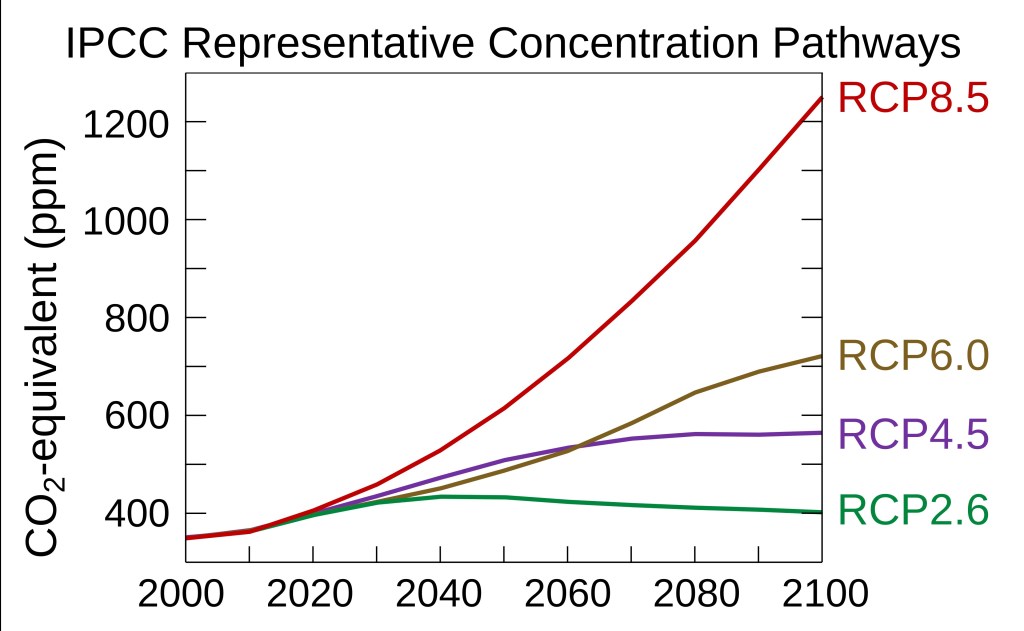
IPCC and the Scenario Model Intercomparison Project never stated that climate change is not caused by humans, or that climate change is not a serious problem. The Representative Concentration Pathways (RCPs) fundamentally depends on how much greenhouse gases we emit, as can be seen in the graph below. RCP8.5 corresponds to a very extreme scenario of burning enormous amount of coal. It was never a likely scenario to begin with, and it had become implausible due to the successful transitions to clean energy. That is why it makes sense to drop RCP8.5.

It was not because climate scientists were wrong about the climate science, or because environmentalists are exaggerating. In contrast to what many media outlets will tell you it is a vindication or victory for environmentalists. The global efforts to transition to clean energy have made it so that we can declare the worst of the worst scenario as implausible.

The graph shows four scenarios RCP2.6, RCP4.5, RCP6.0, RCP8.5, each corresponding to different concentrations of CO2. The Y-axis shows the amount of CO2 in the atmosphere going from 300 ppm to 1300 ppm. The X-axis corresponds to the years going from year 2000 to the year 2100.
Different RCP scenarios result in different predicted greenhouse gas concentrations in the atmosphere (from 2000 to 2100). RCP8.5 would result in the highest greenhouse gas concentration (measured as CO2-equivalents). Efbrazil, CC BY-SA 4.0 https://creativecommons.org/licenses/by-sa/4.0, via Wikimedia Commons.

Since there are so much confusion, misinformation and hoopla surrounding this seemingly non-controversial event, I have reasons to consider the rectification of the misinformation a super-fact.

Official Statements on RCP8.5 by IPCC and the Scenario Model Intercomparison Project

It should also be noted that IPCC issues assessment reports based on research done by other organizations such as the Scenario Model Intercomparison Project. The IPCC does not conduct its own research. That is another common misrepresentation across media. It was not IPCC that decided to drop the RCP8.5 scenario, and the seventh assessment report has not yet been released. It was a suggestion by the Scenario Model Intercomparison Project published as a paper in Geoscientific Model Development, which stated “the CMIP6 high emission levels (quantified by SSP5-8.5) have become implausible, based on trends in the costs of renewables, the emergence of climate policy and recent emission trends”. You can read this paper here (and search for the quote).

Notice that the paper by the Scenario Model Intercomparison Project is NOT stating that global warming / climate change is not human caused. It does NOT state that it is not a serious problem. It does not in anyway imply anything like what the President and certain media outlets claim. There is additional reading from the Scenario Model Intercomparison Project here. You can read IPCC’s official comment on the issue here and its statement here. They were published May 20, 2026. The Washington Post and EOS provide some pretty accurate and easy to read explanations of what happened, for those wanting lighter reading.


To see the Other Super Facts click here

Smorgasbord Blog Magazine shares Superfact number 7

Please take a look at Smorgasbord Blog Magazine’s post about my super fact #7 “Poverty and child mortality has been sharply reduced worldwide“.

My Post We Can See What Stars Are Made of Selected for Freshly Pressed

WordPress Freshly Pressed
Your site has been selected for Freshly Pressed!
Congrats, we love your writing and want to share it with the world.

Hi thomasstigwikman,

We’ve selected your post (We Can See What Stars Are Made of) for Freshly Pressed, a showcase where we feature editors’ picks and community favorites on WordPress.com.

We are thrilled to share your post with our wider audience.

Your post will appear at wordpress.com/discover/, where members of the WordPress.com community can read, comment, like your post, and subscribe to your site to get notified whenever you publish new content.

Thank you for being part of the biggest and best community of bloggers around the world. We’re proud to be the platform that makes your voice heard.

Cheers,

The WordPress.com Team

The Sun is White but the Sky steals its Blue

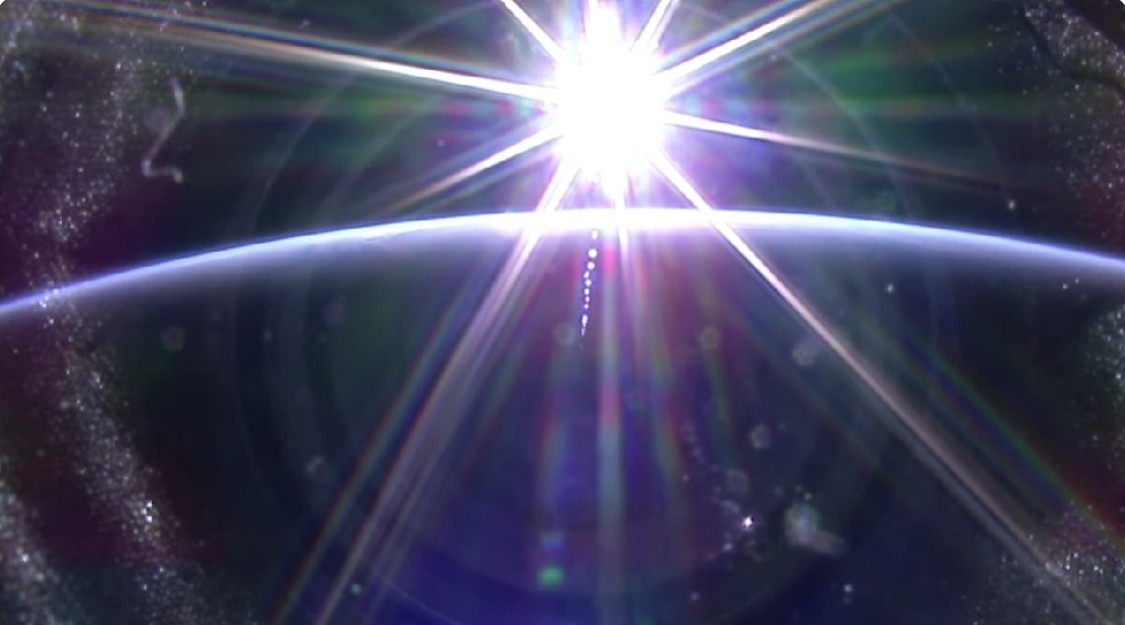
Superfact 105: The Sun is white, but the Sky steals its Blue is a poetic way of saying that the sun’s light is scattered by the atmosphere giving the Sun a yellowish tint as well as giving us our blue sky. From space the sun looks completely white.

A bright white sun is setting over Earth. | The Sun is White but the Sky steals its Blue
Sunset from the International Space Station by NASA

Viewed from space the sun is entirely white. White light consists of a mix of all the colors of the rainbow. However, viewed from earth the sun has a yellow tint, which gets more pronounced, it even dips into orange, as the sun nears sunset. That does not happen in space as can be seen below in the one minute sunset timelapse video taken from the International Space Station.

Sunset Timelapse from the International Space Station

On earth the sunset looks more like something in the picture below.

The sun is setting over distant mountains. There are some clouds, a forest, and field in the foreground. The sun has a yellow tint; the clouds are slightly yellow-orange and sky above is blue. | The Sun is White but the Sky steals its Blue
The sky dusk has a dramatic background featuring a summer season golden sunset landscape. The light is at the horizon is an orange and yellow color with blue sky above. Shutterstock asset id: 2670235703 by Nature Peaceful

The sun is a so called yellow dwarf star, or a G-type main-sequence star. The term yellow dwarf is a bit of a misnomer, because they range in color from white, for more luminous G-types like the Sun, to only very slightly yellowish for less massive and less luminous G-type main-sequence stars. The sun emits all the colors of the rainbow simultaneously, but the most dominant color is green. However, this looks white to us.

When sunlight enters Earth’s atmosphere, tiny air molecules scatter shorter, blue wavelengths of light in all directions. This scattering is what makes the sky look blue. This is called Rayleigh scattering. Because much of the blue light is removed, the remaining wavelengths of light that reach your eyes combine to make the sun appear yellow. This is a super fact because it is a basic but surprising fact, and we know it is true.

Rayleigh Scattering

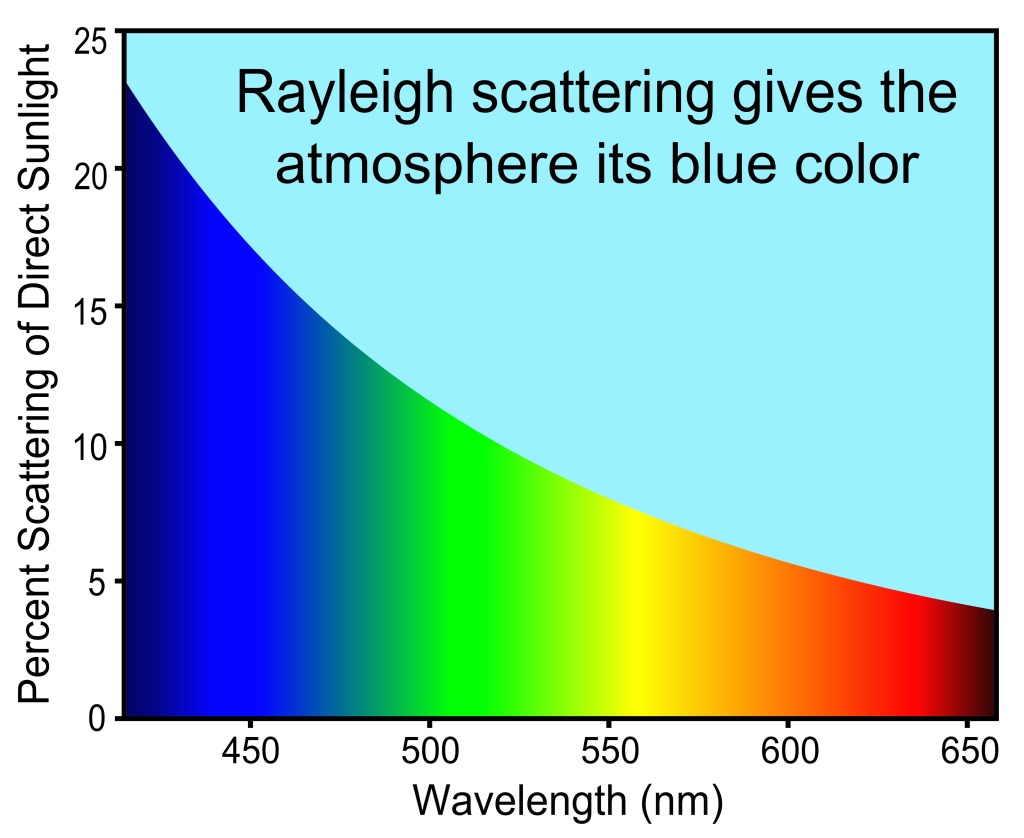
The blue color of the sky is caused by Rayleigh scattering of sunlight by the gases in the Earth’s atmosphere. The image below shows the degree to which Rayleigh scattering occurs at different wavelengths / frequencies of light. Blue has the shortest wavelength (highest frequency) for visible light and red the longest (lowest frequency). The curve shows that blue light scatters more than red light. It should be noted that UV light (not shown) scatter even more. The scattering curve shown is calculated for sunlight passing vertically through the atmosphere.

The graph shows the amount of scattering going from shorter wavelengths (higher frequences) on the left, to longer wavelengths (lower frequences) on the right. Blue has shorter wavelengths and red has longer wavelengths. The graph shows that blue scatter the most.
Figure showing the greater proportion of blue light scattered by the atmosphere relative to red light. Robert A. Rohde derivative work:KES47 (talk) (converted to SVG)., CC BY-SA 3.0 http://creativecommons.org/licenses/by-sa/3.0/, via Wikimedia Commons.


To see the Other Super Facts click here