
The goal of this blog is to create a list of what I call super facts. Super facts are important and true facts that are nevertheless highly surprising to many, misunderstood, or disputed among the public. They are special facts that we all can learn something important from. However, I also make posts that are not super facts but feature other interesting information, such as this book review and book recommendation.
A Note About Liars on Amazon
I’ve noticed that most of the reviews for this book were positive but there were a few negative reviews from what I refer to as climate deniers. These reviews were not just misguided fossil fuel talking points, but they were obviously written by people who had not read the book or by people who skimmed the book and who did not make an honest effort to understand the content of the book. You can tell because the objections they raise were addressed and clearly debunked in the book in a way that was easy to understand.
I’ve read many books on climate science and there are always a bunch of negative reviews written by people who have no clue about the content of the book. Writing reviews for books you have not read is the same as lying, especially if you are slamming the book. There are reviewers who literally seem to be at war with the truth, and they spend their time trying to bury it, and in the process, they are shamelessly lying. Why would someone dump lots of fake reviews over books they haven’t read?
BEYOND DEBATE: Answers to 50 Misconceptions on Climate Change by Dr. Shahir Masri
Below I am listing the two versions of this book (kindle and paperback). I bought the paperback version.
- Paperback – Publisher : Dockside Sailing Press (July 14, 2018), ISBN-10 : 0692157417, ISBN-13 : 978-0692157411, 329 pages, item weight : 1.09 pounds, dimensions : 5.5 x 0.75 x 8.5 inches. It costs $6.44 on US Amazon. Click here to order it from Amazon.com.
- Kindle – Published : Dockside Sailing Press (April 12, 2021) ASIN : B092DPY7LL, 245 pages, it costs $9.99 on US Amazon. Click here to order it from Amazon.com.
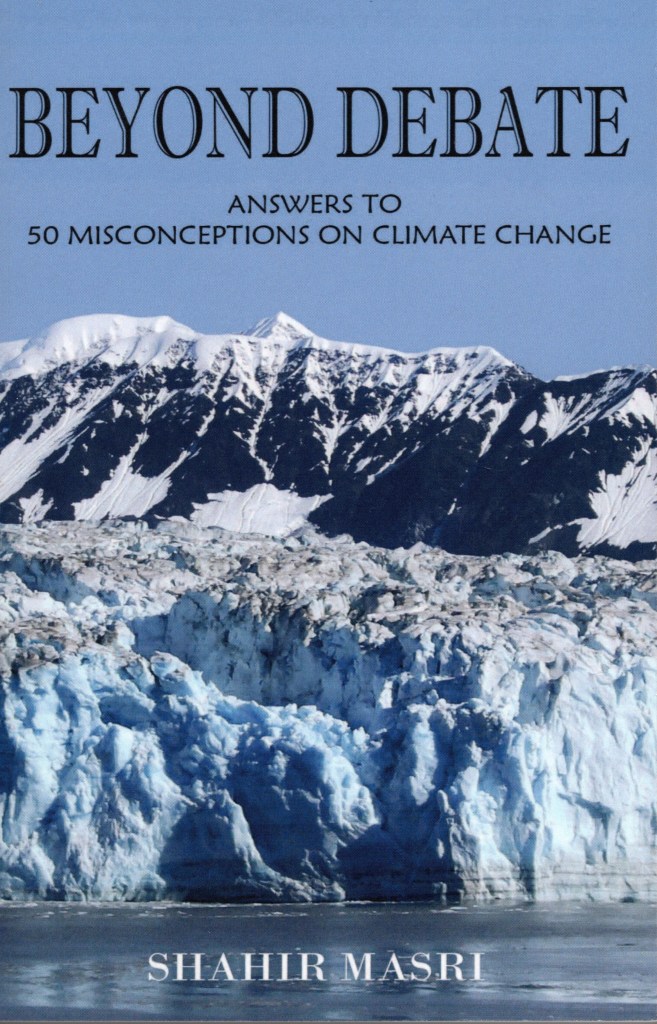
Amazon’s Description of the Book
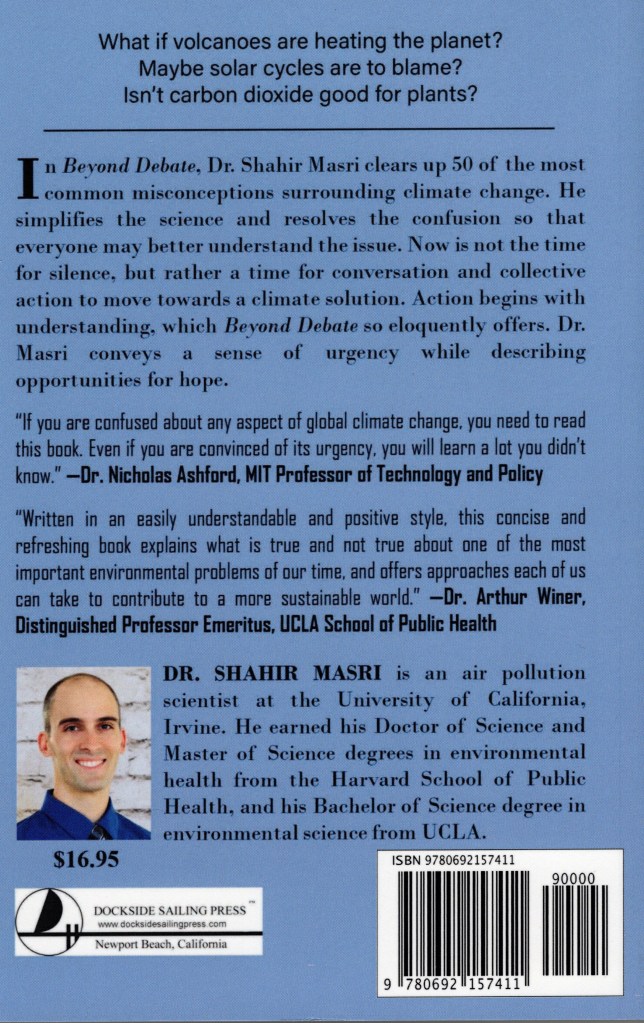
What if volcanoes are heating the planet? Maybe solar cycles are to blame? Isn’t carbon dioxide good for plants? These are but a few of the questions on global warming that are addressed in this book. If you are concerned that global warming may be a serious problem, but find it hard to know what to believe or how to help in the face of conflicting arguments, you will want to read this book. You don’t have to be a scientist to understand Dr. Shahir Masri’s explanations and solutions. They proceed along common-sense lines that are easy to follow. Climate change poses a major threat to public health and the environment. Yet, political squabbles and misinformation have stalled policy and enabled little progress to be made in solving the crisis.
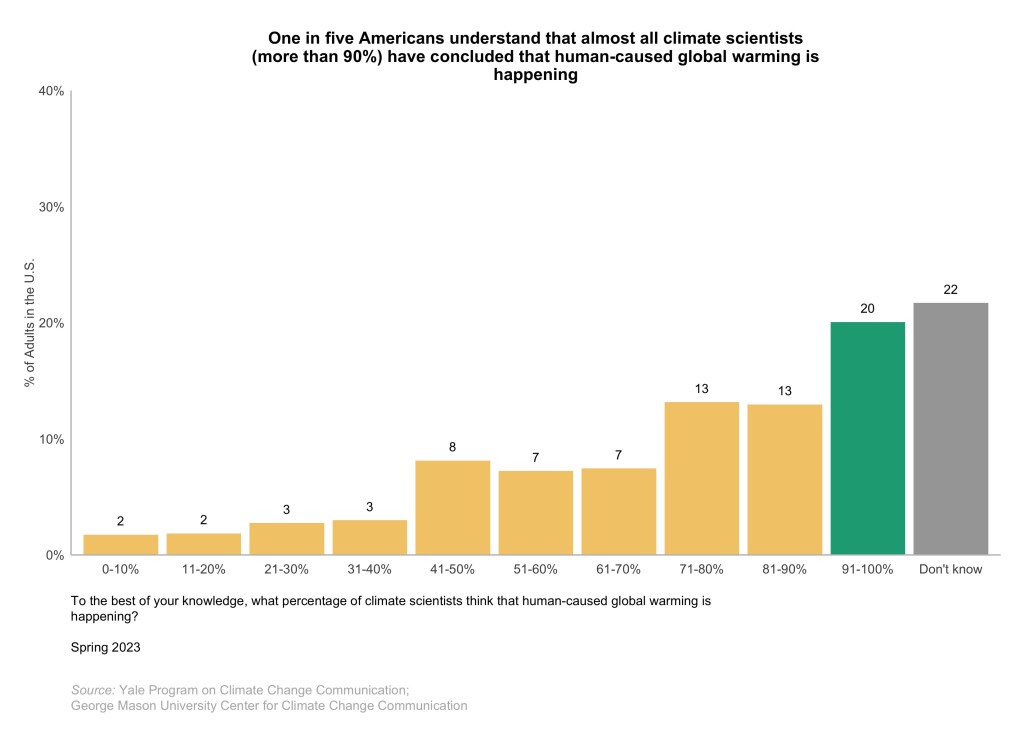
Similarly, the notion of a “climate debate” has created the illusion of a divided scientific community, when in fact most scientists agree that human activity is causing the planet to warm. At a time when open discussion is essential, talk of global warming has become entrenched in politics and all but taboo in unfamiliar company. In Beyond Debate, Shahir Masri clears up 50 of the most common misconceptions surrounding climate change. He simplifies the science and resolves the confusion so that everyone may better understand the issue. Now is not the time for silence, but rather a time for conversation and collective action to address greenhouse gas emissions and begin to solve the climate crisis. Action begins with understanding, which Beyond Debate so eloquently offers. Masri conveys a sense of urgency while describing opportunities for hope.
This is my five-star review for BEYOND DEBATE
Fix your misconceptions. Don’t fall for disinformation. Be curious and learn.
There are a lot of misconceptions, misunderstandings as well as disinformation surrounding climate change or if you call it global warming, global weirding, or climate disruption. This book provides answers and explanations to 50 misconceptions. Some of the misconceptions are common but basic misunderstandings. Other misconceptions require more in depth explanations.
In addition, the book gives you an introduction into how the greenhouse effect works, covering 200+ years of scientific discoveries by some famous scientists. Did you know that without the various greenhouse gases in the atmosphere (water vapor, carbon dioxide, methane, nitrous oxide, and ozone), our planet would be 60 degrees colder than it is. It would be a snowball earth. This book is for those of us who are curious and want to learn more about this topic.
An example of a basic misconception is Chapter 4, “Earth’s Natural cycles explain recent warming”, well they don’t. For example, the Milankovitch cycles, earth’s precession, axial tilt, and the eccentricity of earth’s orbit, are too slow and would favor cooling right now, not warming. It is not the sun (chapter 5) and not volcanoes (chapter 3). Volcanoes release less than 1 % of the CO2 released currently by human activities, and they are part of the carbon cycle, and CO2 from volcanoes have the wrong isotope mix to correspond to the increase of CO2. He explains that the carbon atom comes in different isotopes (different number of neutrons) and that the mix is different for different carbon sources and that the carbon added to the atmosphere comes from burning fossil fuels based on the isotope mix.
I can add that in addition different potential causes for global warming result in different ways the warming happens (like a fingerprint) and the fingerprint of the current warming is that of greenhouse gases (he does not explain this enough). Another thing to ask yourself is if you think the current global warming is natural, why do paleoclimatologists and others who have dedicated their lives to studying naturally occurring climate change not think this warming is natural.
Another basic misconception is addressed in Chapter 23, “Climate models don’t account for the most abundant greenhouse gas, water vapor”, which is false, they do account for water vapor. Some people believe that because water vapor is a more powerful and abundant greenhouse gas than CO2, it should be what is causing global warming. That’s not how it works. We are not increasing water vapor in the atmosphere by emitting it and even if we did it would rain back down. Therefore, water vapor is not driving global warming. If a greenhouse gas isn’t increasing it can’t cause rising temperatures, no matter how abundant it is.
However, an increase in carbon dioxide warms the atmosphere which in turn increases the amount of humidity the atmosphere can hold (positive feedback loop) thus water vapor gives the greenhouse effect a boost. It gives CO2 and methane a bit of a helping hand as the emissions and increase of these gases heats things up, but water vapor is not driving it. This is not hard to understand and yet this misconception refuses to go away.
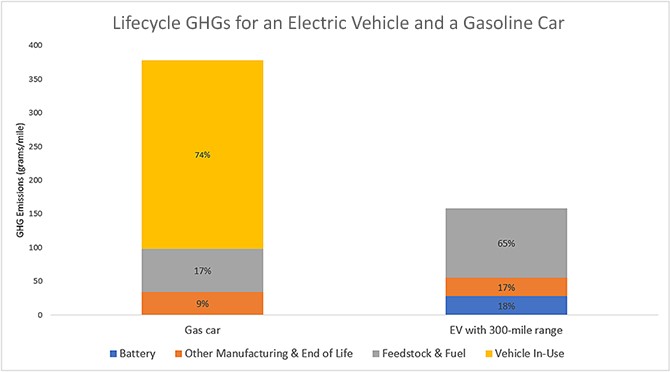
Some other examples are chapter 8, “Climate Change is Chinese hoax” – this is a funny one. Climate science is 200+ year old European science. Chapter 12, “Climate change is just a theory” – see “evolution is just a theory”. Chapter 15, “there is still uncertainty about climate change” – that we know it is happening and that we are the cause is well established but there is uncertainty about other related things. Chapter 36, “glaciers aren’t melting, Antarctica is even gaining ice” – glaciers and sea ice are melting rapidly. Antarctica was gaining ice for four decades despite warming but there are good explanations for this (for example, precipitation). Now Antarctica is losing ice. Chapter 43, “Electric cars aren’t that green” – they are much cleaner than gas cars, but it depends on where you live. Chapter 49, “It’s too late for climate” – no it isn’t.
So, as you can see, this is a fact packed book addressing and correcting a lot of misconceptions. It is very educational and great for anyone ready to learn and understand. It is also well organized and well written. Reading this book will make you smarter and I highly recommend it to anyone who is curious about this topic. I think we all have some misconception on this topic. Let’s correct them.







 Super Facts