The goal of this blog is to create a list of super facts. Important facts that are true with very high certainty and yet surprising, misunderstood, or disputed by many. This blog aims to be challenging, educational, and fun, without it being clickbait. I determine veracity using evidence, data from reputable sources and longstanding scientific consensus. Prepare to be challenged (I am). Intentionally seek the truth not confirmation of your belief.
Category: Environment & Climate Change
Facts relating to Environment & Climate Change known to be true and yet often disputed amongst the public
I came across a very interesting post about the science history of greenhouse effect: “The Greenhouse Effect: From Early Chemistry to the Keeling Curve” by Craigavad miscellany a science blog written by a retired academic. It is a very educational and interesting post related to this topic. Please take a look.
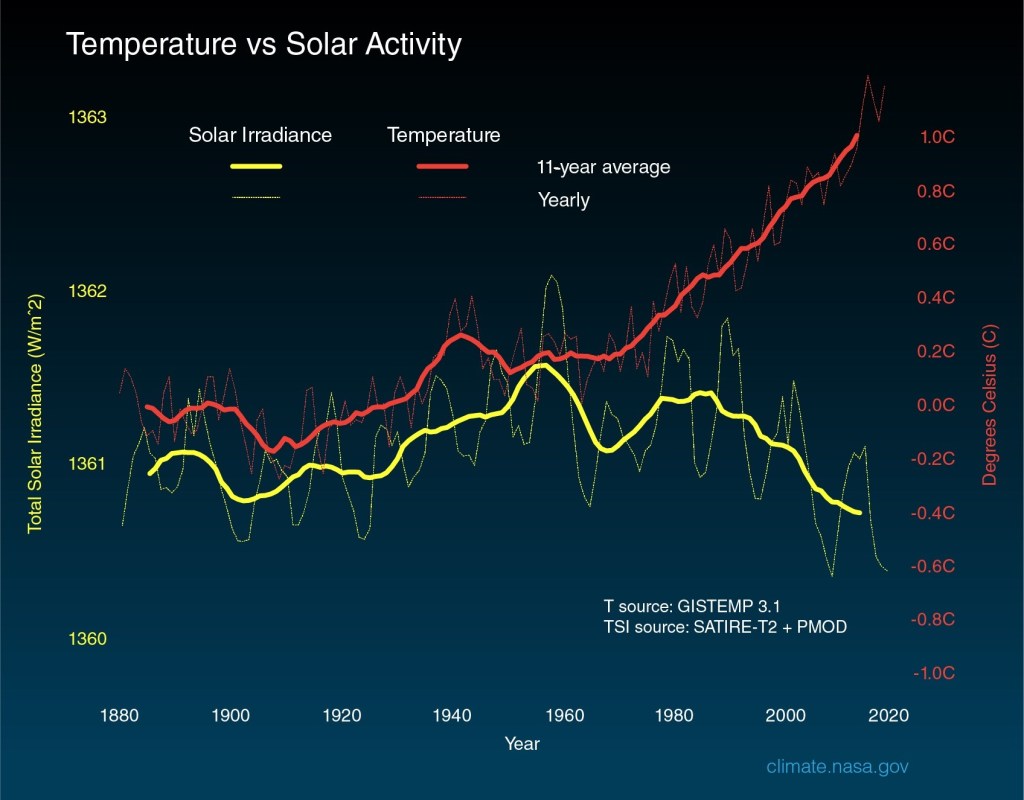
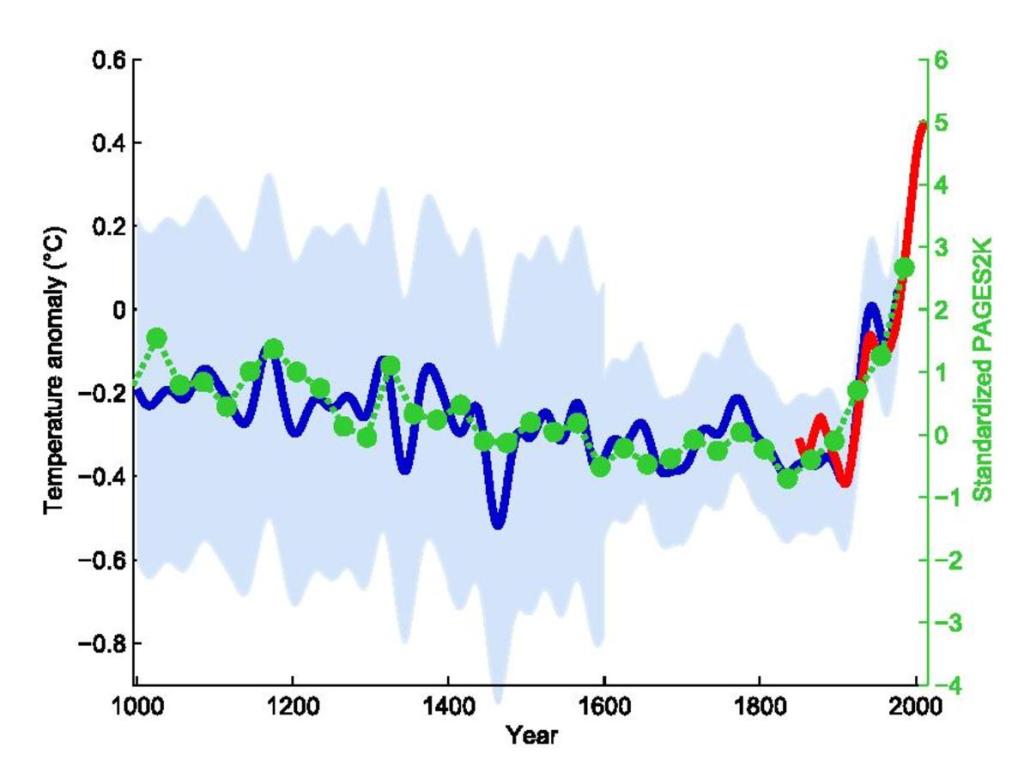
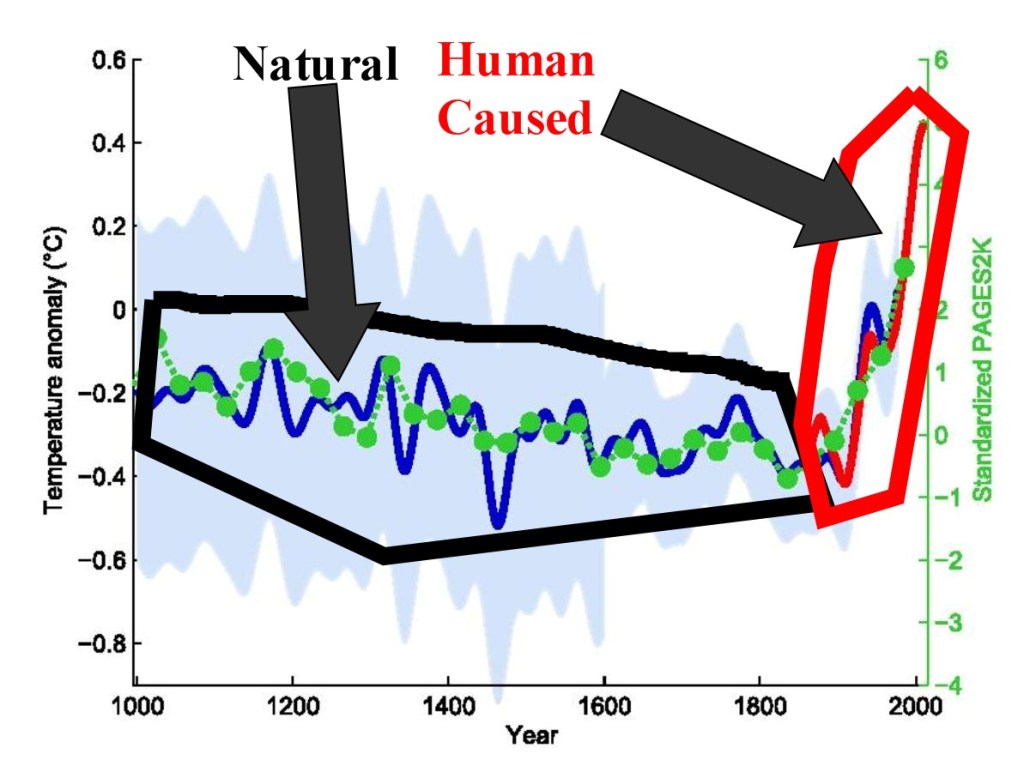
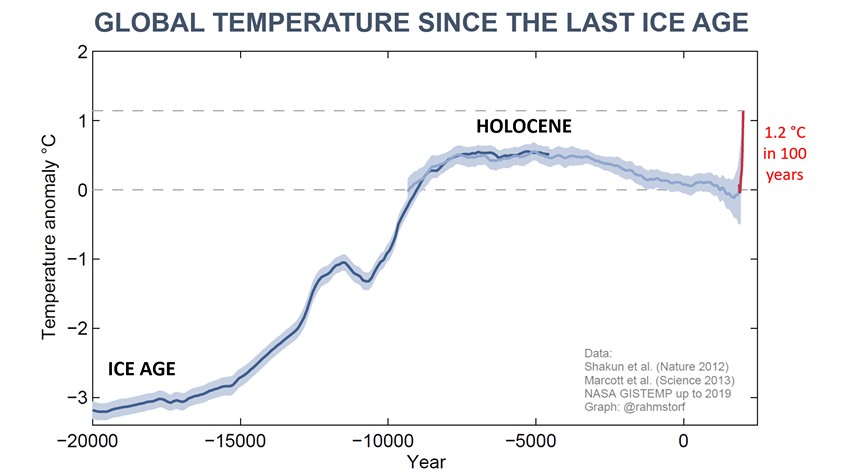
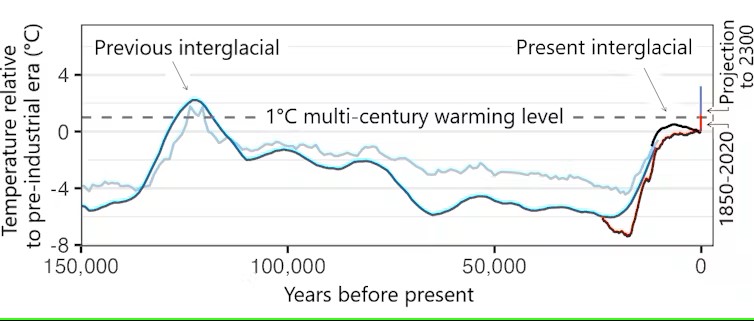
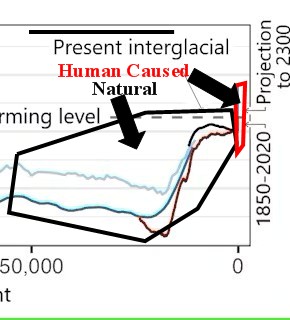
From Scripps institute. Keep two things in mind. First the warming from CO2 is delayed and may result in positive feedback that can manifest decades and centuries later. Secondly, human civilization developed during a period of stable climate. That CO2 levels and temperatures were higher millions of years ago is not much comfort.
Superfact 91: Without greenhouse gases, the Earth’s average surface temperature would drop from the current 15 Celsius (59 Fahrenheit) to approximately -18 Celsius (0 Fahrenheit), which is an average temperature drop of 33 degrees Celsius. If you removed carbon dioxide from the atmosphere but let the other greenhouse gases stay the drop would be 30 degrees Celsius. In both cases most of the planet would freeze. This is referred to as snowball Earth.
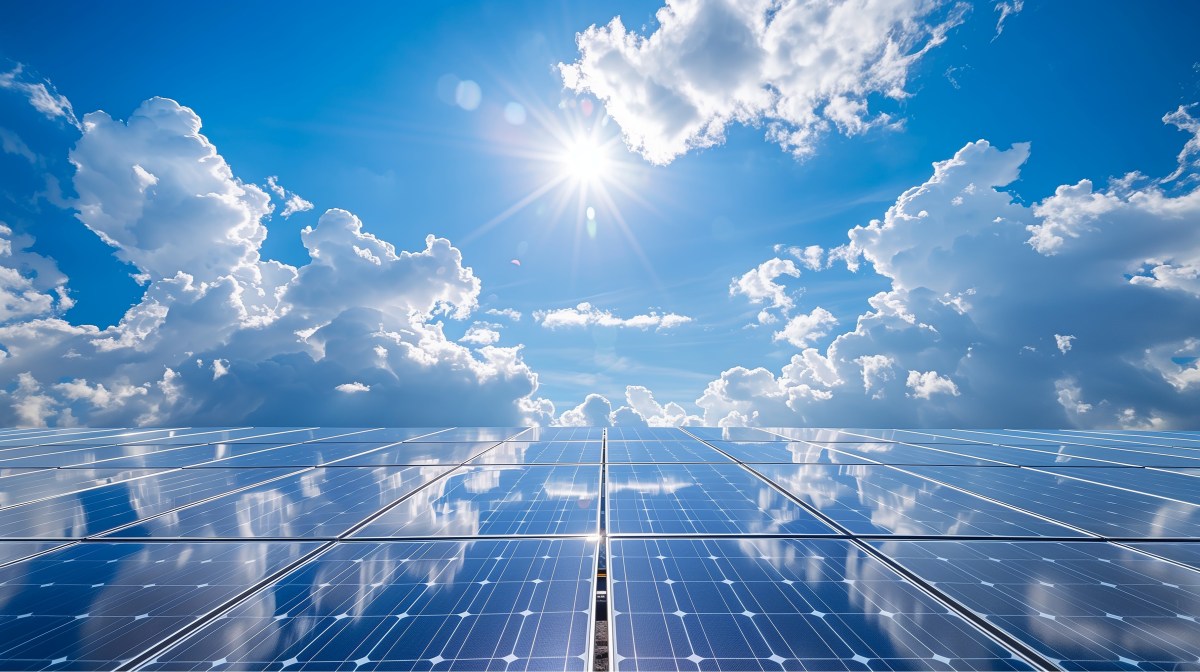
Shutterstock Asset id: 2750019199 by Shutterstock AI
Our planet is much warmer than it otherwise would be because of greenhouse gases. Carbon dioxide, or CO2, is the most important of the greenhouse gases. We are rapidly warming the atmosphere with our carbon dioxide emissions as explained by these articles from NASA and NOAA. If we did the opposite and removed CO2 from the atmosphere we would be cooling the atmosphere. As mentioned, if we removed all greenhouse gases from the atmosphere the planet’s average temperature would drop by 33 degrees Celsius and this NASA article claims it would take 50 years to reach that temperature.
If we removed only carbon dioxide and let all the other greenhouse gases remain, we would get an almost as big temperature drop of 30 degrees Celsius according to the calculations done by this article. Some of you may know that water vapor provides a larger portion of the warming than CO2. In fact, 75% of the greenhouse effect is caused by water vapor and clouds. This seems contradictory. However, when the atmosphere cools, the water vapor will rain out of the atmosphere unlike CO2. Basically, water vapor will adjust to the temperature whilst CO2 is forcing the temperature. It is crucial to understand this difference. That is why CO2 is the most important greenhouse gas. In summary, we need just the right amount of CO2 for a healthy climate.
I consider this a super fact because it is true, it is an important fact, and I believe it is a surprising fact to many, especially those who doubt carbon dioxide’s importance to the global warming we are experiencing. I called it global warming but whether you call it global warming, climate change, or climate disruption, we are talking about the same thing.
Snowball Earth
Shutterstock Asset id: 2749007159 by Shutterstock AI
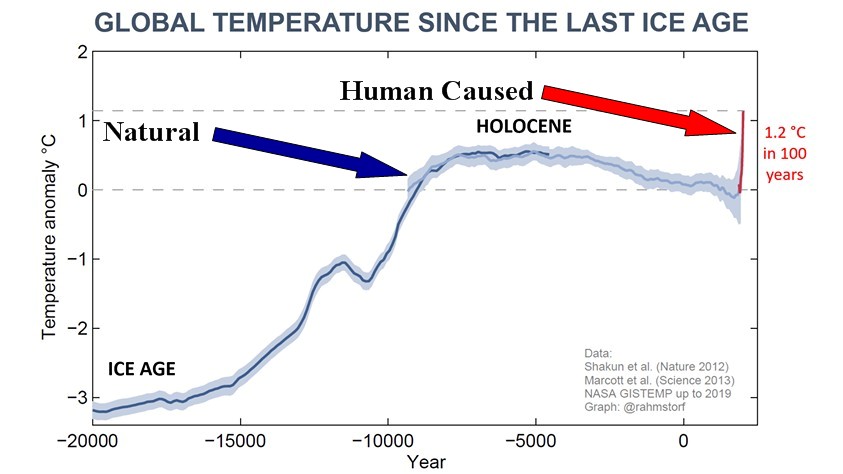
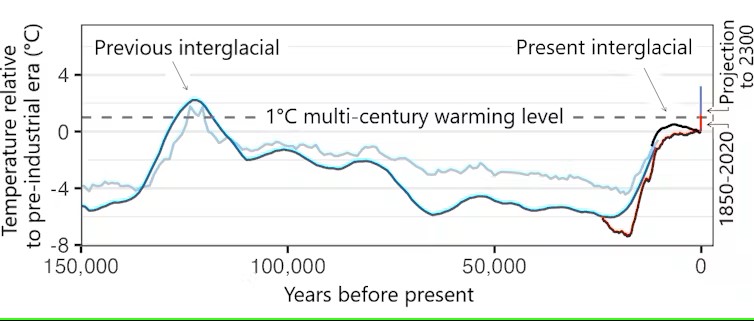
Scientists believe there have been at least two major “Snowball Earth” events between 720 and 635 million years ago where ice and snow covered nearly the entire planet. These snowball earth events were triggered by natural events, likely a plunge in sunlight, followed by a plunge in carbon dioxide not entering the atmosphere, and amplified by sunlight reflecting back into space. All three effects made Earth cooler. The recent ice ages were likely caused primarily by earth’s orbital cycles. Climate changed in the past due to natural phenomena, but that does not mean that the current very rapid warming (rapid geologically speaking) is natural.
If you want to understand why we can be so sure that it is our CO2 emissions that is causing the current global warming, not the sun, not volcanoes, not orbital cycles, and not another natural process, please check out the list of evidence in the second part of this post “Global Warming is Happening and is Caused by us”.
Hothouse Venus
Image taken by the NASA MESSENGER as it approached Venus on June 5, 2007. NASA/Johns Hopkins University Applied Physics Laboratory/Carnegie Institution of Washington, Public domain, via Wikimedia Commons. The image is taken from this Wikipedia article.
The opposite of snowball Earth is hot Venus. Venus is the hottest planet in the solar system due to an extreme runaway greenhouse effect. Surface temperatures are averaging around 465 degrees Celsius (870 degrees Fahrenheit). The thick atmosphere of Venus is composed primarily of carbon dioxide with clouds of sulfuric acid. This causes a greenhouse effect that traps heat.
Despite the fact that Mercury is much closer to the sun (58 million kilometers versus 108 million kilometers) and receives nearly four times as much sunlight per unit area than Venus, Mercury is on average much cooler. The reason is that Mercury’s atmosphere is thin and without a greenhouse effect.
The YouTube video below from NASA explains the greenhouse effect on Venus. It is just one minute long.
The goal of this blog is to create a list of what I call super facts. Super facts are important and true facts that are nevertheless highly surprising to many, misunderstood, or disputed among the public. They are special facts that we all can learn something important from. However, I also make posts that are not super facts but feature other interesting information, such as this book review and book recommendation.
A Note About Liars on Amazon
I’ve noticed that most of the reviews for this book were positive but there were a few negative reviews from what I refer to as climate deniers. These reviews were not just misguided fossil fuel talking points, but they were obviously written by people who had not read the book or by people who skimmed the book and who did not make an honest effort to understand the content of the book. You can tell because the objections they raise were addressed and clearly debunked in the book in a way that was easy to understand.
I’ve read many books on climate science and there are always a bunch of negative reviews written by people who have no clue about the content of the book. Writing reviews for books you have not read is the same as lying, especially if you are slamming the book. There are reviewers who literally seem to be at war with the truth, and they spend their time trying to bury it, and in the process, they are shamelessly lying. Why would someone dump lots of fake reviews over books they haven’t read?
BEYOND DEBATE: Answers to 50 Misconceptions on Climate Change by Dr. Shahir Masri
Below I am listing the two versions of this book (kindle and paperback). I bought the paperback version.
Paperback – Publisher : Dockside Sailing Press (July 14, 2018), ISBN-10 : 0692157417, ISBN-13 : 978-0692157411, 329 pages, item weight : 1.09 pounds, dimensions : 5.5 x 0.75 x 8.5 inches. It costs $6.44 on US Amazon. Click here to order it from Amazon.com.
Kindle – Published : Dockside Sailing Press (April 12, 2021) ASIN : B092DPY7LL, 245 pages, it costs $9.99 on US Amazon. Click here to order it from Amazon.com.
BEYOND DEBATE: Answers to 50 Misconceptions on Climate Change. Click on the image to go to the Amazon page for the paperback version of the book.
Amazon’s Description of the Book
What if volcanoes are heating the planet? Maybe solar cycles are to blame? Isn’t carbon dioxide good for plants? These are but a few of the questions on global warming that are addressed in this book. If you are concerned that global warming may be a serious problem, but find it hard to know what to believe or how to help in the face of conflicting arguments, you will want to read this book. You don’t have to be a scientist to understand Dr. Shahir Masri’s explanations and solutions. They proceed along common-sense lines that are easy to follow. Climate change poses a major threat to public health and the environment. Yet, political squabbles and misinformation have stalled policy and enabled little progress to be made in solving the crisis.
Similarly, the notion of a “climate debate” has created the illusion of a divided scientific community, when in fact most scientists agree that human activity is causing the planet to warm. At a time when open discussion is essential, talk of global warming has become entrenched in politics and all but taboo in unfamiliar company. In Beyond Debate, Shahir Masri clears up 50 of the most common misconceptions surrounding climate change. He simplifies the science and resolves the confusion so that everyone may better understand the issue. Now is not the time for silence, but rather a time for conversation and collective action to address greenhouse gas emissions and begin to solve the climate crisis. Action begins with understanding, which Beyond Debate so eloquently offers. Masri conveys a sense of urgency while describing opportunities for hope.
Fix your misconceptions. Don’t fall for disinformation. Be curious and learn.
There are a lot of misconceptions, misunderstandings as well as disinformation surrounding climate change or if you call it global warming, global weirding, or climate disruption. This book provides answers and explanations to 50 misconceptions. Some of the misconceptions are common but basic misunderstandings. Other misconceptions require more in depth explanations.
In addition, the book gives you an introduction into how the greenhouse effect works, covering 200+ years of scientific discoveries by some famous scientists. Did you know that without the various greenhouse gases in the atmosphere (water vapor, carbon dioxide, methane, nitrous oxide, and ozone), our planet would be 60 degrees colder than it is. It would be a snowball earth. This book is for those of us who are curious and want to learn more about this topic.
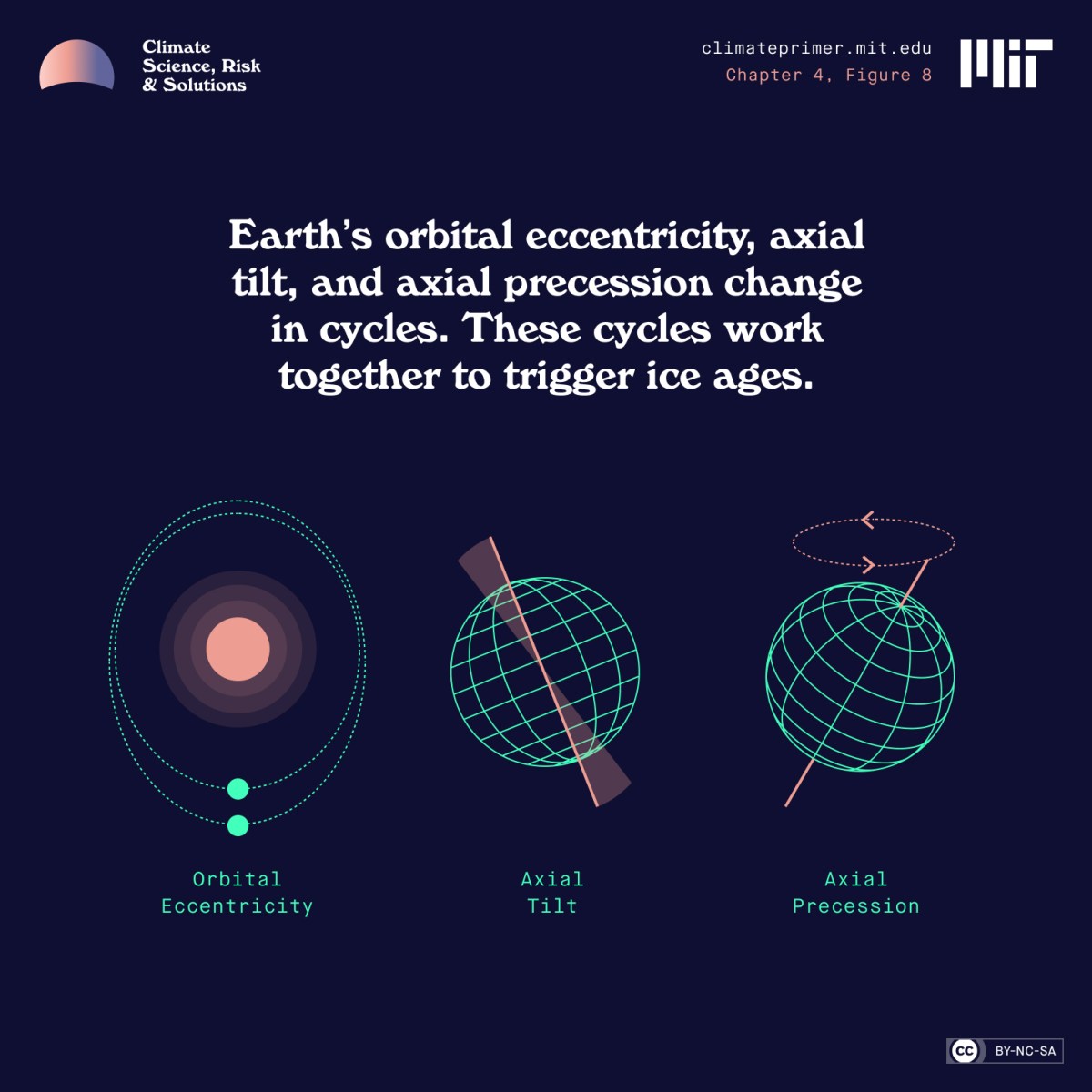
An example of a basic misconception is Chapter 4, “Earth’s Natural cycles explain recent warming”, well they don’t. For example, the Milankovitch cycles, earth’s precession, axial tilt, and the eccentricity of earth’s orbit, are too slow and would favor cooling right now, not warming. It is not the sun (chapter 5) and not volcanoes (chapter 3). Volcanoes release less than 1 % of the CO2 released currently by human activities, and they are part of the carbon cycle, and CO2 from volcanoes have the wrong isotope mix to correspond to the increase of CO2. He explains that the carbon atom comes in different isotopes (different number of neutrons) and that the mix is different for different carbon sources and that the carbon added to the atmosphere comes from burning fossil fuels based on the isotope mix.
I can add that in addition different potential causes for global warming result in different ways the warming happens (like a fingerprint) and the fingerprint of the current warming is that of greenhouse gases (he does not explain this enough). Another thing to ask yourself is if you think the current global warming is natural, why do paleoclimatologists and others who have dedicated their lives to studying naturally occurring climate change not think this warming is natural.
Another basic misconception is addressed in Chapter 23, “Climate models don’t account for the most abundant greenhouse gas, water vapor”, which is false, they do account for water vapor. Some people believe that because water vapor is a more powerful and abundant greenhouse gas than CO2, it should be what is causing global warming. That’s not how it works. We are not increasing water vapor in the atmosphere by emitting it and even if we did it would rain back down. Therefore, water vapor is not driving global warming. If a greenhouse gas isn’t increasing it can’t cause rising temperatures, no matter how abundant it is.
However, an increase in carbon dioxide warms the atmosphere which in turn increases the amount of humidity the atmosphere can hold (positive feedback loop) thus water vapor gives the greenhouse effect a boost. It gives CO2 and methane a bit of a helping hand as the emissions and increase of these gases heats things up, but water vapor is not driving it. This is not hard to understand and yet this misconception refuses to go away.
Some other examples are chapter 8, “Climate Change is Chinese hoax” – this is a funny one. Climate science is 200+ year old European science. Chapter 12, “Climate change is just a theory” – see “evolution is just a theory”. Chapter 15, “there is still uncertainty about climate change” – that we know it is happening and that we are the cause is well established but there is uncertainty about other related things. Chapter 36, “glaciers aren’t melting, Antarctica is even gaining ice” – glaciers and sea ice are melting rapidly. Antarctica was gaining ice for four decades despite warming but there are good explanations for this (for example, precipitation). Now Antarctica is losing ice. Chapter 43, “Electric cars aren’t that green” – they are much cleaner than gas cars, but it depends on where you live. Chapter 49, “It’s too late for climate” – no it isn’t.
So, as you can see, this is a fact packed book addressing and correcting a lot of misconceptions. It is very educational and great for anyone ready to learn and understand. It is also well organized and well written. Reading this book will make you smarter and I highly recommend it to anyone who is curious about this topic. I think we all have some misconception on this topic. Let’s correct them.
BEYOND DEBATE: Answers to 50 Misconceptions on Climate Change. Click on the image to go to the Amazon page for the Kindle version of the book.
Superfact 87: Wind energy is a clean, renewable, and sustainable power source that produces no atmospheric emissions or water pollution during operation. Manufacturing and installation have a small carbon footprint that is much smaller than the carbon footprint of the fossil fuels they potentially replace.
Photo from pexels.com
There is a lot of disinformation being spread about wind power. One recent example is the TV series Landman which presents demonstrably false claims as facts. In Texas where I live the problem with deceitful anti-renewable propaganda is especially severe. It is important to check with reputable sources before you believe what you come across. Wind energy is not 100% clean and not without issues but it is much safer and cleaner than the fossil fuels they potentially replace. Below is a two minute video that explains this.
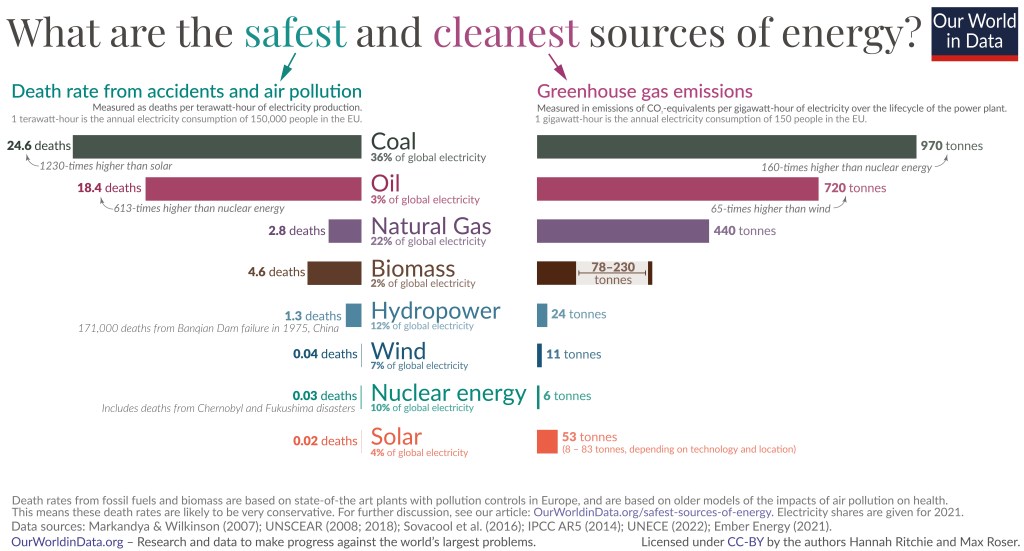
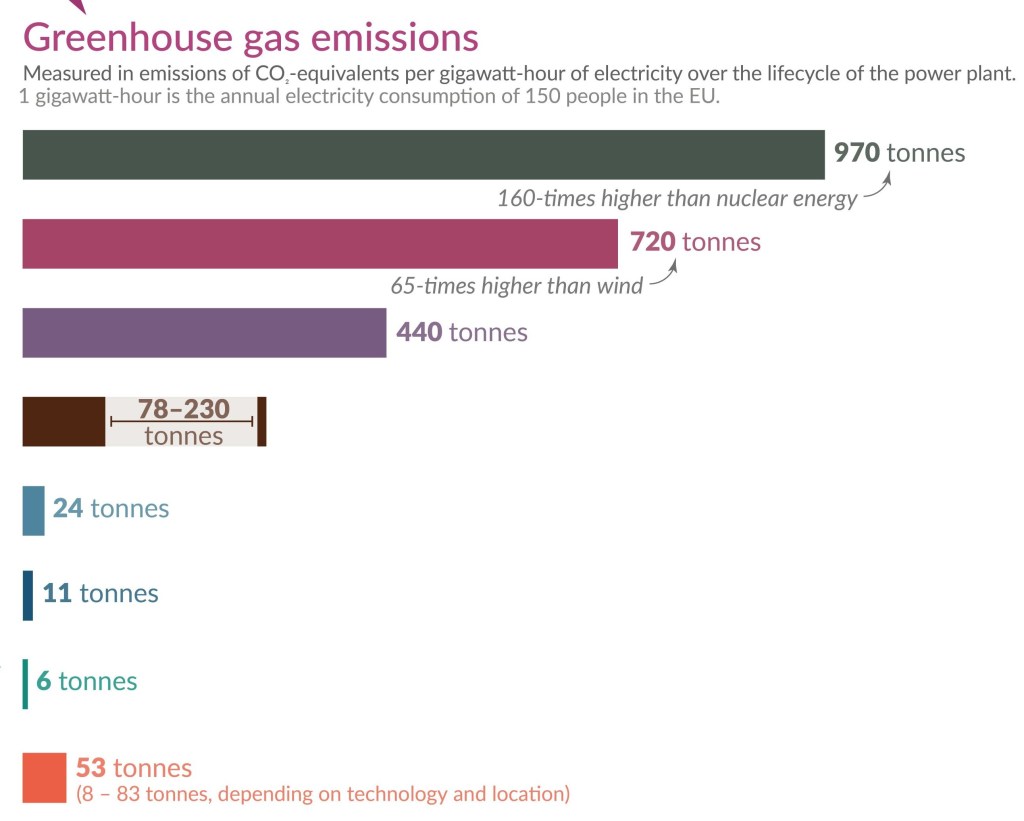
The graph below from Our World in Data depicting lifetime greenhouse gas emissions (construction, operation, disposal) show that the lifetime greenhouse gas emissions of coal power are 88 times higher than those of wind power and kill 615 times as many people as wind power. The lifetime greenhouse gas emissions of natural gas are 40 times higher than those of wind power and kill 460 times as many people as wind power. The difference is staggering. When someone tells you that there’s nothing clean about wind power, they are not just lying to you, they are lying very big.
In the graph below, greenhouse gas emissions is measured of CO2 equivalents per Gigawatt-hour of electricity over the lifecycle of the power plant. 1 Gigawatt-hour is the annual electricity consumption of 150 people in the EU. Death rate from accidents and air pollution is measured as deaths per Terawatt hour of electricity production. 1 terawatt hour is the annual electricity consumption of 150,000 people in the EU.
Death rates from fossil fuels and biomass are based on state-of-the art plants with pollution control in Europe and are based on older models of the impacts of air pollution on health. This means these death rates are likely to be very conservative. For further discussion see our article: OurWorldinData.org/safest-sources-of-energy. Electricity shares are given for 2021. Data sources: Markandya & Wilkinson (2007); UNSCEAR (2008: 2018); Sovacol et al. (2016); IPCC AR5 (2014); UNECE (2022); Ember Energy (2001). OurWorldinData.org – Research and data to make progress against the world’s largest problems. Licensed under CC-BY by the authors Hannah Ritchie and Max Roser. Citation : Hannah Ritchie (2020) – “What are the safest and cleanest sources of energy?” Published online at OurWorldinData.org. Retrieved from: ‘https://archive.ourworldindata.org/20260202-100556/safest-sources-of-energy.html’ [Online Resource] (archived on February 2, 2026).
As you can see wind power is safe and emits very little greenhouse gases over its lifetime. In addition, there is no water impact associated with the operation of wind turbines, but a relatively small amount is used in manufacturing. There are other issues with land use, sounds, rare earth mining, waste, and effects on wildlife particularly birds.
However, these issues are in general smaller than depicted must be compared to issues with the fossil fuels they replace. For example, 15 billion tons of fossil fuels (including 9 billion tons of coal) are mined every year and burned whilst the annual mining for all clean energy technologies is around 7 million tons (2,000 times less). More about birds in the next section. Overall wind energy is a clean, renewable, and a sustainable power source. You can read more about this here, here, here, or here.
I am referring to this fact as a super fact because, it is true, an important topic, and yet it’s a fact that is difficult for many people to believe. Too much misinformation has been spread about wind power. I expect some people to dismiss this fact out of hand. But that is the point of super facts, they are true but hard to believe for many, or surprising, and perhaps even shocking.
Wind power saves a lot more birds than it kills
It may come as a surprise to some, but wind power is not a major cause of bird death. Wind farms are estimated to be responsible for losing less than 0.4 birds per gigawatt-hour (GWh) of electricity generated, compared to over 5 birds per GWh for fossil fueled power stations. This means that replacing fossil fuels with wind power saves a lot more birds than wind power turbines take. In addition, cats, windows, cars, poison and powerlines are examples of things that kill a lot more birds than wind power does. Cats kill thousands of times more birds than wind power does, and this usually does not bother us. Note I love both dogs and cats.
It is difficult to make exact estimates of bird deaths but below are some interesting graphs from reputable sources, confirmed by many other studies and analysis, such as this overview from MIT and this analysis by Hannah Richie. The numbers aren’t the same, but they make the same point. You can read more about this here.
From Wikipedia: Universiteit van Nederland, CC BY 3.0 https://creativecommons.org/licenses/by/3.0, via Wikimedia CommonsAn alternative graph taken from Hannah Richie / Our World in Data, using alternative sources essentially showing the same thing. Sources: Loss et al. (2015), (2013), US Fish and Wildlife Service; Subramnayan et al. (2012), American Bird Conservancy (2021).
That does not mean we shouldn’t do our best to reduce bird deaths from wind power stations. However, don’t fall for the misinformation that is trying to paint it is a big problem specifically for wind power.
Photo from pexels.com
Wind Power is Inexpensive
Finally, a bit of a deviation from the main topic. In addition to being a relatively clean, renewable, and sustainable power source, wind power is now relatively cheap, which explains its recent success around the world. I am bringing this up because another widespread myth about wind power is that it is expensive and wouldn’t survive without subsidies.
Practically all energy sources are subsidized, and fossil fuels have a long history of government subsidies. Below is the average unsubsidized levelized cost of energy according to Lazard. Levelized means that construction costs, land rent, and other costs not directly caused by electricity generation are taken into consideration. Notice how cheap wind is (blue line). This graph is for the United States.
Average unsubsidized levelized cost of energy. Notice that the light blue line indicates that wind power is pretty cheap. Mir-445511, CC BY-SA 4.0 https://creativecommons.org/licenses/by-sa/4.0, via Wikimedia Commons.
Windpower is not only relatively cheap. Wind power is one of the most efficient and sustainable energy sources available. The energy required to manufacture, install, and maintain wind turbines is small compared to the energy they produce over their lifespan. This is known as their energy return on investment (EROI), which is quite favorable for wind energy. The Institute of Environmental Management and Assessment (IEMA) states that the average wind farm will pay back the energy that was used in its manufacture within 3-5 months of operation. This article in the journal Renewable Energy found that the average windfarm produces 20-25 times more energy during its operational life than was used to construct and install its turbines. It included data from 119 turbines across 50 sites going back 30 years.
It is important to be aware that there are many false claims floating around about wind power. The sound from wind power stations does not cause cancer, it does not use any other energy sources while operating; it solely harnesses the kinetic energy from the wind to generate electricity, meaning it only relies on wind to function as its primary energy source. Windpower is not a major cause if bird deaths. To read more about false claims about wind power click here.
Conclusion
There are positive and negative aspects of wind power, like any other source of energy. One issue with wind power (and solar) is that it is an intermittent source of energy. When the wind is not blowing you need other sources of energy (until there is sufficient energy storage). This is less of a problem when you have a mix of energy sources and in practice it has not been a big problem so far. However, what we know is that Wind Energy is indeed clean energy, much cleaner than the fossil fuels they potentially replace, and also relatively cheap, even without subsidies.
Super fact 77 : The TV series Landman portrays several falsehoods about clean energy. Since these claims are mostly unchallenged, appear to be information, and are also very easy to look up and debunk, they are deliberate lies.
“Lies” may be a strong word but if you make a very one sided presentation and you don’t fact check your claims even though that would take less than 30 seconds to do, especially since you are a large company with lots of resources, then you are clearly intentionally deceiving your audience, which is lying. I consider the claim above (in bold) a super fact because it is true, and it is important because it is a popular series and based on the reaction the Landman series has deceived a lot of people.
I got the idea for this super fact yesterday as we were watching a few episodes of Landman. Since I know a little bit about this topic the misinformation was obvious to me. The Landman series is fiction but the way the information was presented made it appear as facts. It appeared as if it was trying to teach us something rather than being the delusional rants of an oilman.
In addition, the misinformation is not minor. It consists of big bold whoppers. Imagine a movie promoting us taking Greenland from Denmark claiming that the Danes attacked Pearl Harbor, acquired a nuclear bomb, and used chemical weapons on Los Angeles. Whatever your opinion on the Greenland situation is, these big whoppers would likely make it harder for you to watch the movie, at least if you know some history. If most people’s knowledge of history was so bad that they’d believe it, then it would also create problems. There is a lot of confusion and misinformation regarding clean energy, and it is a poorly understood topic, so telling big lies does damage.
Wind turbines from pexels.com
It may come as a surprise to many that Paramount plus would deliberately mislead their audience. However, clean energy, climate science, evolution, vaccines, and any science that is inconvenient to some people have been undermined by false information for quite a while. It is just more of it than usual right now. That the executive branch is at war with clean energy might have something to do with it.
Misleading information about clean energy is often spread on social media via fake memes, non-reputable sources, comments by people who do not know what they are talking about, conspiracy theories, small groups of contrarian agenda driven scientists making youTube videos with false information, bots, deep fakes, etc., but now it has also shown up in a major Hollywood Production.
It is more important than ever to be skeptical of claims you hear, especially if they seem to support your own political, ideological, religious, or philosophical views, because that’s how you get bamboozled. Questioning other people’s views does not require much effort. I speak from experience. Intentionally seek the truth not confirmation of your belief. Verify all claims before you take them seriously. Be a realist.
Truth: Windpower and Solar are Much Cleaner than Fossil Fuels
The false claim in the series is that “there is nothing clean about clean energy, that renewables require too much fossil fuel to build to be considered clean.” I am using the true statement as the title of this section because our memories often mix up the false and true statements as time goes by, so highlighting the true statement helps.
Manufacturing, transporting, and building infrastructure for wind power currently involve fossil fuels and so do fossil fuel plants. However, this is only an initial stage. Once wind and solar facilities are built, they generate power without direct emissions, unlike fossil fuel plants which continue to burn fuel and emit CO2 during their entire operational lives. For example, the lifetime emissions of gas-powered generation are estimated to be around 20 to 40 times higher than those of renewables. You can read more here or here.
This is a 3 minute video
Truth: Wind turbines typically offset their carbon footprint within a year
The demonstrably false claim is that “wind turbines do not offset their carbon footprint within their lifespan.” According to energy researchers, for example, the National Renewable Energy Laboratory, a wind turbine typically offsets the carbon emissions from its manufacturing, transport, and installation within six months to one year of operation. In other words, wind turbines offset their carbon footprint quickly. The average lifespan of a wind turbine is over 25 years.
Truth: Solar and Wind Are Cheaper than Gas, Coal and Nuclear
The false claim in Landman is that “solar and wind energy are significantly more expensive than natural gas.” While wind and solar can have higher upfront installation costs, their operational costs are very low as they do not require fuel. Therefore, they can provide electricity very cheaply, making them competitive with and often cheaper than natural gas over their full lifespan.
However, all energy sources are subsidized, and fossil fuels have a long history of government subsidies. Below is the average unsubsidized levelized cost of energy in the United States according to Lazard. Levelized means that construction costs, land rent, and other costs not directly caused by electricity generation are taken into consideration. Notice how cheap wind is (blue line). This is for the United States not just Texas. I don’t have any numbers, but I’ve heard that for Texas solar is the cheapest .
Average unsubsidized levelized cost of energy. Notice that the light blue line indicates that wind power is pretty cheap. Mir-445511, CC BY-SA 4.0 <https://creativecommons.org/licenses/by-sa/4.0>, via Wikimedia Commons.
The free market based Texas (my state) grid ERCOT provides an excellent example of how wind and solar effectively compete with other energy sources. ERCOT provides a minute by minute update for the fuel mix percentages. This is a fun website.
Truth: Fossil Fuels are Worse for the Environment than lithium batteries and solar panels
The false claim in Landman is that “Lithium batteries and solar panels are worse for the environment than fossil fuels.” Solar panels typically offset the emissions from their production and installation within 1 to 4 years. Battery technology is continuously improving, and current systems are highly recyclable (90-95%). While the mining of materials like lithium has environmental impacts, the overall lifetime emissions of renewables and associated storage systems are vastly lower than those of fossil fuels.
Truth: Fossil fuels kill a lot more birds than Wind Power per Giga Watt
Tommy Norris (played by Billy Bob Thornton) implies in a rant that “Wind turbines are a major ecological disaster for birds, disrupting patterns and causing mass deaths.” While wind turbines kill some birds it is minor compared to the impacts of the oil and gas industry or other common human activities. This study estimates that wind farms and nuclear power stations are responsible each for between 0.3 and 0.4 fatalities per gigawatt-hour (GWh) of electricity while fossil-fueled power stations are responsible for about 5.2 fatalities per GWh. These articles from MIT provide additional information and reiterate that fossil fuels are lot more deadly to birds than wind power stations. You can read more on this topic here, here, here or here.
From Wikipedia: Universiteit van Nederland, CC BY 3.0 <https://creativecommons.org/licenses/by/3.0>, via Wikimedia CommonsAn alternative graph taken from Hannah Richie / Our World in Data, using alternative sources essentially showing the same thing. Sources: Loss et al. (2015), (2013), US Fish and Wildlife Service; Subramnayan et al. (2012), American Bird Conservancy (2021).
Truth: There is no evidence that Offshore Wind Kills Whales
The false claim in Landman is that “offshore wind development, including site characterization surveys, is responsible for a spike in whale deaths”. The primary cause of human-caused threats to large whales are vessel strikes and entanglement in fishing gear but not offshore wind. According to NOAA there are no known links between large whale deaths and ongoing offshore wind activities. You can read more on this topic here, here, or here.