There Are Scientific Facts

Super fact 62 : Facts exist in science; a scientific “fact” is an observation of a natural phenomenon that has been repeatedly confirmed by independent observers and is accepted as true for all practical purposes.

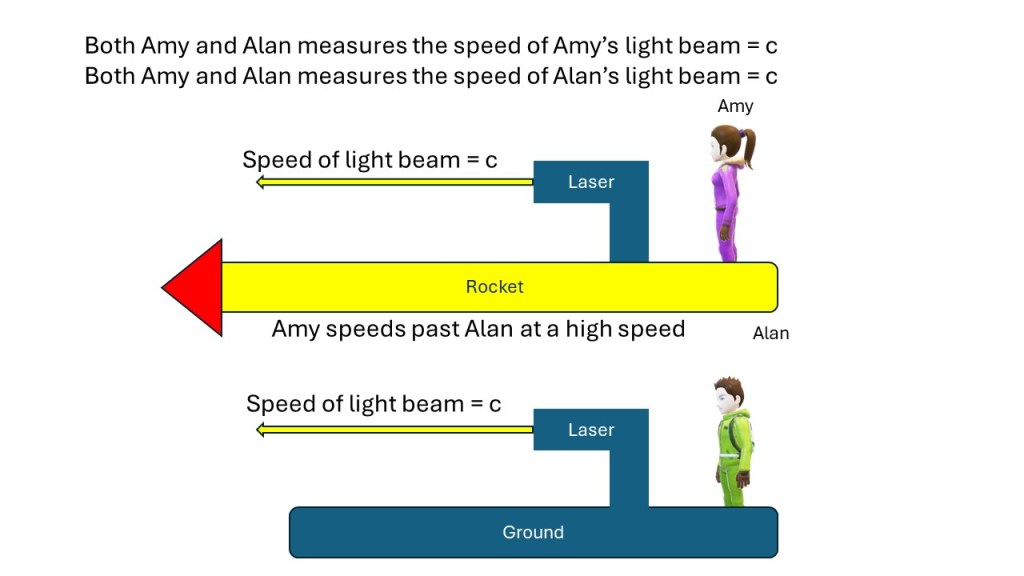
Outside of mathematics and logic nothing is ever the final truth, not in science, and not anywhere else. However, there are facts that have been so well confirmed and are so basic that there is no reason to doubt them. Earth is not flat like a pancake, and the sun is a star, are two examples of astronomical facts. Most dogs have four legs is another fact. The speed of light in vacuum is the same for all observers is a fact in physics that is surprising if you didn’t know it before. Scientific facts are verified by repeatable careful observation or measurement by experiments or other means. It is possible that we are all living in a virtual reality, like in the movie The Matrix, and that Earth is really flat like a pancake after all, because all of reality is a dream. However, for all practical purposes, it is not the case.

This blog, super facts, deal with facts that are surprising, strange, or disputed by non-experts, and yet true because they have been verified, for example, in the case of scientific facts, by repeatable careful observation. Anyone is free to object if you think I am wrong about a fact.

My next super fact is going to be “Evolution is a fact”. Evolution is also a scientific theory, but it means something different from when you say evolution is a fact. Moreover, a Scientific Theory is not a guess, as commonly but incorrectly assumed. I am bringing this up because many people who are typically unaware of the evidence behind a fact will use arguments such as “science does not know everything”, “it is just a theory”, etc., in efforts to dismiss a well-supported claim.

I should say that this post is inspired by a Facebook post by “The Credible Hulk”, a Facebook page managed by a group of anonymous scientists opposing misinformation around vaccines, global warming, evolution and GMOs. I did not save the post, but it went something like this:

One of the commentors said : “Calling evolution a “fact” defeats your argument. The Theory of Evolution is by definition a theory not a fact. It’s the currently agreed upon hypothesis but not a fact”

What the commentor did not realize is that “Theory” in the context of science does not mean what he thought it did. I am using past tense because he got “schooled”. To his credit he did not respond with insults and neither did the Credible Hulk, which does not seem to be standard on Facebook. However, his comment illustrates something that drives scientists like those who created “The Credible Hulk” nuts, and that is the widespread lack of understanding of the difference between a guess, a hypothesis, a scientific fact, theory as used in common language and used when talking about a scientific theory.

Rather than having this discussion over at my upcoming “Evolution is a fact” post, I am making a separate post about it. I consider “There are Scientific Facts” a super fact because it is true, and yet the confusion around it and what a Scientific Theory pertains is massive, and it is an important topic.

What is Science?

Science is the process of learning about the world through systematic observation and experimentation to gain knowledge about how things work. It involves observing phenomena, forming testable ideas (hypotheses), systematic studies, conducting experiments, and collecting evidence and facts that support or refute those ideas, ultimately leading to a deeper understanding of general truths and natural laws. If an idea/hypothesis correctly predicts and explains facts, it becomes a theory, which is something that is very different from a guess.

The process of making observations, formulating testable hypotheses, conducting experiments, analyzing data, and drawing conclusions to understand phenomena and solve problems is referred to as the scientific method, and there are different types of scientific methods. Some involve experiments, other involve analysis historical artifacts or existing data. Objectivity, reproducibility, falsifiability, and predictive power or problem solving are essential.

Banner research vector illustration concept with keywords and icons for Analysis, Data, Survey, Development, Fact, Knowledge, and Data Entry
Aspects of scientific research include analysis, data collection, sometimes surveys, development, establishing facts, creating knowledge, and data entry so that others can repeat it and verify results. Shutterstock Asset id: 1100776715 by Trueffelpix

What is a Scientific Theory?

When people hear the phrase “evolution is a theory,” many mistakenly assume it means evolution is just a guess or speculation. In science, however, a theory is far more than a guess. A scientific theory is an explanation of an aspect of the natural world that can be or that has been repeatedly tested and has corroborating evidence in accordance with the scientific method, using accepted protocols of observation, measurement, and evaluation of results. In other words, it is a well-tested, comprehensive explanation of natural phenomena, supported by an extensive body of evidence.

3D Isometric Flat Vector Conceptual Illustration of Scientific Method and Knowledge Acquiring. Icons organized in a circle, observation, question, hypothesis, experiment, conclusion, and result | There Are Scientific Facts
Conceptual Illustration of Scientific Method and Knowledge Acquiring. Notice, not all scientific methods necessarily include experiments. Some include surveys, or testing of ancient artifacts, etc. Shutterstock Asset id: 2139402875 by TarikVision

The evidence for evolution is both vast and compelling. It is not just the massive fossil record, it is in DNA, anatomy, there’s geographic evidence, and evidence from dozens of other scientific fields, not to mention that evolution is directly observable. There is a Theory of Evolution, that is the well supported explanation for evolution, or evolution by natural selection. There is also “Evolution is a fact” referring to, for example, the fact that we can directly observe it. It is true for all practical purposes, and that does not mean that evolution stops being a scientific theory as well as a fact.

Afterword

Even though science is constantly evolving and our knowledge is evolving and sometimes our understanding and scientific theories on a topic needs to be updated, scientific facts exist. Some scientific facts are extremely unlikely to change. For example, Jupiter has multiple moons, galaxies exist, global warming is real and is caused by us, and evolution is a fact. Before you decide to dismiss such a fact make sure you know what “theory” means in science, and most importantly educate yourself on the relevant evidence. There might be a whole lot more than you imagined, and you may discover that the evidence you thought was contrary is not evidence.

You often hear “science does not know everything”. That’s true. If science knew everything it would stop. However, the collective knowledge created by science is enormous and as individuals we know next to nothing. So be humble and learn from scientific evidence presented by reliable sources.


To see the other Super Facts click here

Superfluid Liquids are Like Magic

Super fact 60 : Superfluids such as liquid Helium cooled below -455.58 Fahrenheit exhibit some very strange characteristics such as it flows right through many solids, it climbs walls, it has near zero viscosity, it exhibits circulating flows that never stop despite no energy being added. It is a Macroscopic Quantum Phenomenon.

When gases are cooled far enough, they will turn into liquids and eventually typically to solids. For example, Oxygen becomes a liquid when its temperature drops to -297 Fahrenheit, which is -183 Celsius, or 90 degrees Kelvin. Kelvin is 0 at absolute zero, the coldest possible temperature, and in addition it uses Celsius for the scale. So, 90 degrees Kelvin is 90 degrees Celsius above absolute zero or 162 degrees Fahrenheit above absolute zero. When Oxygen becomes a liquid, it turns into a pale blue liquid. Oxygen becomes a solid at 54 Kelvin, or −218.8 Celsius, and −361.8 Fahrenheit (at normal pressure). It becomes sky blue ice.

Helium stays a gas until very extreme temperatures. Helium becomes a liquid at 4.2 kelvin or -269 Celsius, or -452.11 Fahrenheit. If the temperature is reduced further by almost half to 2.17 Kelvin, or -270.98 Celsius, or -455.8 Fahrenheit, then Helium suddenly becomes a superfluid, exhibiting macroscopic quantum phenomena. It is so different from normal liquid Helium that it is called Helium II. Its heat conductivity (speed of heat/cold transfer) suddenly increases by one million, and the temperature will become the same throughout the liquid instantly. Even a big pool of liquid helium would almost instantly get the same temperature throughout, and the atoms will start behaving in unison. Regular bubbles can no longer exist (atom sized electron bubbles can exist though).

The liquid starts behaving in bizarre ways. If you place an open metal container of Helium II in a closed room the Helium II would climb out of the container and escape, and a thin film of Helium II would climb the walls and the ceiling. If the floor was made of metal or glazed tile the Helium II would remain on the floor. If the floor was made of unglazed tile or stone, it would leak right through the floor as if the floor was a sieve. If you get a whirlpool or fountain going it will keep going forever without any energy loss. In addition, it would also exhibit many quantum effects that are out of scope for this post.

Superfluid Liquids are Like Magic
Unlike ordinary liquids, helium II will creep along surfaces in order to reach an equal level; after a short while, the levels in the two containers will equalize. The Rollin film also covers the interior of the larger container; if it were not sealed, the helium II would creep out and escape. From : Hampel, Clifford A. (1968). The Encyclopedia of the Chemical Elements. New York: Van Nostrand Reinhold. pp. 256–268 (referenced by Wikipedia). Design: Aarchiba; SVG rendering: Júlio Reis, CC BY-SA 3.0 <https://creativecommons.org/licenses/by-sa/3.0&gt;, via Wikimedia Commons

I consider this a super fact because this is a strange, surprising and not a well-known phenomenon. It is a quantum effect that you can observe with your own eyes. It is important because the discovery of superfluidity and its twin effect superconductivity are very important for science and might lead to revolutionizing energy transport in the future. It is no doubt that the phenomenon is real  (true), and it has been documented by numerous experiments and papers. It is described in thousands of textbooks, and I’ve observed the phenomenon with my own eyes (that is next).

Our Experiment with Superfluid Helium

During my first class in Quantum Physics, we performed experiments with liquid Helium. We started out by cooling helium using liquid nitrogen (colder than -196 Celsius or -321 Fahrenheit). Then using vacuum pumps, we kept cooling the Helium until it became liquid. We continued cooling it and we could see lots of bubbles and boiling as we kept going, and then it boiled extra much, and then very quickly the bubbles vanished, and the content of the entire glass container settled down and then stood perfectly still.

As 2.17 Kelvin was reached the viscosity (flow resistance) was instantly lowered with about one million times, and non-microscopic bubbles could no longer exist. The heat conductivity (the speed with which temperature spreads) increased by one million times. It means that the heat of a drop falling in one end of a swimming pool of Helium II would spread throughout the swimming pool in a second. Except, we only had a glass container in which sameness reigned throughout the liquid.

We continued doing experiments such as watching the Helium II climb walls inside the experimental setup, and of course the famous fountain. Insert a little metallic straw and watch a Helium fountain start to flow, by itself. Without any energy or pressure added, it just kept going by itself because no energy was lost either.

I can add that it was more of a demonstration than an experiment that we actively participated in because playing with extreme temperatures high or low is dangerous. If you’ve read this blog for a while you might remember when I put a Cesium-137 sample (800 times more radioactive than Plutonium-239) in my jeans pocket instead of back into its lead brick container and walked around with it a whole day. Or that time when I replaced a fuse for a 380 volt three phase powered laser with my finger because I was curious what would happen if I put my finger in there, and I was shocked, and it hurt. Students shouldn’t play with dangerous stuff.

Below is a one minute and forty four second YouTube video of a Superfluid / Helium II experiment showing an eternal fountain.


Below is a four minute explanation of a superfluid / Helium II experiment.


I can add that Helium II (super cold helium) is not the only superfluid but the easiest one to achieve.

Other Physics Related Superfacts

To see the other Super Facts click here

Electric Charge is not the only type of Fundamental Charge

Super fact 59 : Most people have heard of electrical charges, positive and negative. However, in nature there are also color charges—red, green, and blue—which are analogous to electric charges. In addition, there are anti-red, anti-green, and anti-blue charges.

Esther’s writing prompt: 10th September : Charge

Click here or here  to join in.

As you may know, atoms consist of particles. Electrons surround the nucleus of the atom. The nucleus of the atom is in the middle of the atom and it consists of protons and neutrons. Electrons have a negative charge. Protons have a positive charge. Neutrons do not have an electrical charge. Electrons are so called elementary particles. They are not composed of other particles. Protons and Neutrons, on the other hand, are not elementary particles. They are composite particles consisting of quarks, gluons and quark pairs called mesons.

The picture shows a Hydrogen atom consisting of one proton and one electron, one Carbon atom with six electrons, six protons and six neutrons, an Oxygen atom with eight electrons, eight protons and eight neutrons, and a Nitrogen atom with seven electrons, seven protons and seven neutrons | Electric Charge is not the only type of Fundamental Charge
Four elements with a nucleus and electron shells. The number of electrons, protons, and neutrons is shown. The green particles circling the nucleus are electrons. The red particles in the nucleus (middle) are protons and the blue particles in the nucleus are neutrons. The colors of the particles in this picture have nothing to do with color charges. The four elements are Hydrogen, Carbon, Oxygen, and Nitrogen. There are 118 elements. These elements can combine into millions of different kinds of molecules that make up everything. Asset id: 1555863596 by OSweetNature.

Quarks have electric charges, just like an electron and a positron, which is why a proton has an electric charge, a positive electric charge. However, in addition quarks have something called color charge. Unlike electric charges, which come in two forms, negative and positive, they come in three forms red, green and blue and in anti-red, anti-green, and anti-blue (well six forms actually). I should say that the color charges, red, green and blue, are not real colors. They are just names. Just electric charges are associated with electric forces; color charges are associated with the nuclear strong force. The strong force is even stronger than the electrical force.

If you take an equal amount of positive and negative electric charges you get something that is electrically neutral. If you take an equal amount of red, green and blue you get what is called white, or neutral. If you take an equal amount of red and anti-red you also get white. Any other mix gives you a net color charge.

vector illustration of up and down quarks in proton and neutron on white background. The proton (left) is a red and blue up quark and a green down quark. The neutron is a red and green down quark and a blue up-quark.
The proton and neutron each consist of three quarks. Protons consist of two up quarks and one down quark. Neutrons consist of two down quarks and one up quark. Both protons and neutrons have a net white charge. The yellow squiggly lines are gluons transporting color charge between the quarks. Asset id: 2333679305 by KRPD.

I can add that gluons are elementary particles that in many respects are like photons. Light consists of photons. It is because of the photons that we can see. In addition, the photons transport electrical charge. Photons are massless elementary particles with the intrinsic spin of one, and they belong to a group of elementary particles called Bosons. Gluons transport color charge, and they are massless and have an intrinsic spin of one and belong to the same group of elementary particles called Bosons. Unlike photons, they are stuck inside the nucleus and unlike photons they never get to see the light of day. The pun was intended.

Matter, light, and electrical charges are all part of our daily life. We can touch matter, see light, and we come across electrical charge when we touch something that is charged or when we see lightning. However, we do not come across quarks, gluons, and color charges in our daily life because they are hidden at the center of the atoms. Yet they are fundamental to the existence of matter, of us. We know color charges exist, the existence of color charges is an important fact, and yet it is not a well-known fact and often a big surprise to people. Therefore, I think it is a super fact.

The 118 Elements and the 3,500 Isotopes

There are 118 known elements. Why not 500, or just 4 or 5, like the ancient Greeks believed? Each element is defined by it having a certain number of protons and the same number of electrons if it is to be electrically neutral. The problem with having more than one proton in the nucleus is that protons all carry a positive charge and therefore want to push each other away. Same charges repel and different charges attract. What saves the nucleus from blowing apart are the neutrons and the associated strong nuclear force (protons & neutrons) which is guided by the color charges. The quantum model for electricity is called Quantum electrodynamics or QED. The quantum model for color charges is called Quantum chromodynamics or QCD.

As you add more protons it becomes increasingly more difficult for the nuclear forces (strong and weak) to hold the nucleus together. The positive charge of the protons is pushing too hard. That’s why there are only 118 Elements. Another thing to note is that the number of neutrons does not have to be the same as the number of protons. This means that for each element there are several kinds of so-called isotopes. For example, carbon has six protons and six electrons (if the atom is electrically neutral) but the carbon atom / element can have six neutrons, seven neutrons, or eight neutrons. You call them carbon-12, carbon-13, and carbon-14, where the number represents the number of protons plus the number of neutrons.

The picture shows a Carbon-12 isotope, a Carbon-13 isotope, and a Carbon-14 isotope | Electric Charge is not the only type of Fundamental Charge
Three natural isotopes of Carbon Stock Vector ID: 2063998442 by zizou7
Bohr model representation of the uranium atom, number 92 and symbol U. Conceptual vector illustration of uranium-238 isotope atom, mass number 238 and electron configuration 2, 8, 18, 32, 21, 9, 2.
This is a simplified Bohr model of the Uranium atom. There are 92 little blue balls circling a nucleus in the middle of the atom. Those are electrons. In the nucleus there are 92 protons. Those are the red balls with plus signs. In addition, there is a yellowish smudge around the protons in the nucleus. Those are the neutrons. Depending on the isotope, there are 143 neutrons for U-235, 146 neutrons for U-238 and 142 neutrons for U-234. Shutterstock asset id: 1999370450 by Patricia F. Carvalho

It is the electrons that determine the chemical properties of an element, and therefore isotopes with a different amount of neutrons are chemically identical. However, they are different with respect to properties that relate to he nucleus, such as radioactivity/stability, and of course weight. Also, when atoms combine into molecules their chemical properties change drastically, but again that is due to the rearrangement of the electrons. There are around 3,500 known isotopes, most of them radioactive.

What is a Quark?

To learn more about Protons, Neutrons, Quarks, Gluons, Color Charges, and Quantum Chromodynamics you can watch this 10 minute video below.

Other Physics Related Superfacts


To see the other Super Facts click here

The Bermuda Triangle the Big Non-Mystery

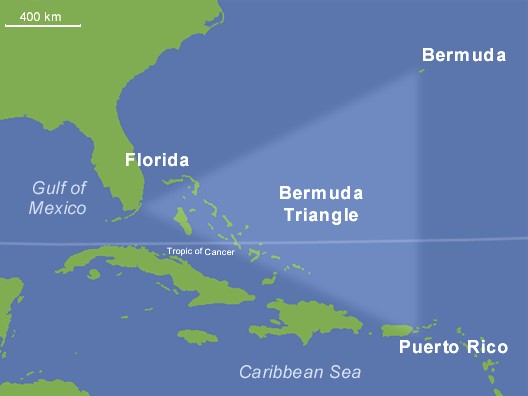
Super fact 56 : The Bermuda Triangle mystery is a myth. There is not a higher risk of disappearances in the Bermuda Triangle. To be specific, disappearances do not occur in the so-called Bermuda Triangle, or Devils Triangle, with any higher frequency than in other comparable regions of the ocean. The “mystery” of the Bermuda Triangle is largely a manufactured one, perpetuated by sensationalized accounts that often misrepresent the facts and downplay the role of natural hazards like storms.

The number of ships and aircraft reported missing in the Bermuda Triangle is not significantly greater, proportionally speaking, than in any other part of the ocean. The U.S. Coast Guard, along with NOAA, the U.S. Navy, Lloyds of London who pays out insurance for ships and aircraft lost/missing at sea, and other organizations do not recognize the Bermuda Triangle as a unique or mysterious geographic hazard. They emphasize that this is a highly traveled area where the losses are consistent with natural phenomena such as strong storms, the Gulf Stream, human error, and poor navigation, rather than any mysterious forces.

Considering all this, the number of disappearances and accidents is what you’d expect. The Bermuda Triangle isn’t any more mysterious than the Greenland square, the New Zeeland circle, or the Azores Octagon, that I just made up. I consider this a super fact because it is very likely true, and yet surprising to many people who are convinced that there really is a mystery. Furthermore, it is important because it is such a well-known myth.

The Bermuda triangle has one corner in Bermuda, one in Puerto Rico and one around Miami, Florida | The Bermuda Triangle the Big Non-Mystery
The Bermuda Triangle: It is approximately defined as a triangle Florida, Bermuda, and Puerto Rico. There is no exact definition. Alphaiosderivative work: -Majestic-, Public domain, via Wikimedia Commons.

Bermuda Triangle Mysteries

Just because the risk of disappearances of planes and ships is not higher in the Bermuda Triangle, does not mean that there aren’t mysterious disappearances and mysterious phenomenon occurring in the Bermuda Triangle. Some notable disappearances are USS Cyclops (1918), Flight 19 (1945), Star Tiger and Star Ariel (1948–1949), and the Witchcraft (1967). However, there are mysteries and mysterious phenomena occurring all around the world.

One of the mysterious phenomena occurring in the Bermuda Triangle is ocean swirls, and rogue waves, and methane burps might be another problem, but it is far from unique to the Bermuda triangle, and there are no magnetic anomalies in the Bermuda triangle as often alleged.

Ocean swirls frequently occur all over the world with some famous hotspots for ocean swirls by the coasts of Japan, Norway, Italy, Scotland, and Maine, USA. The ocean swirls in the Bermuda triangle might be due to movement of water between landmasses and/or the Gulf stream, but this is under investigation. There are no known giant or permanent ocean swirls in the Bermuda triangle.

A giant deep ocean swirl in the middle of the blue ocean.
Ocean swirl allegedly in the Bermuda Triangle Asset id: 1158148882 by PHOTO JUNCTION

As mentioned, another mysterious phenomenon is methane bubbling to the surface of the ocean. However, as can be seen in the maps in this National Geographic blog post the source of these methane burps of death aren’t typical to the Bermuda triangle. The methane hydrate field in the first map of the National Geographic blog post is mostly outside of the Bermuda triangle stretching from Cuba and up along the Florida coast. The second map, the world map, shows that these methane hydrate fields exist all around the world.

Our Honeymoon in Bermuda

Below are some old photos from our honeymoon in Bermuda in August of 1991.


To see the other Super Facts click here

The Enormous Kuiper belt

Super fact 55 : The enormous Kuiper belt.

The Kuiper Belt is a vast torus/donut shaped region of space beyond Neptune, filled with icy, rocky bodies, including dwarf planets like Pluto. It shares a lot of similarities with the Asteroid belt, but it is much larger, and further out. The Kuiper belt is 20 times wider than the Asteroid belt, 1,000 larger by volume, and 20 to 200 times more massive than the Asteroid belt. It extends from roughly 30 to 50 astronomical units (AU) from the Sun.

I can add that one Astronomical Unit (AU) is the distance from the sun to Earth.

In the middle of the picture is the sun and around it is Mercury, Venus, Earth and Mars. Then there is a grey circular band representing the asteroid belt. Further out is Jupiter, Saturn, Uranus, Neptune and Pluto and a large circular band representing the Kuiper belt | The Enormous Kuiper belt
I drew this illustration of the solar system and the Kuiper belt. It is not entirely to scale, and in reality, Mercury and Venus are not attached to the sun.

The Kuiper belt is like a giant Asteroid belt located further out, beyond Neptune. The Kuiper Object Pluto, formerly known as the Planet Pluto, is the most admired, the cutest and most beloved of all planets, and it was the first Kuiper object discovered in 1930. However, we did not know of the existence of the Kuiper belt at the time. The Kuiper belt was discovered in 1992 and predicted to possibly exist by Astronomer Gerard Kuiper in 1951. The discovery of the Kuiper belt was one of the reasons Pluto was demoted from its planet status in 2006. There are other dwarf planets in the Kuiper belt similar Pluto, including Makemake, Haumea, and Eris. However, there could be hundreds. Ceres is a dwarf planet located in the Asteroid belt. To read more about the Kuiper belt and verify the facts above, click here, or here, or here.

This picture features the photo of Pluto taken by NASA’s New Horizons spacecraft in 2015 plus some text. The text says : This is Pluto! In 2006, the International Astronomical Union declared that Pluto is no longer a planet. Despite that, it keeps revolving around the Sun the same way it has been doing for billions of years. Pluto doesn't care what others think about it! Be Like Pluto!
Pluto and its moon Charon from NASA/JHUAPL/SwRI. NASA / Johns Hopkins University Applied Physics Laboratory / Southwest Research Institute, Public domain, via Wikimedia Commons. NASA’s New Horizons spacecraft captured this high-resolution enhanced color view of Pluto in 2015.

I selected this to be a super fact because the existence of the Kuiper belt drastically changed our view of our Solar system, so it is important, we know it exists, so it is a true fact, and despite its enormous size the Kuiper belt is much less known than the Asteroid belt, and its existence often comes as a surprise to people.

The Kuiper Belt Resides in Darkness

You may wonder why the Kuiper belt was discovered so late whilst the Asteroid belt has been known since the beginning of the 19th century (Ceres 1801, Pallas 1802, Vesta 1807, etc.) The reason is that the Kuiper belt resides in darkness. The Asteroid belt is 2.2AU to 3.2AU from the sun whereas the Kuiper belt is between 30 to 50AU from the sun.

Let’s say you take an object that is 2.5AU from the sun and place it at a distance that is 40AU from the sun. Due to the spreading of the light the object will now receive 16 X 16 = 256 times less sunlight. This is called Geometric dilution. In addition, this light needs to be reflected back to earth for us to see the object, and once again the light will  spread resulting in 256 X 256 = 65,536 times less light reaching our telescopes. The Kuiper belt is huge, but it resides in darkness. Despite this fact, we have now discovered and catalogued more than 2,000 Kuiper belt objects. However, it is estimated that there are hundreds of thousands of Kuiper belt objects wider than 100 kilometers.

What is a Dwarf Planet?

A planet as well as dwarf planet is a celestial body that orbits the Sun and is nearly round due to its own gravity. Basically, it must be large enough to have compressed itself to a near spherical shape. To be classified as a planet and not a dwarf planet it must also have cleared its orbit of debris. So, a dwarf planet is therefore a celestial body that orbits the Sun, is nearly round due to its own gravity, but has not cleared the neighborhood around its orbit. Obviously, a planet in the Asteroid belt or the Kuiper belt is a dwarf planet. Just to make this complicated Astronomers have found giant exoplanets that have not cleared their orbit of debris . I wonder, are these exo-planets giant dwarf planets?

Oort Cloud

Astronomer and Author David Lee Summers (blog here) reminded me of the Oort cloud, which could be interesting to bring up in this context. The Oort Cloud is a vast spherical cloud of icy bodies, which is hypothesized to surround the solar system, extending from about 2,000 to 200,000 AU. It is thus thousands of times further out and wide than the Kuiper belt. I say hypothesized because the objects are so small, there’s really no direct observation of them and there’s some variation in numbers for its distance and extent, meaning it’s still not well defined yet. Still, its outer edge is believed to be the boundary between where the sun’s gravity dominates and the galaxy’s gravity dominates.

The Oort cloud is generally considered to be the outer edge of the solar system and believed to be the origin of most long period comets. The Oort cloud is thought to encompass two regions: a disc-shaped inner Oort cloud aligned with the solar ecliptic (also called its Hills cloud) and a spherical outer Oort cloud enclosing the entire Solar System.

The picture is of the Oort cloud with an inset picture of the Kuiper belt at the top. The inset picture is an enlargement of the dot in the middle corresponding to the Kuiper belt.
NASA This SVG image was created by Medium69.Cette image SVG a été créée par Medium69.Please credit this : William Crochot, Public domain, via Wikimedia Commons.

Other Astronomy Related Super Facts


To see the other Super Facts click here