The goal of this blog is to create a list of super facts. Important facts that are true with very high certainty and yet surprising, misunderstood, or disputed by many. This blog aims to be challenging, educational, and fun, without it being clickbait. I determine veracity using evidence, data from reputable sources and longstanding scientific consensus. Prepare to be challenged (I am). Intentionally seek the truth not confirmation of your belief.
Category: Super fact
This post is about a super-fact. The goal of this blog is to create a list of facts or insights that are important and not trivia, known to be true, and yet highly surprising, shocking, amazing, or widely disputed amongst the public but not disputed among the scientists or experts in the relevant fields. However, not all of my posts are super-facts. This category distinguishes posts that are super-facts.
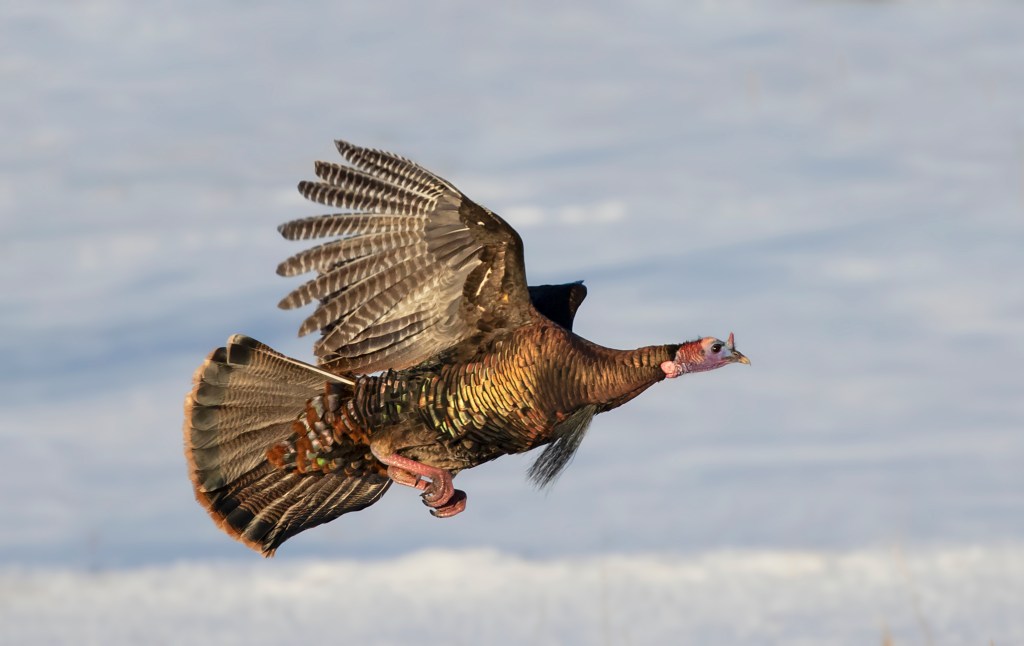
Superfact 20: Domesticated Turkeys and Wild Turkeys are the same species, but Wild Turkeys can fly.So yes, there are flying turkeys.
I think this is a super-fact, because the Turkey is a very important bird to Americans and at the same time a lot of people, including Americans, do not know that Turkeys are not flightless birds.
Domesticated turkeys are flightless but wild turkeys are not flightless. Wild turkeys can fly distances of more than a mile, sometimes at speeds of 55 miles per hour. I’ve seen it with my own eyes on turkey hunts. I’ve seen turkeys fly and glide across the sky at the height of 30-50 feet. I’ve seen them flap their wings and then take off.
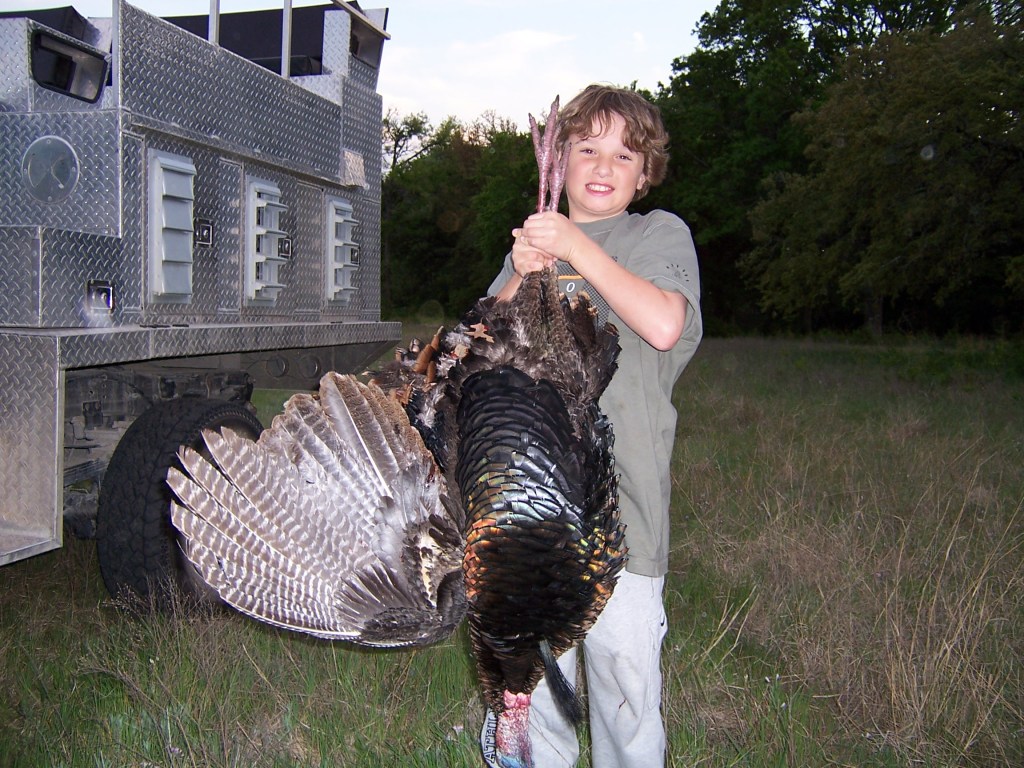
The turkey my oldest son shot when he was 11 years old.My son holding the turkey he shot.
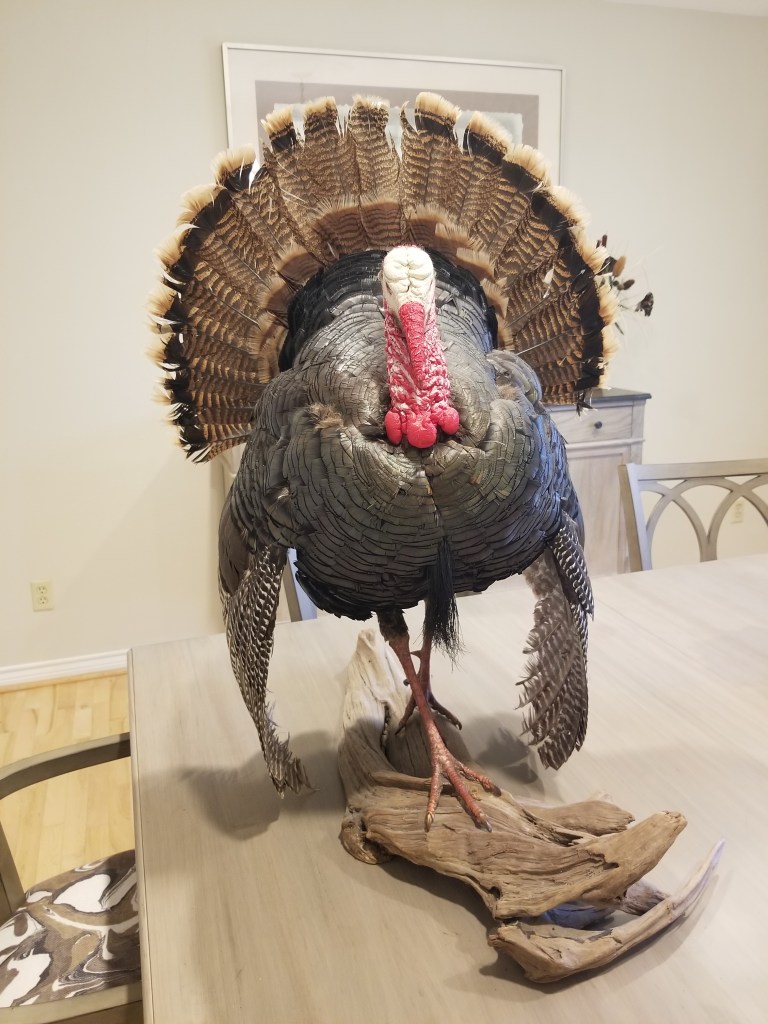
The photo above is a Tom, a male turkey, that my oldest son shot when he was 11 years old. Male turkeys are called Toms and females hens. We took it to a taxidermist for preservation and mounting. I should add that we typically ate the meat of everything we shot. Taking a wild turkey to the taxidermist makes eating the animal more complicated but you can typically ask for the breast meat of the turkey.
Personally, I think that legal hunting is a lot more humane than eating meat from animals from factory farms.
Eastern Wild Turkey Meleagris gallopavo flying over the snow in Ottawa, Canada Stock Photo ID: 1358163995 by Jim Cumming.
I should add that legal hunting is often encouraged for conservation and population management. For example, moose are hunted in Sweden (my native country) to manage their large population (400,000 moose), which can cause damage to forests and agriculture, as well as starvation among moose, if not managed. Illegal hunting, on the other hand, is something nefarious. Below is a video showing wild turkeys flying (video is about one minute long).
Superfact 19: An account impersonating you on Facebook does not mean you have been hacked. When someone using your name and photo starts sending friend requests to your friends on Facebook, they are most likely just copying your information. You have not been hacked.
I am considering this a super-fact because almost every time I see this the person being impersonated states “….I have been hacked”. Most likely they have not been hacked. They don’t need to change their password or take special precautions related to their account or password. It is not the problem.
Facebook is the world’s largest social network with over 3 billion users and few people understand this common Facebook problem, which is why I am calling it super-fact. All that happened is that someone downloaded their photo, copied some information, and started sending out friend requests to their friends. It is so easy to do that. Any 10-year-old can do it and there’s no hacking required. If you think about it for a minute, I am sure you all could do it.
However, it is not appropriate behavior and Facebook can delete your account and ban you if you resort to this behavior.
WP AI generated image
So, what can you do to reduce the chance of being impersonated? You can go to Settings & Privacy > Privacy Settings and set your profile to private by setting “Who can see your posts?” to friends only, but if you want visibility and don’t want to go that far you can set the “Who can see your friends list?” to “only me”. You can also set “Who can see posts you’re tagged in?” to “Friends” or “Only me”. You can “Limit Who can see your profile picture and cover photo?” to “Friends.”
Additional things you can do are regularly search your name on Facebook to check for fake profiles and avoid oversharing.
The actions above will greatly reduce the chance that someone will impersonate you but if it happens anyway, you can report the offender by going to the fake profile and click on the three dots (…) on their cover photo, select “Find support” or “report profile” and choose “Pretending to Be Someone” and follow the instructions to report the account. Encourage your friends to do the same.
Superfact 18: Accents are very difficult to lose. People may speak and understand a second language perfectly and still have a strong accent in that language assuming they did not learn the second language in childhood. This is a fact that is well known to the 20.6% of people in the US who are bilingual and to the 43% of people in the world who are bilingual. Yet many monolingual people are unaware of and surprised by this basic and important language fact.
I can’t lose my accent
On one occasion when I took my oldest son to the playground a guy doing the same started talking to me. Hearing my accent, he asked me where I was from (Sweden) and how long I had been here (10 years). Then the guy said, “I am surprised that after all these years you still have an accent”.
This is a sentiment I’ve come across many times here in the US, but not as often in Europe. Monolingual people are surprised to hear bilingual people’s accent. When I tell people about the reality of accents and that it is difficult to lose one without major speech therapy, they act very surprised. It is a basic and important language fact that is surprising to those who don’t know it. That’s why I think this counts as a super fact.
I have difficulty hearing my own accent, which is to be expected according to this article . However, my accent becomes obvious to me when I hear myself speaking on a recording such as when I was interviewed by NBC about the tornado that ravaged our neighborhood five years ago. At first, I was thinking “oh shoot my accent is so obvious and now the whole world knows”, then I was thinking it is no big deal. If you want to hear my accent, click on this link. It is NBC news and my interview is located at : 1 minute and 11 seconds.
Accents are very difficult to lose
What monolingual people typically do not know but practically all bilingual people do know, is that it’s difficult to lose an accent as an adult learning a new language. Children can do it but not adults, not without major speech therapy. This article states that the cut off age is around 12 years old.
According to a test I took, my vocabulary and understanding of English grammar at the time of the incident above was above the average for native English speakers, and it was just as easy for me to understand, speak, read and write English, as Swedish. Yet my accent was obvious.
It should not really come as a surprise to monolingual people, but it does. After all, if you think about it, famous foreign actors such as Arnold Schwarzenegger, Werner Herzog, Marion Cotillard, Stellan Skarsgård. etc., speak with an accent even after living in the US and/or working for Hollywood, several decades, and they are not faking it. I have several friends and relatives who speak with a strong foreign accent after living in the United States for 30, 40, 50, and 60 years. If they came as adults, they still have their accent.
Arnold Schwarzenegger a bilingual man Stock Photo ID: 2501506607 by Ralf Liebhold
As this article states, “accents are extremely difficult to lose because our infant brains codify a lifetime’s worth of sounds before we’ve spoken our first word”. As this article explains as we age our brains become more specialized in our native language sounds, making it harder to accurately perceive and produce new sounds from another language, a phenomenon often referred to as the “critical period hypothesis” in language acquisition; essentially, the window for easily acquiring perfect pronunciation closes during childhood.
Past childhood it is much harder to accurately perceive and produce new sounds from another language Stock Photo ID: 1818291203 by pathdoc
A few second language facts
The most popular second language in the world with respect to the number of non-native speakers (data taken from this site).
(1) English – 1,140 million non-native speakers
(2) Hindi – 264 million non-native speakers
(3) Chinese (Mandarin) – 199 million non-native speakers
(4) Urdu – 162 million non-native speakers
(5) French – 132 million non-native speakers
(6) Arabic – 109 million non-native speakers
(7) Russian – 107 million non-native speakers
(8) Spanish – 74 million non-native speakers
(9) Bengali – 43 million non-native speakers
(10) Portuguese – 28 million non-native speakers
The most popular second language in the world with respect to number of countries.
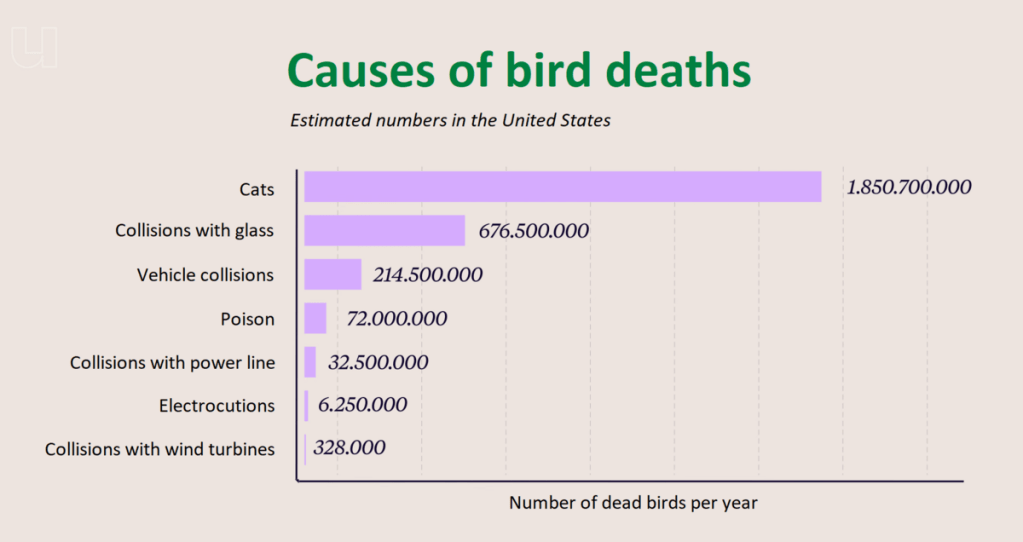
Superfact 17: Fossil fuels kill a lot more birds per gigawatt hour than wind power does. Cats, windows, cars, poison and powerlines are examples of things that kill a lot more birds than wind power does. Wind power killing birds is not the huge environmental problem it is often made out to be.
Wind power killing birds is often mentioned as a slam dunk environmentally based argument against wind power and evidence for the hypocrisy of environmentalists. This is misguided. Wind power killing birds is a real problem and it should be addressed, and it is being addressed. No energy source comes without environmental problems. However, wind turbines account for only a small fraction of overall bird deaths compared to other human causes. It is not a good argument against wind power, and it does not demonstrate any hypocrisy by environmentalists. In fact, a study made in 2012 (overview here) concluded that fossil fuels killed 24 million birds per year in the US, which correspond to 35 times more birds per GWh than wind power kills according to this study. Even though this study and other similar studies are estimates based on assumptions that are far from perfect, they are good indicators that replacing fossil fuels with wind power likely saves birds rather than kills them.
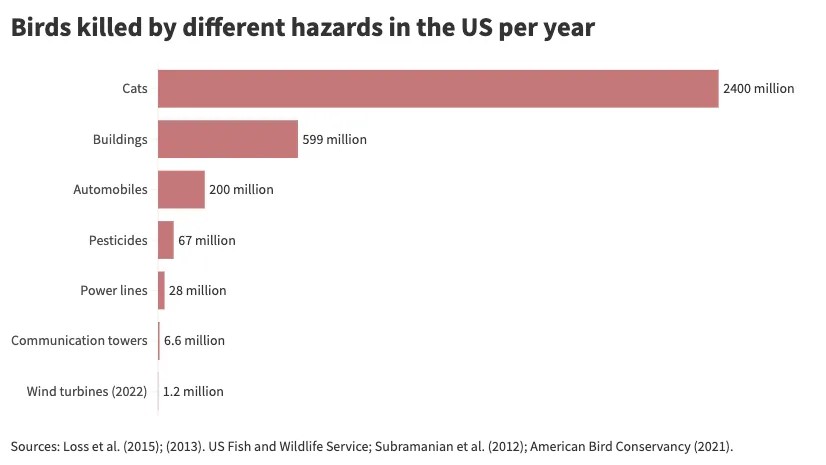
In any case, as this Wikipedia article states, collisions with wind turbines are a minor source of bird mortality compared to other human causes. According to the graph below cats kill 5,600 times more birds than wind power and collisions with powerlines kills 99 times more birds than wind power, and yet we rarely discuss these problems. Even though these numbers are estimates they are mostly confirmed by other studies and analysis, as this overview from MIT and this analysis by Hannah Richie shows. The numbers aren’t the same, but they make the same point. FYI Hannah Richie is the deputy editor and lead researcher at Our World in Data. Our World in Data is a scientific online publication that focuses on large global problems. They are associated with Oxford University and is one of the most respected statistics, analysis and research organizations in the world.
From Wikipedia: Universiteit van Nederland, CC BY 3.0 <https://creativecommons.org/licenses/by/3.0>, via Wikimedia CommonsAn alternative graph taken from Hannah Richie / Our World in Data, using alternative sources essentially showing the same thing. Sources: Loss et al. (2015), (2013), US Fish and Wildlife Service; Subramnayan et al. (2012), American Bird Conservancy (2021).
Wind power has been on the receiving end of false claims, nonsense, and strange rumors for quite some time. It is not the only energy source maligned by false information, but it is an interesting case study in misinformation regarding energy sources. To read about nonsense and rumors about wind power click here.
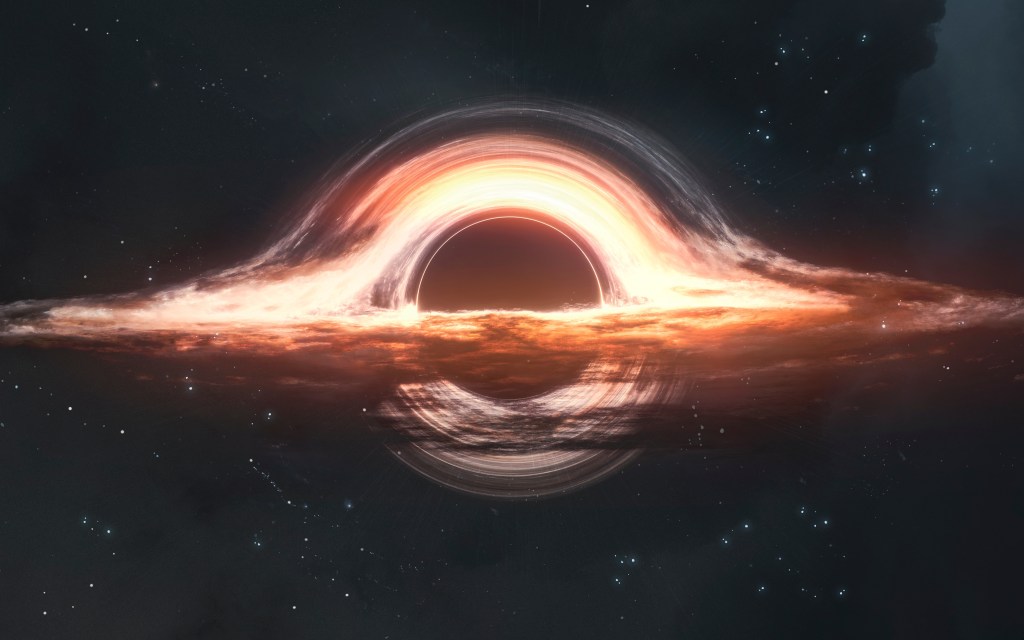
3D illustration of giant Black hole in deep space. High quality digital space art in 5K – realistic visualization. Stock Illustration ID: 2476711459 by Vadim Sadovski.
Superfact 15: A black hole is a region of spacetime wherein gravity is so strong that nothing can escape it, not light, not anything. There are different kinds of black holes. We don’t fully understand black holes, which makes them very interesting to science. The boundary of no escape is called the event horizon. Black holes are invisible. They are truly black. However, we can see what they do to their environment as they consume surrounding matter. Below are some bizarre facts about black holes.
Time runs much slower closer to a black hole.
An object falling towards a black hole will become redder, faint, then infrared, then invisible and all its movements and clocks will freeze.
From the perspective of an outside observer, time appears to stop for someone reaching the event horizon of a black hole. Time will continue for someone falling in.
At the center of a black hole may lie a gravitational singularity, a region where the spacetime curvature becomes infinite. However, since we cannot peer into a black hole we cannot know.
The largest known black hole (TON 618) is more than 287 million times more massive than the most massive known star (R136a1).
If our planet earth collapsed into a black hole, it’s diameter would be 1.75 centimeters or 0.69 inches in diameter. The diameter of the largest known black hole (TON 618) is 242 billion miles, which is more than one million times larger than the distance from the earth to moon.
There are supermassive black holes located at the center of most large galaxies, including our Milky Way. The Milky Way’s black hole is about 4 million times the mass of the Sun.
Astronomers estimate that there are around 100 million black holes in our Milky Way.
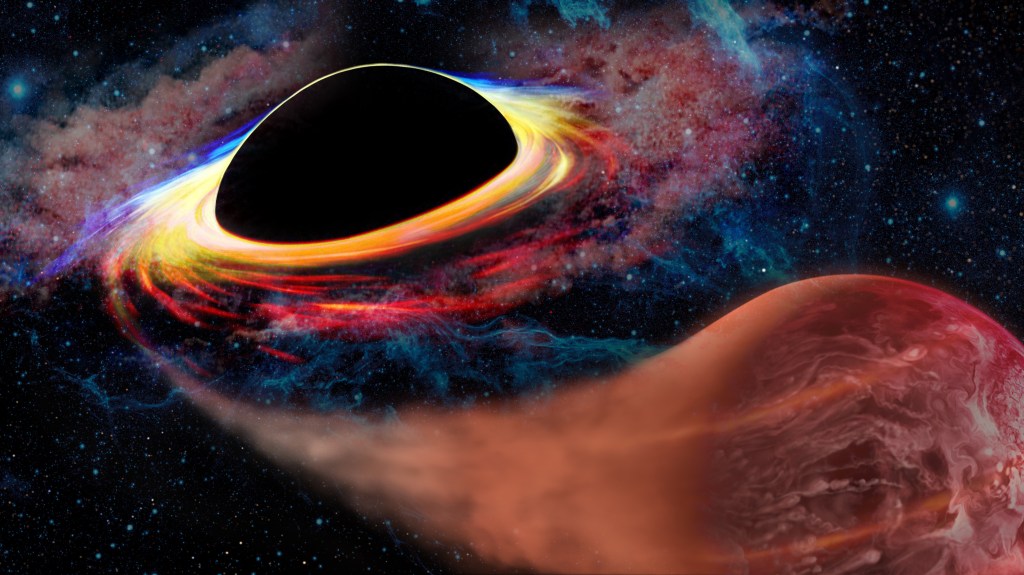
When an object (maybe a spaceship, or a person) approaches or falls into a black hole the difference between the gravity on the parts closer to the black hole and those further away will be so large that the object is stretched and ripped apart. This is called spaghettification.
Stretching from the event horizon and out another half radius of the black hole is a region called the photon sphere. In the photon sphere light will travel in a non-stable circular orbit around the black hole. Light will go around and around for a while. If you are in the photon sphere you might be able to see the back of your head.
Above is just a small sample of weird black hole facts.
The understanding of black holes requires the General Theory of Relativity, and it is still a lot we don’t understand about them. Stock Photo ID: 2024419973 by Elena11
The Bizarre Reality of Black Holes
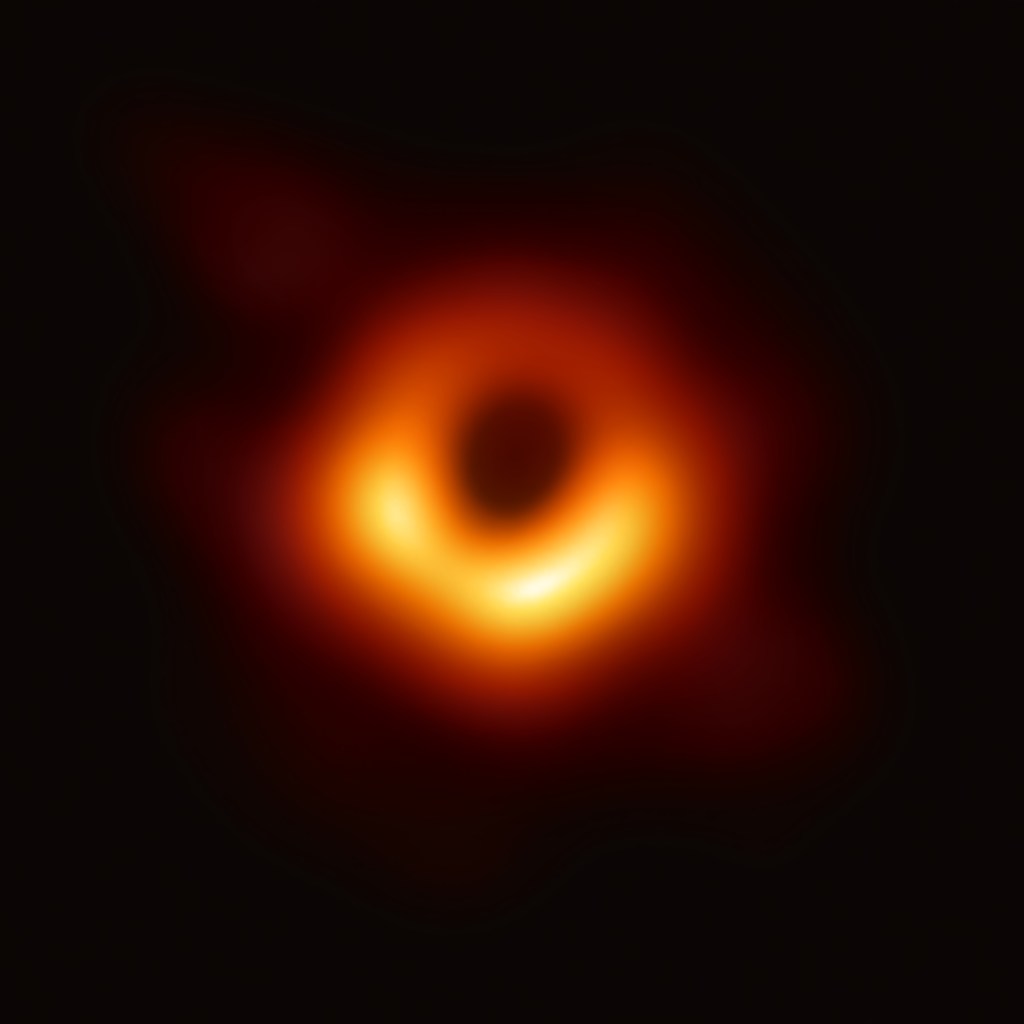
I chose the Bizarre Reality of Black Holes as a super-fact and included the ten facts above because these facts are shocking and yet not well known. Below is a photograph of a supermassive black hole at the center of the galaxy M87 taken by the event horizon telescope in 2017. To create the picture below image processing was needed. It is the first photograph of a black hole. This supermassive black hole is an estimated 6.5 billion times as massive as our sun, and 28 million times as massive as the largest known star.
The photo of the supermassive black hole at the center of the galaxy M87 taken by the event horizon telescope in 2017. Uploader cropped and converted TIF to JPG – This file has been extracted from another file, CC BY 4.0, https://commons.wikimedia.org/w/index.php?curid=77925953.
The fact that from the perspective of an outside observer, time appears to stop for someone reaching the event horizon of a black hole seems to prevent anything from falling into a black hole from an outside perspective. How does anything ever get inside the black hole if it freezes up at the event horizon? Black holes grow, they collide and merge, so clearly things can get inside, right? But how? As I tried to find the answer to this question, I found that I was far from the only one asking this question.
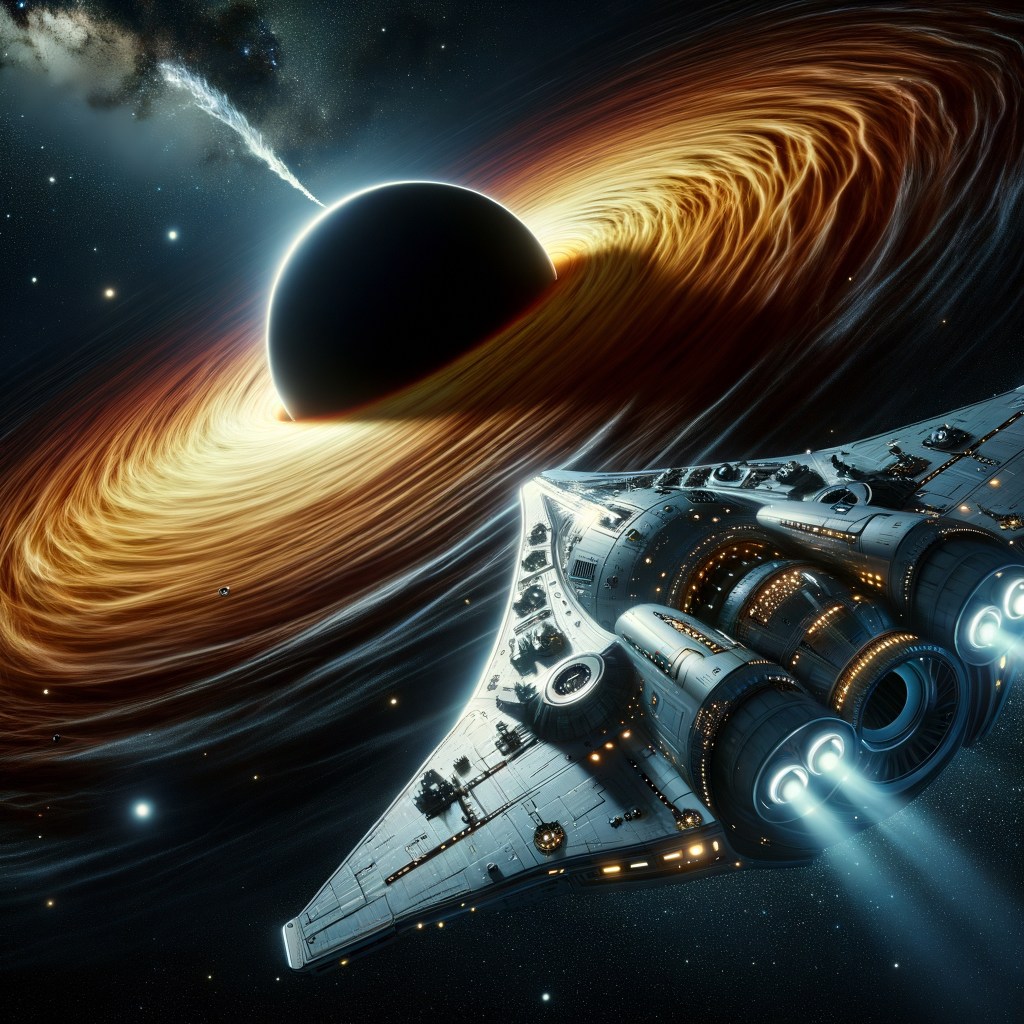
Realistic spaceship approaching a black hole. This content was generated by an Artificial Intelligence (AI) system. Stock AI-generated image ID: 2448481683 AI-generated image Contributor Shutterstock AI Generator.
I searched physics forums trying to find the answer to this question. There were a lot of discussions but no clear answers. Some said, nothing falls into a black hole. Everything accumulates on the event horizon from the outside perspective and that’s how the event horizon and the black hole grows. The observer crossing the horizon essentially jumps infinitely far into the future, or into a different universe, that’s how he can pass through the event horizon.
Others said that the black hole is not static, it grows, and it shrinks from Hawking radiation, and this complicates the equations so that objects can enter the black hole even from an outside perspective. I have a few physics books on black holes that I have not finished reading. If I learn something better, I will update this post.
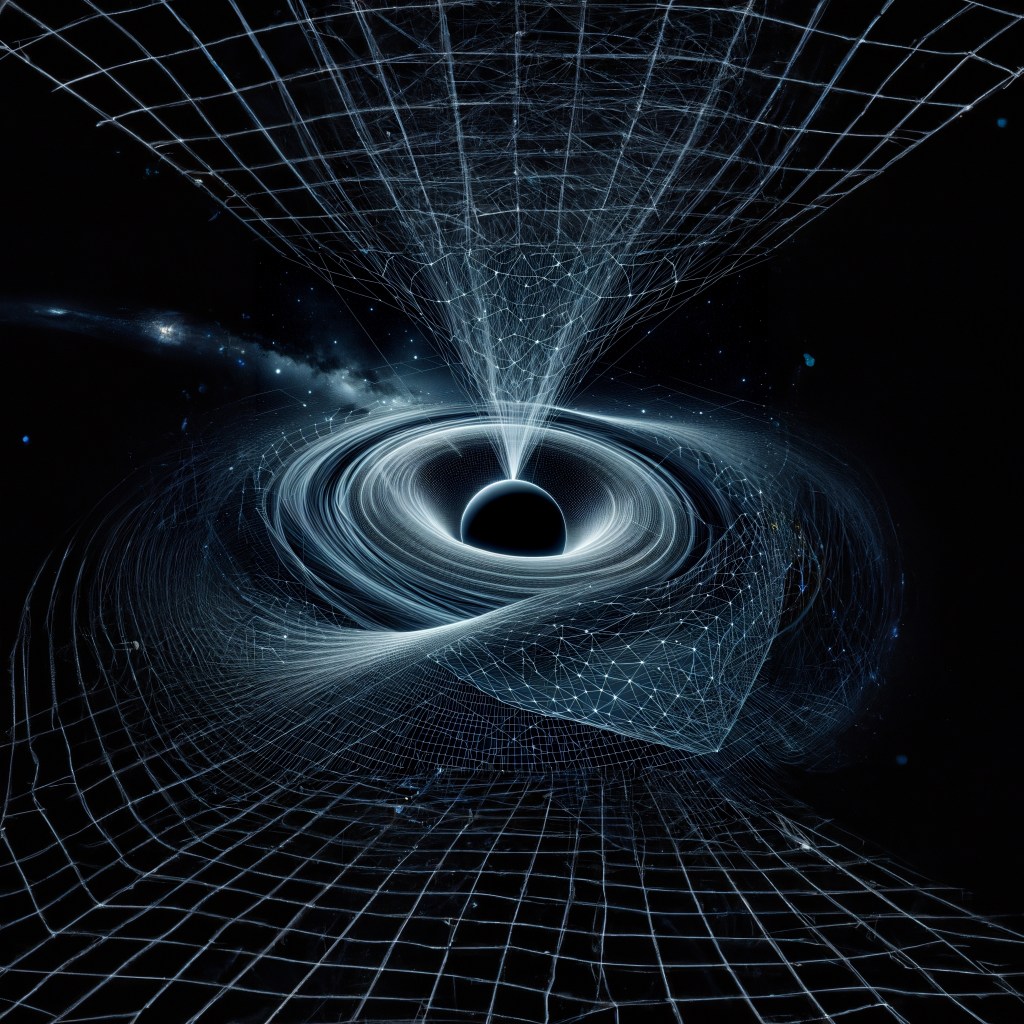
AI-generated image Description : Space Black Hole Blue Illustration Gravity Geometry Vast Line. Stock AI-generated image ID: 2457551367 by AI-generated image Contributor Shutterstock.AI
In the image above the grid demonstrates how a black hole is distorting space-time. Other strange facts about black holes are that they are slowly evaporating through what is called Hawking radiation.
They come in different sizes. The smallest known black hole (XTE J1650-500) has a diameter of approximately 15 miles. Perhaps scariest of all, black holes are nearly undetectable unless they are feeding on star dust or tugging on nearby stars. That means one hungry black hole could be zipping right through our solar system without us knowing. Considering there are an estimated 100 million black holes in our Milky Way space travel might be scary.
Addressing a Good Question
After posting this post I received a question via email regarding this fact “If our planet earth collapsed into a black hole, its diameter would be 1.75 centimeters or 0.69 inches in diameter. The diameter of the largest known black hole (TON 618) is 242 billion miles, which is more than one million times larger than the distance from the earth to moon.” The person who asked thought that 1.75 centimeters was pretty tiny and was wondering how a black hole could be that small.
To create a black hole, you need extremely strong gravity and one way to increase the force of gravity at the surface of a planet is to compress all its mass into a smaller volume.
If you compressed all of earth’s gravity so its diameter was only half of what it is, it would be more compact, and the gravity would be four times stronger at earth’s surface. If you compressed it further so that the earth’s diameter would only be a fourth of its original diameter the gravity at the surface would now be 16 times stronger. If you keep compressing the earth until its diameter is only 1.75 centimeters the force of gravity at the surface would be 132,000 trillion times greater than it currently is according to Newtonian physics, and you would get a black hole.
I should say that it comes out differently with General Relativity and that number is different for different sized black holes. However, this calculation is for demonstrative purposes. For relatively small masses like a planet, you would have to compress so much that it becomes tiny before gravity becomes large enough to make a black hole.







 Super Facts