How Our Planet Came to Life

I recently read a very interesting book on the history of our Planet Earth, Becoming Earth: How Our Planet Came to Life by Ferris Jabr. Life of various forms, microbes, fungi, plants, animals, etc., has had a large impact on climate, earth’s crust, the composition of the atmosphere, the oceans, and still do. This fact filled book is about this four and half billion history. Below is my review of the but first something about the book formats.

Becoming Earth Book Formats

Becoming Earth: How Our Planet Came to Life by Ferris Jabr comes in four formats. I bought the hardback format.

  • Hardcover –  Publisher : Random House (June 25, 2024), ISBN-10 : 0593133978, ISBN-13 : 978-0593133972, 304 pages, item weight : 2.31 pounds: ‎ 6.3 x 1.1 x 9.55 inches, it costs $16.68 on US Amazon. Click here to order it from Amazon.com.
  • Paperback –  Publisher : Random House Trade Paperbacks (April 1, 2025), ISBN-10 : 0593133994, ISBN-13 : 978-0593133996, 320 pages, item weight : 4.8 ounces, dimensions : ‎ 5.15 x 0.75 x 7.97 inches, it costs $ 13.57 on US Amazon. Click here to order it from Amazon.com.
  • Kindle –  Publisher : Random House (June 25, 2024), ASIN : B0CJTLBCDX, ISBN-13 : 978-0593133989, 423 pages, it costs $5.99 on US Amazon. Click here to order it from Amazon.com.
  • Audio–  Publisher : Random House Audio (June 25, 2024), Listening Length : 9 hours and 27 minutes, ASIN : B0CKM3P33F, it costs $0.99 on US Amazon with membership. Click here to order it from Amazon.com.
Front cover of Becoming Earth: How Our Planet Came to Life by Ferris Jabr.
Front cover of Becoming Earth: How Our Planet Came to Life by Ferris Jabr. Click on the image to go to the Amazon page for the hardcover version of the book.

Amazon’s Description of Becoming Earth

NEW YORK TIMES BESTSELLER • A vivid account of a major shift in how we understand Earth, from an exceptionally talented new voice. Earth is not simply an inanimate planet on which life evolved, but rather a planet that came to life.

“Glorious . . . full of achingly beautiful passages, mind-bending conceptual twists, and wonderful characters. Jabr reveals how Earth has been profoundly, miraculously shaped by life.”—Ed Yong, Pulitzer Prize winner and bestselling author of An Immense World

FINALIST FOR THE LOS ANGELES TIMES BOOK PRIZE • FINALIST FOR THE OREGON BOOK AWARD • AN AMERICAN LIBRARY ASSOCIATION NOTABLE BOOK OF THE YEAR

A BEST BOOK OF THE YEAR: Smithsonian, Chicago Public Library, Booklist, Scientific American, Nature

A BEST BOOK OF THE SUMMER: The Atlantic and NPR’s Science Friday

One of humanity’s oldest beliefs is that our world is alive. Though once ridiculed by some scientists, the idea of Earth as a vast interconnected living system has gained acceptance in recent decades. We, and all living things, are more than inhabitants of Earth—we are Earth, an outgrowth of its structure and an engine of its evolution. Life and its environment have coevolved for billions of years, transforming a lump of orbiting rock into a cosmic oasis—a planet that breathes, metabolizes, and regulates its climate.

Acclaimed science writer Ferris Jabr reveals a radical new vision of Earth where lush forests spew water, pollen, and bacteria to summon rain; giant animals engineer the very landscapes they roam; microbes chew rock to shape continents; and microscopic plankton, some as glittering as carved jewels, remake the air and sea.

Humans are one of the most extreme examples of life transforming Earth. Through fossil fuel consumption, agriculture, and pollution, we have altered more layers of the planet in less time than any other species, pushing Earth into a crisis. But we are also uniquely able to understand and protect the planet’s wondrous ecology and self-stabilizing processes. Jabr introduces us to a diverse cast of fascinating people who have devoted themselves to this vital work.

Becoming Earth is an exhilarating journey through the hidden workings of our planetary symphony—its players, its instruments, and the music of life that emerges—and an invitation to reexamine our place in it. How well we play our part will determine what kind of Earth our descendants inherit for millennia to come.

My five-star review for Becoming Earth

A Page Turner for People with a Curious Mind

This book gives us a brief overview of the natural history of Earth, emphasizing that not only is life impacted by geological forces, but life is influencing and even creating the composition of the atmosphere, impacting climate and even affecting geological forces. The author explains how microbes, plants, and animals transformed the planet. He is explaining how humans are transforming planet Earth and its climate through fossil fuel consumption, agriculture, and pollution. He is noting that we have altered more layers of the planet in less time than any other species, pushing Earth into a crisis. The author promotes the idea that Earth itself is a living organism (Gaia hypothesis). I am not sure if I entirely buy that idea, but he makes a good case for it.

The book covers a lot of history. Earth is four and half billion years old and a lot has happened. As a result, there are no deep dives into topics. However, the book is filled with hundreds of interesting facts and information, which makes the book a page turner to anyone with a curious mind. One major example of this is that about three billion years ago Cyanobacteria evolved a new type of photosynthesis that used sunlight, water, and carbon dioxide to create energy, while releasing oxygen as a waste product. This transformed the atmosphere and enabled complex life by allowing aerobic respiration to evolve. This invention turned the sky blue, gave us the protective ozone layer, but also caused climate change (snowball Earth) resulting in massive extinctions.

However, there is much more. Another example is that microbes helped transform Earth’s crust. During the first half billion years of Earth’s history, Earth was a water world save for volcanic islands. Trees communicate and assist each other via fungi (Mycorrhizas). Phytoplankton produces 50% of all oxygen, the invention of the Haber-Bosch process more than doubled the world’s crop harvest, there once was 30-60 million Bison roaming the plains, humans now emit 60 to 120 times more carbon dioxide each year than all the world’s volcanoes.

As I mentioned there are hundreds more interesting facts. He also presents a lot of facts and information regarding the destruction of the environment, which may not sit well with everyone. However, I think it is important information. The book includes a large number of references for further reading.

The book is well written and well organized and included fun personal anecdotes. It was easy and entertaining reading and like I said, it is a page turner to people with a curious mind. I loved this book and I highly recommend it.

Back cover of Becoming Earth: How Our Planet Came to Life by Ferris Jabr.
Back cover of Becoming Earth: How Our Planet Came to Life by Ferris Jabr. Click on the image to go to the Amazon page for the paperback version of the book.


To see the Super Facts click here

Oxygen Blue Sky and Complex Life Exist Because of a Bacteria

Super fact 72 : About three billion years ago Cyanobacteria evolved a new type of photosynthesis that used sunlight, water, and carbon dioxide to create energy, while releasing oxygen as a waste product. This transformed the atmosphere and enabled complex life by allowing aerobic respiration to evolve. This invention turned the sky blue, gave us the protective ozone layer, but also caused climate change resulting in massive extinctions.

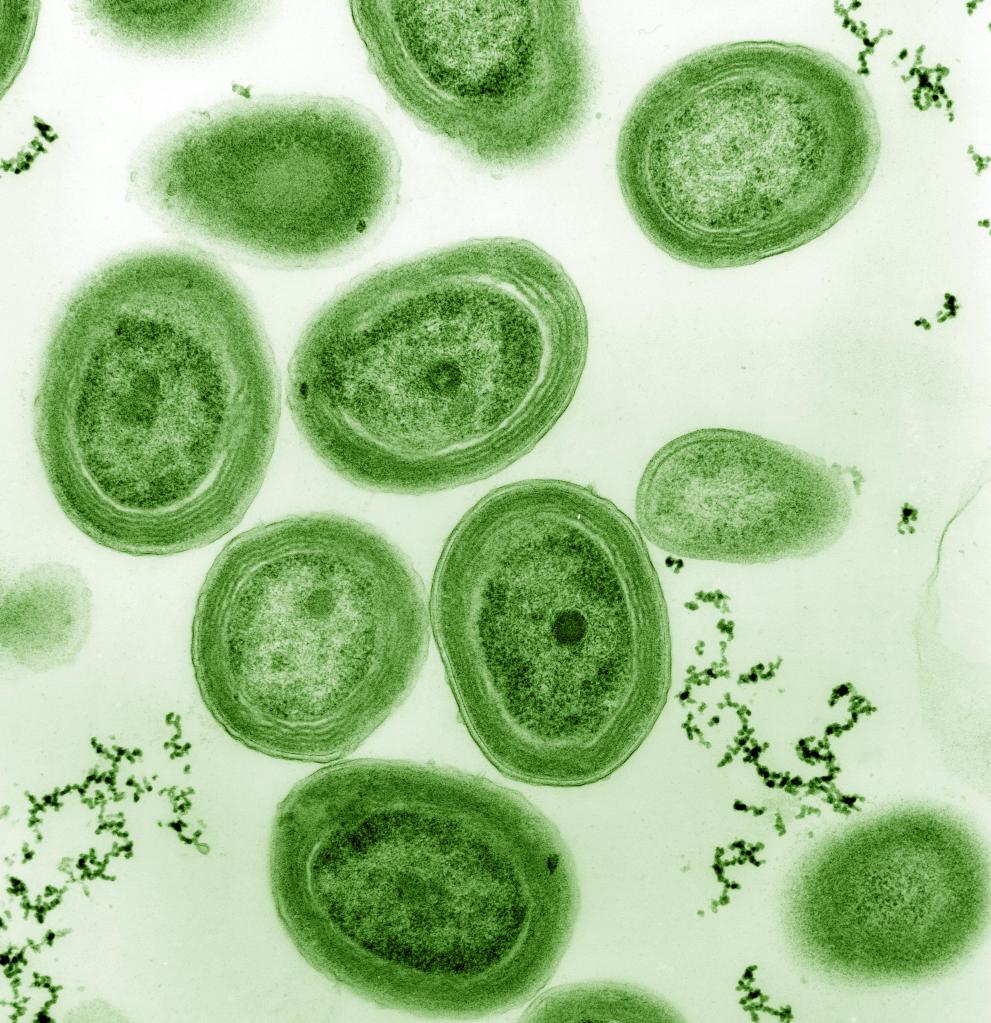
A microscopic photo of Cyanobacteria. They look like green blobs with small nucleuses. | Oxygen Blue Sky and Complex Life Exist Because of a Bacteria
An example of a Cyanobacteria. From Wikipedia. Luke Thompson from Chisholm Lab and Nikki Watson from Whitehead, MIT, CC0, via Wikimedia Commons

Cyanobacteria, also known as blue-green algae, are bacteria capable of oxygenic photosynthesis. Between 3.4 and 2.5 billion years ago they developed a new and very effective form of photosynthesis, which took advantage of highly abundant resources, using sunlight, water, and carbon dioxide turning it into sugar and releasing oxygen as byproduct. This is referred to as the Great Oxidation Event. You can read more about this event here, here, here, here, here, or in the book Becoming Earth by Ferris Jabr.

The atmosphere prior to the Great Oxidation Event was primarily composed of volcanic gases including nitrogen, carbon dioxide, water vapor, methane and ammonia, but almost no free oxygen. The Great Oxidation Event changed all this, but it likely took at least 200 million years.

Labeled educational bacteria internal structure scheme.
Cyanobacteria vector illustration. Biological blue green algae diagram with carboxysome, thylakoid and phycobilisome parts location inside cell. Asset id: 1687712761 by VectorMine

A Microbial Great Extinction and Snowball Earth

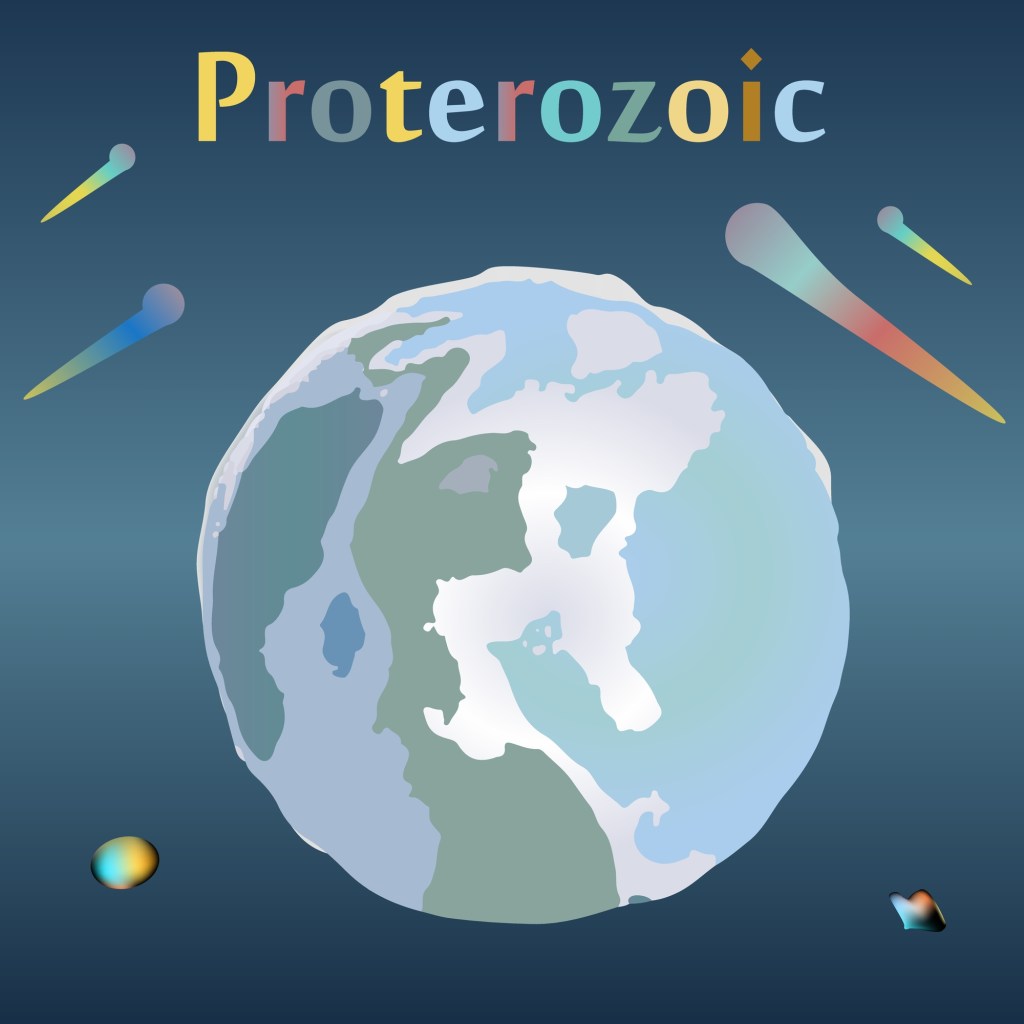
Oxygen was a toxic gas to many early microbes forcing them to adapt or perish. In addition, the change in the atmospheres composition changed the climate, resulting in a severe global cooling referred to as Snowball Earth. This caused a great extinction, perhaps the most severe extinction in Earth’s history. It is not included among the five mass extinction events in Earth’s history because it happened very early in Earth’s history when only primitive microbial life existed and fossil evidence from that time is nearly non-existent. The definition of a mass extinction event is that at least 75% of the world’s species are lost during a short period of time – geologically speaking. This period is not clearly defined but often defined to be two million years. It is very difficult to determine whether the great extinction following the Great Oxidation Event qualifies as a mass extinction event. To read about mass extinctions click here.

Ancient Earth almost entirely covered by ice and white snow. | Oxygen Blue Sky and Complex Life Exist Because of a Bacteria
Proterozoic era in the history of the Earth. Snowball earth. Global glaciation of the Earth. Asset id: 2010272753 by Elena Kelman

The Ozone Layer and the Blue Sky

Oxygen is also responsible for formation of the ozone layer in the atmosphere. The UV radiation from the sun split oxygen molecules, which consist of two oxygen atoms, into two separate atoms of oxygen, which then reacted with another oxygen molecule to generate ozone, and oxygen molecule consisting of three oxygen atoms. Ozone acts as a natural sunscreen to prevent harmful UV radiation from reaching the earth. Therefore, oxygen not only enables land dwelling complex multicell organisms to exist by allowing aerobic respiration to evolve, but also by protecting life from too much UV radiation.

As mentioned above, the atmosphere prior to the Great Oxidation Event was primarily composed of volcanic gases and almost no free oxygen. The color of the sky was likely orange, brown. As oxygen replaced the existing gases the sky slowly turned blue. Oxygen molecules along with Nitrogen molecules scatter blue light from the sun through a process called Rayleigh scattering, making the sky appear blue.

Cyanobacteria and The Great Oxygenation Event

It should be noted that there were other geological and biological processes that were responsible for this permanent shift in the Earth’s system, including changes in the composition of volcanic emissions and chemical reactions that allowed atmospheric hydrogen to escape to space, leaving behind an excess of oxygen molecules. However, whatever the exact mix of mechanisms, cyanobacteria were undoubtedly a critical source of accumulating oxygen. It is possible that tectonic activity altered the cycling and distribution of phosphorus and other nutrients essential for cyanobacteria. To read more see the book Becoming Earth by Ferris Jabr.


To see the other Super Facts click here

The Wild Mammal Biomass Has Substantially Declined

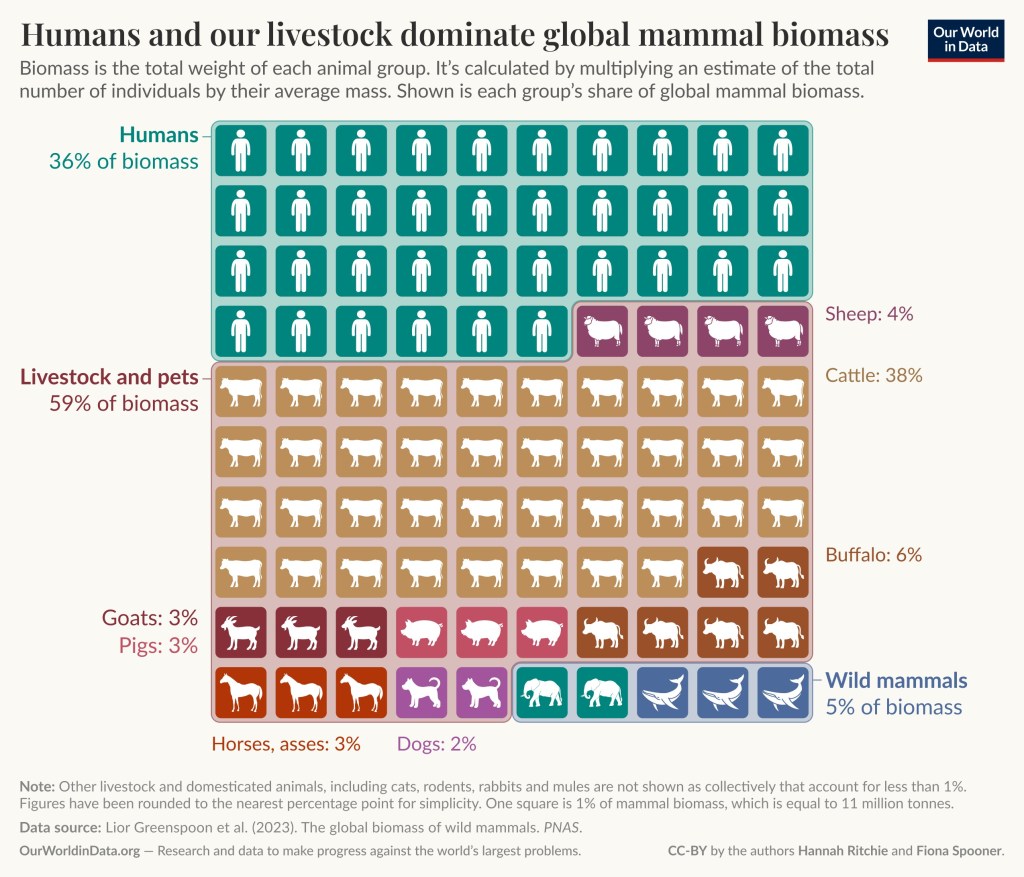
Super fact 70 : Wild mammals have declined by 85% since the rise of humans even as the total mammal biomass has nearly tripled. The result is that only 4-5% of the total biomass of mammals are wild animals. The rest are humans and livestock.

Pie chart shows that Livestock, mostly cattle and pigs, corresponds to 60% of the mammal biomass, humans are 36%, and wild mammals are 4%. | The Wild Mammal Biomass Has Substantially Declined
Livestock, mostly cattle and pigs, corresponds to 60% of the mammal biomass, humans are 36%, and wild mammals are 4%. The data is taken from this article.

As stated, mammal biomass has declined by 85% since the rise of humans. This is despite a threefold increase in mammal biomass over the last 200 years. However, this increase is almost entirely due to the growth of human and livestock populations. The result is that only 4-5% of the total biomass of mammals are wild animals. Another result is that Earth’s wild land mammals now make up just 2% of the mammal kingdom. You can read more here, or here, or here, and more in depth here.

Humans are 36% of the mammal biomass, Sheep is 4%, Livestock and pets 59%, including 2% dogs, 3% pigs, goats 3%, cattle 38%, and buffalo 6%
Humans and our livestock dominate global mammal biomass. Biomass is the total weight of each animal group. It’s calculated by multiplying an estimate of the total number of individuals by their average mass. Shown is each group’s share of global mammal biomass. This graph is taken from Our World In Data.

I think this is a super fact because we know it is true, and this huge and extremely rapid change of Earth’s fauna (from a geological timescale) is certainly important, and yet I think it comes as a surprise to many people. I often see the argument that humans have been great for animals because there are many more of them and the mammal biomass has tripled. That argument leaves out the part about the increase in mammal biomass coming from domesticated animals while wild animals have been disappearing. One question that comes to mind is whether life at the cramped factory farm is better than the life as a wild animal.

Wild Mammal Biomass Data

Below are a couple of graphs displaying some additional information on wild mammal biomass.

The graph shows that even hoofed mammals is a big group consisting of 49% of the wild mammal biomass. Rodents are 16% and elephants are 8%, bats are 7%, Marsupials are 7%, and primates are 4%, carnivores 3%, rabbits 1%, and other mammals 4%.
The distribution of the world’s wild land mammal biomass. The graph is taken from Our World in Data.

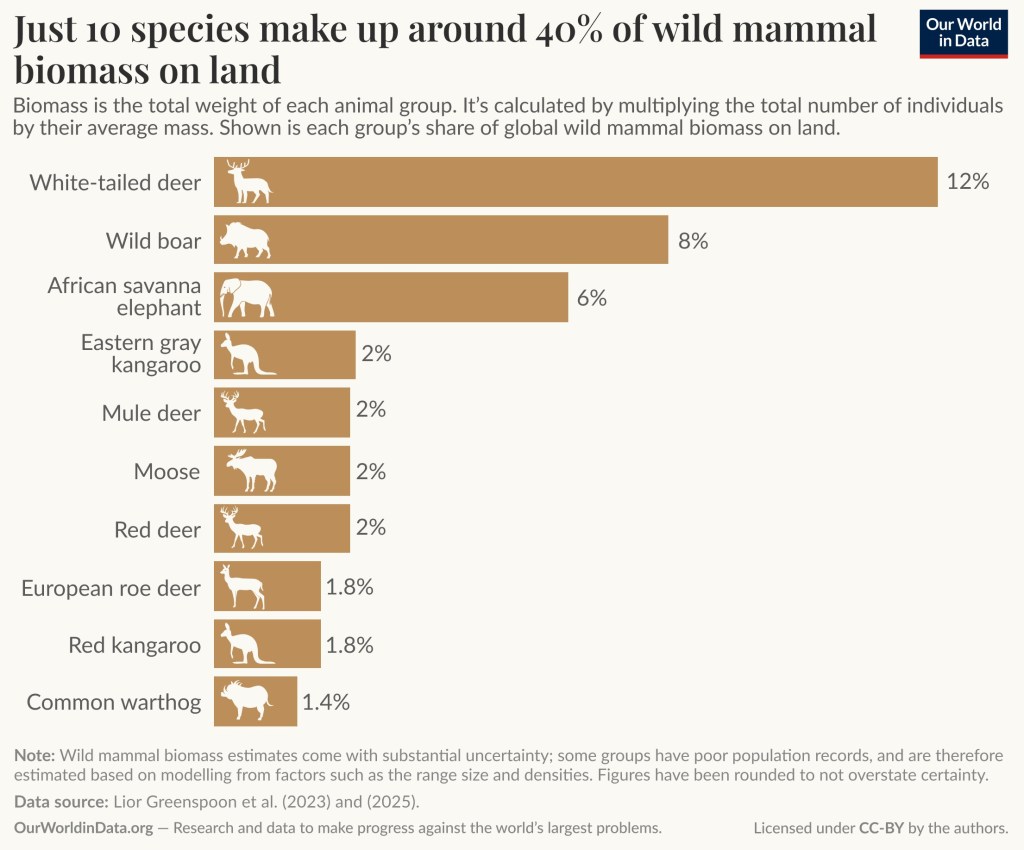
Another thing to note is that the wild animal biomass is very concentrated to just a few species. Considering that there are between 6,500 and 6,800 recognized mammal species in the world, it is quite remarkable that only 10 species make up 40% of the mammal biomass.

White-tailed deer is 12%, Wild boar is 8%, African Savanna Elephant is 6%, Eastern gray kangaroo is 2%, Mule deer is 2%, Moose is 2%, Red Deer is 2%, European roe deer is 1.8%, Red Kangaroo is 1.8%, and the Common Warthog is 1.4%.| The Wild Mammal Biomass Has Substantially Declined
Just 10 species make up around 40% of wild mammal biomass on land. The graph is taken from Our World in Data.

Reasons for Decline of Wild Animal Biomass

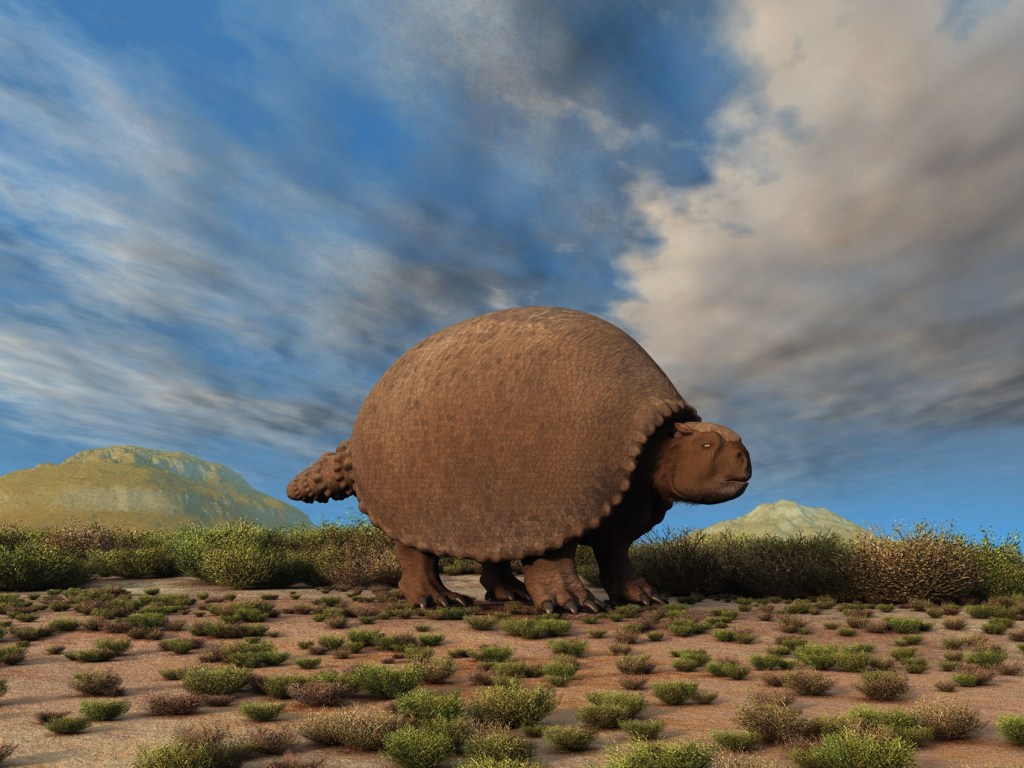
This decline of wild mammal biomass is primarily caused by human activity, including hunting, habitat loss and degradation from agriculture and urbanization, climate change, and pollution. This human-driven extinction event is the result of a rapidly growing human population and its increased consumption of natural resources, leading to widespread disruption of ecosystems and dramatic declines in wild mammal populations. It should be mentioned that the extinction of large mammals such as mammoths, American mastodon, giant ground sloths and glyptodonts was likely aided by human hunting in prehistoric times. The largest mammals have always been at the greatest risk for extinction and that is still true today.

A stunning AI generated illustration of a woolly mammoth standing on a snowy landscape during a vibrant sunset with northern lights in the sky.
Woolly mammoth, now extinct, Asset id: 2571557381 by Wirestock Creators.
A Glyptodon walking across an empty prairie. | The Wild Mammal Biomass Has Substantially Declined
3D illustration of a Glyptodon, also extinct, Asset id: 495169627


To see the other Super Facts click here

Threats To Coral Reefs What Can Be Done

I am not a super fact hunter today. This post is about an interesting book that I recently finished reading, “Life on the Rocks: Building a Future for Coral Reefs by Juli Berwald”, a prominent marine biologist based in Austin, Texas. Coral Reefs are underappreciated. They are extremely important to the ocean’s ecosystems. A fourth of all marine species depend on the reef at some point in their life. Coral reefs are also very important to us humans for a variety of reasons.

Unfortunately, today’s coral reefs are assaulted by a host of environmental stresses. The largest is climate change, or if you call it global warming, which is warming marine ecosystems even faster than those on land. 75% of the reef building corals in the world have already been damaged by high seawater temperatures. This book is about corals, what they are, how they live and evolve, their DNA, and what is being done to save the coral reefs. The book is heavy on the science at the same time as it is not tough reading. She is a great author as well as scientist.

Life on the Rocks Book Formats

Life on the Rocks: Building a Future for Coral Reefs by Juli Berwald comes in four formats. I bought the hardback format.

  • Hardcover –  Riverhead Books (April 5, 2022), ISBN-10 : 0593087305, ISBN-13 : 978-0593087305, 352 pages, item weight : 1.25 pounds, dimensions : ‎ 6.31 x 1.11 x 9.26 inches, it costs $ 3.98 on US Amazon. Click here to order it from Amazon.com.
  • Paperback –  Publisher : Riverhead Books (April 4, 2023), ISBN-10 : 0593087313, ISBN-13 : 978-0593087312, 352 pages, item weight : 9.2 ounces, dimensions : ‎ 5.19 x 0.91 x 7.93 inches, it costs $ 15.44 on US Amazon. Click here to order it from Amazon.com.
  • Kindle –  Publisher : Riverhead Books (April 5, 2022), ASIN : B098PWTYLL, ISBN-13 : 978-0593087329, 348 pages, it costs $9.99 on US Amazon. Click here to order it from Amazon.com.
  • Audio–  Publisher : Penguin Audio (April 05, 2022), Listening Length : 10 hours and 52 minutes, ASIN : B09B83BHH1, it costs $ 15.75 on US Amazon. Click here to order it from Amazon.com.
Front cover of hardback format of the book Life on the Rocks: Building a Future for Coral Reefs by Juli Berwald | Threats To Coral Reefs What Can Be Done
Front cover of hardback format of the book Life on the Rocks: Building a Future for Coral Reefs by Juli Berwald. Click on the image to go to the Amazon page for the hardcover version of the book.

Amazon’s Description of Life on the Rocks

FINALIST FOR THE L.A. TIMES BOOK PRIZE

NAMED A BEST BOOK OF THE YEAR BY THE NEW YORKER AND BOOKLIST

The story of the urgent fight to save coral reefs, and why it matters to us all

Coral reefs are a microcosm of our planet: extraordinarily diverse, deeply interconnected, and full of wonders. When they’re thriving, these fairy gardens hidden beneath the ocean’s surface burst with color and life. They sustain bountiful ecosystems and protect vulnerable coasts. Corals themselves are evolutionary marvels that build elaborate limestone formations from their collective skeletons, broker symbiotic relationships with algae, and manufacture their own fluorescent sunblock. But corals across the planet are in the middle of an unprecedented die-off, beset by warming oceans, pollution, damage by humans, and a devastating pandemic.

Juli Berwald fell in love with coral reefs as a marine biology student, entranced by their beauty and complexity. Alarmed by their peril, she traveled the world to discover how to prevent their loss. She met scientists and activists operating in emergency mode, doing everything they can think of to prevent coral reefs from disappearing forever. She was so amazed by the ingenuity of these last-ditch efforts that she joined in rescue missions, unexpected partnerships, and risky experiments, and helped rebuild reefs with rebar and zip ties.

Life on the Rocks is an inspiring, lucid, meditative ode to the reefs and the undaunted scientists working to save them against almost impossible odds. As she also attempts to help her daughter in her struggle with mental illness, Berwald explores what it means to keep fighting a battle whose outcome is uncertain. She contemplates the inevitable grief of climate change and the beauty of small victories.

My five-star review for Life on the Rocks

Interesting Science an Important Message and the Beauty of Corals

Coral reefs are incredibly important to the ocean and its ecosystems. A fourth of all marine species depend on the reef at some point in their life. Coral reefs are also very important to us humans for a variety of reasons. However, today’s coral reefs are assaulted by a host of environmental stresses. The largest is climate change, or if you call it global warming, which is warming marine ecosystems even faster than those on land. 75% of the reef building corals in the world have already been damaged by high seawater temperatures.

Our burning of fossil fuels also causes ocean acidification. The effects of ocean acidification have not yet damaged corals but will in the future. Add to that, hurricanes (getting worse due to climate change), diseases (SCTLD), pollution, fertilizer and sewage runoff, wild harvesting of corals for export, loss of urchins, illegal fishing, such as using explosives to catch fish (blast fishing), and cyanide. In 2009 70% of all fish in fish markets had telltale scars from explosions and in 2016 more than half the fish in aquarium shops tested positive for cyanide poisoning. The explosives and the cyanide destroy coral reefs. We know what’s causing the loss of coral reefs, but we also know how to solve these things: stop burning fossil fuels, manage fishing, prioritize sanitation, and control pollution.

This book will teach you about corals, that they are marine animal related to jellyfish and sea anemones, consisting of hundreds to thousands of tiny individual polyps that form colonies. That they are in a symbiotic relationship with photosynthetic algae called zooxanthellae. That the algae power the coral by making sugar and the coral provides the supplies the alga needs to make that power. They are 160 million years old.

You will learn about the history of the oceans pH level (acidity). different species, coral bleaching, hybridization and reticulated evolution. You will learn about the threats to corals and the efforts to save the coral reefs. The author is a distinguished scientist who does a lot of research and scuba diving. She takes you on an underwater (and above water) journey around the world, Florida, Sulawesi, Bali, Dominican Republic, and Australia, like Jacques Costeau used to do.

The efforts to save the corals include coral restoration, which is very difficult and expensive, coral farming, marine protected areas, aquarium hobbyists growing corals, cryobiology/ cryogenics, which is a futuristic technology involving freezing and later restoring corals in a better future. It should be noted that as warming events and coral bleaching events kill corals the ones that survive are better equipped to survive future warming. This is not so much adaptation as evolution by natural selection. Even though this can give you hope, one should remember that the current warming is very fast and even if evolution might save some corals, it changes the composition of coral species.

However, scientists have sequenced coral DNA and are trying to identify the genes that help some corals to survive warming events better than other corals. This could lead to assisted evolution. The author also addresses geoengineering techniques to slow down climate change such as marine cloud brightening, and she discusses the tragedy of the commons.

This book is full of facts and interesting science. However, it is not a difficult read. In addition, she makes it more colorful and personal by discussing her personal opinions on issues, her daughter’s mental illness caused by a lingering strep throat infection, her experiences with covid-19, and as mentioned, this book is organized as a journey around the world. I should mention that I felt that some of her personal opinions and personal stories may have been distractions, especially when I could not agree with what she said. But I thought that was a minor issue. She is a great author who knows how to keep an audience captivated despite all the science. She lists 292 references. It is a very well-written and interesting science book about corals. I learned a lot from reading this book. I highly recommend this book.

Advance Praise for Life on the Rocks and another book by the author called Spine Less, plus more colorful corals | Back cover of hardback format of the book Life on the Rocks: Building a Future for Coral Reefs by Juli Berwald.
Back cover of hardback format of the book Life on the Rocks: Building a Future for Coral Reefs by Juli Berwald. Click on the image to go to the Amazon page for the paperback version of the book.

Posts Related to Climate Change

Note: I have updated my previous super fact post Time is a fourth dimension. Now it is much clearer.


To see the Super Facts click here

Climate change worsens wildfires in the US

Super fact 52 : Climate change, including increased heat, extended drought, and a thirsty atmosphere, has been a key driver in increasing the risk and extent of wildfires in the United States, particularly the western United States during the last two decades. The number of Wildfire acres burned in the United States has significantly increased even though the number of wildfires has not. Another important factor is forest management.

The graph consists of blue bars corresponding to a year starting in 1983 with the last bar being 2020. The bars show the number of million acres burned per year in the US. In 1983 and 1984 the bars show between 1 and 2 million acres burned. The following three years more than 2 million acres were burned. From 2015 to 2020 the number of acres burned annually is between 5 and 10 million acres | Climate change worsens wildfires in the US
Wildfire acres burned in the United States. Number of acres of wildfire burned in a given year in the United States. This is shown from 1983 onwards, when consistent reporting began. Data source : National Interagency Fire Center (NIFC). Presented by OurWorldinData/natural disasters.

To some people this does not come as a surprise. However, due to the complexity of the issue combined with political spin, this is a surprise to me, or even something they refuse to believe. I’ve come across many people who are surprised to hear that there really is a connection between climate change and wildfires in regions of the world which are getting dryer and hotter due to climate change. There are also others who are surprised to hear about the complex picture and the importance of good forest management. In any case, since it is a surprising fact to many, and an important fact, I consider it a super fact.

As super fact 52 above states, Climate change is a key driver in the worsening of wildfires in the US, particularly in the American West. A 2016 study published in PNAS found that human-caused climate change caused over half of the documented increases in fuel aridity since the 1970s and doubled the cumulative forest fire area since 1984. I can add that we know that Climate Change, or if you call it Global Warming, is Happening and is Caused by us, primarily due to our burning of fossil fuels. I can also add that Scientists Agree that Global Warming is happening and that we are the Cause.

Wildfires and the Complex Statistical Picture

In general, you can’t look at wildfire statistics and draw conclusions without considering the context. Below are some considerations.

  • Wildfires are not started by climate change or poor forest management. They are started by lighting, falling powerlines, campfires that are not properly put out, and sometimes by arson. That doesn’t mean that climate change and poor forest management does not increase the risk and extent of wildfires.
  • Research organizations such as NOAA recognize that wildfire is a natural part of the western US ecosystem. However, climate change is significantly exacerbating the problem by creating conditions more conducive to intense and widespread wildfires.
  • Suppression of fire in certain ecosystems may in fact increase the likelihood that a wildfire will occur.
  • There are wildfires started intentionally to prevent future wildfires.
  • In the past, forests evolved with frequent, low-intensity fires that helped clear out underbrush. They can have ecological benefits. Therefore, the number of wildfires may not have increased over the last 100 years.
  • Local conditions and forest management have evolved through time complicating the wildfire statistics around the world.
  • In the past reporting was not always consistent.

That does not mean that we don’t know whether climate change worsens wildfires or not. Research organizations such as NASA, NOAA, NOAA (again), NOAA on LA fires , Ohio University, are all in agreement on the fact that Climate change has been a key driver in increasing the risk and extent of wildfires in the United States. Other organizations such as AccuWeather, Texas 2036, the Nature Conservancy, IFAW, American Progress, and the New York Times concurs.

The photo shows tree trunks on fire and professional firefighters extinguishing a large, high-priority part of a forest fire.
Highly skilled hotshot firemen crew working in a challenging remote area with flames reaching the treetops. Shutter stock asset id: 2258645599 by Gorodenkoff

Fix Our Forest Act

Climate change is a huge problem that is going to take decades to tackle and the whole world needs to be involved in that effort. However, we can quickly address wildfires here in the US, especially the American West by addressing the other half of the problem, forest management. There is currently a bill in congress called the Fix Our Forest Act that does that. It streamlines and enhances forest management based on the science. In the house of representatives, it has the number H.R.471 and in the Senate it is S.1642.

I was recently in Washington DC to do volunteer lobbying for these bills. You can read about it here.


To see the other Super Facts click here