
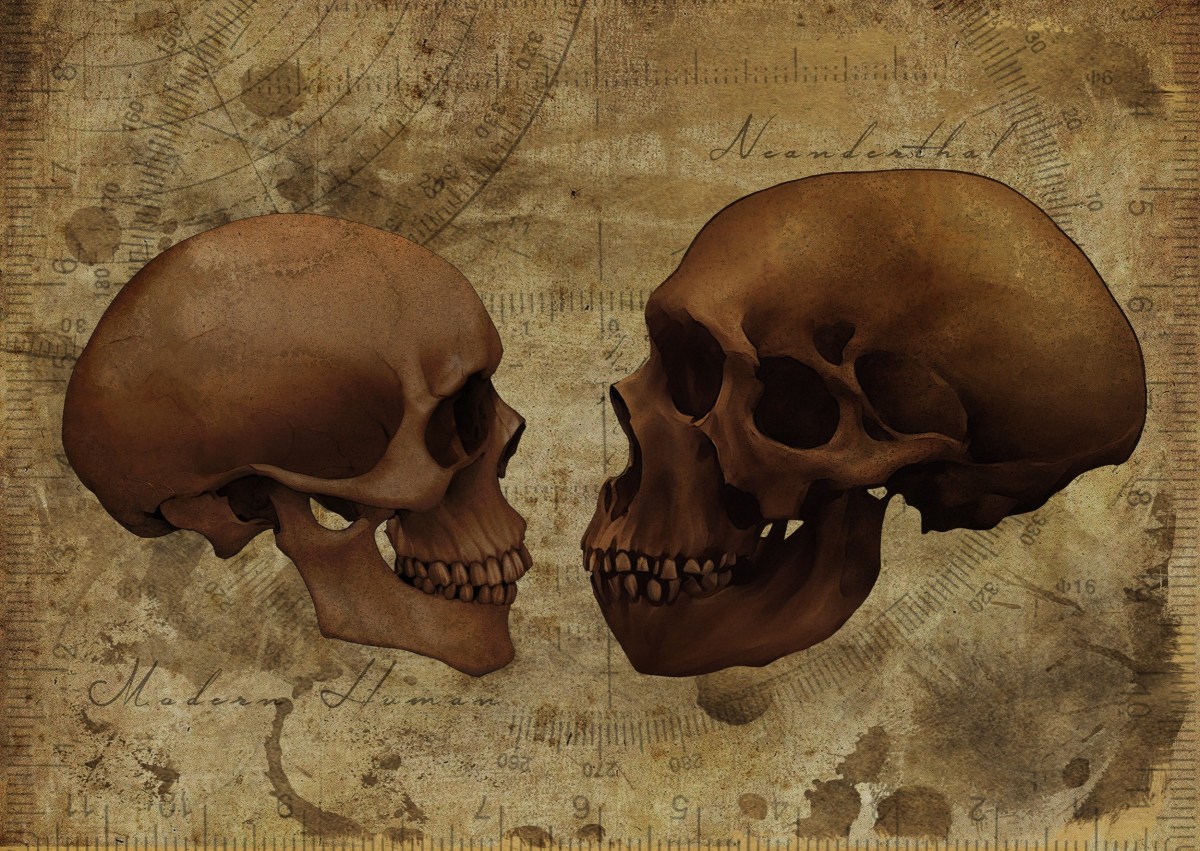
Superfact 114: Early humans (early Homo sapiens) lived at the same time as many other homo species including Neanderthals (Homo Neanderthalensis) and Humans and Neanderthals Interbred.
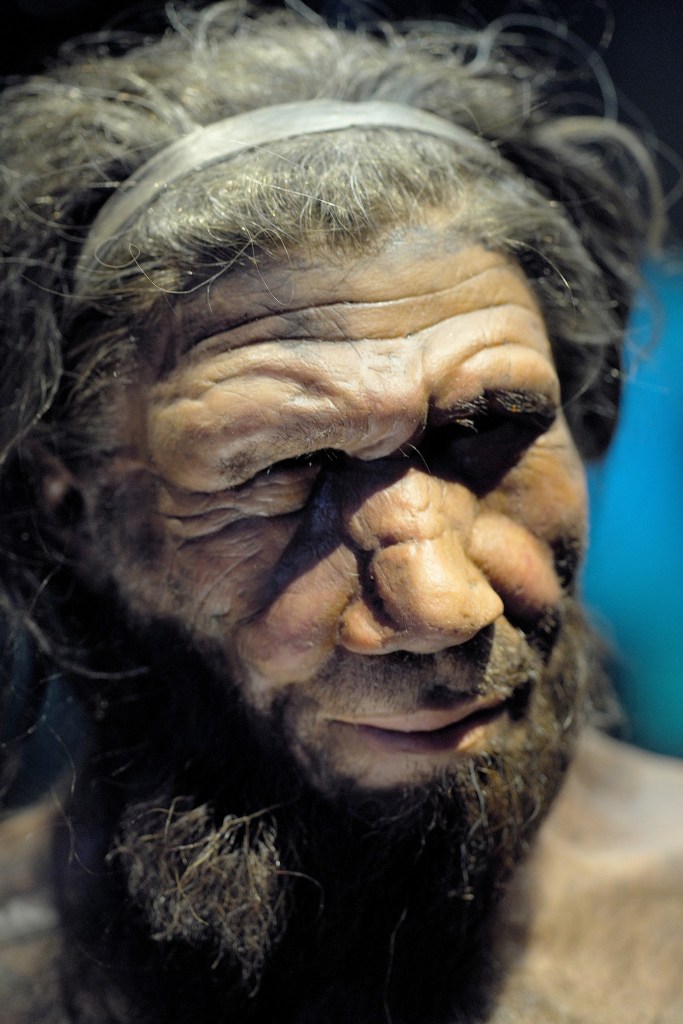
It’s been known for more than a decade that ancient members of our species, Homo sapiens, met and mated with our evolutionary cousins, Neanderthals. If you have read the Savage Land trilogy by Jacqui Murray, or you have taken a DNA test from, for example, 23AndMe, then you already knew that. Today, up to 2% of the genomes of people outside sub-Saharan Africa originated from Neanderthals. The Neanderthal genome was successfully sequenced in 2010. You can read more about it here. More recently, an analysis of Neanderthal X chromosomes found that most cross-species couplings involved Neanderthal males and modern human females.
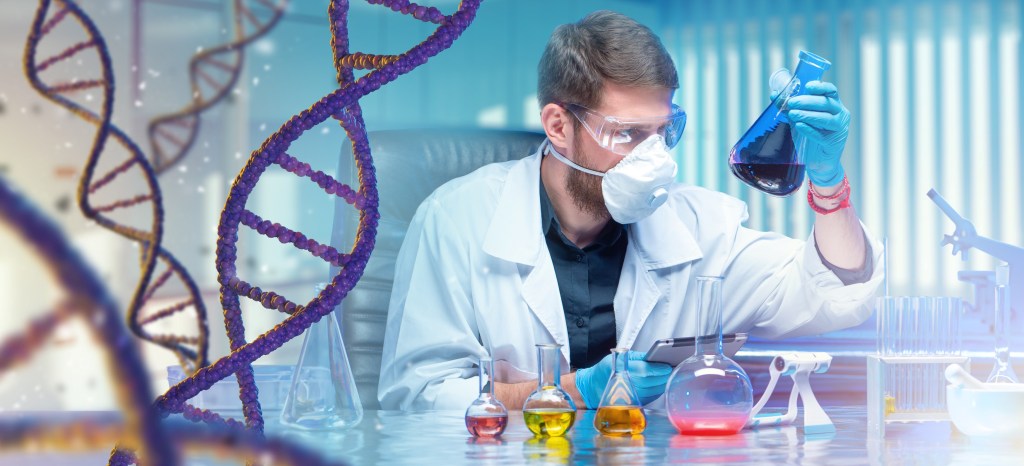
My wife and I took a DNA test with 23AndMe to find out about inherited diseases as well as our ancestry. I found out that my ancestry was 99.8% Northwestern European, 85.3% Scandinavian/Sweden/Norway, 14.4% Finnish, 0.1% other Northwestern European, and 0.2% Siberian. I also found out that I had strong Neanderthal ancestry. The report said that I have more Neanderthal variants than 99% of customers. Even though this kind of information is fun, it is risky to have some of this information exposed, so I deleted it.
Anyway, I consider this a super fact because it comes as a surprise to many that humans and Neanderthals interbred, and that many of us therefore have traces of neanderthal DNA. It is also an important fact that we know is true.
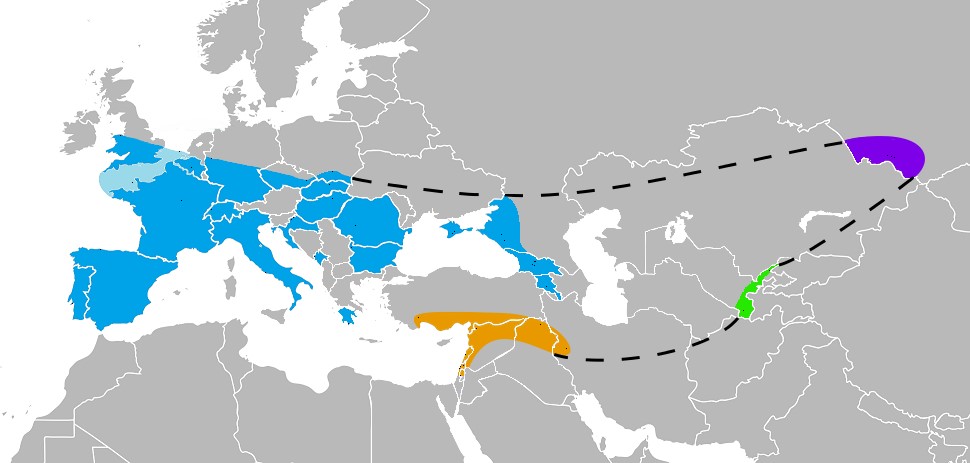
Early Homo Sapiens lived at the same time as many other human species
Early humans, early homo sapiens, lived at the same time as many other human species, not just Neanderthals. Early Homo sapiens lived at the same time as Denisovans, Homo floresiensis, Homo naledi, Homo luzonensis. Homo heidelbergensis, Homo erectus, and maybe other species as well. Neanderthals interbred with homo sapiens and died out around 40,000 years ago. The Denisovans also interbred with homo sapiens and died out around 30,000 to 50,000 years ago. Moreover, Homo Neanderthalensis interbred with Homo Denisova. You can read more here and here.
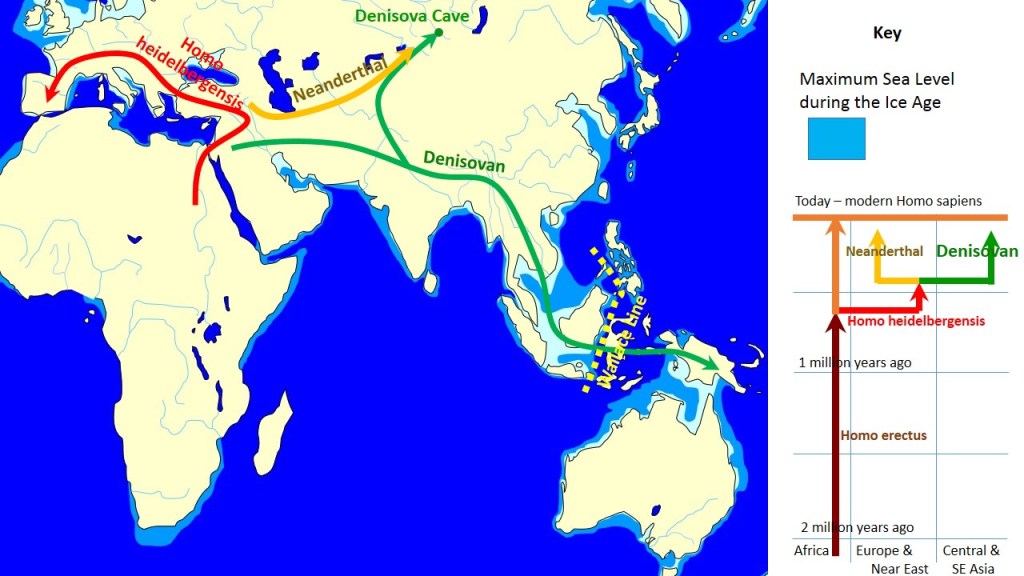
Speciation is considered relative
Homo Neanderthalensis and Homo Sapiens were different species, so it may seem strange that they could interbreed. However, species is a complex non-static concept, and it is considered relative.
It is often said that two animals belong to the same species if they can interbreed in nature and produce viable, fertile offspring. However, it is not that simple. An animal A may be able to successfully interbreed with an animal B, and that animal B may be able to successfully interbreed with an animal C, but animal A and C cannot interbreed. Animal A could be said to be a different species relative to animal C, but animal B could be said to be the same species as both animal A & C using the definition above. A great geography related example of this is ring species. In a ring species, gene flow occurs between neighboring populations of a species, but at the ends of the ring the populations don’t interbreed.
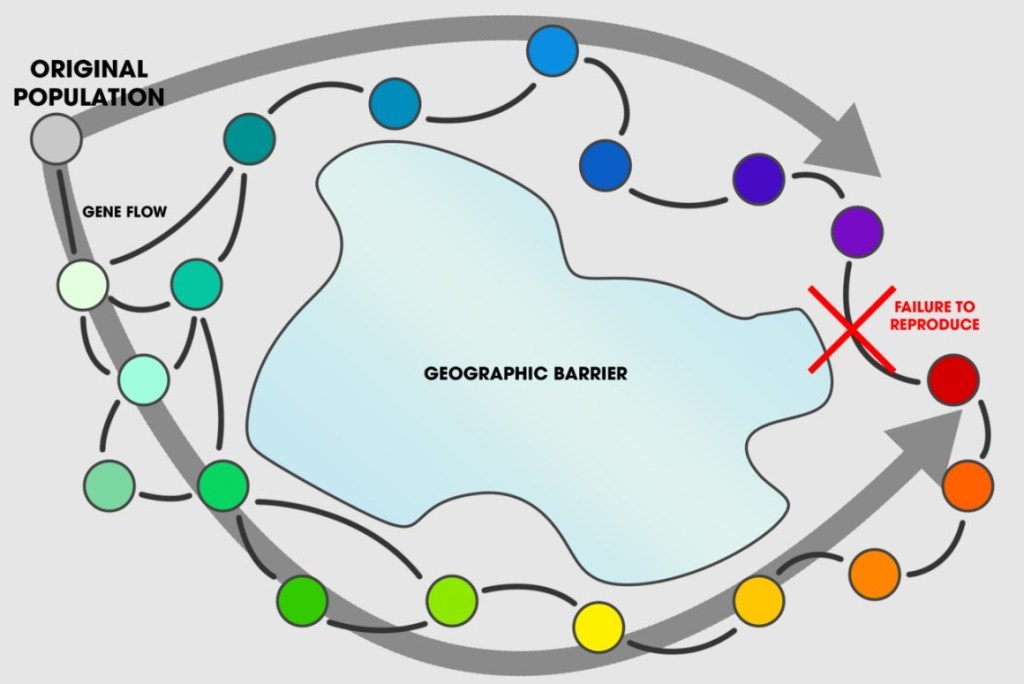
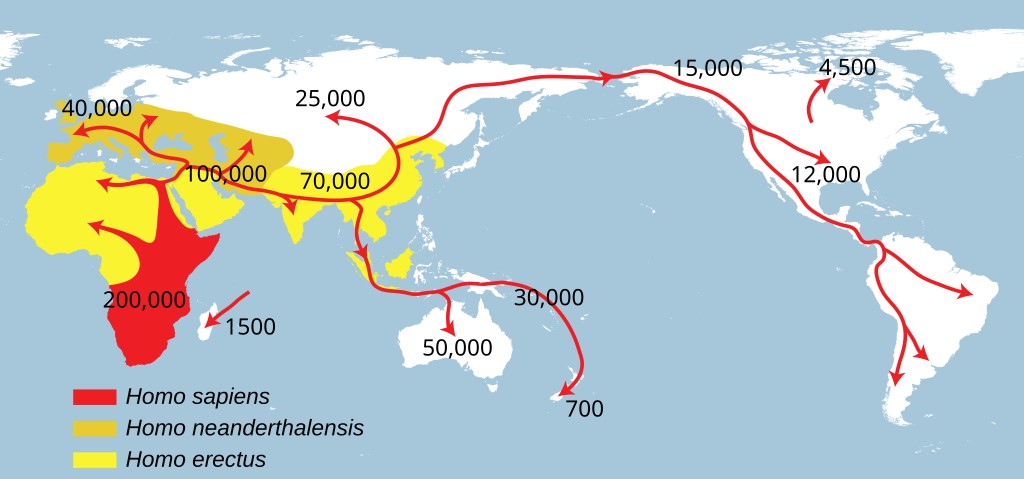
For the case of Neanderthals and Homo sapiens (and Denisovans); at certain points in history, you could consider Homo Neanderthalensis and Homo Sapiens to be different subspecies rather than different species. That is why you sometimes hear the terms Homo Sapiens Neanderthalensis and Homo Sapiens Sapiens. I can add that Homo sapiens certainly got around, as you can see on the map below.
Super fact posts related to this one
- Neanderthals Never Lived in Africa
- Evolution is a fact
- The Second Law of Thermodynamics Does Not Contradict Evolution
- Humans and Chimpanzees Have a Common Ancestor
- Early Homo Sapiens lived at the same time as many other human species
To see the Other Super Facts click here

 Super Facts
I haven’t read Jacqui’s books yet, but have read all of Jean Auel’s. That was my first exposure to this information. Fascinating and much different from our earlier understanding. Maggie
LikeLiked by 2 people
You’ve got to read Jacqui’s books! They are full of information but also very gripping in the entertainment factor.
LikeLiked by 2 people
Yes you are right Anneli. Thank you.
LikeLiked by 2 people
Thank you so much Maggie. I’ve read some of Jean Auel’s books too, a long time ago. Jacqui Murray’s books and Jean M. Auel’s books have similarities but Jacqui’s books are based on more recent discoveries and research and often include information about the time period. They are very exciting, a lot of fun and interesting.
LikeLiked by 1 person
She did a good job of respectfully representing Neanderthals. Kudos to her, especially so long ago.
LikeLiked by 1 person
Yes like you she was a great author. However, you have access to much better information than she had.
LikeLike
Sorry, Jacqui and Thomas, I didn’t mean to make this about these other books 😊
LikeLiked by 1 person
No don’t worry, but if you liked Jean Auel’s book I’ll bet you will like Jacqui’s books. I can add that Jacqui also cover a larger time span and several homo species, which gives you a wider perspective.
LikeLiked by 1 person
How intriguing, Thomas! I’m fascinated that you and your wife took a DNA test (kind of wish me and my husband could also do this!). I see what you mean about Homo Neanderthalensis and Homo Sapiens being a different subspecies and it’s cool that Homo Sapiens got around, as shown by the map.
LikeLiked by 1 person
Thank you Ada. I agree it is fascinating information that many do not know. I believe you can still take DNA tests with 23AndMe but their bankruptcy spooked me. The problem is that there are a lot of health related information in the DNA and you don’t want insurance companies to get their hands on that.
LikeLiked by 1 person
Wow, I never thought of that! Yes, if insurance companies got their hands on it, that would be a gamechanger! I’m a bit torn with the whole thing, to be honest, as I think it would’ve helped me at certain points to know things in the test (I have an autoimmune condition triggered by childbirth and didn’t realize or get a diagnosis for it until years later) but keeping this data safe is another issue entirely.
LikeLiked by 1 person
Unfortuntaly, as long as health inusrance companies can reject people for any pre-existing condition, this information is dangerous for us and a goldmine for them. Otherwise this information could be very useful for detecting problems long before they occur. It is a complicated situation but I decided to delete it.
LikeLiked by 1 person
This was a great read. I have actually started a similar post, but from a slightly different angle: do we really know where we come from?
Whenever I hear someone yell, “Go back where you came from,” in some news clip or online argument, I can’t help but think, “Okay, if we go back far enough, we all came from Africa.”
Modern humans, Homo sapiens, originated in Africa before migrating across the globe. Along the way, they encountered and interbred with other human species, including Neanderthals. As a result, many people today carry a small percentage of Neanderthal DNA.
What fascinates me most is not the differences between us, but the similarities. Despite all the lines we draw between countries, cultures, races, and religions, we are all branches of the same family tree. The evidence suggests that Homo sapiens were the last surviving human species, likely due to a combination of adaptability, cooperation, communication, and social organization.
I was not aware that Neanderthal ancestry is a sensitive topic for some people. Personally, I find it fascinating. Rather than diminishing our humanity, it adds another chapter to the story of who we are and how we got here.
LikeLiked by 2 people
Neanderthals amazingly didn’t migrate to or from Africa. They seem to have evolved right in Eurasia. Africans have very little Neanderthal DNA.
LikeLiked by 1 person
NO Homo sapiens did and we are the last of the species so we all evolve from Africa. Homo spaiens sare about 2% DNA
LikeLiked by 2 people
That sounds very interesting. I am looking forward to your post Kevin. I should say that what spooked me about 23AndMe was not the Neanderthal finding but the fact that they went bankruptcy and the DNA analysis include a large amount of health related information that you don’t want health insurance companies to get their hands on.
I joined an online Neanderthal club that required you to be in 98 percentile or above for membership (I have 99%). However, some people in the club said weird things like we in the club should demand reparations because homo sapiens were responsible for the demise of neanderthals. I thought it was joke and laughed at first. Then when I realized that many took this seriously I decided it was time to leave the club.
LikeLiked by 1 person
Yea that is very odd! reparations. Good move getting out, I think it is kind of cool. I read that they did not have a chance, lack of any communication type skills, organization skills and their heads were to big consuming a lot of energy. That is not a sapiens thing and it is kind of nuts that is even a discussion topic.
LikeLiked by 1 person
Yes I am pretty sure I remember you reading the book Sapiens, which discussed these things.
LikeLike
Jacqui’s books are amazing! And so is your article! Such an interesting topic.
LikeLiked by 3 people
Yay!
LikeLiked by 2 people
Thank you so much for your kind words Kymber.
LikeLiked by 1 person
This was fascinating!
LikeLiked by 2 people
Thank you Violet
LikeLiked by 1 person
Thank you for the shout out. You have touched on a piece of Neanderthal-H. sapiens admix I don’t understand, maybe you can help me with: Neanderthals and Homo sapiens interbred but I am reading that the Neanderthal Y chromosome–for males–didn’t survive, only females. Can you explain that? According to med.stanford.edu: There is no trace of the Neanderthal Y found in any modern human male. I’m assuming that had to contribute to their extinction? Or am I wrong?
LikeLiked by 2 people
I don’t know the details but this article from Science (it is a reputable science publication) is stating that it likely was sexual preference (consensual or not). That is certainly an interesting topic to explore. Thank you so much Jacqui for the visit and I am looking forward to your upcoming books.
LikeLiked by 1 person
When you say Neanderthals and humans interbred, are you saying that Neanderthals were not human?
LikeLiked by 2 people
That is a good question. I’ve been told that the title needs to be short and I just used “human” to refer to Homo Sapiens or Homo Sapiens Sapiens, and human is not precise. Homo is the genus to which both Homo Sapiens and Homo neanderthalensis belong but Homo Sapiens and Homo neanderthalensis are two different species. However, as mentioned above – (ring species) species is a fluid concept and at times they were rather subspecies Homo Sapiens Sapiens and Homo Sapiens neanderthalensis and during those times they could interbreed. I would say that if you with human mean modern humans, like anyone alive today, then Neanderthals were not human. If you with human mean anyone in the homo genus, then Neanderthals were human.
LikeLiked by 2 people
I had never thought of it that way.
LikeLiked by 1 person
Well you started an interesting discussion
LikeLiked by 1 person
Why is this genetic information risky, Thomas? I think it’s very interesting. I did know a lot of this information but it’s nice to read it all together in such a succinct post.
LikeLiked by 1 person
I did not explain, but what happened was that the DNA from 23AndMe included a lot of health related information (hundreds of items/genes) and 23AndMe went bankruptcy. I was afraid that health insurance companies could get a hold of our health related DNA and misuse it. Ancestry and Neanderthal stuff is just fun info but the health related information could be dangerous if it gets in the wrong hands. For example, if you have a gene that makes you pre-disposed for let say a certain type of cancer the health insurance company could use that to deny you health insurance.
LikeLiked by 1 person
What fun to read you have some Neanderthal in your DNA, Thomas.. Maybe it came from all of the admiration of reading Jacqui’s great books. 😂. Great post and shout out too. ❤️
LikeLiked by 2 people
Ha ha maybe you are right Cindy. If I read one more of Jacqui’s books maybe I will walk into the grocery store wearing a reindeer hide and a spear and the police come and arrest me. Anyway, I agree with you, Jacqui’s books are great. Thank you so much Cindy.
LikeLike
Why did Homo Sapiens migrate out of Africa but not Homo Erectus, Neanderthals, or Denisovans back into Africa?
LikeLiked by 1 person
That is a very good question World Questioner, and I have no idea. You are asking a lot of great questions.
LikeLike
This is interesting, and I thank Jacqui and 23 and Me for initiating the talk about our ancestors so far back in the past. Great post!
LikeLiked by 2 people
They are fascinating ancestors.
LikeLiked by 1 person
Yes I certainly agree Jacqui
LikeLiked by 2 people
Thank you so much Mary. Jacqui’s books are certainly great reads.
LikeLiked by 2 people
Yes you are right Jacqui.
LikeLike
Although this Superfact is not new to me, I still find it interesting. I remember in the 1970s going to the natural history museum in Seattle and seeing their reconstruction of a Neanderthal. It looked just like the country singer, Buck Owens. At the time, before we knew that Neanderthals and Homo Sapiens interbred, my dad and I speculated that Owens must have been at least part Neanderthal. Now we know that might actually be possible!
LikeLiked by 1 person
Ha ha that was funny. I had to look up Buck Owens, and you are right. He kind of look a bit like the Neanderthals are depicted. Your dad and you were before your time.
LikeLiked by 1 person
I knew about Neanderthal and Homo sapiens breeding, but I didn’t know what a ring species was. Interesting, Thomas!
LikeLiked by 1 person
Thank you so much Priscilla. Yes I know you have also been reading Jacqui’s books.
LikeLiked by 1 person
It’s interesting that I’ve assumed the definition of species I learned in high school about the viable offspring, was correct, though I know things are often more complex than we once believed. Thank you for clarifying.
LikeLiked by 1 person
Well, that definition is not wrong. It is a simple one that is often used. However, it is often the case that A can breed with B (viable offspring) and B can breed with C but A can’t breed with C. Despite being a useful definition it is fuzzy, fluent and relative. Real life is complicated. Thank you JoAnna.
LikeLike
Java Bean: “Ayyy, our Dada has done one of those DNA tests, but not the one that tells you if you have any Neanderthal DNA, so that remains a mystery. Given that he has ancestors in France and Italy, though, it seems like he might!”Lulu: “That’s funny, you and I know how ‘wolfy’ we are, but Dada doesn’t know how ‘Neanderthal’ he is …”
LikeLiked by 1 person
Ha ha Java Bean and Lulu that is funny. You know how wolfy you are. You are right Neanderthal DNA is common in Europeans.
LikeLike
I always enjoy the way you break down your posts Thomas so they are easy to absorb. Another fascinating historic informative post. 😊
LikeLiked by 1 person
Thank you so much Debbie. I put the important summary in bold at the top to give people the choice of reading just that or dive in deeper.
LikeLiked by 1 person
And I appreciate both. 🙂
LikeLiked by 1 person
Thank you Debby
LikeLiked by 1 person
I did not know about this, Thomas. It’s fascinating!
LikeLiked by 1 person
Thank you so much Lori
LikeLike
A fascinating read. Modern genetics has revealed how closely connected ancient human groups were, reminding us that human history is more complex and interconnected than many people realize. Thanks for sharing!
LikeLiked by 1 person
Those are indeed very wise words. Thank you so much Anowar.
LikeLiked by 1 person
You’re most welcome 🤗
Thank you so much for your wonderful words.
LikeLiked by 1 person