
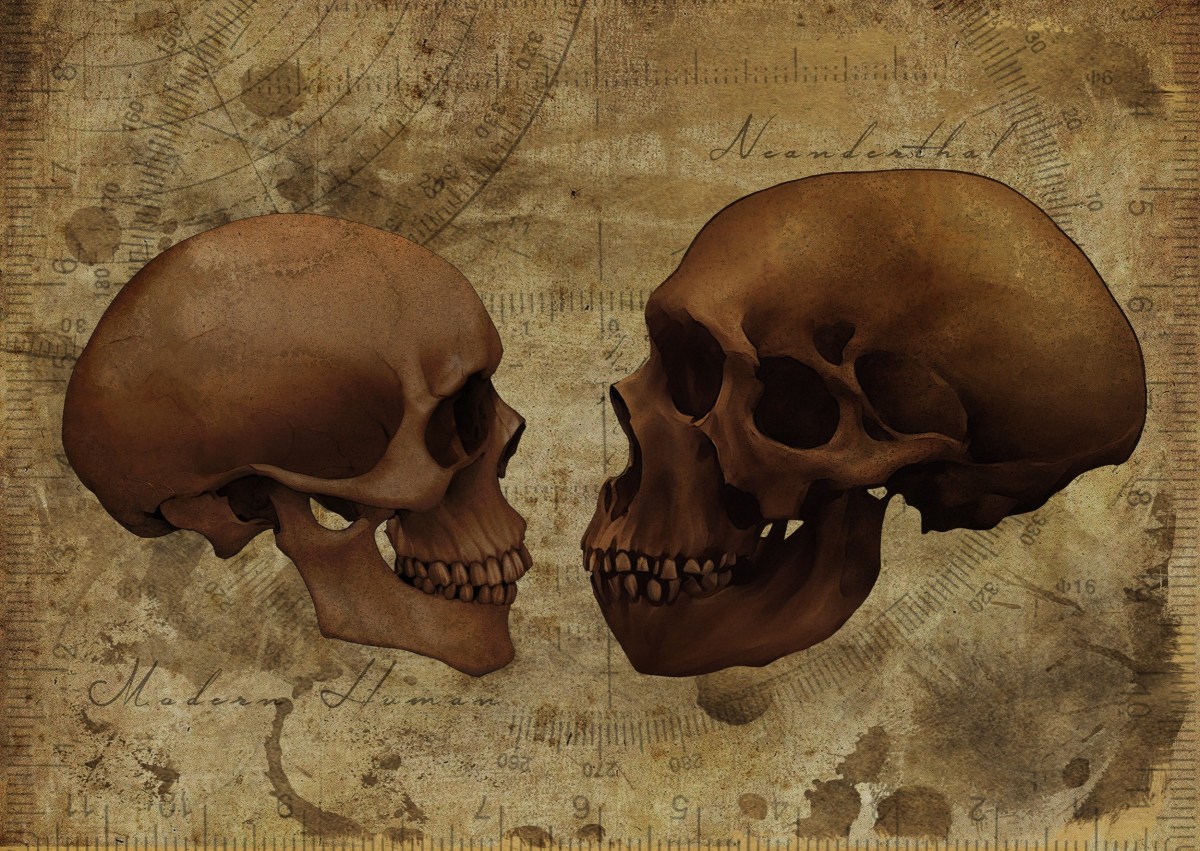
Superfact 114: Early humans (early Homo sapiens) lived at the same time as many other homo species including Neanderthals (Homo Neanderthalensis) and Humans and Neanderthals Interbred.
It’s been known for more than a decade that ancient members of our species, Homo sapiens, met and mated with our evolutionary cousins, Neanderthals. If you have read the Savage Land trilogy by Jacqui Murray, or you have taken a DNA test from, for example, 23AndMe, then you already knew that. Today, up to 2% of the genomes of people outside sub-Saharan Africa originated from Neanderthals. The Neanderthal genome was successfully sequenced in 2010. You can read more about it here. More recently, an analysis of Neanderthal X chromosomes found that most cross-species couplings involved Neanderthal males and modern human females.
My wife and I took a DNA test with 23AndMe to find out about inherited diseases as well as our ancestry. I found out that my ancestry was 99.8% Northwestern European, 85.3% Scandinavian/Sweden/Norway, 14.4% Finnish, 0.1% other Northwestern European, and 0.2% Siberian. I also found out that I had strong Neanderthal ancestry. The report said that I have more Neanderthal variants than 99% of customers. Even though this kind of information is fun, it is risky to have some of this information exposed, so I deleted it.
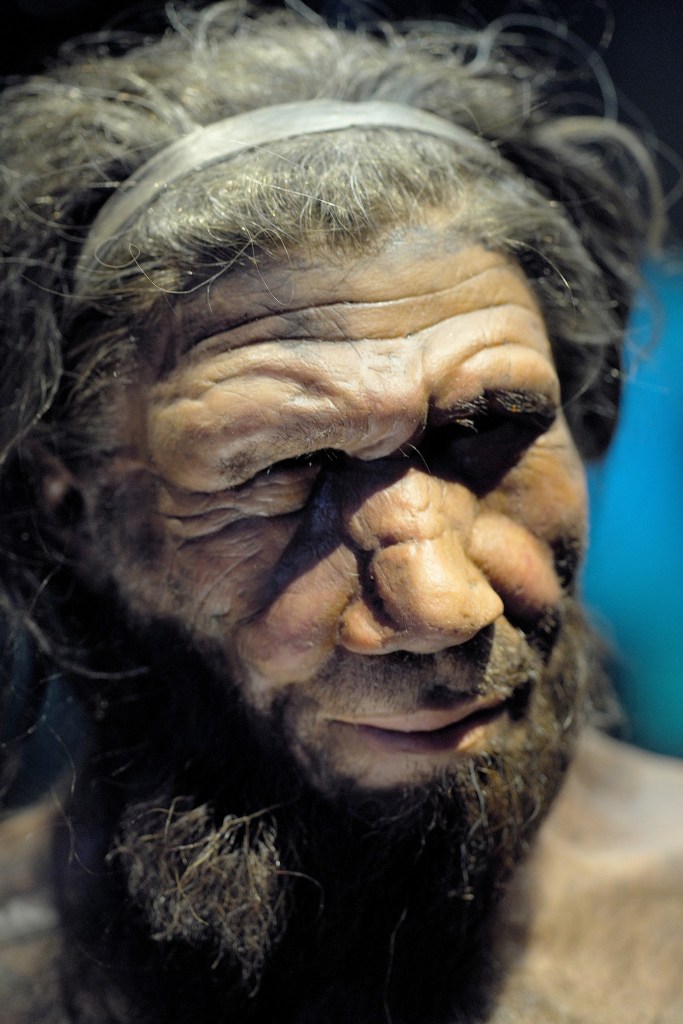
Anyway, I consider this a super fact because it comes as a surprise to many that humans and Neanderthals interbred, and that many of us therefore have traces of neanderthal DNA. It is also an important fact that we know is true.
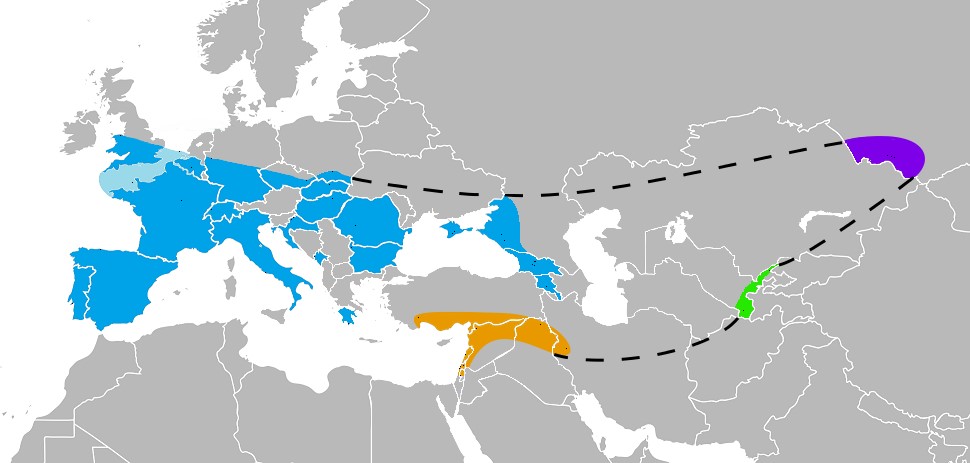
Early Homo Sapiens lived at the same time as many other human species
Early humans, early homo sapiens, lived at the same time as many other human species, not just Neanderthals. Early Homo sapiens lived at the same time as Denisovans, Homo floresiensis, Homo naledi, Homo luzonensis. Homo heidelbergensis, Homo erectus, and maybe other species as well. Neanderthals interbred with homo sapiens and died out around 40,000 years ago. The Denisovans also interbred with homo sapiens and died out around 30,000 to 50,000 years ago. Moreover, Homo Neanderthalensis interbred with Homo Denisova. You can read more here and here.
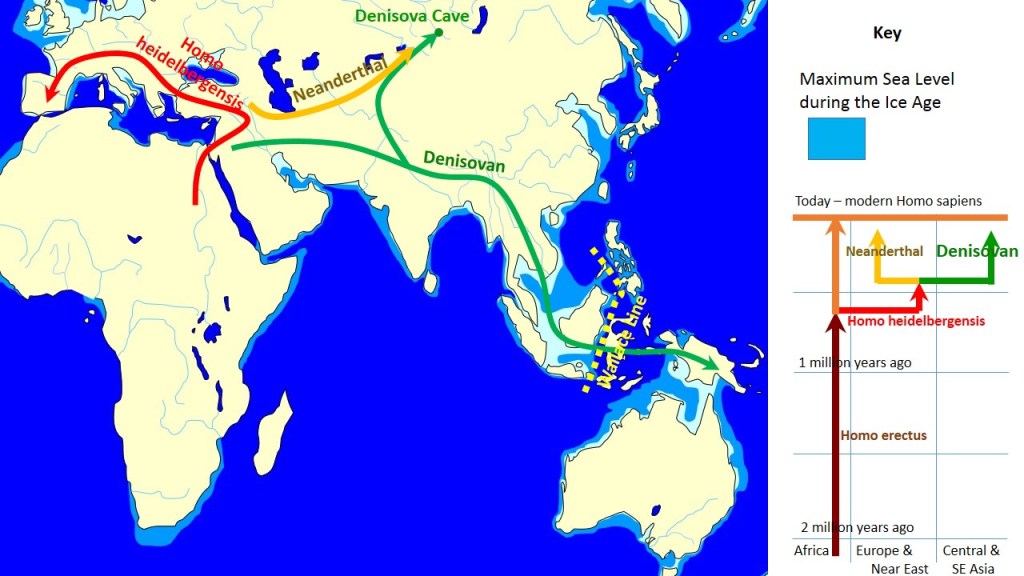
Speciation is considered relative
Homo Neanderthalensis and Homo Sapiens were different species, so it may seem strange that they could interbreed. However, species is a complex non-static concept, and it is considered relative.
It is often said that two animals belong to the same species if they can interbreed in nature and produce viable, fertile offspring. However, it is not that simple. An animal A may be able to successfully interbreed with an animal B, and that animal B may be able to successfully interbreed with an animal C, but animal A and C cannot interbreed. Animal A could be said to be a different species relative to animal C, but animal B could be said to be the same species as both animal A & C using the definition above. A great geography related example of this is ring species. In a ring species, gene flow occurs between neighboring populations of a species, but at the ends of the ring the populations don’t interbreed.
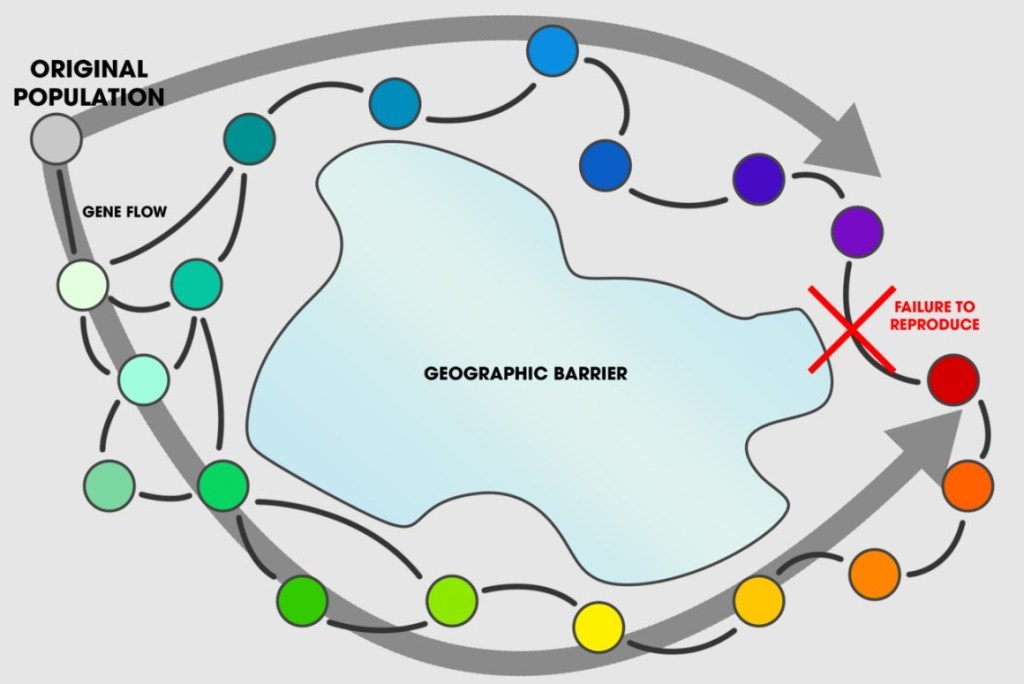
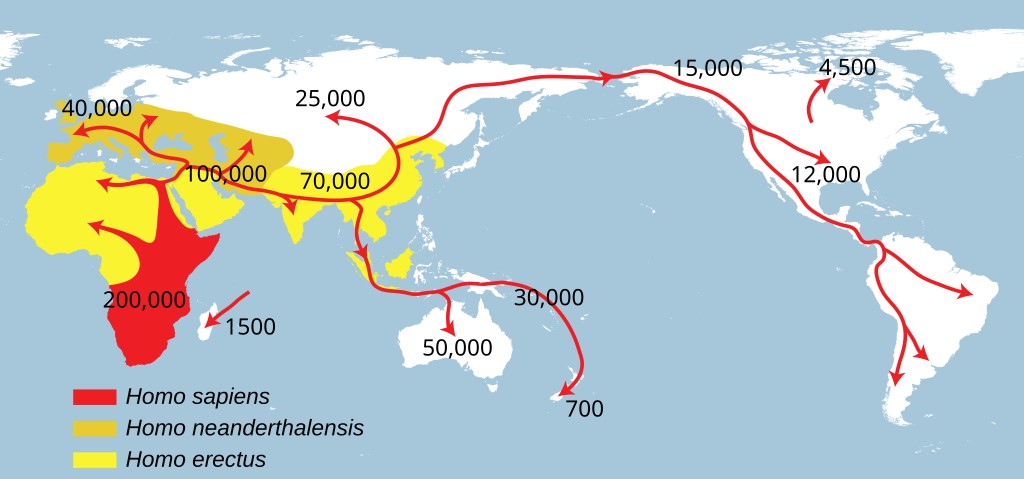
For the case of Neanderthals and Homo sapiens (and Denisovans); at certain points in history, you could consider Homo Neanderthalensis and Homo Sapiens to be different subspecies rather than different species. That is why you sometimes hear the terms Homo Sapiens Neanderthalensis and Homo Sapiens Sapiens. I can add that Homo sapiens certainly got around, as you can see on the map below.
Super fact posts related to this one
- Neanderthals Never Lived in Africa
- Evolution is a fact
- The Second Law of Thermodynamics Does Not Contradict Evolution
- Humans and Chimpanzees Have a Common Ancestor
- Early Homo Sapiens lived at the same time as many other human species
 Super Facts