
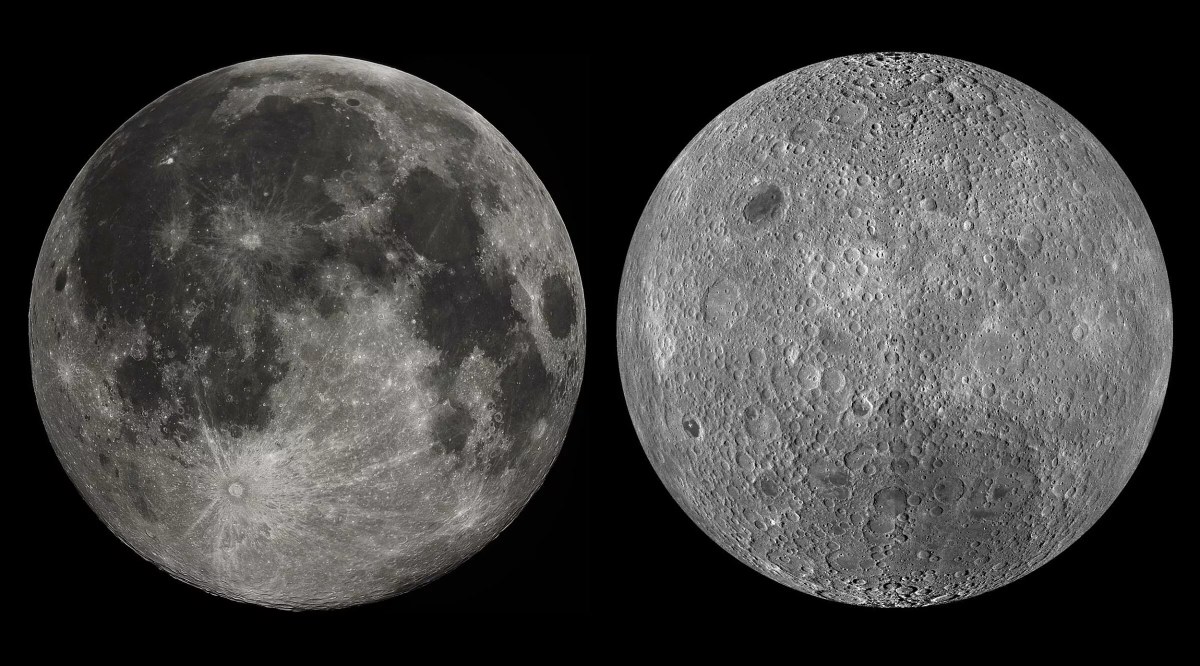
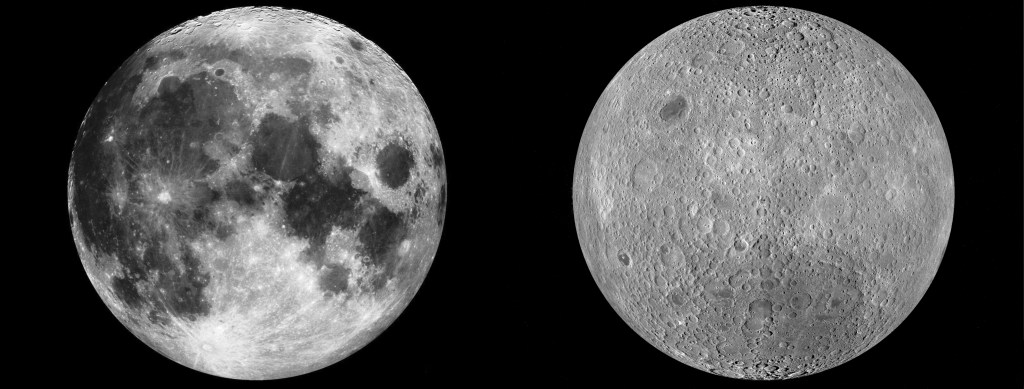
Super fact 103: The moon is always turning the same side towards us. This side is often referred to as the near side of the moon. The back side, which we can’t see from Earth, is often referred to as the far side of the moon. However, there is no side of the moon that is always dark. The near side of the moon and the far side of the moon both have day and night (in a 29.5 day cycle). Another interesting fact is that even though the near side and the far side of the moon get the same amount of light they are very different.
Below is a youTube video showing an animation composed of actual satellite photos by NASA. It shows the far side of the moon, illuminated by the sun, as it crosses between the DSCOVR spacecraft’s Earth Polychromatic Imaging Camera (EPIC) and telescope, and the Earth – one million miles away.
The video has frequently been shown on social media, and I’ve seen many comments stating that it is fake because the back side / far side of the moon is not dark in the video. However, the sun is behind us in the video and shining on both Earth and the far side of the moon. The far side is not always dark.
This is a super fact because many people mistakenly think there is a permanently dark side of the moon, which we know is incorrect and understanding the basics about the moon, the most prominent celestial object in the sky, aside from the sun, is kind of important.
Moon Photos
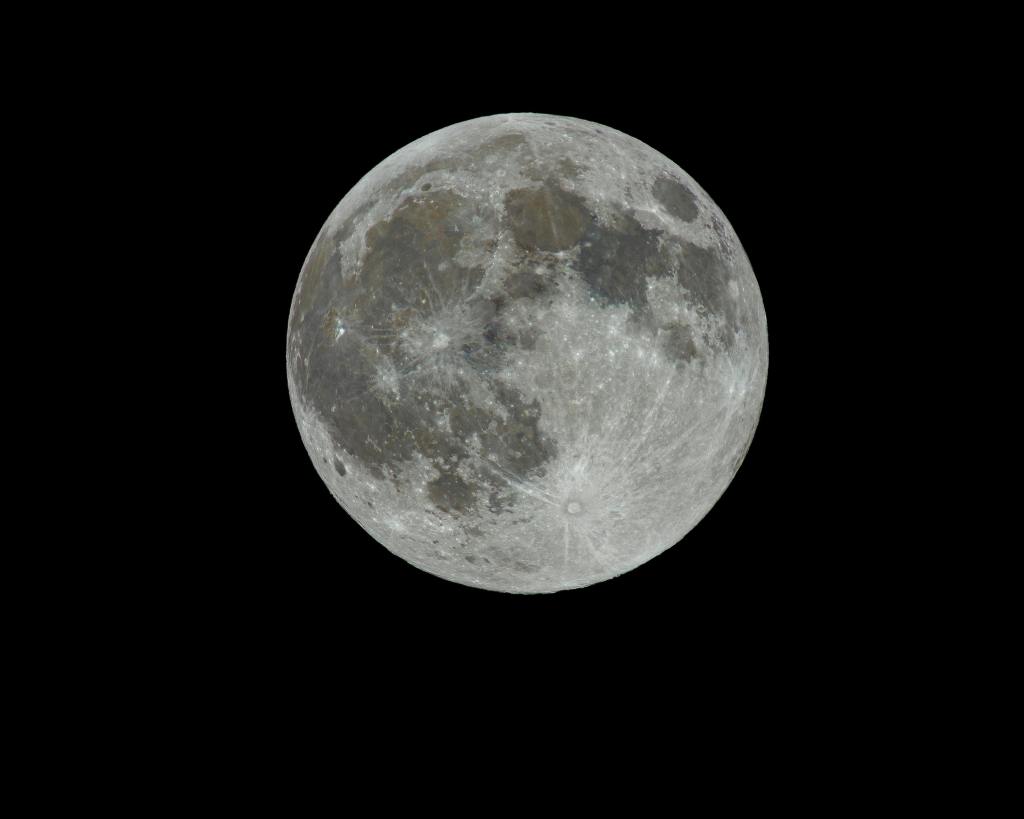
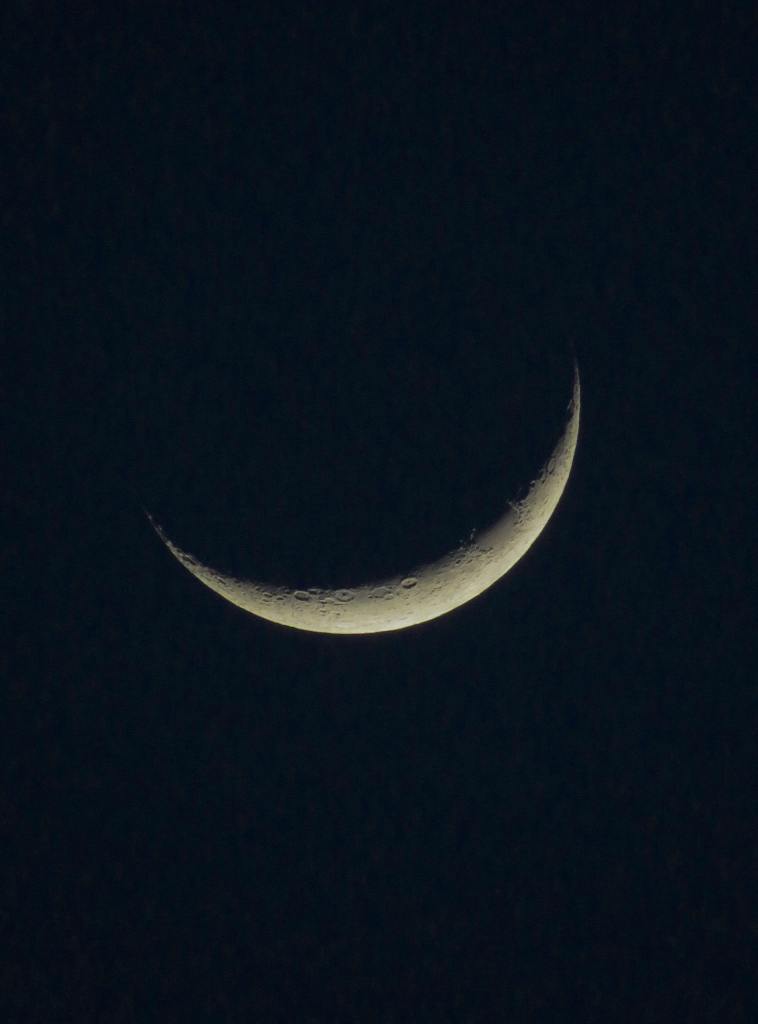
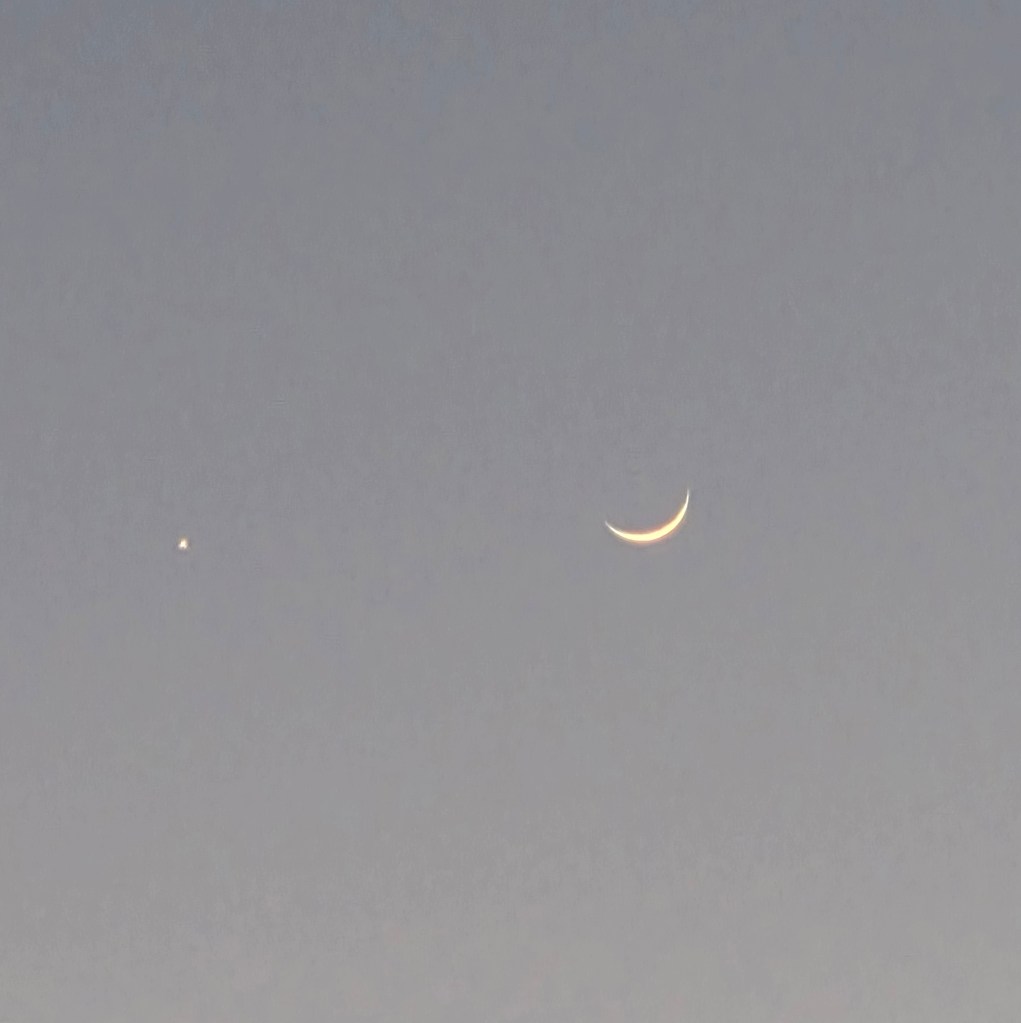
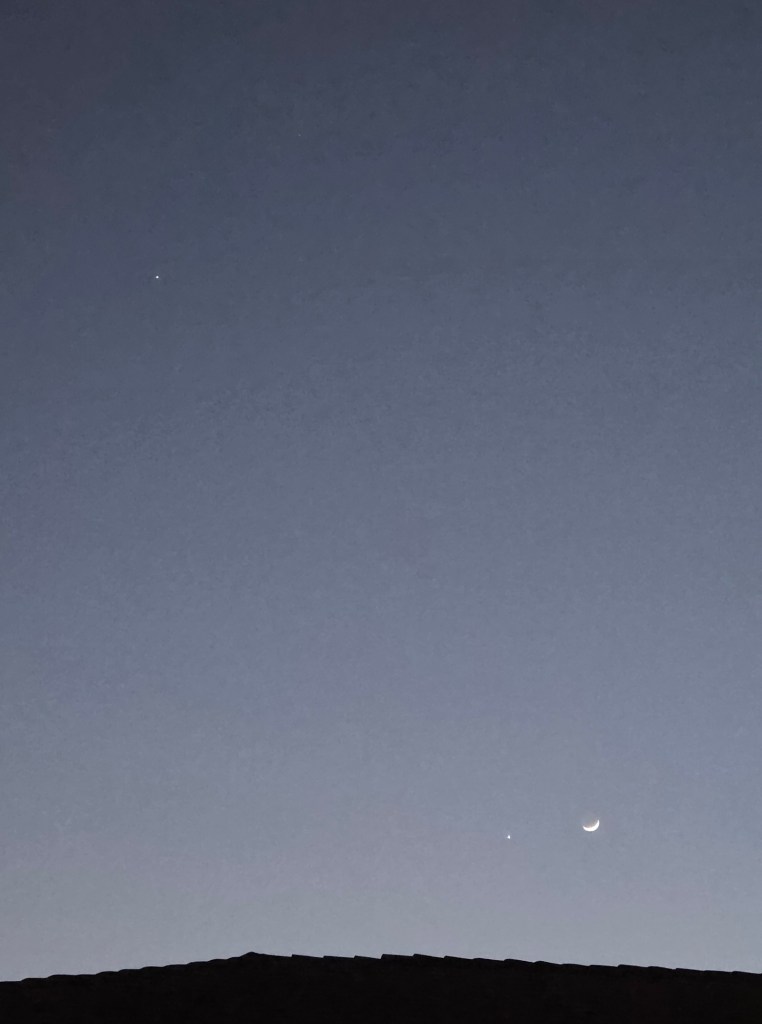
I took the photo below with my phone a few minutes ago this evening. The little dot on the left (it is not twinkling) is the planet Venus. The moon is currently a crescent, which means that at the moment of my writing this the back side / far side of the moon has day. The sun is shining down on the far side, and it is reflecting light back into space. The back side / far side is almost a full moon right now, but we can’t see that from Earth.
Interesting Moon Facts
I thought I might as well mention a few interesting facts about the moon.
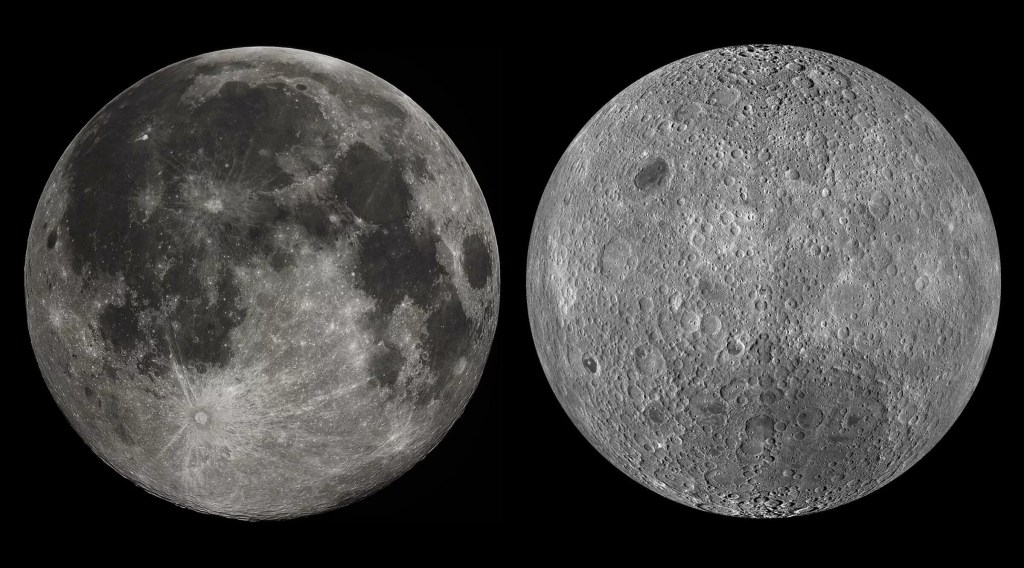
The far side of the moon is different. As you can see in the YouTube video and photo above, the far side looks different from the nearside and it is different in appearance and terrain. The near side of the moon has large, dark, flat-lying basins called maria. They look like oceans. The far side is a lot more rugged and covered by lots of craters. Another difference is that the far side of the moon has a much thicker crust compared to the near side.
The sun is 400 times wider than the moon. They appear to be roughly be the same size in the sky because the moon is 400 times closer.
The moon is drifting away from earth at about 3.8 centimeters per year. The moon is moving away from earth due to the gravitational forces between the moon and earth, which also causes tidal bulges in the Earth’s oceans and the moon. Back in high school I took a difficult physics test for a competition and one of the questions was to show that the moon was moving away from earth due to gravitational forces and calculate by how much. I did not solve that one.
The moon was likely created by a celestial collision. The most widely accepted explanation for the existence of the moon is that the Moon was created when a planet-like object, the size of Mars slammed into Earth, soon after the solar system began forming. That was about 4.5 billion years ago.
NASA found water on the moon. In 2020, NASA announced the discovery of water on the surface of the Moon. The NASA video below features more interesting facts about the moon.
If you visit this link you’ll find an interactive 3D animation using the NASA Visualization Technology Applications and Development (VTAD) technology. By using your mouse, you can view the moon from many different angles and positions (both the near side and the far side of course).

