Sweden and Norway and Carl XIV Bernadotte

I just returned from a trip to Scandinavia with my son and his wife and I thought I would make another post related to our travel. “Sweden and Norway and Carl XIV Bernadotte” is a factual post, but it is not a super-fact post.

This post is about an interesting Swedish and Norwegian king who was imported from France, and who was the founder of the current Swedish dynasty, Bernadotte. While the United States is a democratic federal republic and Sweden is a democratic constitutional monarchy, they are both representative democracies with a lot in common politically.

The Swedish political power is divided between a legislative, executive, and judicial branch, just like in the United States, people vote for their representatives, and the modern Swedish king does not have any significant political power. However, the royal family is an important symbol for Sweden and is in general well liked. Below is the photo of the current Swedish royal family.

This is a photo of a well-dressed 8-member royal family.
The Swedish Royal family. The two people in the middle are Queen Silvia and King Carl XVI Bernadotte. To the right of the king is the future monarch of Sweden princess Victoria and to the left of Queen Silvia is her husband. The others are their other two children and their spouses.

It may come as a surprise to non-Americans that despite the United States being a Democratic Republic and not a monarchy, Americans are obsessed by the British Royal family. I should say that this obsession is only with the British Royal Family and not with any of the other 42 Royal Families of the world. Sweden, Norway and Denmark are all monarchies, but my efforts to create an American obsession with the Swedish royal family might be in vain. Below is a map of northern Europe showing these three countries and a few more north European countries.

Map of northern Europe including Sweden, Norway, Denmark, Iceland, Finland, Estonia, Latvia, Lithuania, United Kingdom, and Ireland | Sweden and Norway and Carl XIV Bernadotte
Northern Europe including Sweden, Norway and Denmark. Stock Vector ID: 2173507635 by Peter Hermes Furian

King Karl XIV Johan of Sweden (or Carl XIV), or Charles XIV John was King of Sweden and Norway from 1818 until his death in 1844 and the first monarch of the Bernadotte dynasty. However, he was elected the heir-presumptive to the childless King Charles XIII of Sweden in 1810 and became the de facto ruler after Charles XIII (Carl XIII) had a stroke in 1812. King Karl XIV was born in France 26 January 1763 and his name was originally Jean-Baptiste Jules Bernadotte.

During the Napoleonic Wars, he participated in several battles as a Marshal of France, and he played a significant role in the French victory at Austerlitz. He became an extended member of the French Imperial family (Emperor Napoleon).

Photo of a painting of Carl XIV wearing a uniform | Sweden and Norway and Carl XIV Bernadotte
This is a painting of Jean-Baptiste Jules Bernadotte  (Carl XIV) hanging in the Royal Palace in the Old City of Stockholm.
10 uniformed soldiers marching outside the Royal Palace.
A photo I took of the guard at the Royal Palace in the Old City of Stockholm. If you zoom in you can see that a few of them are women.
A large room filled with beautiful decorations and paintings.
One of the many rooms inside the Royal Palace in the Old City of Stockholm.
My photo of Drottningholm castle taken from the garden, a very large garden | Sweden and Norway and Carl XIV Bernadotte
Drottningholm, one of the Royal Palaces in Sweden. It was built in the 1660’s and inspired by Versailles.

Sweden took Norway from Denmark in 1814, and Karl XIV Johan became the ruler of both Sweden and Norway and was officially made king in 1818. Sweden was a country that had been almost constantly at war but since 1814 reign Sweden was at peace. Sweden’s longstanding non-alignment and peace was initiated during King Carl / Karl XIV reign (Karl XIV Johan died 1844). Norway and Sweden resolved their union peacefully in 1905. Karl XIV Johan was popular in both countries.

Carl XIV sitting on a throne, wearing white, receiving a crown | Sweden and Norway and Carl XIV Bernadotte
My photo of a painting in the Royal Palace in the Old City of Stockholm. It shows the coronation of Karl XIV Johan.
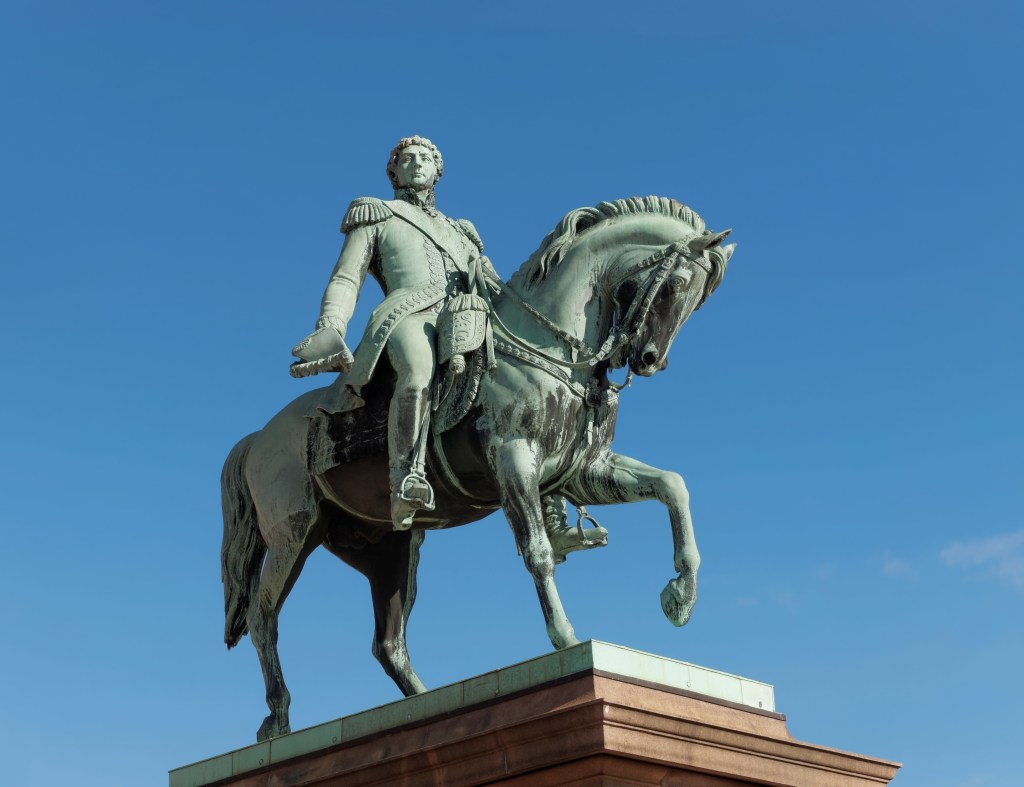
Statue of Carl XIV sitting on a horse | Sweden and Norway and Carl XIV Bernadotte
Carl XIV of Norway and Sweden. This statue is located in Norway. Stock Photo ID: 191276033 by Toni Genes

To see the Super Facts click here


Sweden and Denmark and Gustav I Vasa

I am currently traveling in Scandinavia with my oldest son and his wife. Therefore, my blogging activities are a little bit less intense than usual. This post is factual, but it is not a super-fact post.

Yesterday, we visited Uppsala, a city north of Stockholm. Uppsala is Sweden’s fourth largest city, and it is the home to one of Europe’s most prominent universities, Uppsala University. This is also where I studied engineering physics before coming to the United States.

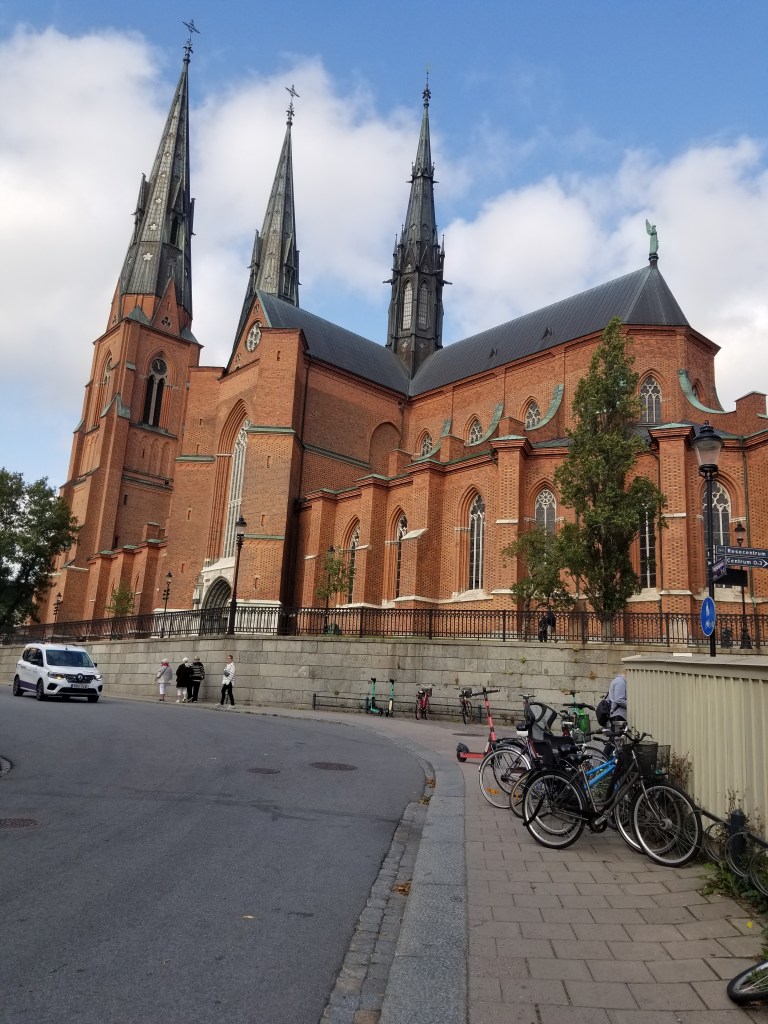
Photo of a large red brick church with tall pointy spires | Sweden and Denmark and Gustav I Vasa
The largest cathedral in Sweden, Uppsala Domkyrka. This is where Gustav I Vasa is buried. Gustav I is arguably Sweden’s most prominent king.

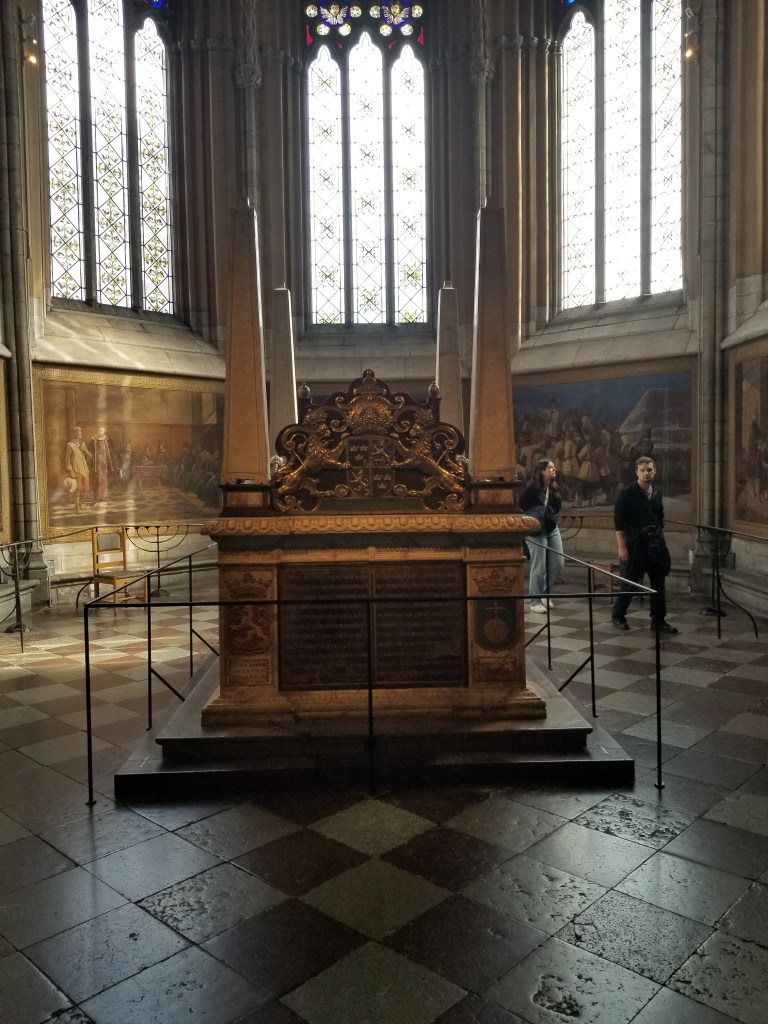
During the Viking era Uppsala was the religious center of Sweden. Later as Sweden became Christian it remained the religious center of Sweden, however, the Viking temple in old Uppsala was replaced by a Christian church. Sweden’s largest cathedral, Uppsala Domkyrka, is located in Uppsala. Inside Uppsala Domkyrka is the tomb of the king that is considered to be the father of Sweden, Gustav I Vasa.

The inside of the church is very large.
Inside Uppsala Domkyrka.

The relationships between the Scandinavian countries were quite complicated in the past, especially that between Sweden and Denmark. If you do a google search using the phrase “which two countries fought the most wars with each other” the top results all claim that this was Sweden and Denmark. The websites in question, Quora, Twitter and Reddit, aren’t reliable sources, so this may not be true. However, more reliable sources, such as historical sites, encyclopedia Britannica and Wikipedia state that Sweden and Denmark fought at least 11 wars with each other.

On the left, a fist with a yellow and blue flag. On the right, a fist with a red and white flag | Sweden and Denmark and Gustav I Vasa
Denmark vs Sweden. The yellow and blue flag is the Swedish flag. Red and white is the Danish. Shutterstock Stock Photo ID: 1114320377 by Hasanov Jeyhun.

In 1397 a union was formed between Denmark, Norway and Sweden called the Kalmar Union (Kalmar is a city a Sweden). The Kalmar Union came to be dominated by Denmark and eventually Sweden rebelled against the Danish King Christian II. He was called Christian the Good in Denmark and Christian the Tyrant in Sweden.

This rebellion was led by a noble, Gustav Eriksson who later would be crowned as Gustav I Vasa. He was the first of the Vasa kings. Sweden declared its independence from Denmark on June 6th, 1523, which is why June 6th is Sweden’s national day, or Independence Day.

Map showing Denmark, Sweden and Norway in purple. Iceland and Finland are also included | Sweden and Denmark and Gustav I Vasa
The Kalmar Union. Finland was part of Sweden at the time. Ssolbergj, CC BY-SA 3.0 <https://creativecommons.org/licenses/by-sa/3.0&gt;, via Wikimedia Commons
Painting showing a king with an interesting hairdo and wearing a large robe.
Painting of Gustav I Vasa. Fashion was somewhat different back in the day.

Sweden and Denmark had a complicated history that included a lot of hostilities and wars, but you wouldn’t know it if you looked at the situation today. There hasn’t been a war between Sweden and Denmark in more than 180 years and Swedes and Danes get along very well, well as long as you don’t talk too much about the past. In my opinion Swedes and Danes get along better than Texans and Oklahomans. Maybe it helps that Swedes can’t understand what the Danes are saying.

Heavily decorated coffin shaped tomb placed in a large, decorated room filled with paintings.
The tomb of Gustav I Vasa in Uppsala Domkyrka. In the background is my son and his wife.

To see the Super Facts click here


Scandinavian Folklore

I am currently traveling in Scandinavia with my oldest son and his wife. Therefore, my blogging activities are a little bit less than usual. This particular post is not a super-fact, but it features some interesting facts regarding Scandinavian folklore and mythology. Yesterday, we visited a Norwegian Fjord called Sognefjord, which is said to be the dwelling of a number of Huldra, which is their name in Norwegian, or Skogsrå (forest fairy) in Swedish. Sognefjord is also known to be a narrow deep and long fjord. Sognefjord is one mile deep and 45 miles long and it is surrounded by tall mountains.

The photo is of me standing on the deck of a boat in Sognefjord. There are mountains and a village in the background. I am wearing a white jacket.
Me on a boat in Sognefjord Norway.
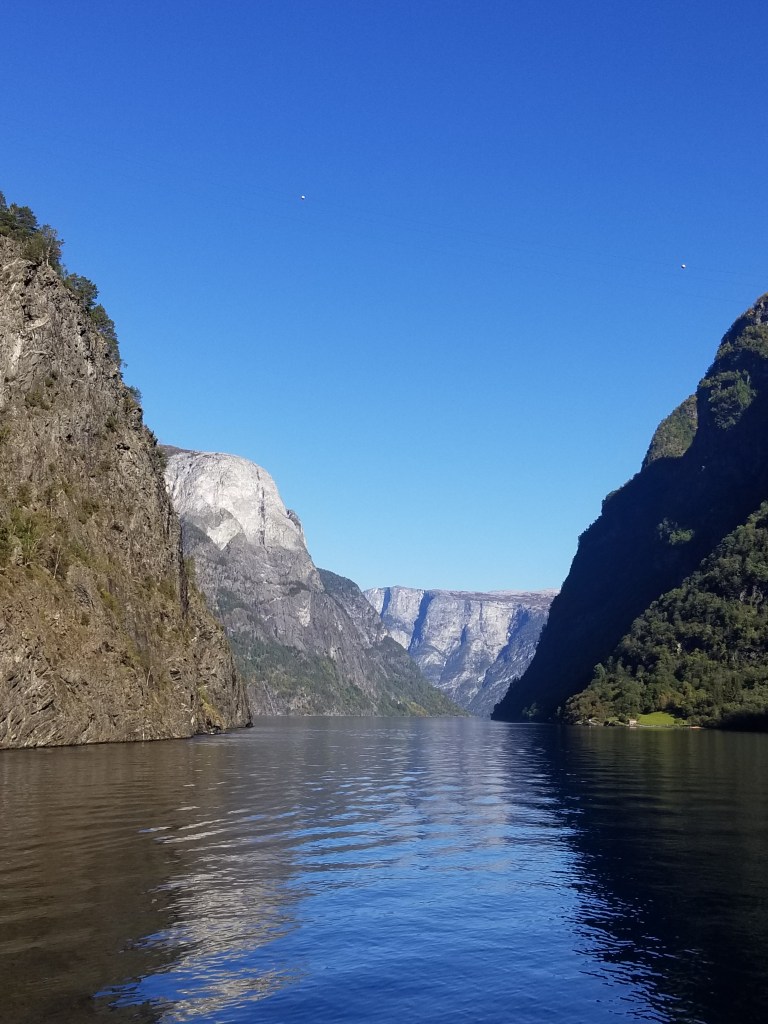
The photo is of the beginning of Sognefjord, or rather the end of Sognefjord inland of Norway.
The beginning (or end) of Sognefjord. Sognefjord is one mile deep and 45 miles long and surrounded by tall mountains.

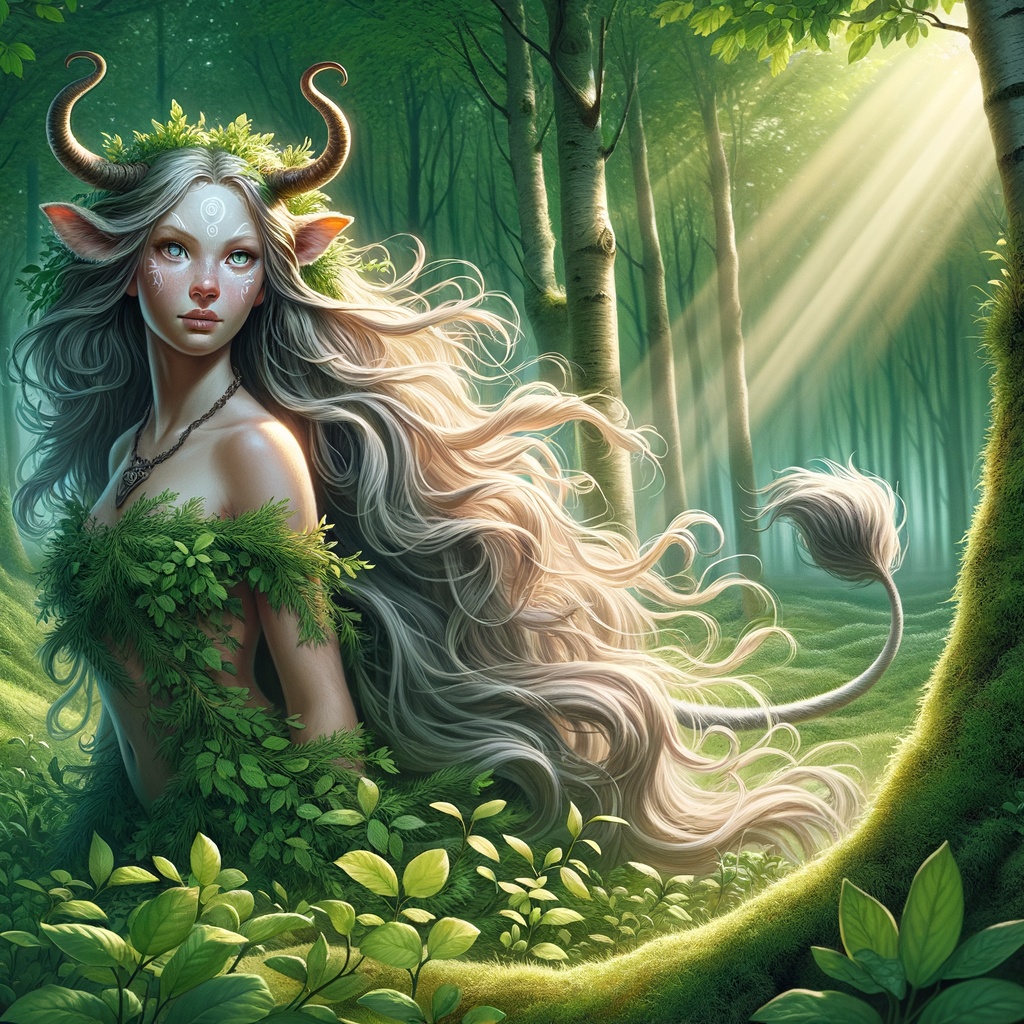
A Huldra or Skogsrå or Tallemaja in Swedish is a seductive female creature who lures men with her beauty and beautiful singing and then kills the men. It should be noted that I read that if you meet a Huldra in the forest and you treat her with respect she will not kill you. She would just enjoy your company for a while, talk to you, sing to you, show you the beauty of the forest, and then she would let you go. It is only the rude and selfish men who don’t respect her boundaries whom she kills. What do you think is the truth?

An image AI-illustration of a Huldra | Scandinavian Folklore
Imagining how a Huldra would look like. Stock AI-generated image ID: 2400845203 by Shutterstock AI Generator.

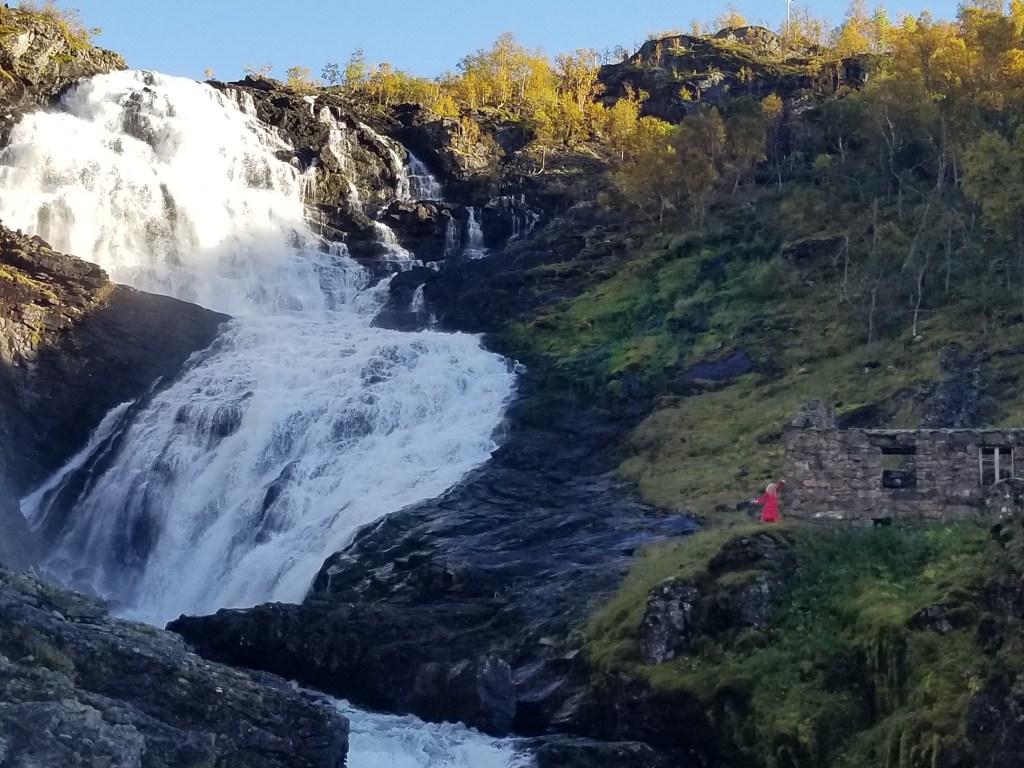
We took a two-hour cruise on Sognefjord and after the cruise we took a train to the top of the surrounding mountains. Along the way we encountered a Huldra by a waterfall. She sang to us in her beautiful voice, and she seduced us all, both men and women, to take photos of her with our phones and posting them on social media.

A waterfall in the mountains. A woman in a red dress is standing to the right of the waterfall | Scandinavian Folklore
My photo of the Huldra (in red) by the waterfall in the Norwegian mountains. She seduced us all into taking photos of her for Facebook. Her seductiveness was feared in medieval times, but in modern times we refer to the seductiveness of the Huldra as a “tourist trap”. On Facebook we call it clickbait.
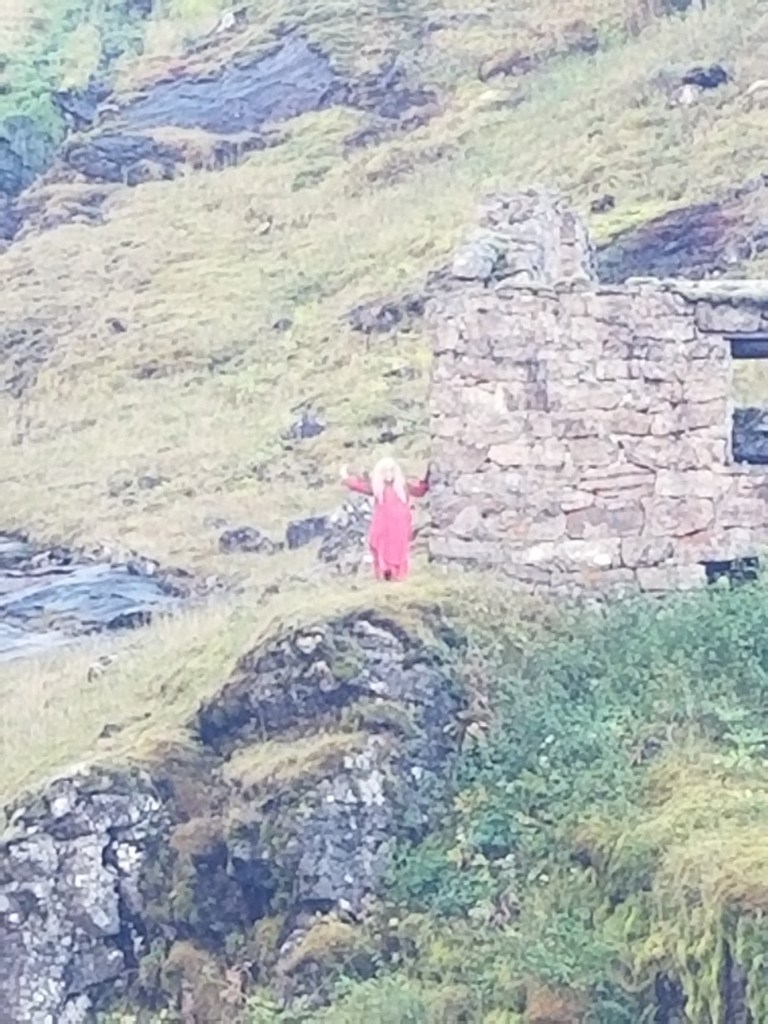
A Huldra dressed in red standing on a mountain side | Scandinavian Folklore
A close up of the Huldra we encountered. Sorry, my phone camera is the best and it was at a distance.

Scandinavian Folklore Creatures:

The Huldra / Skogsrå is not the only creature in Scandinavian folklore. There are many. Below is a list of Scandinavian folklore creatures.

  • Huldra / Skogsrå – the aforementioned female forest spirit who may kill the men she lures with her beauty and beautiful singing.
  • Troll – Trolls are large ugly creatures with magical powers. They typically live in caves and sunlight is dangerous to them. They are typically hostile to humans and may kidnap people, including children, to work in their mines.
  • Näcken – is a male creature who lives by the water, creeks, rivers, ponds and lakes. He lures children and others to their death. In southern Sweden (Scania) he seduces people by skillfully playing a violin thus creating irresistible music.
  • Vittra or Vitterfolk – are supernatural spirits or small invisible people who have a lot in common with people. They own cattle and they sometimes interact with people. Usually, they stay out of your way, but if you hurt them, for example by throwing hot water out the window without warning them first, they may take revenge on you and burn down your house. Vittra are not evil but not friendly either. The belief in Vittra is especially prevalent in northern Sweden.
  • Tomtar – gnomes – nisse – is another type of small magical people related to vittra but unlike vittra they are friendly. They may help you with your projects and duties as long as you are nice to them. They help you with your farm and your animals, warn you of danger, and bring you gifts for Christmas if you in return give them food, such as porridge. The Swedish Santa Claus is not one guy, but a Tomte, and there are many Tomtar, often one Tomte per house. It makes a lot more sense. How could one guy bring presents to all the children around the world? He would have to fly faster than the speed of light. No, it is rather an army of Tomtar who does that work. The Walt Disney Santa Claus invention is not realistic. Ancient superstition makes more sense.
  • Storsjö odjuret – this is a Swedish lake monster like the Loch Ness monster. It resides in a lake in northern Sweden.
  • Kraken – a gigantic octopus that can bring down entire ships.
  • Blodstämmare – this is not a creature but a very common superstition in northern Sweden. There are people, blodstämmare, who can stop the flow of blood by uttering magical phrases while focusing their minds on the person in question. This power is usually used for good to help people who are bleeding. It can also be used for evil, like black magic, to stop the blood flow in someone’s heart. This superstition is based on Sami (indigenous north Scandinavian people) Shamanism and north Swedish Christian fundamentalism (Laestadians). It is respected enough that some north Swedish hospitals has used blodstämmare in emergency situations. The father of a close friend of mine called a blodstämmare when he had a bad nosebleed, and it worked. I know anecdotes are not valid scientific evidence, but maybe someone should do a study.
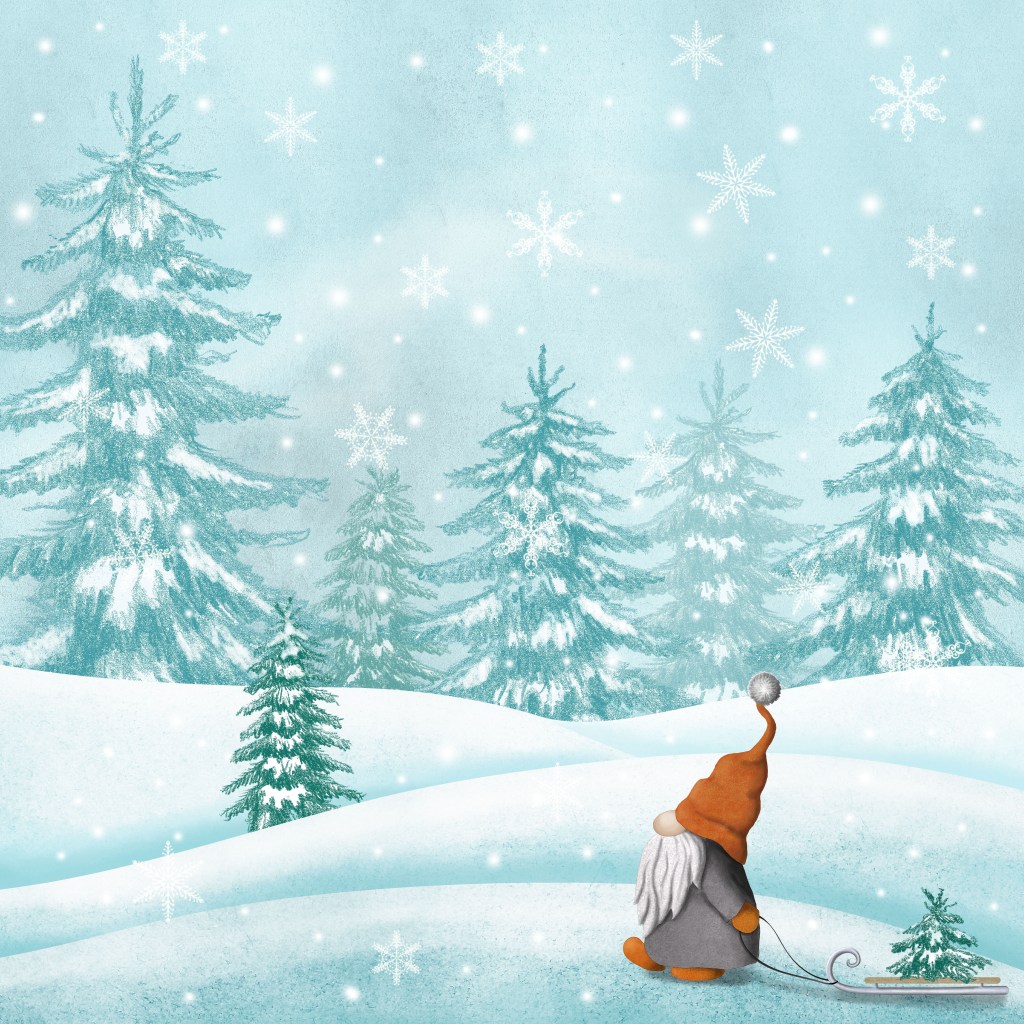
A tomte wearing a red hat in a snowy winter forest | Scandinavian Folklore
An illustration of a Tomte. Shutterstock ID: 2060057882 by PLIMPLUM.

Do I believe in the existence of any of these creatures? No, I don’t, but I am curious, what are the mythical creatures in your culture?


To see the Super Facts click here


Vasa Museum Stockholm

This is not a Super Fact post, but it features some interesting facts that have to do with the Vasa Museum Stockholm. It is a bit of trivia and not shocking or disputed information. I am currently traveling in Scandinavia with my oldest son and his wife. This is why I have not been active blogging for a while. By the way, today is his birthday.

This post is about the Swedish warship Vasa. Vasa (or Wasa) was built between 1626 and 1628, and it tipped and sank on its maiden voyage. It was the largest war ship in the world at the time. The cold and brackish waters of this part of the Baltic were free from shipworms and the ship was only 32 meters down below. This made it possible to salvage the ship with a largely intact hull, which was done in 1961.

The Vasa Museum with its huge and impressive 400-year-old war ship is open to the public and a visit does not take long. It is one of the easy must-see destinations for visitors to Stockholm. It is an example of how a big fiasco can be turned into a wonder of the world.

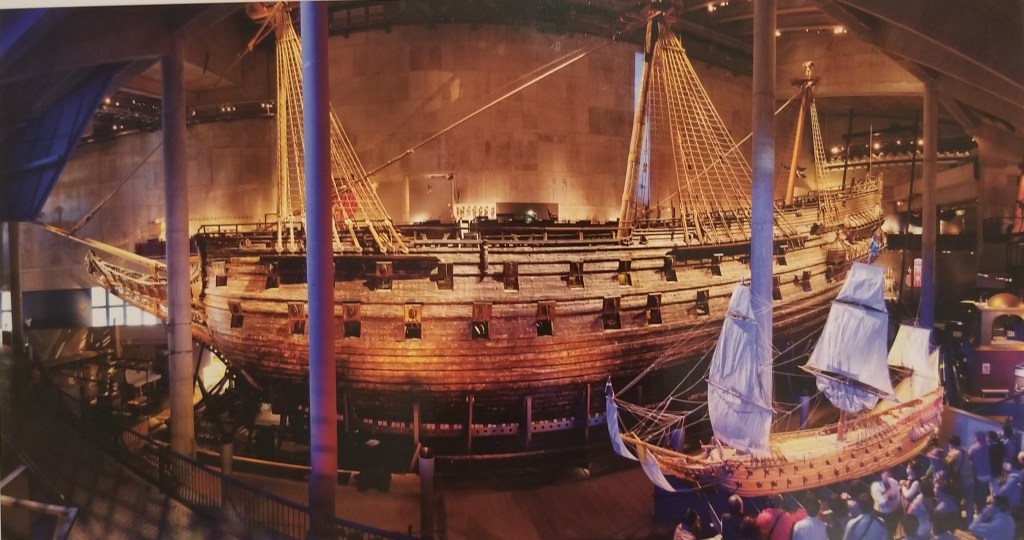
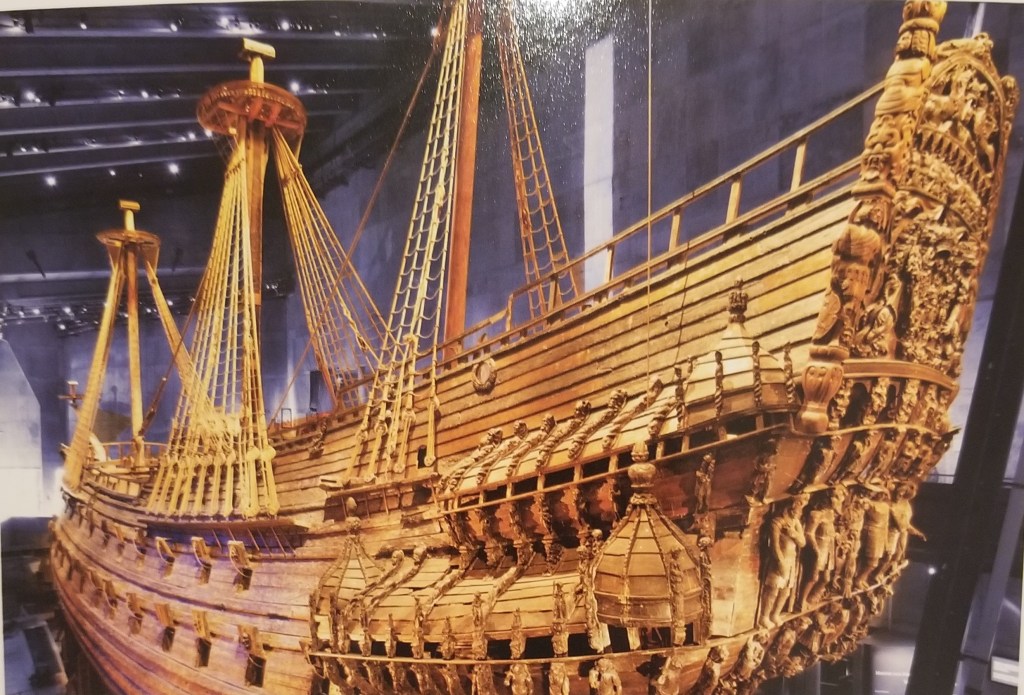
A photo of the Vasa Ship from a distance at the Vasa Museum Stockholm.
The War Ship Vasa sank in 1628 and salvaged in 1961. It is very well preserved and is on display to the public at the Vasa Museum Stockholm. This photo is taken from a distance. It is not my photo.

At the time there was a big war in Europe, the thirty-year war, fought mainly between protestants and catholic regions. An estimated 4.5 to 8 million people died in this war. Sweden got involved in this war on the protestant side and fought Poland and Lithuania. This war served as a motivation for building Vasa. The reason the Vasa ship tipped over was that the center of gravity was too high. There were too many cannons, ornaments, and the large hull, basically too  much stuff, too high up.

A photo of the Vasa Ship at the Vasa Museum Stockholm.
An enhanced photo of the Vasa Ship from the museum.
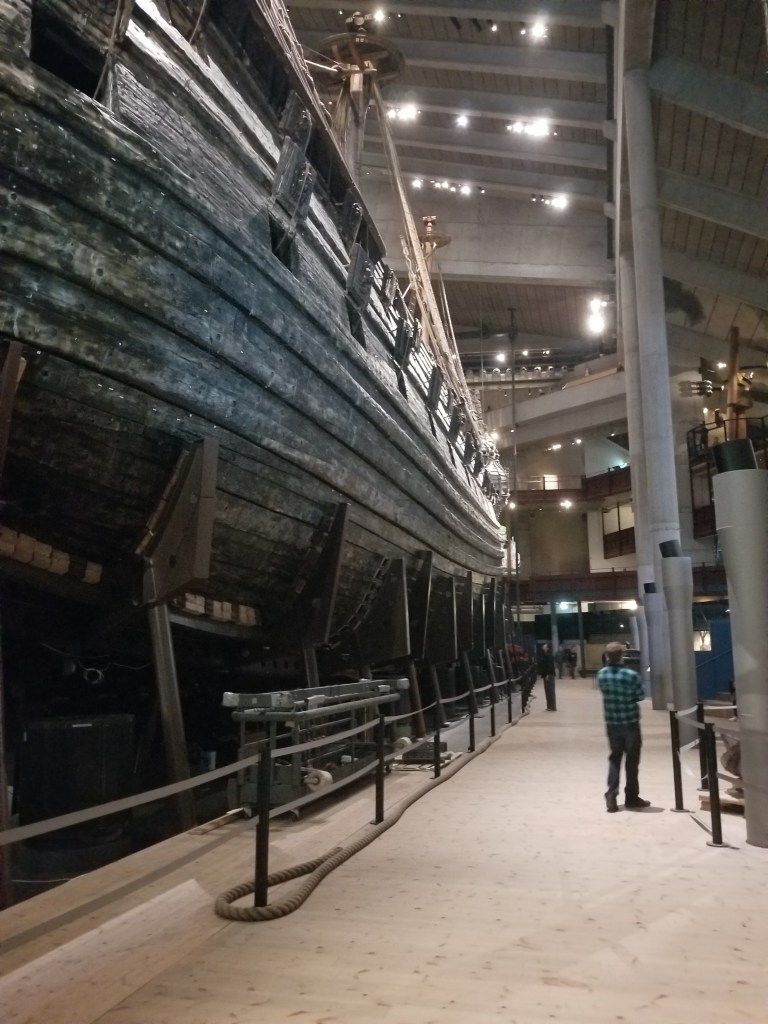
A photo of the Vasa Ship taken from below.
A photo of the Vasa ship from the bottom floor. My son is standing on the right in a green and black shirt.

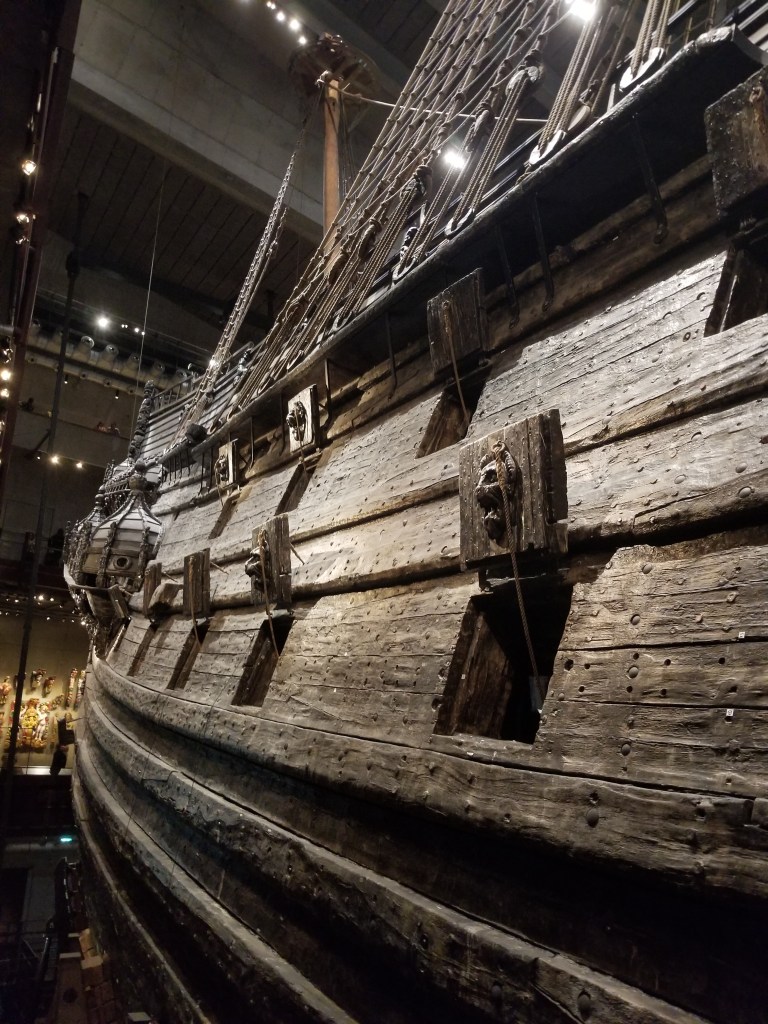
A note regarding the photos below. I could not find a spot in the museum where I could take an unobstructed photo of the entire ship. So my photos just shows parts of the ship.

A photo of the Vasa Ship taken from the side.
A photo of the Vasa ship from the third floor and on the other side (my photo).
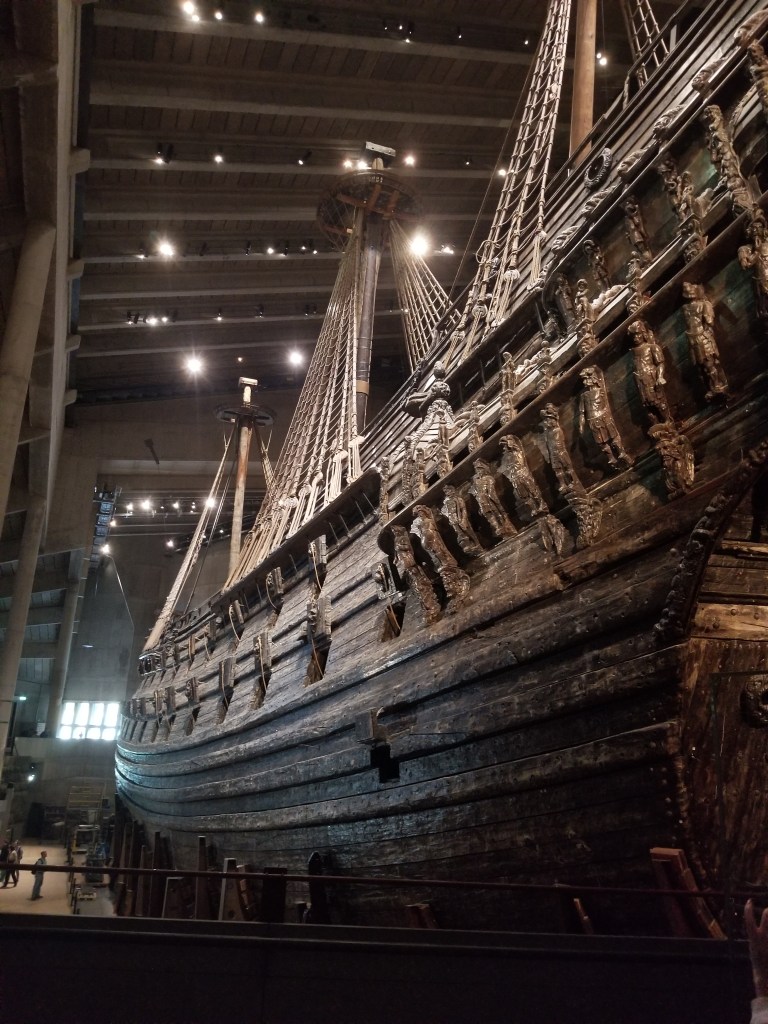
A photo of the Vasa Ship taken from the side.
A photo of the Vasa ship from the second floor and more from the front. I was walking around the ship and taking photos.
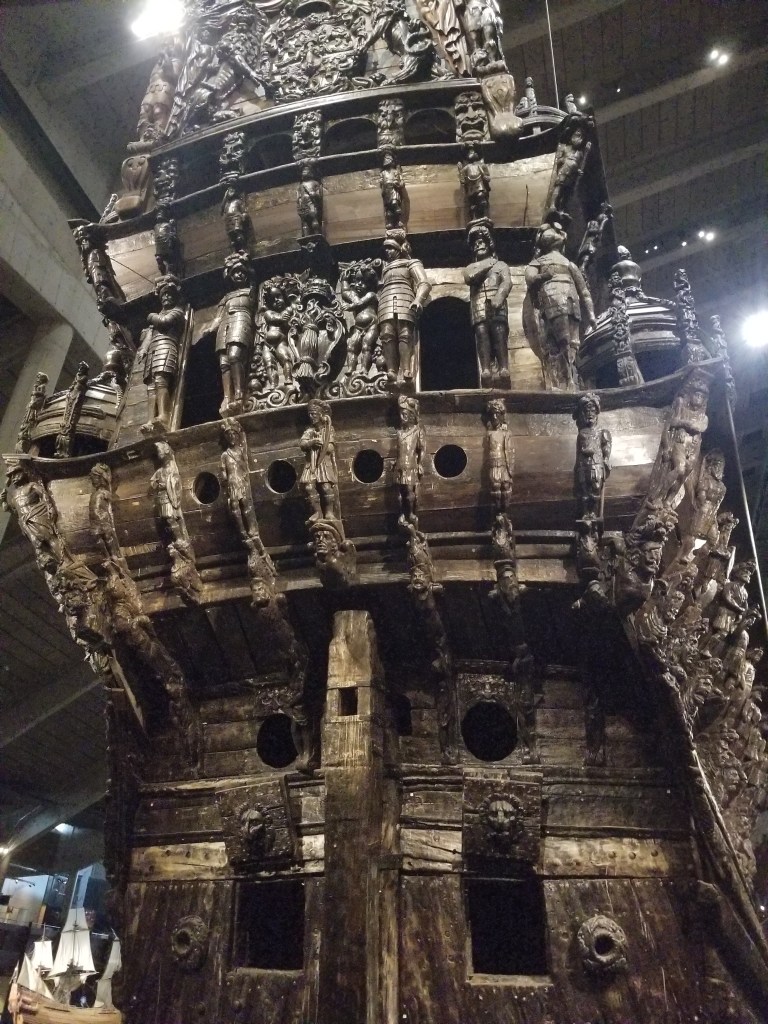
A photo of the Vasa Ship taken from the back at the Vasa Museum Stockholm.
A photo of the Vasa ship from the back. They removed all the ornaments and placed them separately. This was not always the case. This is my photo.
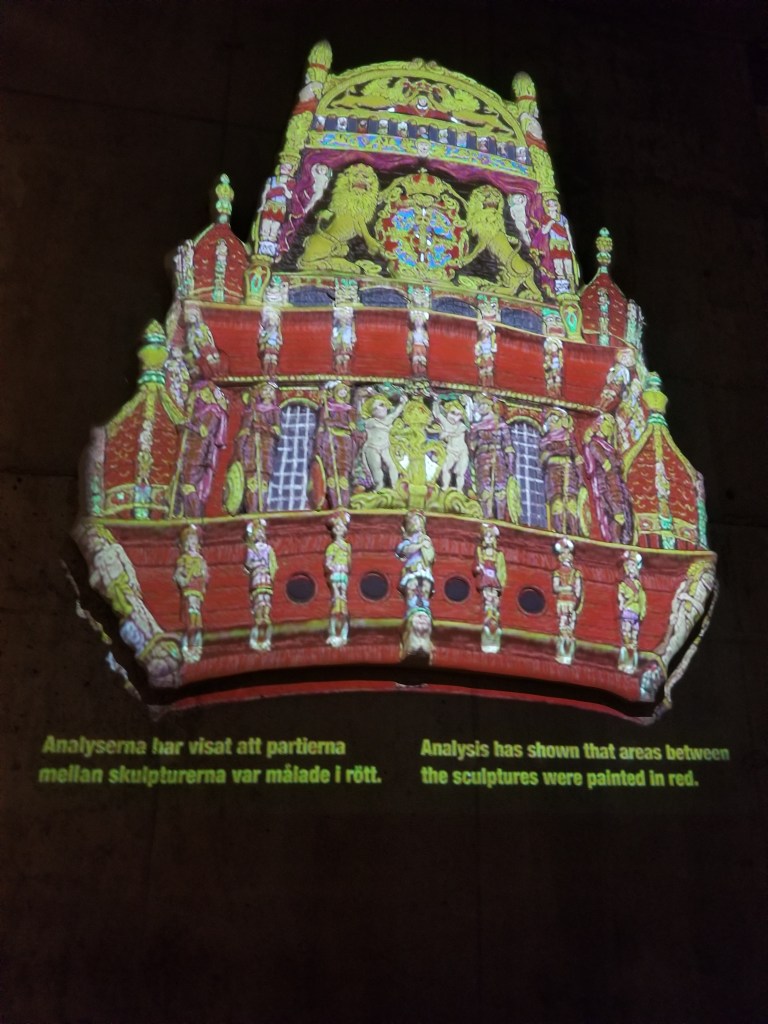
A photo of an illustration of the back of the ship the way it once looked like. It was quite colorful.
This is just picture hanging in the museum. It shows how the back of the ship once looked like.
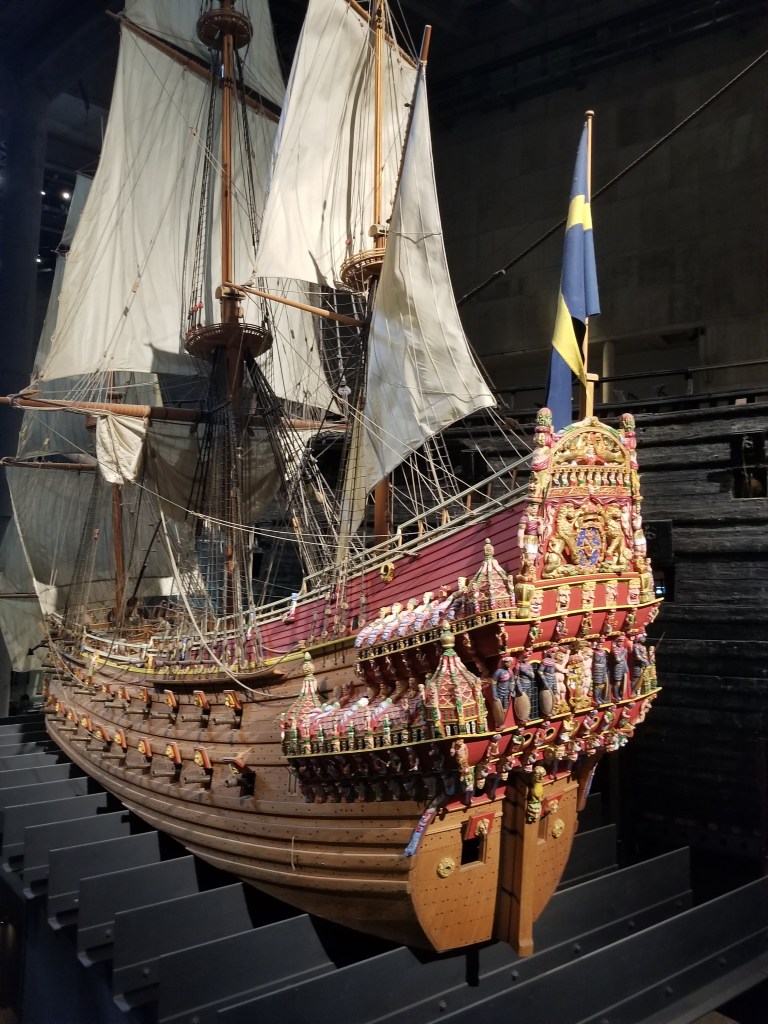
This is my photo of a model of the Vasa ship. The model is colorful and feature a Swedish (blue and yellow) flag as well as sails.
A model of the ship showing how it once looked like. This model is part of the museum exhibit (my photo).
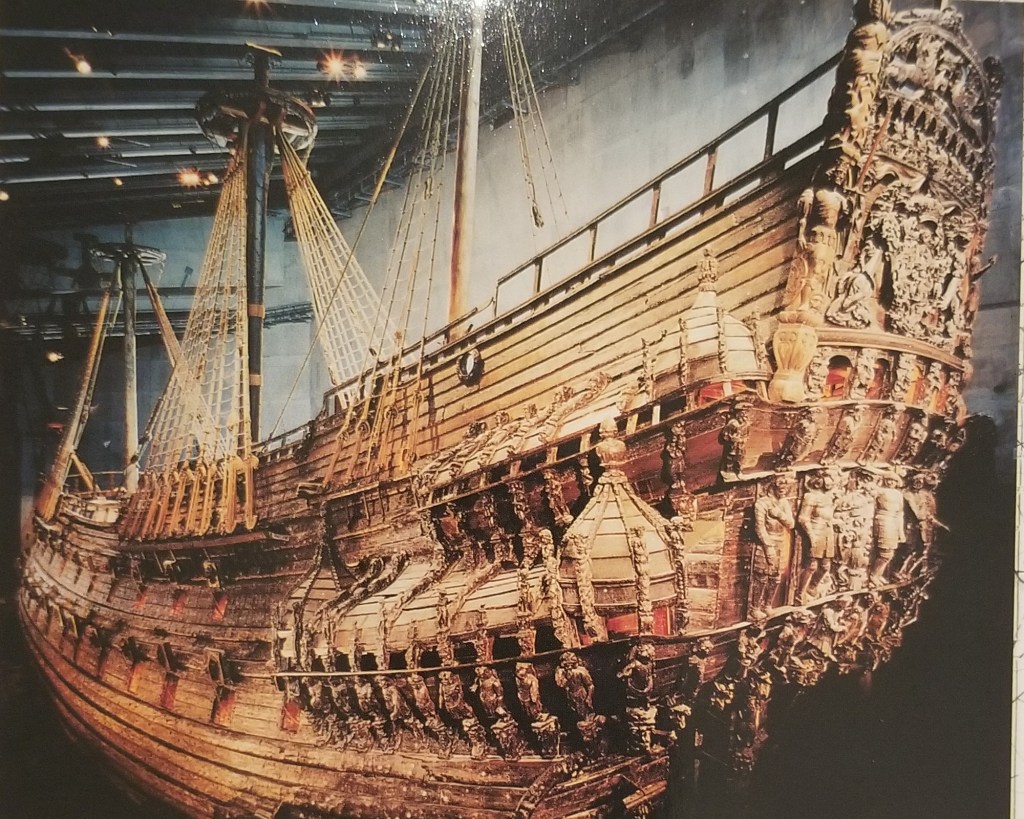
A photo of the Vasa ship taken from the side at the Vasa Museum Stockholm.
An older photo of the Vasa ship (not mine). It is taken from the side so you can see the whole ship.

It should be noted that the conservators learned some lessons as they tried to conserve the ship. They pioneered many new methods and succeeded in solving many difficult problems. However, they found that using the conserving agent PEG was not a good idea. The iron originally concentrated in specific areas in the wood was spread over the entire ship. The consequences of this became apparent decades later.

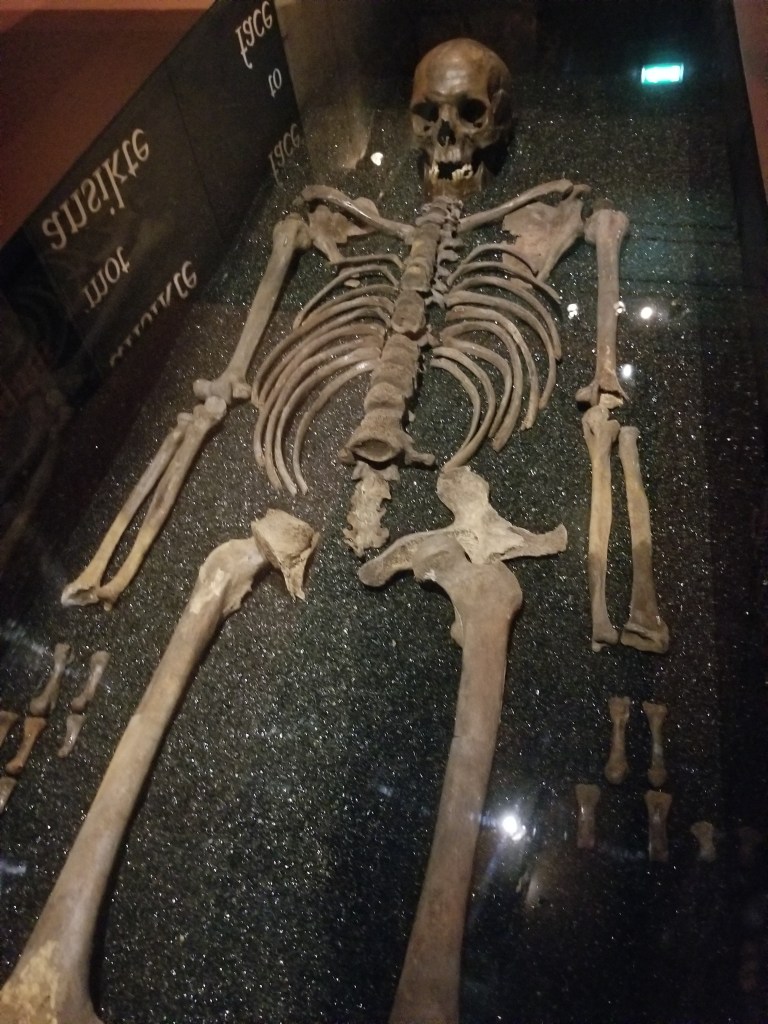
A photo of a skeleton lying on its back at the Vasa Museum Stockholm.
Other things they found when they salvaged the ship were the anchors and skeletons.

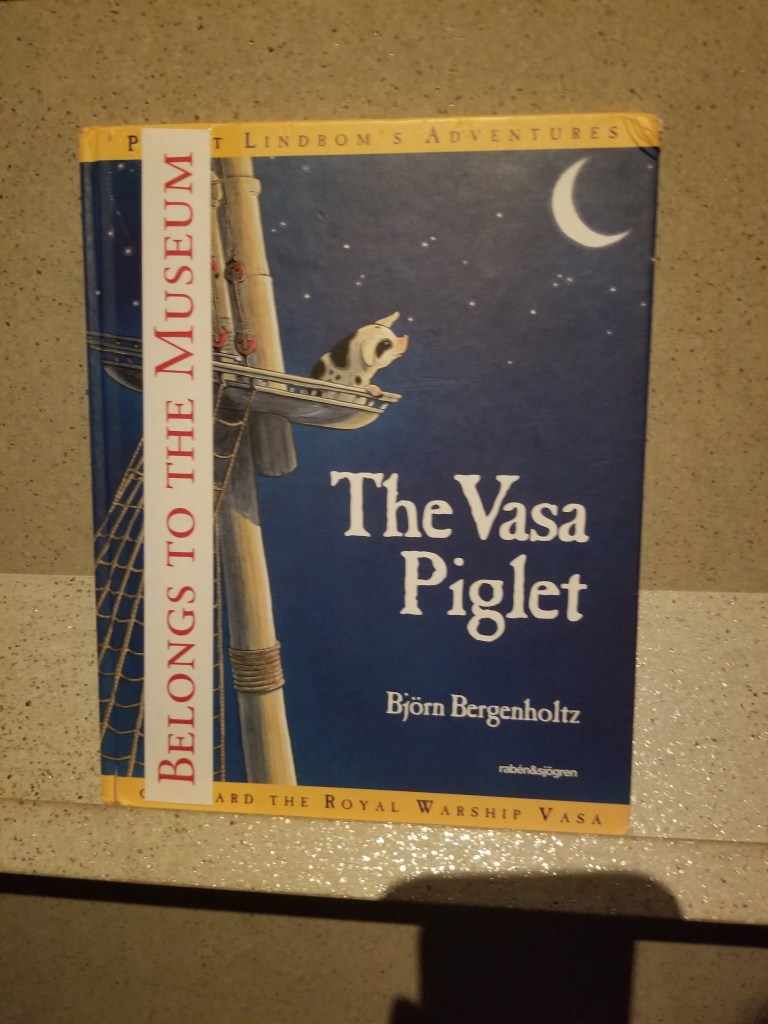
Once when we visited the Vasa Museum, I bought a children’s book that they sold at the museum called The Vasa Piglet. The story was about a pig who was brought onto the ship to be slaughtered and eaten. However, the ship tipped and sank but the pig saved itself by climbing the mast, sitting in the mast platform for a while before swimming to shore. The piglet survived, and no one ever tried to eat him again. Therefore, he lived happily ever after, but no one else did. It seemed like a cute story to me, but my daughter claims she was traumatized by this book. She was fearful of boats for several years afterwards.

The front cover features a black and white pig sitting in the platform at the top of the mast.
Photo of the front cover of the children’s book the Vasa Piglet.

To see the Super Facts click here


We are Star Dust

Superfact 10 : We Are Star Dust

The matter in our bodies and our planet was formed by fusion in the cores of distant stars and then spread across the Universe by supernova explosions. This matter was later incorporated in second and third generation stars like our sun and its planets.

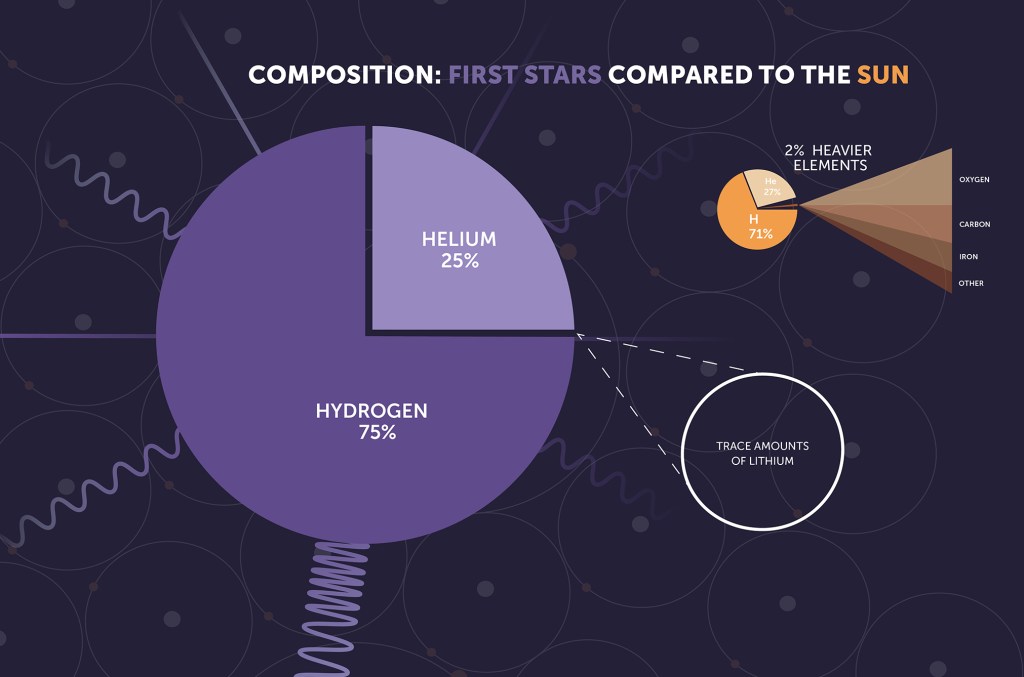
What do I mean by “We are Star Dust”? Let me explain. The first stars in the Universe were made of 75% hydrogen and 25% helium and trace amounts of Lithium, just like the entire Universe at the time. There were no heavier elements that could form planets or other solid celestial bodies. These early stars tended to be large and heavier elements like carbon, oxygen, and iron were formed by fusion in the cores of these stars.

Many of the first stars, called first generation stars, ended their lives in massive supernova explosions and the dusty remains of these explosions, including the metals formed in their cores, became the building blocks of the stars we see today. These second and third generation stars have planets and other smaller solid objects orbiting them, formed from the gas and dust (star dust) left over from the supernova explosions. So, we are star dust. The atoms formed inside the first-generation stars are now within us.

The picture consists of two pie chart graphs representing stars. The left one is a first-generation star with one pie for the 75% hydrogen and one pie for the 25% helium | We are Star Dust
The first-generation stars consisted of 75% hydrogen and 25% helium and trace amounts of Lithium. A second or third generation star like our sun is still mostly hydrogen and helium but also many other elements. The rocky planets circling the sun are mainly elements heavier than hydrogen and helium. Image credit NASA, ESA, CSA, STScI.
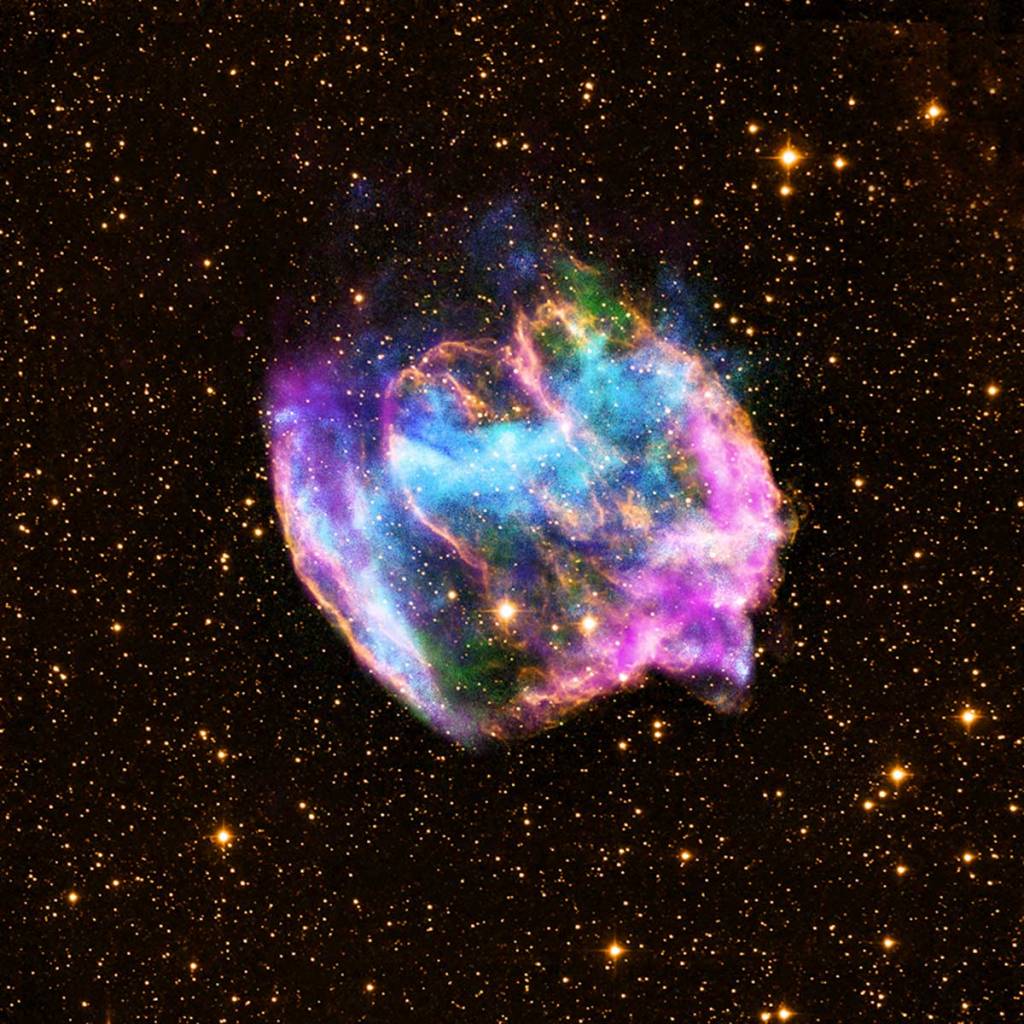
A colorful, nebula, a remnant from a supernova explosion on the background of a black sky full of stars.
Remnants of a recent supernova W49B, 26,000 light years away. Credit: X-ray: NASA/CXC/MIT/L.Lopez et al.; Infrared: Palomar; Radio: NSF/NRAO/VLA.

For those who know astronomy this may be basic information, but I’ve met many people who are unfamiliar with this information, and they are quite often surprised and astonished. That is why I consider this information a super fact. I can add that this process, the birth and death of first-generation stars, the supernova explosions, the disbursal of the matter, which later clump together to form new stars and rocky planets as well, takes many millions of years.

Bright white star surrounded by bluish rings | We are Star Dust
This is an Illustration of a supernova. Stock Vector ID: 2109918599 by Varunyuuu.

A Refresher

For those who need a refresher of things like stars and planets and galaxies. Our sun is a star, a third-generation star. It is much bigger than our Earth. If Earth is the size of a small pea or a caper, then the sun would be the size of a beach ball. However, our sun is not a big star, and it is only one star among between 100 and 400 billion stars in our galaxy the Milky Way.

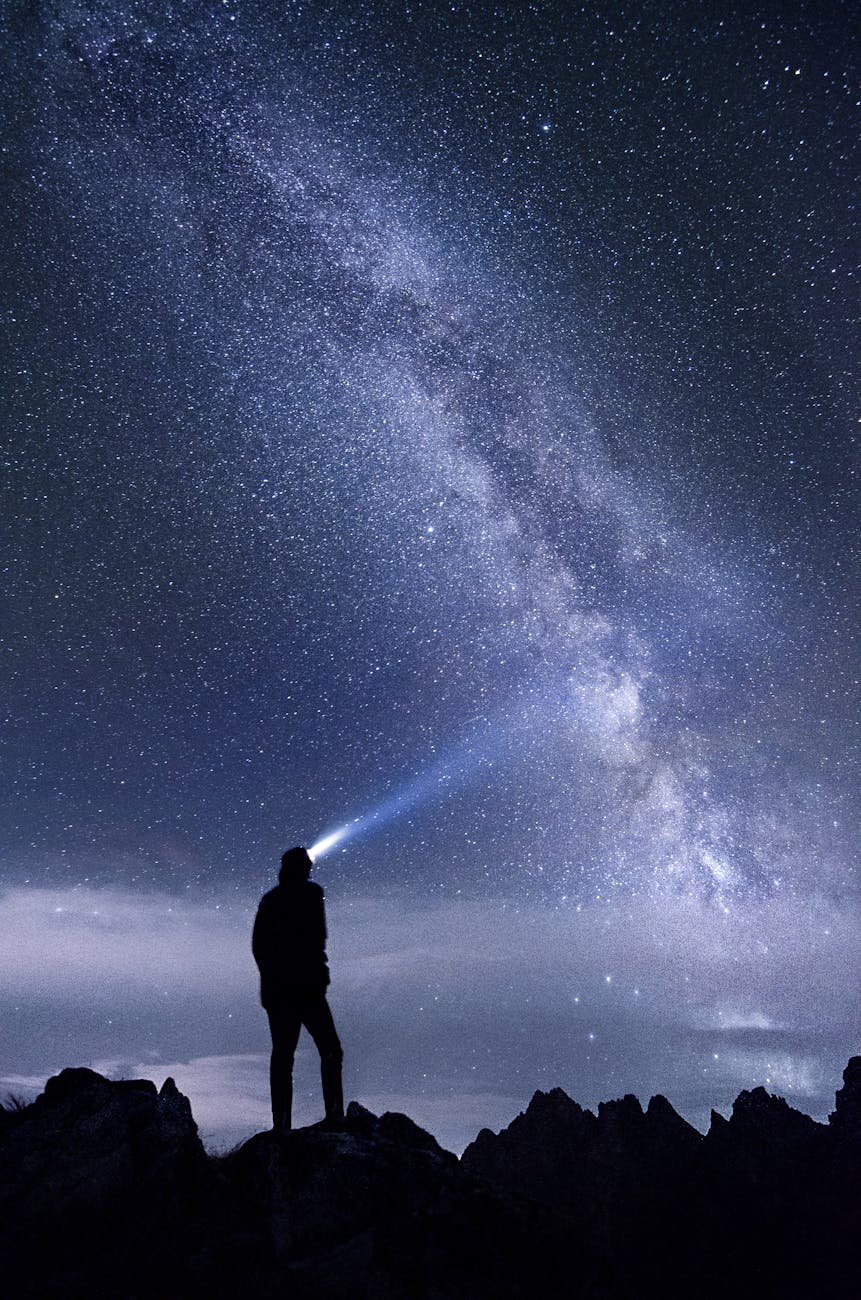
Many galaxies including our own are disc shaped or look like spirals. If you imagine a dust storm cloud in which there are a thousand dust particles per cubic foot, each representing a star. Then this dust cloud would be 100 to 400 feet thick, and a thousand feet wide and long. I can add that there are between 100 billion to 2 trillion galaxies in the visible Universe. Also, the Universe is much bigger than the visible Universe and might be infinitely large.

The milky way galaxy stretches across the night sky.
A glimpse of our milky way galaxy. Photo by Stefan Stefancik on Pexels.com

As mentioned, orbiting around our sun there are planets, dwarf planets, moons, planet rings, asteroids, comets, meteoroids, interplanetary dust, etc. The star closest to the sun is Proxima Centauri, which is 4.24 light-years away, but it is too small to be seen. The stars that are visible in the night sky tend to be large stars that are not too far away.

Here in Dallas where I live you can typically see 15 stars with the naked eye, and you cannot see the Milky Way. That’s because of the light pollution. In northern Sweden where I grew up you could see 3,000 stars, our galaxy the Milky Way, as well as the Andromeda Galaxy on a clear night with the naked eye.

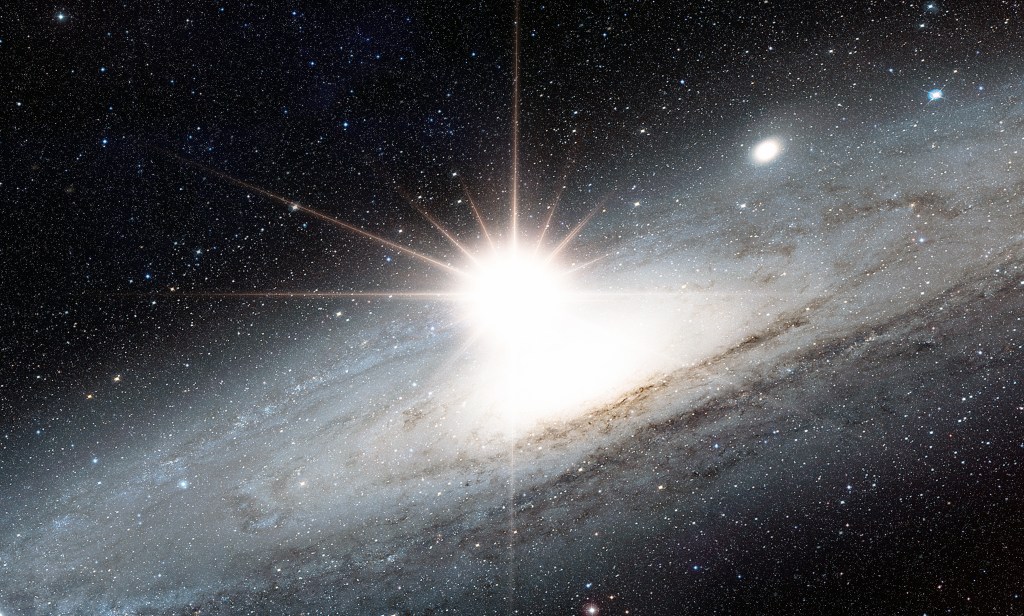
In 1885 a supernova explosion was recorded in the Andromeda Galaxy. Below is a constructed photo showing how it might have looked like if we had had better equipment back then. Notice that the supernova explosion is essentially outshining the entire galaxy. We are the result of the gases and dust spread by such explosions. You can also read more here.

A picture of the Andromeda Galaxy with a bright white light near its center. The bright light is almost outshining the entire galaxy.
Supernova explosion in the center of the Andromeda galaxy “Elements of this image furnished by NASA” It is essentially an enhanced photo of a supernova explosion in a neighboring galaxy. Stock Photo ID: 2495486227 by muratart.

To see the other Super Facts click here