
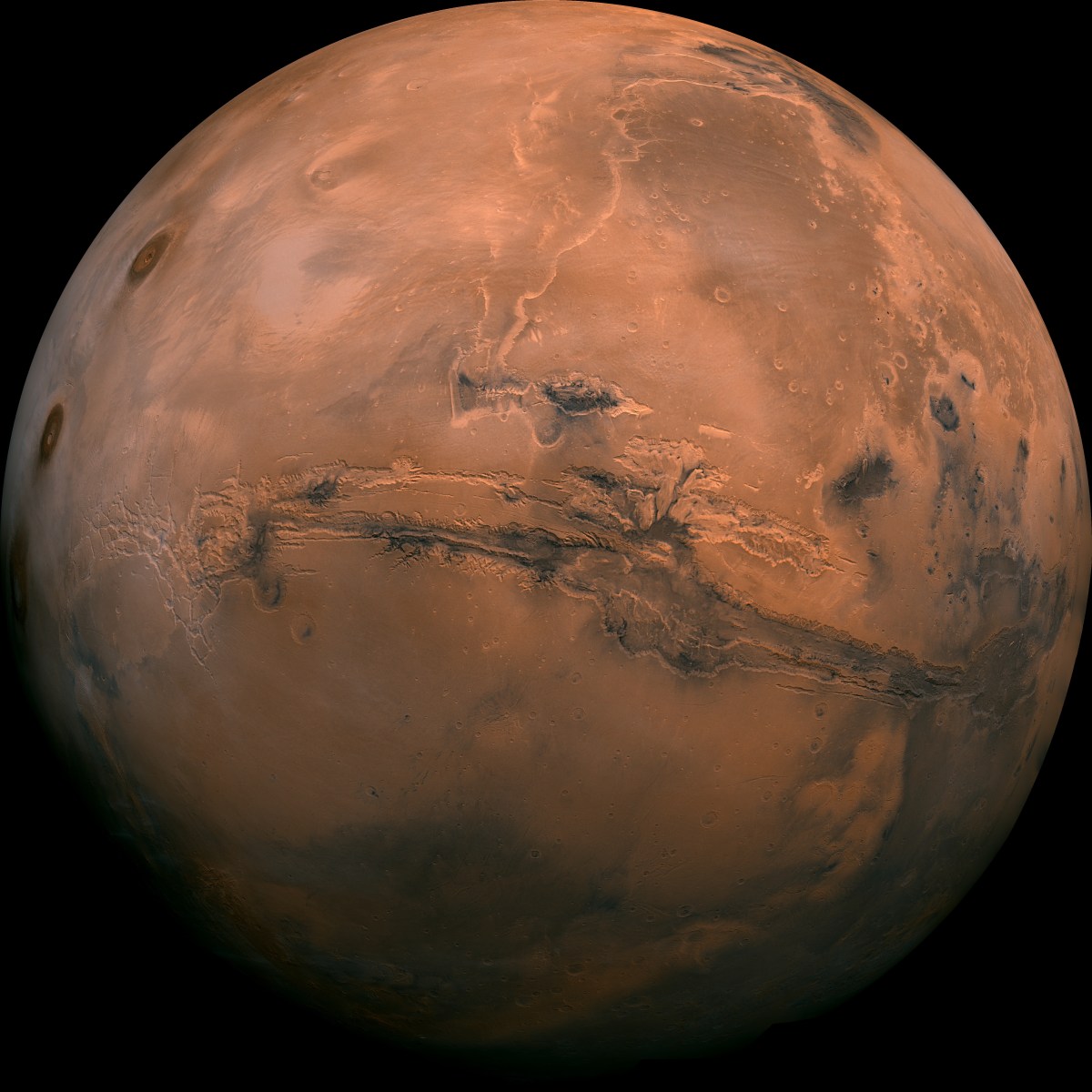
Superfact 141: Humans travelling to Mars and back using current chemical rocket technology is nearly impossible and extremely dangerous. It is in a completely different category from manned Moon Missions.
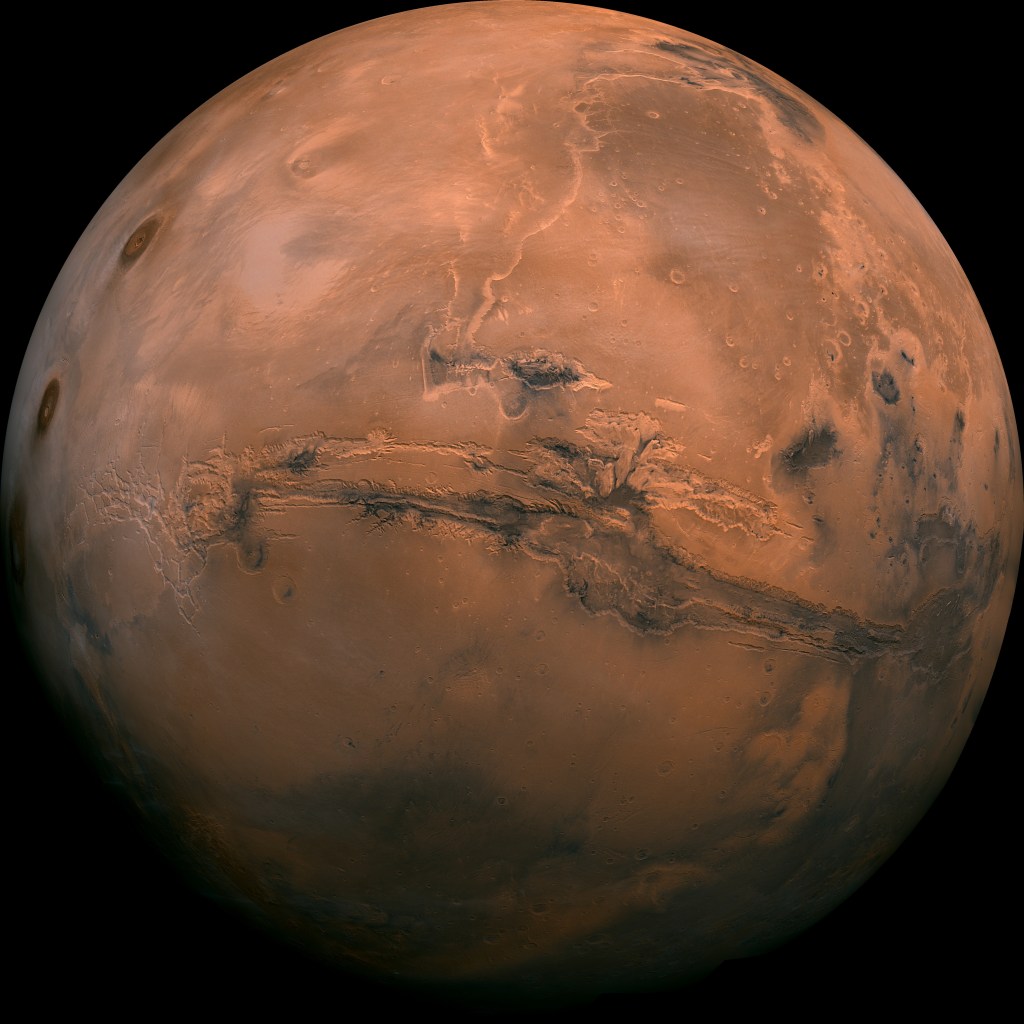
The exponential nature of rocket physics (the tyranny of the rocket equation), massive fuel and weight requirements, immense distances, the 500 days of waiting on the surface for Earth and Mars to align for a safe return, and severe hazards to human health, makes travelling to Mars immensely more difficult than travelling to the moon and back.
We went to the moon. Russian cosmonaut Valeri Polyakov spent 438 days in space. We’ve sent spacecraft and landers, rovers and an aerial helicopter to Mars, so why could we not send people? It is just a few hundred times farther than the moon. Shouldn’t we be able to keep an astronaut alive for a couple of years for a Mars trip? It turns out that those questions are forgetting about several enormous obstacles. It turns out that the enormous obstacles facing a human Mars expedition are surprising if you haven’t investigated this topic before, and therefore I consider it a super fact.
The Tyranny of the Rocket Equation
The Earth and the Sun have gravitational fields that a rocket needs to overcome to move up into space. A good indicator of how difficult it is to leave a planet, or other celestial objects, is its escape velocity. The escape velocity is the minimum speed a rocket must achieve to break free from a celestial body’s gravitational pull and never fall back, without any further propulsion. The escape velocity for Earth is 11.2 km/s, for the sun it is 617.7 km/s, and for the sun starting from Earth’s orbit it is around 42.1 km/s. This means you need a better rocket to make it all the way to Mars because it is further away from the sun.
If the rocket is not powerful enough you need to add more fuel. The problem is that more fuel means that you make the rocket heavier, so you need even more fuel, etc. This is called the rocket equation. It is commonly called the tyranny of the rocket equation. Current chemical rockets using the best hydrogen-oxygen propellants already dedicate about 80% to 90% of their mass purely to carrying fuel.
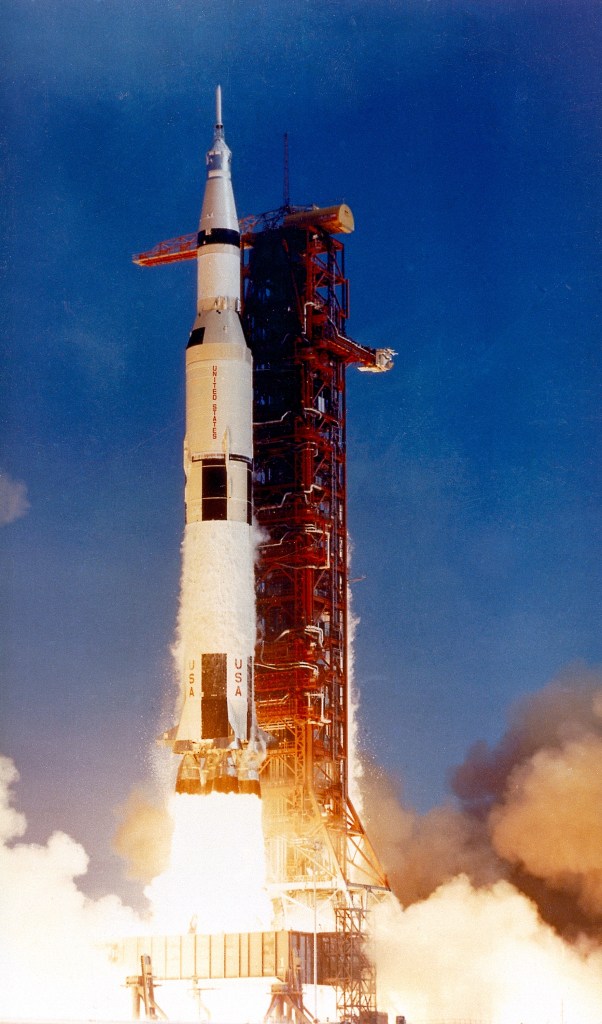
In fact, leaving Earth with a standard chemical rocket would become practically impossible if the planet’s radius were 50% larger. If Earth’s radius increased by 50% while maintaining the same density, its mass would grow by a factor of 3.375, raising surface gravity to about 1.5 times current levels. No matter how much fuel you added you could never leave planet Earth.
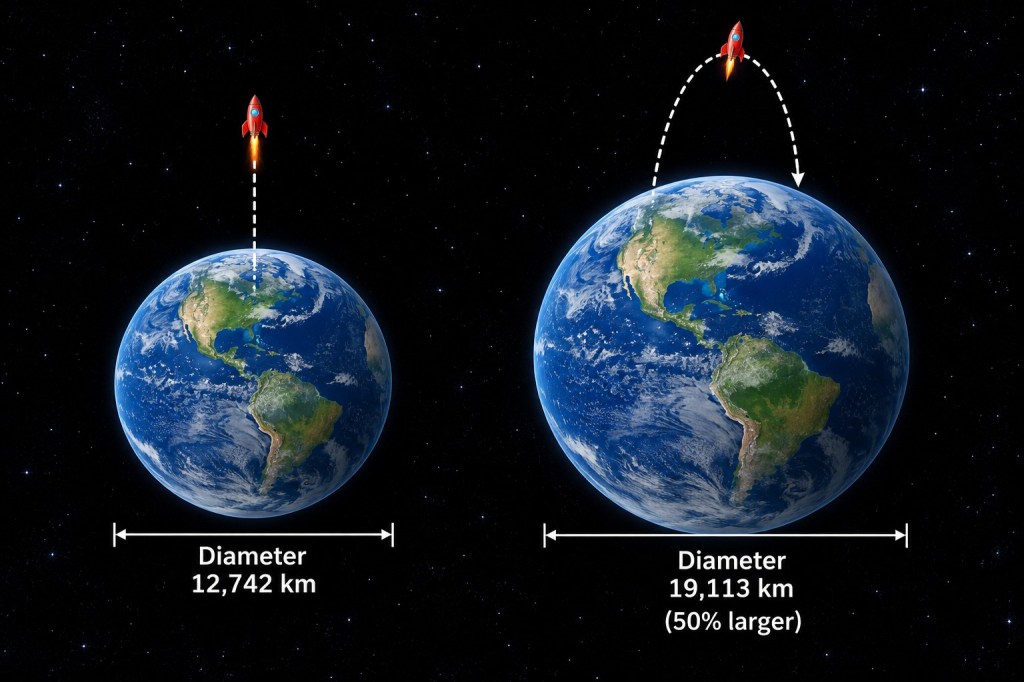
I should say that situation with Mars is a bit different from the supersized Earth situation above. We can send a standard chemical rocket spacecraft to Mars. Otherwise, we would not have been able to get any spacecraft to Mars. However, for a round trip we need extra fuel to get back up from Mars and that cannot be done without refueling. This means that you need orbital refueling strategies. For example, you can build refueling stations along the way, on the moon and on Mars, and then you have to transport the fuel there, before you begin the roundtrip. That is a lot of extra effort. You can read more here.
The Required 500 Days of Waiting on Mars
The distance to Mars is immense. When Mars is the closest to Earth it is on average roughly 60 million miles, which is 250 times farther than the moon. This is referred to as Mars being in opposition. When Mars is the farthest from Earth, it is 250 million miles from Earth, or 1,050 times as far as the moon. This is because Earth and Mars travel in orbits at different speeds. That’s a long trip. The picture below shows the planets and their orbits. See how Earth and Mars are far away from each other in this picture.
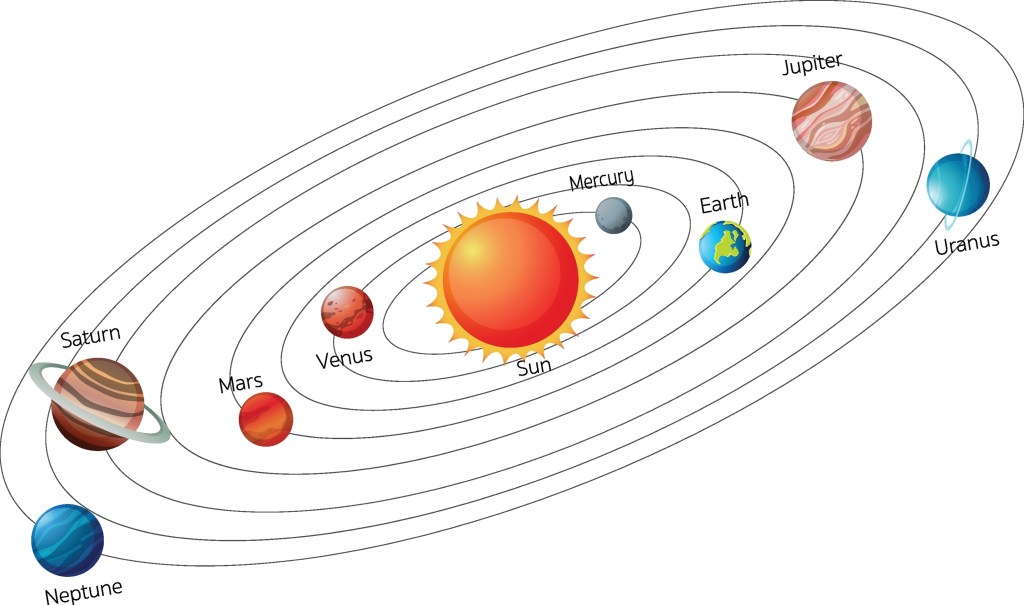
There are two obvious problems. First, after you land on Mars you cannot go back the way you came. You are going to have to wait for the best opportunity to fly back to Earth. A round-trip mission to Mars is estimated to take 900 to 1100 days. One estimate is 911 days (about 2.5 years): 174 days to get there, over 500 days waiting on the surface for planets to align for a safe return, and 201 days to fly back. The crew needs to be protected from the extreme radiation for 500 days, and fed for 500 days, and kept safe for 500 days without access to any Earth facilities.
Add to that the fact that Mars and Earth will be on the opposite side of the Sun from each other for two to several weeks (Mars solar conjunction) during which radio communication will be impossible. Any help needed from Earth during that time will be absent.
The Extreme Radiation and other Hazards
Last but not least the threats to the astronauts health are immense. Space radiation during a short trip to the moon is one thing. Being subject to space radiation during two and half years is quite another. Mars magnetic field is weak and its atmosphere thin, so you won’t get much help from that. To protect astronauts, you would need lead and water containment, which would add weight and additional fuel requirements. A very long time without gravity, maintaining safe ecosystems inside a rocket for two and half years, isolation and confinement, are all challenges that may not be survivable.
Conclusion
A manned Mars Mission is easier said than done. If you are interested, below is a YouTube Video that explains the details. Naturally, in the future we may have different kinds of technology, nuclear powered spacecraft, spacecraft utilizing the solar wind, advanced robots aiding astronauts, etc., that could make manned Mars missions feasible.

