
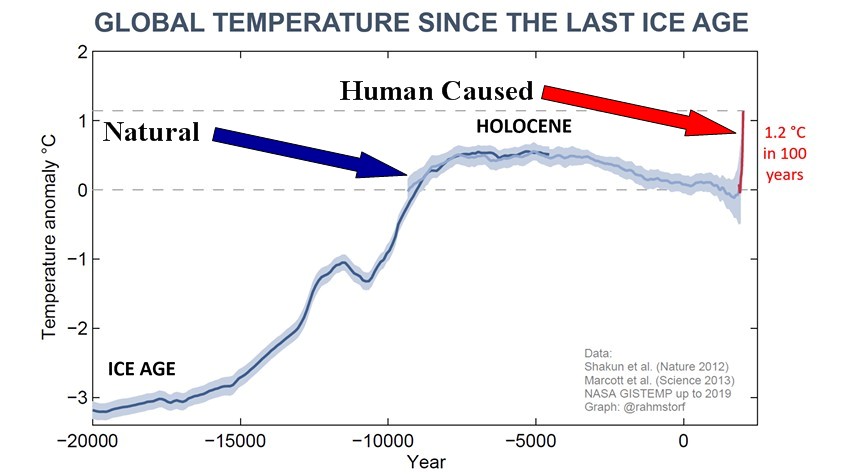
Superfact 136: Ocean currents regulate global climate but are not the cause of the rapid Global Warming we are witnessing. El Niño events can combine with background global warming to temporarily increase global temperatures but is not the cause of the current rapid Global Warming. The cause for the recent rapid global warming is human activities, chiefly our greenhouse gas emissions. This in turn alters ocean currents and intensifies El Niño.
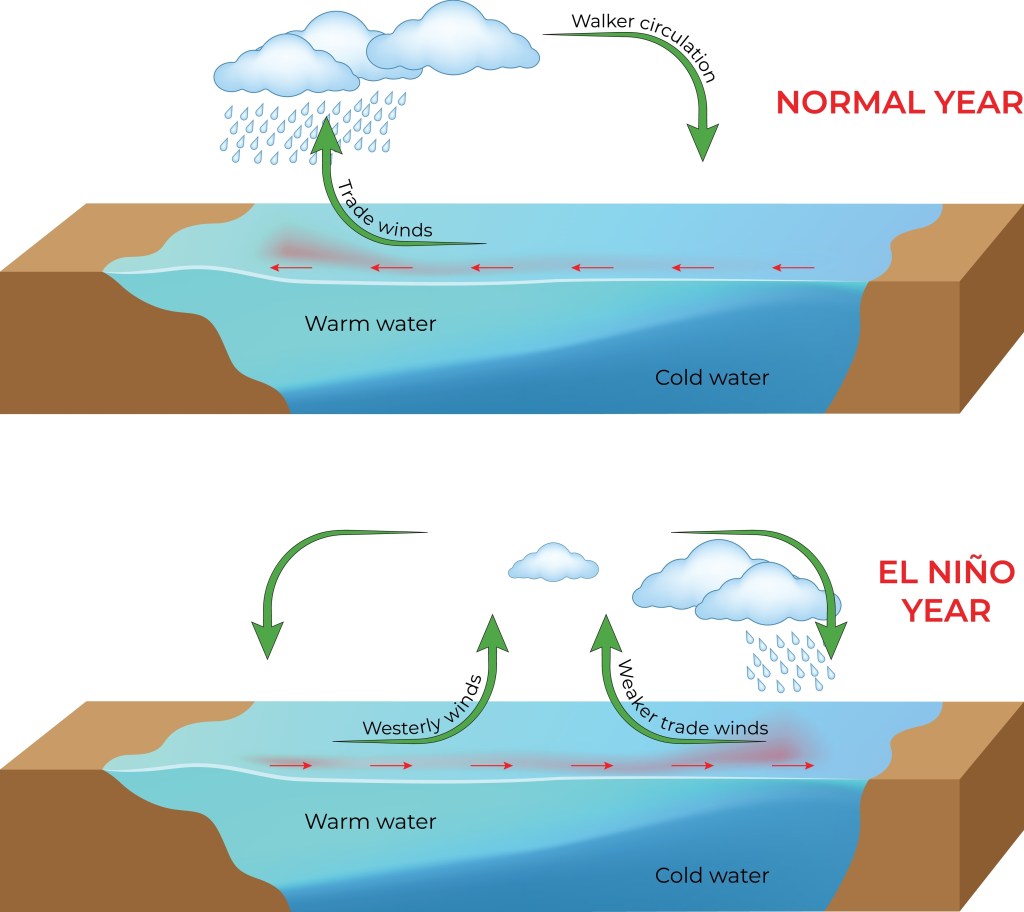
El Niño is a natural phenomenon caused by the weakening or reversal of the trade winds across the tropical Pacific Ocean. El Niño and the corresponding cooling phase, La Niña, is also called the Southern Oscillation (ENSO). ENSO is referred to as climate variability rather than climate change because the variations in climate are on shorter specific time scales, like a cycle. Other climate variability / cycles are the Pacific Decadal Oscillation and the North Atlantic Oscillation.
El Niño temporarily spikes global temperatures and makes the impacts of global warming worse. It is important to understand that natural climate variability and cycles like El Niño are not the cause behind the rapid global warming / climate change that we have witnessed over the last 150 years.
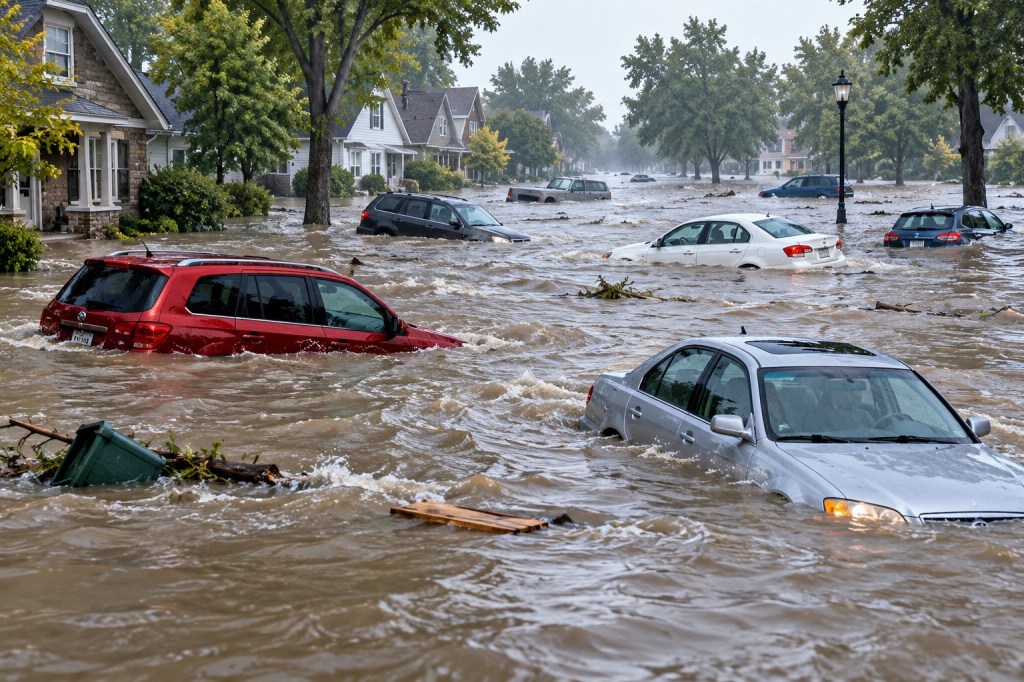
However, human-caused global heating from burning fossil fuels is making El Niño events stronger. Rising global background temperatures make a warmer atmosphere hold more water vapor. When El Niño happens on top of long-term climate change, it supercharges weather events leading to heavier floods, worse droughts, stronger heatwaves, and severe wildfires. Studies show that El Niño events are more than 36% stronger than they were before the industrial era began, with an acceleration in recent decades. This year we are expecting an extra strong El Niño. You can read more about that here and here.
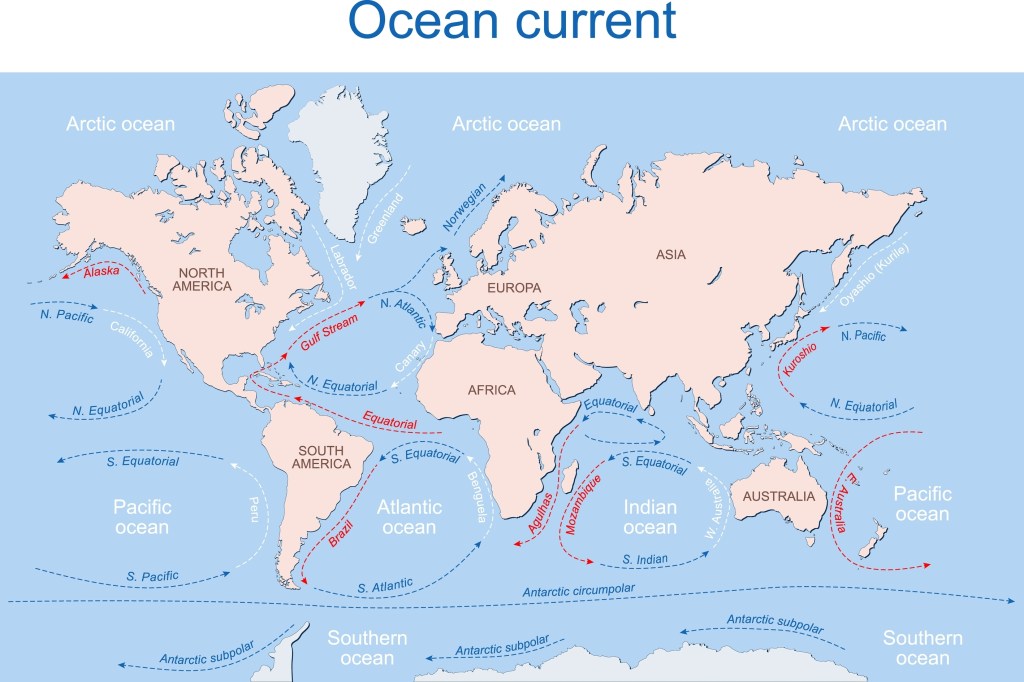
The ocean and ocean currents are affecting climate. The oceans store heat from the sun and ocean currents help distribute the heat and regulate climate. However, even though ocean currents affect the rate of global warming they are not driving it. Global warming of surface air temperature is as mentioned largely due to increases in greenhouse gases, which lead to increased radiative heat fluxes toward Earth’s surface. You can read more here and here.
I have not come across many claims that specifically states that climate variabilities such as El Niño is what is causing the recent rapid global warming. However, I’ve seen many dismissive comments stating that it is just some sort of cycle (the unknown cycle). Comments such as “climate has always changed”, or “it is natural” are based on the mistaken assumption that scientists haven’t investigated natural causes for climate change. Therefore, I consider it a super fact.
What is not Causing the Recent Rapid Global Warming
This is my sixth and last post in the series about natural causes of climate change that we know are not the cause of the current rapid global warming / climate change. The fact that no known natural cause for climate change can explain the current rapid global warming is just one small piece of the evidence. However, it is a piece that people tend to get stuck on a lot. You often hear claims such as “climate has always changed”. “I think it is a natural cause”. To recap, these are the previous posts.
Superfact 122: We know that the current global warming, or if you call it Climate Change, or Climate Disruption, is caused by us primarily because of our burning of fossil fuels. It is not “natural causes”, and it is not orbital cycles, so called Milankovitch cycles. These orbital cycles include changes in orbital eccentricity, axial tilt, and axial precession. We know that Orbital Cycles are not responsible for the current rapid global warming because Orbital Cycles operate on tens of thousands of years or hundreds of thousands of years, not a couple of centuries. We know that Orbital Cycles are not responsible for the current rapid global warming because the effects of Orbital Cycles are slowly cooling Earth, not warming it. The way the warming happens is also wrong for orbital cycles.
Superfact 124: The Sun is not the cause of current global warming. According to data from NASA, solar energy output has shown no net increase since the late 1970s. In addition, the amount of solar energy Earth receives has followed the Sun’s natural 11-year cycle of small ups and downs with no net increase. Over the same period, global temperature has risen significantly. The current warming is driven by human-made greenhouse gases, not changes in the Sun.
Superfact 125: Volcanoes emit about 0.2 to 0.6 billion metric tons of carbon dioxide per year globally. Our burning of fossil fuels and industrial activities release more than 35 billion metric tons annually. Human emissions are roughly 60 to 100 times greater than all global volcanic output combined. Thus, volcanoes are not the cause of the current rapid global warming.
Superfact 128: There are a lot of natural carbon emissions from the soil, rotting plants, animal and human respiration, and oceans, and a small amount from volcanoes. However, carbon is also absorbed by the oceans, and by plants via photosynthesis, etc., and this creates a balance that has existed for many thousands of years. This is called the carbon cycle. Despite the fact that the carbon emissions from our burning of fossil fuels are much smaller than some of the naturally occurring carbon emissions mentioned, they are what is behind the increase of carbon in the atmosphere because they are a new addition that disrupts the carbon cycle.
Superfact 133: Water vapor is responsible for roughly half of Earth’s total greenhouse effect, but unlike carbon dioxide or methane, water vapor condenses and falls as precipitation. Water molecules only stay in the atmosphere for about two weeks. We do not directly control global water vapor levels. When carbon dioxide warms the planet the atmosphere holds more water vapor, which amplifies the initial warming. However, water vapor does not drive global warming. Carbon dioxide emissions and to a lesser degree methane emissions drive global warming. Water vapor just amplifies the effect.
Conclusion
Climate variability, climate oscillations, climate currents affect climate and are important to climate and are affected by global warming, but they are not the cause behind the recent rapid global warming. It is caused by us primarily as a result of our burning of fossil fuels.
Super facts related to global warming
- Global Warming is Happening and is Caused by us
- The Hockey Stick Graph is not Wrong
- Scientists Agree that Global Warming is happening and that we are the Cause
- Climate change worsens wildfires in the US
- Without carbon dioxide the Earth would freeze
- IPCC Did Not Backtrack on Global Warming Being Human Caused
- Orbital Cycles are not the Cause of the current Global Warming
- The Sun is not the Cause of the current Global Warming
- Volcanoes emit a tiny fraction of carbon compared to humans
- Climate change worsens wildfires Globally and human Land-Use Changes Reduces them
- Carbon Cycle Emissions Does Not Cause Global Warming
- The Most Important Greenhouse Gas Does Not Drive Global Warming
To see the other Super Facts click here


A clear and useful explanation. I especially appreciate the distinction between short-term natural variability such as El Niño and the longer-term warming trend. It makes a complicated subject much easier to understand. Thank you.
LikeLiked by 1 person
Thank you so much Patricia for your very kind words
LikeLike
Hreat descriptions Thomas, I also like the El Nino graphic, it makes it a little easier to visualize what’s happening. Maggie
LikeLiked by 1 person
Thank you so much for your kind words Maggie. Yes I think that is a good El Nino graphic. I looked at a few but most were too complicated.
LikeLiked by 1 person
very informative (and well-written)
one thing does bother me about the current culture is it’s man vs nature* match-up is how there is still plenty of time left to find a fix (and protect shareholder value)
alas
*no! serially I grew up in the 50s and 60s and two things stick with me: ‘endless natural resources’ (in actual book that I had in grade school) and ‘conquering the: weather, elements, wilderness etc’
LikeLiked by 1 person
Thank you so much Clark. Yes you are right the longer we take to reduce emissions (or keep increasing them) the more the damage will be, and even if we completely stop emissions, the damage will keep getting worse for several decades. So we better do well. Luckily we have made some progress. Most developed countries have reduced their emissions by 20-40% since 2005 and even China is turning their emissions around. It is going slow but a baby step.
LikeLiked by 2 people
Java Bean: “Ayyy, how could anyone believe ocean currents could be the cause of global warming? Sometimes I think humans will grasp any straw they can find to avoid changing their behavior in ways that are inconvenient.”
Lulu: “Only sometimes?”
LikeLiked by 1 person
Yes you are right Java Bean. I was kind of like that myself 15 years ago but then I actually took the time to understand the evidence and the science and it changed everything. When you don’t much about a topic it is easy to be overconfident and believe silly things. But you are right Java Bean and Lulu, it is called motivated reasoning. When you don’t want to understand something then you won’t.
LikeLike
this a big topic in Brazil, my wife mentions it from the news. It was caused some warmer than usual with more rainfall n and winds.
LikeLiked by 1 person
Yes the El Niño events are getting stronger and from the report I’ve read this year, end of 2026 and 2027 is expected to be the strongest.
LikeLiked by 1 person
Another excellent post, Thomas. What you have said was very clear, so thanks for that.
LikeLiked by 1 person
Thank you so much Chris. I appreciate your kind words.
LikeLiked by 1 person
Thanks for another great read, Thomas.
LikeLiked by 1 person
Thank you Denise. I really appreciate it.
LikeLiked by 1 person
Very informative, Thomas! Yes, the Earth has its own ways of regulating and balancing itself. The ocean currents (and even the atmospheric currents) are part of these mechanisms. Even the peculiar El Niño ends up acting as a more extreme “valve” for global management. But when we alter chemically and physically the natural settings beyond the buffer capacity of the Earth, we end up creating desregulation and disruption. Global warming is an example of that. The Earth has its natural variations, but the global warming is clearly much more than that. I am enjoying your posts on this matter, and I thank you for bringing forward updated information. Informed people can make better choices. Sending light and blessings your way, my friend, always! ✨🙏
LikeLiked by 1 person
I think that is a great way of summarizing the whole thing. Thank you so much Susana and I am also sending light and blessings your way, my friend!
LikeLiked by 1 person
I remember learning in one of my classes that the meat and dairy industry is one of. the biggest emitters of methane. Not sure how accurate that is but something I thought of while reading this. Also, there’s going to be El Niño rains in Kenya starting October and really hoping there’s no major flooding.
LikeLiked by 1 person
Yes meat and dairy industry and consumption generate roughly 14.5% to 18% of total global emissions, which is a lot. Beef is the worst, 8-10 times as much as chicken for the same amount of protein, and 50 times as much as plants for the same amount of protein. In the US the percentage is less but not the total, and that is because we have other things that emit a lot of carbon, transportation, we use a lot of energy etc. I am certainly hoping that you don’t get a lot of flooding in Kenya.
LikeLiked by 1 person
Thanks, I read today that it won’t be too bad here but still fingers crossed. That’s interesting to know, I remember learning that in sociology.
LikeLiked by 1 person
Yes let’s hope for the best. I’ve read that we will see more rain this fall and judging from the last two days that is true. We went from 40 Celsius to pouring rain in one day. I am a bit worried about tornadoes. Hopefully we won’t see that.
LikeLiked by 1 person
Yeah, I hear tornados are frequent there. Hopefully, it won’t be the case this time. Oddly enough it’s not rained much here all year but I guess it’ll come now.
LikeLiked by 1 person
It’s been raining a lot here. It finally stopped today and no tornadoes. An EF3 tornado destroyed out neighborhood on October 20 in 2019.
LikeLiked by 1 person
Yes, I remember you mentioned you were on the news for that right?
LikeLiked by 1 person
Yes you are right Pooja. Good memory. NBC Texas interviewed me and I was on TV.
LikeLiked by 1 person
Hopefully there won’t be much destruction this year.
LikeLiked by 1 person
Yes let’s see what happens.
LikeLiked by 1 person
Thanks for the good post about El Nino and climate change. El Nino is a phenomenon I’m well familiar with having experienced other El Nino years in the past — and of course the changes they bring to the weather impact my work in astronomy. This one has definitely seemed intensified over those, but as you say, it’s a case of climate change intensifying the natural phenomenon rather than the natural phenomenon causing climate change.
LikeLiked by 1 person
Yes you are right and it is interesting that El Nino impacts Astronomy as well. I don’t know how that works, but it is interesting.
LikeLiked by 1 person
In very general terms an El Nino year will be a wetter year for the Southwestern United States, so that means more storms and poorer conditions for observing. That said, climate change has made those storms much stronger and longer lasting, so its even worse now than it was, for example, during the El Nino year we experienced in the mid 1990s.
LikeLiked by 1 person
I see. That makes sense. I hope the El Nino will not ruin too much of your work.
LikeLiked by 1 person
This is really interesting; I’ve never understood the carbon cycle before. I actually didn’t know that carbon can be absorbed by the oceans and by plants through photosynthesis. It seems clear now that carbon dioxide emissions and methane emissions drive global warming, rather than other causes.
LikeLiked by 1 person
Yes what some people don’t seem to understand is that the scientists, the weather organizations around the world, NASA, NOAA, etc., keep track of natural variability, cycles, orbital cycles, the sun, and that in addition they all result in different climate patterns and different effects on the atmosphere. We can also directly meausure the effects via satellites. We’ve known with a very high degree of certainty for many decades that we are the cause of the current rapid overall global warming, and yet many people keep dismissing it out of hand as “climate always been changing”. It is complicated but possible to understand. Thank you so much Ada.
LikeLiked by 1 person
Thanks for this excellent write-up, Thomas! 👌 It’s timely, as we are supposed to have a strong El Niño affecting our weather this winter. Although I hate the cold, and appreciate a milder temperature arc, they say the possibility of ice storms will increase. 😬
LikeLike
Thank you so much Debbie. Yes the combination of an overall milder winter and worse ice storms is possible. Both can be true. I hope you’ll be safe up there in Canada. Here in Texas they predict a cooler and wetter winter with risk for flooding. We’ll see.
LikeLiked by 1 person
Hi Thomas, I know El Niño is not the cause of climate change but it’s useful to understand how climate change is impacting this natural phenomena and why. Thanks for this detailed post.
LikeLiked by 1 person
Yes I agree. Thank you so much for your kind words Robbie.
LikeLike
💚
LikeLiked by 1 person
Great breakdown Thomas. and truth to every word what causes climate change. I read recently that this year’s El Nino was to be very disruptive. Then I heard the currents changed in the Pacific and the El Nino predicted was to turn into a La Nina, which I’m afraid will bring back the horrific winter we had last winter. El Nino usually gives us a warmer winter and less snow. 🙂
LikeLiked by 2 people
Yes I’ve been reading the same thing. El Ninos keep getting worse with climate change, but it is not El Nino that is driving the overall global warming trend and climate change. I hope it will not be too bad. Thank you Debby.
LikeLiked by 1 person
😊
LikeLiked by 1 person
interesting. we’re still unseasonably sweltering here in Los Angeles…
LikeLiked by 1 person
We’ve had a very hot and dry summer in north Texas, around 100 degrees almost every day for the last 2-3 months, but it suddenly stopped a couple of days ago. Now the temperature is comfortable and we got lots of rain. The heat is not fun for dogs. I hope your’s does not last long.
LikeLiked by 1 person
now we’re getting ready for deluge…
LikeLiked by 1 person
Hopefully not too much
LikeLiked by 1 person