
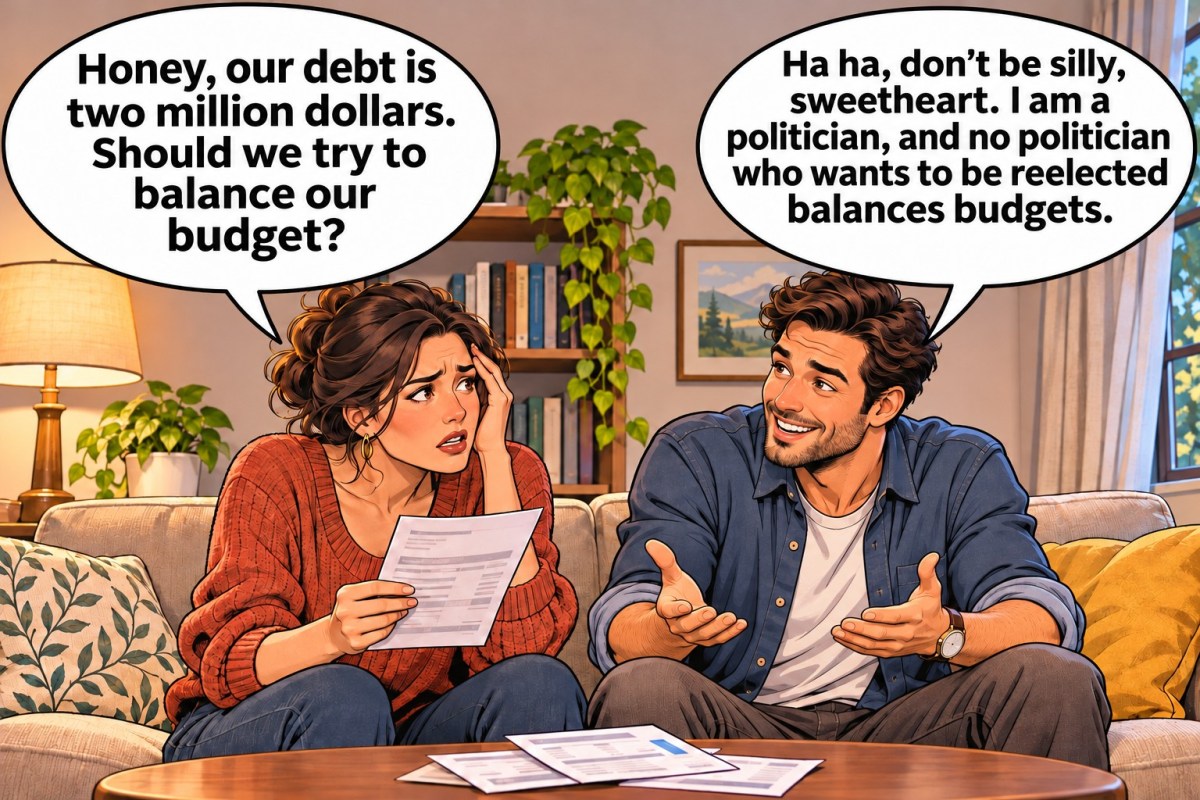
Superfact 149: Developed countries such as the United States, Japan, and most European countries are failing to balance their budgets, and their national debts are staggering.
Esther’s writing prompt: November 18th: Balance
Click here or here to join in.

The current US national debt is at a record 40.7 trillion dollars and growing despite the fact that we are not in a recession (technically). The US debt to GDP Ratio of 125 percent. You can read more about the US national debt and what it is here. This corresponds to a debt of 119,000 dollars per person or 475,000 dollars for a family of four, not counting their private debts such as loans and credit card debts.
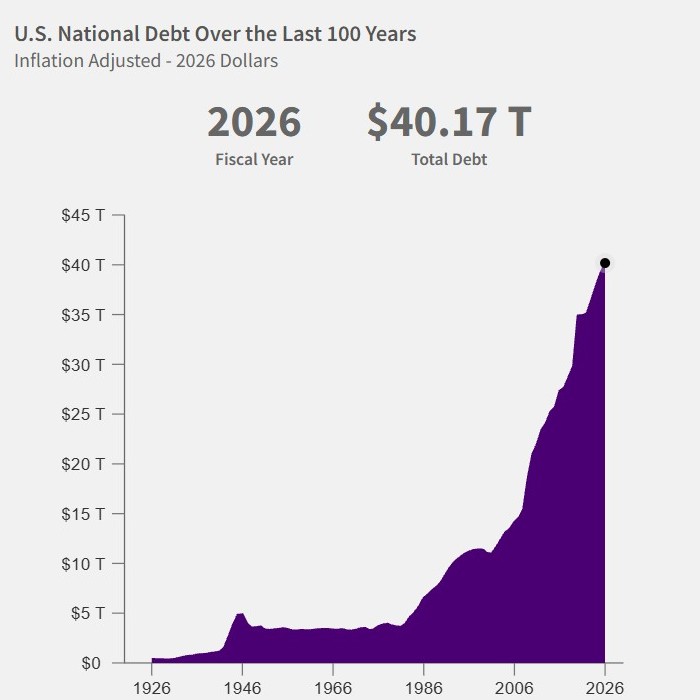
Below is a graph showing the US national debt as a ratio of GDP (Gross Domestic Product). This number is more telling than the raw dollar numbers because GDP is indicative of our ability to pay back the debt. The average GDP for the fiscal year 2026 was $32.24 T, which was less than the U.S. debt of $40.17 T. This resulted in a Debt to GDP Ratio of 125 percent. Generally, a higher Debt to GDP ratio indicates that a government will have greater difficulty in repaying its debt.
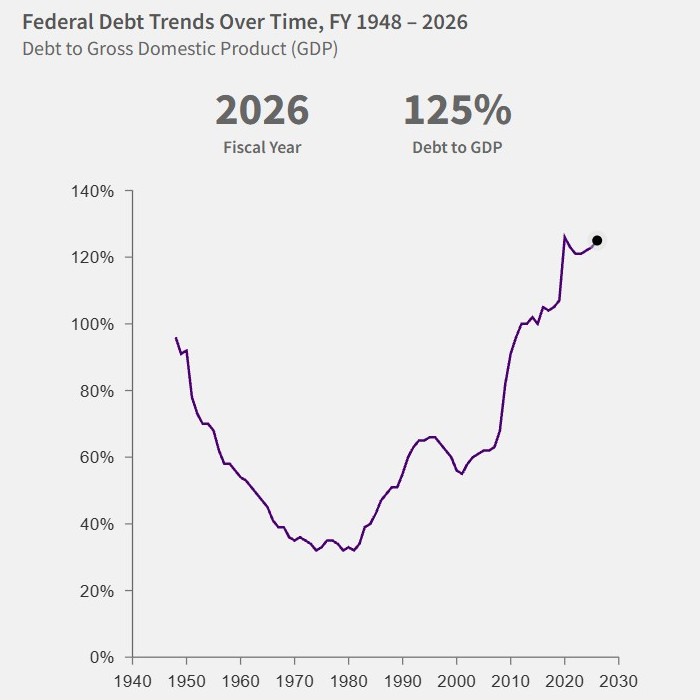
Wars and recessions tend to add to the federal debt. While debt spikes during crises, it historically receded after. The second World War is an example (see above). However, since 1980 US debt has grown without seeming to come back down. Not only does the current debt to GDP ratio exceed the one after the Second World War, the current trends show persistent deficits even in peacetime, unlike post-WWII, making the long-term outlook scary.
Another, very important fact is that the U.S. dollar’s status as the world’s primary reserve currency lowers U.S. borrowing costs. Unfortunately, the U.S. dollar’s status as the world’s primary reserve currency has recently eroded.
However, it is not just the United States that has a growing problem with a growing national debt. Japan’s government gross debt-to-GDP ratio is more than 200%, France 118%, Italy 140%, Greece 140.8%, UK 101%, Belgium 110.2%, EU 88.8%. The Visual Capitalist has a map of Europe illustrating the size of the problem in different countries. Most of the developed world (the US, Europe plus Japan) has a big national debt problem.
We used to talk about the national debt as if it was a huge and scary problem when it was much smaller. Now when the problem is much bigger we hardly ever bring it up. I believe that the fact that the problem is not just still around but much bigger comes as big surprise to many, which is why it is a super fact.
Why the National Debts of Developed Countries is a Problem
A high national debt is not something you should take lightly. A high national debt strains the budget, can slow growth, and raises borrowing costs at home and abroad. Interest on the debt keeps rising and it can increase inflation. It results in less flexibility to respond to crisis. Eventually it can lead to a default crisis. It is also a burden on future generations. You can read more about his here, and here, or here.
My Other Responses to Esther’s Prompts
- Prompt : Small : Small Microscopic Subatomic and Strings
- Prompt : Kind : Leonbergers Are Kind Dogs
- Prompt : Window : What Does Rollo See Out His Window
- Prompt : Charge : Electric Charge is not the only type of Fundamental Charge
- Prompt : Promises : Promises To My Dog
- Prompt : Shade : A Total Solar Eclipse the Ultimate Moon Shade
- Prompt : Money : Ten Money Facts
- Prompt : Edge : The Edge of the Observable Universe is 46.5 billion Light Years Away
- Prompt : Fish : Ten Amazing Fish Facts
- Prompt : Promise : I Promise Not to Post AI Generated Comments
- Prompt : Respect : Respect your Dog
- Prompt : Giving : Leonbergers Giving Gifts to Pugs
- Prompt : Family : Dogs Are Family
- Prompt : Snow : Snow and Ice in Norrland
- Prompt : Red : The Universe has a Redshift and its Increasing
- Prompt: Shapes : Conic Sections are the Shapes that Shape Our World
- Prompt: Flying : 10 Wind Blowing Facts About Birds
- Prompt: Drive : Letting Your Dog Drive the Car
- Prompt: Memories: False Memories Strange Memories Unpleasant Memories and Amnesia
- Prompt: Magic: Magic In New Orleans a Travel Overview
- Prompt: Vision: Human Vision Only Detects a Sliver of the EM Spectrum
- Prompt: Flower: Leonberger Dogs with Flowers
- Prompt: Capture: Carbon Capture and Storage an Unfulfilled Promise
- Prompt: Eyes: The Evolution of Eyes is Convergent
- Prompt: Pet: The Joy of Having a Pet
- Prompt: Cross: Why did the Dog Cross the Road
- Prompt: Close: Close Encounter with Grizzly Bear Number 399
- Prompt: Block: 60 million Lego Blocks
- Prompt: Bank: The Riverbank of Moälven
- Prompt: Rich: Super Rich
- Prompt: Test: When our Leonberger took a Car for a Test Drive
- Prompt: Fire: Climate change worsens wildfires Globally and Human land-Use Changes Reduces them
- Prompt: Exercise: Dogs Make you Exercise and you Live Longer
- Prompt: Play: Dog Play
- Prompt: Catch: Playing Catch with Dogs
- Prompt: Classic: Modern Physics is Fundamentally Different from Classical Physics
- Prompt: Snake: Texas the Snake State
- Prompt: Fence: A Good Fence Makes Good Dogs
To see the Other Super Facts click here


Truly concerning—not only the staggering debts but also their continuous increase. In the end, your images say it all, Thomas. Things got wild, and now it seems almost impossible to balance them. Governments and people just keep going and keep it rolling. Thank you for bringing it to our awareness. Light and blessings to you, my friend ✨🙏
LikeLiked by 1 person
I agree, it is concerning. There’s too much debt and seems like the more it grows the less we are talking about or try to fix it, which is backwards. Thank you Susana and light and blessings to you too, my friend.
LikeLiked by 1 person
Quem sabe conseguiriam se não estivessem tão obcecados em se armarem…
Bom dia!
LikeLiked by 1 person
Sim, talvez tenhas razão.
LikeLiked by 1 person
Lots of excellent points here, Thomas. It really needs taking notice of. Thank you for your insights.
LikeLiked by 1 person
Thank you so much Esther for this interesting prompt. You are right, we need to pay attention to and try to do something about, all around the world.
LikeLiked by 1 person
Whoa, Thomas! I knew the U.S. national debt was high, but hadn’t realized it was true for so many other developed countries as well.
LikeLiked by 1 person
Thank you Mitch. Yes the fact that so many countries put themselves in this situation is a problem to the world economy.
LikeLiked by 1 person
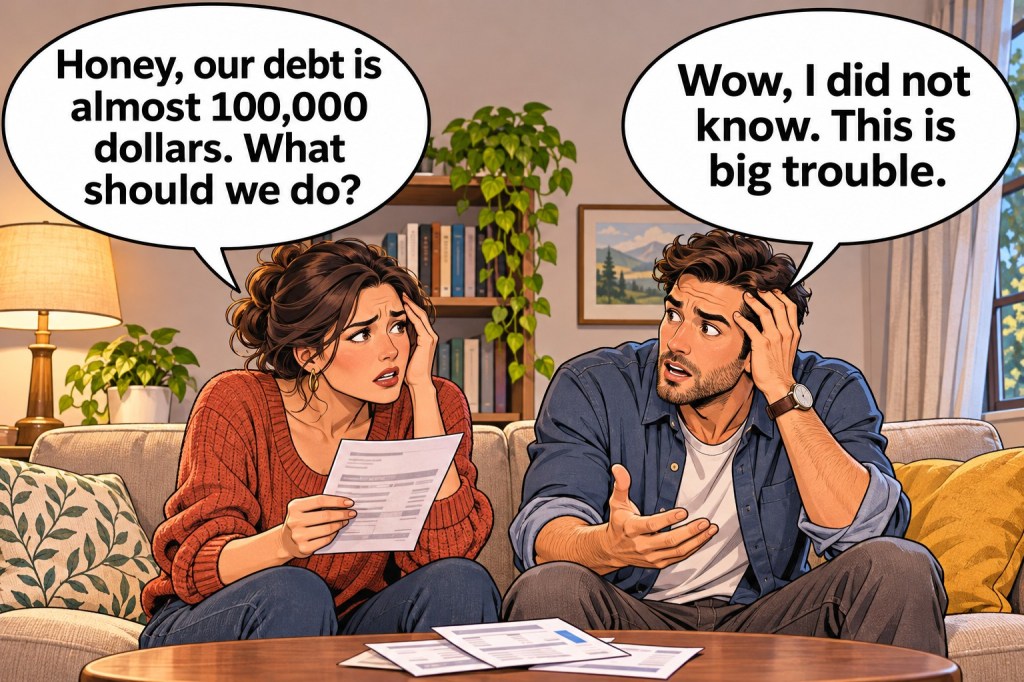
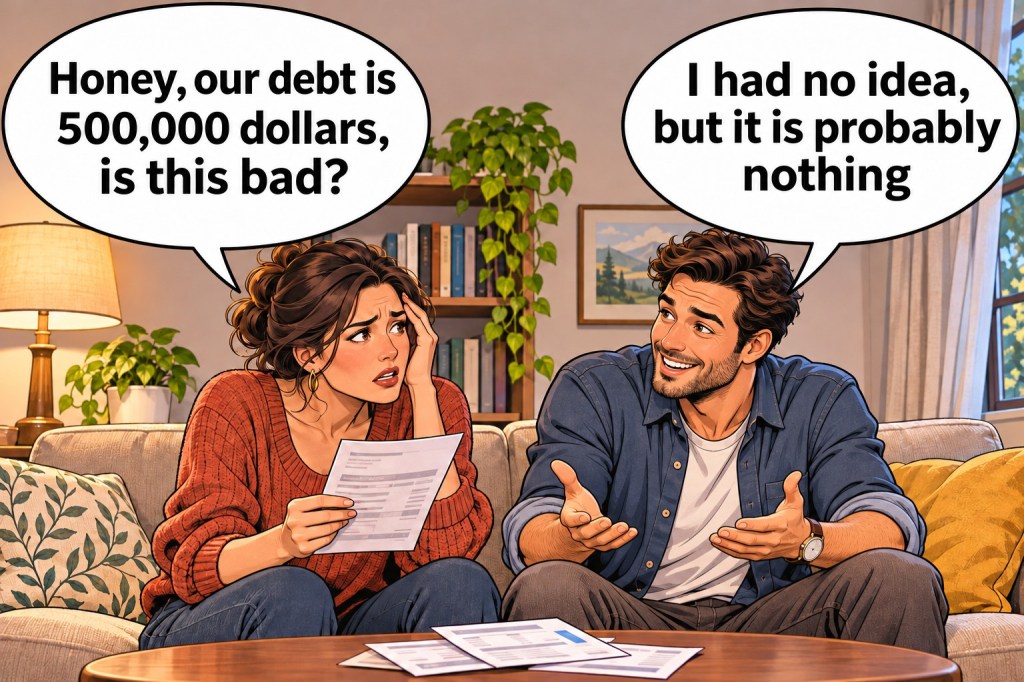
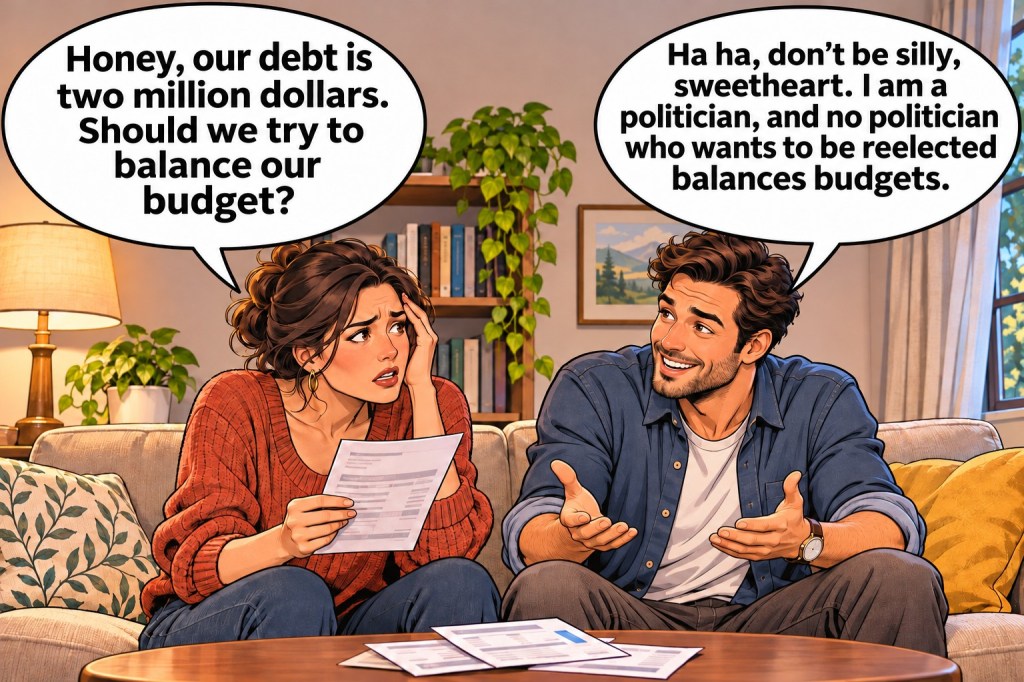
Thomas, as staggering as the debt is, and it is, I think most middle class people are probably carrying a similar debt ratio if not worse, and handling it, if home loans are part of the equation. I got a kick out of the cartoonsdepicting people not worrying about it. How true that is, unless someone has their income cut off, things go on as normal. If suddenly they lost a job or, in our case, the state and federal governments quit paying us our retirement income, or the banks holding savings shut and you couldn’t get your money, things would collapse quickly. As a country, we had that happen during the Great Depression. When you can’t buy food, or pay for housing, suddenly things get real serious. These last few days should be a wake-up call as to how quickly things can change. Great post, but very scary.
LikeLiked by 1 person
Thank you so much Marsha. You bring up a good point. I didn’t mention it but private debt held by consumers and businesses is also large. In the US, household debt, such as mortgages, is 66% of GDP or 19.1 trillion. For most people this works out even though you should not take on too much. However, loosing your income and carrying a large debt at the same time is a disaster and you can find yourself underwater. I think that the government debt sneaking up on us without us knowing or asking for it is a bit scarier but it all depends on your indiviudal situation. Below is a graph for different kinds of debt in the US as a ratio of GDP. It starts out high in 1945 but that was the economic fall out of World War II and we, the US, and other countries worked to fix it. Now not many are trying to fix the current large debts.
LikeLiked by 1 person
We can work on our personal depts, but it’s a lot harder to work on government depts. It takes a lot just to maintain what we have. Our infrastructures are getting old – like air traffic control, bridges, etc. We have lots of people on Social Security, Medicare, Medicaid, and Welfare. We have military spending, education, and so much more. It’s not easy to lower spending without cutting off something that is important to a group of people. All that grows each year without taking on anything new. So, no matter what your politics are, there is money that has to be spent. If anyone talks about cutting them, there could be some pretty violent reactions. So it’s easier not to talk about it.
LikeLiked by 1 person
Yes I think that is great analysis. Politicians maybe self serving but they are also in a difficult situation. To balance the budget, do you raise taxes, and if not what do you cut? There’s a myth that there is a lot of waste in government. There isn’t. Administrative ovehrhead and waste is significantly less than 1%. To balance the budget without raising taxes you actually have to cut real programs that help people, just like in your list above.
LikeLike
No one seems to have an appetite for balancing budgets except me (OK, there are a few more). Europe doesn’t; US doesn’t; hard to tell with other countries.
LikeLiked by 1 person
Yes you are right Jacqui. Not many have an appetite for balancing budgets. In addition, most developed countries there are also consumers who take on risky loans. It is great that you are balancing your budget. I wish more people and governments would.
LikeLiked by 1 person
Those AI images you created are so true. I think this issue is the biggest facing global north countries at the moment.
LikeLiked by 1 person
Thank you Pooja. You are right this is a big and important issue that is not getting much attention, and it is not fair to younger people like you and my children.
LikeLiked by 1 person
Yes, I think the younger generations suffer most because we’re stuck in a place where it’s almost impossible to succeed without generational wealth.
LikeLike
A scary thought for sure!
LikeLiked by 1 person
Yes I think it time that we start addressing it
LikeLike
If the dollar ever gets downgraded or confidence in the US economy is lost, it would be a disaster. That would also cause major issues. No country, at least not a developed country, can operate with zero debt; it is normal, but now it’s beyond what it produces, and that can’t continue forever. The big issue is that people complain, but if a politician changes their approach and wants to reduce or scale back what people want, they don’t get elected. Most people don’t understand how or why the debt is created. Debt was once used for long-term investment; private business advanced. Now it is used for short-term wants, not for long-term investment with a return.
LikeLiked by 1 person
Yes you are right Kevin. That is a great analysis. Just like businesses and even private individuals taking out a mortgage, even government debt is a long-term investment, but it has grown unreasonably large and keeps growing even in times when we should be paying it back, and most developed countries are in the same predicament. Politicians maybe self serving but they are also in a difficult situation. To balance the budget, do you raise taxes, and if not what do you cut? There’s a myth that there is a lot of waste in government. There isn’t. Administrative ovehrhead and waste is significantly less than 1%. To balance the budget without raising taxes you actually have to cut real programs that help people. And who wants to do that?
LikeLike
Makes me want to plant a victory garden….
LikeLiked by 1 person
Oh yes the victory gardens from World War II (and I). Maybe it is time.
LikeLiked by 1 person