
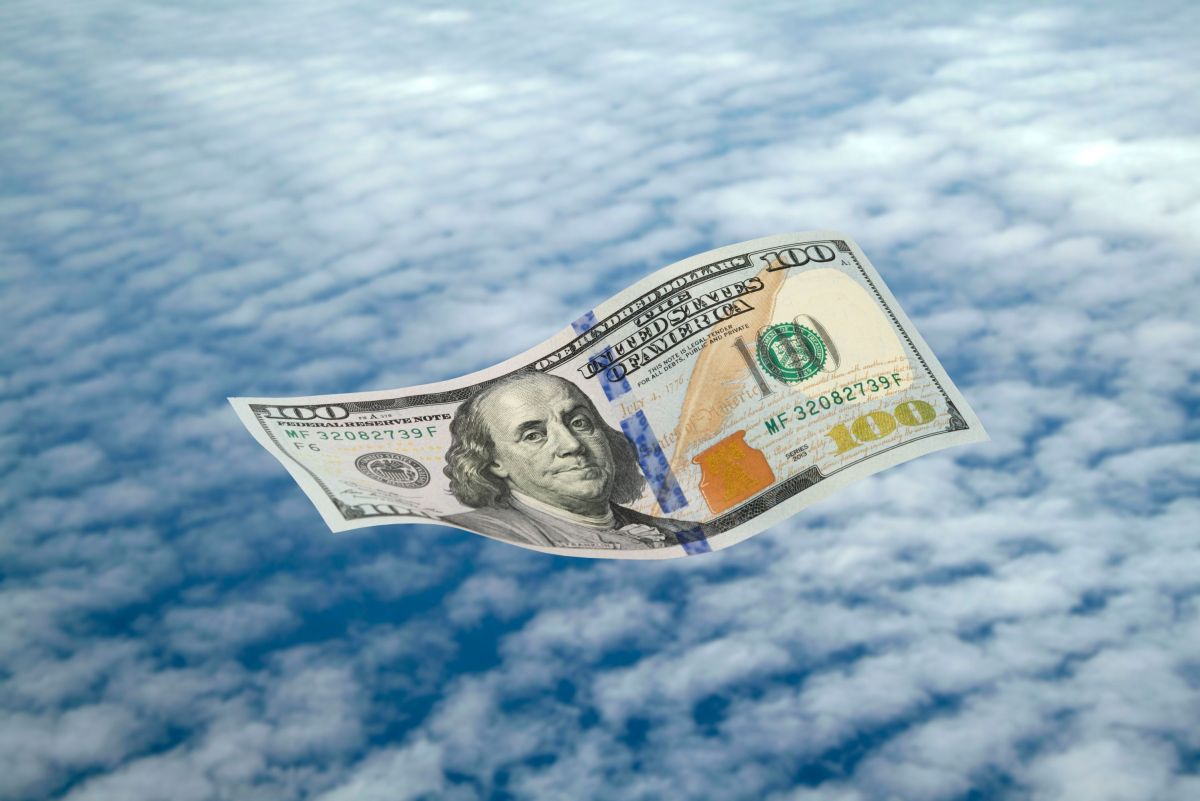
Esther’s writing prompt: October 15 : Money
Click here or here to join in.
This is not a super fact but a collection of interesting facts regarding money.

Money is a Shared Fiction, a Myth
Money is a fiction that depends on the trust that we collectively put in it. In his book Sapiens, History Professor Yuval Noah Harari argues that money is a “myth”, or a “shared fiction” because its value is not an objective, physical reality but a collective belief. This imagined order allows for mass cooperation by creating a universally accepted, albeit artificial, medium of exchange that can bridge the gap between strangers who don’t know or trust each other personally. When people cease to believe in the value of money it ceases to have value.
Money is Not the Root of All Evil
The “root of all evil is money” is a common phrase that is a misquote of the biblical verse in 1 Timothy 6:10. According to the King James Version of the Bible it says, “For the love of money is the root of all evil: “. However, this is also not correct because it is a mistranslation. According to the New American Standard Bible – NASB 1995 (NASB1995), the New Century Version (NCV), the American Standard Version (ASV), the New King James Version (NKJV), the correct translation is “For the love of money is a root of all kinds of evil”. The latter makes a whole lot more sense. Not all evil is because of the love of money, but a lot of it.
The Wealth of the World is 500 Trillion Dollars
The world’s total net wealth in 2025 is estimated to be around 500 trillion, but there are other estimates. More than half of this, $260 trillion, is in stocks and bonds.
The Wealth of the United States is 160 Trillion Dollars
The United States has an estimated total wealth of approximately $160 trillion. The top 50% of the US population own 98% of that wealth. The bottom 50% of the US population owns 2% of that wealth. In Q3 2024, the top 1.3 million had a wealth of 49.2 trillion (31%), the next 65.2 million had a wealth of 106.8 trillion (67%), and the next 66.6 million had a wealth of 3.9 trillion (2%).
The Second Most Important Currency is the Euro
The Euro is the second most important currency after the US Dollar, which is the most important currency for borrowing, lending, and reserves.
US paper money is not paper
US paper mone is not made of paper; it’s a blend of 75% cotton and 25% linen to make it more durable.
Cacao Was Once a Currency
The ancient Aztecs used cacao beans as a form of money. Some Aztec taxes were paid in Cacao, and it was even used to pay workers. A single bean could buy you a tamale, while a few dozen might get you a rabbit.
Cash is Not Very Common
On the topic of digital money, it turns out that only 8% of the world’s currency is actually physical, the rest is online or card transactions.
In God We Trust
“In God We Trust” is the official motto of the United States. It was adopted by the U.S. Congress in 1956, replacing E pluribus unum (“Out of many, one”). The first paper money to feature the motto was the one-dollar silver certificate, which entered circulation on October 1, 1957.
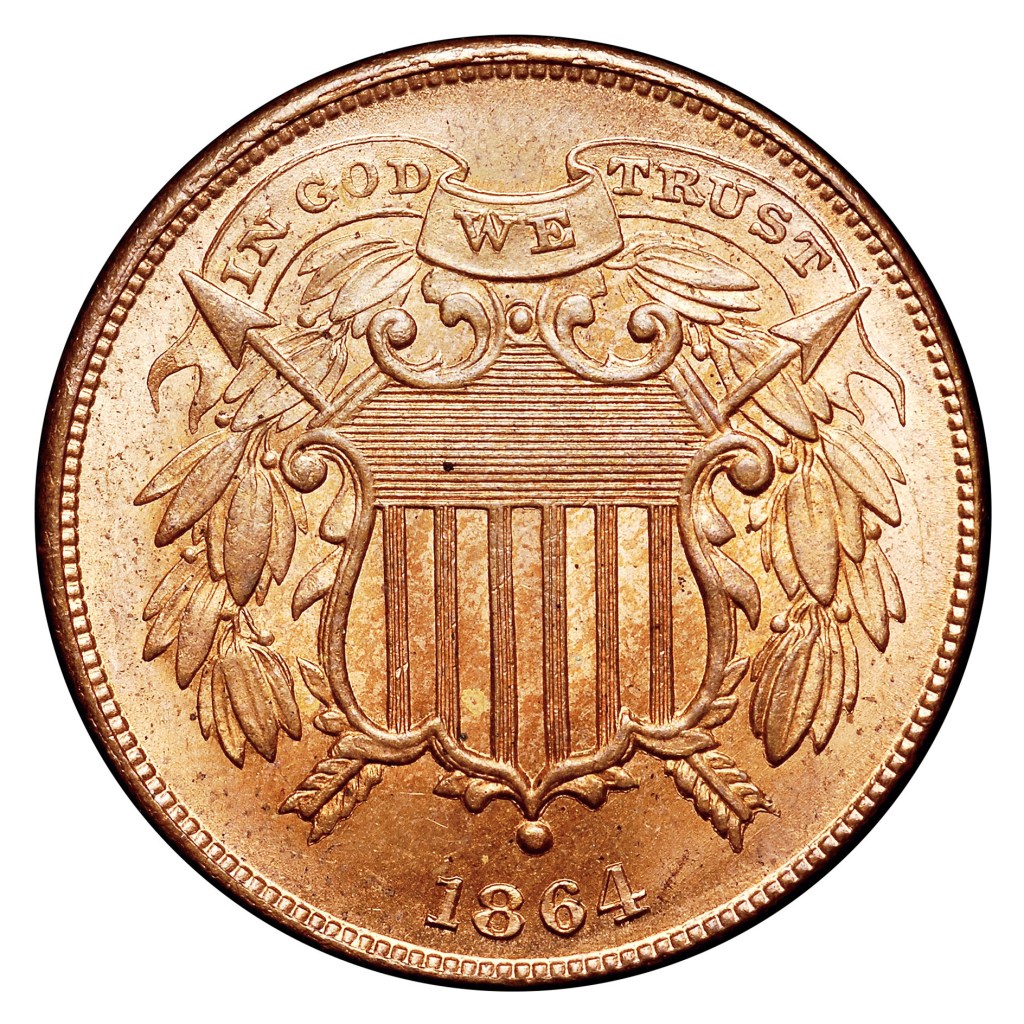
However, that was not the first time “In God We Trust” appeared on American money. “IN GOD WE TRUST” first appeared on the obverse side of the Two-cent piece in 1864.
US Banknotes Have Multiple Security Features
US banknotes / “paper currency” (along with other currencies) contain security features that can be used to authenticate the banknotes and thereby avoiding accepting counterfeit currency. If you feel the paper (well it is not paper) it should feel slightly rough. All denominations higher than $10 have color shifting ink in the numeral on the lower right corner of the note. On current notes it should change from copper to green. The current style of $100 notes also includes two new security features that you can check by tilting the note: the color shifting in the inkwell and the 3D security ribbon (in the middle across the note). The images of the bells and the text of “100s” should shift as you tilt the note.
In addition, hold the note to light and check the watermark and the security thread that are included on denominations $5 and higher. When held to light the security thread should be visible when held to light. The watermark on a bill should match the portrait of the banknote. The two watermarks on five dollar bills should match the numeral five. The security thread is in a different location for each denomination and glows in a unique color when exposed to UV light. To watch a video explaining how you can check if a bank note is authentic click here or on the YouTube Video below.
If you sort the banknotes or use a machine to check for counterfeiting, there are additional features. The different denominations have a unique magnetic ink signature, as well as a serial number that is unique to each banknote. However, that is for machines and complex systems to discover. The serial number helps in identifying and tracking individual bills.
Me Being a Money Printing Engineer
At one point in my life (2013, 2014, beginning of 2015), I was working for a British company, which at the time was called DeLaRue Cash Systems, now DeLaRue Currency Solutions. DeLaRue Currency Solutions provide more than half of the world’s currencies for a lot of countries around the world. I was working there as a senior software engineer (and electrical engineer) and I was handling and developing the machines that printed banknotes or sorted banknotes. Both of these machines needed to be able to detect the security features described above and therefore they featured various detectors such as cameras, UV lights, magnetic detectors, etc. In the first case to make sure the banknotes were printed correctly and in the second case to check for counterfeit banknotes.
Through my work at DeLaRue I got the opportunity to travel to Great Britain and India. In Great Britain (Gateshead) I visited a banknote printing facility, which when I visited contained huge stacks of banknotes to the value of several billion dollars. Security was pretty tight, and you were not allowed to bring in or out any money. In Bangalore in India, I was introduced to an actress at the Bangalore Palace. My guide told me she was the Jennifer Aniston of India. I looked it up and she was not. Anyway, below is a picture.

Finally, ABBA’s Money, Money, Money
To see the Super Facts click here

 Super Facts
This is so interesting, Thomas. I love these facts. I didn’t know US paper money isn’t made out of paper, for example. Thank you so much for this.
LikeLiked by 3 people
Thank you so much Esther and I am glad you found it because I realized I forgot to post it in your comments. I was going to post it in your comments now, but since saw it, I don’t need to.
LikeLiked by 2 people
A rich history (pun intended). All kidding aside, interesting facts. Thanks, Thomas!
LikeLiked by 4 people
Ha ha, thank you Grant
LikeLiked by 2 people
Wow, how interesting, Thomas! The Aztec taxes being paid in Cacao is particularly fascinating!
LikeLiked by 3 people
I agree Ada, that is fascinating, and since they could make a cacao/chocolate drink, they could drink their money.
LikeLiked by 2 people
Fascinating, Thomas, thank you for this post. You’ve had an interesting life, marked by your diverse employment and interests. I suspect that we’re headed toward a digital currency, but I also suspect it will take years before it’s implemented. I know nothing about these matters and trust that folks like yourself will help guide us. Thank you again.
LikeLiked by 3 people
Thank you so much Gwen. You are probably right, but I admit I don’t know much about digital currency. I am not sure I can be of any guidance. But during my relatively short stint at DeLaRue and saw some interesting things. When I visited the Gateshead facility they had just printed 600 million dollars worth of Saudi money, incorrectly. Normally you would just destroy it and start over but the money was already on the ship. I don’t know what they did with it. The company I stayed the longest with was Siemens, 17 years.
LikeLiked by 2 people
The adoption of “In God We Trust” as the motto was a side effect of both conservative majority rule in Washington, DC and the anti-Communism that dominated American foreign and domestic policies in the wake of the 1950s’ Red Scare. The logic of adopting the new motto was, “The Soviet Union and its Communist rulers are officially atheist, so we Americans need to counter that by stating our theist identity.” I have no doubt that the government officials and members of Congress behind the “In God We Trust” movement were earnest in their beliefs, but I doubt it impressed the Soviets much,
LikeLiked by 3 people
That is interesting. Thank you for the history Alex.
LikeLiked by 1 person
I’m glad you found that bit of history interesting, Thomas!
LikeLiked by 2 people
Yes thank you Alex. I am glad you are a history buff.
LikeLiked by 2 people
It’s a trait that’s proved useful…every so often.
LikeLiked by 2 people
I’m collecting pennies because they are discontinued, and I hear the nickel is next.
LikeLiked by 3 people
That sounds like a fun idea. I’ve read that the value of the metals in the penny is much higher than the value of the penny, so perhaps you could melt the penny and sell the metal (that is not a serious suggestion).
LikeLiked by 2 people
I think melting down money is illegal–you’d probably know better than me, Mr. Superfacts!
LikeLiked by 2 people
Yes you are right. It is not legal. In Sweden the one-crown coins (worth about ten cents) used to contain silver and it was quite profitable to melt them and sell the silver. There was a gang, the silver-gang, who collected one-crown coins and melted them. It became quite a large operation, which is why they were caught. After a number of such instances the government removed the silver from the coins (in 1968).
LikeLiked by 2 people
Hi Thomas, this depiction of money’s value being a collective belief is very true. Empires have come and gone throughout history and the value of their money has fallen.
LikeLiked by 2 people
Yes, it is a basic fact that is often forgotten. When the Swedish government changed the banknotes I got stuck with a bunch of banknotes worth nothing. It was just to throw away. I read that in Zimbabwe they had 100 Trillion dollar banknotes (Zimbabwe dollars) due to inflation. What’s in the bank is just a number in a database. You have to trust that no one turns that number into a 0.
LikeLiked by 1 person
Really interesting about all things going on with money. Lots of images that are very small and we usually don’t notice on the bills. I enjoyed reading this. 🙂
LikeLiked by 3 people
Yes you are right. All the security features became necessary because the US dollar is such an attractive banknote to counterfeit. Iran and some other countries used to print counterfeit US dollars, especially the $100 bill to use underground, for terrorism and even to intentionally hurt the US economy. A lot of security features were added after that.
LikeLiked by 2 people
Very interesting post, Thomas. Thank you. The value invested in “money” (or cacao or blue beads or whatever) is more or less an agreed-upon group hallucination. 😉
LikeLiked by 3 people
Thank you so much Lynette. I guess that is pretty good way of putting it.
LikeLiked by 2 people
Lulu: “Money! It’s a crime! Or so Pink Floyd once said, according to our Dada.”Charlee: “By the way, which one’s Pink?”
LikeLiked by 3 people
Well, Lulu, printing money is a crime unless you work for DeLaRue (or similar organizations). Charlee, I don’t know who Pink is in Pink Floyd, maybe Floyd?
LikeLiked by 1 person
It must have been quite an experience working in the currency printing business! I admit I’ve never given that aspect of money much thought, although I’m aware that there is a body called the Royal Canadian Mint, but I think it produces only coins, increasingly for collectors. Our “paper” banknotes are now made of some sort of polymer and also have security features.
LikeLiked by 3 people
Yes that is interesting, polymer and hologram and other security features. DeLaRue does not print Canadian banknotes or US banknotes but they print the banknotes for United KIngsdom and a lot of countries in the developing world. While I was working for DeLaRue I could say that I was making money, literally.
LikeLiked by 2 people
Making money–that’s perfect!
LikeLiked by 2 people
ABBA was the cherry on the top. 👏👏👏👏
LikeLiked by 3 people
Ha ha thank you TMC
LikeLiked by 2 people
A fun touch, I think!
LikeLiked by 3 people
Yes a very smart one at that.
LikeLiked by 3 people
I had no idea so little money was actually physical money. 8% seems so little, I would have assumed it was much more. Thanks for sharing these, they were all quite interesting.
LikeLiked by 4 people
Yes it is kind of disappointing. I thought I was making all the world’s money at DeLaRue and it was only 8%. Just kidding, but when I was at Gateshead, there were still 30 feet tall stacks of banknotes of all kinds. I tried to calculate the value of one cubic meter of one dollar bank notes, and that was about one million dollars, and the value of one cubic meter of one hundred dollar bank notes is one hundred million dollars. If you take a 10 meters cube (giant stacks) (of which there were many) you get one billion dollars and 100 billion dollars respectively. It was still a lot of money in there. No wonder they searched your pockets when you left the building.
LikeLiked by 2 people
Wow, that must have been a crazy experience to see so much money in person.
LikeLiked by 2 people
Yes you are right and I was thinking that this would be the perfect place to rob. But security was super tight and then you have all the serial numbers for everything printed stored on computers, which may make the banknotes useless.
LikeLiked by 2 people
Yeah, I guess they need the security more than anyone with that much money around.
LikeLiked by 2 people
Yes you are right. They had more money than any bank. However, since they have all the serial numbers of the money they printed it would be difficult to use the stolen money.
LikeLiked by 2 people
Yeah, that’s probably why they keep track of the serial numbers so there wouldn’t be much of a point of stealing.
LikeLiked by 2 people
Yes you are right. If an alarm goes out that all bills between L89820000J and L89830000J have been stolen it is tougher (but not impossible) to use them. If you steal a bunch of banknotes from a safe or cash register you most likely don’t know what serial numbers it was.
LikeLiked by 2 people
Interesting post. I had no idea paper money was not paper. It’s so strange for cash to be disappearing after having used it for half a century. Earlier today, I was surprised to find enough coins in my purse to get a snack from a rest stop vending machine, and that they still took coins.
LikeLiked by 3 people
Yes I’ve also recently come across vending machines that take coins. In fact, it still seems pretty common. However, in my native country Sweden they are getting rid of coins and banknotes. Most places will not accept cash and banks will not exchange cash. You have to pay with debit/credit card, swish, applepay, googlepay or similar. Sweden is the most cashless society in the world. Personally, I don’t like that as it limits your options.
LikeLiked by 1 person
I would not like those limits either, but I guess people get used to it.
LikeLiked by 2 people
Very usefull tips
LikeLiked by 3 people
Thanks for the enjoyable post. I especially enjoyed learning about your background as a money-printing engineer. That sounds like an interesting job. It seems as though the actress you met was known, if not quite Jennifer Aniston-known.
LikeLiked by 3 people
Thank you David. I think my guide was the best liar I’ve come across. He walked into the palace, into to the fenced off area where they were filming, interupted the filming, pointed towards me and told the director something. Then the director told the star of the movie to go and meet me, and she did somewhat reluctantly. I don’t know what my guide told the director, but I am pretty sure it wasn’t the truth. Then he tells me “now you are going to meet the Jennifer Aniston of India”. Then he tells me to go and sit on the furniture in the palace, including the Maharajas throne, despite the fact that it is roped off with signs saying don’t touch. He takes pictures of me with my phone and finally I told him I don’t think I should be doing this. I started getting nervous about ending up in Indian jail.
LikeLiked by 2 people
It’s a great story! I’m glad you didn’t end up in jail!
LikeLiked by 2 people
I did sit on some furniture but then I said no, I am not doing that. It is not just about getting caught violating the signs, but it is disrespectful. Well, he was an interesting guide, but after a while I stopped trusting him.
LikeLiked by 2 people
Dear Thomas
Your posts teach me a lot.
Thanks for liking my post Not3 🌷❤️🌹
LikeLiked by 3 people
Thank you for your kind words Veerites.
LikeLiked by 2 people
I had no idea paper money wasn’t paper , it can sure rip like paper … we have a 20 sitting in a drawer that somehow got ripped.. I always wonder if u can take it and if that would work but maybe you sew it 😂.
LikeLiked by 3 people
Yes there are a lot of interesting things to know about money and banknotes. If you have both halves of the 20 dollar banknote I would take it to the bank and ask for a new one. They should be able to replace it for you at no charge. I’ve done that. They replace worn out and ripped banknotes all the time. As long as they report the replacement no money has been lost. The funny thing is, since the banknotes themselves cost almost nothing to print so replacing worn out and ripped bank notes does not cost anything.
LikeLiked by 2 people
Oh gosh I had no idea I’ll do that. Forsure. Thank you for that.
LikeLiked by 2 people
This was a fascinating post Thomas. Although you corrected the saying – that the love of money is the root of all evil. It’s still money that attracts the evil, so I think money is evil. Especially in the world we’re all trying to live in now, GREED is king. Everywhere. Also, a bit miffed at the US wealth at 160 trillion – does this include the 37 trillion in debt? Just my thoughts. 😍
LikeLiked by 3 people
Thank you Debby. Like you I think money is behind a lot of evil, but not all of it. I can think of many other root causes of evil, which is why “For the love of money is a root of all kinds of evil” makes more sense to me (and is the accurate translation). About the 160 trillion and debt, the link I shared does not say, but based on other links I’ve found it does include the debt. I should say that most of the 37-38 trillion debt is owed to Americans and about 9 trillion to foreigners. Anyway, if I had made a superfact I would have investigated in depth but I didn’t. You say you are miffed that US wealth is 160 Trillion. Is that because you think it is a lot or too little?
LikeLiked by 2 people
Thanks for elaborating Thomas. I was miffed at the 160 T because I wasn’t sure if that included the 37 and change T debt. But you’ve answered that. Thank you. 😊
LikeLiked by 2 people
A fascinating post, Thomas! How exciting to travel to Great Britain and India!
LikeLiked by 3 people
Thank you Dawn. Yes those were interesting business trips. I also travelled with a lot with ABB Robotics, mostly to Sweden, which gave me an opportunity to visit family. I also worked for Siemens, the company I worked the longest for (17+ years), but I travelled less with them. However, I spent a half summer in Germany, and various places within the US. Business trips aren’t always fun but the ones with DeLaRue were.
LikeLiked by 1 person
cacao beans makes sense lol – & so what is paper, then? as for evil – I believe the obsession for power is worse…
LikeLiked by 2 people
Well paper is made from cellulose fiber / wood pulp. I know because I grew up nearby a paper mill. Tree trunks in –> paper out. But as I said the banknotes or papermoney isn’t paper. I agree with you the obsession of power is probably worse.
LikeLiked by 2 people