

Superfact 145: Fusion Power, a type of Nuclear Power, is a clean source of power that is potentially nearly limitless. It would likely not run out of fuel for millions of years. Unfortunately, we do not yet have a working commercial fusion power plant. However, we are continuously getting closer.

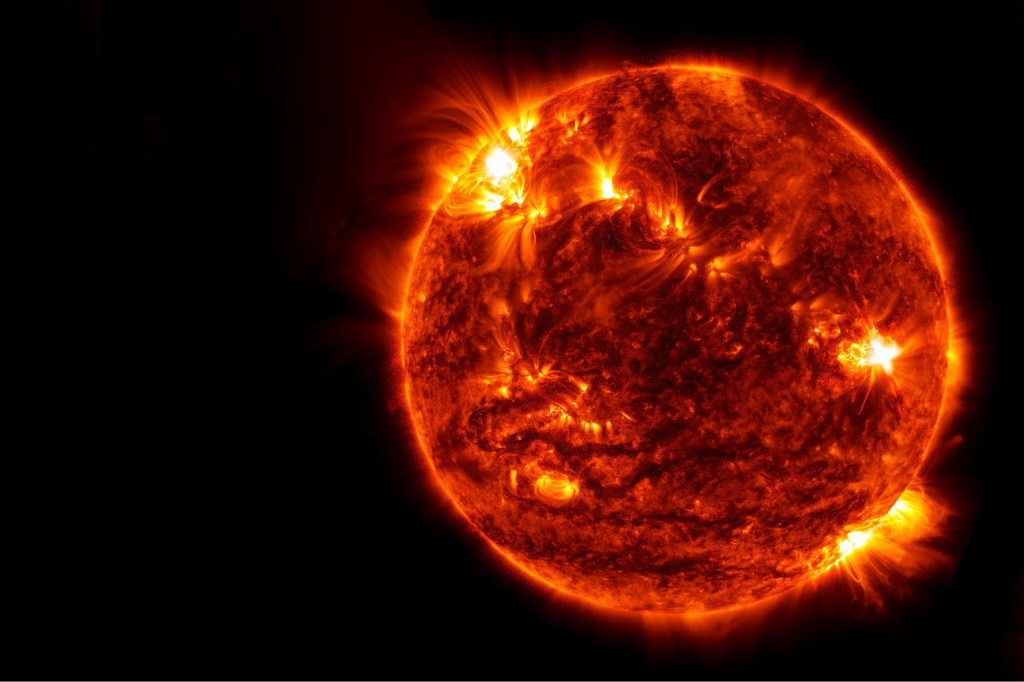
Nuclear Fusion is the process of combining atomic nuclei, for example, hydrogen nuclei into heavier nucleus / atoms. This is the opposite of fission, the splitting of nuclei, which is used in contemporary nuclear power stations. Nuclear fusion is the process that powers the sun.
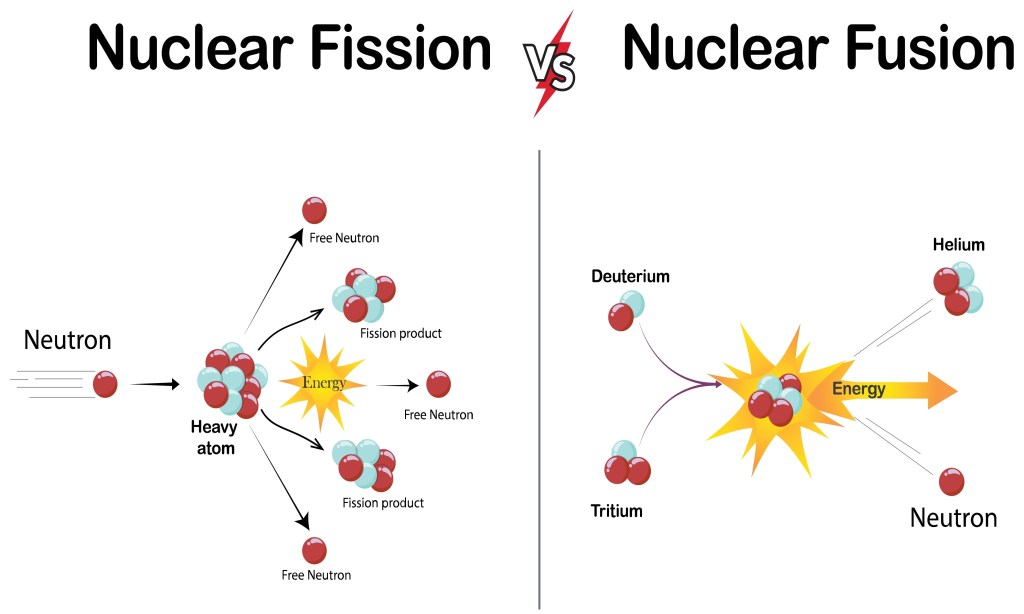
Unlike nuclear fission, nuclear fusion does not generate much radioactive waste. Another advantage is that nuclear fusion is nearly limitless. Tritium is the most limited fuel for fusion power, but you can generate it from Lithium ore. Fusion specialists state that, in a world where all energy would be produced by fusion, the quantity of fuel lithium ore present in landmass would be sufficient to provide the required tritium for several thousand years. As for lithium present in oceans, it could last us millions of years. Unfortunately, we do not yet have a working commercial fusion power plant.
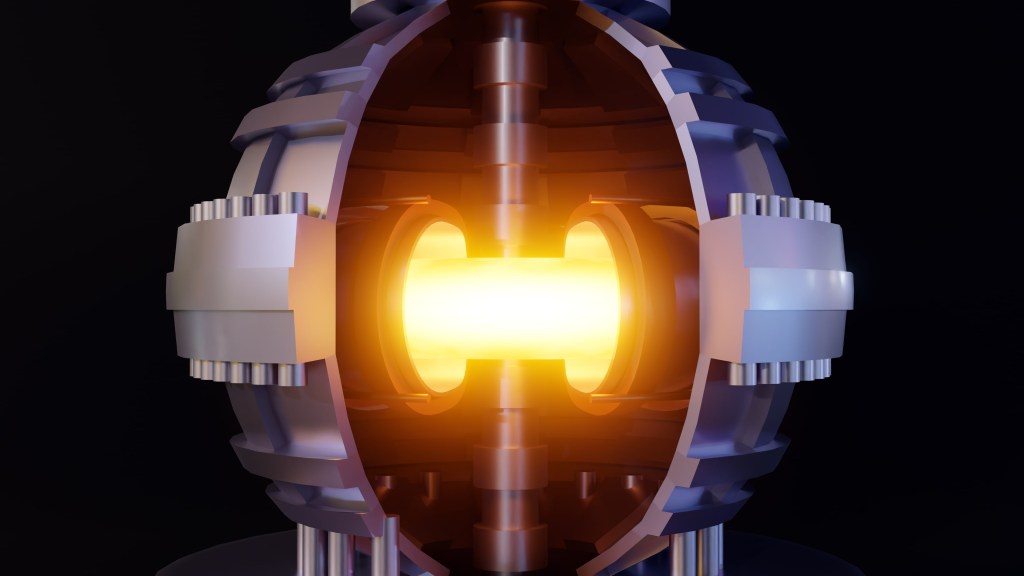
Nuclear fusion would be the holy grail of clean energy, or nearly clean energy, if we had a working commercial fusion power plant. However, the fact that this technology exists and that we are getting close to a commercial fusion power plant is quite astonishing and a surprise to those who were unaware of its existence. Therefore, it is a super fact.
Is Commercial Nuclear Fusion Viable ?
Commercial nuclear fusion is not yet viable for widespread power generation but a lot of investment in the technology is moving it closer to commercial realization. In 2022 the Lawrence Livermore National Laboratory, using IFC laser technology produced more energy from fusion than the energy delivered by the laser realizing the fusion. The consensus among energy scientists seems to be that fusion won’t be ready for widespread power generation until at least after 2050 or 2060.
In my, somewhat less professional opinion, this is too long to wait before addressing both current and future energy needs as well as threat of global warming / climate change, which is chiefly caused by us burning fossil fuels. Luckily, there is an unfolding clean energy revolution with solar, wind, battery storage replacing fossil fuels around the world.
A Brief Overview of Fusion Reactors
To make atomic nuclei fuse you need extremely high temperatures, several millions of degrees Celsius. At these extreme temperatures, the electrons are stripped away from atoms, turning the gas into a charged and superheated so called plasma. Particle beams, electrical currents, or radio waves are used to heat the plasma. This superheated plasma needs to be confined. The superheated plasma cannot be allowed to touch any other matter as it would instantly melt it. The plasma must be suspended midair. This is something that is very difficult to do.
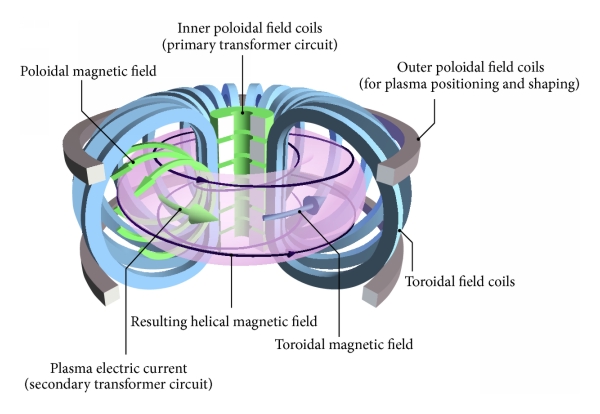
There are different ways of doing this. One way is to confine the plasma in donut shaped vacuum chambers using powerful magnetic fields. This is referred to as a Tokamak. See the picture below. The surrounding layer is heated and boils water driving turbines driving generators generating electricity.
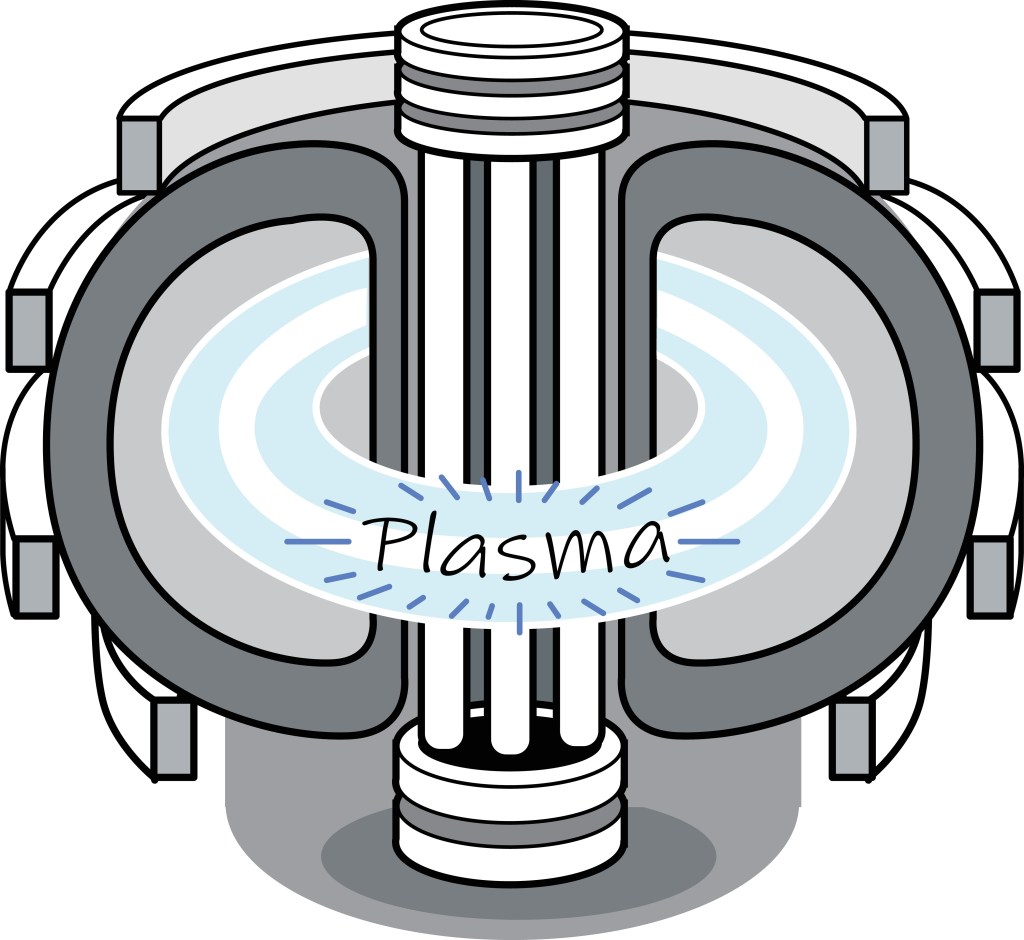
The picture below shows the poloidal field coils, which are ring-shaped electromagnets used in a tokamak. It also illustrates the magnetic fields in the tokamak fusion reactor. The picture is taken from here.
Another way to confine the plasma is to use high-powered lasers or ion beams.
Other Super Fact Posts on Energy Sources
- Wind power is providing more than a quarter of Texas Power
- Wind power is not a major cause of bird death
- Landman Lies
- Wind Energy is Indeed Clean Energy
- Nuclear Energy is Relatively Clean and Safe
- Carbon Capture and Storage an Unfulfilled Promise
- The Unfolding Clean Energy Revolution
- The Number of people in the World without Electricity has halved since 2000
To see the other Super Facts click here


It’s great when it works, but disastrous when it fails.
LikeLike
Sadly this is a technology that’s been ten to fifteen years in the future for at least the last 40 years. A modern version of Zeno’s paradox perhaps!
LikeLike