
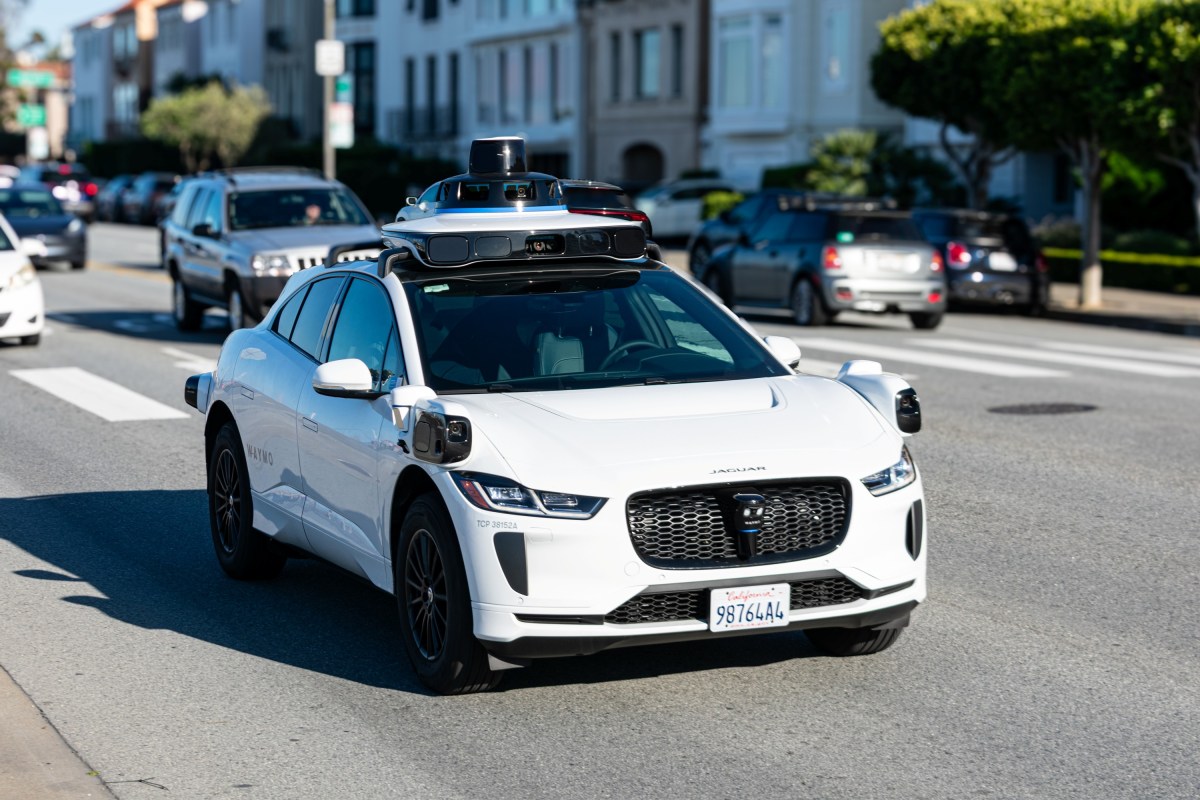
Super Fact 146 : Research on self-driving and driverless cars has been going on for many decades but only during the last few years have driverless cars began to show up on our roads and they are quickly becoming more common.
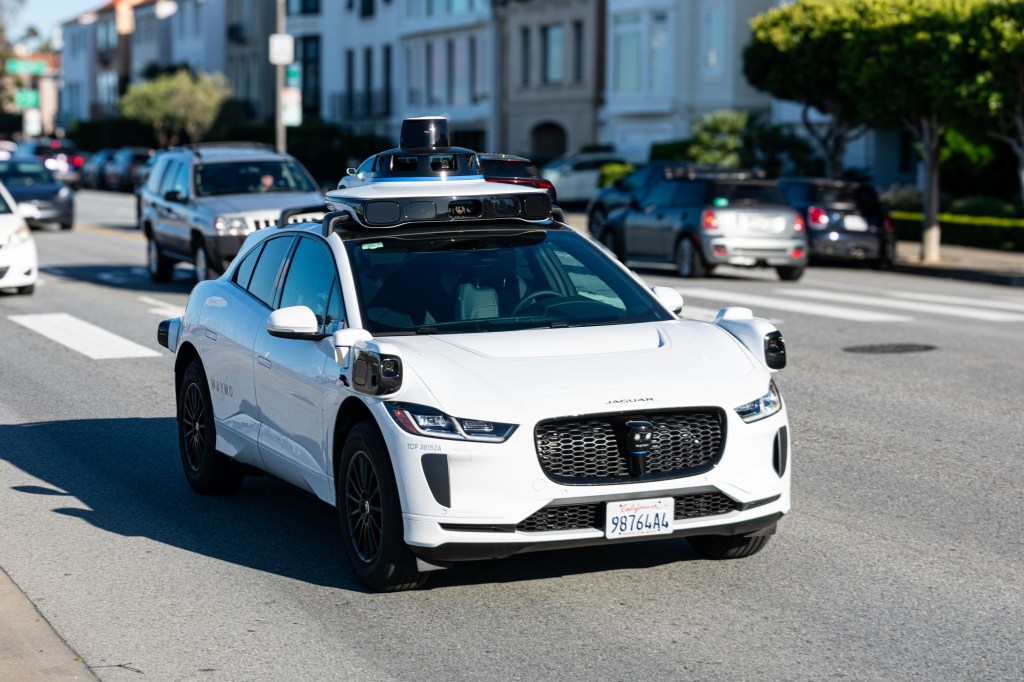
When I was working on my PhD in Applied Physics & Electrical Engineering, specialty Robotics, in the 1990’s I used Artificial Intelligence algorithms, and I also read research papers on self-driving cars and autonomous cars, and I watched demonstrations of self-driving cars on videos. Self-driving and even autonomous cars existed but they weren’t driving around on public roads. It is not until the last few years that driverless cars have become common on our roads. I’ve recently seen several Waymo cars driving around in traffic here in Dallas.
Note, a fully autonomous or driverless car can drive without any human supervision whilst a self-driving car still requires some human supervision. In this post I am referring to both for the same purpose. Self-driving cars and driverless cars are both gaining a lot of traction.
When we took our daughter to the car dealership last month to buy her a car there were many cars that came with a self-parking option and that included parallel parking. You drove up to the open space and pressed a button, and the car parked itself perfectly in seconds. That is not really what we mean by a driverless car, but it shows how the technology is changing. When we bought our last car a few years ago that option did not exist. As the graphs below show, during the last few years driverless cars are rapidly becoming common.
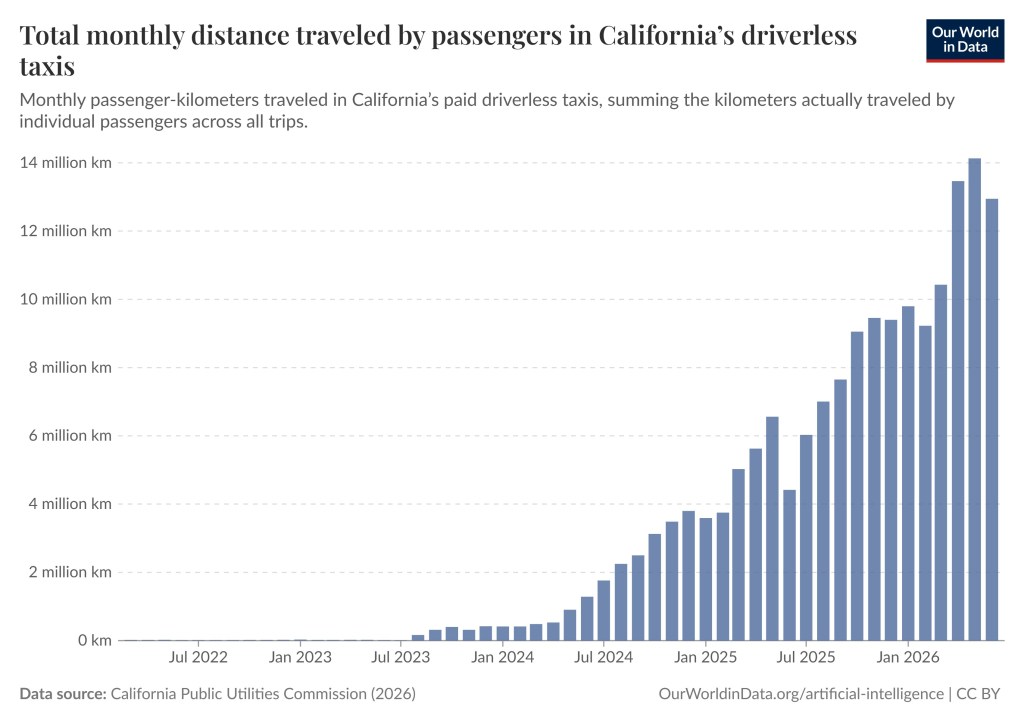
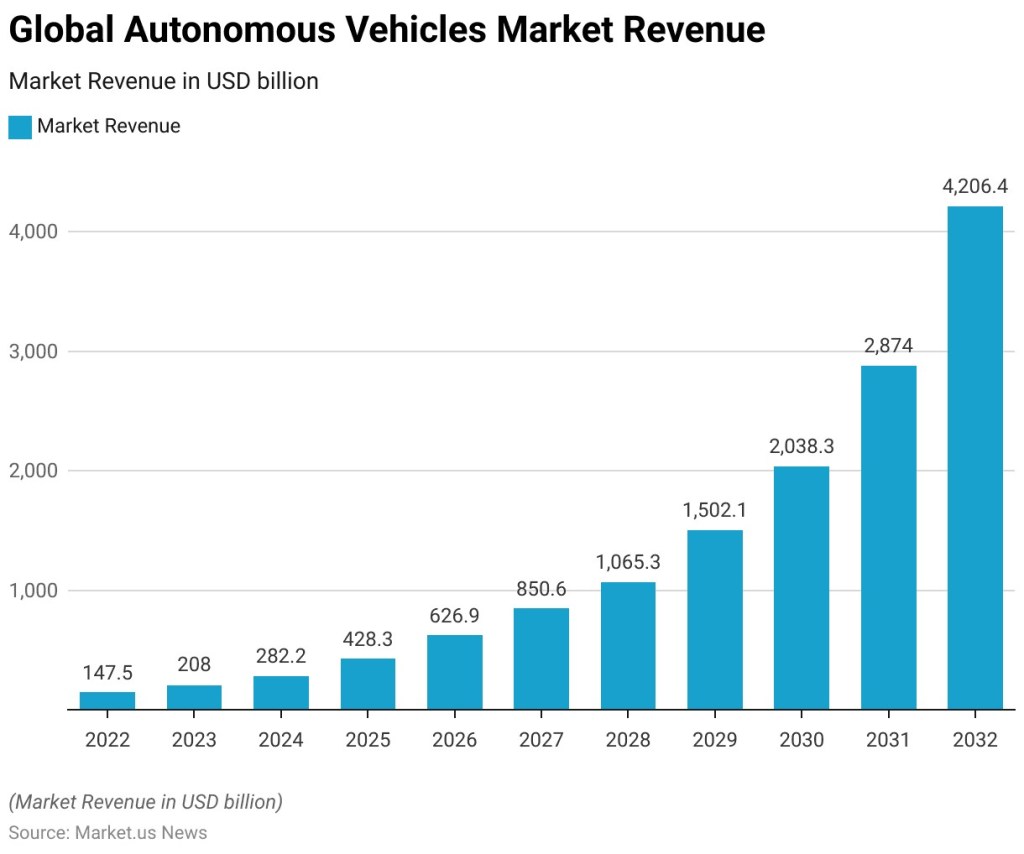
Technology may be developing slowly and then suddenly everything happens very quickly. I remember people complaining in the early 1990’s about how Artificial Intelligence was making such slow and meager progress and that it was a disappointment. It is true that for decades it was just for engineers and scientists. Then a few years ago the powerful Large Language Models showed up in everyone’s browsers. Electrical Vehicles were rare and restricted just a bit more than a decade ago but now they are replacing gasoline cars around the world. See my post “EVs are Replacing the Internal Combustion Engine”. In Norway, 98% of all new cars sold are Electrical Vehicles. Clean energy is similarly beginning to replace fossil fuels, see “The Unfolding Clean Energy Revolution”.
I believe that the rapid adoption of autonomous cars comes as a surprise to many and therefore I consider this a super fact.
SAE Classification
The SAE classification defines the level of automation for autonomous cars.
- Level 0: No automation. The human does all the driving.
- Level 1: The human controls most of the driving tasks, must be fully attentive, but get some assistance from the car. Examples are lane-keep assistance and cruise control.
- Level 2: The human must supervise the system and keep the hands nearby the steering wheel. Self-parking is considered level 2.
- Level 3: The human can take their eyes off the road under certain conditions but must remain in standby.
- Level 4: High automation. The vehicle drives itself completely but is restricted to a specific weather or route condition.
- Level 5: Full automation. Passengers are purely riders and no steering wheel, pedals or driver seat is needed.
You can read more here or here
A Brief History of Autonomous Cars
The history of driverless cars goes back 100 years. In 1925, a radio-controlled car named the “American Wonder” was driven through New York City traffic. In the 1950’s there was serious scientific research on driverless cars. In 1977 Japan’s Tsukuba Mechanical Engineering Laboratory built the first autonomous car capable of independently reading painted road lines without external wires. In January 2014, Induct Technology’s Navia shuttle became the first self-driving vehicle available for commercial sale. In 2015–2017 early commercial driverless taxi and robotaxi services (such as Waymo’s early rides) began rolling out on public roads. The last few years autonomous vehicles have become increasingly common around the world.
Other Super Facts Related to Artificial Intelligence
- The Nobel Prize in Physics and Neural Networks
- Artificial Intelligence is Not New
- Large Language Models is just One Branch of Artificial Intelligence
- The Dark Side of Artificial Intelligence
- Transistors per Microchip Increased by More than 50 million Times in 50 Years
- AI is Already More Capable Than Humans in Many Areas
- A Typical AI Query Use Less Energy Than Using a Laptop One Minute
- The Future of AI is Superintelligence
To see the other Super Facts click here


Interesting to see how a technology that once belonged to the world of research and science fiction is becoming part of everyday life. Your personal experience with robotics in the 1990s adds an interesting perspective. It makes me wonder what will seem perfectly ordinary on our roads another decade from now.
LikeLiked by 1 person
Thank you so much for your kind words Patricia. I agree with you and I certainly wonder about the same thing.
LikeLike
It’s amazing to me how quickly technology can move sometimes, and how what was once something I only imagined in sci-fi films and novels, is now an actual thing. If autonomous cars become more widespread, maybe even the norm eventually, I wonder what effect this would have on road rage.
LikeLiked by 2 people
Thank you so much Ruth and I agree. What I think happens is that a lot of research, work and engineering goes into something but it is not good enough for commercial success until one day it suddenly is. I hope autonomous cars will prevent road rage.
LikeLiked by 1 person