
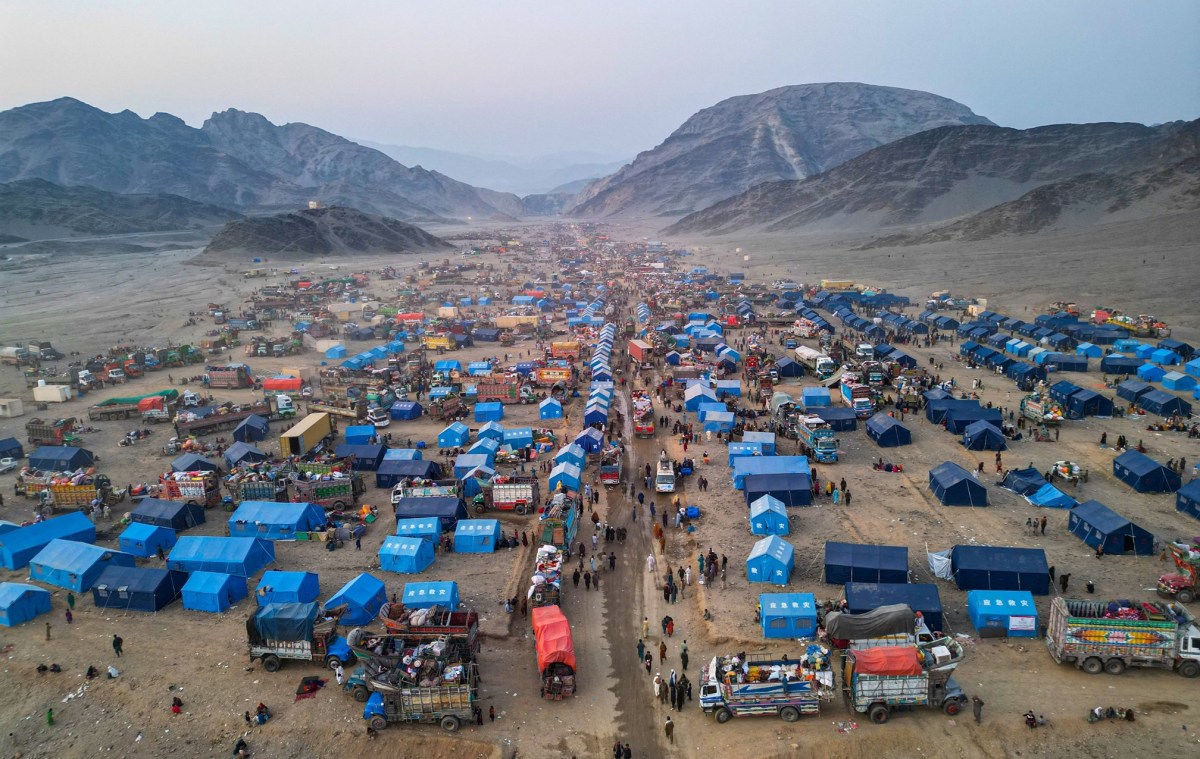
Superfact 118: There are more than 100 million forcibly displaced people in the world, including more than 30-40 million refugees, 9 million asylum seekers, and more than 70 million internally displaced persons. The number of refugees in the world has almost tripled since the year 2000 and the number of internally displaced persons is estimated to have more than ten doubled since the year 2000.
According to Wikipedia the number of refugees is 41.6 million worldwide, 72.1 million internally displaced persons, 8 million asylum seekers and 122.6 million forcibly displaced people in total globally. The number of refugees in the year 2000 was 12,129,600 and the number of internally displaced persons in the year 2000 was 5,998,500.
According to the refugee council of Australia there were 117.8 million forcibly displaced persons in 2025 including 34.4 million refugees, 9 million asylum seekers, and 73.5 million internally displaced persons. According to Our World in Data a record 83 million people globally were living in internal displacement at the end of 2024.

I should explain that a refugee is someone who has been forced to flee their home country to escape war, violence, or persecution. A refugee who acquires a new citizenship or returns to his country stops being a refugee. An internally displaced person is an individual who was forced to leave their home or place of residence but did not cross an international border.
It should be noted that World War II was the largest forced displacement event in recorded human history. 65 million people were forcibly displaced in Europe alone according to the Imperial War Museum. The partition of India and Pakistan in 1947 resulted in 12-20 million people being forcibly displaced according to this article. The Afghanistan war resulted in around 10 million people being forcibly displaced according to this article. Today most refugees (65%) come from just five countries Syria, Venezuela, Ukraine, Afghanistan, and Sudan.
Having tens of millions of refugees and forcibly displaced persons is nothing new. What may come as a surprise to many is first of all the size of the numbers and the fact that despite the reduction of causalities from wars in the 21st century compared to previous centuries; the refugee and forcibly displaced persons problem has grown significantly larger over the last couple of decades. Since this is an important but surprising reality, I consider it a super fact.
Where Are the Internally Displaced Persons ?
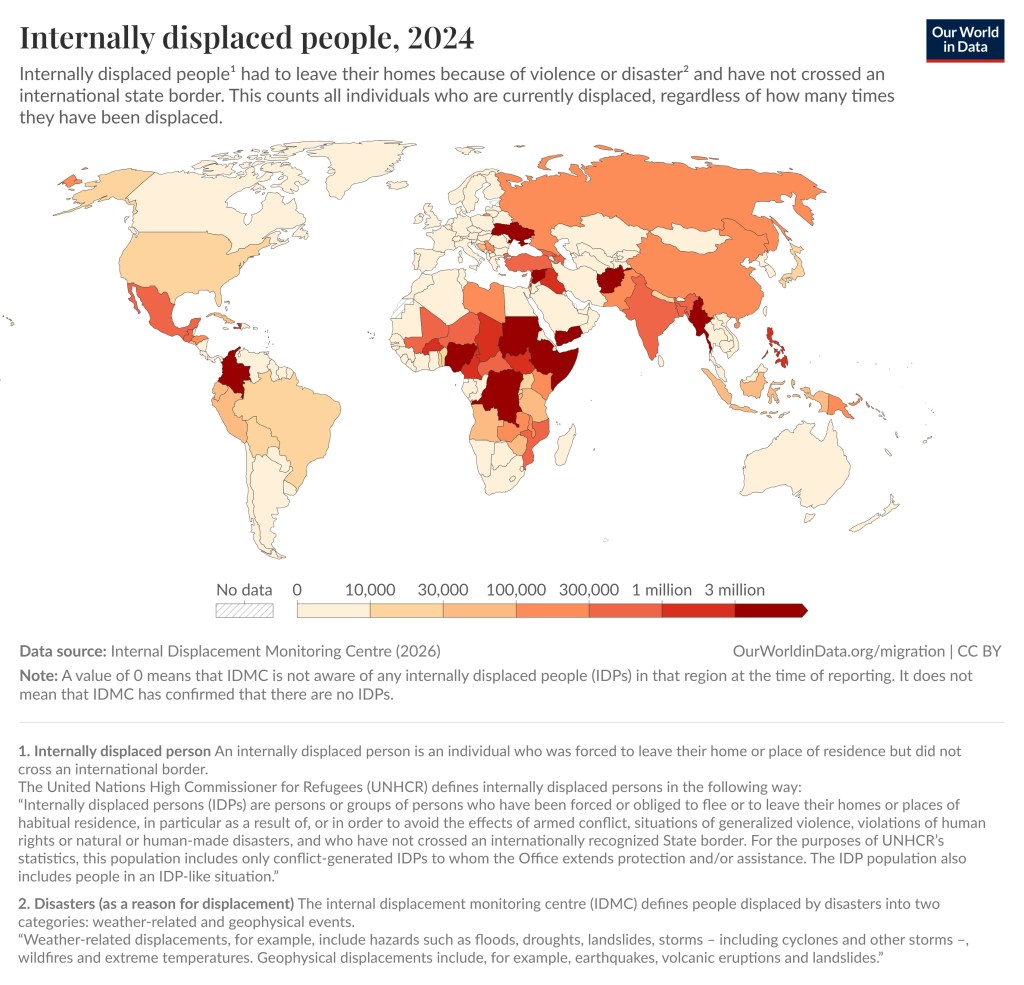
You may wonder how come there are internally displaced people in countries such as Japan and the United States. The reason is that natural disasters can also be a source of internal displacement. In fact, my in-laws were internally displaced persons after a tornado devastated our neighborhood in Dallas in October 2019. Notice that the Africa is where you have most of the internally displaced persons.
Where are the Refugees ?
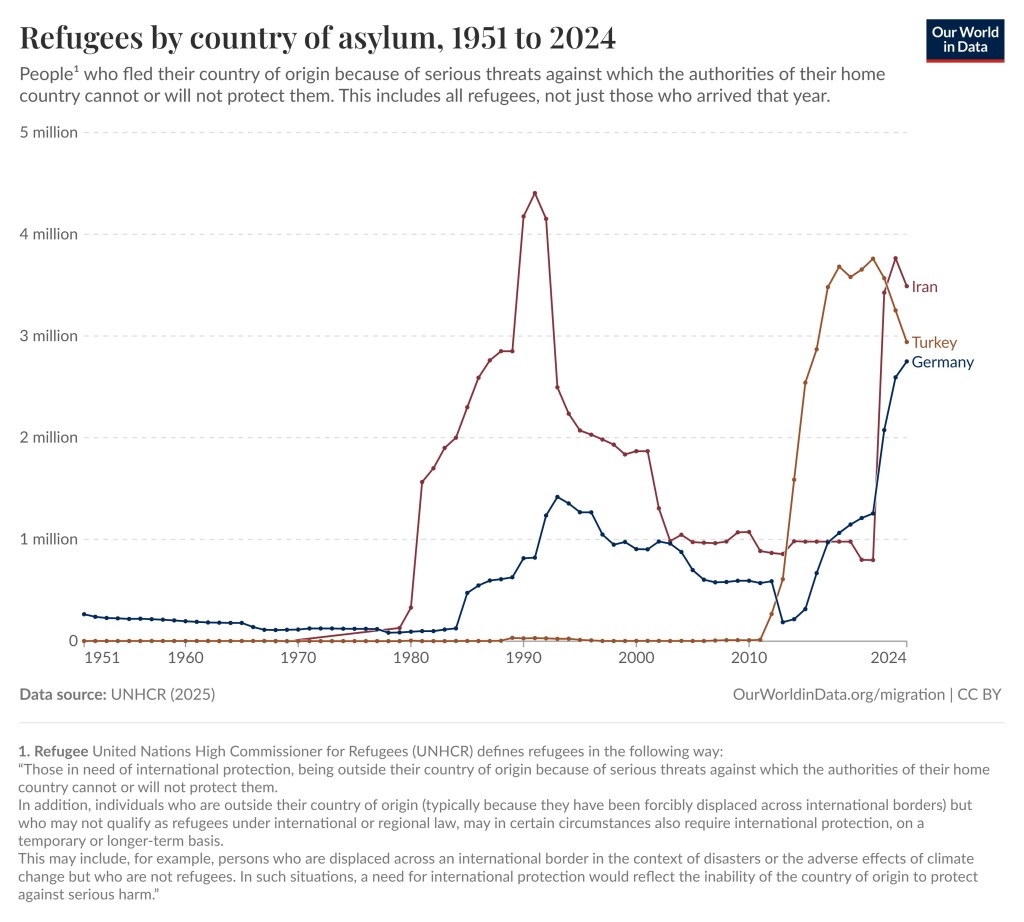
The three countries with the most refugees are Iran (3.49 million), Turkey (2.94 million) and Germany (2.75 million). Next comes Uganda, Pakistan, Chad, Poland, Ethiopia, all Bangladesh, all with more than one million refugees. Iran has a lot of refugees because of the refugees from Afghanistan pouring into the country, and Turkey has a lot of refugees because of the refugees from Syria, and Germany has a lot of refugees because of their generous immigration and refugee policy. The big spike in the number of refugees in Iran around 1991 was due to the Gulf war and the Afghanistan war.
As for other Western countries, France has 722 thousand refugees, United Kingdom 516 thousand refugees, the United States 435 thousand refugees, and Spain 429 thousand refugees. By clicking here, you can play around with the graphs and compare all countries in the world.
To read a real eyewitness account from the persecution and genocide of the Rohingya people, click here – The Friday I Never Returned Home: A Rohingya Survivor’s Story from June 8, 2012
 Super Facts