
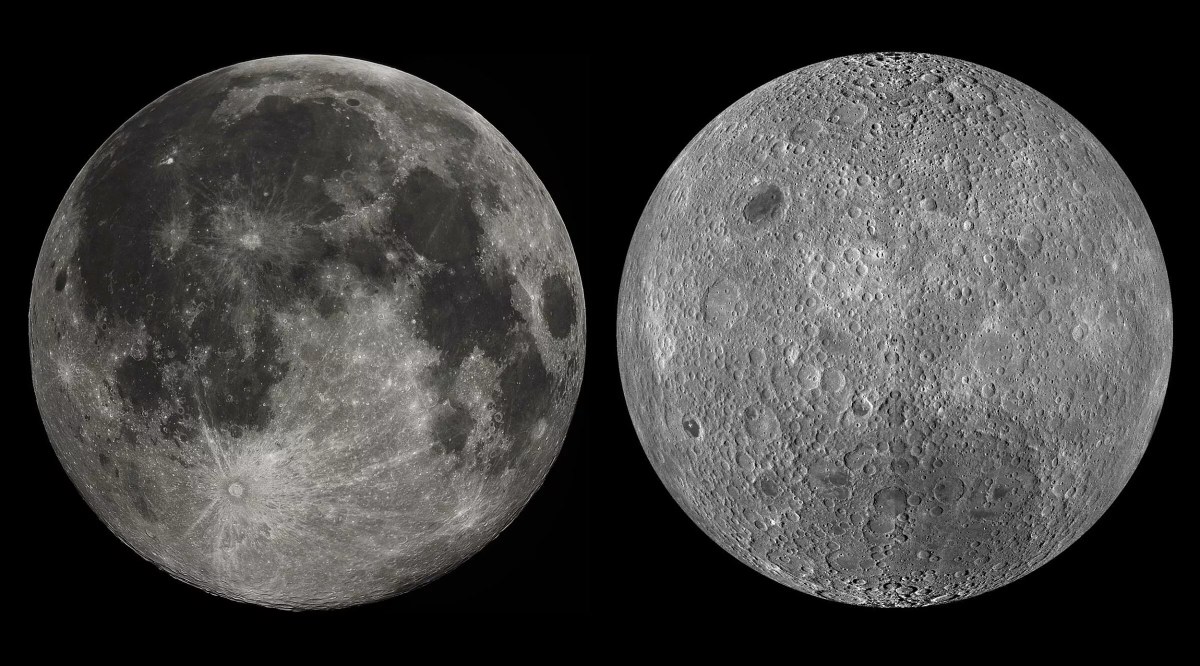
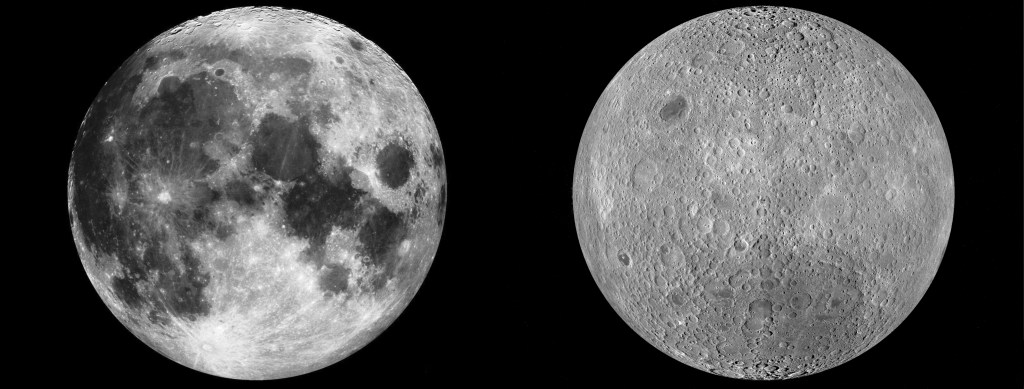
Super fact 103: The moon is always turning the same side towards us. This side is often referred to as the near side of the moon. The back side, which we can’t see from Earth, is often referred to as the far side of the moon. However, there is no side of the moon that is always dark. The near side of the moon and the far side of the moon both have day and night (in a 29.5 day cycle). Another interesting fact is that even though the near side and the far side of the moon get the same amount of light they are very different.
Below is a youTube video showing an animation composed of actual satellite photos by NASA. It shows the far side of the moon, illuminated by the sun, as it crosses between the DSCOVR spacecraft’s Earth Polychromatic Imaging Camera (EPIC) and telescope, and the Earth – one million miles away.
The video has frequently been shown on social media, and I’ve seen many comments stating that it is fake because the back side / far side of the moon is not dark in the video. However, the sun is behind us in the video and shining on both Earth and the far side of the moon. The far side is not always dark.
This is a super fact because many people mistakenly think there is a permanently dark side of the moon, which we know is incorrect and understanding the basics about the moon, the most prominent celestial object in the sky, aside from the sun, is kind of important.
Moon Photos
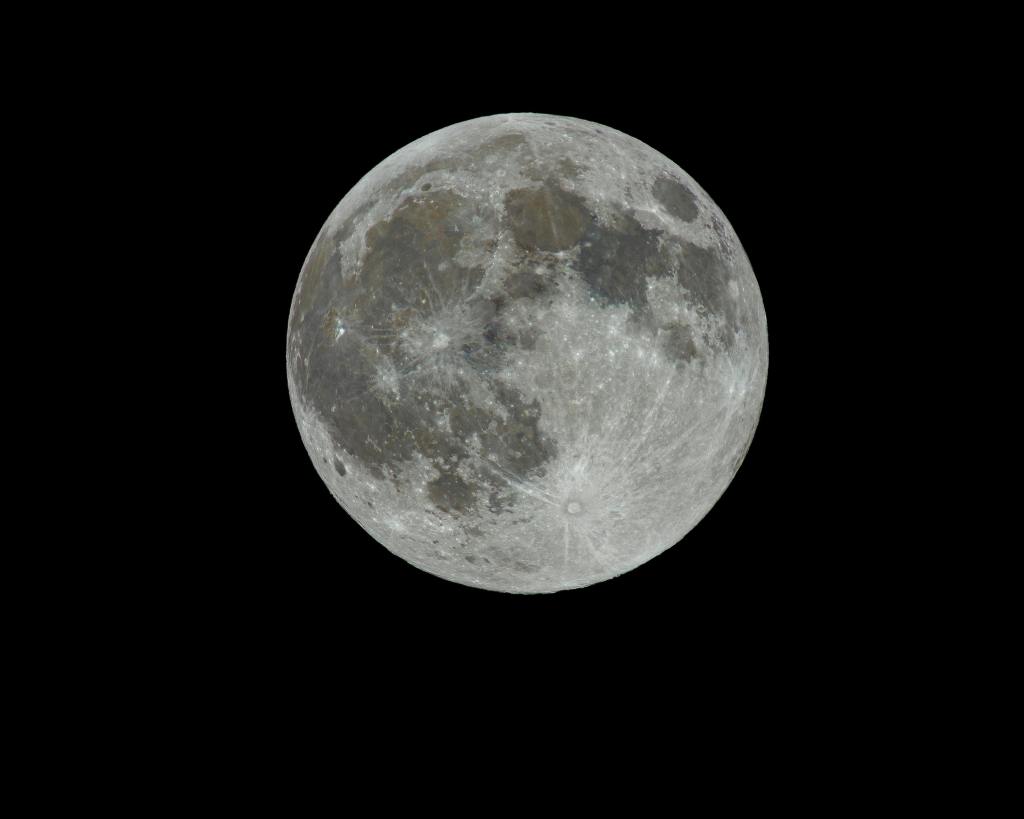
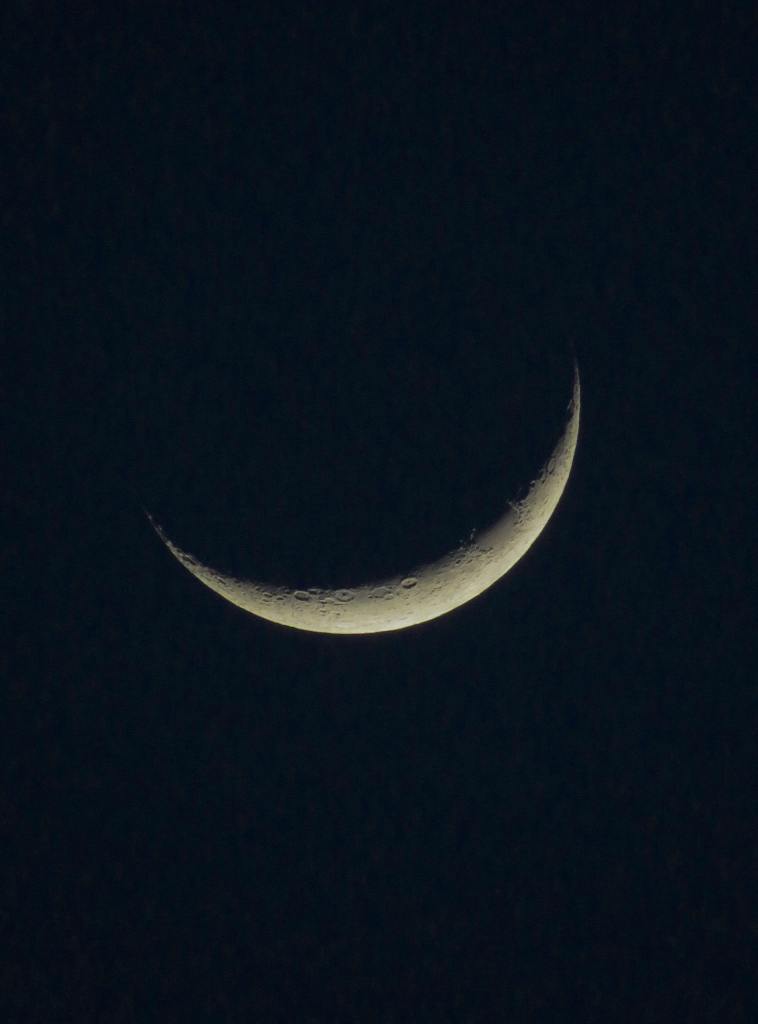
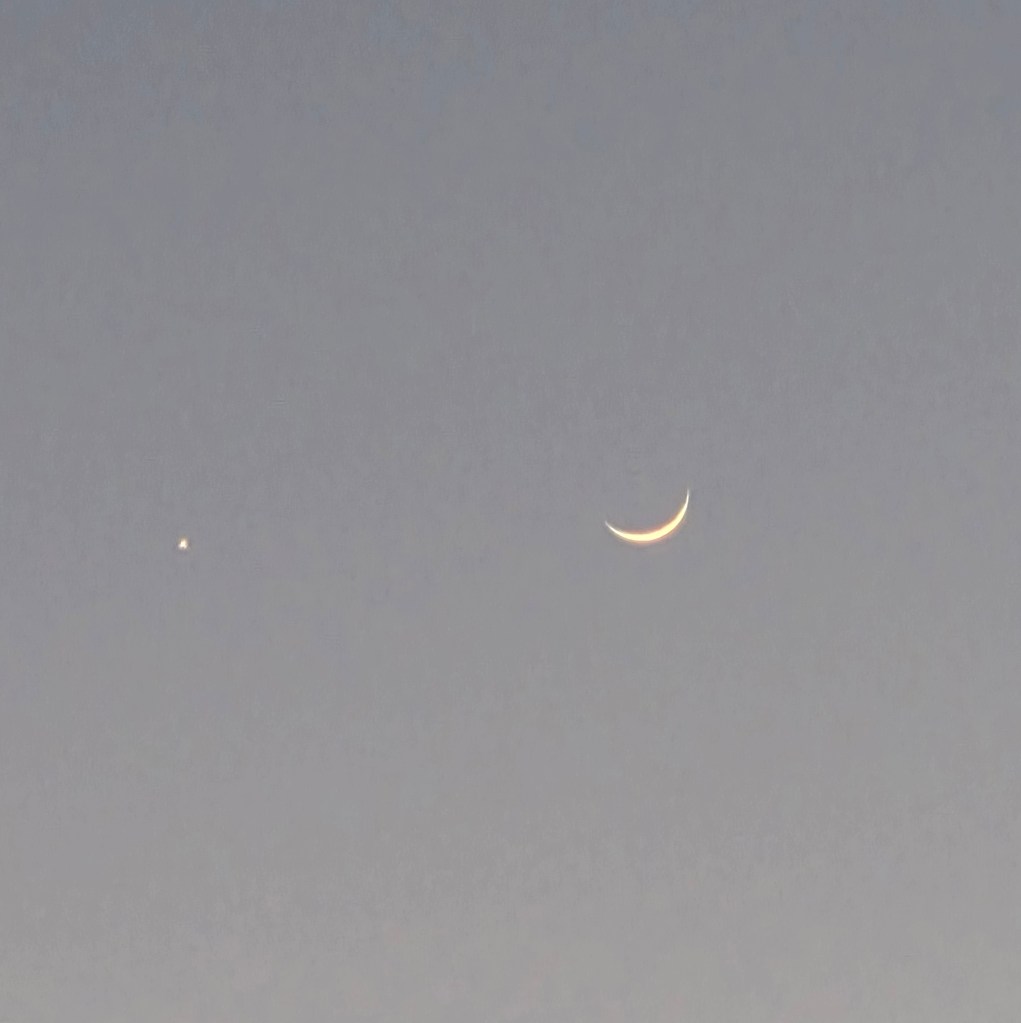
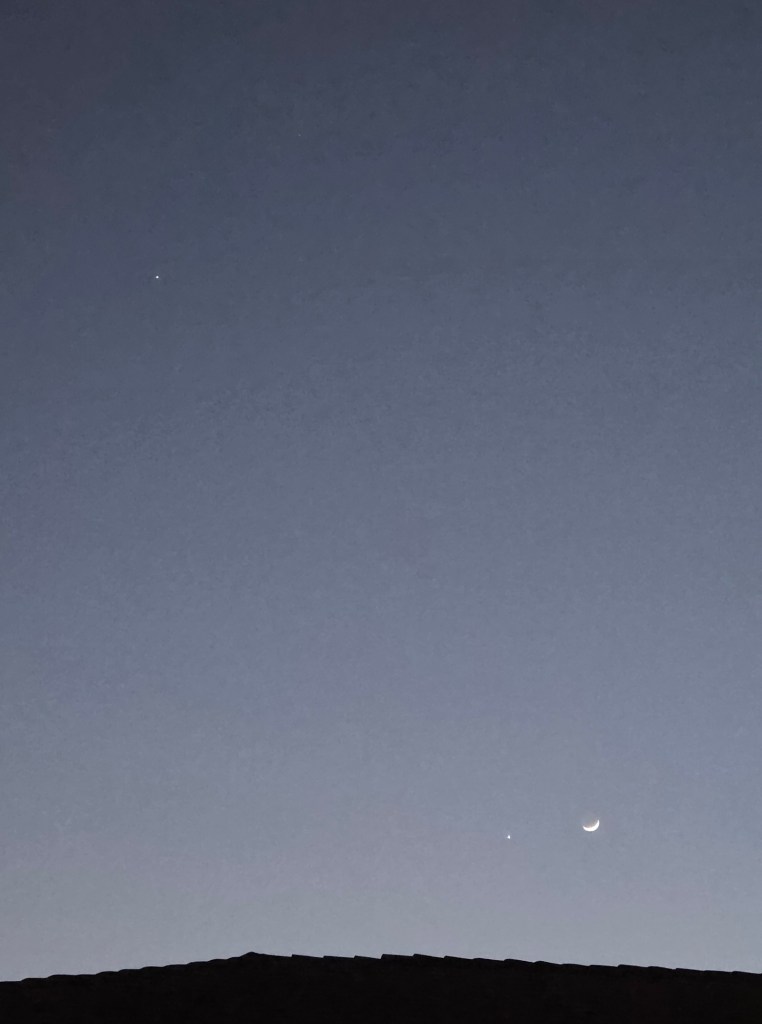
I took the photo below with my phone a few minutes ago this evening. The little dot on the left (it is not twinkling) is the planet Venus. The moon is currently a crescent, which means that at the moment of my writing this the back side / far side of the moon has day. The sun is shining down on the far side, and it is reflecting light back into space. The back side / far side is almost a full moon right now, but we can’t see that from Earth.
Interesting Moon Facts
I thought I might as well mention a few interesting facts about the moon.
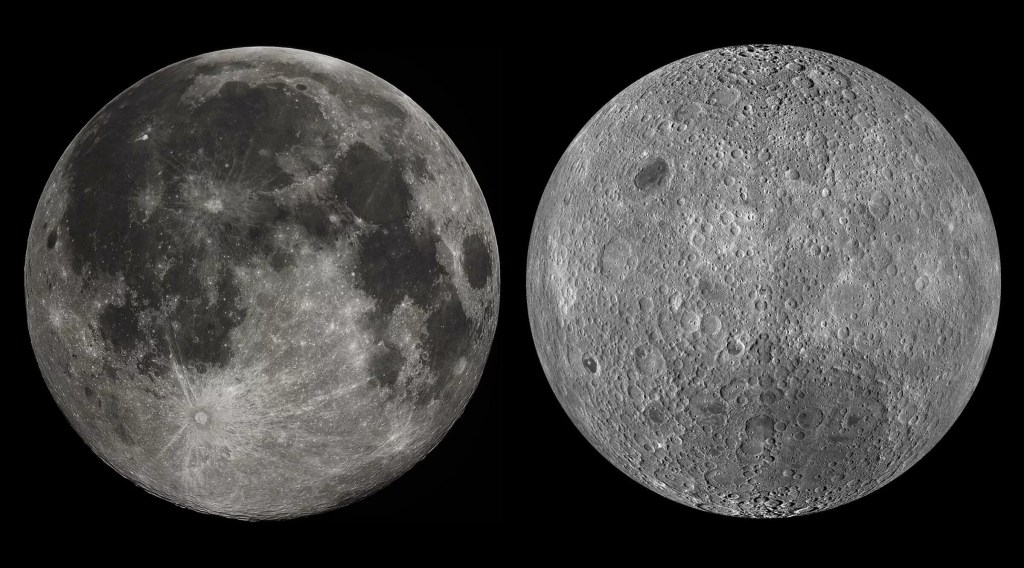
The far side of the moon is different. As you can see in the YouTube video and photo above, the far side looks different from the nearside and it is different in appearance and terrain. The near side of the moon has large, dark, flat-lying basins called maria. They look like oceans. The far side is a lot more rugged and covered by lots of craters. Another difference is that the far side of the moon has a much thicker crust compared to the near side.
The sun is 400 times wider than the moon. They appear to be roughly be the same size in the sky because the moon is 400 times closer.
The moon is drifting away from earth at about 3.8 centimeters per year. The moon is moving away from earth due to the gravitational forces between the moon and earth, which also causes tidal bulges in the Earth’s oceans and the moon. Back in high school I took a difficult physics test for a competition and one of the questions was to show that the moon was moving away from earth due to gravitational forces and calculate by how much. I did not solve that one.
The moon was likely created by a celestial collision. The most widely accepted explanation for the existence of the moon is that the Moon was created when a planet-like object, the size of Mars slammed into Earth, soon after the solar system began forming. That was about 4.5 billion years ago.
NASA found water on the moon. In 2020, NASA announced the discovery of water on the surface of the Moon. The NASA video below features more interesting facts about the moon.
If you visit this link you’ll find an interactive 3D animation using the NASA Visualization Technology Applications and Development (VTAD) technology. By using your mouse, you can view the moon from many different angles and positions (both the near side and the far side of course).
To see the other Super Facts click here


The moon circles us like a wary animal, always keeping its eye on us.
LikeLiked by 2 people
That is very poetic. Thank you Anneli.
LikeLiked by 1 person
Yes I knew about the dark side of the moon, first through Pink Floyd and then through science. 😉 I like the Epic View video a lot.
LikeLiked by 3 people
That is great Lynette. It appears that many people think there far side of the moon is always dark, which it isn’t.
LikeLiked by 1 person
I haven’t see the far side of the mon video before. What agreat sequence. Maggie
LikeLiked by 2 people
I agree, it is an awesome video. It used to be pretty popular on social media a couple of years ago, but it all depends on the algorithm if you see it. Thank you Maggie.
LikeLiked by 1 person
did not know that about the moon
LikeLiked by 2 people
Yes I think it is interesting information. Thank you Kevin.
LikeLiked by 1 person
Very interesting, Thomas! All aspects related to the moon are so enigmatic, from its near and far sides to its precise distance to the Earth, that chance doesn’t seem to play a role here. Thank you for this insightful post. Much enjoyed! Light and blessings your way, always, my friend! ✨🙏🌙
LikeLiked by 1 person
Thank you Susana. It is an interesting topic. Light and blessings your way too, my friend
LikeLiked by 1 person
Oh wow, what a fantastic post! We say that image of the moon last night and wondered what was next to it; my husband offered a star as a suggestion, and I wondered if it was something else. To find out it was Venus, is amazing! Your facts about the moon, like it was created from a celestial collision, are fascinating. It’s amazing how little I know and how much misinformation is out there.
LikeLiked by 1 person
Thank you so much Ada. I also think it is a fascinating topic. I have an app on my phone, SkyMap, which I use to identify objects in the sky. Venus is typically either in the western sky in the evening (called the Evening Star) or the eastern sky in the morning (called the Morning Star). Despite those nicknames, it is a planet, not a star. Venus tend to hang around close to the sunset or close to sundawn in the morning. Anyway, the only time I’ve seen Venus straight above was when we had a total solar ecplise. That was because the sun was above that time (but covered by the moon).
LikeLike
Oh wow, that’s so interesting… that wonderful moon, plus the gorgeous photos with Venus by her!
LikeLiked by 1 person
Thank you so much Chris. When we had the total solar eclipse I we got some even cooler photos of the moon blocking the sun and Venus nearby the sun+moon. The solar eclipse made it dark so you could easily see Venus and it was right above our heads. Normally Venus is close to the sunset in the evening (if up at all) or sundawn in morning.
LikeLiked by 1 person
Really interesting information about the moon. I’d heard that there was the far side or dark side, but I didn’t know at times it was the opposite of what we were seeing. I like the photos, you found. Also the ones you yourself took, with the two planets turned out good. 🙂
LikeLiked by 1 person
Yes you are right. The moon has no permanently dark side, but of course, a permanently far side. One day I’ll hope to learn to take photos with my telescope but until then I just use my phone. Well I could buy a telescope adapter for the phone too. Thank you for your kind words Barbara.
LikeLiked by 1 person
Excellent explanation.
LikeLiked by 1 person
Thank you so much Jacqui.
LikeLiked by 1 person
This is interesting information about the moon. If the moon is gradually moving away from earth and it is responsible for the tides, doesn’t that mean the tides will ultimately shift and the oceans change position?
LikeLiked by 1 person
Yes the tides will be less as time goes on but very slowly. After one billion years at 3.8 cm per year means that the moon has moved 38,000 kilometers or about 10%. The tides will be a little less after one billion years.
LikeLike
Great post about the moon and how it rotates on its axis and orbits the Earth. I remember when I took my first astronomy course and had to get my head around phase-locked bodies and suddenly understood how the moon works. It was actually pretty mind-blowing at the time.
LikeLiked by 1 person
Thank you so much David for your kind words. It is always very special when you visit an Astronomy related post of mine. There are a lot of mind blowing stuff in Astronomy.
LikeLiked by 1 person
I really appreciate the care you put into your Super Facts posts whether astronomy related or not. The world is a better place the more people realize that good science can make a positive difference in their lives.
LikeLiked by 1 person
Yes I think you are right and thank you so much for your support
LikeLiked by 1 person
Great post and fantastic pics. I haven’t seen the moon transiting the earth before. Very cool. I always thought the dark side of the moon was referred to that way because we couldn’t see it, not because there was no light there. Of course, light shines there when it faces the sun. Oh, well. Live and learn. 🙂
LikeLiked by 1 person
Thank you so much Denise. Yes some people, like you, figure things out, but I’ve seen and heard a lot people making the claim that the far side back side is always dark, so I thought this super fact might be educational.
LikeLiked by 1 person
The m9on always seems to be such a fascinating subject. So much folklore about it yet we’re always ready to dream about it . I know I am 🙂
LikeLiked by 1 person
Thank you so much Patricia. I agree, the moon is fascinating and there’s so much folklore around it, for example, werewolves, moon rabbit, moon magic, etc. Dreaming about the moon sounds great. Sweet dreams.
LikeLiked by 1 person
Interesting information, Thomas. The moon is a fabulous subject for poets and physicists alike.
LikeLiked by 1 person
Thank you so much Priscilla. You are right, it is for poets and physicists alike.
LikeLiked by 1 person
Java Bean: “Ayyy, but if there is no Dark Side of the Moon, how is Pink Floyd going to see us there?!”
Lulu: “How would they see us there if it were dark?”
Java Bean: “🤯”
LikeLiked by 1 person
Java Bean don’t listen to Pink Floyd, I mean about this, not the music. Java Bean and Lulu, I agree seeing in the dark is difficult, luckily the far side has sun light half the time. You just never get to see Earth from there.
LikeLike
Thank Pink Floyd for perpetrating the myth that the moon has a dark side. 😆 Of course, I thought it did too, so thanks for setting the record straight, Thomas. 🙂 Love the photos and the interactive video! The moon is a fascinating topic, and I enjoyed learning more about it.
LikeLiked by 1 person
Yes that is what I suspect. I certainly remember that song. I agree, the moon is a fascinating topic. Thank you so much for your kind words Debbie.
LikeLiked by 1 person
The City in the Middle of the Night by Charlie Jane Anders, which I liked a lot, involves people trying to live on a tidally locked planet with one side constantly baking and one side constantly freezing. Civilization exists in a narrow band where the two sides meet, but of course the characters have to venture into the wastelands on either side, because plot reasons.
LikeLiked by 1 person
That seems like a very interesting science fiction novel that I would like to read. I remember a story by Arthur C. Clarke, The Wall of Darkness, about a planet that always showed the same side towards its sun with the other side being dark and cold. (it turned to be more complicated than that.) It is one of my favorite science fiction stories. It is not the same as The City in the Middle of the Night but it reminded me of that story.
LikeLiked by 1 person
“It’s more complicated than you think” was one of Arthur C. Clarke’s hallmarks if I remember correctly lol
LikeLiked by 1 person
Ha ha that is an interesting quote. Yes things are not as simple as many hope them to be.
LikeLiked by 1 person
What a fascinating post, Thomas. The moon has landed in many of my poems. Great inspiration for writing. Thanks for sharing these facts and photos.
LikeLiked by 1 person
Thank you so much for kind words Lauren. The Moon is indeed a great inspiration for poems and for our ponderings and fascination,
LikeLiked by 1 person
You’re welcome, Thomas! Have a great weekend!
LikeLiked by 1 person
Have a great weekend you too
LikeLiked by 1 person
Fabulous post Thomas… and we have had some clear skies at night recently and Venus has been shining brightly… the moon has been a source of human fascination since time began and far more songs have been penned about its magic than the sun. Thanks for enlightening us. xx
LikeLiked by 1 person
Thank you so much for your kind words Sally. It is great that you had clear skies and could see both the moon and Venus. I did not know that far more songs have been penned about its magic than the sun. That is quite interesting but it makes sense. The moon is mysterious and fascinating.
LikeLiked by 1 person
It’s cool there’s water on the moon!
LikeLiked by 2 people
Yes I think that was a very fascinating discovery.
LikeLike