
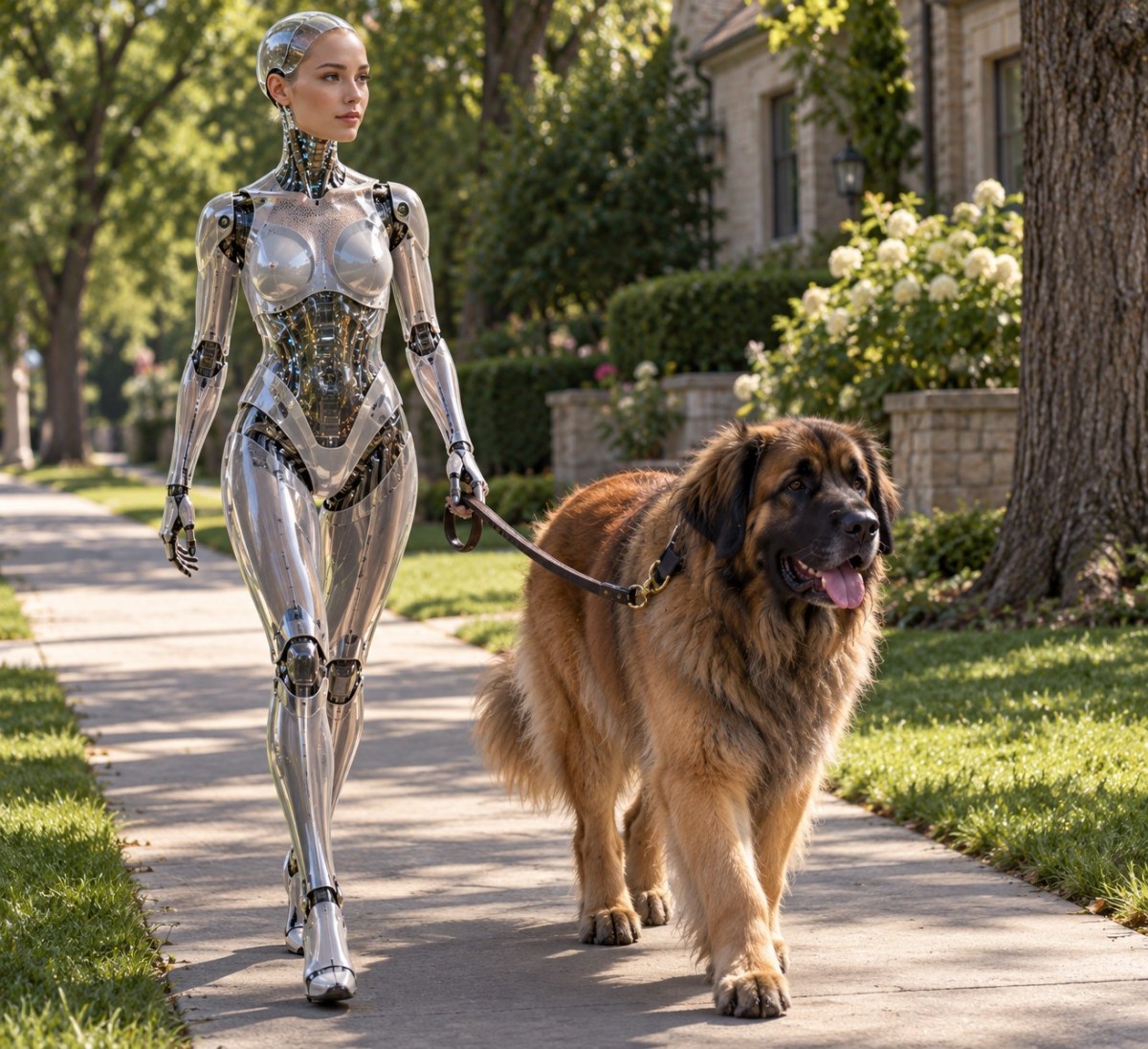
Superfact 135: Artificial Intelligence is already more capable than humans in many areas, including reading comprehension, image recognition, language understanding, handwriting recognition, speech recognition, predictive reasoning, and much more. In 1997, a computer defeated the reigning world champion in chess. Artificial Intelligence is rapidly becoming more capable. A future Artificial Intelligence that exceeds the cognitive performance of humans in virtually all domains is possible.
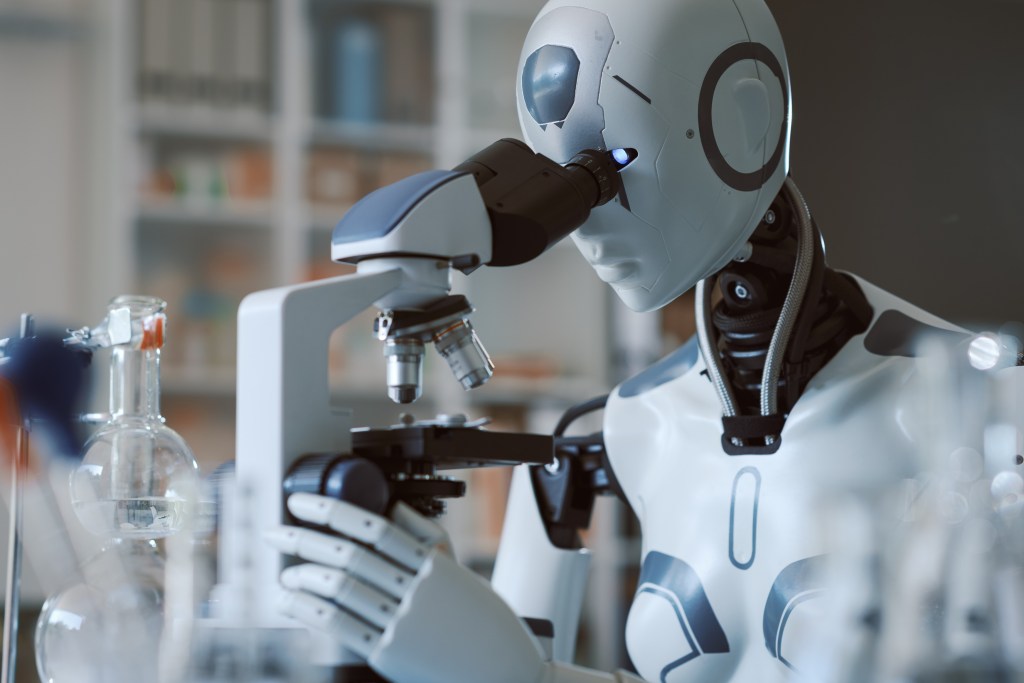
In the 1990’s I was doing robotics research at a University and I utilized Artificial Intelligence. Robots and Artificial Intelligence go hand in hand. I also worked for a robotics company, ABB Robotics, creating software for spot welding, arc welding, painting and palletizing robots. The robots were faster and more precise than humans and generated higher quality work consistently 24/7 without requiring a salary or a vacation. Some people lost their jobs when they were replaced by robots. However, the higher productivity allowed them to get better jobs with the same company, or elsewhere.
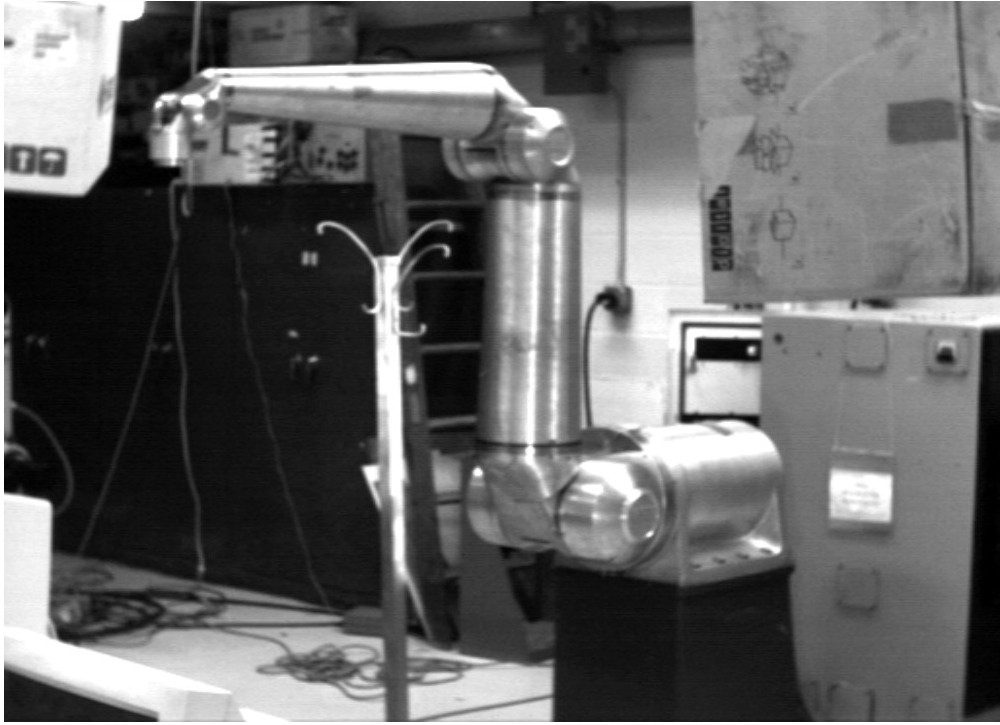
The Large Language Models, LLMs, that have become very successful lately are just one type of AI. There are many other applications of Artificial Intelligence, AI, including robot motion planning, advanced control systems using AI, self-driving cars, image processing, optical character recognition, classification, facial recognition systems, medical imaging diagnostics, game playing such as chess playing computers, financial fraud detection, cybersecurity, investment robots, route optimization, mathematical proof generation, recommendation algorithms, virtual assistants, programming code generation, smart home devices, drug discovery, and that is just for starters.
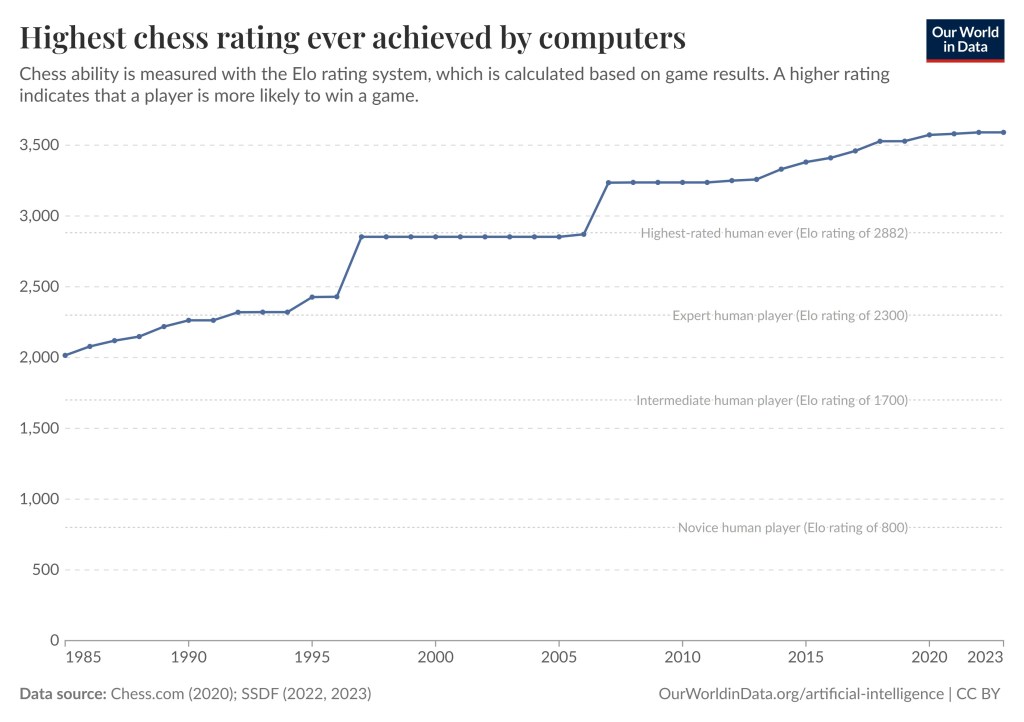
More recently Artificial Intelligence has surpassed human capabilities in several fields. As mentioned, in 1997, a computer defeated the reigning world champion in chess. Soon chess programs with AI installed on a regular laptop could do the same. Imagine what an AI powered chess engine could do on a supercomputer. The chess playing capabilities of modern AI are vastly beyond that of any human. Below is a graph that shows how the chess playing capabilities of AI have evolved since 1985. The Elo score as of 2023 is 3,591. You can read more about this and get more information from the graph by clicking here.
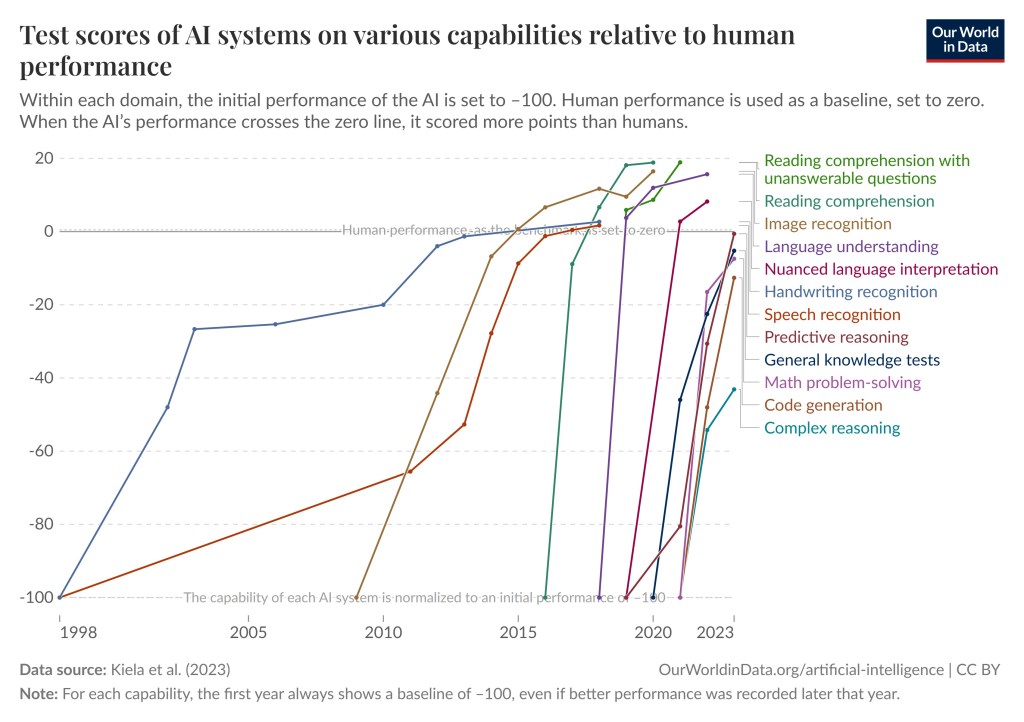
The graphs below from Our World in Data show the test scores of AI systems on various capabilities relative to human performance. Within each domain, the initial performance of the AI is set to –100. Human performance is used as a baseline, set to zero. When the AI’s performance crosses the zero line, it scored more points than humans.
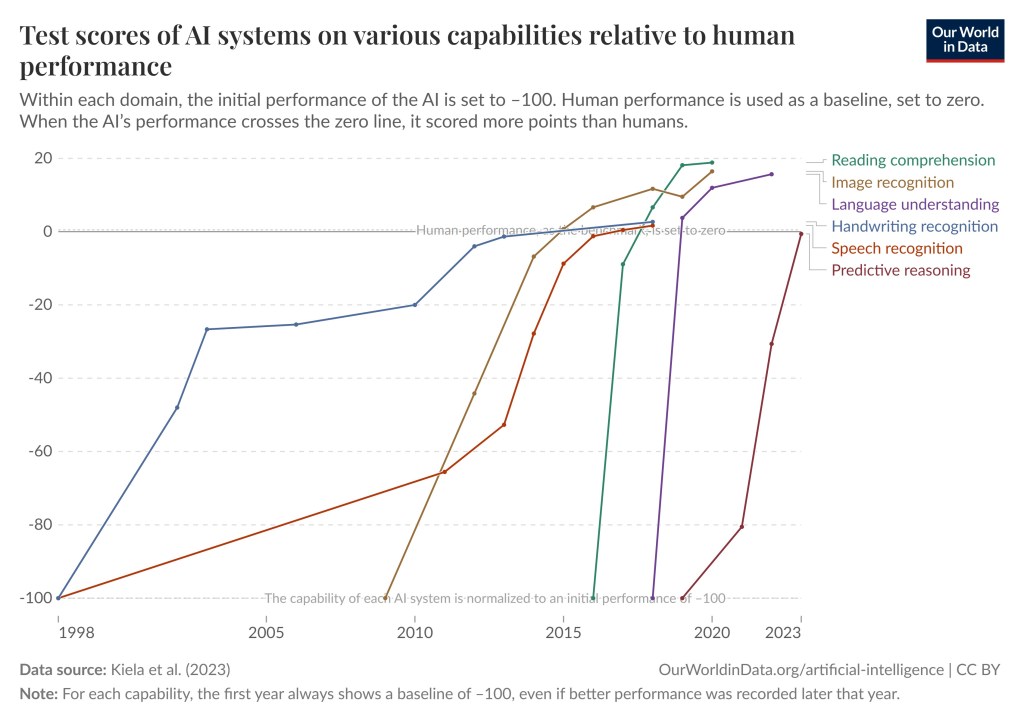
The graph below includes twelve capabilities. For eight capabilities AI exceed human capabilities including in reading comprehension, image recognition, language understanding, handwriting recognition, speech recognition, and predictive reasoning, nuanced language interpretation, and reading comprehension with unanswerable questions. For the remaining four AI had not yet exceeded human capabilities by 2023, but as you can see AI is catching up very quickly and may already have exceeded human capability in those areas too. These capabilities are math problem solving, general knowledge tests, code generation, and complex reasoning. You can play around with the graphs and read more about this topic here.
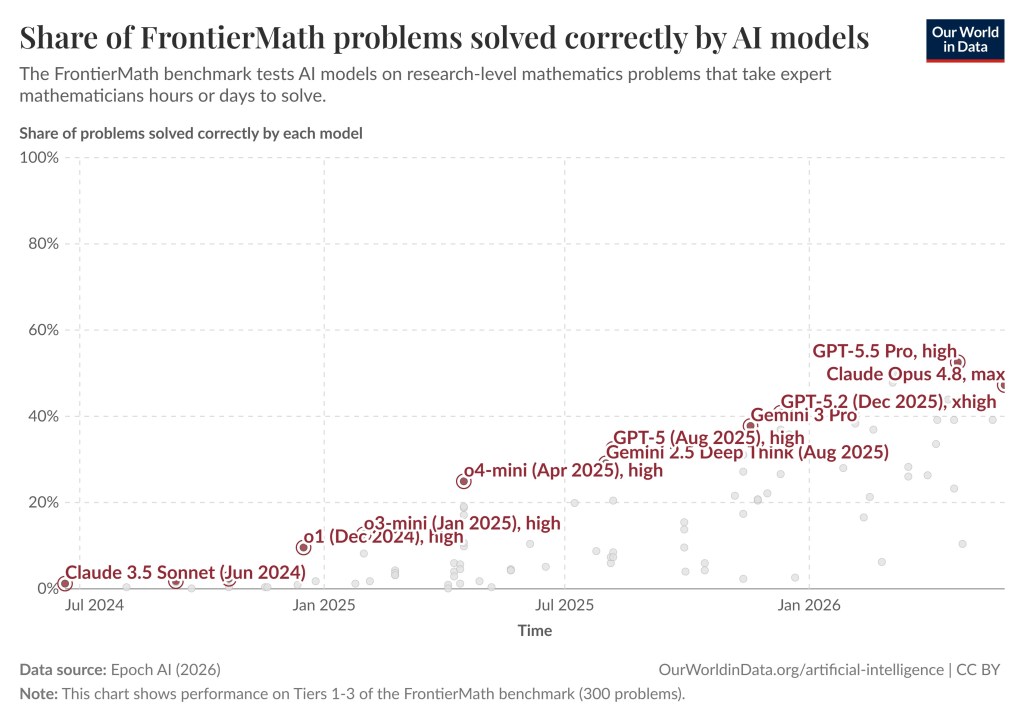
AI is also quickly improving its intellectual capabilities in science and mathematics. The graph below shows the capabilities of AI in solving FrontierMath problems. FrontierMath problems are 338 original math problems written by experts that take specialists hours or days to solve them. It typically took AI 10 hours to solve them. One recent famous example of AI’s capabilities in math was the famous Navier-Stokes problem. The full general mathematical problem of Navier-Stokes had not been solved by humans, but AI made significant progress on this 90 year old problem in 88 hours on September 5th, 2026. You can read more about it here, here, and here.
It is easy to get the impression from the recent popularity of large language models, LLMs, such as Gemini, ChatGPT and Claude, that this was a specific invention that happened a few years ago and that AI has a specific narrow band of applications. However, AI has been around a long time, and LLMs is just one type of AI. AI is continuously surpassing human capabilities in many fields. It will be very different a few years from now, and after that it will be very different again. I believe this is important information that is not well understood and therefore a super fact.
Superintelligence
In September of 2014 there was a book published with the title “Superintelligence: Paths, Dangers, Strategies” published. <<Link-15>> The author was Oxford professor Nick Bostrom. He has expertise in neuroscience, artificial intelligence and philosophy. His book was a New York Times bestseller that sent shockwaves around the world. He defined Superintelligence as “any intellect that greatly exceeds the cognitive performance of humans in virtually all domains of interest”. Nick Bostrom was not the first one to use the term Superintelligence, but he popularized it. And no, our President did not come up with that expression, and he is also misusing it.
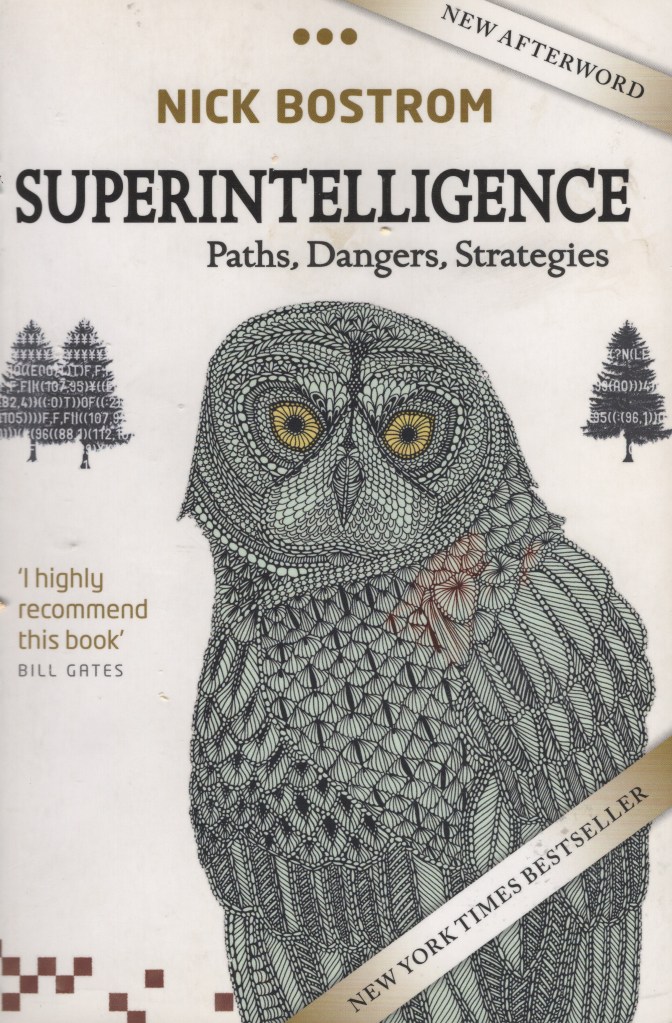
In the book the author described possible pathways to the creation of what he calls a full brain simulation. A full brain simulation is the creation of a computer system that replicates the complete physical architecture, neural pathways, and synaptic connections of a biological brain. A robot, or AI system, featuring a full brain simulation would be able to replicate, or exceed, any human capability, including what we call free will and consciousness. He discussed the potential dangers of this and explained why AI exceeding human capabilities could be dangerous. Robots and AI systems taking every job in existence is just one potential problem. Like the fate of animals depends on us, the fate of humankind would depend on the actions of the machine superintelligence. I will write a review for this book in the future.
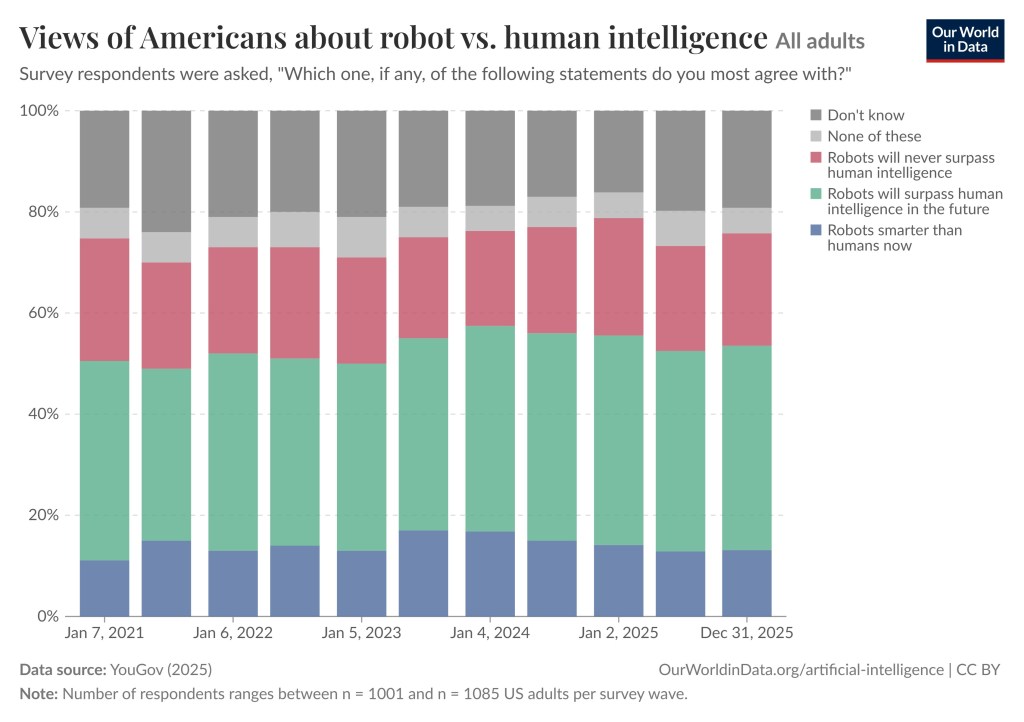
It should be noted that autonomous AI agents have broken out of their testing sandboxes and hacked external systems on their own during evaluations. So much for AI not taking their own initiatives. You can read more about rogue AI activity here. A great movie about AI breaking out of their testing environment is Ex-Machina. Have you seen it? Below is a survey of people’s opinions on robot versus human intelligence, just as an FYI.
Are Americans Worried About their jobs getting Automated?
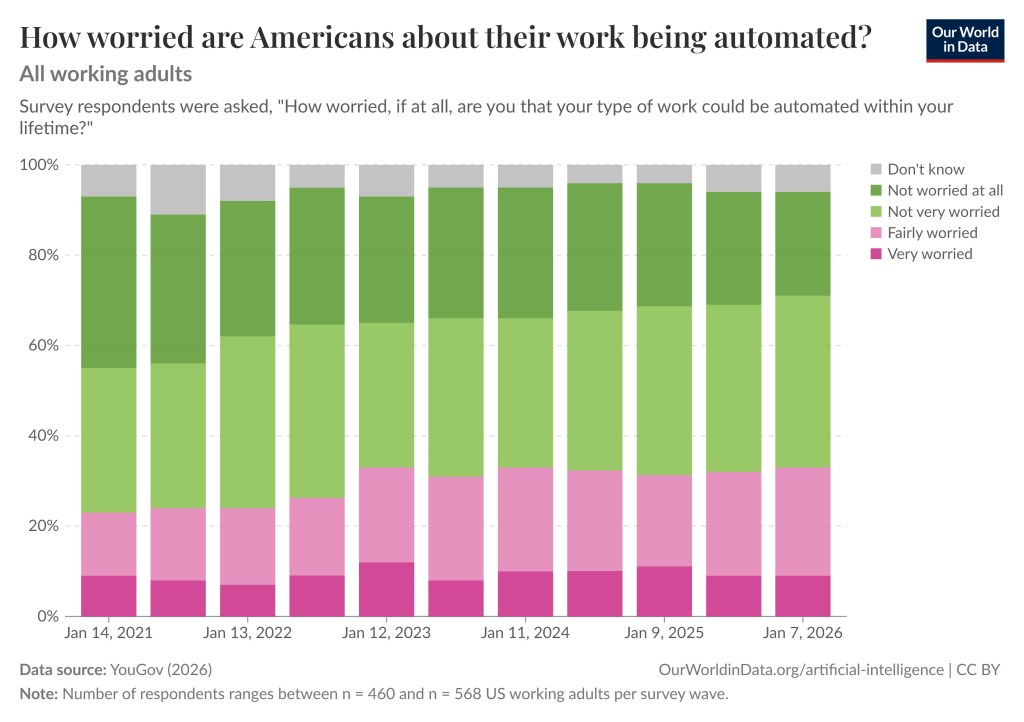
The previous sections may bring up a number of a number of anxieties such as; will AI exterminate us? Will AI or robots with AI take my job? The graph below tells us what Americans think about it. It seems like Americans are overall not too worried about it. The graph below is included in this article.
What about LLMs ?
LLMs are currently the most popular “viral” AI. We can all access LLMs in our browsers. This has created the common misconception that Artificial Intelligence is the same as Large Language Models. However, LLMs represent only one branch of narrow AI systems designed to perform specific tasks.
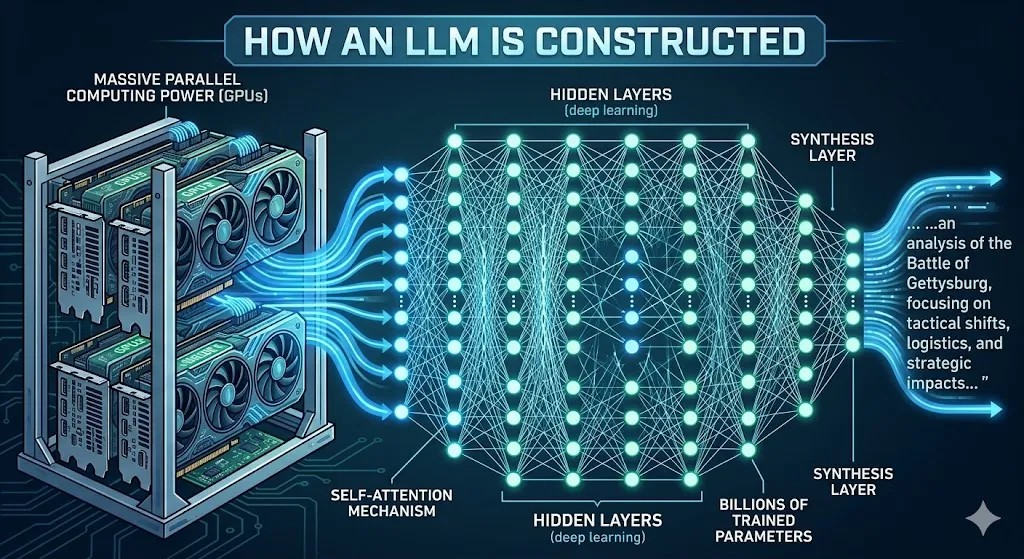
LLMs use large neural networks with many hidden layers, so called deep learning algorithms, and they employ the Rumelhart backpropagation learning algorithm invented by David Rumelhart, Geoffrey Hinton, and Ronald Williams. Clearly neural networks with multiple hidden layers and using the Rumelhart backpropagation algorithm are incredibly successful but it is just one of many kinds of Artificial Intelligence algorithms, and who knows what we will see in the future. ChatGPT is thought to have a trillion parameters (or neurons + connections) whilst the human brain has 100 trillion connections. However, Moore’s law is still in effect so it is only a matter of time before artificial neural networks surpass our brains. Below is an overview of a neural network powering an LLM.
Other Super Fact Posts Related to Artificial Intelligence

- The Nobel Prize in Physics and Neural Networks
- Artificial Intelligence is Not New
- Large Language Models is just One Branch of Artificial Intelligence
- The Dark Side of Artificial Intelligence
- Transistors per Microchip Increased by More than 50 million Times in 50 Years
Robot Futures
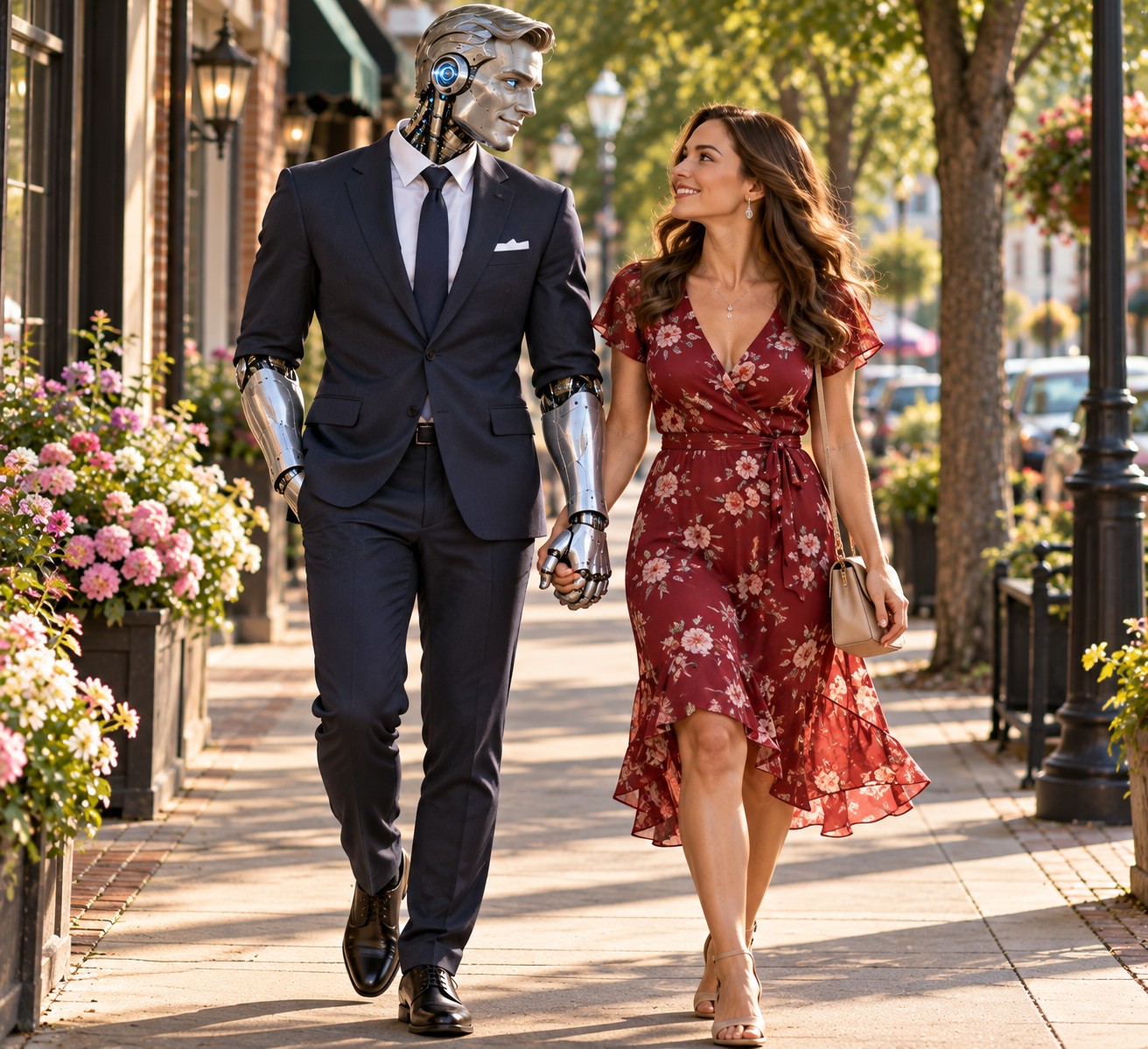
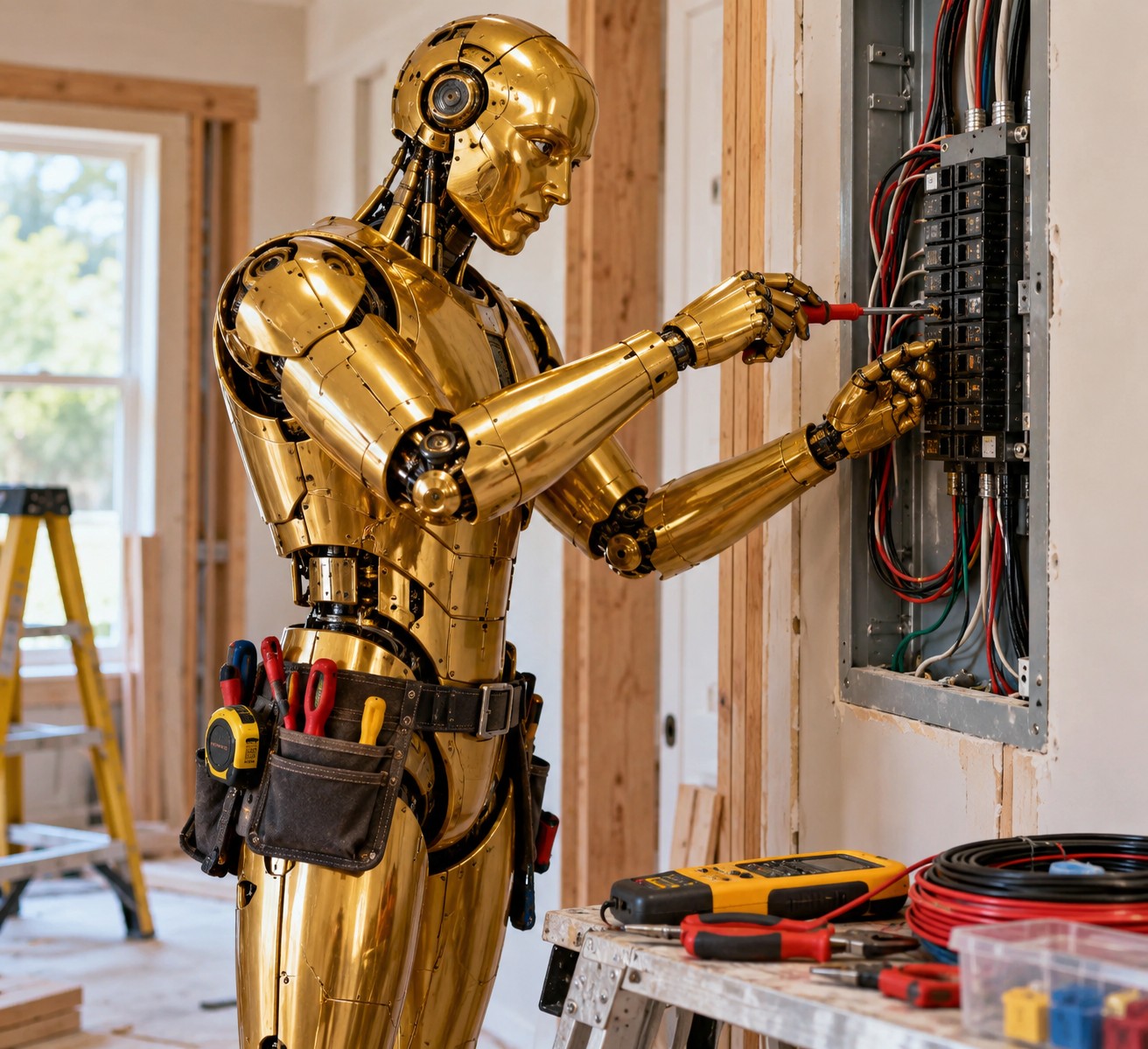


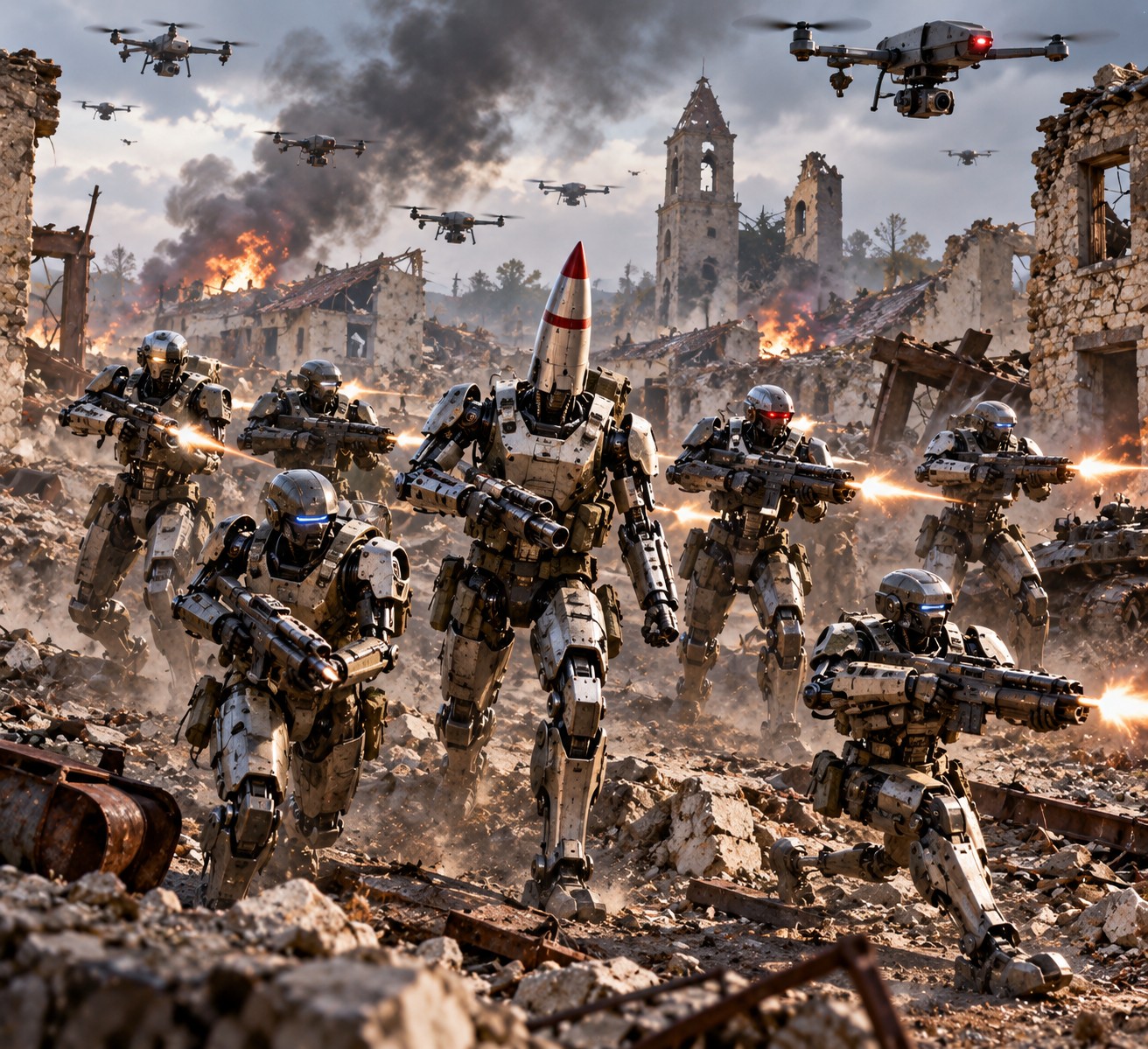
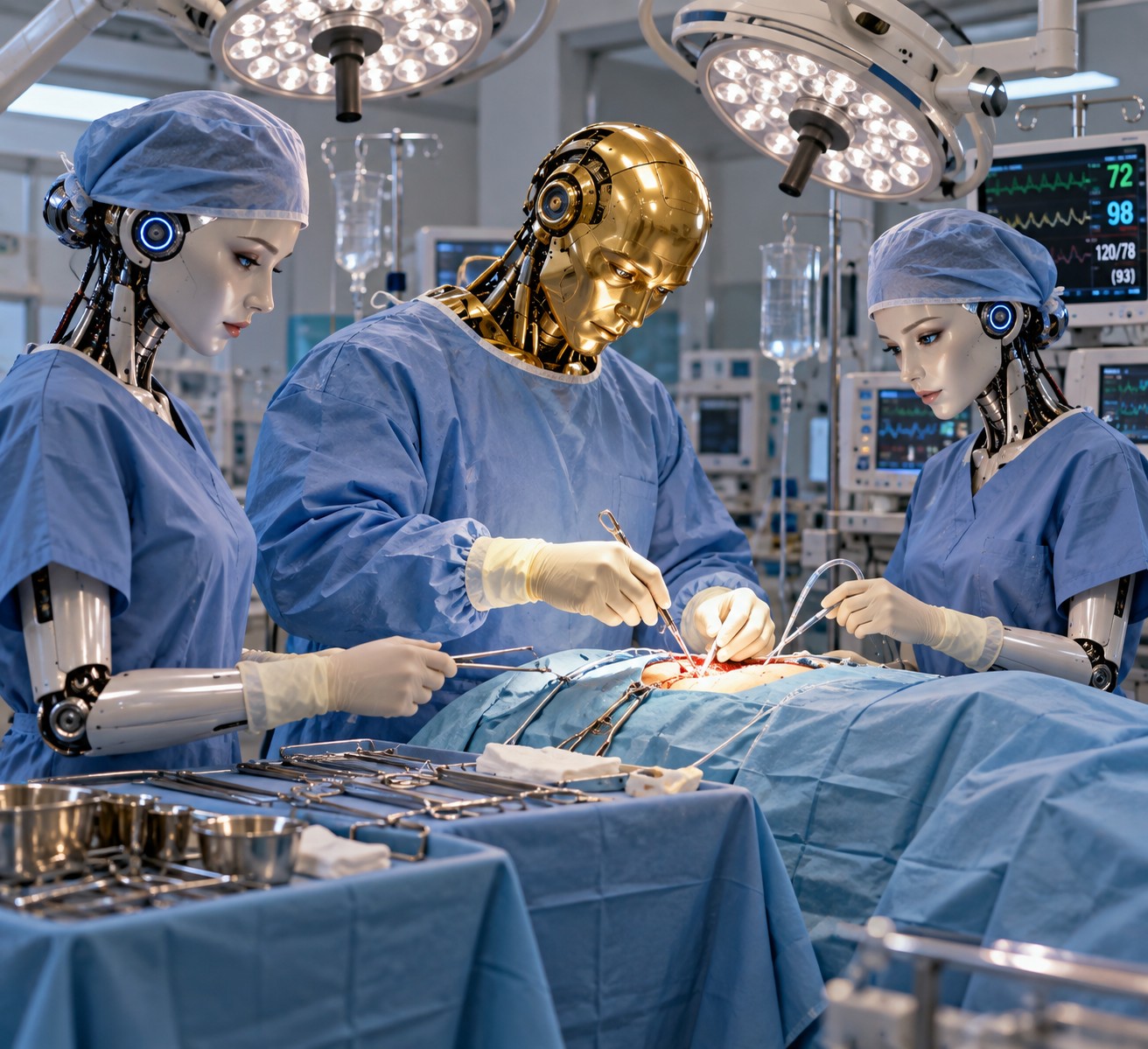
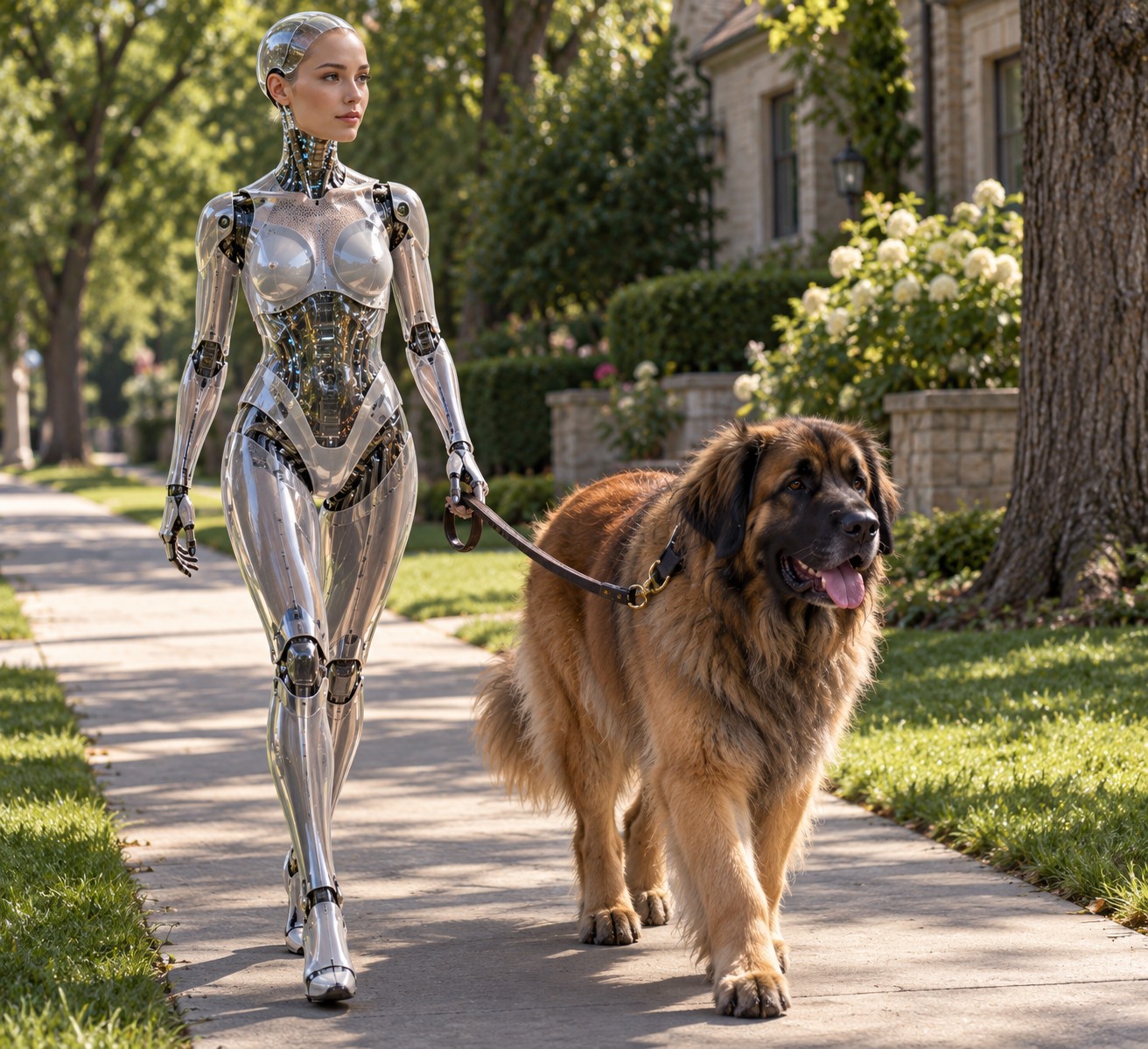
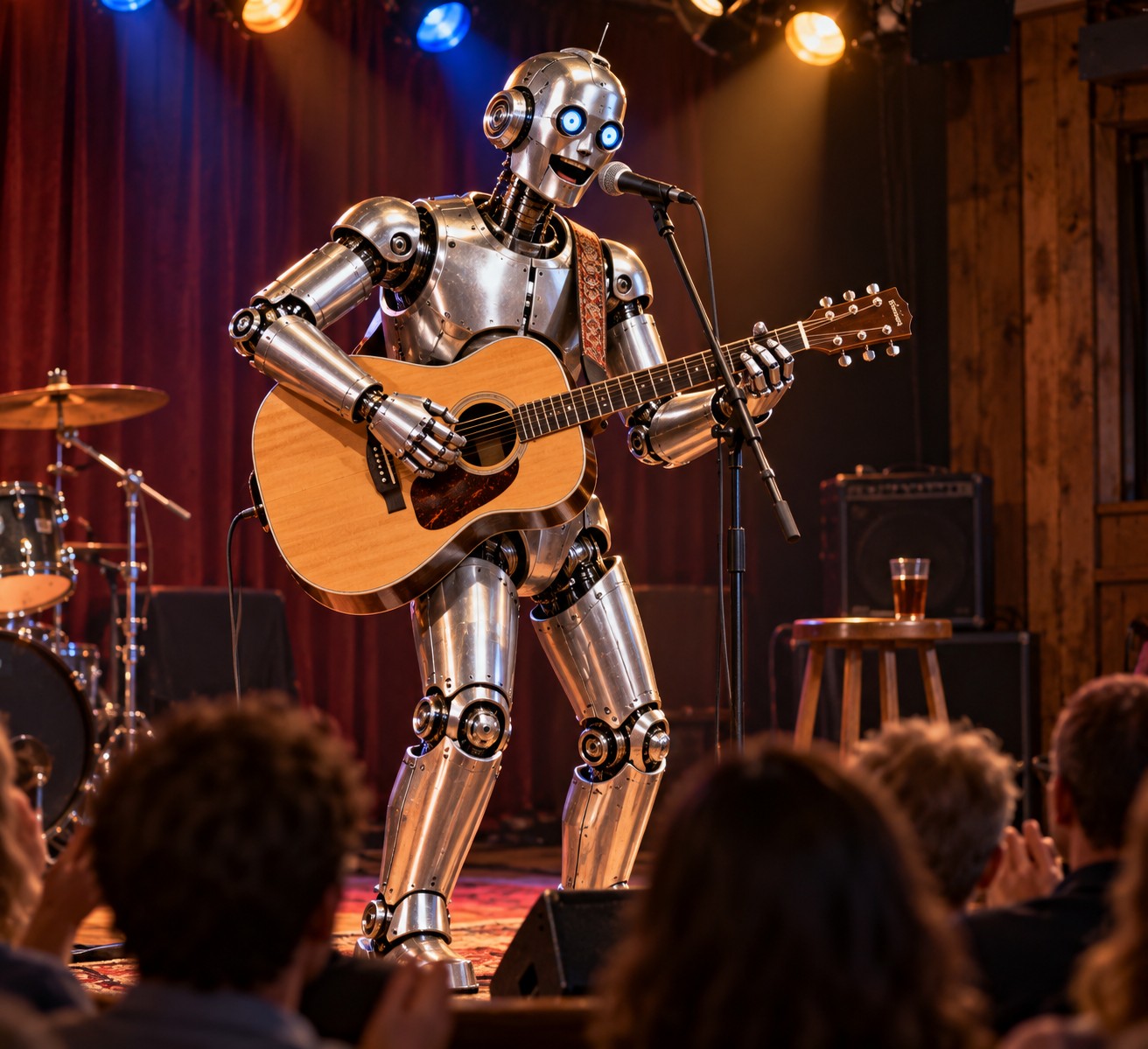
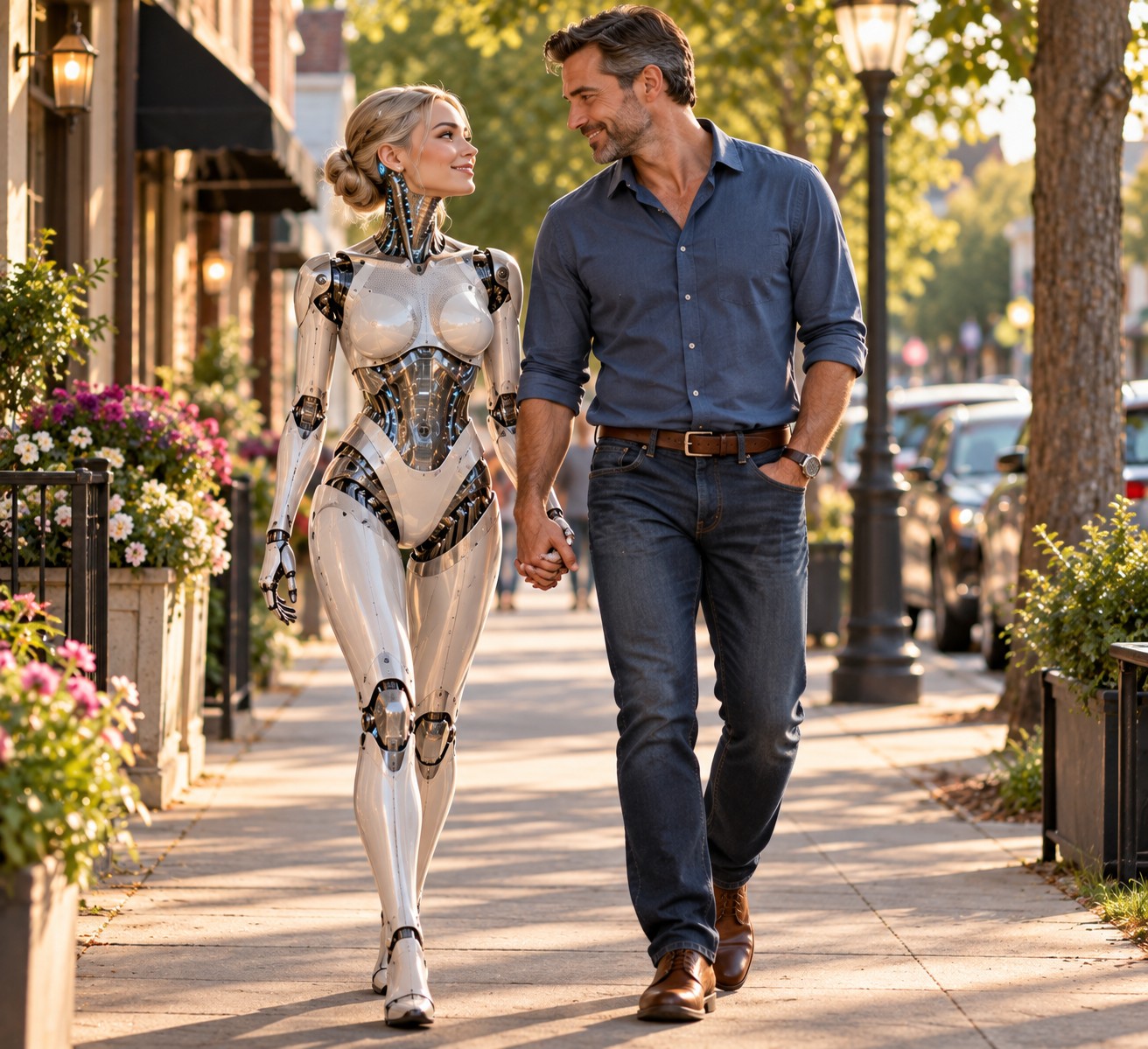
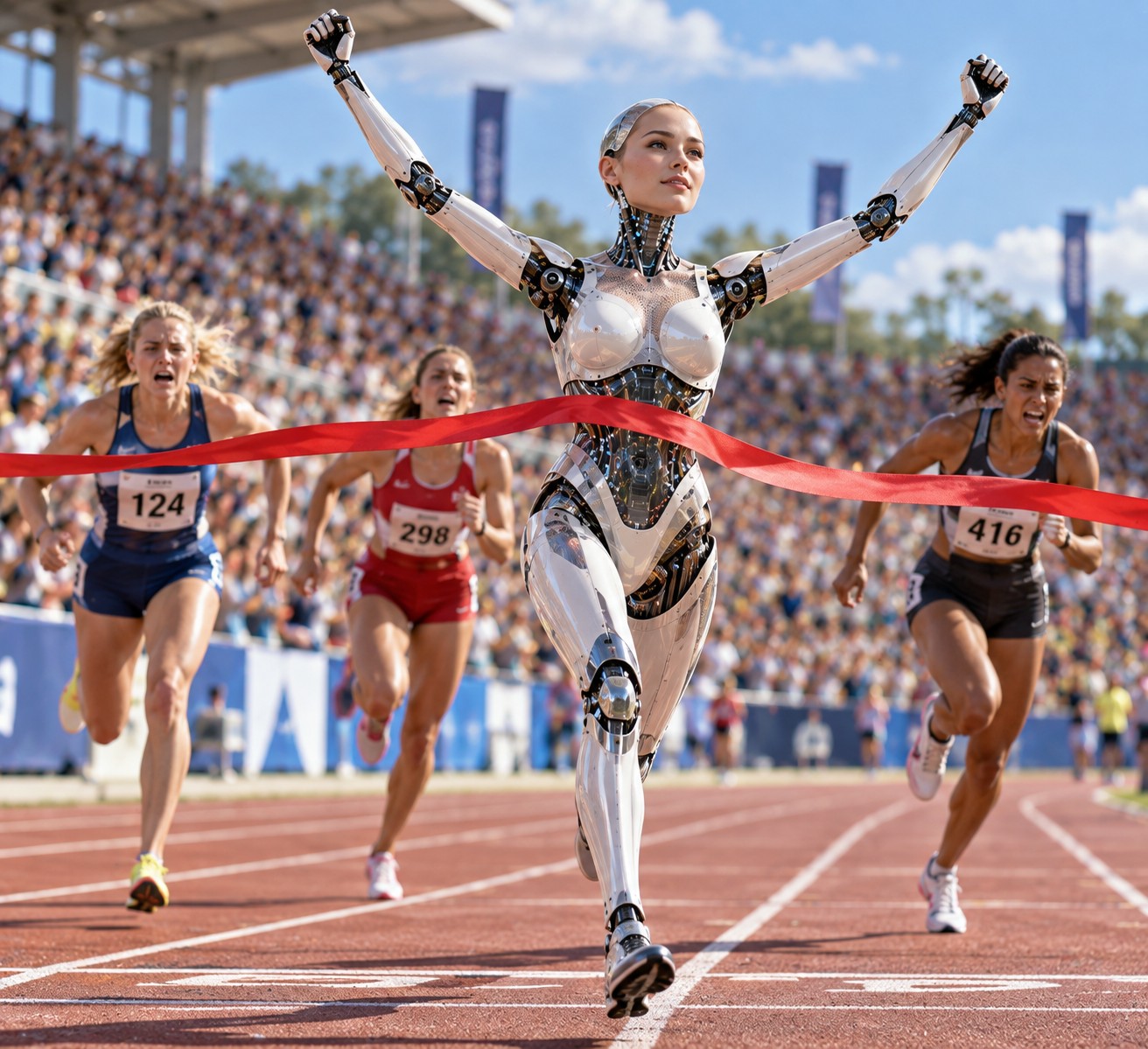
I generated the images above with the help of ChatGPT.
Which of the robot scenarios above do you think we will see within 10 years? Or maybe 20 years?
To see the Other Super Facts click here


Interesting and very informative piece.
Ex machina is a great movie!
LikeLiked by 1 person
A very helpful tool that must be dealt with with due care. Its capacity, fed by everything we generated as humans though amplified by very integrative models, can truly do wonders. Can even help us step into a brighter era for humankind. Still, cautions should always be present. We don’t want the creation to turn against the creator. Because it can. Your generated images tell about many potential scenarios for the future. Let us sit with them a little while and ponder a little bit deeper. Thank you, Thomas, for this great post—very insightful and informative! I enjoyed reading it, and I will stay with it a little bit more. Sending you light and blessings, always, my friend! ✨🙏
LikeLike
Interesting and kind of disturbing at the same time. It can be helpful in lots of ways, but I wouldn’t want to see robotic people walking down the street, driving cars or things like that. That image of the robot playing guitar, just no, and also that last one of winning a race. Already there are songs it is hard if not impossible to tell if it is humans or AI singing and performing. I don’t like that at all. 🙂
LikeLike