
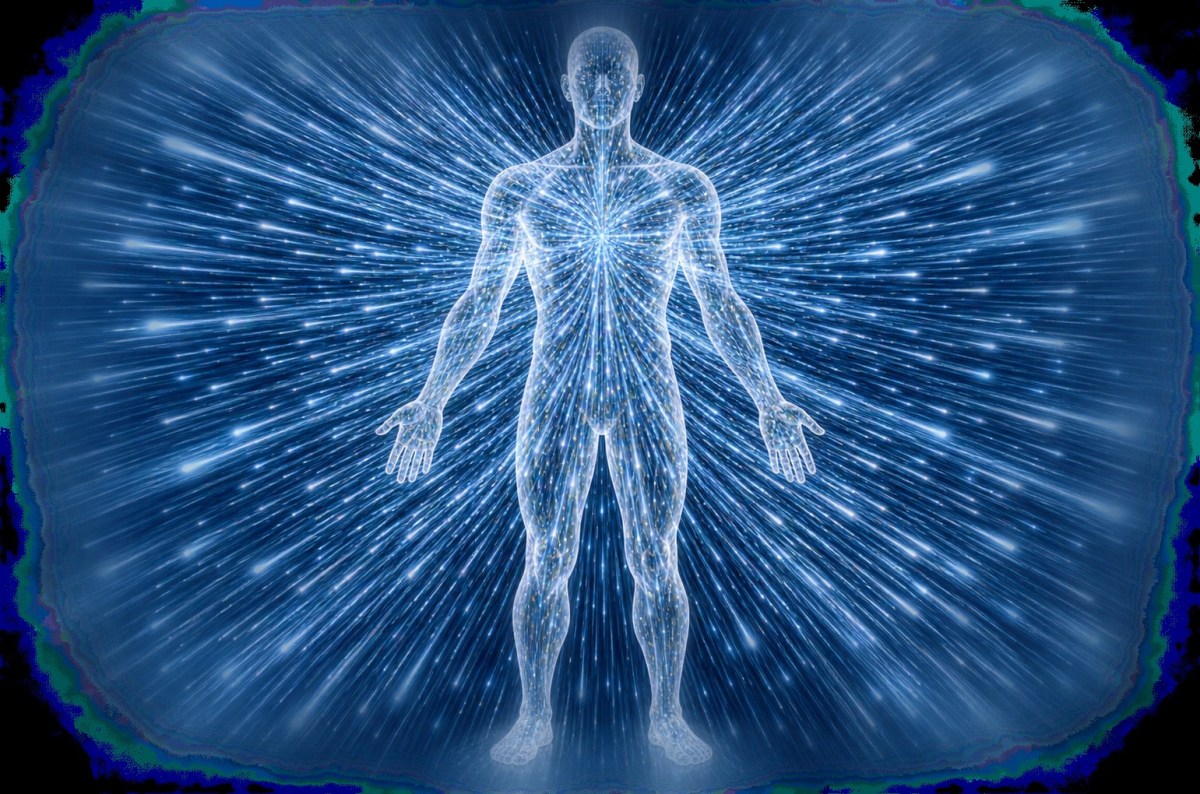
About two weeks ago I published a super fact post titled “100 trillion Ghostly Particles Passes Through Your Body Every Second” The exact super fact is below. Little did I know that the Nobel Prize in Physics would be given to Neutrino research. The announcement happened today and I almost missed it.
Super fact 132 : An estimated 100 trillion ghostly elementary particles, called neutrinos, pass through your body every second, which is 237 sextillion particles in 75 years. Despite that fact the chance that even a single neutrino will interact with an atom in your body during your entire life is about 1 in 4. These extremely abundant particles pass right through you as well as planets without interactions, like ghosts.
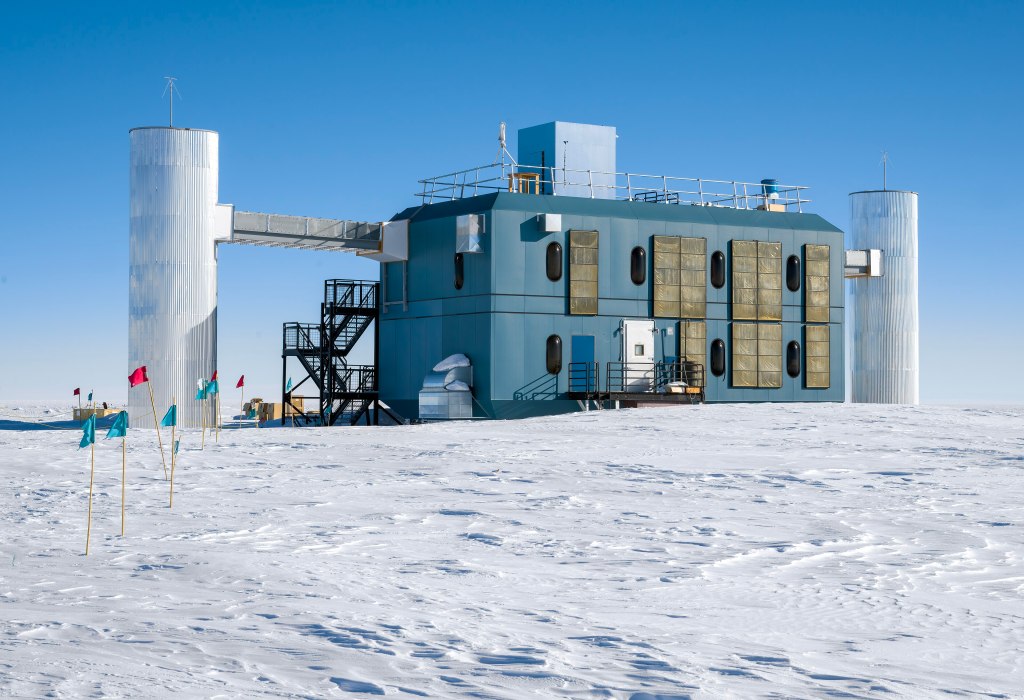
Briefly, the Nobel Prize was awarded to the Wisconsin Professor Francis Halzen for his contributions to the IceCube Neutrino Observatory and the discovery of high-energy neutrinos from deep space. Antarctica serves as an ideal location for neutrino research because its massive clear ice sheet acts as a giant, transparent detector target for the very hard to detect neutrinos (ghost particles). These are some quick facts about the IceCube Neutrino Observatory. This is the press release from the Nobel Committee. This is an announcement featuring popular science. This is the advanced information. This is the New York Times article.
Neutrinos with extremely high energies are created in the same environments as other types of particles. However, unlike other particles, neutrinos reach us without changing direction or losing energy. This means they can provide information that is not available in any other way. As an example, an average photon (light particle) is absorbed and re-emitted roughly billions of trillions of times before escaping the Sun. This process takes ten thousands and even hundreds of thousands of years. Once in open space the photon takes just 8 minutes to reach us, but it is certainly not the “original”, if I put it that way. A neutrino on the other is the original.
You can read more about neutrinos here, and here, here, or here. This is an article from the Scientific American about neutrinos and the discovery of neutrinos coming from the Milky Way.
Physics Related Super Facts
- Some Things Cannot be Known
- Radon Represents our Largest Exposure to Ionizing Radiation
- We are Star Dust
- The Speed of Light In Vacuum Is a Universal Constant
- Two events may be simultaneous for some but not for others
- The Strange Worlds of Exoplanets
- The vastness of space and the beginning of infinity
- The Bizarre Reality of Black Holes
- Every Symmetry is Associated with a Conservation Law
- GPS uses relativity for accuracy
- Time Dilation Goes Both Ways
- The Pole-Barn Paradox and Solution
- The Enormous Kuiper belt
- Time is a Fourth Dimension
- Electric Charge is not the only type of Fundamental Charge
- Superfluid Liquids are Like Magic
- The Edge of the Observable Universe is 46.5 billion Light Years Away
- Magnetars Super Magnets in the Sky
- Neutron Stars Trillions of Times Denser than the Sun
- The Universe has a Redshift and its Increasing
- Electrons Have Spin Without Spinning
- We Can See What Stars Are Made of
- Stars Twinkle but Planets Do Not
- Pulsars the Cosmic Lighthouses
- Light is Beyond the Reach of Time
- The speed of light is the speed of causality
- The Strong Nuclear Force Increases with Distance
- 100 trillion Ghostly Particles Passes Through Your Body Every Second
To see the Super Facts click here


A fascinating reminder Thomas, that an entire invisible universe is passing through us every second. The comparison to ghosts makes this extraordinary science wonderfully tangible. And a little eerie.
LikeLiked by 1 person
Thank you so much for your kind words Patricia. Yes I have to admit I find neutrinos spooky. They are invisible and almost entirely undetectable.
LikeLike
I was glad to hear about this. My graduate advisor, Stirling Colgate, was known for predicting that supernova explosions would be preceded by a neutrino burst. This was demonstrated when neutrino observatories detected a neutrino burst ahead of Supernova 1987A. The IceCube Observatory wasn’t one of them, though, since it hadn’t been built back then.
LikeLiked by 1 person
Wow that is very interesting. You certainly had a smart graduate advisor. I quickly looked him up and he is no longer alive. Nobel prizes are not given posthumously, but it makes me wonder if he could have gotten the nobel prize too with Francis Halzen if he had been alive. Geoffrey Hinton got the nobel prize in physics in 2024 for his research on artificial intelligence, especially the backpropagation learning algorithm. However, he was only one of the three inventors and the other two were dead.
LikeLiked by 1 person
In fact, I wrote a post about Stirling Colgate on December 7, 2013, shortly after he passed away. One could certainly make an argument based on his contributions to physics and astronomy that he should have been a Nobel Prize contender. In addition to his theoretical work on supernovae, one could argue his pioneering work in telescope automation paved the way for space telescopes such as Hubble and JWST. However, he was something of a controversial figure, in part because of his work for Edward Teller on the Hydrogen bomb. As such, I gathered that while he was highly respected, he was never quite seen as “Nobel Prize material.” That said, his postdoc advisor, William Fowler, did win the prize for his theoretical and experimental studies of the nuclear reactions of importance in the formation of the chemical elements in the universe.
LikeLiked by 1 person
You certainly have connections to some very influential astrophysicists. That is very cool. I can see how working on the Hydrogen Bomb with Edward Teller would make the Nobel committee hesitate even though his contribution to science was worthy of the prize. They want to avoid controversies. Edward Teller was also a genius who made great contributions to physics but he did not get the Nobel Prize. You would think they could keep less reputable science (the hydrogen bomb) separate from other work but it is not that simple.
LikeLiked by 1 person
I think I first heard of neutrinos from a video game ― probably Reactor ― way way way back in the 80s. They sure have come up in the world since then. 😁
LikeLiked by 1 person
Wow I did not know about that game. It seems really cool. Back in 1982 I did not even have a computer.
LikeLiked by 1 person
Lulu: “Our Dada says he might have had a VIC-20 in 1982, but he’s not sure. He was definitely a Commodore kid back in the day though!”
LikeLike
Lulu he was definitely ahead of me. In 1982, in high school, I was using so called mini-computers but I did not have my own computer. I had friend living one mile away, who had a Commodore though.
LikeLike
My goodness, that was really, really interesting. Another great post, Thomas.
LikeLiked by 1 person
Thank you so much for your kind words Chris.
LikeLiked by 1 person
I knew it did but I had to look up the specifics for the Big Bang Theory show.
1. Season 2, Episode 4 — “The Griffin Equivalency”
This is probably the one you are remembering.
Sheldon is working at his whiteboard when he suddenly says:
LikeLiked by 1 person
Hi Kevin, my guess is that this comment was intended as a reply to Barbara / ghostmmnc on a related post of mine “100 trillion Ghostly Particles Passes Through Your Body Every Second“. She will not see it unless you put it there.
LikeLiked by 1 person
How nice that an area you recently researched has won the physics Nobel prize. I remember this article because it’s such a strange idea and I hadn’t heard about it before.
LikeLiked by 1 person
Thank you so much Robbie. Yes I think it was an interesting coincidence.
LikeLike
💞
LikeLiked by 1 person
Thanks for another interesting post about neutrinos. I did see the comment left above, and I do remember that episode of Big Bang Theory. I want to add the episodes also … Season 2, Episode 22 features the doctor on the roof, and Season 4, Episode 12 features Meemaw’s famous scientific crochet work. [1]
where they are discussing them. That’s the first I’d heard about neutrinos.
Now, Thomas … in your article you said they never touch any atoms of ours, except there was only a 1 in 4 chance? What do you think would happen if we were that one and one got us? Would we feel that one? 🙂
LikeLiked by 2 people
Thank you so much Barbara and it is amazing that you saw the comment. Also thank you for the interesting information. I watched a few of the Big Bang episodes but not this one. It was interesting to read about it. About the 1 in 4 chance a neutrino touch one of your atoms. If you are lucky enough for it to happen, you will never know, and you will be fine. There are billions of other particles, photons, electrons, muons, protons, neutrons, alpha particles, etc., that will hit your atoms and you will feel nothing and usually nothing happens. Sometimes high energy photons (gamma ray photons) or alpha particles can cause cancer, but not neutrinos. Alpha particles come from radon in our basements.
LikeLiked by 1 person
Thanks for the extra information. I’m glad we wouldn’t notice if one of those neutrinos did hit us! .. oh on those episodes of tv show I mentioned, it was on Young Sheldon, instead of Big Bang Theory. 🙂 and I usually do read all comments, so I was happy to have read that one! 🙂
LikeLiked by 1 person
OK Young Sheldon. Thank you so much Barbara. That it is very ambitious, reading all of the comments.
LikeLiked by 1 person
I knew it did but I had to look up the specifics for the Big Bang Theory show.
1. Season 2, Episode 4 — “The Griffin Equivalency”
This is probably the one you are remembering.
Sheldon is working at his whiteboard when he suddenly says:
LikeLiked by 2 people
I am glad you connected
LikeLiked by 1 person
Thank you, Thomas for an extraordinary read!
LikeLiked by 1 person
Thank you so much Charles
LikeLike
Fascinating facts about something I did not know. I like the synchronicity of how your post was published so close to when this Nobel prize was awarded. You have good instincts. 🙂
LikeLiked by 1 person
Thank you so much JoAnna. It was an interesting coincidence that the Nobel Prize would be given for neutrino research two weeks after I posted about it, but it was just luck.
LikeLiked by 1 person