
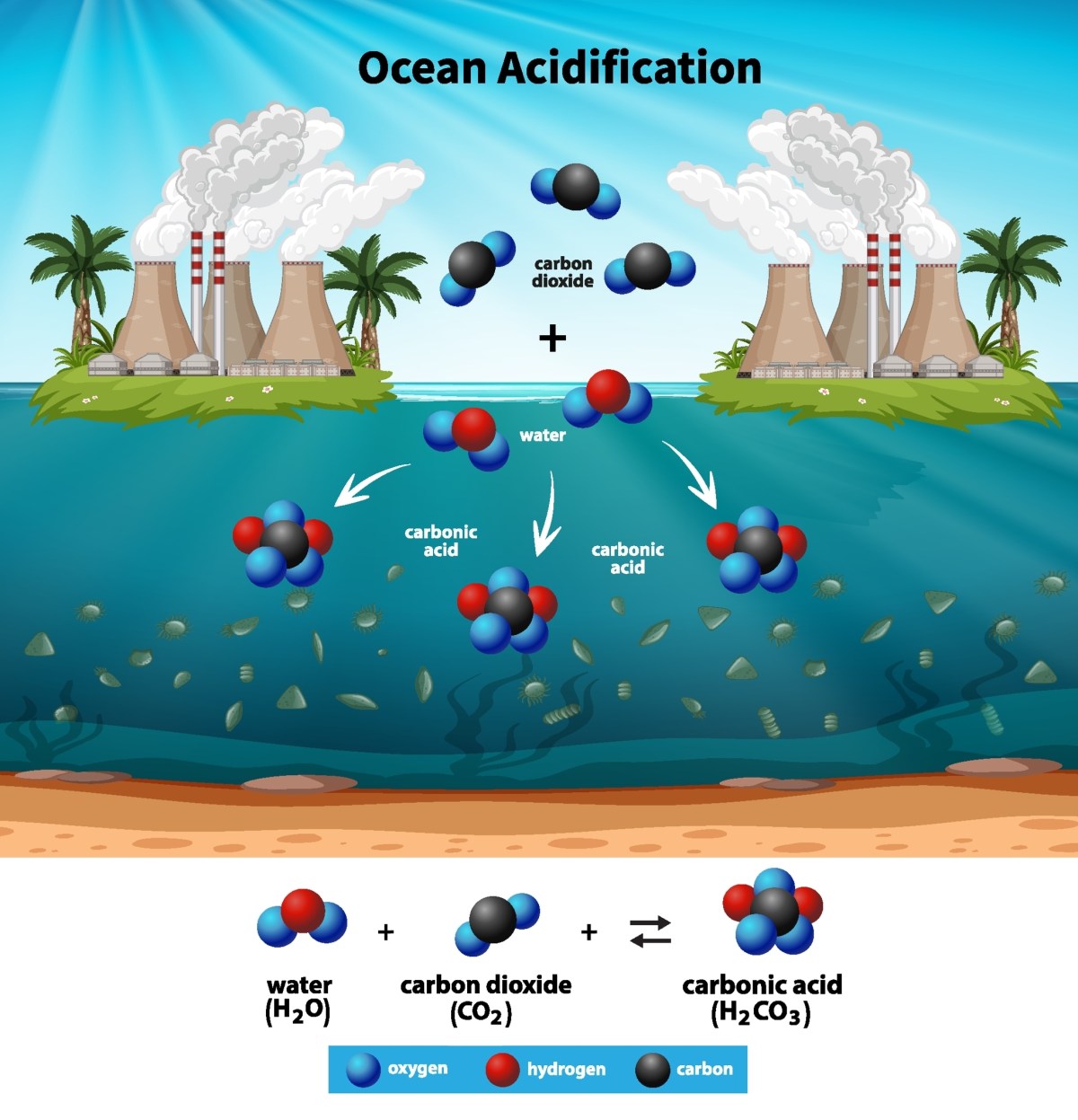
Superfact 150: Carbon emissions from burning fossil fuels drive rapid Global Warming, but it also causes Ocean Acidification, Global Warming’s evil twin.
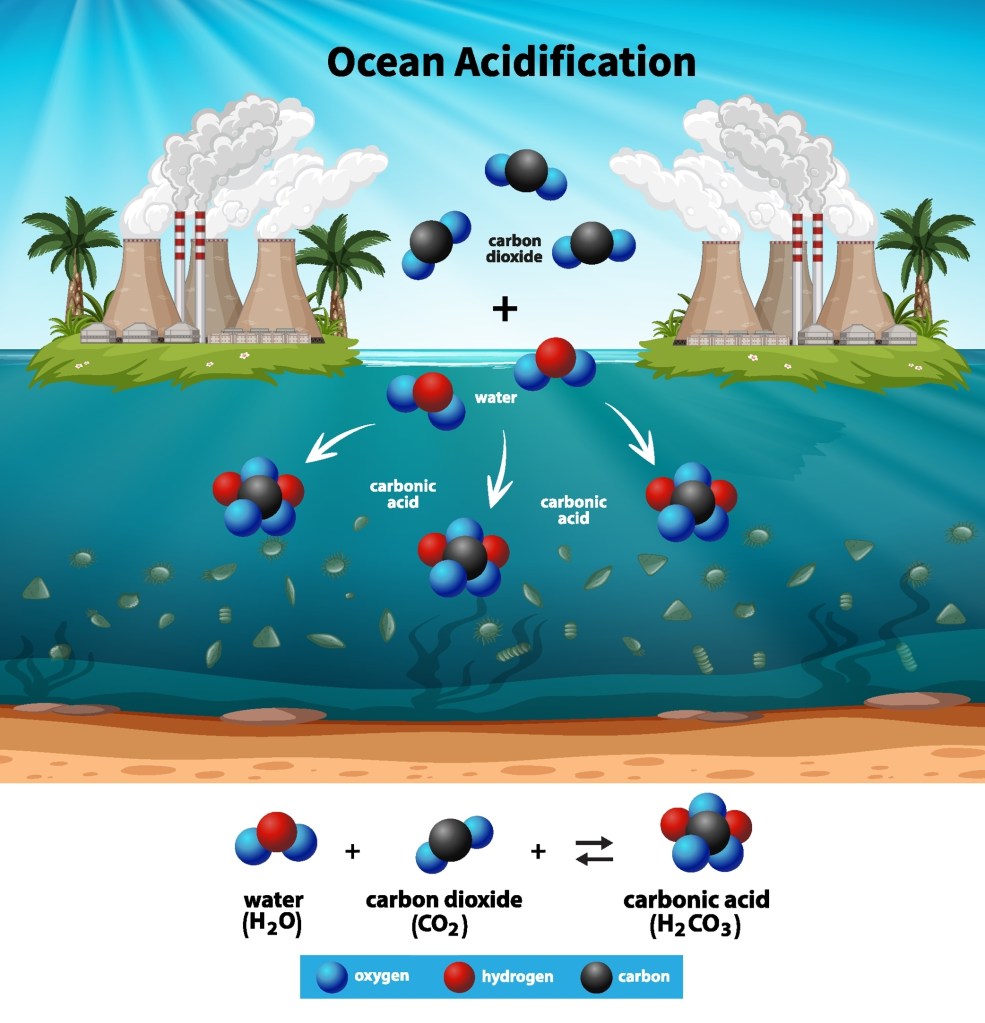
Oceans absorb about 30% of human-emitted carbon dioxide, which reduces the pace of global warming, which is a good thing. However, the carbon dioxides react with water molecules to form carbon acid, making ocean water more acidic, which is not a good thing.
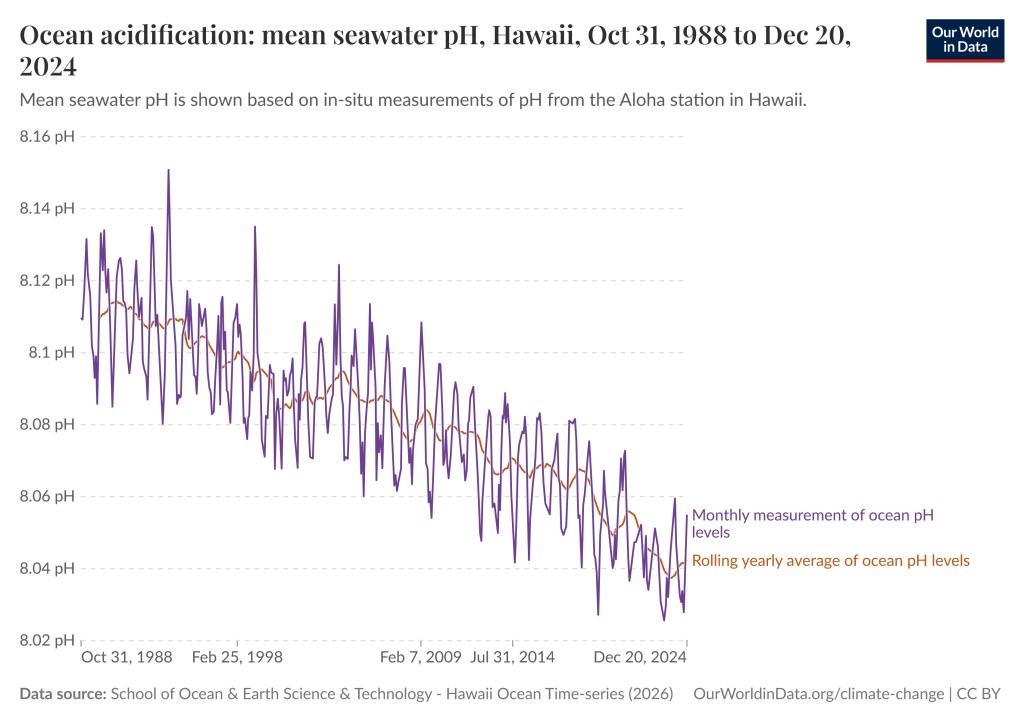
The ocean is slightly basic. Prior to the Industrial Revolution of the 18th to 19th centuries, the ocean’s average pH was about 8.2. Today, the ocean’s average pH is 8.1. This means that the ocean today is about 30 per cent more acidic than in pre-industrial times. pH is a logarithmic scale so a solution at pH 7 is 10 times more acidic than a solution at pH 8. Below is a graph showing how much more acidic the ocean around Hawaii became over the time period 1988 to 2024.
Burning fossil fuels cause a number of problems including climate change, specifically rapid global warming, health hazards caused by nitrogen oxides, sulfur dioxide, particulate matter, methane, ground level ozone, the occasional middle east war, and last but not least ocean acidification. Ocean acidification is a large problem that devastates oceanic eco system and yet you hardly ever hear about it, and many people may not even know about it. That is why I consider it a super fact. You thought you knew about all the problems fossil fuels are causing, well here is another one. You can read more here or here.
The Effects of Ocean Acidification
Ocean acidification has significant negative effects on marine life. Before I continue, I would like to refute the common and dismissive objection to the worry about ocean acidification that freshwater is a lot more acidic than oceanwater and still full of life. This is true. However, freshwater and ocean water feature different flora and fauna. For example, you won’t find coral reefs in rivers and lakes. Another example, freshwater and oceanwater feature different kinds of fish, with the exception of so called euryhaline fish, which can live in both. But that is not a lot of species.
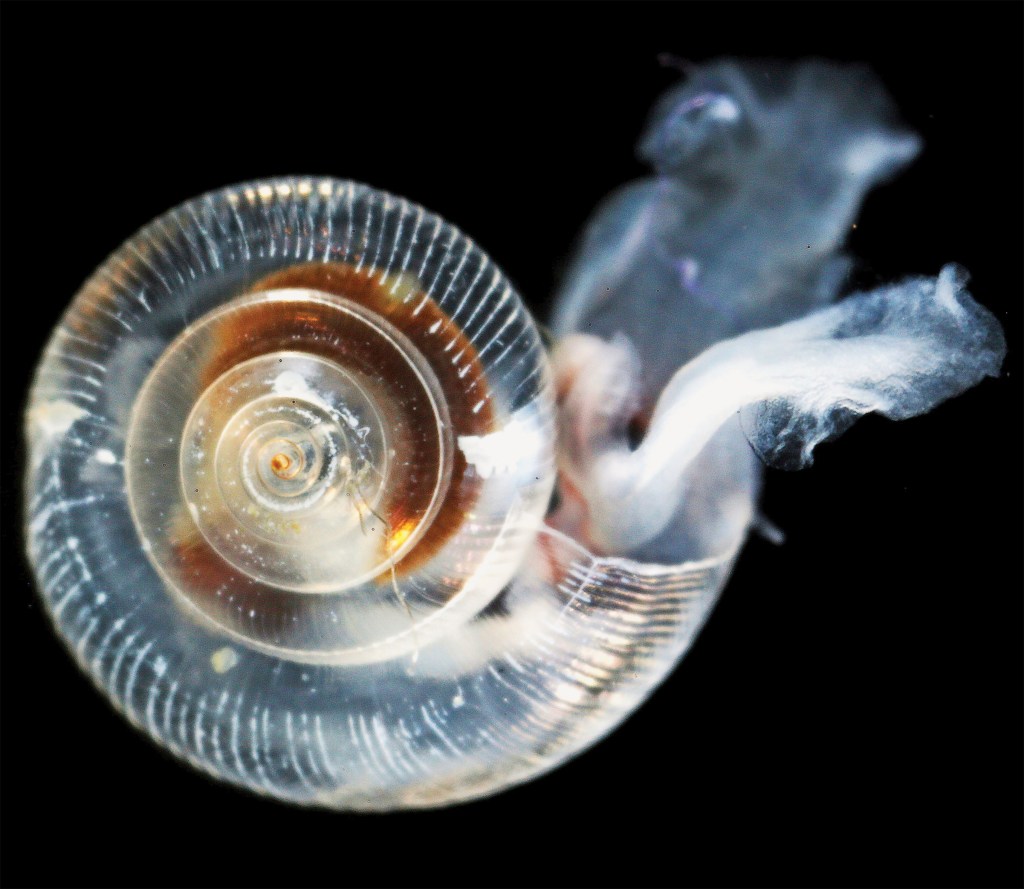
“Many chemical reactions, including those that are essential for life, are sensitive to small changes in pH. In humans, for example, normal blood pH ranges between 7.35 and 7.45. A drop in blood pH of 0.2-0.3 can cause seizures, comas, and even death. Similarly, a small change in the pH of seawater can have harmful effects on marine life, impacting chemical communication, reproduction, and growth. The building of skeletons in marine creatures is particularly sensitive to acidity. One of the molecules that hydrogen ions bond with is carbonate (CO3-2), a key component of calcium carbonate (CaCO3) shells. To make calcium carbonate, shell-building marine animals such as corals and oysters combine a calcium ion (Ca+2) with carbonate (CO3-2) from surrounding seawater, releasing carbon dioxide and water in the process.” – note this paragraph I copied from this article from Smithsonian – reviewed by NOAA.
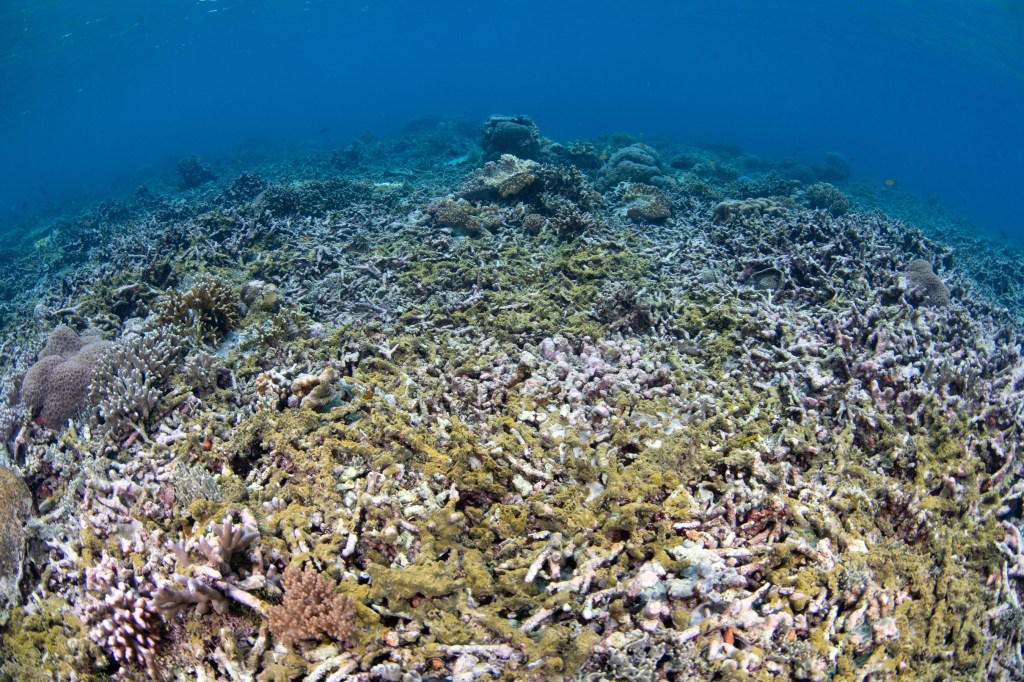
Coral bleaching is a serious problem for marine life that is caused by global warming and ocean acidification. Coral reefs are incredibly important to the ocean and its ecosystems. A fourth of all marine species depend on the reef at some point in their life. Coral reefs are also very important to us humans for a variety of reasons. 75% of the reef building corals in the world have already been damaged by high seawater temperatures and ocean acidification. You can read more about this in my post “Threats To Coral Reefs What Can Be Done”. The book “Life on the Rocks: Building a Future for Coral Reefs by Juli Berwald” lucidly explains the science, the problem, and the importance and beauty of corals.
According to the International Atomic Energy Agency and the IPCC Sixth Assessment Report “by 2100, the pH of the ocean could decrease [around 0.4 points] to about 7.8, making the ocean 150 percent more acidic and affecting half of all marine life. So, this is a serious problem. Like I said ocean acidification is global warmings evil twin.
Other super facts related to global warming
- Global Warming is Happening and is Caused by us
- The Hockey Stick Graph is not Wrong
- Scientists Agree that Global Warming is happening and that we are the Cause
- Climate change worsens wildfires in the US
- Without carbon dioxide the Earth would freeze
- IPCC Did Not Backtrack on Global Warming Being Human Caused
- Orbital Cycles are not the Cause of the current Global Warming
- The Sun is not the Cause of the current Global Warming
- Volcanoes emit a tiny fraction of carbon compared to humans
- Climate change worsens wildfires Globally and human Land-Use Changes Reduces them
- Carbon Cycle Emissions Does Not Cause Global Warming
- The Most Important Greenhouse Gas Does Not Drive Global Warming
- El Nino or Ocean Currents are not the Cause of Global Warming
- Without the Burning of Fossil Fuels Earth would be cooling
- Natural Causes Cannot Explain the Current Rapid Global Warming
- Global Warming Causes Sea Level Rise – Culprit is not Sea Ice
To see the other Super Facts click here


