

Super fact 131 : There is no absolute reference point. All motion is relative. Since everything is in motion compared to something else, that means that everything is in motion. In addition, all material objects consist of particles that are in motion, and all objects with mass move through time.
I previously made a post on this topic called “Everything is in Motion – Stream of Consciousness”. For a Stream of Consciousness post you are supposed to write whatever comes to mind without editing, except for typos. Stream of Consciousness is a fun concept. However, it is not fit for a super fact post because a super fact post requires fact checking and linking to reputable sources and it needs to be well organized and well explained, and all that is editing. After writing Everything is in Motion – Stream of Consciousness I realized that “Everything is in Motion” is a super fact. It is an important observation and a fact that is far from obvious. With this post I am rewriting “Everything is in Motion – Stream of Consciousness” into a super-fact I call “Everything is in Motion”.
All Motion is Relative
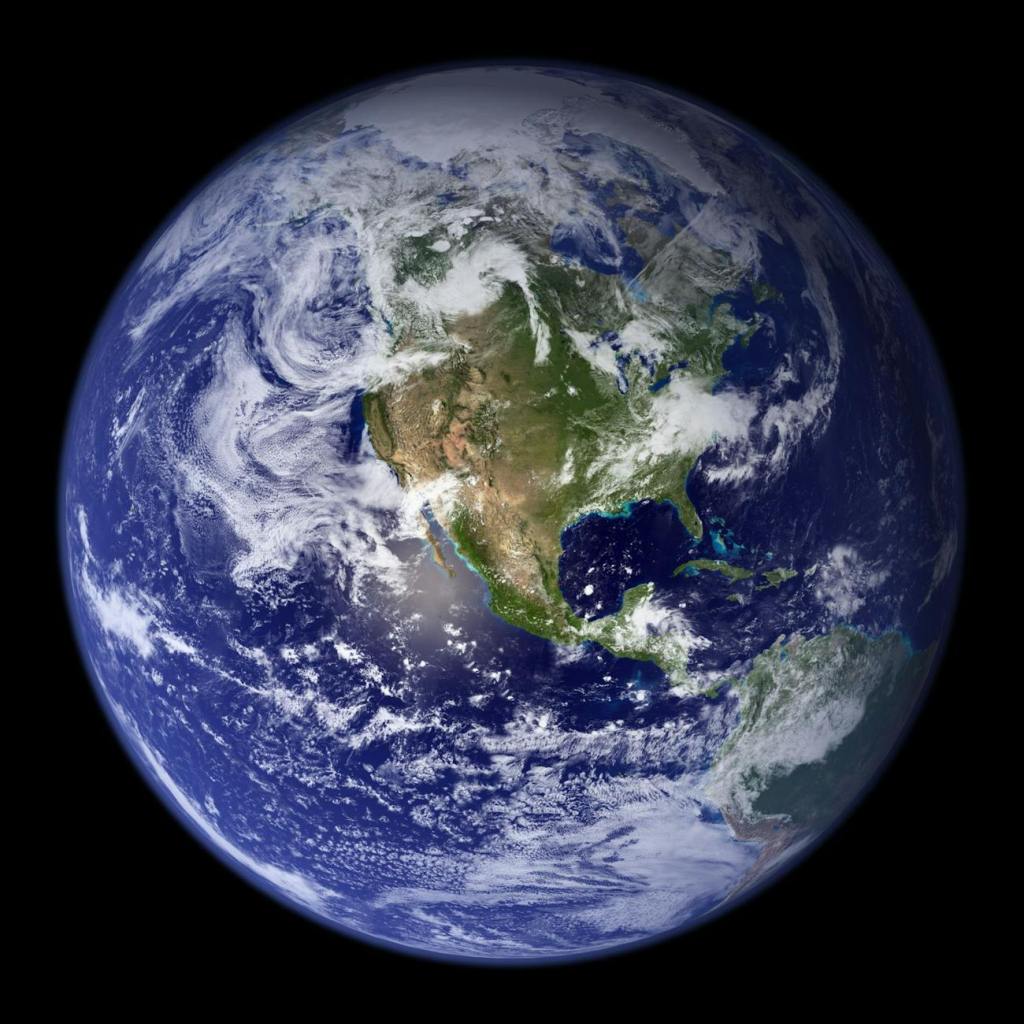
All motion is relative and everything moves in comparison to something else. You may be sitting in your chair completely still thinking that you are not moving but you are. Earth rotates around its axis at 1,040 miles per hour at the equator, and at 733 miles per hour at latitude 45 degrees. Latitude 45 degrees goes through New York and other northern States, as well as Europe. Sitting at the geographic north Pole won’t help you either because Earth is also wobbling and it is rotating around the sun at roughly 67,000 miles per hour or 107,000 kilometers per hour.

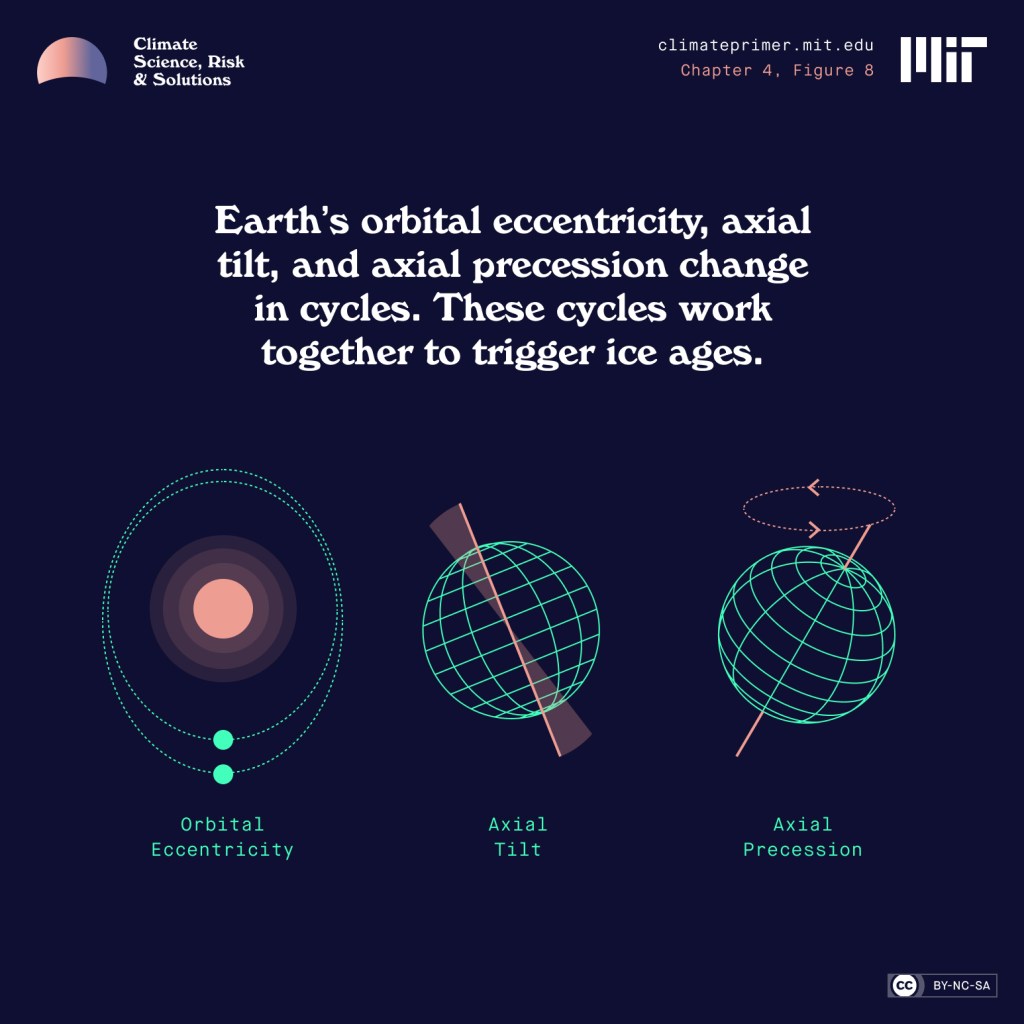
The picture below shows Earth’s three main orbital cycles. I used this picture in another context for super-fact #122 “Orbital Cycles are not the Cause of the current Global Warming”. In that context I wanted to point out that Earth’s orbital cycles are too slow (100,000 years, 41,000 years, and 26,000 years) to explain the sudden rapid rise in global temperatures that we are witnessing now. The orbital cycles are also currently slowly cooling Earth, not warming it. However, in this context I am using the picture for a different purpose, and that is to point out that even if you sit at the north pole (or anywhere else on Earth) you will be moving.
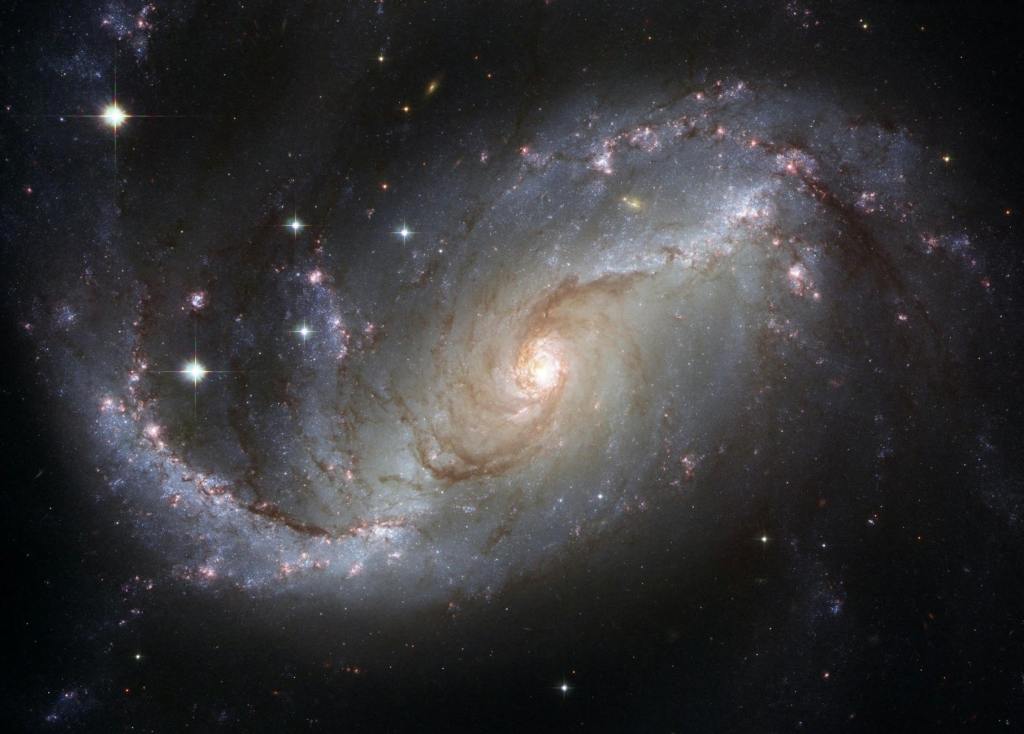
In addition, the sun is rotating around the center of our galaxy, the Milky Way at 514,000 to 560,000 miles per hour or 792,000 to 828,000 kilometer per hour, and our galaxy and the Andromeda galaxy are approaching each other at the speed of 110 kilometers per second, which is 396,000 kilometers per hour, or 246,000 miles per hour. Whether it is the Andromeda galaxy that is approaching us or our galaxy that is approaching the Andromeda galaxy is just a point of view. We are also moving at millions and billions of miles of hour compared to some other galaxies.
You are also Moving Through Time
As mentioned, motion is not absolute. It is always relative to something else. The universe has no center, no ether to compare with, there is no absolute reference point. It is not possible to declare anything as truly standing still. Understanding this is the first step towards understanding the theories of relativity. According to the theories of relativity the speed of light, or the speed of light in vacuum if you will, is a universal constant c = 299,792,458. The speed of light in vacuum is the same for all observers regardless of their speed and the direction in which they are going. In other words, you are moving at the speed of c = 299,792,458 compared to all light.
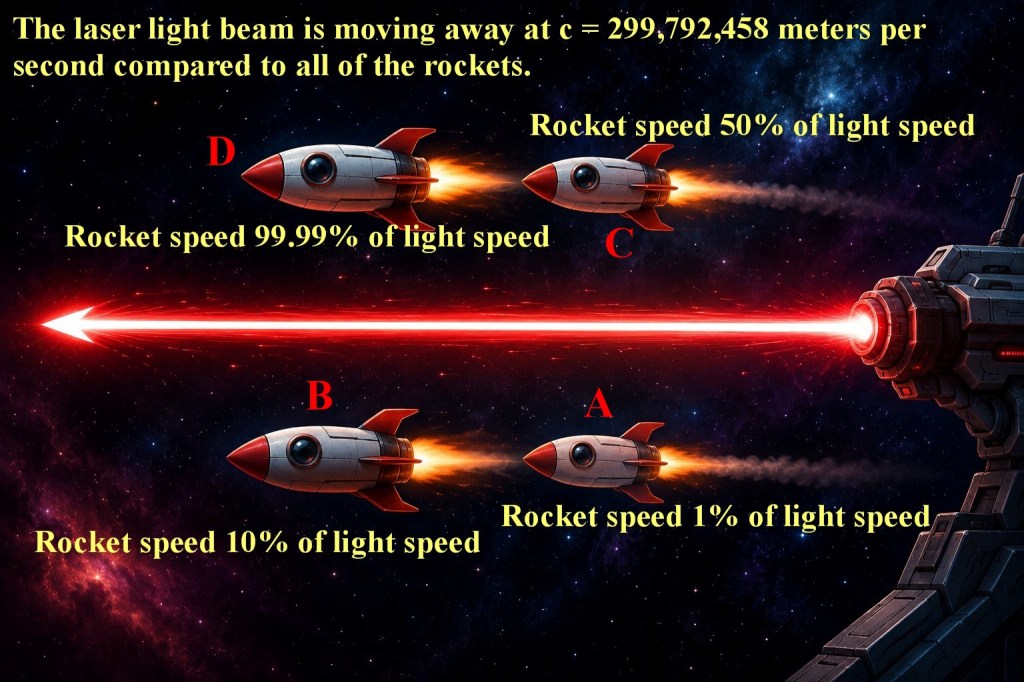
In addition, c = 299,792,458 is not a speed in a regular sense, but a conversion factor between space and time. All particles/objects without mass (light particles called photons, gluons and gravity waves) must always travel at this speed, whilst all objects that have mass can only travel slower than c = 299,792,458 (compared to other objects with mass).
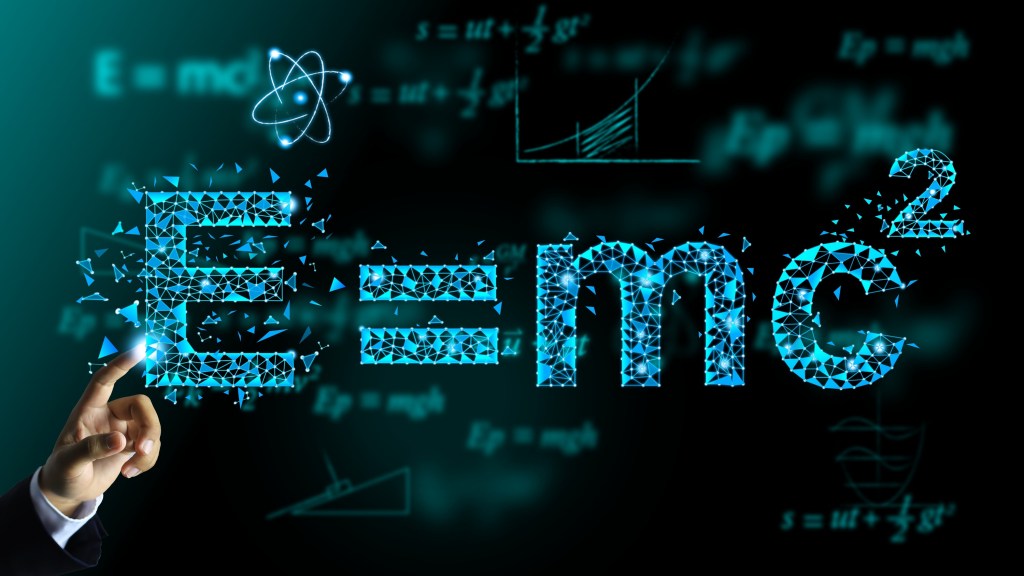
You could say that compared to the reference frame of my choosing, which happens to be the chair I am sitting in, I am sitting still. I am not sure that would be fair but according to the theories of relativity you are also moving through time at the speed of c = 299,792,458. Well, that is assuming you have mass. For mass-less particles, like photons, time does not exist. Anyway, the fact that you are always moving kind sneaks in, no matter what you try.
You could raise a couple of objections to some of the claims in the last paragraphs. Very far away, beyond the limit of the visible Universe, galaxies can move away from us faster than the speed of light. However, they are not moving faster than the speed of light compared to the space where they are. What is going on is that space and time are stretching fast due to the expansion of the Universe.
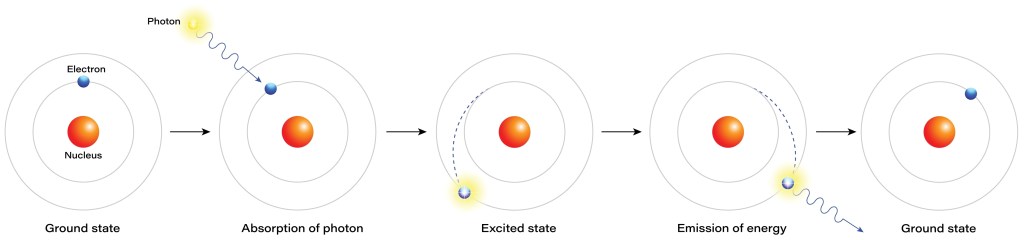
Another objection might be that light can move slower than c = 299,792,458 through transparent materials such as glass and water. So, how can the claim that all massless particles must always move at exactly the speed of light in vacuum be true? The answer to that is that the light particles (photons) in those materials are being absorbed and re-emitted as new photons by the atoms. However, in between the atoms the photons move exactly at the speed c = 299,792,458, or more correctly at the time-space conversion factor c = 299,792,458.
All Matter Consist of Molecules and Atoms that move
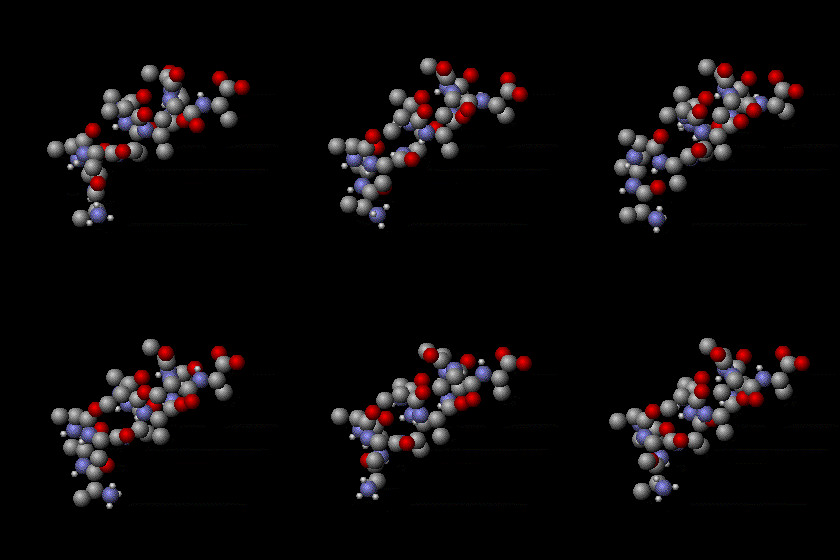
But wait, we are not done. Another fact is that everything is made of atoms and molecules that are never completely still. Temperature is a measure of their average kinetic energy (energy of motion). Even at the temperature absolute zero molecules and atoms are still moving. Yes, even at the lowest possible temperature they are still moving. It is impossible for atoms and molecules to stand completely still, just like children.
Other Super Facts Related to Relative Motion
- The Speed of Light in Vacuum Is a Universal Constant
- Two events may be simultaneous for some but not for others
- GPS uses relativity for accuracy
- Time Dilation Goes Both Ways
- The Pole-Barn Paradox and Solution
- Time is a Fourth Dimension
- The Edge of the Observable Universe is 46.5 billion Light Years Away
- Light is Beyond the Reach of Time
- The speed of light is the speed of causality
 Super Facts