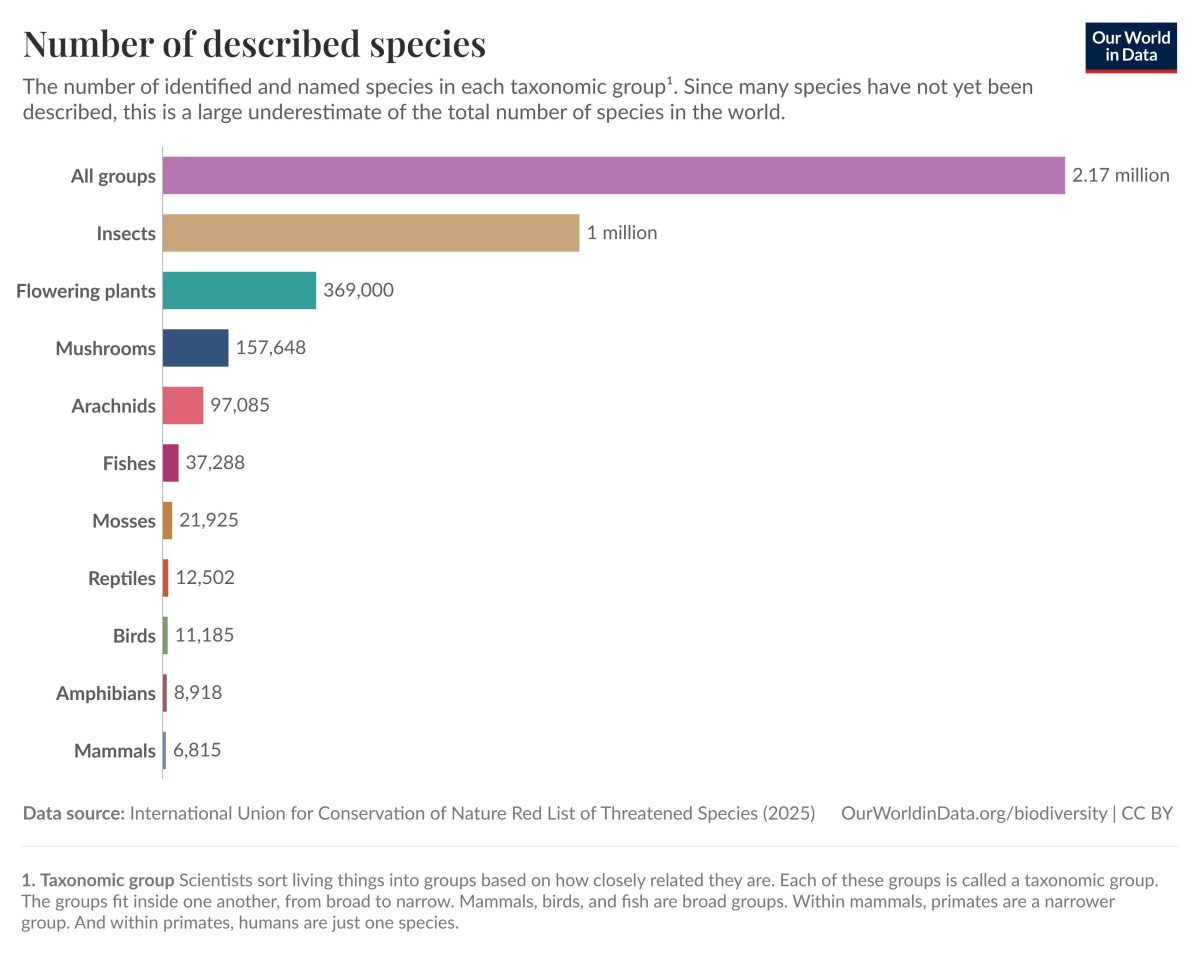
Super fact 139 : 2.17 million species have been described but it is possible that as many as 20% of those are duplicates. However, most species are likely undiscovered.
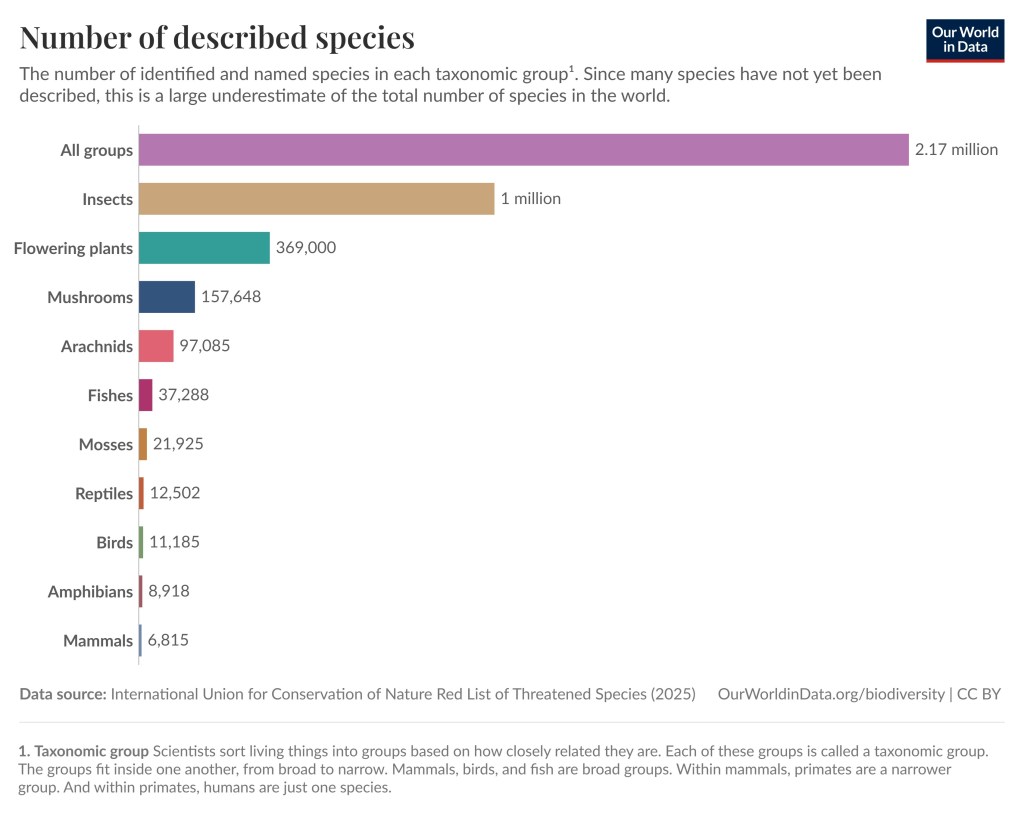
As mentioned, a couple of million species have been named and identified. For a species to be formally described, it’s description must be published in a scientific journal or book. Considering this it is quite impressive that we’ve described millions of species, mostly insects and plants. However, according to science magazine the most likely number of species is in the range of 5 to 10 million eukaryotes. Eukaryotes are organisms consisting of complex cells with a membrane wrapped in nucleus and other internal compartments, which exclude viruses and bacteria.
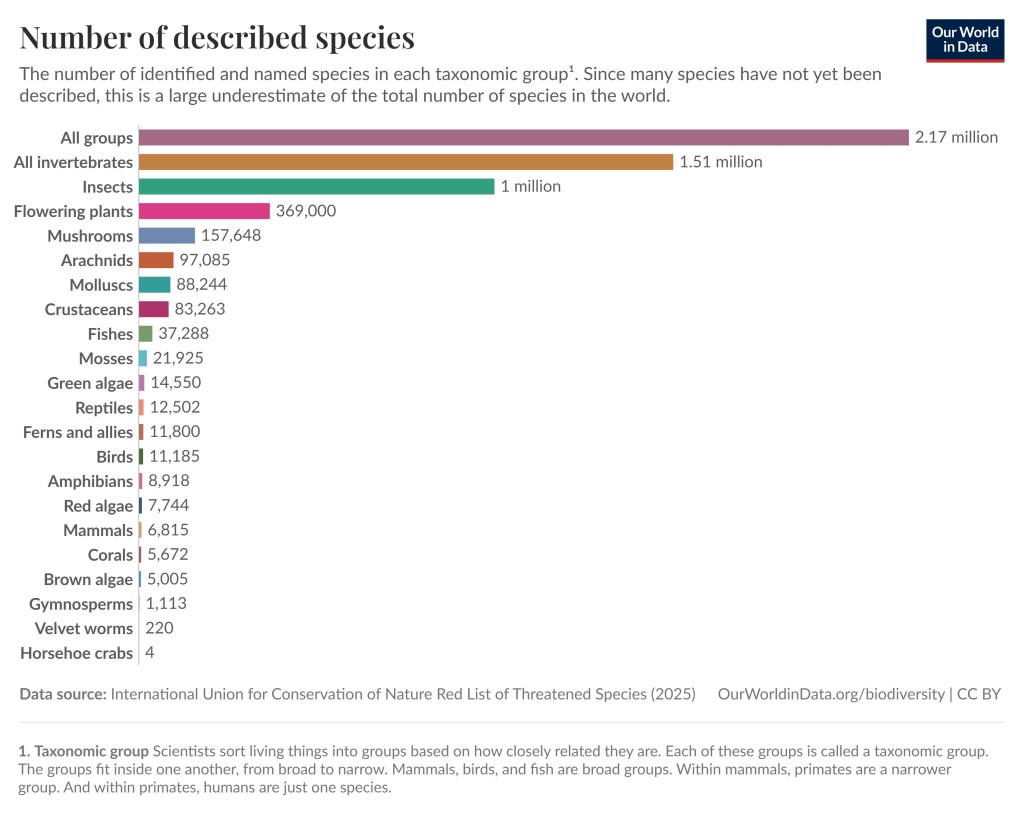
The fact that we have succeeded in describing two million species is impressive and surprising. That is a lot of work. The fact that there are likely millions of more species we haven’t found is equally surprising. There are surprisingly many species and unless you already knew this, this is surprising and perhaps mind-blowing information, and therefore a super fact.
Challenges in Defining a Species
Species is a unit of biological classification and it is the lowest taxonomic rank below genus. Species is often defined using the Biological Species Concept, which is defined as populations whose members can interbreed and produce fertile offspring, and are reproductively isolated from other groups. However, it is complicated. Asexual organisms, hybrids and ring species, and extinct species complicate things. Therefore, other ways of defining species exist.
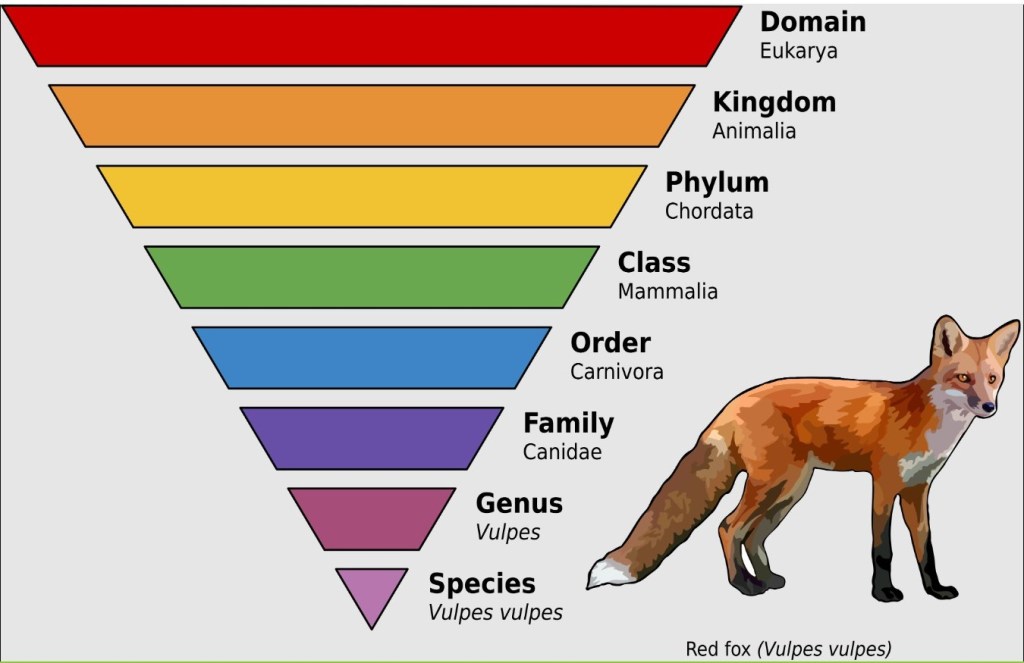
To define a species, you can also use genetic similarity, unique ecological niches, unique common ancestors, distinct physical traits, size, shape, and structural features. In other words, species concept is not simple and defining a species requires expertise. This makes it even more impressive that we have identified and described two million species.
I should add that there are also subspecies. A subspecies is a distinct population within a species that lives in a specific geographic region and differs in physical traits from other populations of the same species, while still being able to interbreed with them. An example is the dog which is a subspecies of the gray wolf.
Ring Species
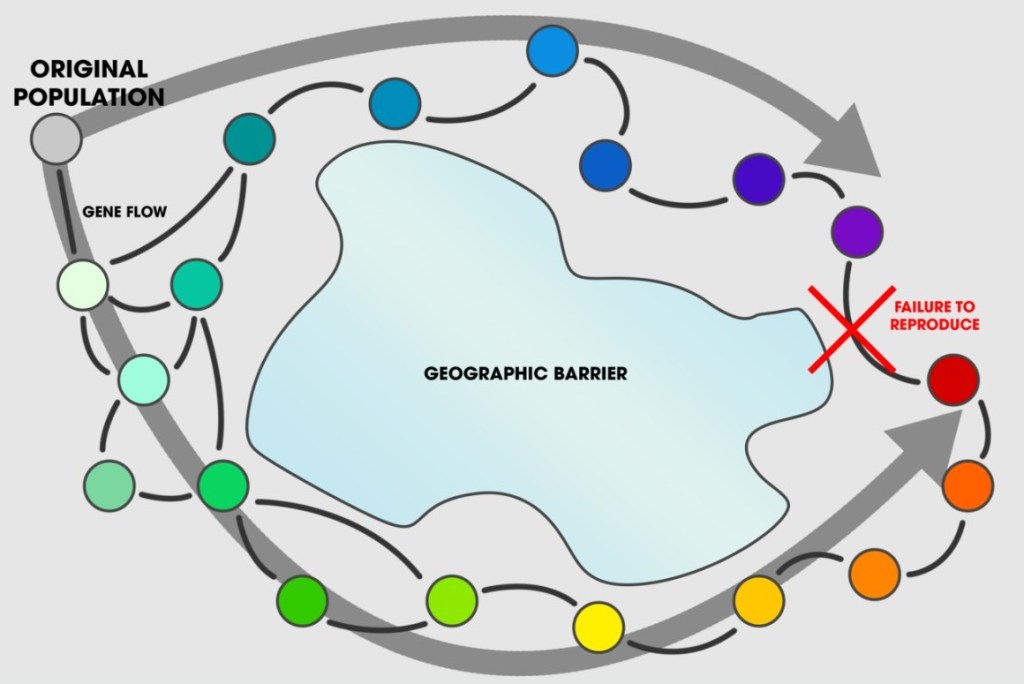
As mentioned, a common definition of species is that two animals belong to the same species if they can interbreed in nature and produce viable, fertile offspring. As I pointed out it is not always that simple. An animal A may be able to successfully interbreed with an animal B, and that animal B may be able to successfully interbreed with an animal C, but animal A and C cannot interbreed. Animal A could be said to be a different species relative to animal C, but animal B could be said to be the same species as both animal A & C using the definition above. A great geography related example of this is ring species. In a ring species, gene flow occurs between neighboring populations of a species, but at the ends of the ring the populations don’t interbreed.
Other Super Facts Related to Wildlife
A couple of interesting super facts related to species and wildlife are :
- (70) The Wild Mammal Biomass Has Substantially Declined – click to visit
- (71) The Extinction Rate is Much Higher Than the Natural Baseline Rate – click to visit
The first one is concerning the fact that we humans and our domesticated animals, cattle etc., have largely replaced wild animals and wild mammals. As the total biomass has increased the wild mammal biomass has decreased. The second super fact is about the current extinction rate being perhaps thousands of times higher than what is typical. A mass extinction event is often defined as when 75% of all species, or more, goes extinct within 2 million years. 200 years is only 0.01% of 2 million years so modern society has existed for an extremely short time. It is just a tiny blip on geological scales. So, even with an extinction rate thousands of times above normal, we haven’t gotten very far yet. Luckily, it looks like we might be turning things around, so perhaps we won’t be like the asteroid that exterminated the non-Avian dinosaurs.