
Superfact 144: Modern Physics including Quantum Physics and Relativity is fundamentally different from Classical Physics. Even if you include Relativity in Classical Physics, which is often done, it is still fundamentally different from “Classic Classical Physics”.
Esther’s writing prompt: October 28th: Classic
Click here or here to join in.
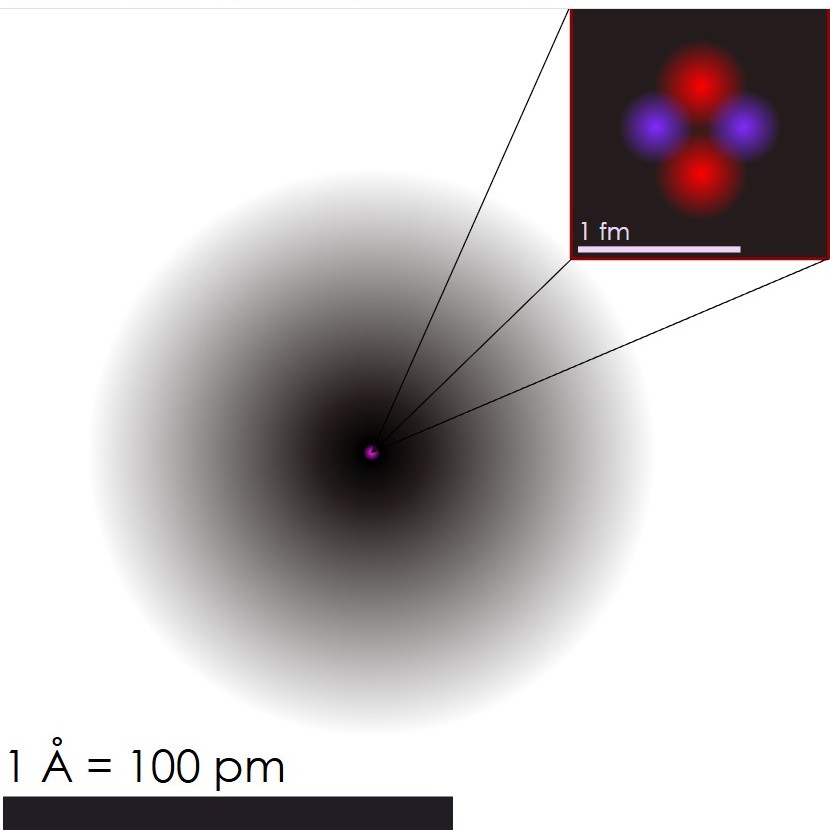
Classical physics and modern physics represent two major phases in our understanding of how the universe works. Classical physics includes fields such as classical mechanics, electromagnetism, optics, and thermodynamics. Modern physics include relativity and quantum mechanics. However, relativity is often said to be classical physics as well as modern physics.
In classical physics time and space are independent of the observers, objects can have exact positions and velocities, and if you measure them precisely you can make exact predictions. Furthermore, energy and matter are continuous. In relativity time and space are relative, and there is no universal now. The order of events depends on the observer and energy and mass are interchangeable. In quantum physics particles do not have a specific positions or velocities, they behave as both particles and waves, and energy is quantized. In quantum physics you have probabilities instead of certainties. The electrons (and other particles) in atoms are described as probability clouds (see picture above). Classical physics and modern physics are very different.
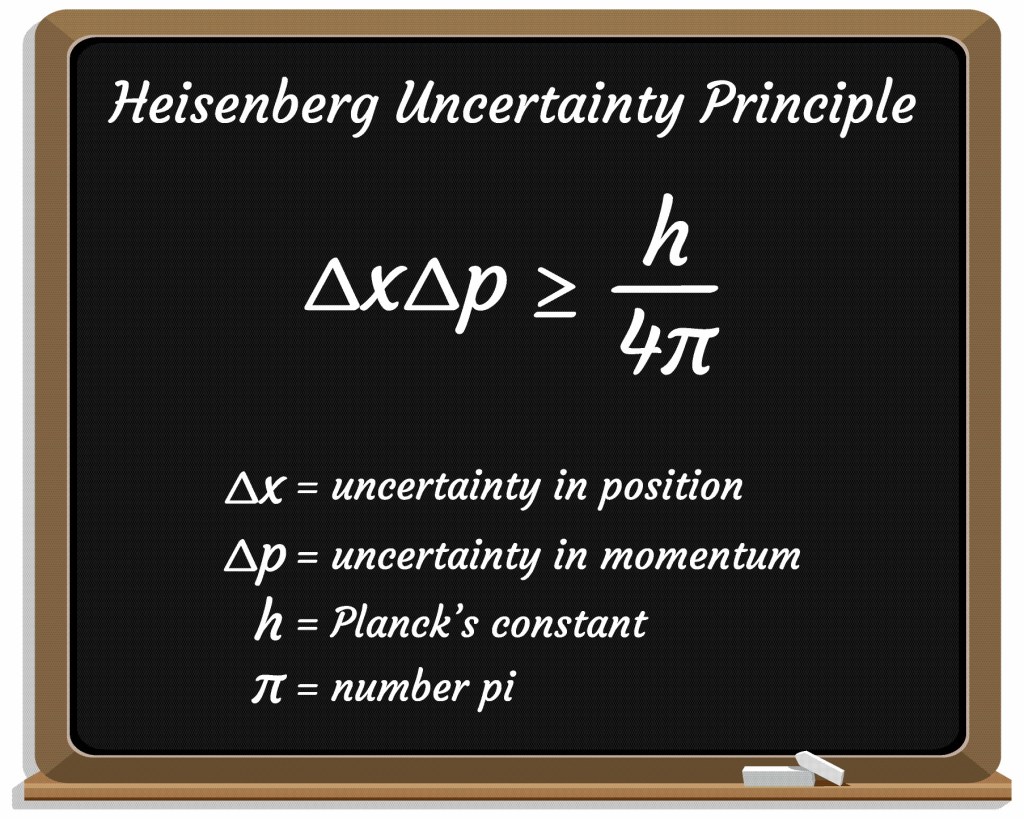
A famous but simple formula from quantum mechanics is the Heisenberg uncertainty principle which states that you cannot both know the exact position and momentum (that is mass times velocity) of a particle. Another version of it states that you cannot both know the exact energy and the time interval to measure it. Basically, it is impossible to know a particle’s quantities exactly. They don’t even exist other than as probabilities.
The difference between how things work in classical physics and in modern physics is very large. The language and philosophy of classical physics and modern physics is not even the same. I believe that the fact that there is such a large and distinct difference between the two phases of physics comes as a big surprise to those who were unaware of it. Since this fact is important and potentially surprising, perhaps mind-blowing, it is a super fact in my opinion.
It is easy to think that modern physics is philosophical, mysterious, esoteric, and impractical. It is not. Pretty much all of the electronics you have ever used exist because of modern physics. Modern physics is also essential for lasers, MRI and PET scans, modern medicine, nuclear power, nuclear weapons, GPS, atomic clocks, solar power, small-scale nanotechnology, and a large amount of new materials. That might be a super fact all in itself.
Special Relativity
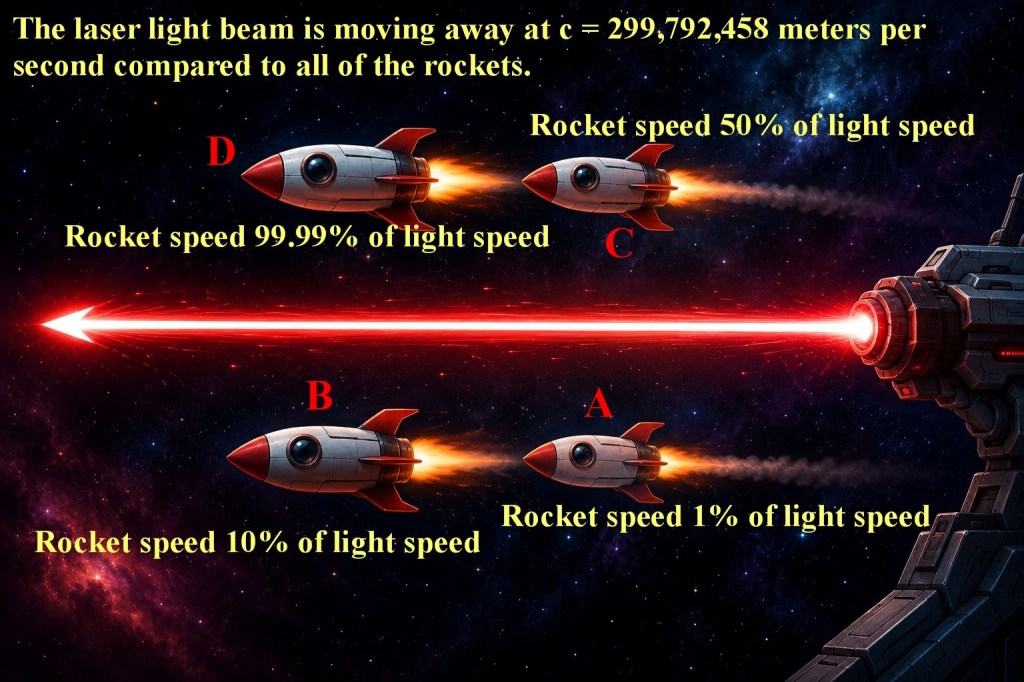
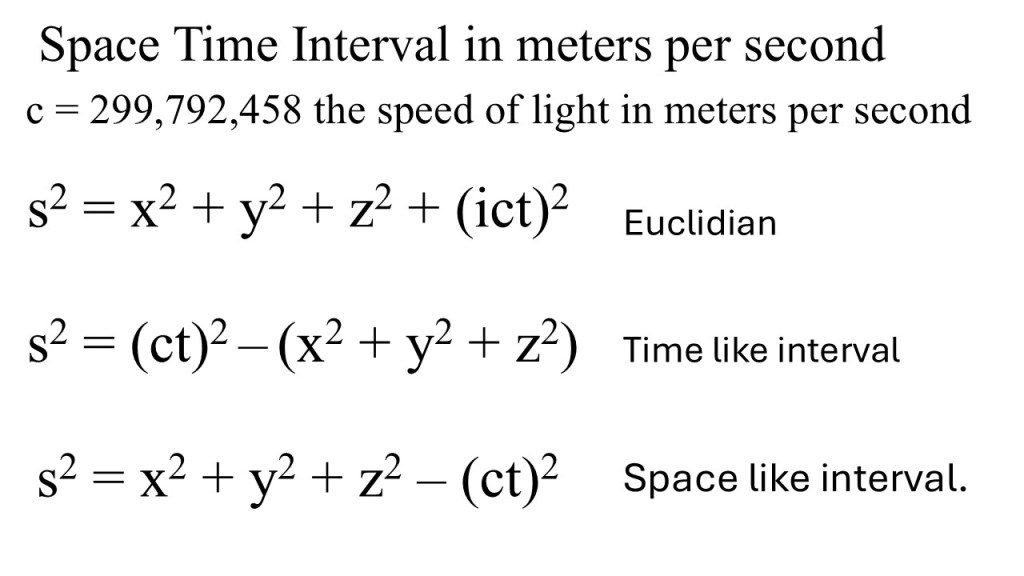
Relativity comes in two flavors, special relativity and general relativity both pioneered by the physicist Albert Einstein. Special relativity states that the speed of light in vacuum is a universal constant c = 299,792,458 meters per second. The speed of light in vacuum is the same for all observers regardless of their speed and the direction in which they are going. It is always c = 299,792,458 meters per second. If you try to catch up to a light beam and try to travel close to the speed of the light beam, you will not be able to catch up. The speed of the light beam will still be c = 299,792,458 meters per second compared to you no matter how fast you go. In fact, anything without (rest) mass will travel at exactly this speed compared to everything else, whilst nothing else could ever reach or exceed this speed.
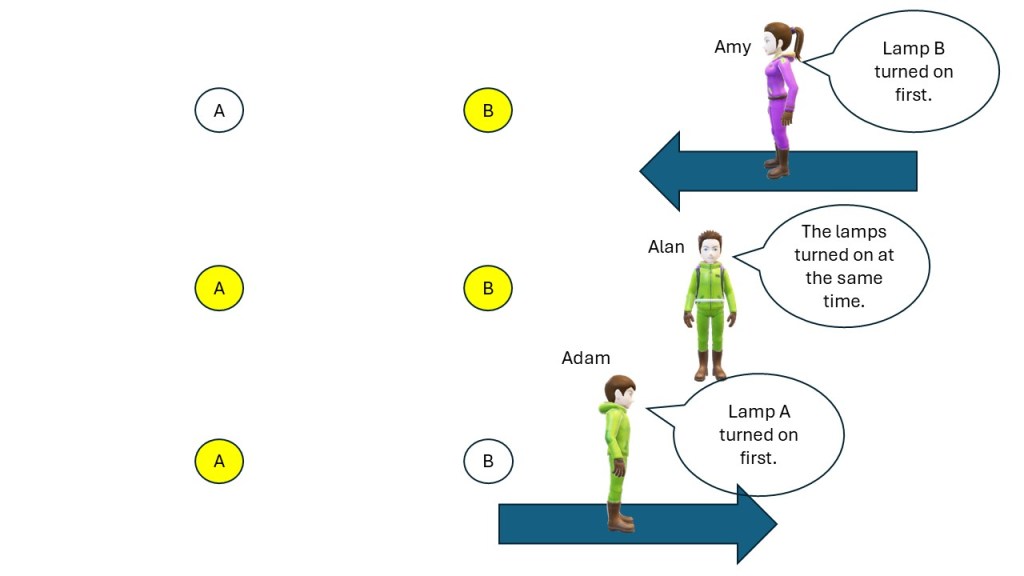
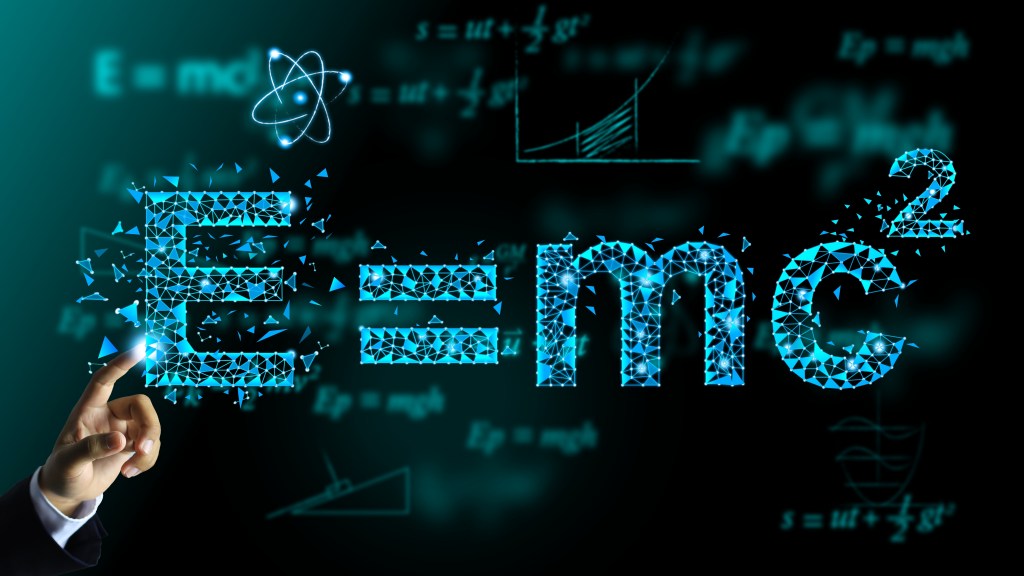
Some consequences of this is that there is no universal now, two events may be simultaneous for some but not for others, two observers moving compared to each other will both observe the other’s time as being slower, and energy and mass are interchangeable, and time acts like a fourth dimension.
General Relativity
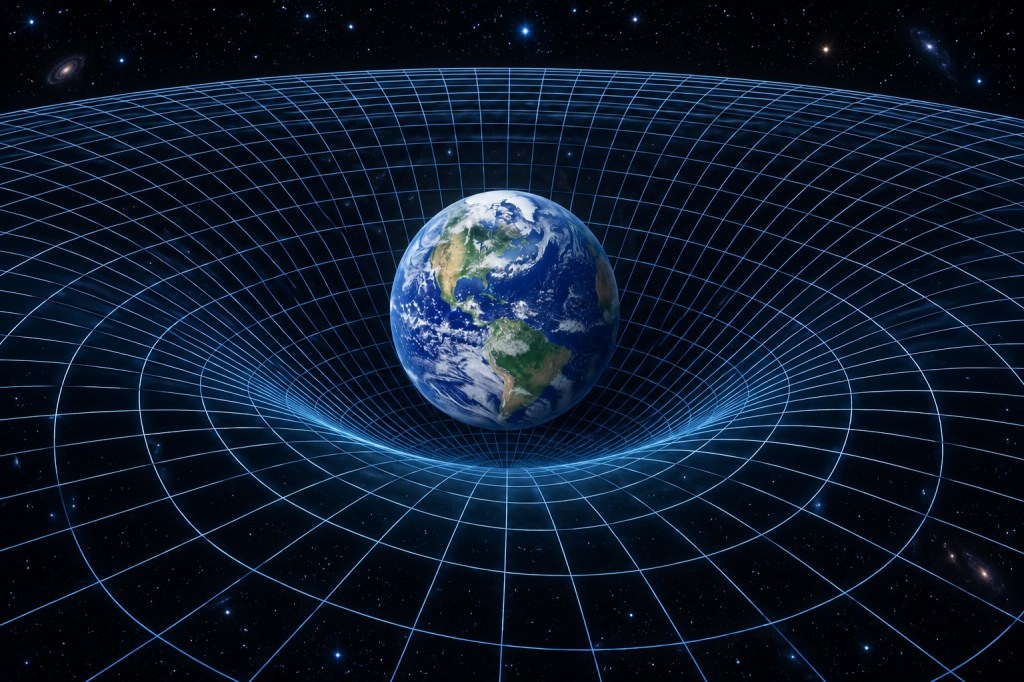
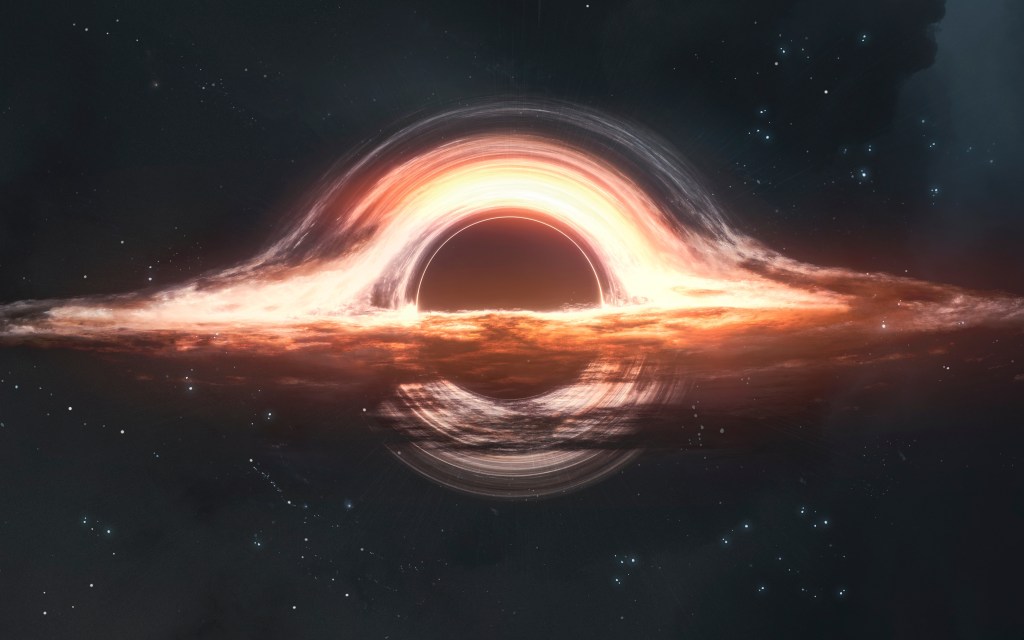
In General Relativity gravity is not viewed as a force over distance. Mass / energy is distorting the local space-time creating the effects of gravity. Even though the end result is very similar to Newton’s theory of gravity, the General Theory of Relativity is much more accurate. The General Theory of Relativity also predicts that clocks will be running slower in gravitational fields. It predicts gravity waves, and the strange behavior of black holes, and it is necessary for GPS to work.
Quantum Physics
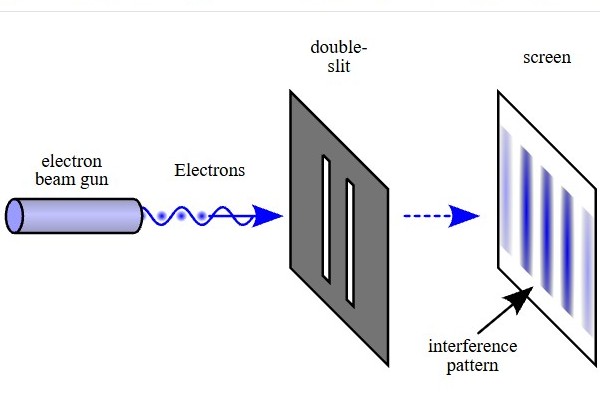
As mentioned, in quantum physics, particles do not have specific positions or velocities. See the Heisenberg uncertainty principle above. In quantum physics you have probabilities instead of certainties, and energy is quantized. The electrons (and other particles) in atoms are described as probability clouds. Particles behave as both particles and waves, the so called wave particle duality. Particles exhibit both wave-like and particle-like properties depending on the type of measurement. An example is the famous double slit experiment.
If you shoot electrons, or any particle, through a double slit (panel with two slits) they will show up on the detector panel behind the first panel as if they were a wave. There will be interference patterns (multiple bands), the same as you would get from light waves or water waves. You will even get the interference pattern if you shoot the electrons one by one. However, if you try to detect the individual electrons to see which slit they went through you will get just two bands as if the electrons were bullets going through the slits. In other words, if you look at them, they won’t do the beautiful interference pattern anymore, as if they are saying, “if you look at me, I won’t do it”.
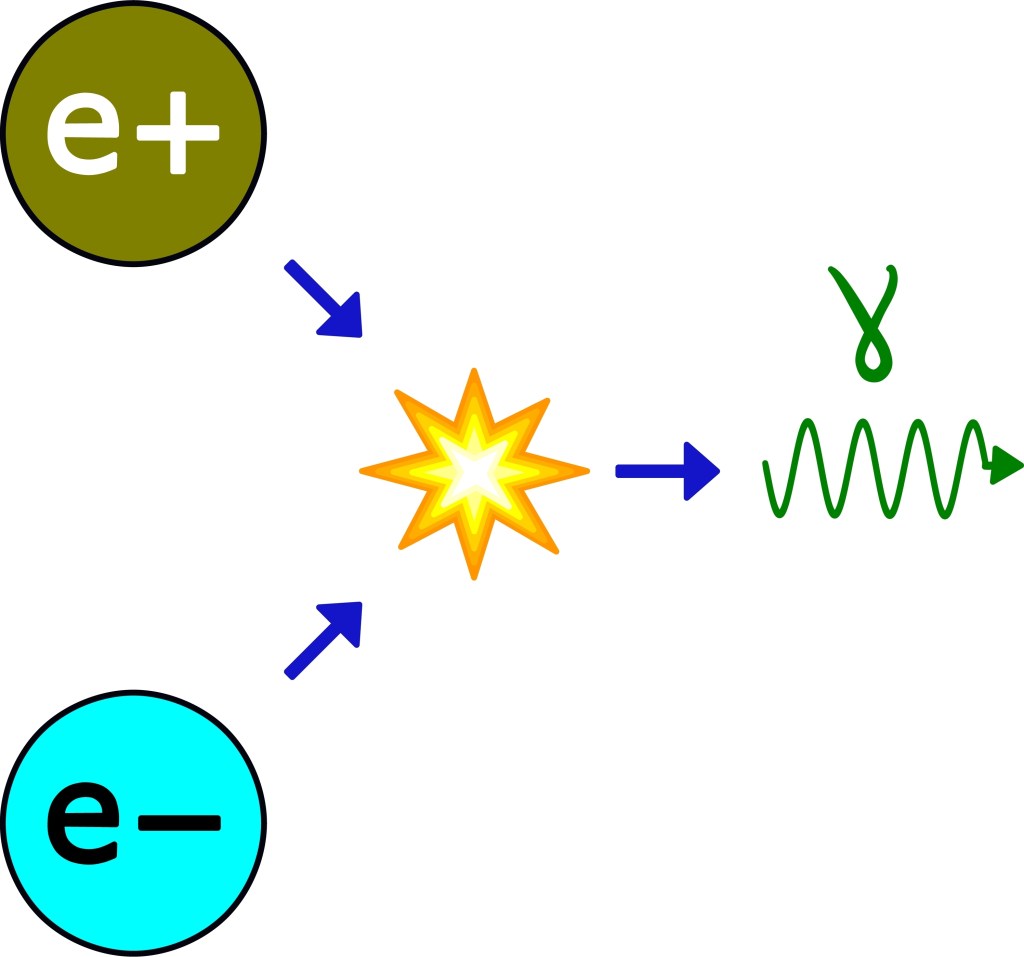
One amazing discovery was that of anti-particles / anti-matter. Anti-matter was predicted in 1928 by the physicist Paul Dirac when he combined quantum mechanics with Albert Einstein’s special theory of relativity. A few years later (1932) the anti-particle of the electron, called the positron was discovered. Since then, many anti-particles have been found. I can add that Matter and anti-matter annihilate upon contact releasing enormous amounts of energy.
Conclusion
Going from classical physics to modern physics represented a huge quantum leap forward (pun intended) both with respect to our understanding of the Universe and the technological revolution this shift (paradigm shift) caused.
My Other Responses to Esther’s Prompts
- Prompt : Small : Small Microscopic Subatomic and Strings
- Prompt : Kind : Leonbergers Are Kind Dogs
- Prompt : Window : What Does Rollo See Out His Window
- Prompt : Charge : Electric Charge is not the only type of Fundamental Charge
- Prompt : Promises : Promises To My Dog
- Prompt : Shade : A Total Solar Eclipse the Ultimate Moon Shade
- Prompt : Money : Ten Money Facts
- Prompt : Edge : The Edge of the Observable Universe is 46.5 billion Light Years Away
- Prompt : Fish : Ten Amazing Fish Facts
- Prompt : Promise : I Promise Not to Post AI Generated Comments
- Prompt : Respect : Respect your Dog
- Prompt : Giving : Leonbergers Giving Gifts to Pugs
- Prompt : Family : Dogs Are Family
- Prompt : Snow : Snow and Ice in Norrland
- Prompt : Red : The Universe has a Redshift and its Increasing
- Prompt: Shapes : Conic Sections are the Shapes that Shape Our World
- Prompt: Flying : 10 Wind Blowing Facts About Birds
- Prompt: Drive : Letting Your Dog Drive the Car
- Prompt: Memories: False Memories Strange Memories Unpleasant Memories and Amnesia
- Prompt: Magic: Magic In New Orleans a Travel Overview
- Prompt: Vision: Human Vision Only Detects a Sliver of the EM Spectrum
- Prompt: Flower: Leonberger Dogs with Flowers
- Prompt: Capture: Carbon Capture and Storage an Unfulfilled Promise
- Prompt: Eyes: The Evolution of Eyes is Convergent
- Prompt: Pet: The Joy of Having a Pet
- Prompt: Cross: Why did the Dog Cross the Road
- Prompt: Close: Close Encounter with Grizzly Bear Number 399
- Prompt: Block: 60 million Lego Blocks
- Prompt: Bank: The Riverbank of Moälven
- Prompt: Rich: Super Rich
- Prompt: Test: When our Leonberger took a Car for a Test Drive
- Prompt: Fire: Climate change worsens wildfires Globally and Human land-Use Changes Reduces them
- Prompt: Exercise: Dogs Make you Exercise and you Live Longer
- Prompt: Play: Dog Play
- Prompt: Catch: Playing Catch with Dogs

