
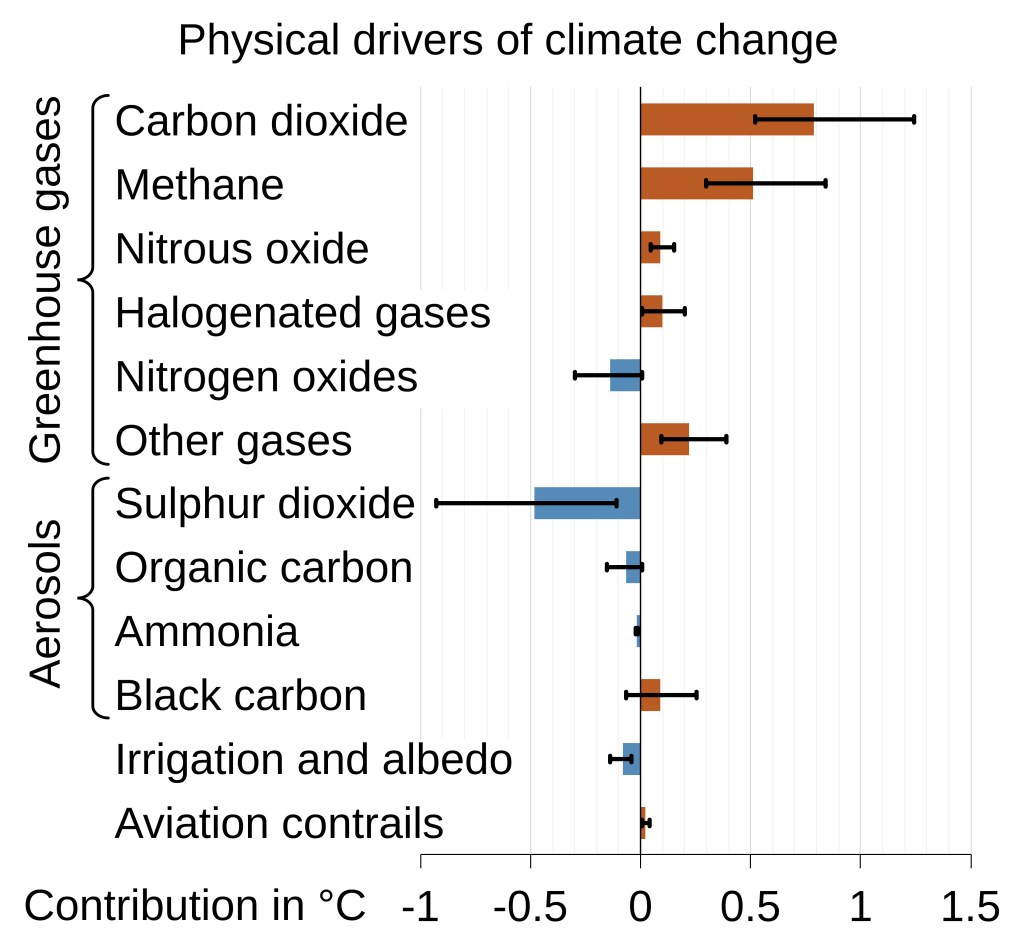
Superfact 133: Water vapor is responsible for roughly half of Earth’s total greenhouse effect, but unlike carbon dioxide or methane, water vapor condenses and falls as precipitation. Water molecules only stay in the atmosphere for about two weeks. We do not directly control global water vapor levels. When carbon dioxide warms the planet the atmosphere holds more water vapor, which amplifies the initial warming. However, water vapor does not drive global warming. Carbon dioxide emissions and to a lesser degree methane emissions drive global warming. Water vapor just amplifies the effect.
On social media you often see the claim that water vapor is a more powerful greenhouse gas than carbon dioxide, and the implicit implication is supposedly that our carbon emissions are not the problem. What is getting lost in these posts is that we are not adding water vapor to the atmosphere like we are adding carbon dioxide (or methane) to the atmosphere. The amount of water vapor in the atmosphere will increase because a warmer atmosphere can hold more water vapor, but that is because of our carbon emissions in the first place. You can read more about that here, and here, and here.
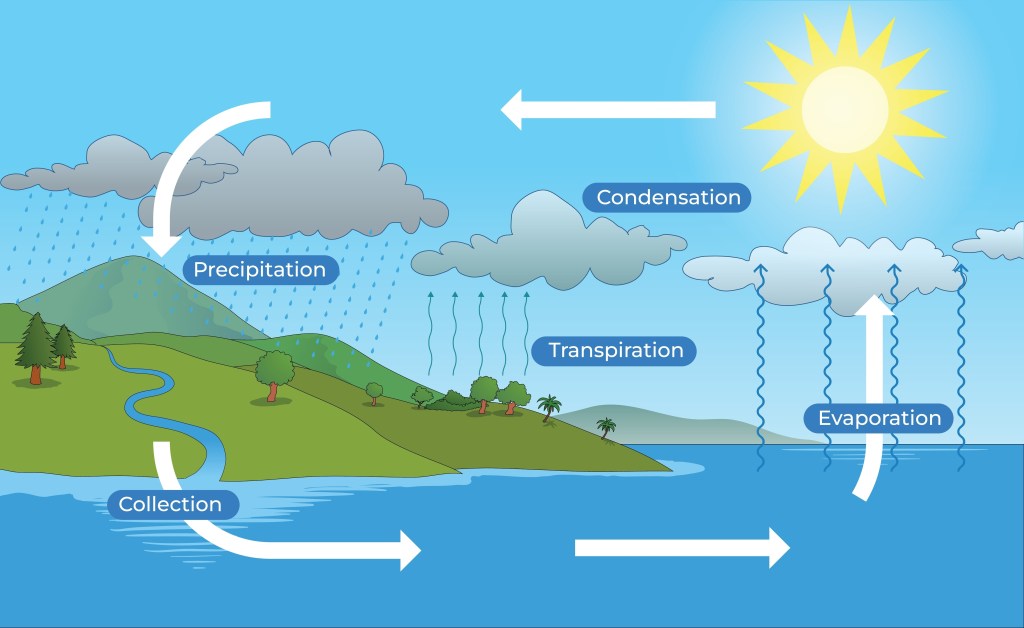
A related fact is that the water cycle is a relatively fast cycle compared to the carbon cycle. A water molecule stays in the atmosphere on average for two weeks according to MIT and nine days according to Wikipedia. Our carbon emissions stay in the atmosphere for several hundred years. In short, water vapor is not the driver of the current rapid global warming. That is chiefly carbon dioxide, but also methane, and deforestation.
It does not matter that water vapor causes a larger percentage of the warming than carbon dioxide. It is not what is causing the increase in the average global temperature. Since so many people have been fooled by the water vapor misdirection, incorrectly thinking that carbon dioxide is unimportant because water vapor is a more important greenhouse gas, this is an important fact that will come as a surprise to many. Therefore, it is a super fact in my opinion.
More on the Water Cycle and the Greenhouse Effect
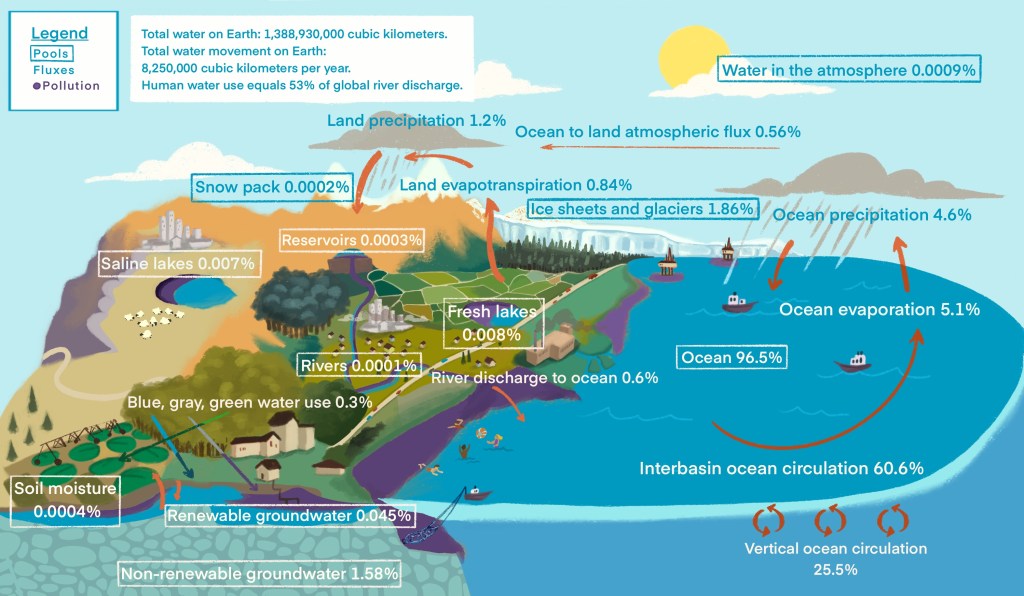
Below is a more detailed illustration of the water cycle for those who are interested. It should be noted that even though water vapor is not driving the rapid global warming we are witnessing, the very rapid global warming we are experiencing is affecting the water cycle, for example, the precipitation patterns around the world. You can read more about that here.
Another less simplistic argument based on water vapor as a greenhouse gas that tries to claim that carbon dioxide is not behind the rapid global warming we are seeing is that water vapor is such an effective greenhouse gas across all frequences that there is not much room for carbon dioxide to make it worse.
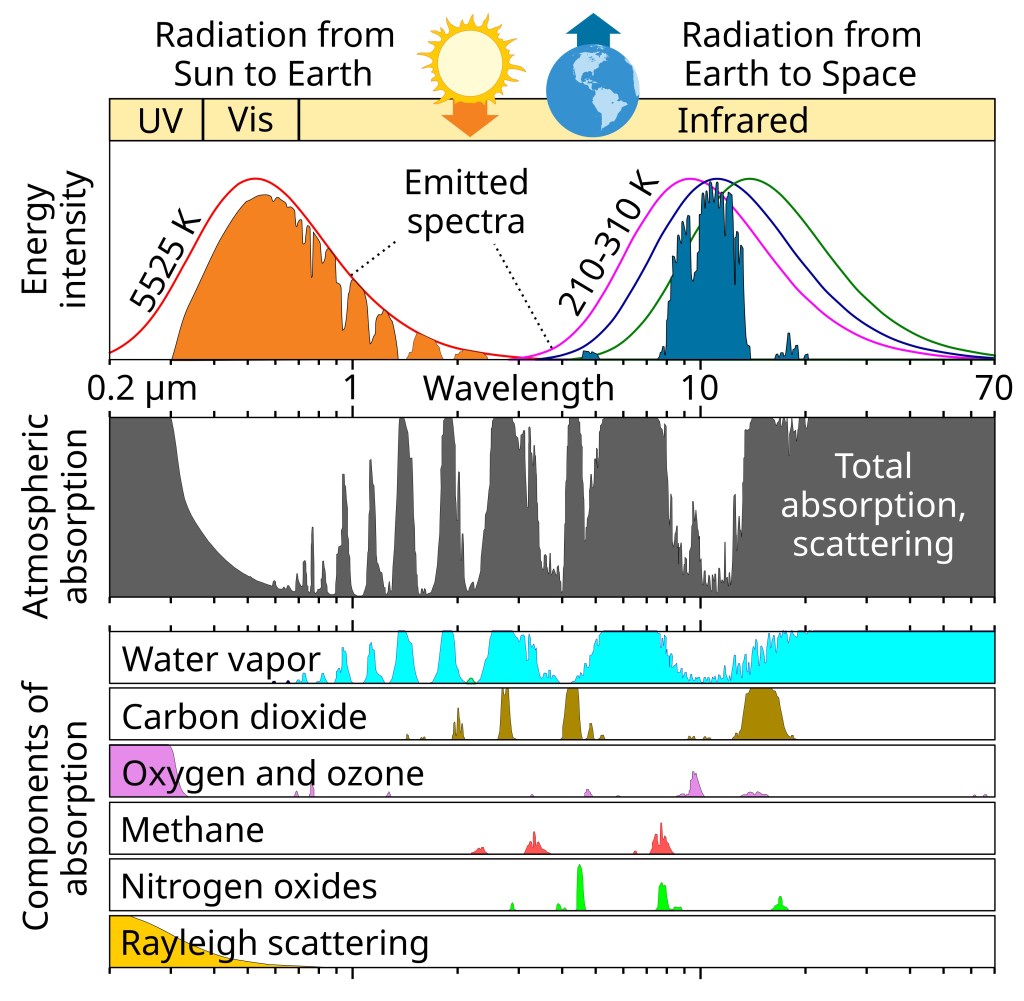
Greenhouse gases absorb infrared radiation and that is what warms the atmosphere like a blanket. However, the different greenhouse gases absorb radiation at different frequencies. As you can see in the figure below water vapor has a pretty impressive spread across most frequencies.
However, if you look carefully, you see that carbon dioxide and water vapor complement each other in the spectra and in addition, as mentioned, we are not increasing water vapor directly, but we are increasing the amount of carbon dioxide directly. It should be noted that, in addition, satellite measurements directly confirm that our emissions are warming the planet. The topic of absorption at different frequencies by carbon dioxide and water vapor is explored in greater detail in the book “The Physics of Climate Change by Lawrence M. Krauss”, which I reviewed here.
Conclusion
Water vapor is a powerful greenhouse gas but unlike carbon dioxide and methane it is not driving the rapid global warming that we are seeing. We are directly increasing water vapor via water vapor emissions, and if we did it would just come raining back down pretty quickly. However, when carbon dioxide warms the planet the atmosphere holds more water vapor, which amplifies the initial warming.
Other super facts related to global warming
- Global Warming is Happening and is Caused by us
- The Hockey Stick Graph is not Wrong
- Scientists Agree that Global Warming is happening and that we are the Cause
- Climate change worsens wildfires in the US
- Without carbon dioxide the Earth would freeze
- IPCC Did Not Backtrack on Global Warming Being Human Caused
- Orbital Cycles are not the Cause of the current Global Warming
- The Sun is not the Cause of the current Global Warming
- Volcanoes emit a tiny fraction of carbon compared to humans
- Climate change worsens wildfires Globally and human Land-Use Changes Reduces them
- Carbon Cycle Emissions Does Not Cause Global Warming

