
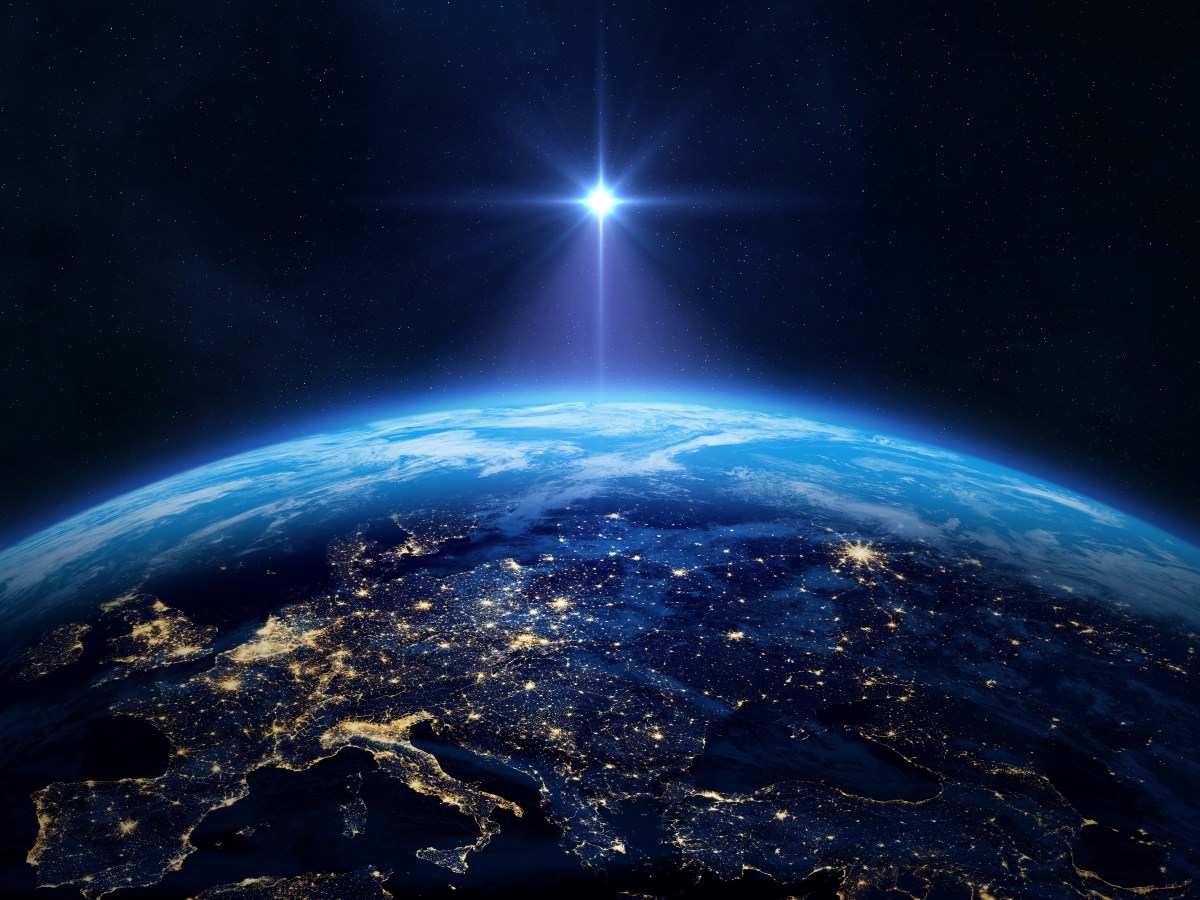
Super fact 102: Stars twinkle but planets do not. Planets reflect sunlight, like the moon, whereas stars emit intense light like the sun. However, stars are thousands of times further away.
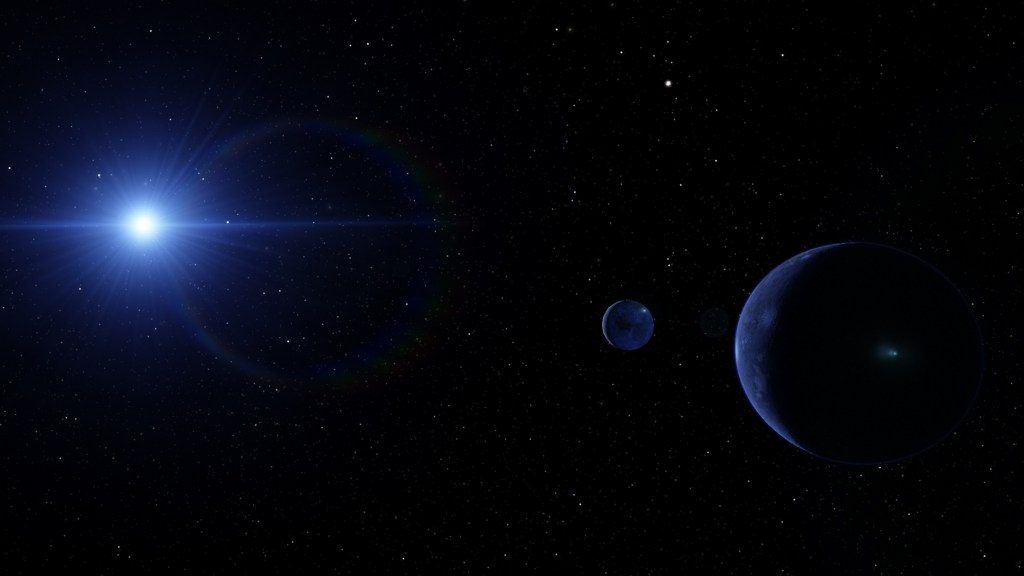
The Sun and the Moon appear to have roughly the same sized disk in the sky, about 0.5 degrees of arc, because the Sun is roughly 400 times wider than the Moon but also about 400 times farther away. However, the moon, which reflects sunlight but does that emit any, is much fainter than the sun in our sky. The Sun provides approximately 400,000 times more light to Earth than the full Moon. If you were to move the sun farther away until it provided the same amount of light as the moon you would have to move the sun 632 times farther away until it became a tiny point in comparison to the moon.
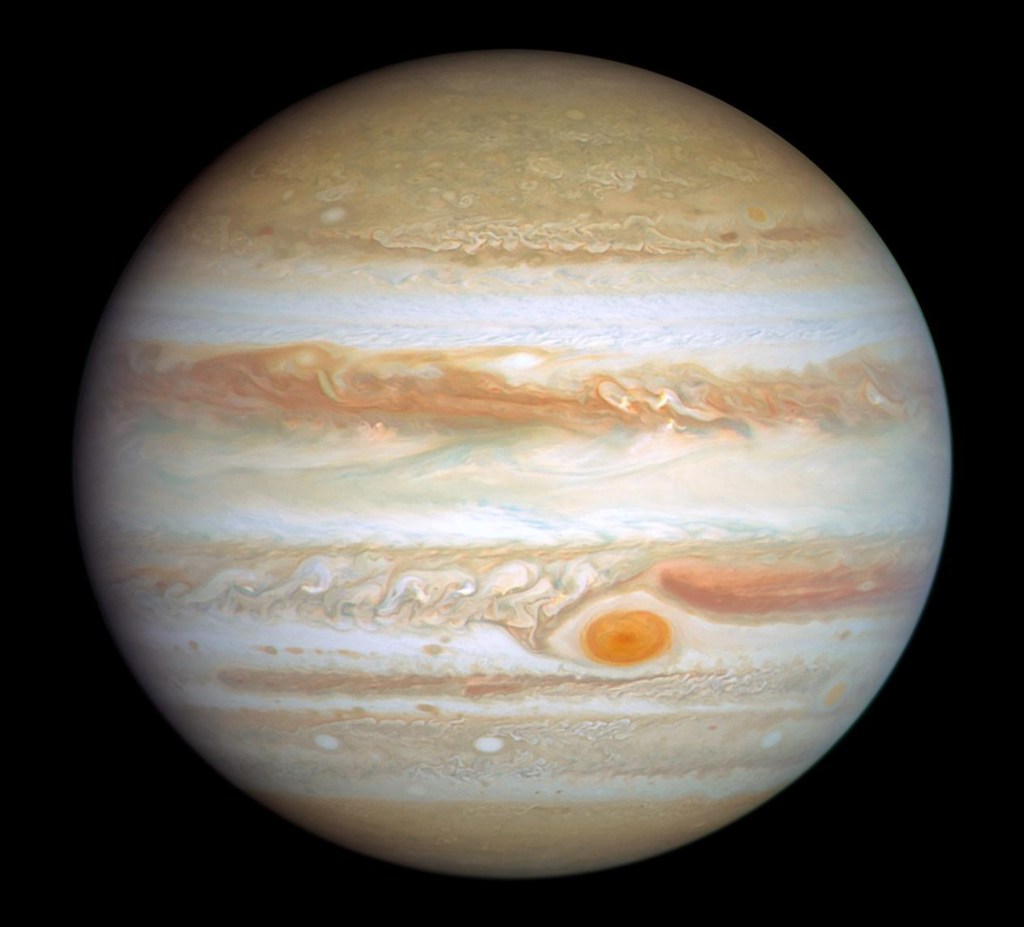
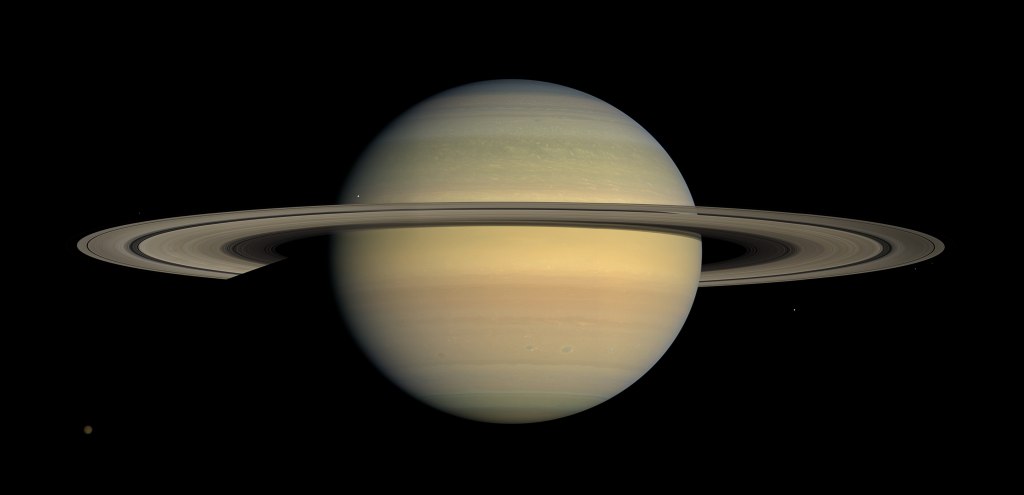
The planets in our solar system, Venus, Jupiter, Mars, Mercury, Saturn, etc., appear in the sky as small discs reflecting light whereas the stars appear as intense points of light with a disc diameter that is thousands of times smaller than that of the planets. However, we can’t see the difference with the naked eye. Both planets and stars appear like points of lights to us, but the difference in disc size in the sky is very big.
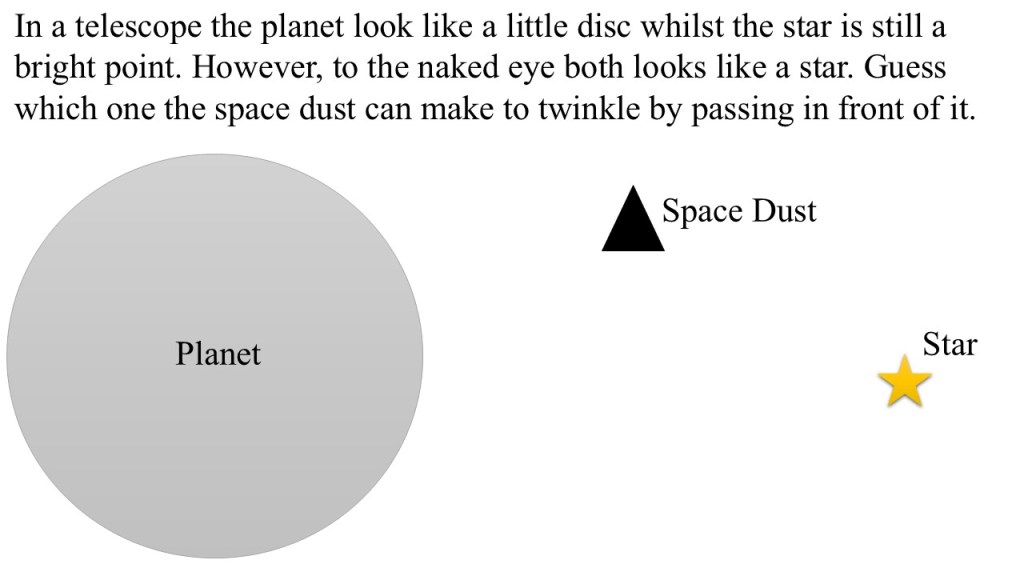
Because stars are tiny intense points of light Earth’s atmosphere can easily refract (bend) their light. This is known as scintillation. I can add that the light from stars that are low in sky go through more atmosphere and therefore twinkle more. Since planets appear as tiny discs rather than tiny points, planets create a steadier beam of light, which averages out atmospheric turbulence. In addition, dust particles in space and in the atmosphere can more easily block the light from stars compared to that of planets, because the planets have much larger discs in the sky (thousands of times larger).
Since this fact is not scientifically under question, a lot of people don’t know it, and it is kind of important to anyone interested in the night sky, I consider it a super fact. I should say that I borrowed this super fact from Jacqui Murray’s blog worddreams.
Planets Reflect Light like the Moon
Planets reflect light. They don’t shine and emit light like the sun or the stars.
To see the other Super Facts click here


That’s an excellent explanation, Thomas.
LikeLiked by 1 person
Thank you so much Anneli
LikeLiked by 1 person
I had no idea the planets in our solar system appear as small discs that reflect light. I heard somewhere (in the media, I think) that Venus shines like a star, which just shows how misonformed people are! Thanks for sharing this interesting post.
LikeLiked by 1 person
Yes the planets look like stars to the naked eye but if you use a telescope, even a small one, or binoculars, you see that they look little moons in the sky. However, the stars will still look like points, only brighter points, even in a strong telescope. Venus is often called the evening star when you see it in the west in the evening, and it is often called the morning star when you see it in the east in the evening. However, it is of course not a star, but a planet. Those are nick names. Since the Venus is closer to the sun than Earth you tend to see it closer to the sun and never right above in the sky, except for during a total solar eclipse (I’ve seen that).
LikeLiked by 1 person
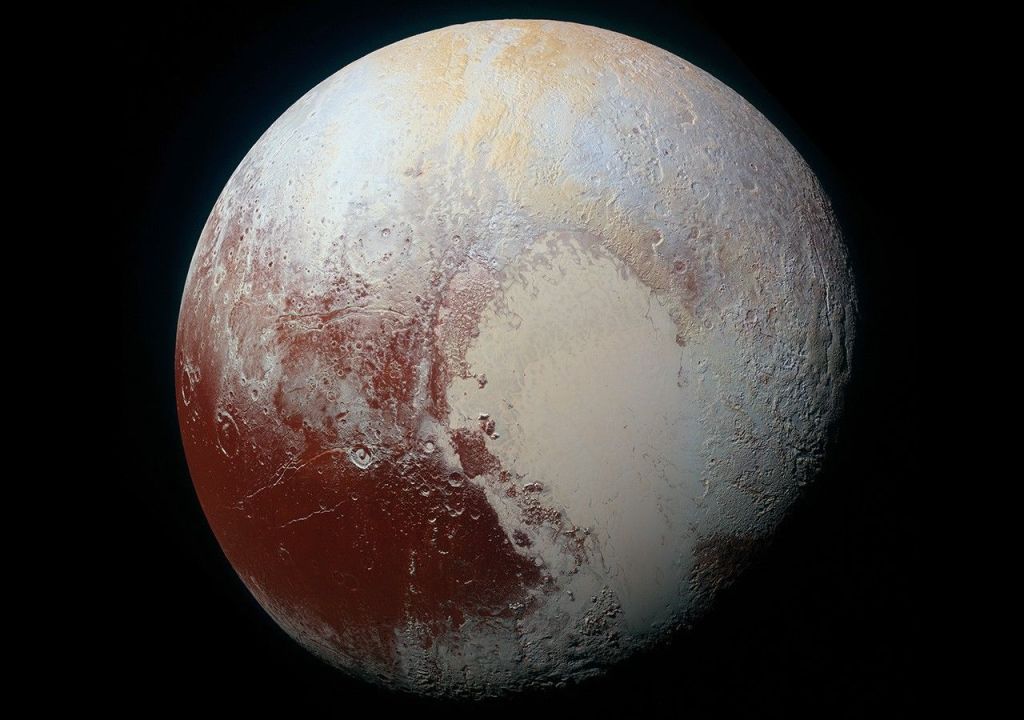
I don’t think I’ve ever seen a photo of Pluto before. It is very colourful. Maggie
LikeLiked by 1 person
I agree, it is beautiful. The photo was taken by the New Horizons space craft, which was a project launched and lead by Alan Stern who went to the same school as my boys, St. Marks School of Texas.
LikeLiked by 1 person
Small world!
LikeLiked by 1 person
Yes you are right. But it was also one reason I picked this photo. Our boys school is a place of admiration of the planet Pluto (oh my God what did I say).
LikeLiked by 1 person
😅😅 I KNEW it was a planet! 😊
LikeLiked by 1 person
Ha ha. IAU voted in 2006 to classify Pluto as a dwarf planet rather than just a “planet”, but it was far from unanimous and the planetary scientists (different from astronomers) were upset. It is a lot more controversial than one might think. Basically, at first a planet was considered an object that orbited the sun but was big enough to squeeze itself into a sphere (or closely a sphere). What happened was that a third condition was added, that it had to clear its neighborhood/orbit of debris. That third condition is true for Mercury, Venus, Earth,, Mars, Jupiter, Saturn, Uranus, and Neptune, but not for Pluto. So it was reclassified as a dwarf planet instead of a planet.
There are advantages and disadvantages to the decision. Pluto is part of the Kuiper belt and there are probably a lot of Kuiper belt objects that are like Pluto but haven’t been discovered yet so it would complicate things if they all would be considered planets. That’s an advantage of the new definition. A disadvantage of the new definition is that there are many very large exo-planets (planets orbiting other stars), larger than Jupiter that have not cleared their neighborhood of debris, so applying that third condition to exo-planets would make these “giant planets”, not planets anymore. It is an interesting drama.
LikeLiked by 1 person
I have yet t mention this to anyone who is aware of the difference. Fun… And thanks for the shout out!
LikeLiked by 1 person
Thank you so much Jacqui from bringing it up
LikeLiked by 1 person
This is just as well, it would be a little bit tougher to do the poem otherwise. Hmm … “Twinkle twinkle little planet, you are probably made of granite. Aliens up in the skies, looking down with envious eyes.” Wow that went right to War of the Worlds, didn’t it?
LikeLiked by 1 person
“Twinkle twinkle little planet, you are probably made of granite…..” – ha ha you are a clever poet and funny too. I appreciate that.
LikeLiked by 1 person
As usual, very clearly explained, and such interesting information about stars as compared to planets, thank you, Thomas!
LikeLiked by 1 person
Thank you so much for your kind words Nicole
LikeLiked by 1 person
Gosh, those wonderful photos. I knew the difference between stars and planets, although you explain it so well, Thomas. Another look at those gorgeous planets! Wow.
LikeLiked by 1 person
Thank you so much Chris. Those beautiful planet photos were taken by NASA spacecraft passing by the planets.
LikeLiked by 1 person
Scintillating! 🙂 Thanks for this informative post about the difference between stars and planets. The images are striking, especially that of Pluto.
LikeLiked by 1 person
Thank you so much Debbie. An interesting coincidence is that the NASA space probe that took the Pluto photo, New Horizons, was the creation of Alan Stern, who went to the same school as my two boys, St.Marks School of Texas. Alan Stern came back to the school and spoke to the kids about Pluto and the mission.
LikeLiked by 1 person
That must have been exciting for them! 😎
LikeLiked by 1 person
Yes it was definitely a cool moment.
LikeLike
After all the science fiction I’ve watched, you’d think I’d know this. But in all honesty, I thought it was the tree branches making the stars appear to twinkle. Now that we have more open space in our backyard, I’m going to be watching for those twinkles
LikeLiked by 1 person
Well, I am sure tree branches can make the stars twinkle too. Atmospheric turbulance, dust particles (in the atmosphere and space), and tree branches maybe.
LikeLiked by 1 person
One of the earliest Superfacts I learned on my path to being an astronomer! Related to this is that if the atmosphere is very calm and still, stars twinkle much less than they do when the atmosphere is very agitated. So on ideal nights for ground-based astronomy, the stars don’t twinkle as much as they do on windier more turbulent nights.
LikeLiked by 1 person
Oh wow that makes a lot of sense but I did not think about that. That is a great fact to know.
LikeLiked by 1 person
Yes, in fact “delivered image quality,” which is a measurement of how much the turbulent atmosphere is affecting the starlight, is something we pay close attention to and report on each night of our observations. In short, how much the stars twinkle affects the quality of our data, so it’s an important thing for us to measure.
LikeLiked by 1 person
Yes I can certainly imagine that. It is very interesting information and it certainly would be very interesting to see you Astronomers work.
LikeLiked by 1 person
This is a fascinating post, Thomas. I did no most of the big ticket information but I find your background and details helpful.
LikeLiked by 1 person
Thank you so much for your kind words Robbie
LikeLike
🪐🌞💛
LikeLiked by 1 person
Very well explained Thomas, thank you. Stars twinkle but planets do not. 😉
LikeLiked by 1 person
Yes that is right. Thank you Debby.
LikeLiked by 1 person
😊
LikeLiked by 1 person
Java Bean: “Ayyy, the way our Dada tells planets from stars is by pointing his phone with the Star Chart app at the sky and having it tell him which is which!”
LikeLiked by 1 person
Ha ha that is a good idea Java Bean. I do the same. I have SkyMap. However, you can also see that the planets don’t twinkle, or very little compared to a star.
LikeLike
Long ago a friend of mine bought a telescope and invited me over to check it out. He pointed it at a star. Turns out that “star” was actually a galaxy! It was just so far away it looked like a single point of light to the naked eye. That blew my mind!
LikeLiked by 1 person
Yes that is amazing. I have a small telescope as well and I look at various things. Thank you for your comment blainerestaurantreport.
LikeLiked by 1 person
Just a question. Compared to yellow stars, do blue stars twinkle more and red stars twinkle less?
Also, planets closer to their stars reflect more brightly, while planets farther from their stars reflect more faintly, do they not? Therefore, Saturn ought to reflect more faintly than Jupiter, and Mars more faintly than Venus or Mercury, right? Neptune ought to reflect more faintly than Uranus.
LikeLiked by 1 person
Great questions! The wider apparent angular diameter that red giants have in the night sky will make them twinkle less. I admit I had to look up that one. But the second question I knew. Yes planets that are closer to the sun reflect more per angular diameter in the night sky, assuming the material is the same. Venus has a large apparent angular diameter in the night sky (close to us), it is relatively close to the sun and therefore get more light, and the thick white atmosphere is also very reflectant. That is why it is so bright in the night sky.
LikeLike