The goal of this blog is to create a list of super facts. Important facts that are true with very high certainty and yet surprising, misunderstood, or disputed by many. This blog aims to be challenging, educational, and fun, without it being clickbait. I determine veracity using evidence, data from reputable sources and longstanding scientific consensus. Prepare to be challenged (I am). Intentionally seek the truth not confirmation of your belief.
Super fact 84 : Modern birds are classified as part of the clade Dinosauria. They are direct descendants of small, feathered maniraptoran dinosaurs that survived the Cretaceous-Paleogene extinction event 66 million years ago. Maniraptoran dinosaurs in turn are a major subgroup of coelurosaurian theropod dinosaurs. In other words, birds are avian dinosaurs.
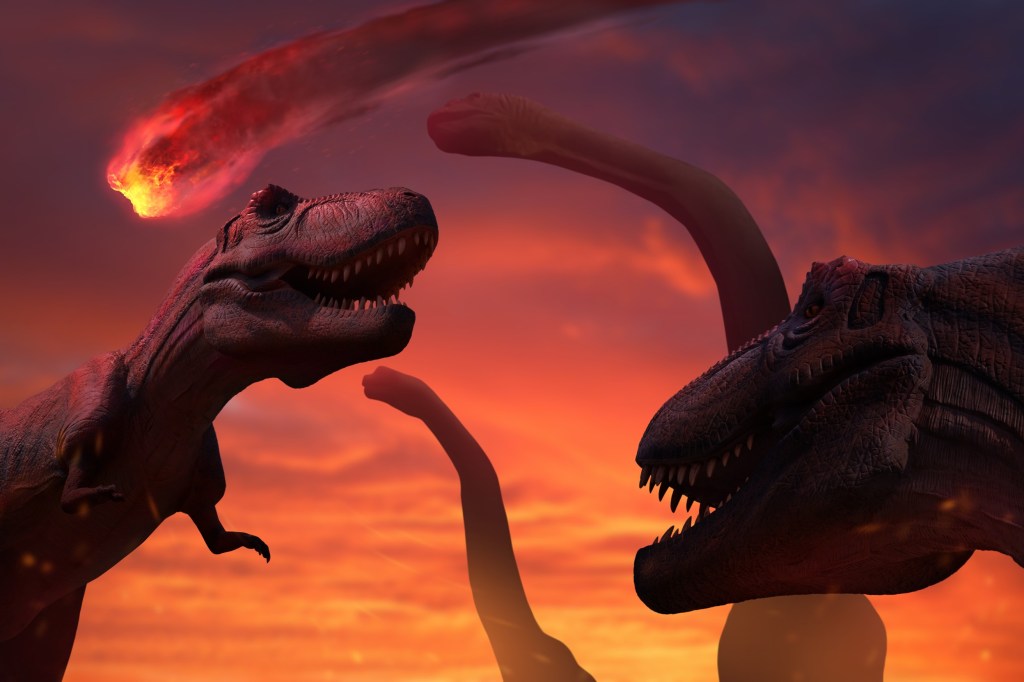
Some dinosaurs survived the Cretaceous-Paleogene extinction event 66 million years ago. Shutterstock Asset id: 2196200279 by funstarts33
Birds are descendants of specialized maniraptoran theropod dinosaurs that survived the extinction event that killed most dinosaurs 66 million years ago. Maniraptoran dinosaurs in turn are a major subgroup of Tyrannoraptora, which include the well-known Tyrannosaurus Rex. Tyrannoraptora in turn is a major subgroup of coelurosaurian theropod dinosaurs. Both the well-known dinosaur called velociraptor, and birds belong to the group Maniraptora. Even though the velociraptor was not a bird they shared many bird-like features, including feathers, wishbones, hollow bones, and similar wrist joints.
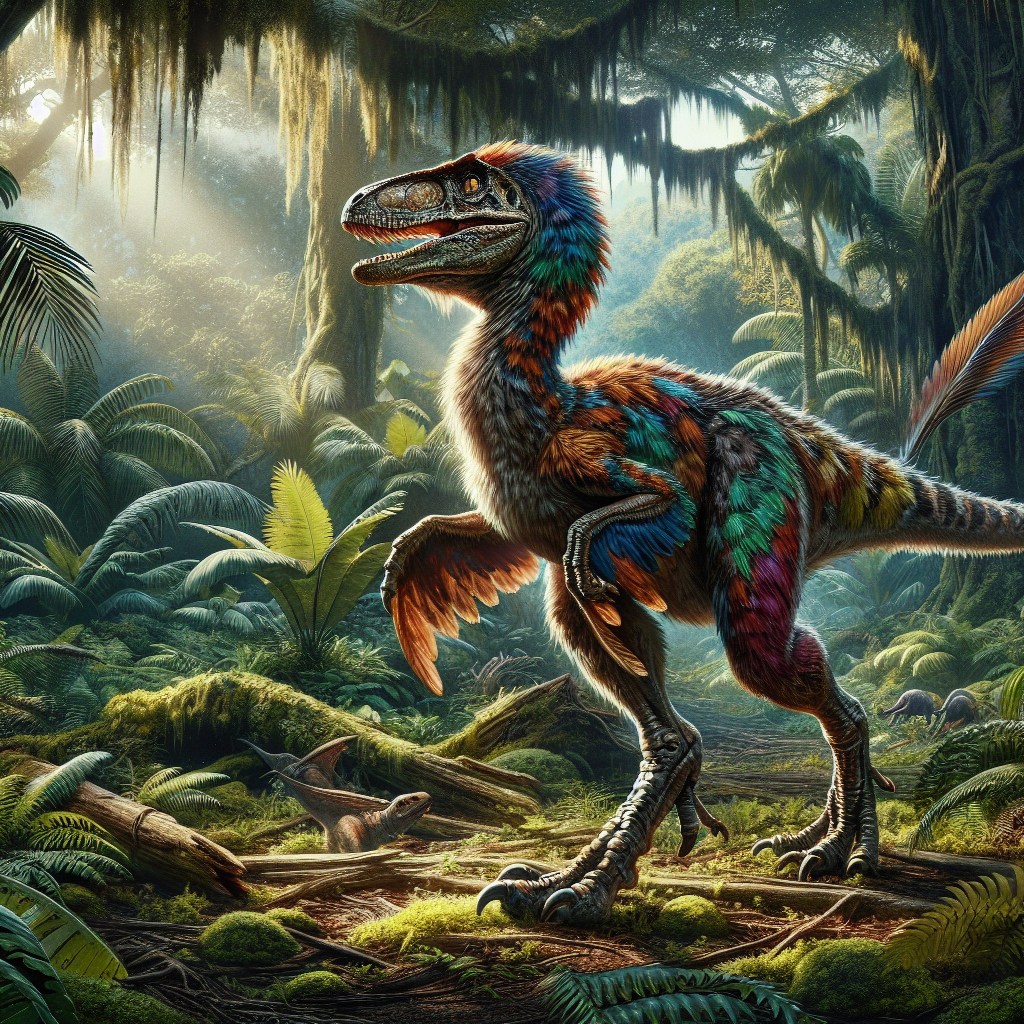
Velociraptor with feathers (well a little bit). Shutterstock Asset id: 2636534673 by Shutterstock AI Generator
Birds evolved during the Jurassic period from two-legged, carnivorous, and often feathered dinosaurs, and are the only surviving dinosaurs. They have been classified as avian dinosaurs since the 1980’s. In other words, they are dinosaurs. Initially feathers evolved among dinosaurs for insulation, sexual display, and camouflage rather than flight. One of the early birds was Eoconfuciusornis. It lived 131 million years ago, long before the Cretaceous-Paleogene extinction event 66 million years ago. Eoconfuciusornis could fly and it had colorful feathers.
I brought up this fact in a recent post and I hinted that it was a super fact. It is true, surprising and kind of important. After all birds are all around us. In this post I am exploring the fact that birds are dinosaurs a little bit more than I did in my previous post. Below are a couple of modern birds.
A shoebill stork standing at Ueno Zoo, Tokyo, five feet tall. Bob Owen, CC BY 2.0 https://creativecommons.org/licenses/by/2.0, via Wikimedia CommonsA wild turkey in our dining room.
Feathered Dinosaurs
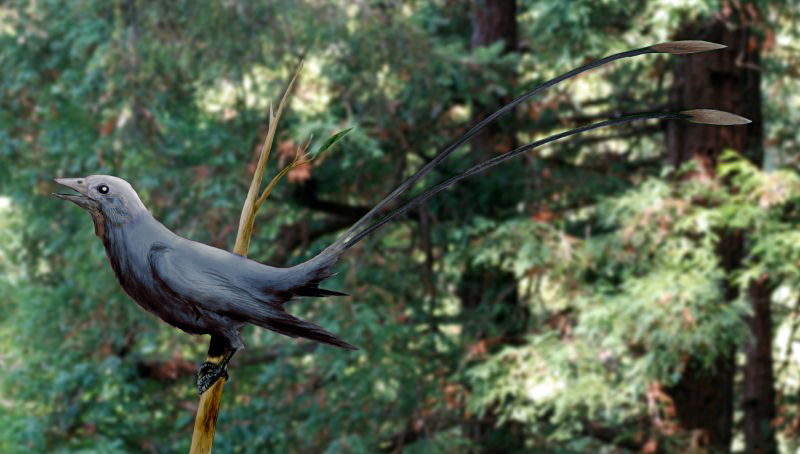
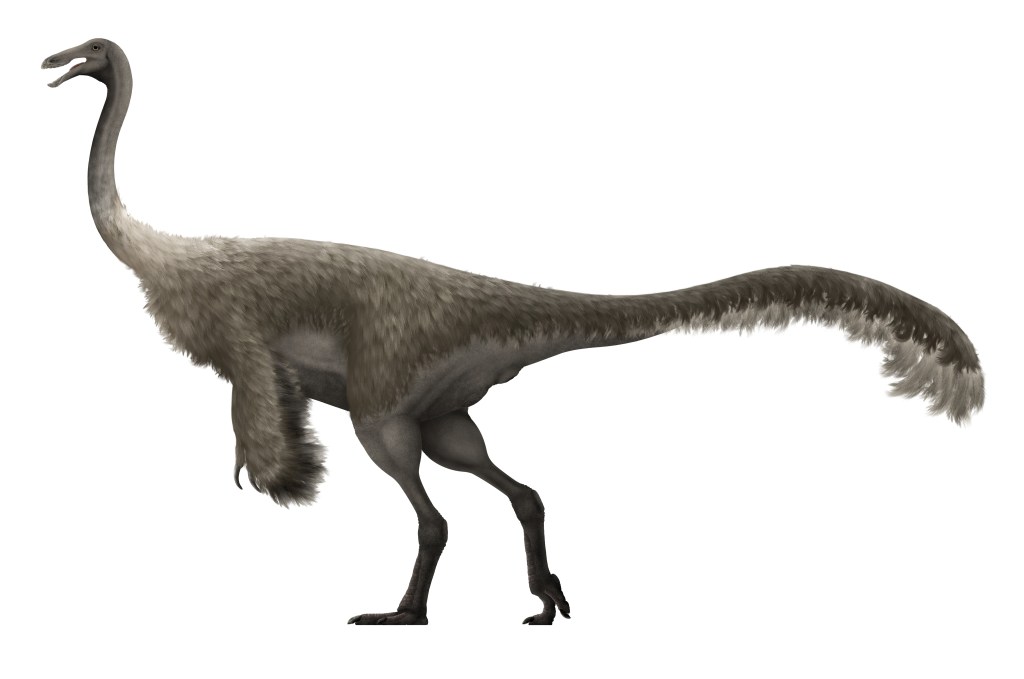
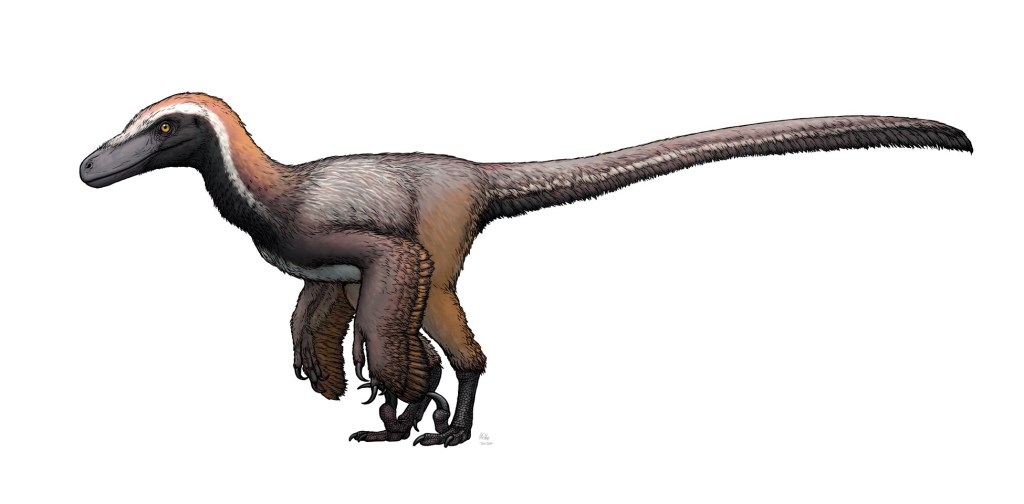
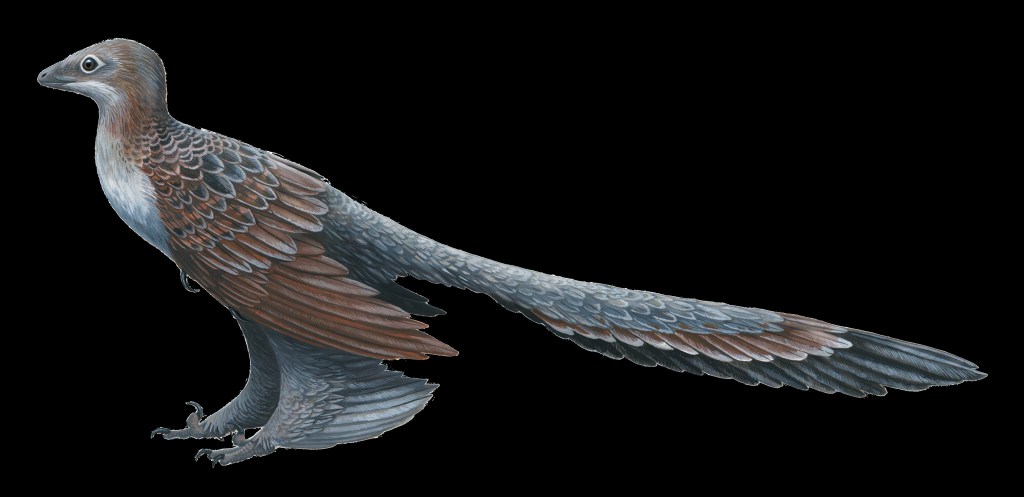
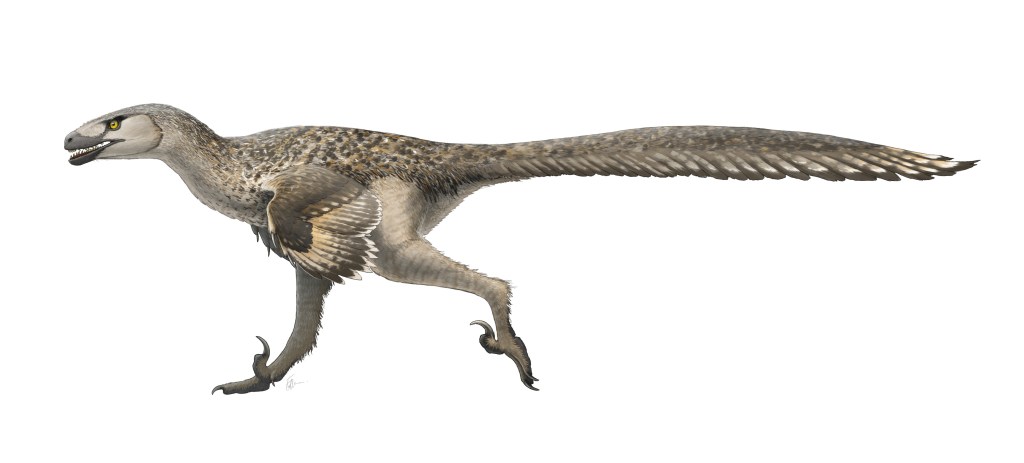
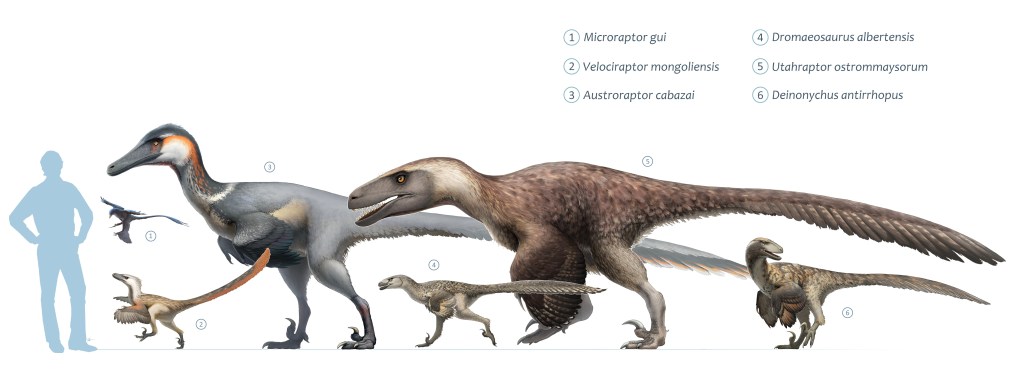
A lot of dinosaurs had feathers, and some could fly. That included many types of dinosaurs other than birds. Dinosaurs with feathers include, for example, Velociraptor, Deinonychus, Archaeopteryx (could fly), Microraptor (could fly), Rahonavis (could fly), Gallimimus, Ornithomimus, Yutyrannus huali, Psittacosaurus, Psittacosaurus, Sinosauropteryx, Sinornithosaurus, Eoconfuciusornis, Wulong, Psittacosaurus, Sciurumimus, Kulindadromeus, Caudipteryx, Utahraptor, Deinonychus, and even young T-Rex and many others. We know that at least some dinosaurs had feathers as well as colors based on fossil finds. Below are some illustrations.
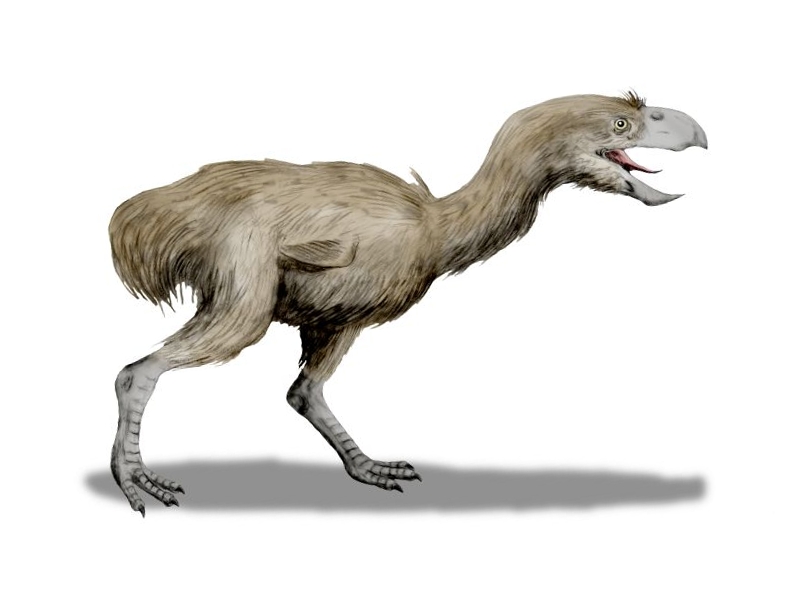
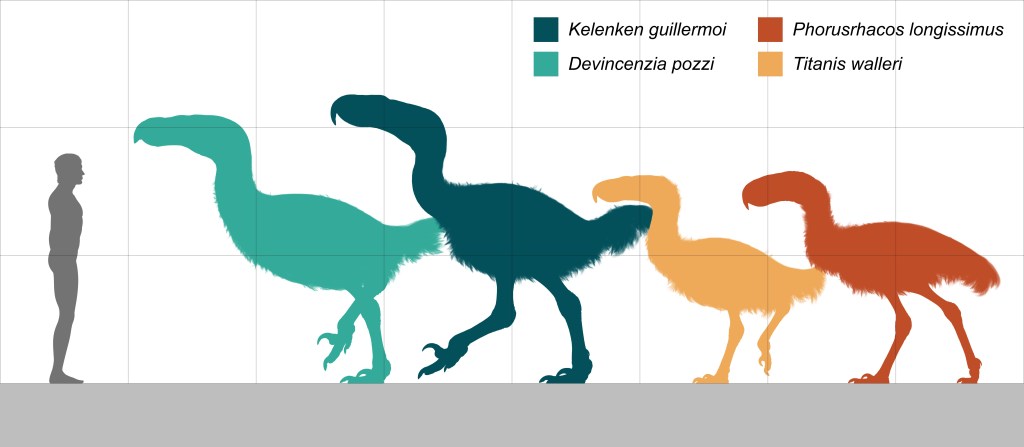
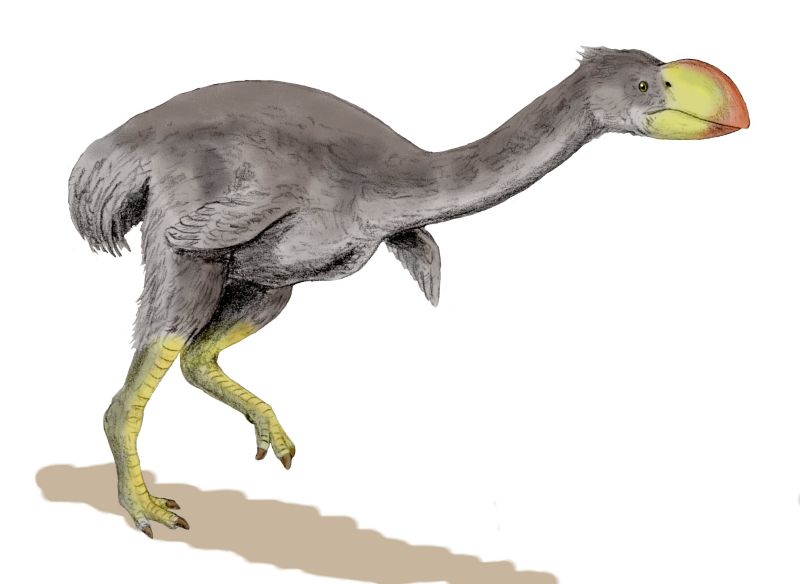
After the Cretaceous-Paleogene extinction event 66 million years ago birds continued evolving. Some of them became large standing 1 – 3 meters (3-10 feet) and weighing hundreds or even thousands of pounds. From about 53 million years ago until 100,000 years ago there were large birds that we refer to as Terror Birds. They lived at the same time as humans. However, there were other large and scary birds. Dromornis stirtoni was a flightless bird that lived 7-8 million years ago, it was over three meters in height (10 feet) and weighed 500-600 kilograms (1,100 to 1,300 pounds). Below are some illustrations.
Super fact 83 : Everyone experiences false memories. They are a normal part of how human memory works and are very common. There are also false memories that are shared among large groups of people and that are often socially reinforced. This is called the Mandela effect.
Shutterstock Asset id: 717504940 by durantelallera
As I mentioned, false memories are very common. However, what may come as a surprise is that some false memories are widespread and socially reinforced. It is important to know this, and we know it is true, so it is a super fact. The effect is named after the former President of South Africa, Nelson Mandela, who died in 2013. However, a lot of people distinctly remember him dying in prison in the 1980s.
It was paranormal researcher Fiona Broome who named the effect after having a personal experience with the phenomenon. She wrongly recalled Nelson Mandela dying in the 1980s and she could even remember the news coverage of his funeral, and yet it never happened. After talking to other people, she realized that she was far from alone with her false memory.
Another example is that a lot of people remember Darth Vader in Star Wars telling Luke “Luke, I am your father”. What Darth Vader said was “No, I am your father”. Yet another movie example is that Forrest Gump did not say “Life is like a Box of Chocolates”. He said, “Life was like a box of chocolates”. Also, the Monopoly man never had a monocle, Curious George doesn’t have a tail, many remember the “Berenstein Bears” but it’s the “Berenstain Bears”. C-3PO is not all gold, he has a silver leg. You can easily find hundreds of examples of the Mandela effect online.
Shutterstock Asset id: 558350728 by Willrow Hood
People have asked me, “do you remember in the 1970’s and 1980’s when scientists were convinced that global cooling was happening”, to which I answer, “no I don’t remember that and neither do you”. In the 1970’s much less was known about the climate, but the possibility of anthropogenic warming dominated the peer-reviewed literature even then. There were a few contrarian climate scientists who claimed there was global cooling and there were some articles in popular media about global cooling, but the statement that scientists were convinced there was global cooling is simply false. You can read more about this in this book. Yet some people “remember” this. I believe this is another example of a socially reinforced Mandela Effect.
False Beliefs and False Memories
The existence of false beliefs is another phenomenon that is very common. There are hundreds of common beliefs that we know are false based on carefully vetted data, large amounts of studies, and scientific experiments. I think we all have some false beliefs. We have all been bamboozled at some point. The way to know is to check and compare the evidence and the data and papers from reputable sources. Find out what the experts in the field say. Some examples of false beliefs are:
Vaccines don’t work and are dangerous – reality: vaccines work, save millions of lives, and are in general safe.
Wind Power is not really clean energy – reality: wind power is much cleaner (by a lot) than the fossil fuels they replace.
Astrology works – reality: astrology is not science and lack predictive power.
Homeopathy works – reality: homeopathy has not been shown to work better than placebos.
We adopt false beliefs because of misinformation, propaganda (politics), social reinforcement, a wish to believe certain things, our own lack of critical thinking, etc. False memories, including collective false memories are due to the fact that memories aren’t perfect recordings, memory reconstruction, social reinforcement (also true for false beliefs), and confusion with similar events.
Shutterstock Asset id: 2593117091 by Drawlab19
Both false beliefs, false memories and the Mandela effect distort our understanding of the world. That is BTW one important inspiration for this fact finding blog – superfactful. It is difficult to accept that what you believe to be true may simply be false. We want to believe that we know better than others, not that we have been bamboozled or that we misremember things. But we need to be open to look at and compare evidence, be curious and willing to understand how things work, and be willing to change our beliefs and accept that some of our memories may be false. That is one way to grow as a human.
Super fact 82 : All known cellular life descends from a single Last Universal Common Ancestor (LUCA). All animals, all plants, fungi, algae, green and red algae, kelp, phytoplankton, cyanobacteria, amoebas, amoebozoa, diatoms, stramenopiles, rhizaria, hacrobia, all eukaryote, all archaea, all bacteria, all the millions of species on Earth come from one single ancestor known as the Last Universal Common Ancestor – LUCA. Viruses are an exception, but viruses are not considered life.
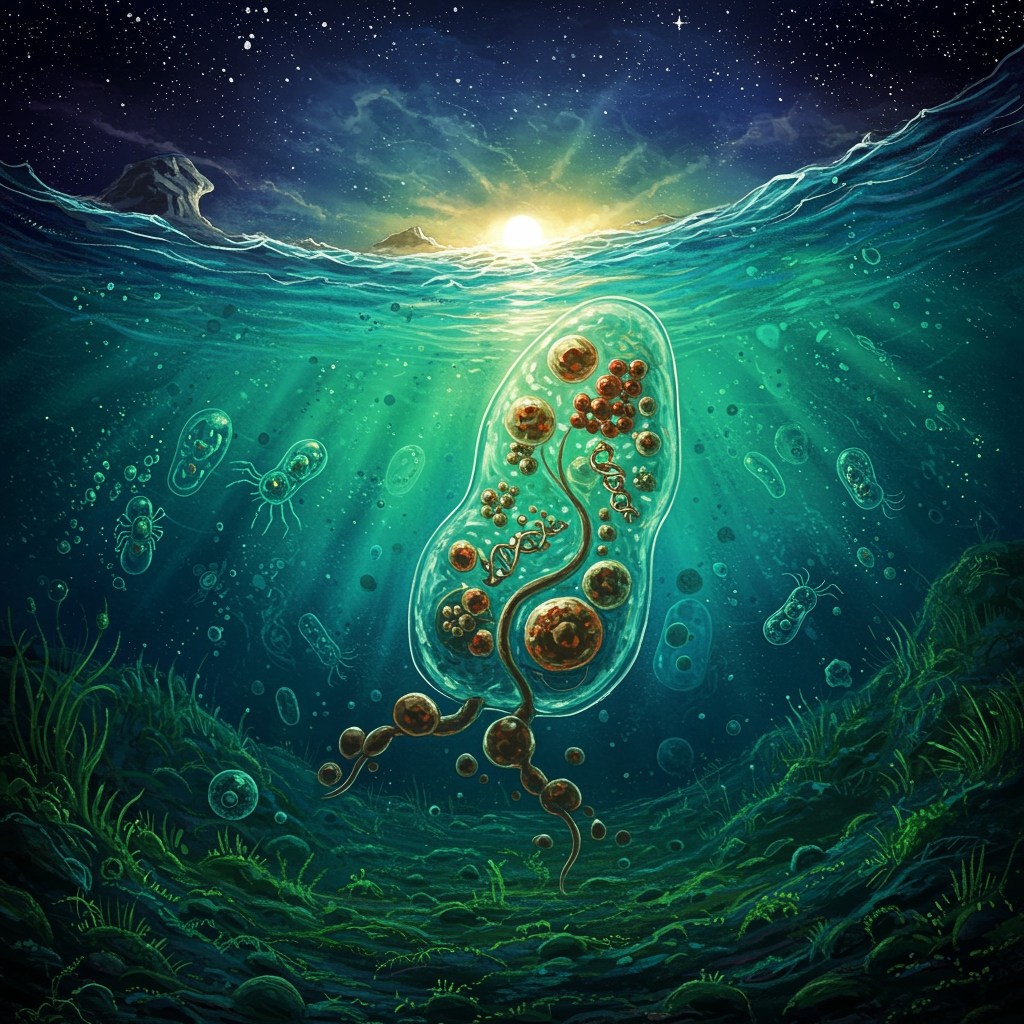
Last Universal Common Ancestor creation Shutterstock Asset id: 2666598705 by Shutterstock AI
The answer is genome mining. By surveying nearly 2000 genomes of modern microbes we not only know that all life has a common ancestor (LUCA), that lived roughly 4.2 billion years ago, but we also know that it thrived near hydrothermal vents as part of a larger microbial community. This is analogous to another of my posts “Humans and Chimpanzees Have a Common Ancestor”. By sequencing human DNA and chimpanzee and bonobo DNA we know that humans and chimpanzees have a common ancestor. No fossils, or other information from the past is needed. DNA is a great tool for determining relationships between species and for finding information about past life, without the need of fossils.
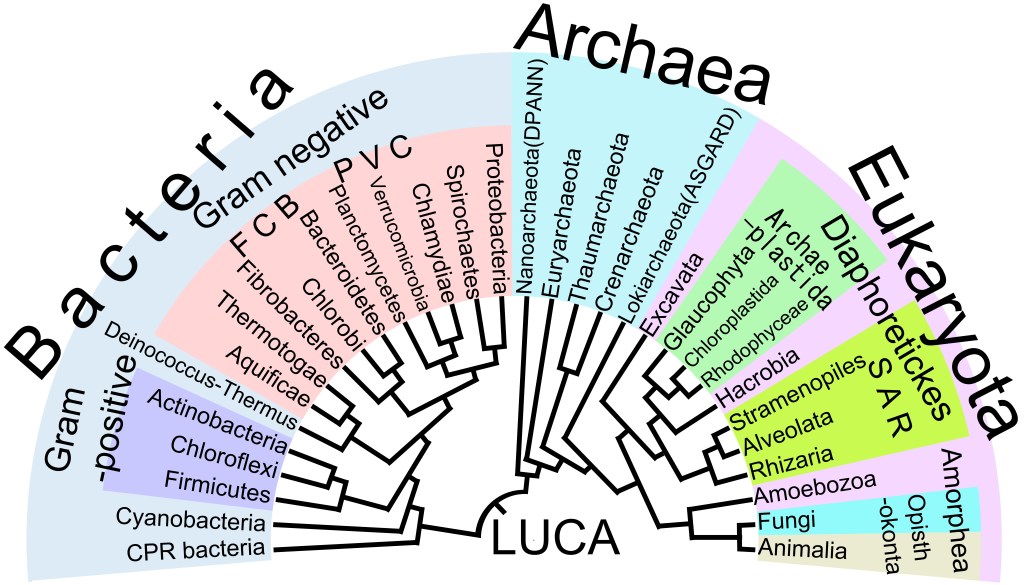
To be more specific, the detailed biochemical similarity of all current life makes the existence of LUCA widely accepted by biochemists. There is a Universal Genetic Code, which means that nearly all living things use the same DNA/RNA-based genetic code to translate genetic information into proteins. There is a shared molecular machinery, for example, all life relies on ribosomes for protein synthesis, similar energy carriers like ATP, and the same 20 amino acids. All life uses the same mirror-image form of molecules, a signature of a single, common ancestry. In addition, there is a “core” set of 355 gene families present in both modern bacteria and archaea, which were likely inherited from LUCA. Finally, we have phylogenetic mapping, protein-sequence-based phylogenetic trees converge on a single root, indicating a common ancestry for all life. See the phylogenetic tree of life below.
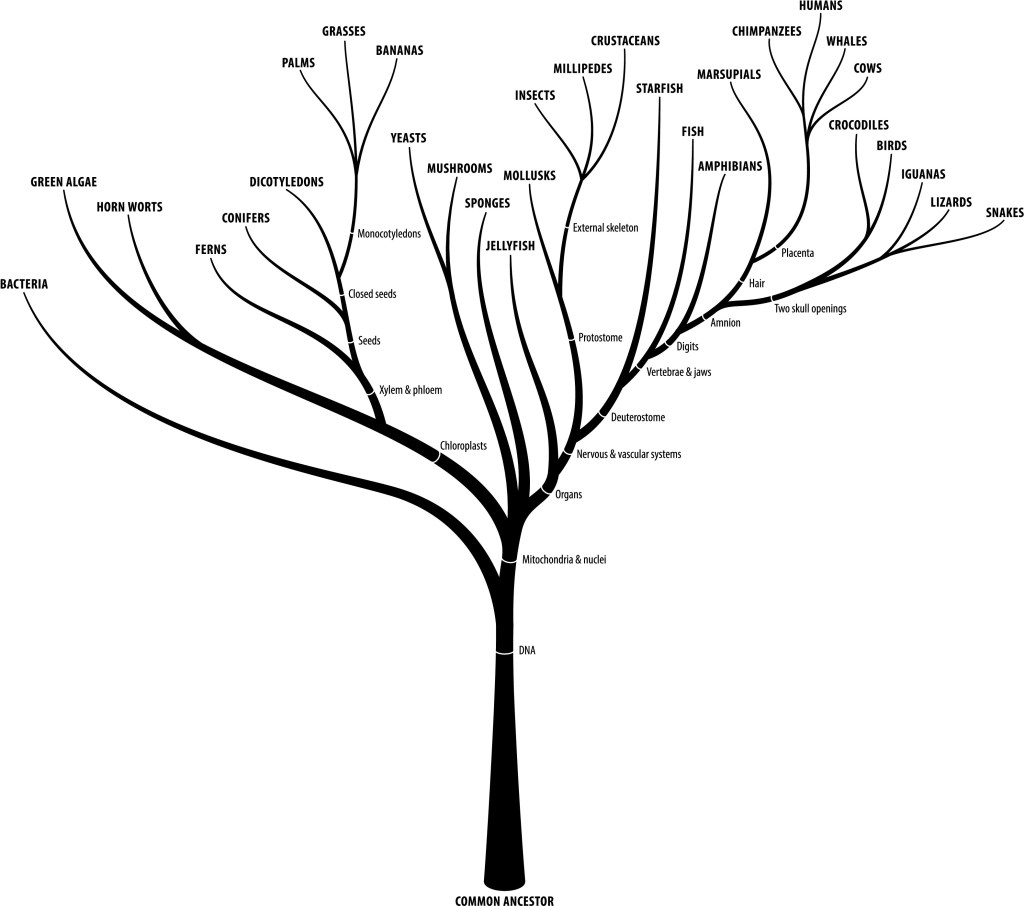
Below is another view of the diversification of life that focuses on the inventions made by life.
The evolutionary tree of life showing diversification, branching and key characteristics of each branch. Shutterstock Asset id: 228953155 by Zern Liew
It should be noted that in addition to viruses there were likely other forms of life that existed alongside LUCA or before it. There was likely non-cellular life as well as cellular life that died out, RNA-based life, self-replicating nucleic acids, etc. It should also be noted that if some of the large viruses were to be reclassified as life, or a life form not based on LUCA were to be discovered then our “current LUCA” would no longer be LUCA, but just the ancestor of “almost all life”. That would still be amazing, just slightly less so.
The existence of LUCA brings up an interesting question. What would happen if we found DNA based life on another planet and its DNA showed that it also originated from LUCA ?
Super fact 81 : Humans are not descended from chimpanzees, or monkeys, or any other primate living today. However, humans and chimpanzees share a common ancestor that lived roughly 5 to 7 million years ago. The two species evolved separately to become modern humans and chimpanzees. Humans and chimpanzees are closely related and share approximately 98.8% of their DNA. Studying the DNA, it is possible to determine how long ago this ancestor lived despite not having any fossils from this ancestor.
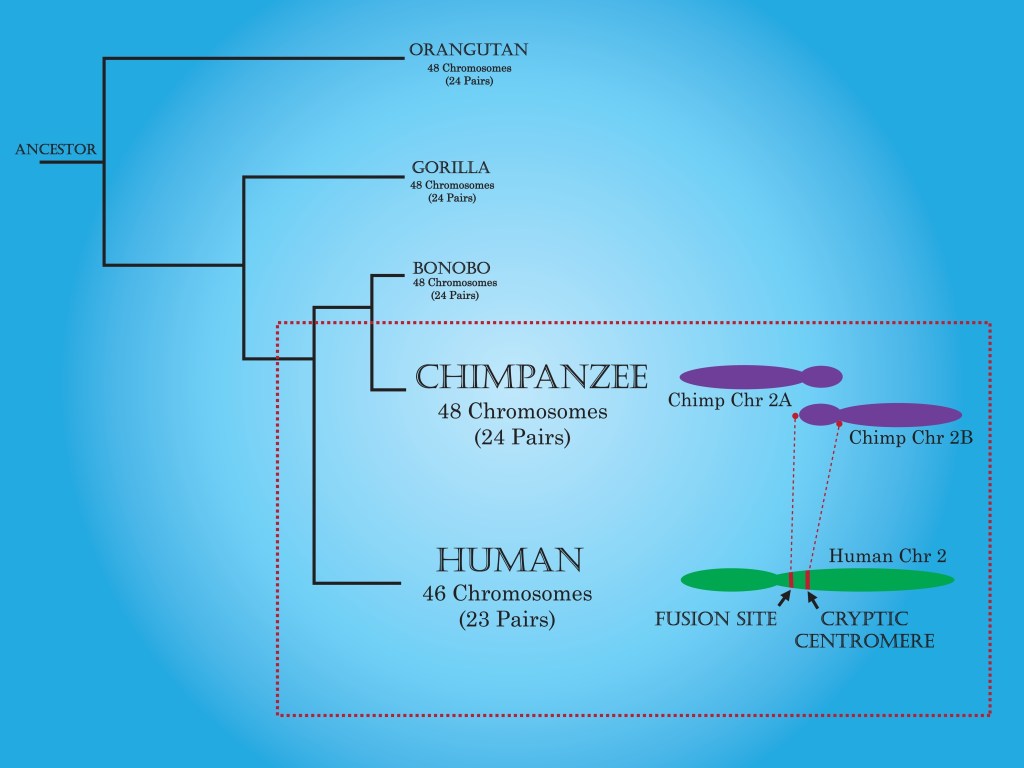
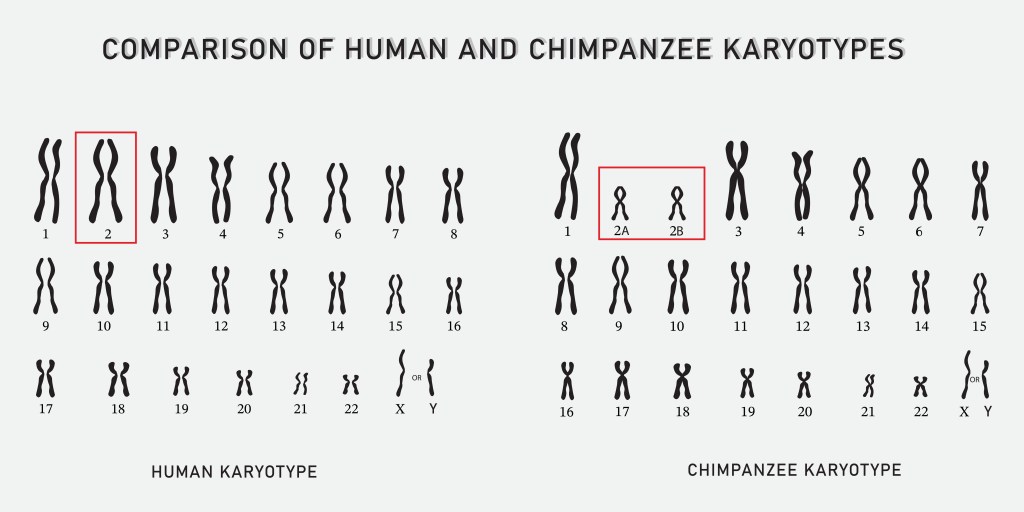
Chimpanzee genome sequencing and the sequencing of human DNA has led to the realization that human and chimpanzee DNA is very similar and that humans and chimpanzees share an ancestor. The fact that the great apes have 48 (24 pairs) chromosomes while humans have 46 (23 pairs) is not an issue. What happened was that the ancestral chromosomes corresponding to modern chimpanzee chromosomes 2A and 2B fused to create human chromosome 2. We can see that the genes in 2A and 2B line up with chromosome 2 and we can also see where the 2A and 2B merge in the human chromosome 2 (see picture below).
Evolution of humans via phylogenetics and differentiation between humans, chimpanzees, and other primates. Shutterstock Asset id: 2448150743 by kanyanat wongsa
The graph above shows that gorillas, chimpanzees and humans share a common ancestor with orangutans. At the next level bonobos, chimpanzees and humans share a common ancestor with gorillas and finally chimpanzees and bonobos share a common ancestor with humans. We can deduct these things from DNA without needing fossils. We have found millions of fossils corresponding to more than 250,000 species. However, the best evidence for so called “macro evolution” and the best tool for determining relationships between species may not be the fossil record but DNA.
It should be noted that the terms “macro-evolution” and “micro-evolution” are terms that creationists like to use but that scientists do not like to use. Creationists like to say that microevolution is possible (it is observed) but not macroevolution. However, macroevolution is the result of repeated microevolution, so you cannot claim that microevolution is possible but not macroevolution. In addition, speciation is relative. An animal A may be able to successfully interbreed with an animal B, and that animal B may be able to successfully interbreed with an animal C, but animal A and C cannot interbreed. The border between microevolution and macroevolution is fuzzy.
The fact that we can determine evolutionary ancestry by sequencing DNA of living creatures may come as a surprise to many people. In addition, we can also determine how long ago a common ancestor lived. It may also come as an additional surprise to many that we are not descended from the great apes but share a common ancestor. Super fact 81 is a super fact because we know it is true, it is surprising to many, and important to know.
Identifying a common ancestor using DNA Sequencing
Below is a very high-level image of human and chimpanzee chromosomes referred to as a Karyotype. A karyotype is a laboratory-produced image or visual profile of an individual’s complete set of chromosomes, arranged in pairs by size, shape, and number.
Comparison between human and chimpanzee karyotypes isolated on background. Shutterstock Asset id: 2432966649 by kanyanat wongsa
Based on the similarity in transposons, or jumping genes, pseudo genes, and genes in general (all of the genome) we know that the closest related living animals to humans are chimpanzees and bonobos. You can read more about this in the book Relics of Eden by Daniel Fairbanks, a book I highly recommend. According to the author the latest and perhaps best evidence for evolution as well as the fact that humans and chimpanzees have a common ancestor comes from so called junk-DNA. DNA that is not currently used but contains scientifically informative remnants of our evolutionary ancestry trapped in our DNA. The author refers to these remnants as relics.
Hominini species
Another interesting fact derived from DNA research is that chimpanzees and humans are more closely related than chimpanzees than to the other great apes. Based on the genetic record chimpanzees are no longer classified as great apes but as Hominini together with humans. The fact that there are three Hominini species (homo sapies – us humans, chimpanzees and bonobos) could maybe be another super fact.
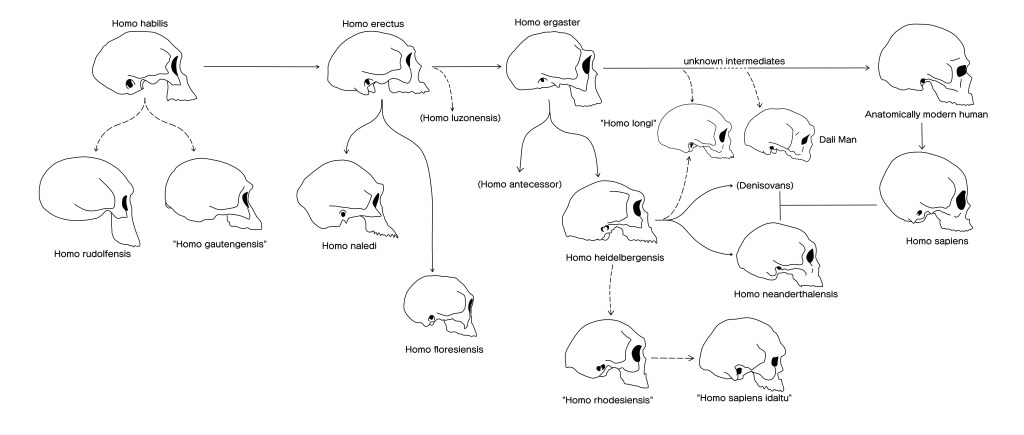
Speaking about hominini species, we have found more than 6,000 hominin fossils corresponding to dozens of species including Australopithecus, Paranthropus, Homo Habilis, Homo Erectus, Homo Heidelbergensis, Homo Neanderthalis, and Homo Sapiens. This link features a cool phylogenetic tree that includes Homo Sapiens (us), Neanderthals, as well as chimpanzees and bonobos.
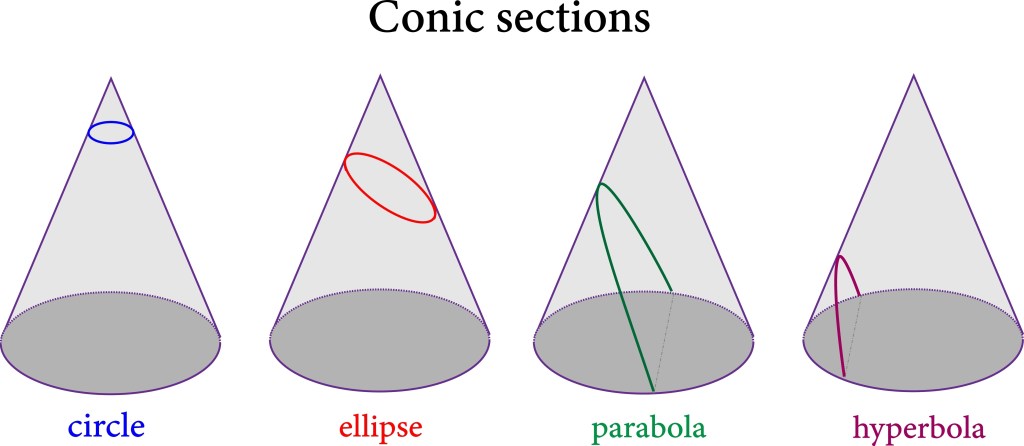
Super fact 80 : A conic section is a shape formed by slicing a cone with a plane. There are four such shapes, circle, ellipse, parabola, and hyperbola. The conic sections universally describe motion under gravity. The orbits of planets around their stars are circles or ellipses, comets fly around space in elliptical orbits, or parabolic or hyperbolic paths. Objects thrown up in the air follow parabolic paths. They are the basis for a huge amount of engineering applications.
Types of conic sections : circle , ellipse , parabola , hyperbola Shutterstock Asset id: 2377159367 by ProfDesigner
The four conic sections, circle, ellipse, parabola and hyperbola are fundamental and very useful shapes in mathematics, physics and engineering. Well, a circle is a special case of an ellipse, so it is really only three conic sections. The motion of the planets and other stellar objects are described by the conic shapes. Isaac Newton derived his law of gravitation from Kepler’s laws, which describe planetary orbits as ellipses.
The conic sections are all described by second degree equations (quadratic equations) and are in that sense the simplest shapes aside from points and lines. It is important to understand that there is an infinite amount of shapes that are almost conic sections and look like conic sections, but it is the exact mathematical properties of the four conic sections that make them so common in physics, mathematics, nature and engineering.
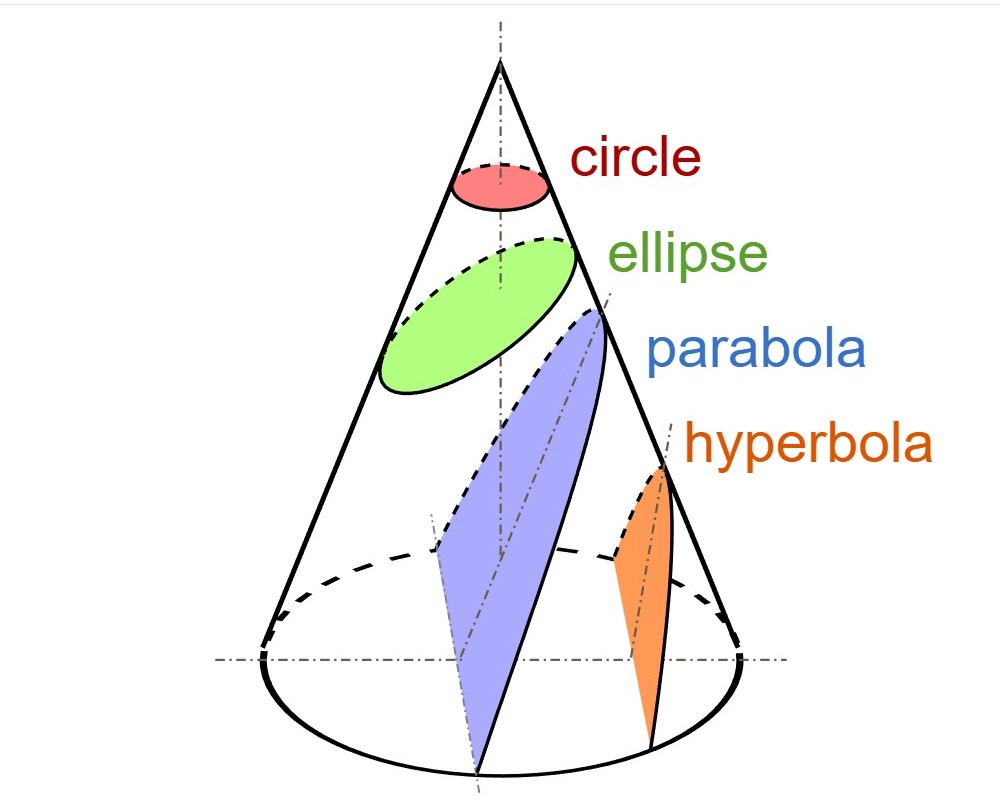
The black boundaries of the colored regions are conic sections. Not shown is the other half of the hyperbola, which is on the unshown other half of the double cone. by Magister Mathematicae, CC BY-SA 3.0, https://commons.wikimedia.org/w/index.php?curid=18556148
It may not come as a surprise that the circle is a fundamental and important shape, but I believe that the fact that the other conic sections are also fundamental in mathematics, physics and engineering come as a surprise to people outside of the STEM fields. It is a true and an important fact regarding how our world works.
Conic Sections
As mentioned, the conic sections are fundamental shapes that appear in a lot of places in STEM. Below are a few examples.
Parabola
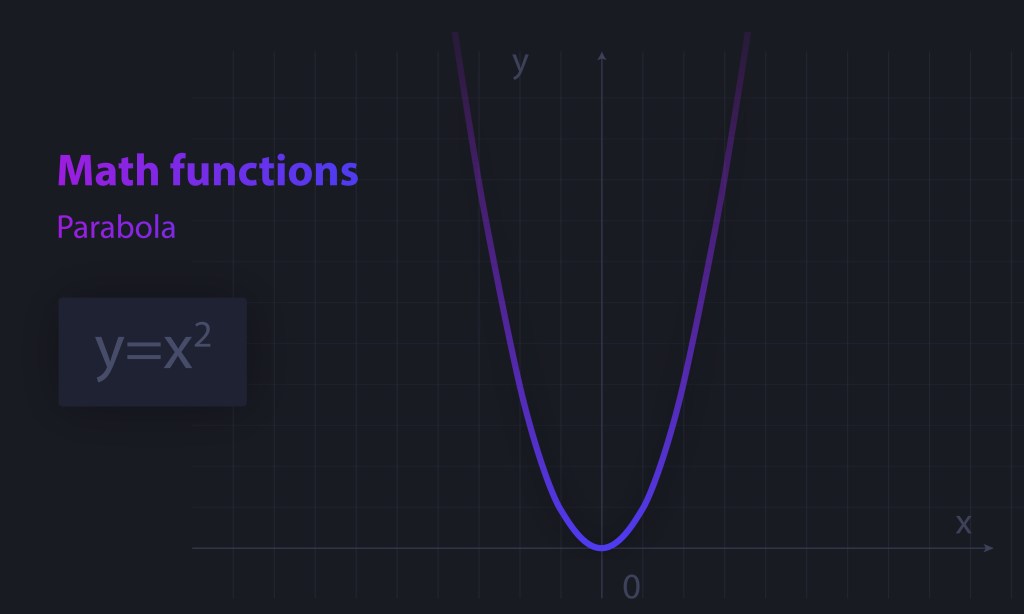
Math function parabola. Shutterstock Asset id: 1628916337 by EleonoraDesigner
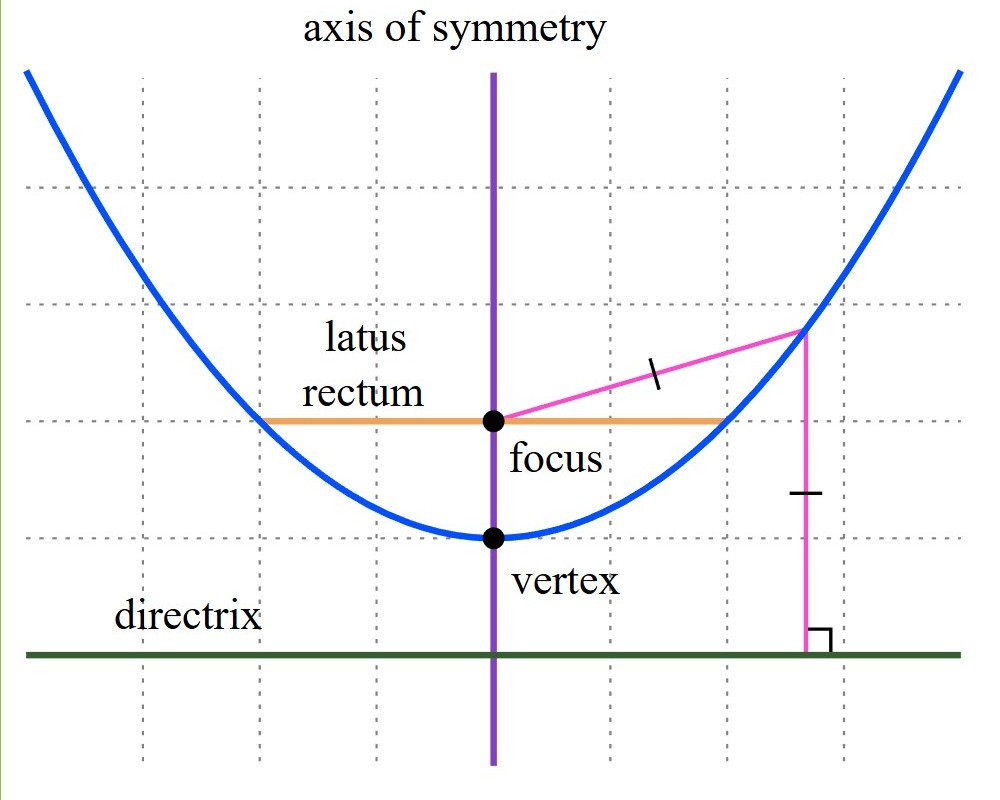
A parabola is formed when a plane cuts a cone, so the plane is parallel to a side of the cone. Parabolas are shapes that are roughly U-shaped and described by the equation y = x^2 or more generally by y = ax^2 + bx + c. Parabolas have a so called focus point. See the picture below. If you throw a ball, or any object, up in the air its trajectory will be a parabola (ignoring distortions caused by friction and wind). I should say the parabola you get in this case is upside down. The parabola is important when you design any kind of projectile.
Part of a parabola (blue), with various features (other colours). The complete parabola has no endpoints. In this orientation, it extends infinitely to the left, right, and upward. Picture is from Wikipedia Melikamp, CC BY-SA 3.0 https://creativecommons.org/licenses/by-sa/3.0, via Wikimedia Commons.
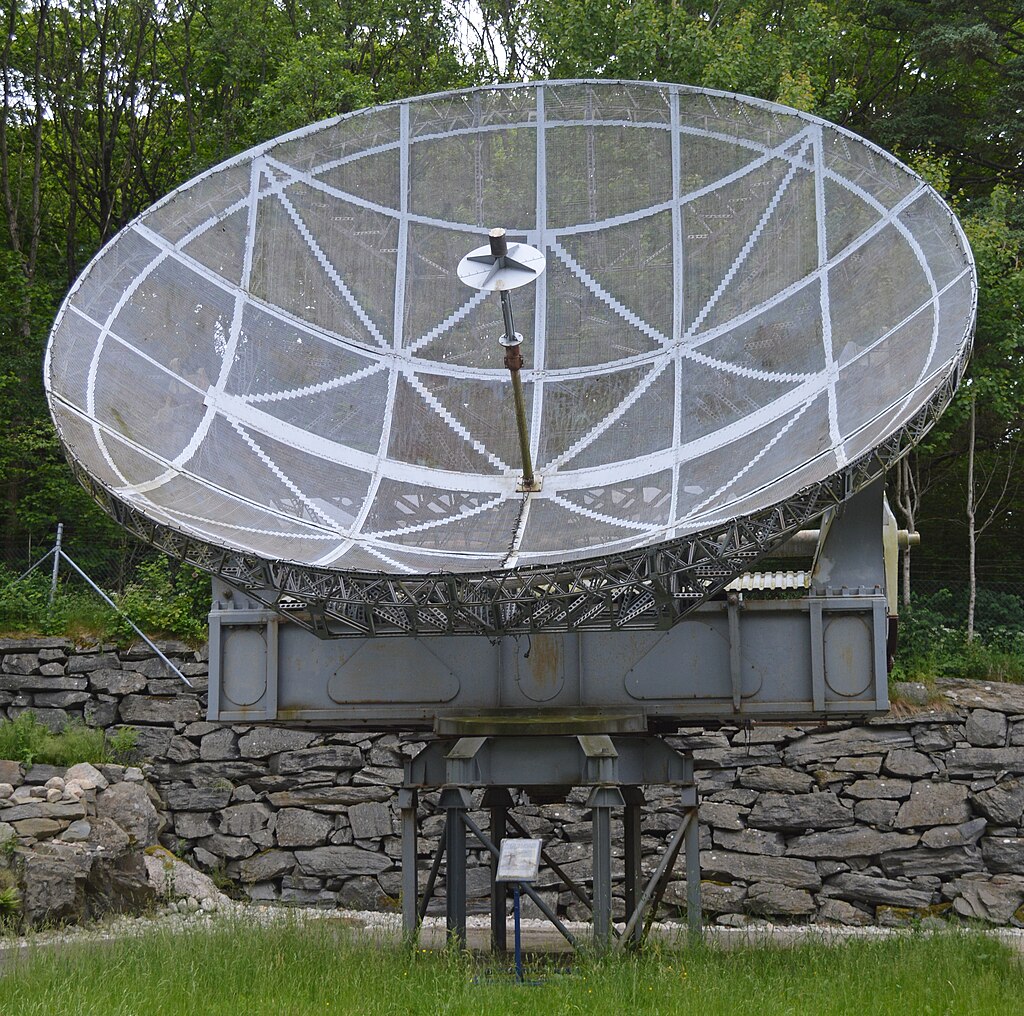
Antennas shaped like parabolas (in 3D) will direct incoming radiation and waves towards their focus point. If the surface is reflective a light located at the focus point will reflect to create a straight beam. Parabolas are used for radio telescopes, satellite dishes, car headlights, flashlights, solar cookers, solar power plants, water fountains, suspension bridges, business modelling and thousands of engineering applications. Parabolas like circles and the other conic sections shape our modern world (pun intended).
Würzburg-Riese radar built by Germany in WW2 had a 7.4 meter (24 foot) dish. From this page. Alan Wilson from Stilton, Peterborough, Cambs, UK, CC BY-SA 2.0 https://creativecommons.org/licenses/by-sa/2.0, via Wikimedia Commons
Ellipse and circle
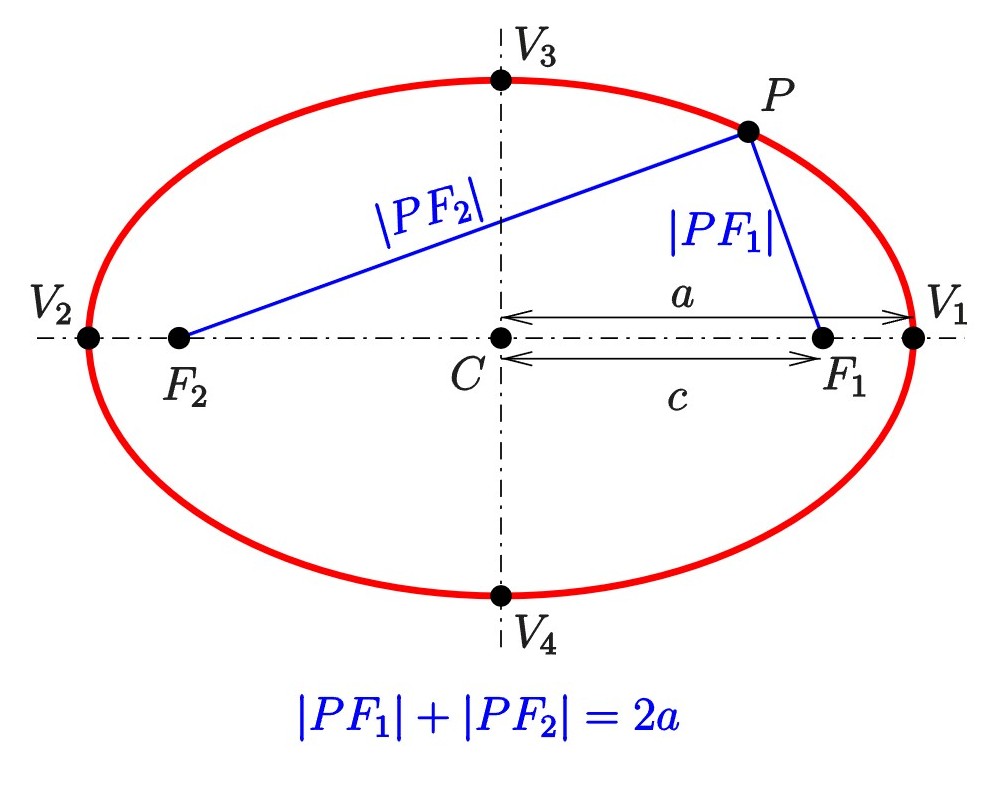
As mentioned, a circle and an ellipse are conic sections formed by intersecting a plane with a cone. You get a circle when the cuts perpendicular to the cone’s axis (see pictures above) and an ellipse form when the plane intersects the cone at a slant but not slanted so much that it becomes a parabola or a hyperbola. An alternative for an ellipse is that the sum of the distances from any point on the curve to two fixed points (called the foci) is a constant. See the picture below. The two definitions are identical. For a circle the two foci are merged into one point at the center.
There are a lot of real world examples of ellipses. Planets orbit the Sun in elliptical paths. The sun is in one of the foci points. The orbits of other stellar objects and satellites are also elliptical. Charged particles follow elliptical paths within magnetic fields. Elliptical patterns are observed in the rotation of ocean currents, elliptical models and algorithms are used in medical imaging, computer science and encryption. Also whispering galleries.
Hyperbola
Comets and spacecraft that are not orbiting another body, in other words, they have enough speed to escape the gravitational pull and continue into deep space, will travel along a hyperbola. The boundary of a shockwave from a supersonic jet (a sonic boom) creates a hyperbolic curve on the ground as it moves. The intersection of two sets of concentric ripples in water makes a hyperbola. The light beam from a lamp or flashlight makes an ellipse or an hyperbola on a plane depending on the angle.
Newton’s Law of Gravitation
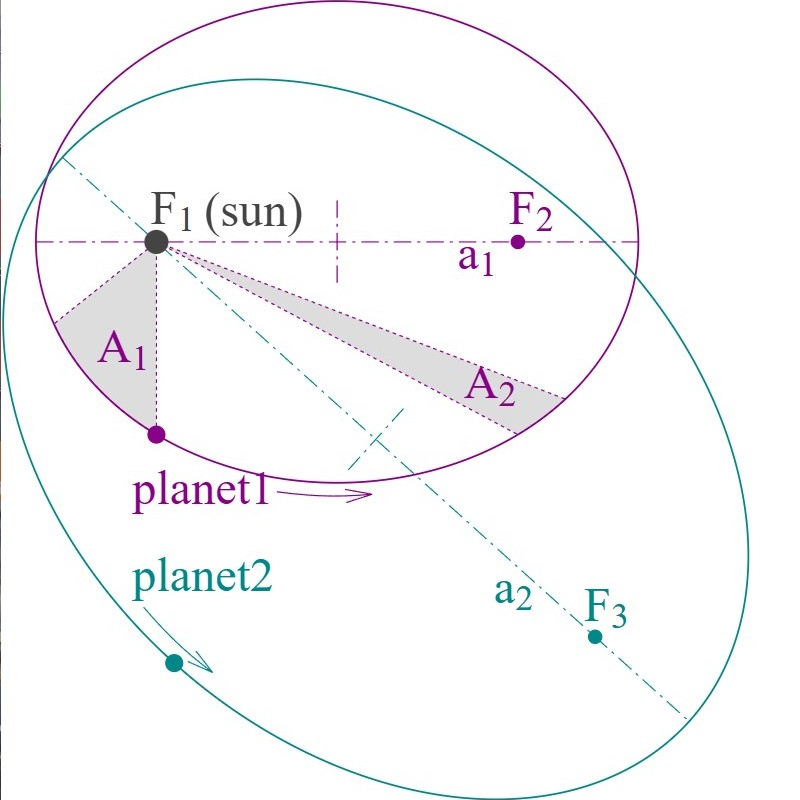
Johannes was an early 17th century German mathematician who derived three laws that describe how planetary bodies orbit the Sun using the observational data collected by the Danish astronomer Tycho Brahe. The three laws are the following:
Planets move in elliptical orbits with the Sun as a focus.
A planet covers the same area of space in the same amount of time no matter where it is in its orbit.
A planet’s orbital period is proportional to the size of its orbit (its semi-major axis).
Illustration of Kepler’s laws with two planetary orbits. The orbits are ellipses, with foci F1 and F2 for Planet 1, and F1 and F3 for Planet 2. The Sun is at F1. The shaded areas A1 and A2 are equal and are swept out in equal times by Planet 1’s orbit. The ratio of Planet 1’s orbit time to Planet 2’s is (a1/a2)^3/2 Hankwang, CC BY-SA 3.0 <http://creativecommons.org/licenses/by-sa/3.0/>, via Wikimedia Commons
Later Isaac Netwon would use Kepler’s three laws to derive his law of gravity. Newton showed that an inverse-square force (gravity) directed toward the sun was necessary to explain the orbits.





 Super Facts