
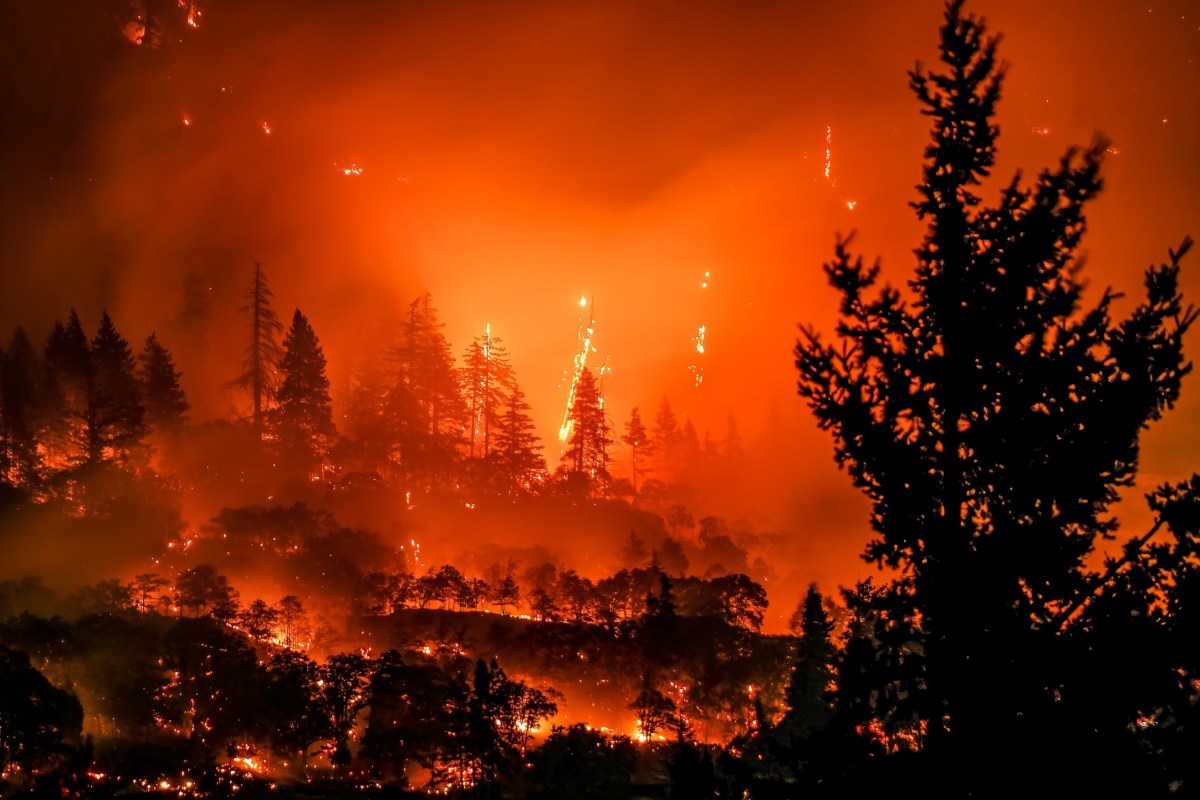
Superfact 126: Climate change worsens wildfires in North America, especially in the western U.S. and Canada, as well as in southern and western Europe, the Arctic and Siberia, Australia, and parts of South America and central Africa. That is because these areas face longer dry spells and rising temperatures due to climate change. However, changes in human land-use, such as farming expansion, and landscape fragmentation in Northern Africa and south Asia have caused the total burned area to decline.
Esther’s writing prompt: August 19th : Fire
Click here or here to join in.
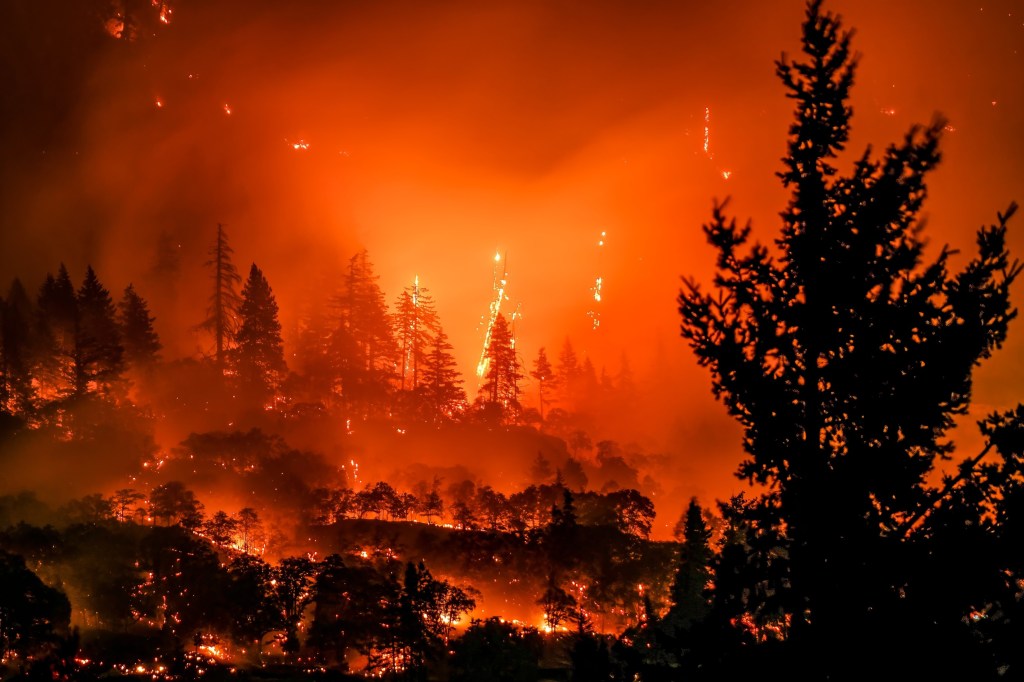
Human-caused global warming is causing longer dry spells and rising temperatures in many areas. This results in larger and more intense wildfires despite improved forest management. This has globally expanded the area burned by 16% (2003 to 2019)
As mentioned, climate change worsened wildfires in North America, especially in the western U.S. and Canada, as well as in southern and western Europe, the Arctic and Siberia, Australia, and parts of South America and central Africa. However, changes in population distribution, land use, forest fragmentation and the conversion of land for urban development and agriculture in particularly south Asia and North Africa have suppressed wildfires, driving down global burned area. The net effect is estimated to be a reduction of the burned area by 5%. You can read more here, or here, or here, or here.
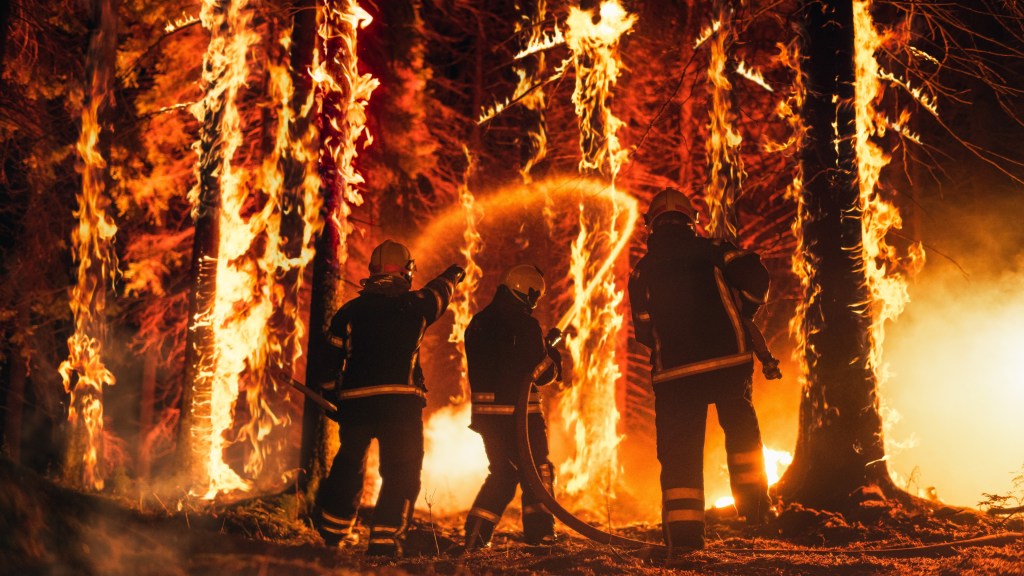
This is an important fact that is also paradoxical. On the one hand climate change / global warming is worsening wildfires. On the other hand, the size of the total area burned by wildfires has declined because of the change of human land use. Those who knew that wildfires are getting worse due to climate change are likely surprised to hear that total area burned by wildfires has declined. Those who use the fact that the total area burned by wildfires has declined to deny that global warming is worsening wildfires might be surprised to learn that they are wrong.
Some Clarification on Wildfires
- Wildfires are not started by climate change or poor forest management. They are started by lighting, falling powerlines, campfires that are not properly put out, and sometimes by arson. That doesn’t mean that climate change and poor forest management does not increase the risk and extent of wildfires.
- Research organizations such as NOAA recognize that wildfire is a natural part of the western US ecosystem. However, climate change is significantly exacerbating the problem by creating conditions more conducive to intense and widespread wildfires.
- Suppression of fire in certain ecosystems may in fact increase the likelihood that a wildfire will occur.
- There are wildfires started intentionally to prevent future wildfires.
- In the past, forests evolved with frequent, low-intensity fires that helped clear out underbrush. They can have ecological benefits. Therefore, the number of wildfires may not have increased over the last 100 years.
- Local conditions and forest management have evolved through time complicating the wildfire statistics around the world.
- In the past reporting was not always consistent.
Climate change worsens wildfires in the US
Climate change, including increased heat, extended drought, and a thirsty atmosphere, has been a key driver in increasing the risk and extent of wildfires in the United States, particularly the western United States during the last two decades. The number of Wildfire acres burned in the United States has significantly increased even though the number of wildfires has not. Another important factor is forest management.
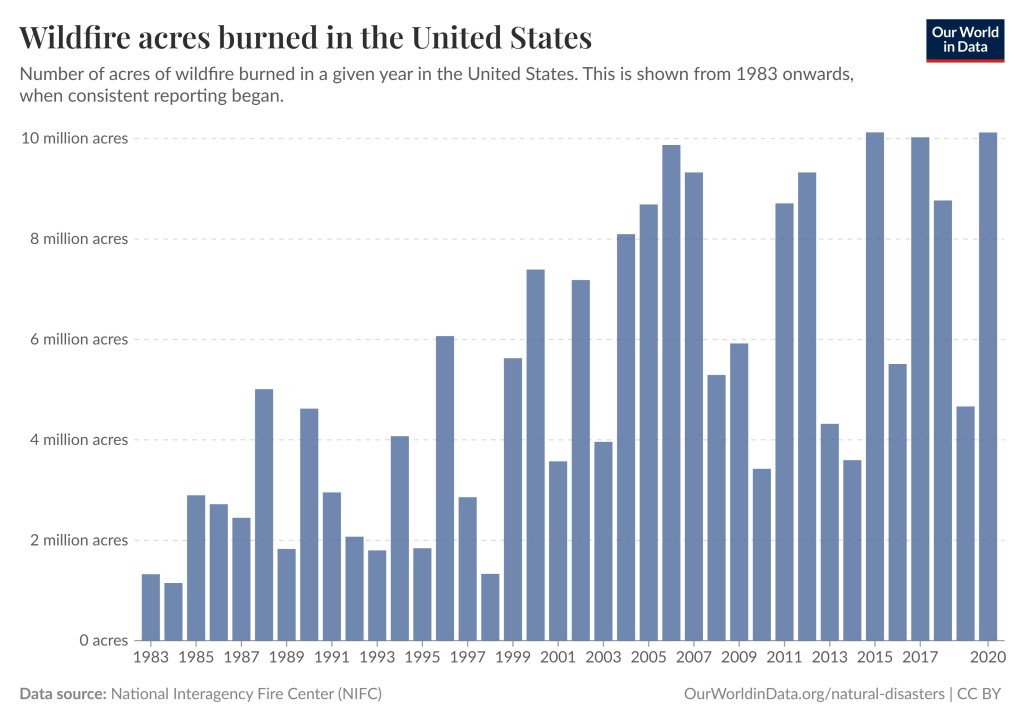
You can read more about the increased wildfires in the United States in this superfactful post.
Other super facts related to global warming
- Global Warming is Happening and is Caused by us
- The Hockey Stick Graph is not Wrong
- Scientists Agree that Global Warming is happening and that we are the Cause
- Climate change worsens wildfires in the US
- Without carbon dioxide the Earth would freeze
- IPCC Did Not Backtrack on Global Warming Being Human Caused
- Orbital Cycles are not the Cause of the current Global Warming
- The Sun is not the Cause of the current Global Warming
- Volcanoes emit a tiny fraction of carbon compared to humans
My Other Responses to Esther’s Prompts
- Prompt : Small : Small Microscopic Subatomic and Strings
- Prompt : Kind : Leonbergers Are Kind Dogs
- Prompt : Window : What Does Rollo See Out His Window
- Prompt : Charge : Electric Charge is not the only type of Fundamental Charge
- Prompt : Promises : Promises To My Dog
- Prompt : Shade : A Total Solar Eclipse the Ultimate Moon Shade
- Prompt : Money : Ten Money Facts
- Prompt : Edge : The Edge of the Observable Universe is 46.5 billion Light Years Away
- Prompt : Fish : Ten Amazing Fish Facts
- Prompt : Promise : I Promise Not to Post AI Generated Comments
- Prompt : Respect : Respect your Dog
- Prompt : Giving : Leonbergers Giving Gifts to Pugs
- Prompt : Family : Dogs Are Family
- Prompt : Snow : Snow and Ice in Norrland
- Prompt : Red : The Universe has a Redshift and its Increasing
- Prompt: Shapes : Conic Sections are the Shapes that Shape Our World
- Prompt: Flying : 10 Wind Blowing Facts About Birds
- Prompt: Drive : Letting Your Dog Drive the Car
- Prompt: Memories: False Memories Strange Memories Unpleasant Memories and Amnesia
- Prompt: Magic: Magic In New Orleans a Travel Overview
- Prompt: Vision: Human Vision Only Detects a Sliver of the EM Spectrum
- Prompt: Flower: Leonberger Dogs with Flowers
- Prompt: Capture: Carbon Capture and Storage an Unfulfilled Promise
- Prompt: Eyes: The Evolution of Eyes is Convergent
- Prompt: Pet: The Joy of Having a Pet
- Prompt: Cross: Why did the Dog Cross the Road
- Prompt: Close: Close Encounter with Grizzly Bear Number 399
- Prompt: Block: 60 million Lego Blocks
- Prompt: Bank: The Riverbank of Moälven
- Prompt: Rich: Super Rich
- Prompt: Test: When our Leonberger took a Car for a Test Drive
To see the other Super Facts click here


Thank you for these facts, Thomas. So many countries are experiencing these fires. It’s awful to see. Your facts make interesting reading and are so insightful in helping us gain a true picture of the situation.
LikeLiked by 1 person
Thank you so much Esther for your very kind words and thank you for doing these prompts.
LikeLiked by 1 person
I had no idea that some wildfires are started intentionally to prevent future wildfires, or that suppression of wildfires in some ecosystems make them more likely to occur! That’s really interesting. Seems it’s all a rather delicate (and complex) balancing act.
LikeLiked by 1 person
You are right, wildfire management can be counter intuitive and complicated. We’ve gotten better at it but the drier and hotter weather in the regions that are already prone to drought due to climate change is making things more difficult.
LikeLiked by 1 person
I did know that some fires were started intentionally and are part of a controlled burn when there is good forest management however thanks to your post I have also learnt a lot more about these fires which have been awful and life threatening to watch when they are not managed…
LikeLiked by 1 person
Thank you so much Carol. Wildfire and forest management is complicated and counter intuitive but you already knew that. We’ve gotten better at forest & wildfire management but the drier and hotter weather in the regions that are already prone to drought due to climate change is making things more difficult.
LikeLiked by 1 person
It has Thomas I have read some areas are bringing in natives who have always practiced good forest management to help and advise them in good practices x
LikeLiked by 1 person
Yes I remember reading this too. They have ancient traditions based on experience that were discounted and dismissed more than a hundred years ago, but now they are getting attention again. Climate change will take several decades to address but improved forest management can deliver positive results in a few years.
LikeLiked by 1 person
Absolutely ,Thomas I accept change if it’s for the better however sometimes especially in situations like this old ways still work. I think on the whole everyone needs to accept this and apply their energies where it does make difference instead of trying to reinvent the wheel x
LikeLiked by 1 person
Yes I believe you are right Carol. There are forgotten practices of the past that works and we need to re-examine them. If they work we need them.
LikeLiked by 1 person
We’ve never been threatened with fires directly, happily, but fires have burned near here. A park where we used to hike burned about ten years ago. And they want to develop the area. It is terrifying.
LikeLiked by 1 person
There are those that believe that the only way you could be closer to the truth is if you were in the fire yourself.
LikeLiked by 1 person
Perhaps swallowing arsenic to learn whether it’s good for you is a bit too much truth-seeking. With information and foresight, one can plan ahead and skip the arsenic. One does not have to build a subdivision in an area prone to wildfires.
LikeLiked by 1 person
You are right Denise. We can learn from the experience of others, learn from research, science and collected data. No need to try the arsenic for yourself.
LikeLiked by 1 person
I’m sure someone has tried the arsenic.
I suppose if I want to keep arsenic out of my system I’d start by staying away from rice and seafood. ***Naaah!
I’d give up eating apple seeds except for the built up tolerance to cyanide it gives me. But also— the Acrylamide found in coffee, there’s no way I’m giving up coffee.
But, having said that: Socrates ingested hemlock— it didn’t do his body any good.
ymmv
~ Keep on keeping on
LikeLiked by 1 person
You are right Kenneth. The size of the dose always matters. Most things are can be ingested in small enough doses.
LikeLiked by 1 person
Interesting but I have not heard that before. However, my cousin’s daughter Emily is a firefighter and a fire engineer with a PhD, and she leads firefighting teams as well as write research papers sharing her knowledge. She has certainly been in the middle of it.
LikeLike
That is scary and I agree it does not sound like a good idea to develop the area. I visited northern Sweden in 2018 for my dad’s funeral. That summer they/we had record heat and record drought and there was a massive amount of wildfires, some large, and this was essentially in the arctic. They did not have enough people to put them out. It was pretty scary.
LikeLiked by 1 person
It’s certainly been a heck of a year for wildfires so far, although thankfully for once not here in Southern California (yet). Of course, we’re not in the thick of our fire season yet. Once the Santa Ana winds kick up is when we really have to worry. If we get some bad fires on the slopes and El Niño follows up the way they’re saying, the folks who live under denuded hillsides could be in for a bad time …
LikeLiked by 1 person
Yes you are certainly right. We visited our grandson in Baltimore when the wildfires were ravaging the boreal forests in Canada. There was smoke in the air all the way down in Baltimore and the air was unhealthy. However, I’ve read that they were not the worst wildfires in Canadian history, that was the wildfires in 2023. I certainly remember the palisade fires in California last year. However, they were not the worst in California history. That was the fires in Butte County in 2018. You sure have a lot of fires in California but it is a pretty dry place. I hope you will have a mild fire season and that all will be safe.
LikeLike
We sure know about that up here, eapecialy the last 4 or 5 years. It is widely believed to be directly related to climate change.
LikeLiked by 1 person
Yes you are right Maggie, you have certainly suffered a lot from wildfires in Canada lately and you are right, climate change bringing drier and hotter weather increases the likelihood for large wildfires. The large wildfires in the boreal forests this year were certainly bad. We visited our 10 month old grandson in Baltimore and the smoke came down all the way to Baltimore making the air unhealthy. Of course it was much worse in Canada. The last few years have been very bad for Canada but I’ve read that the worst wildfires in Canadian history was the wildfires in 2023. However, I am glad Australia, Mexico and New Zeeland and a few other countries came to help Canada this time.
LikeLiked by 1 person
The firefighters from these countries seem to have full time jobs, moving to the next countey during their wildfire season. We’re grateful and then reciprocate by sending our own. That’s a tough job.
LikeLiked by 1 person
Yes you are right. I guess we are going to need every firefighter we can get as that is also becoming a less popular job. The daughter of my cousin Emelie, is a firefighter, a fire enginer, and she has a PhD in fire engineering and leads teams of fire engineers. She has written articles about the decline of the employment of fire fighters and volunteers. Considering the increased of wildfires in many countries around the world, this is a challenge.
LikeLike
Thanks for sharing all this great information about the fires… I hope more will be done to protect the forests
LikeLiked by 1 person
Thank you so much Denise. I agree with you. As heat waves and drought become more severe we need to get better at forest management.
LikeLike
Fascinating and sobering, Thomas. Australia has certainly experienced the devastating reality of wildfires, and I recently watched a documentary about the Australia’s Black Summer—it was both heartbreaking and unforgettable. Your explanation of how climate, land use, and fire management interact shows just how complex the problem is. Thank you for putting these facts into perspective.
LikeLiked by 1 person
Thank you so much Patricia. I remember the horrible wildfires in Australia. You are right, the heat waves and droughts are getting worse due to climate change at the same time as turning forests and savannahs into crop fields will reduce areas burned as in South Asia, resulting in the statistics for burned areas being confusing.
LikeLiked by 1 person
Thanks for the great post about how climate change is contributing to the increased rate of wildfires. We had a bad wildfire about four years ago that threatened Kitt Peak. That one was likely sparked by lightning but dry hot conditions made the fire much more severe than it might have been.
LikeLiked by 1 person
Thank you so much David. That must have been scary. I guess lighting is a pretty common fire starter, but like you say hot conditions increases the risk and severeity. I was just curious so I just looked up where Kitt Peak is and I realized it is pretty close to Tuscon. That is a dry area. We’ve been to Tucson a few times to visit our niece who was in school there.
LikeLiked by 1 person
Yes, Kitt Peak is about 50 miles slightly south and mostly west of Tucson. The Quinlan mountains are something of a riparian oasis in the desert. Even so, it’s been drying out a lot in recent years.
LikeLiked by 1 person
That must be very interesting to see. Too bad it is drying out. I remember your book The Astronomer’s Crypt. I imagine that the landscape you described was inspired by Kitt Peak and the Quinlan Mountains.
LikeLiked by 1 person
The landscape in The Astronomer’s Crypt was actually inspired by the Sacramento Mountains of New Mexico which are higher and more forested. Unfortunately they’re also drying out as demonstrated by a recent forest fire near Ruidoso, NM.
LikeLiked by 1 person
Oh I see. Now when I looked it up I can see that. I have to visit the Sacramento Mountains in New Mexico.
LikeLiked by 1 person
I highly recommend a visit to the Sacramento Mountains. The villages of Ruidoso and Cloudcroft are both good places to stay and then explore further.
LikeLiked by 1 person
Thank you so much for the info David. One day I will.
LikeLiked by 1 person
This is a well researched post. Wildfire in our country is also started unfortunately by some unscrupulous elements.
LikeLiked by 1 person
Thank you so much Kaushal. I am sorry to hear about that.
LikeLiked by 1 person
Always fascinating Thomas. I read recently that El Nino will be approaching late fall and make for more furious fires next year. 😥
LikeLiked by 1 person
Thank you so much Debby. I’ve read that too and I am not looking forward to it. We don’t have a big wildfire problem here in north Texas (yet) but we currently have a high risk threat that is getting worse. Whether we get a wildfire where I live or not, it affects the home insurance premium, and I don’t like a bigger home insurance premium.
LikeLiked by 1 person
I hear you my friend. Insurance – the biggest scammers of all! 😁
LikeLiked by 1 person
You are right, they are scammers. However, the costs from flooding and wildfires etc., are real and they go on our premiums. Here in Dallas we are paying for the increased flood insurance for Houston residents but they are not paying for our increased risk from wildfires and severe hail storms. It’s local law. Not to mention that the tornado that destroyed our neighborhood to the tune of one billion dollars 6-7 years ago is making itself visible on our insurance premiums.
LikeLiked by 1 person
Oh yes, it always catches up. Here, insurance premiums go up annually because of other people’s accidents and claims. We pay for the mistakes of all. And then the fun part begins when you need THEM to pay out! 😦
LikeLiked by 1 person
I guess we were lucky. After a tornado destroyed our neighborhood our insurance paid $50,000.00 to repair our house, which was all of it, except for one parasol that flew away and they did not believe it ever existed. However, our neighbor really had to fight with their insurance.
LikeLiked by 1 person
Some people have it smooth with insurance claims, and some not. I’m so glad you got it all back – except an umbrella. 😊
LikeLiked by 1 person
Yes I should say that we raised the issue with the umbrella late. They had already paid us $50,000.00 for a new roof, a new chimney, new attic wiring and plumbing, a new fence, garage door, and my grill that flew away, and all the clean up, and several months later we said, we also had a table umbrella and it is gone. Well I guess that is called a parasol. They wanted proof that the umbrella ever existed, which we didn’t have.
LikeLiked by 1 person
But I’d say you did very well for your compensation. 🙂
LikeLiked by 1 person
Yes I should not complain. My neighbor had a much harder time.
LikeLiked by 1 person
😊
LikeLiked by 1 person
In western and Arctic Canada we know all too well about the fires and it’s also very widely accepted here that they are the result of climate change.
LikeLiked by 1 person
That is good to know. There is still a lot of denial here in the US, less so in my native country Sweden. I am so sorry about the fires Canada has suffered lately. Thank you for your comment.
LikeLiked by 1 person
Interesting post. I’m curious about forest fragmentation and how it affects wildlife habitat… probably not as much as wildfires. As someone mentioned above, it is a delicate balance, and changes need to be made with care.
LikeLiked by 1 person
Thank you JoAnna. That is an interesting question. I know that forest fragmentation is not good for wildlife. It blocks migration and movement and leads to human-wildlife conflict, among other things. However, I don’t have any numbers for how big the effects are. However, forest fragmentation and the change of land use, for example, turning forests and savannah into crop fields, lowers the risk of wildfires, while also harming wildlife. What is worse in the end I don’t know. However, it does complicate numbers regarding wildfires and that is a good unfortunately something those who want to confuse the public can use.
LikeLiked by 1 person
Thanks for considering these things.
LikeLiked by 1 person
Yes I should say that the title of this post “Climate change worsens wildfires Globally and Human land-Use Changes Reduces them” is not in any way an endorsement, in any way for getting rid of forests. It is just an acknowledgement that if you turn forests and savannahs into crop fields you essentially remove the wildfire risk from that area. This in turn is the explanation for the fact that despite the fact that climate change worsens wildfires around the world, the total acreage burned in the world has not increased. We haven’t clearcut forests in the US and Canada and therefore wildfires is becoming a larger and larger problem here, made worse by climate change. That doesn’t mean that we should get rid of our forests.
LikeLiked by 1 person
I can see the logic in these remedies. I hope there are balanced ways to keep decreasing wildfire damage and keeping healthy forests and habitats.
LikeLiked by 1 person
In fact there is. Cutting all forest is a super bad idea (even though that happens a lot in South Asia). However, there is a bill in congress called the Fix Our Forest Act, S.1462, which streamline and improve forest management. Climate change will take a long time to fix but improving forest management you can do right away.
LikeLiked by 1 person
Thank you, Thomas! That’s good to know!
LikeLiked by 1 person
Chaplin: “We are not fans of wildfires here. We ran away from one of them in 2017 and it was very stressful for everyone, especially Dennis. Fortunately we had somewhere to stay that time but Mama and Dada’s friends have since moved away so I’m not sure where we would go if it happened again …”
LikeLiked by 1 person
I am so sorry that happened to you Chaplin and all the other animals especially Dennis. I hope it will never happen again. Here in Texas we are having problems with Wildfires right now. Dallas is surrounded by wildfires but they are smaller. In south-central Texas there is a big one that has burned 50,000 acres.
LikeLike
I think you have beaten me to the Wildfire essay. Yes, all very difficult and unnerving. But we have just had sufficient gentle rain for a few days and cooler. But the heat will return.
LikeLiked by 1 person
Thank you navasolanature. We are having wildfires in north Texas where I live (Dallas) and there are big ones in central Texas. It is getting worse where I live.
LikeLiked by 1 person
Very sad and difficult for those affected.
LikeLiked by 1 person
Yes you are right. I think the whole world is affected.
LikeLiked by 1 person
Another fascinating and important Super Fact. Climate change can make wildfires more intense and widespread, even while the total global area burned declines because of changes in land use. The distinction is really interesting.
LikeLiked by 1 person
You are right Anowar. It is important not to confuse those to sides of the story. Again thank you so much Anowar for your kind comment.
LikeLiked by 1 person
You’re most welcome 🤗
LikeLiked by 1 person
Hej Thomas, Just a point that I learnt about the Australian environment years ago at University. The unique adaptations of Australian plants like Banksia species mean they need the super hot intense fires to germinate their seeds. The off season burnoffs ( which they still conduct due to a build up of leaf litter) can help reduce the likelihood of fire, but can also cause long term detriment to our unique botany. It is a difficult problem to balance. Sadly, some of our fires have become intense in areas that have not been burnt for years, and the wildlife and human loss is devastating. Kangaroo Island and Marysville for instance. You are right, too about arson. In some of the catasclymic Black Saturday fires in Victoria, Australia, where 173 lives were lost, arson was blamed. (Plus falling power lines too) https://en.wikipedia.org/wiki/Black_Saturday_bushfires
LikeLiked by 1 person
Yes it is a complicated issue. The uncontrolled wildfires that are becoming more common, or at least larger, due to warmer and drier climate in certain parts of the world, are not a good thing. However, controlled fires to take care of underbrush and other issues is healthy for the ecosystem and can prevent uncontrolled and damaging wildfires. Climate change, dry weather, or hot weather does not start fires but provides the conditions for increasing the risk of them getting started or making the ones that are intentionally started worse. It is horrible when people start them intentionally (unless it is a controlled fire created by forest management teams).
LikeLiked by 1 person