
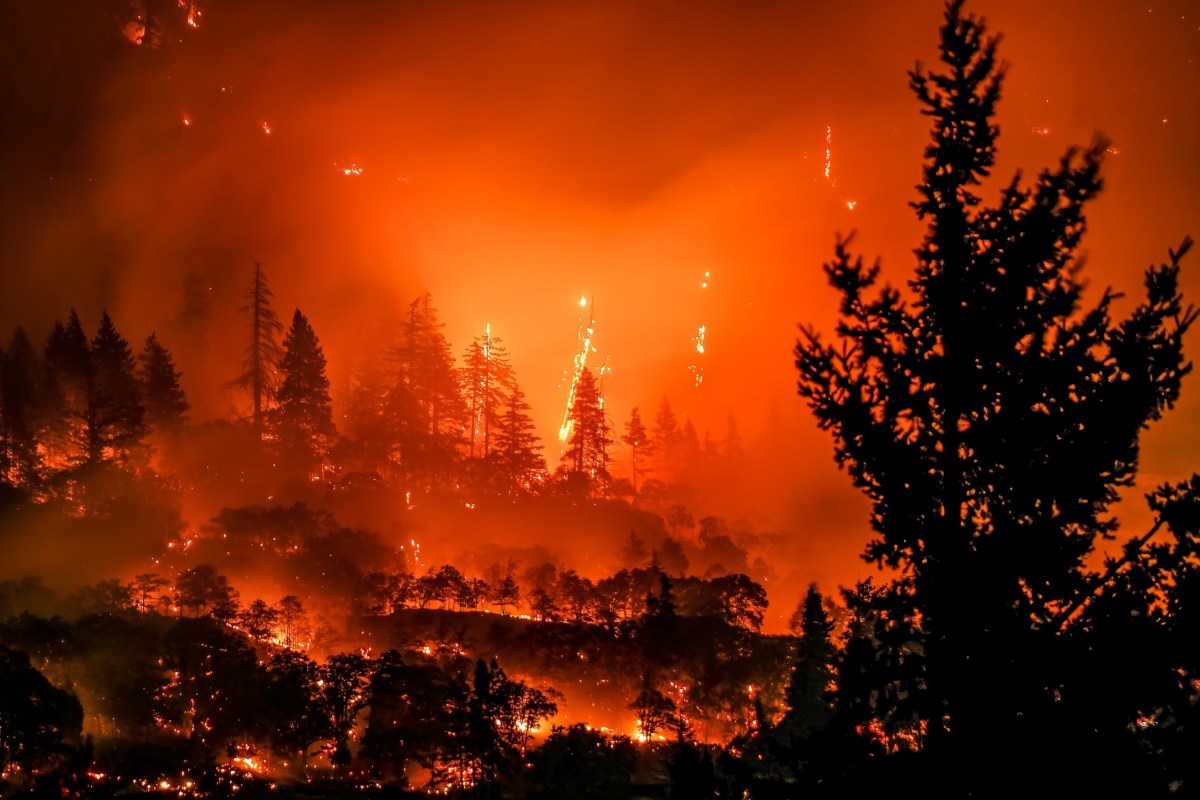
Superfact 126: Climate change worsens wildfires in North America, especially in the western U.S. and Canada, as well as in southern and western Europe, the Arctic and Siberia, Australia, and parts of South America and central Africa. That is because these areas face longer dry spells and rising temperatures due to climate change. However, changes in human land-use, such as farming expansion, and landscape fragmentation in Northern Africa and south Asia have caused the total burned area to decline.
Esther’s writing prompt: August 19th : Fire
Click here or here to join in.
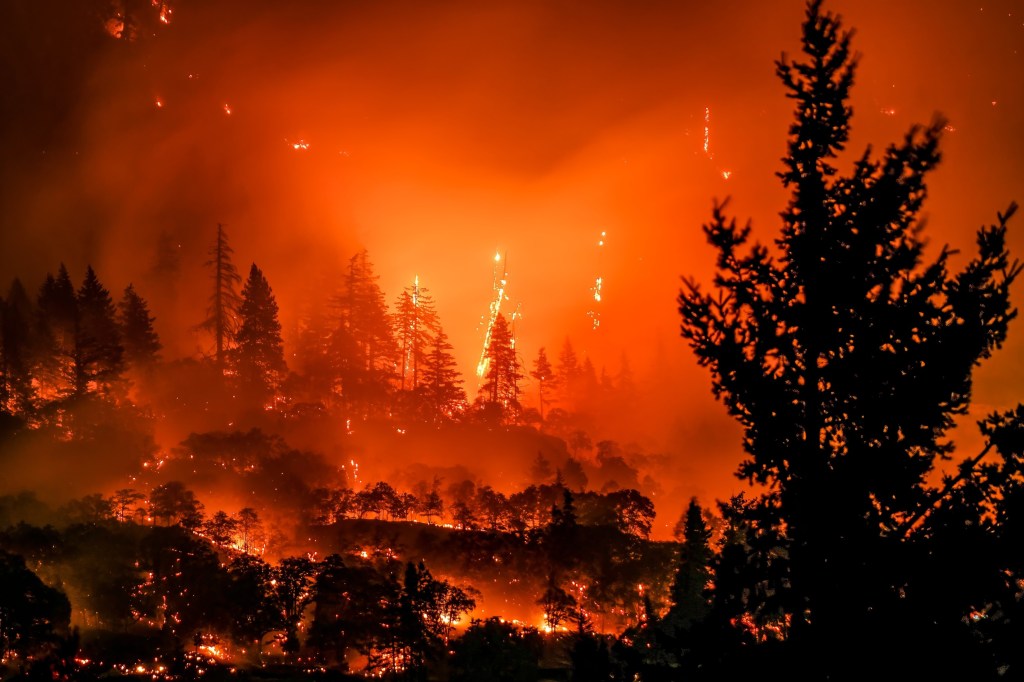
Human-caused global warming is causing longer dry spells and rising temperatures in many areas. This results in larger and more intense wildfires despite improved forest management. This has globally expanded the area burned by 16% (2003 to 2019)
As mentioned, climate change worsened wildfires in North America, especially in the western U.S. and Canada, as well as in southern and western Europe, the Arctic and Siberia, Australia, and parts of South America and central Africa. However, changes in population distribution, land use, forest fragmentation and the conversion of land for urban development and agriculture in particularly south Asia and North Africa have suppressed wildfires, driving down global burned area. The net effect is estimated to be a reduction of the burned area by 5%. You can read more here, or here, or here, or here.
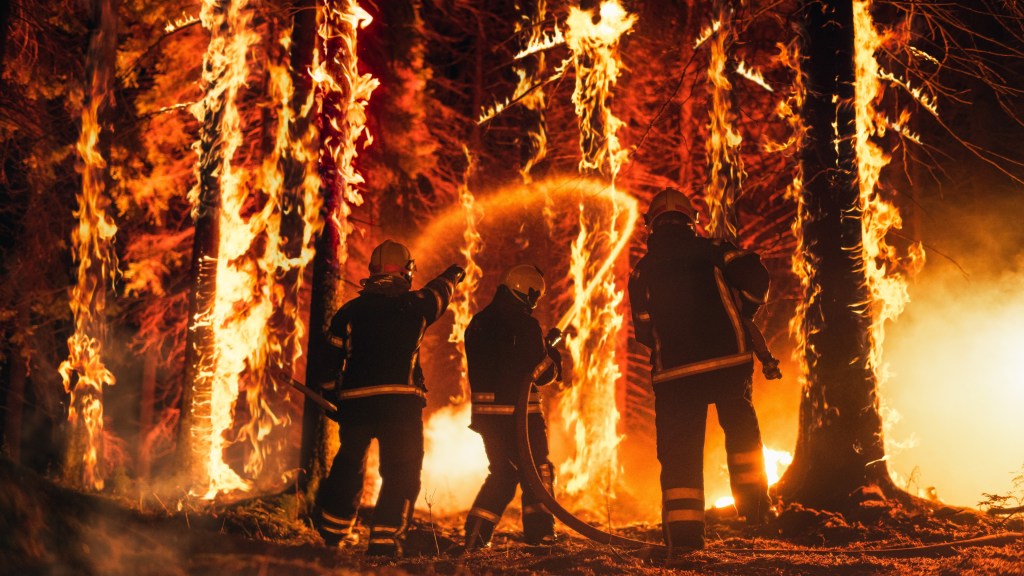
This is an important fact that is also paradoxical. On the one hand climate change / global warming is worsening wildfires. On the other hand, the size of the total area burned by wildfires has declined because of the change of human land use. Those who knew that wildfires are getting worse due to climate change are likely surprised to hear that total area burned by wildfires has declined. Those who use the fact that the total area burned by wildfires has declined to deny that global warming is worsening wildfires might be surprised to learn that they are wrong.
Some Clarification on Wildfires
- Wildfires are not started by climate change or poor forest management. They are started by lighting, falling powerlines, campfires that are not properly put out, and sometimes by arson. That doesn’t mean that climate change and poor forest management does not increase the risk and extent of wildfires.
- Research organizations such as NOAA recognize that wildfire is a natural part of the western US ecosystem. However, climate change is significantly exacerbating the problem by creating conditions more conducive to intense and widespread wildfires.
- Suppression of fire in certain ecosystems may in fact increase the likelihood that a wildfire will occur.
- There are wildfires started intentionally to prevent future wildfires.
- In the past, forests evolved with frequent, low-intensity fires that helped clear out underbrush. They can have ecological benefits. Therefore, the number of wildfires may not have increased over the last 100 years.
- Local conditions and forest management have evolved through time complicating the wildfire statistics around the world.
- In the past reporting was not always consistent.
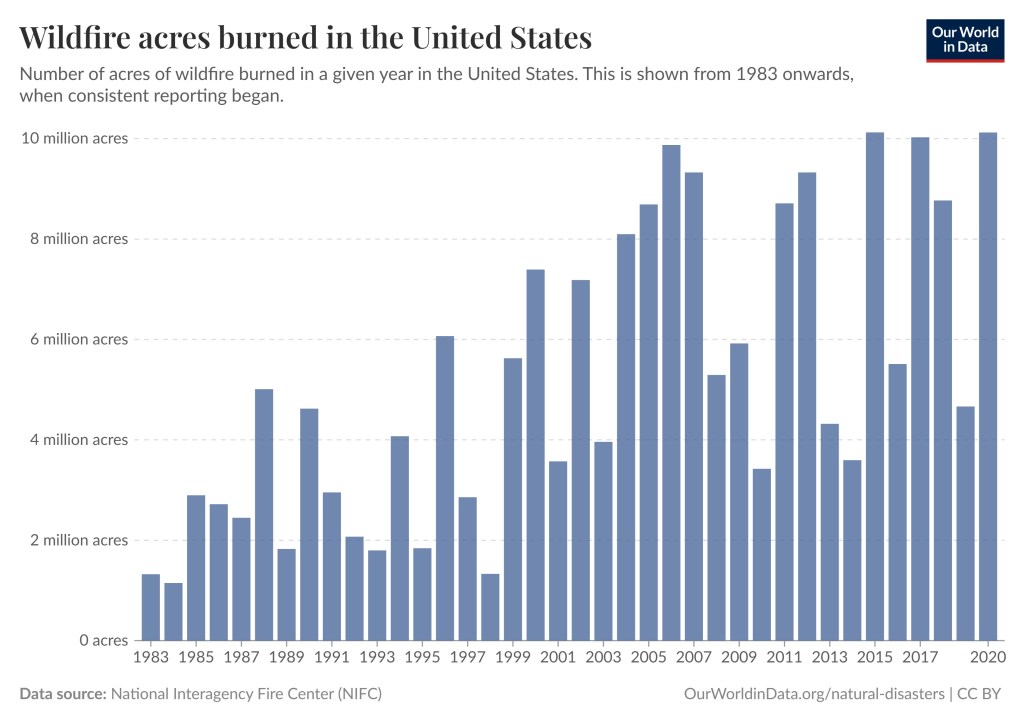
Climate change worsens wildfires in the US
Climate change, including increased heat, extended drought, and a thirsty atmosphere, has been a key driver in increasing the risk and extent of wildfires in the United States, particularly the western United States during the last two decades. The number of Wildfire acres burned in the United States has significantly increased even though the number of wildfires has not. Another important factor is forest management.
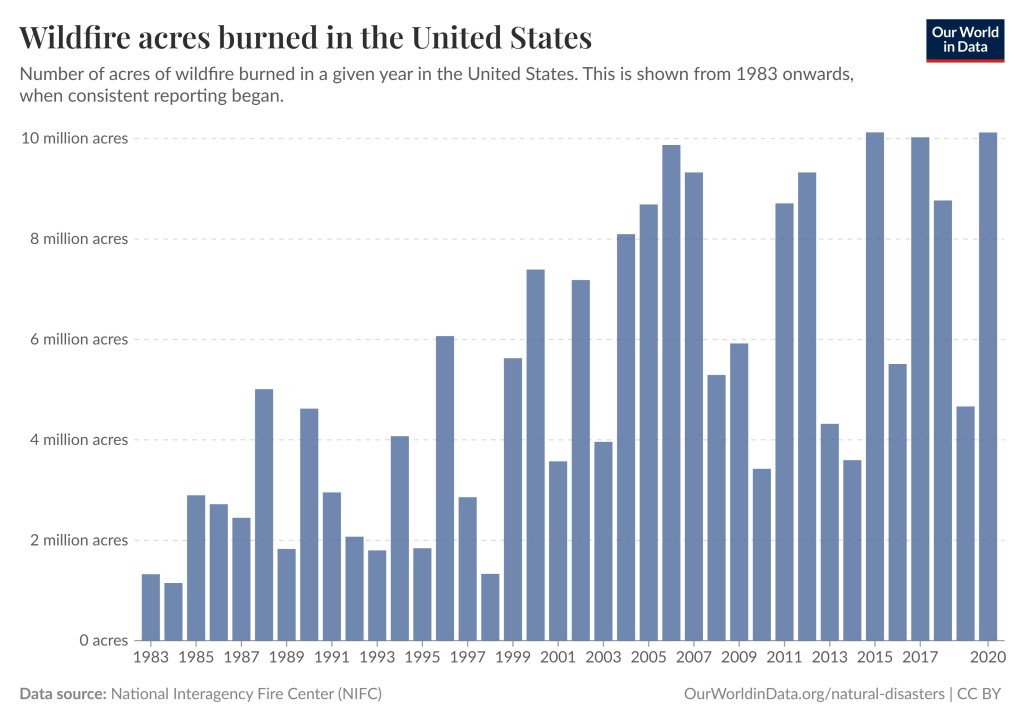
You can read more about the increased wildfires in the United States in this superfactful post.
Other super facts related to global warming
- Global Warming is Happening and is Caused by us
- The Hockey Stick Graph is not Wrong
- Scientists Agree that Global Warming is happening and that we are the Cause
- Climate change worsens wildfires in the US
- Without carbon dioxide the Earth would freeze
- IPCC Did Not Backtrack on Global Warming Being Human Caused
- Orbital Cycles are not the Cause of the current Global Warming
- The Sun is not the Cause of the current Global Warming
- Volcanoes emit a tiny fraction of carbon compared to humans
My Other Responses to Esther’s Prompts
- Prompt : Small : Small Microscopic Subatomic and Strings
- Prompt : Kind : Leonbergers Are Kind Dogs
- Prompt : Window : What Does Rollo See Out His Window
- Prompt : Charge : Electric Charge is not the only type of Fundamental Charge
- Prompt : Promises : Promises To My Dog
- Prompt : Shade : A Total Solar Eclipse the Ultimate Moon Shade
- Prompt : Money : Ten Money Facts
- Prompt : Edge : The Edge of the Observable Universe is 46.5 billion Light Years Away
- Prompt : Fish : Ten Amazing Fish Facts
- Prompt : Promise : I Promise Not to Post AI Generated Comments
- Prompt : Respect : Respect your Dog
- Prompt : Giving : Leonbergers Giving Gifts to Pugs
- Prompt : Family : Dogs Are Family
- Prompt : Snow : Snow and Ice in Norrland
- Prompt : Red : The Universe has a Redshift and its Increasing
- Prompt: Shapes : Conic Sections are the Shapes that Shape Our World
- Prompt: Flying : 10 Wind Blowing Facts About Birds
- Prompt: Drive : Letting Your Dog Drive the Car
- Prompt: Memories: False Memories Strange Memories Unpleasant Memories and Amnesia
- Prompt: Magic: Magic In New Orleans a Travel Overview
- Prompt: Vision: Human Vision Only Detects a Sliver of the EM Spectrum
- Prompt: Flower: Leonberger Dogs with Flowers
- Prompt: Capture: Carbon Capture and Storage an Unfulfilled Promise
- Prompt: Eyes: The Evolution of Eyes is Convergent
- Prompt: Pet: The Joy of Having a Pet
- Prompt: Cross: Why did the Dog Cross the Road
- Prompt: Close: Close Encounter with Grizzly Bear Number 399
- Prompt: Block: 60 million Lego Blocks
- Prompt: Bank: The Riverbank of Moälven
- Prompt: Rich: Super Rich
- Prompt: Test: When our Leonberger took a Car for a Test Drive

 Super Facts