Wind power is not a major cause of bird death

Superfact 17: Fossil fuels kill a lot more birds per gigawatt hour than wind power does. Cats, windows, cars, poison and powerlines are examples of things that kill a lot more birds than wind power does. Wind power killing birds is not the huge environmental problem it is often made out to be.

Wind power killing birds is often mentioned as a slam dunk environmentally based argument against wind power and evidence for the hypocrisy of environmentalists. This is misguided. Wind power killing birds is a real problem and it should be addressed, and it is being addressed. No energy source comes without environmental problems. However, wind turbines account for only a small fraction of overall bird deaths compared to other human causes. It is not a good argument against wind power, and it does not demonstrate any hypocrisy by environmentalists. In fact, a study made in 2012 (overview here) concluded that fossil fuels killed 24 million birds per year in the US, which correspond to 35 times more birds per GWh than wind power kills according to this study. Even though this study and other similar studies are estimates based on assumptions that are far from perfect, they are good indicators that replacing fossil fuels with wind power likely saves birds rather than kills them.
Photo by Pixabay on Pexels.com

In any case, as this Wikipedia article states, collisions with wind turbines are a minor source of bird mortality compared to other human causes. According to the graph below cats kill 5,600 times more birds than wind power and collisions with powerlines kills 99 times more birds than wind power, and yet we rarely discuss these problems. Even though these numbers are estimates they are mostly confirmed by other studies and analysis, as this overview from MIT and this analysis by Hannah Richie shows. The numbers aren’t the same, but they make the same point. FYI Hannah Richie is the deputy editor and lead researcher at Our World in Data. Our World in Data is a scientific online publication that focuses on large global problems. They are associated with Oxford University and is one of the most respected statistics, analysis and research organizations in the world.
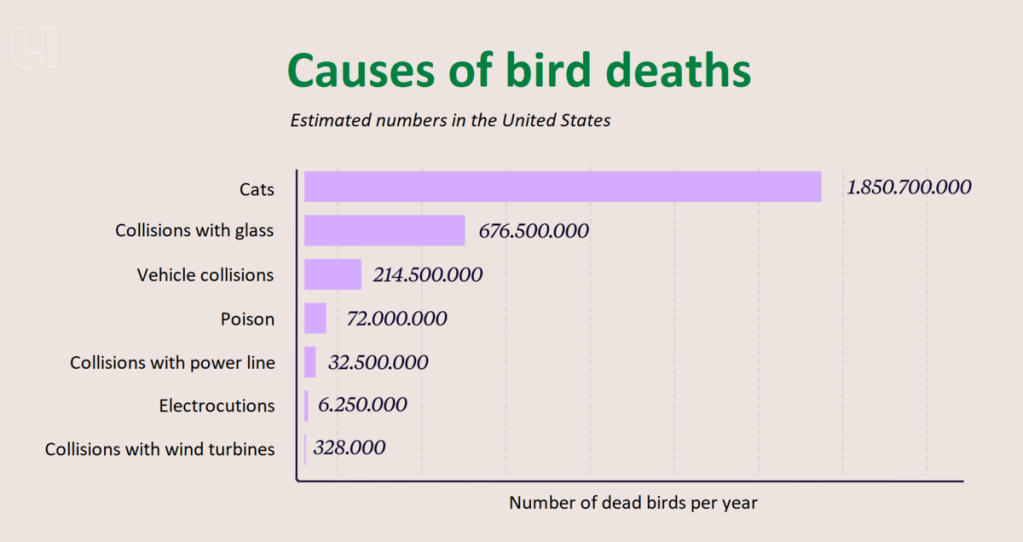
The graph shows that Wind Turbines kill 328,000 birds per year in the US, Electrocutions kill 6,250,000 birds, Collisions with powerlines kill 32,500,000 birds, Poison kills 72,000,000 birds, Vehicle collisions kill 214,500,000 birds, Collisions with glass kill 676,500,000 birds, and cats kill 1,850,700,000 birds per year in the US.
From Wikipedia: Universiteit van Nederland, CC BY 3.0 <https://creativecommons.org/licenses/by/3.0&gt;, via Wikimedia Commons
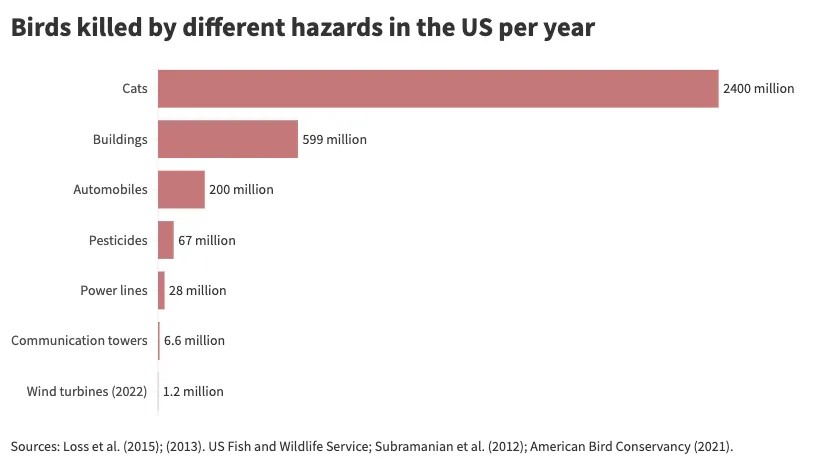
Bar graph showing cats killing an estimated 2,400 million birds per year, buildings killing an estimated 599 million birds per year, automobiles killing an estimated 200 million birds per year, pesticides killing an estimated 67 million birds per year, powerlines killing an estimated 28 million birds per year, communication towers killing an estimated 6.6 million birds per year, and wind turbines killing an estimated 1.2 million birds per year.
An alternative graph taken from Hannah Richie / Our World in Data, using alternative sources essentially showing the same thing. Sources: Loss et al. (2015), (2013), US Fish and Wildlife Service; Subramnayan et al. (2012), American Bird Conservancy (2021).

Wind power has been on the receiving end of false claims, nonsense, and strange rumors for quite some time. It is not the only energy source maligned by false information, but it is an interesting case study in misinformation regarding energy sources. To read about nonsense and rumors about wind power click here.
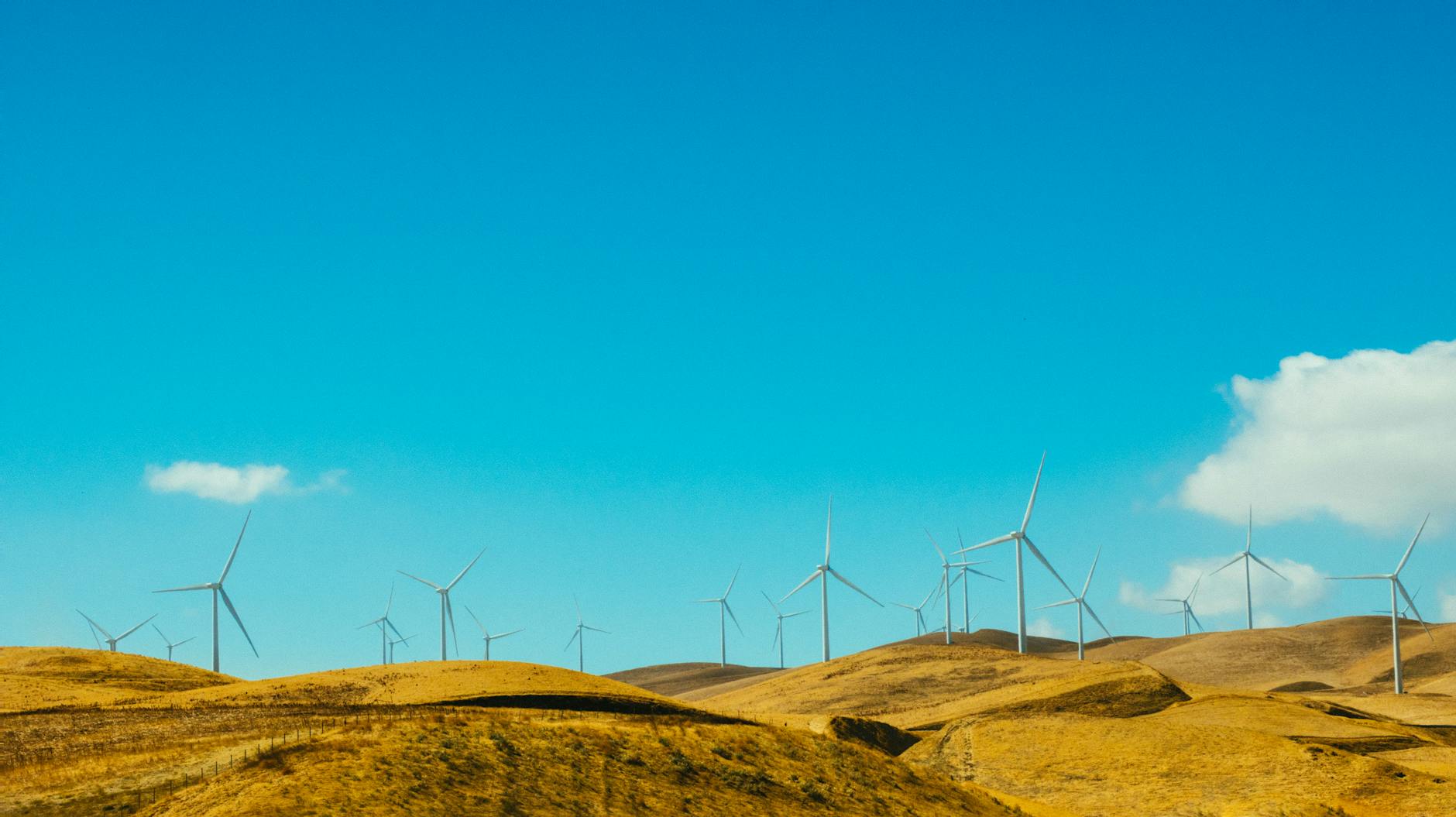
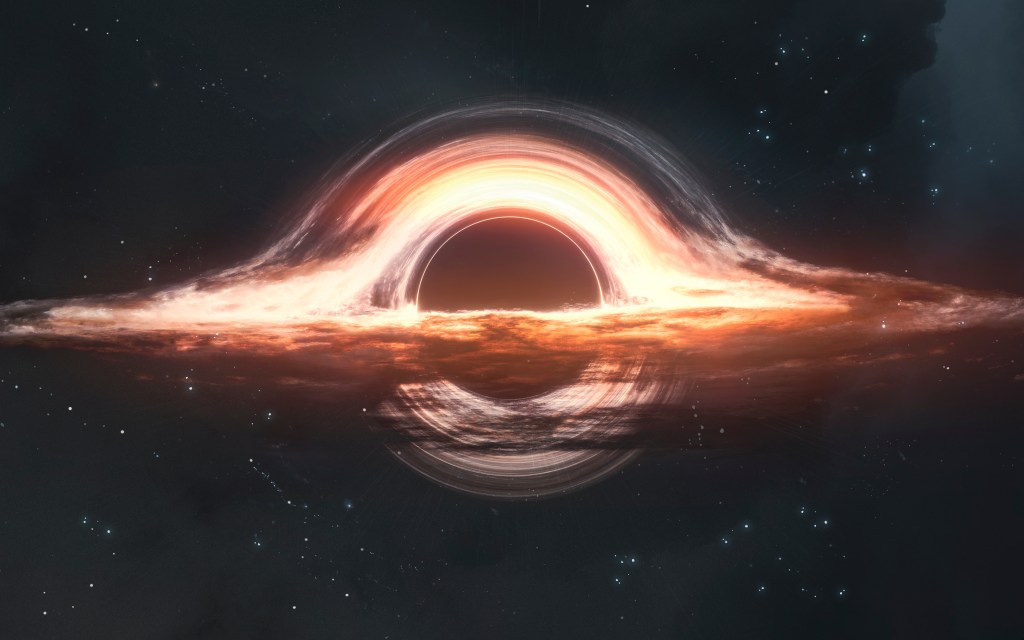
Photo by Athena Sandrini on Pexels.com


To see the other Super Facts click here


The Bizarre Reality of Black Holes

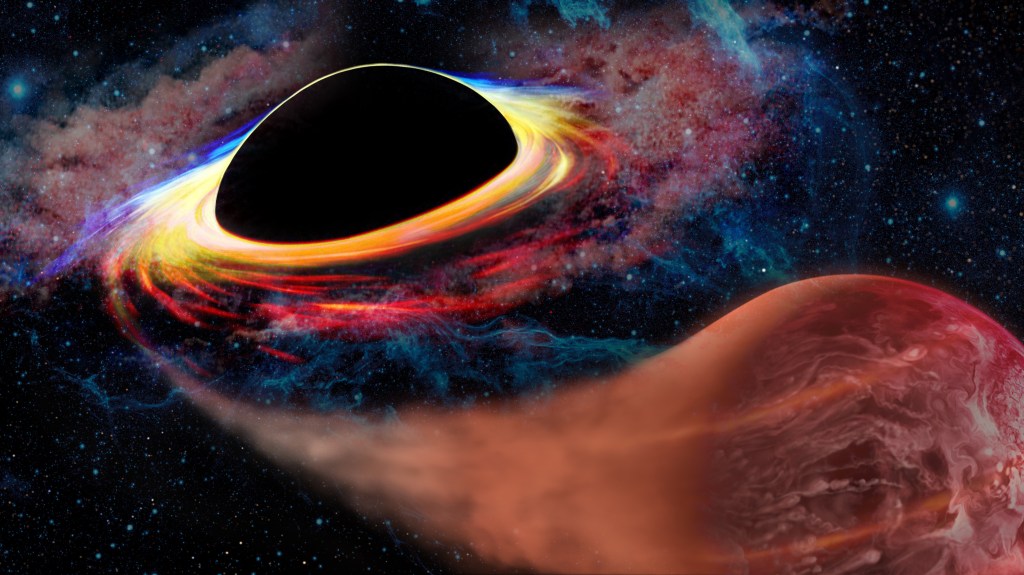
A black hole with a large bright accretion disk | The Bizarre Reality of Black Holes
3D illustration of giant Black hole in deep space. High quality digital space art in 5K – realistic visualization. Stock Illustration ID: 2476711459 by Vadim Sadovski.

Superfact 15: A black hole is a region of spacetime wherein gravity is so strong that nothing can escape it, not light, not anything. There are different kinds of black holes. We don’t fully understand black holes, which makes them very interesting to science. The boundary of no escape is called the event horizon.  Black holes are invisible. They are truly black. However, we can see what they do to their environment as they consume surrounding matter. Below are some bizarre facts about black holes.

  • Time runs much slower closer to a black hole.
  • An object falling towards a black hole will become redder, faint, then infrared, then invisible and all its movements and clocks will freeze.
  • From the perspective of an outside observer, time appears to stop for someone reaching the event horizon of a black hole. Time will continue for someone falling in.
  • At the center of a black hole may lie a gravitational singularity, a region where the spacetime curvature becomes infinite. However, since we cannot peer into a black hole we cannot know.
  • The largest known black hole (TON 618) is more than 287 million times more massive than the most massive known star (R136a1).
  • If our planet earth collapsed into a black hole, it’s diameter would  be 1.75 centimeters or 0.69 inches in diameter. The diameter of the largest known black hole (TON 618) is 242 billion miles, which is more than one million times larger than the distance from the earth to moon.
  • There are supermassive black holes located at the center of most large galaxies, including our Milky Way. The Milky Way’s black hole is about 4 million times the mass of the Sun.
  • Astronomers estimate that there are around 100 million black holes in our Milky Way.
  • When an object (maybe a spaceship, or a person) approaches or falls into a black hole the difference between the gravity on the parts closer to the black hole and those further away will be so large that the object is stretched and ripped apart. This is called spaghettification.
  • Stretching from the event horizon and out another half radius of the black hole is a region called the photon sphere. In the photon sphere light will travel in a non-stable circular orbit around the black hole. Light will go around and around for a while. If you are in the photon sphere you might be able to see the back of your head.
  • Above is just a small sample of weird black hole facts.
A black hole sucking in a planet
The understanding of black holes requires the General Theory of Relativity, and it is still a lot we don’t understand about them. Stock Photo ID: 2024419973 by Elena11

The Bizarre Reality of Black Holes

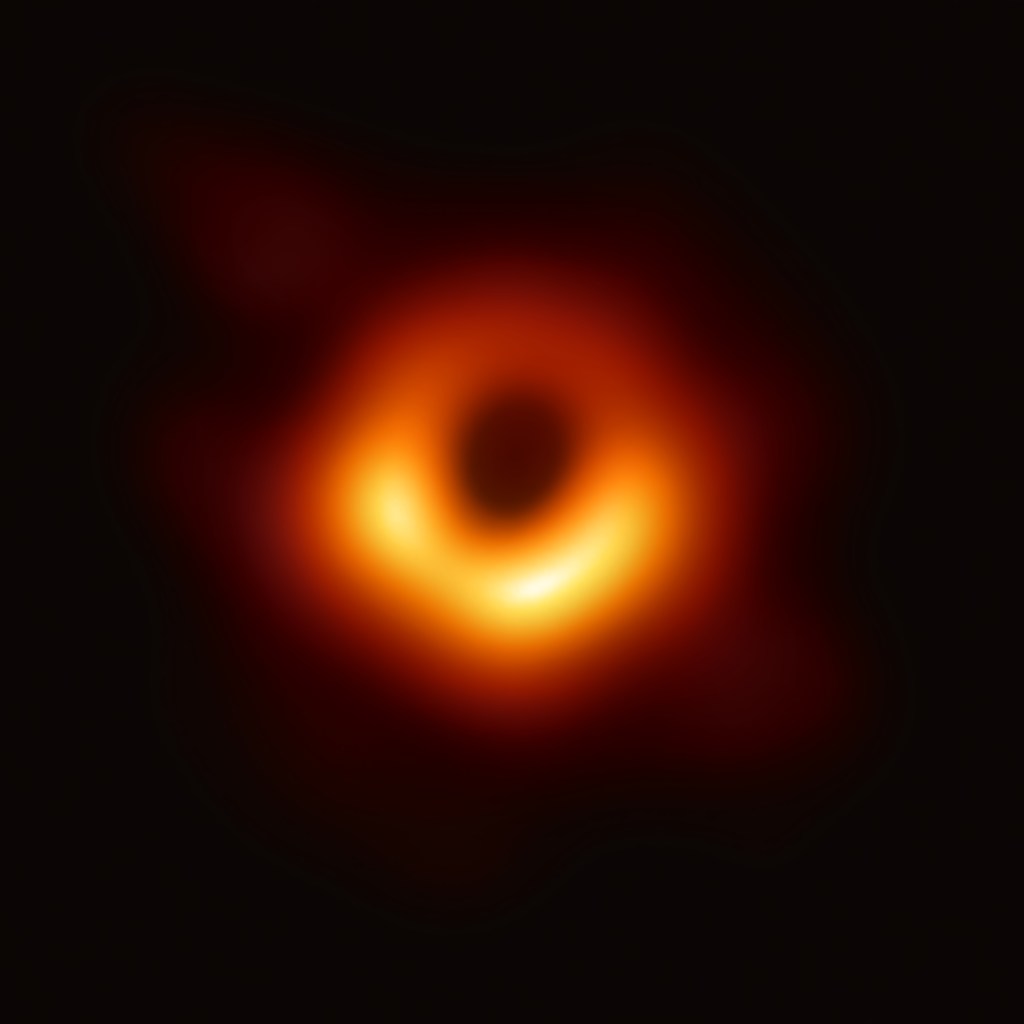
I chose the Bizarre Reality of Black Holes as a super-fact and included the ten facts above because these facts are shocking and yet not well known. Below is a photograph of a supermassive black hole at the center of the galaxy M87 taken by the event horizon telescope in 2017. To create the picture below image processing was needed. It is the first photograph of a black hole. This supermassive black hole is an estimated 6.5 billion times as massive as our sun, and 28 million times as massive as the largest known star.

The supermassive black hole at the center of the galaxy M87 taken by the event horizon telescope in 2017 | The Bizarre Reality of Black Holes
The photo of the supermassive black hole at the center of the galaxy M87 taken by the event horizon telescope in 2017. Uploader cropped and converted TIF to JPG – This file has been extracted from another file, CC BY 4.0, https://commons.wikimedia.org/w/index.php?curid=77925953.

Below is an animation created by NASA that depicts what an observer falling into a black hole would see.

The fact that from the perspective of an outside observer, time appears to stop for someone reaching the event horizon of a black hole seems to prevent anything from falling into a black hole from an outside perspective. How does anything ever get inside the black hole if it freezes up at the event horizon? Black holes grow, they collide and merge, so clearly things can get inside, right? But how? As I tried to find the answer to this question, I found that I was far from the only one asking this question.

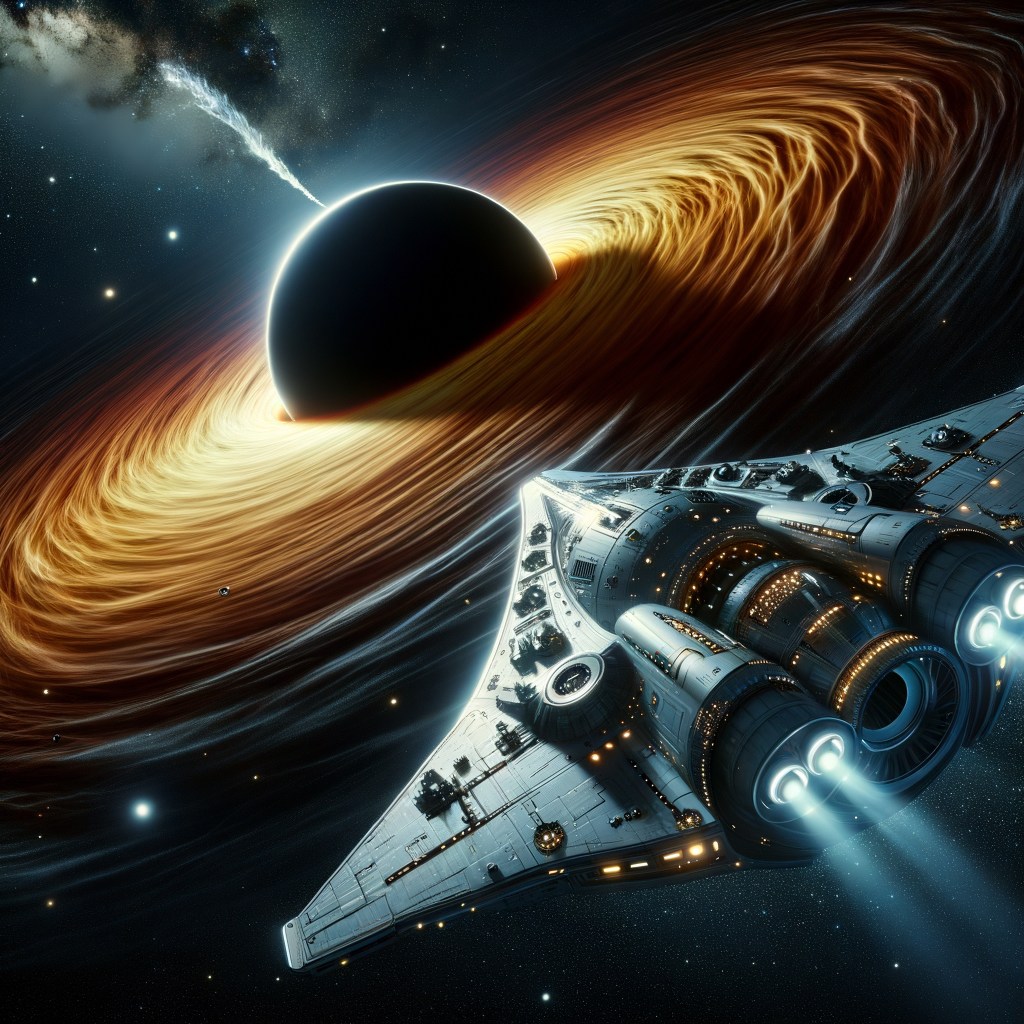
A black hole with an orange accretion disk is approached by futuristic starship.
Realistic spaceship approaching a black hole. This content was generated by an Artificial Intelligence (AI) system. Stock AI-generated image ID: 2448481683 AI-generated image Contributor Shutterstock AI Generator.

I searched physics forums trying to find the answer to this question. There were a lot of discussions but no clear answers. Some said, nothing falls into a black hole. Everything accumulates on the event horizon from the outside perspective and that’s how the event horizon and the black hole grows. The observer crossing the horizon essentially jumps infinitely far into the future, or into a different universe, that’s how he can pass through the event horizon.

Others said that the black hole is not static, it grows, and it shrinks from Hawking radiation, and this complicates the equations so that objects can enter the black hole even from an outside perspective. I have a few physics books on black holes that I have not finished reading. If I learn something better, I will update this post.

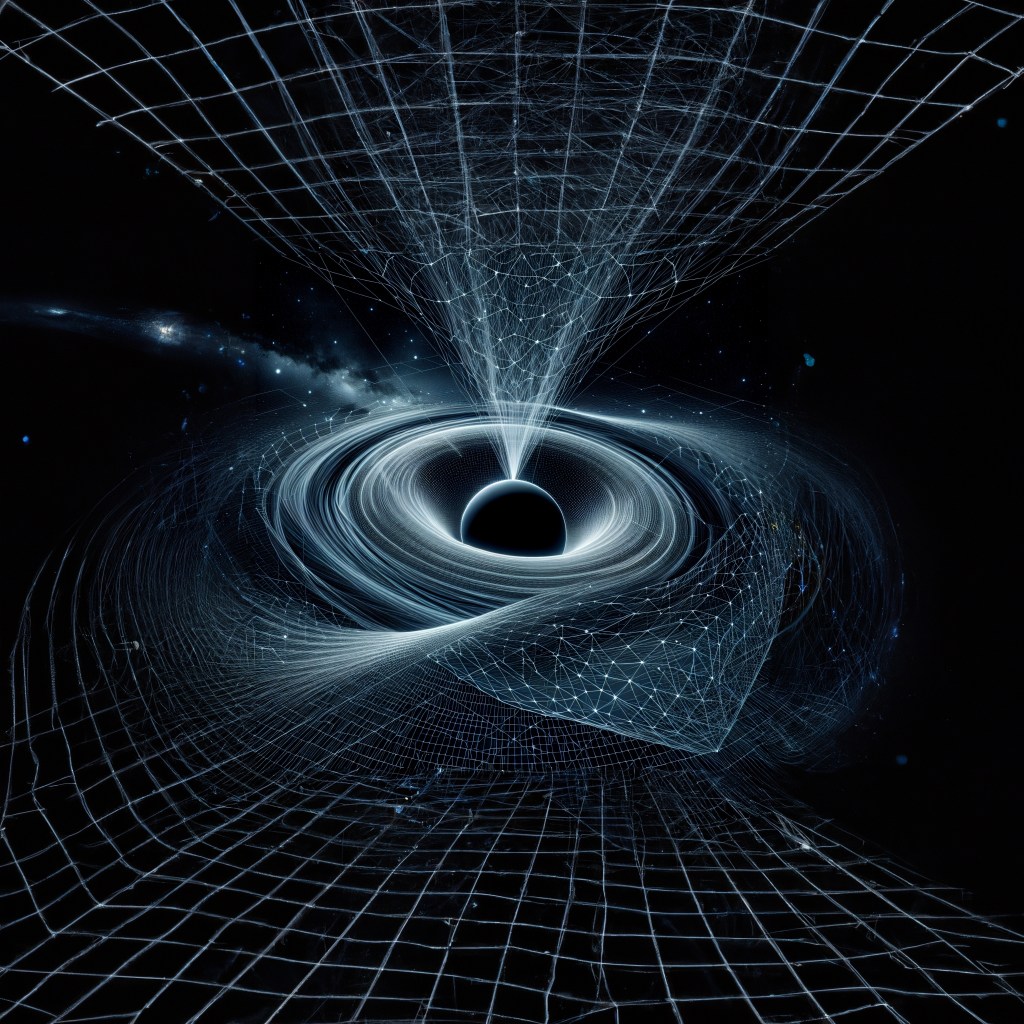
A depiction of a black hole surrounded by a space-time geometric grid that is bending due to gravity | The Bizarre Reality of Black Holes
AI-generated image Description : Space Black Hole Blue Illustration Gravity Geometry Vast Line. Stock AI-generated image ID: 2457551367 by AI-generated image Contributor Shutterstock.AI

In the image above the grid demonstrates how a black hole is distorting space-time. Other strange facts about black holes are that they are slowly evaporating through what is called Hawking radiation.

They come in different sizes. The smallest known black hole (XTE J1650-500) has a diameter of approximately 15 miles. Perhaps scariest of all, black holes are nearly undetectable unless they are feeding on star dust or tugging on nearby stars. That means one hungry black hole could be zipping right through our solar system without us knowing. Considering there are an estimated 100 million black holes in our Milky Way space travel might be scary.

Addressing a Good Question

After posting this post I received a question via email regarding this fact “If our planet earth collapsed into a black hole, its diameter would  be 1.75 centimeters or 0.69 inches in diameter. The diameter of the largest known black hole (TON 618) is 242 billion miles, which is more than one million times larger than the distance from the earth to moon.” The person who asked thought that 1.75 centimeters was pretty tiny and was wondering how a black hole could be that small.

To create a black hole, you need extremely strong gravity and one way to increase the force of gravity at the surface of a planet is to compress all its mass into a smaller volume.

If you compressed all of earth’s gravity so its diameter was only half of what it is, it would be more compact, and the gravity would be four times stronger at earth’s surface. If you compressed it further so that the earth’s diameter would only be a fourth of its original diameter the gravity at the surface would now be 16 times stronger. If you keep compressing the earth until its diameter is only 1.75 centimeters the force of gravity at the surface would be 132,000 trillion times greater than it currently is according to Newtonian physics, and you would get a black hole.

I should say that it comes out differently with General Relativity and that number is different for different sized black holes. However, this calculation is for demonstrative purposes. For relatively small masses like a planet, you would have to compress so much that it becomes tiny before gravity becomes large enough to make a black hole.


To see the other Super Facts click here


If you were an astronaut on an interstellar journey, would you be afraid of falling into a black hole?

The vastness of space and the beginning of infinity

Superfact 14: The vastness of space and the beginning of infinity

The Universe is unimaginably large. Our solar system is enormous. It consists of our star, the sun, the planets including earth, dwarf planets, asteroids, comets, rocks, the Kuiper belt, the Oort cloud, and much else. It is 100,000 times wider than the distance between the sun and our earth. Yet it is just one star system among between 100 and 400 billion in our galaxy, the Milky Way. 

But that is not all. According to the Nobel Prize winner in physics, Roger Penrose, our universe is just one in an eternal (infinite) series of universes, an eternal chain of Big Bangs that has always existed. See his conformal cyclic cosmology (CCC) model (and the book cycles of time).

According to Stephen Hawking, M-theory, an extension or collection of string theories, states that there are 10^500 or 10000000000000…(followed by five hundred zeros) possible multi-verses that are all equally possible. Hugh Everett’s multiverse or multi-world theory states that there are infinitely many universes.

Now try to imagine the size of it all. You can’t do that, can you?

The vastness of space and the beginning of infinity
Photo by Pixabay on Pexels.com

About The Universe

When the astrophysicist Brian Cox was asked the question “what is the one fact about the Universe that blows your mind the most?”, he answered, “One. Just the size and scale of it…”.

At first, I thought his answer was a bit boring. I mean, what about neutron stars, which essentially are giant atomic nuclei? What about the amazing mysteries surrounding black holes, and what about supermassive black holes, quasars, magnetars, the great attractor, what about the big bang, quantum physics, massless particles, the amazing general theory of relativity, dark energy, etc.

Then I tried to imagine the size and scale of the universe and I realized that he knew what he was talking about. The more you think about it, the more it blows your mind.

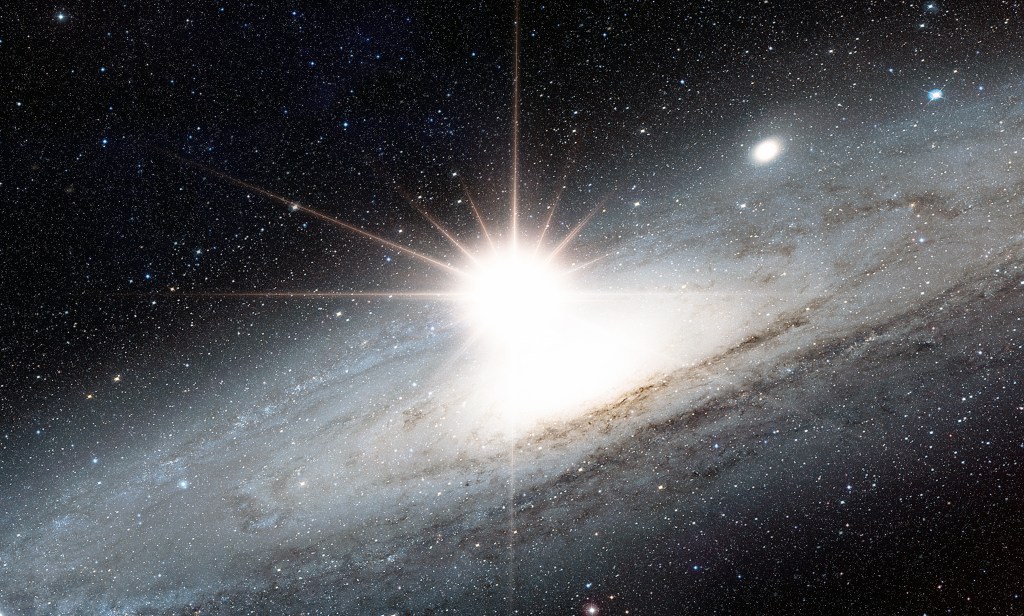
A picture of the Andromeda Galaxy with a bright white light near its center. The bright light is almost outshining the entire galaxy.
An illustration of the Andromeda galaxy with a supernova explosion near its center. “Elements of this image furnished by NASA” Stock Photo ID: 2495486227 by muratart.

The vastness of space and the beginning of infinity

Below is a 55 second video in which astrophysicist Brian Cox ruminates on what it means to live a finite fragile life in an infinite eternal Universe.

Our sun is a star. The sun’s diameter is 109 times larger than earth’s diameter, which means that you could fit more than one million earths inside the sun. The distance between the sun and the earth is called an astronomical unit or 1 AU. 1 AU is approximately 11.7 million times larger than earth’s diameter and 107,340 times larger than the sun’s diameter.

The solar system including all the planets, dwarf planets, asteroids, the Kuiper belt and the Oort cloud is 100,000 AU across with the sun just being a dust speck in the middle.

I mentioned that M-theory implies that there are at least 10^500 multiverses. To get an idea of how bif that number is;  It is a quintillion times a quintillion times a quintillion times a quintillion times a quintillion times a quintillion times a quintillion times a quintillion times a quintillion times a quintillion times  a quintillion times a quintillion times a quintillion times a quintillion times a quintillion times a quintillion times a quintillion times a quintillion times a quintillion times a quintillion times a quintillion times a quintillion times a quintillion times a quintillion a quintillion times a quintillion times a quintillion times. By the way a quintillion is a million trillion.

The vastness of space and the beginning of infinity
Photo by Philippe Donn on Pexels.com

Below are two more videos. The first one is trying to give a perspective on the size of our solar system, our galaxy, and the Universe. It is 11 minutes and 9 seconds long. The second one is very long, half an hour, and it is a bit advanced, so I recommend it only to star nerds.

However, at 22 minutes and a bit more than 30 seconds it states the observable universe is less than a 15 millionth of the universe (which might be even bigger) which contains at least 30 quintillion galaxies.


To see the other Super Facts click here


The United States is a Republic and a Democracy

Superfact 12: The United States is both a Republic and a Democracy

I believe that most people do not find that statement surprising in the least. When I became a citizen of the United States, through naturalization (I am originally from Sweden), I had to learn about the US government, and I was told by the US government officials that the United States is both a Republic and a Democracy.

However, I’ve come across a lot of people who state something like “The United States is a Republic and therefore not a Democracy” as if being a Republic and a Democracy are mutually exclusive. Well, as this article explains it is not. To be very specific, the United States is a “federal constitutional representative democracy.” Because the United States is indeed both a Republic and a Democracy and yet many would dispute that fact, I consider this to be a super-fact.

This is an article from the United States Citizenship and Immigration Services on the topic that confirms that the United States is a Republic and a Democracy. This is an article from NPR on the topic. This is what the Wikipedia entry on the United States says under the headline “Government and politics” “It is a liberal representative democracy “in which majority rule is tempered by minority rights protected by law.””

The picture shows an American Flag and the shadows of people | The United States is a Republic and a Democracy
The United States is a representative democracy. Photo by Brett Sayles on Pexels.com

It should be noted that United States is not a Direct Democracy, like ancient Greece, but it features some aspects of it in referendums. Just like most democracies around the world. Another thing to note is that the Economists Intelligence Unit downgraded the United States from a full democracy to a flawed democracy in 2016. But it is still a democracy.

Is the United States a democracy?

If you ask google / AI this question “Is the United States a democracy?”. The answer you get is:

The United States is a representative democracy. This means that our government is elected by citizens. Here, citizens vote for their government officials. These officials represent the citizens’ ideas and concerns in government.

When I asked ChatGPT the same question (Is the United States a democracy?) I got this answer:

Yes, the United States is considered a democracy, but more specifically, it is a representative democracy or democratic republic. In a pure democracy, citizens directly vote on all laws and policies. In a representative democracy, like in the U.S., citizens elect officials (such as members of Congress, the president, and local representatives) who make decisions and pass laws on their behalf.

The U.S. system is also based on the principles of constitutional democracy, where the rule of law, individual rights, and the separation of powers (between the executive, legislative, and judicial branches) are foundational. The Constitution guarantees these principles, which are designed to protect minority rights while allowing majority rule through democratic elections.

In summary, the U.S. combines democratic elements with a framework that ensures checks and balances to prevent abuses of power.

The photo shows the United States Capitol Building, which is white and is shaped like a roundish tower.
The United States Capitol Building in Washington DC. Photo by Patrick Morris on Pexels.com

Partisan politics aside, the consensus seems to be that the United States is both a Republic and a Democracy.


To see the other Super Facts click here


United States, Europe and the Pacific Ocean Are Bigger Than You Might Think

Superfact 11: United States, Europe and the Pacific Ocean Are Bigger Than You Might Think

  • The area of the United States is around 9,8 million square kilometers
  • The area of continental United States is around 8.1 million square kilometers
  • The area of Europe is around 10.2 million square kilometers
  • Earth’s total land area is 148.9 million square kilometers
  • The area of the Pacific Ocean is 165.3 million square kilometers
  • The area of the whole earth is 510 million square kilometers

The United States

The United States is much bigger than many Europeans think. Europe is much bigger than many Americans think. Many of us don’t realize that one of the five oceans, the Pacific Ocean, is one third of earth’s entire surface and cover a larger area than all landmass on earth. Since so many of us are surprised to hear these facts and they are not under dispute among experts, they constitute a super-fact, or a few super-facts in my opinion.

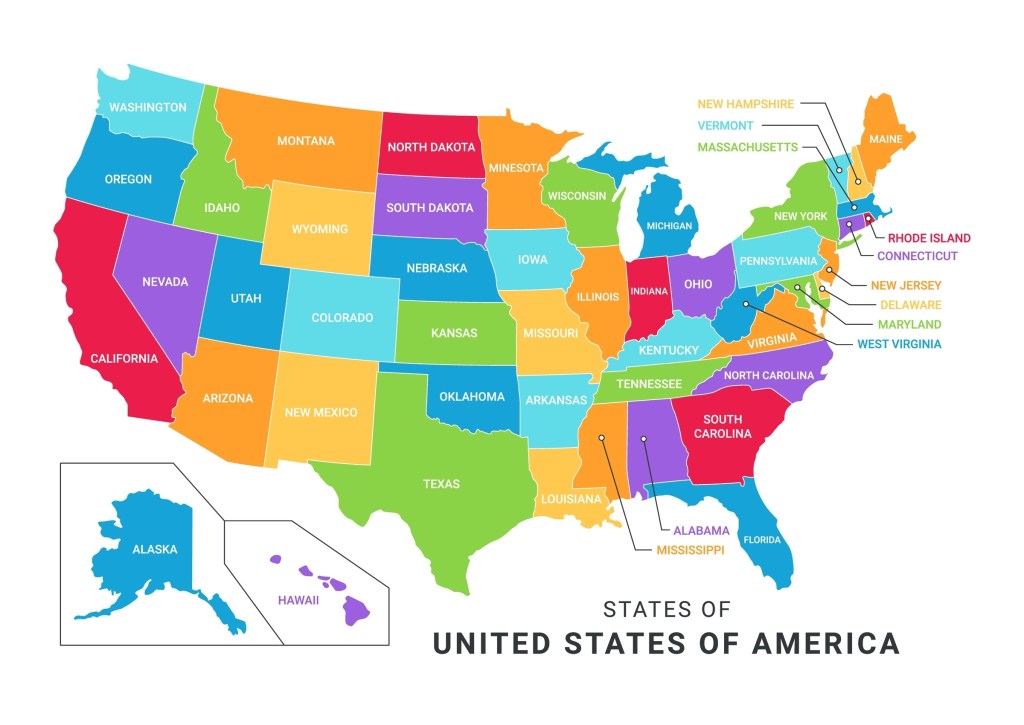
The map of the states in the United States are shown in various colors. It should be noted that some states are quite large and some quite small | United States, Europe and the Pacific Ocean Are Bigger Than You Might Think
Map of the United States. Alaska and Hawaii are not to scale. Alaska is double as big as Texas. Stock Vector ID: 2247501877 by HazimAlfi.

Some time ago I was talking to a Swedish friend of mine who told me something along the lines of “the United States isn’t so big as they say. We drove through half a dozen states in an afternoon.” I asked her, “which states?” It turns out that was the New England states, Maine, New Hampshire, Massachusetts, Rhode Island, Connecticut, and finally New Jersey and New York (New York city). You can do that drive in an afternoon, but you cannot drive through Texas in an afternoon, not even in a day.

The distance from Texarkana to El Paso is 1,300 kilometers and takes more than 12 hours to drive on the highway without stopping. I’ve come across many Europeans who underestimate the size of the United States. The mistake they make is that they don’t realize that while some US states are small, other states are much bigger. Just look at the map.

A to scale map of Europe with the countries having different colors. It should be noted that some countries are quite large and some quite small | United States, Europe and the Pacific Ocean Are Bigger Than You Might Think
Political map of Europe (including European Russia) Stock Vector ID: 319593110 by okili77.

Europe

Interestingly Americans often make the same mistake about Europe. I quite often hear Americans claim that distances are so small in Europe. You can drive through a country in a couple of hours and the language changes. It’s a trope that seems to be repeated every time Europe is discussed on social networks.

Today, as I was talking to a friend of mine about our recent trip to Sweden and Norway, my friend told me that it was good that distances in Europe were so short so we could easily travel between the places I was telling him about. He was more than surprised to hear that was not the case.  The distance between where we were Sweden and Norway was too large for anything other than planes considering we only had 10 days.

The distance from Malmö in southern Sweden to Karesuando in northern Sweden is more than 1,900 kilometers and takes more than 21 hours to drive without stopping. In fact, by area, Sweden is bigger and longer than California. 

The Pacific Ocean

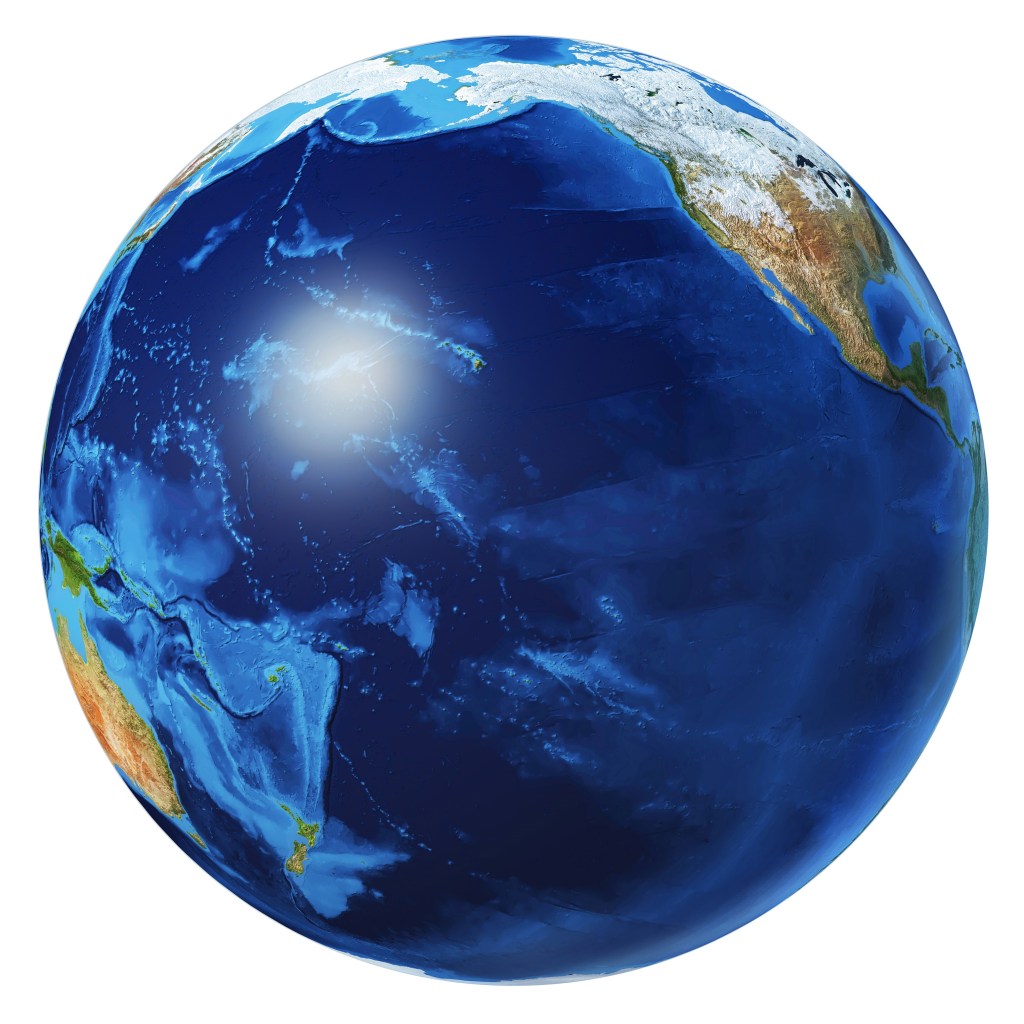
Last but not least. Earth has seven continents (Asia, Africa, North America, South America, Antarctica, Europe, and Australia), and five oceans (the Arctic, Atlantic, Indian, Pacific, and Southern (Antarctic) Oceans). But just one ocean, the Pacific Ocean cover a third of earth’s entire surface. This may come as a surprise to many. See the globe photorealistic 3d illustration below.

Earth globe photorealistic 3d illustration, on white background. Pacific Ocean view. Clipping path included. Without clouds.
Earth Pacific Ocean view Stock Illustration ID: 1617553012 by Matis75.

To see the other Super Facts click here