Without carbon dioxide the Earth would freeze

Superfact 91: Without greenhouse gases, the Earth’s average surface temperature would drop from the current 15 Celsius (59 Fahrenheit) to approximately -18 Celsius (0 Fahrenheit), which is an average temperature drop of 33 degrees Celsius. If you removed carbon dioxide from the atmosphere but let the other greenhouse gases stay the drop would be 30 degrees Celsius. In both cases most of the planet would freeze. This is referred to as snowball Earth.
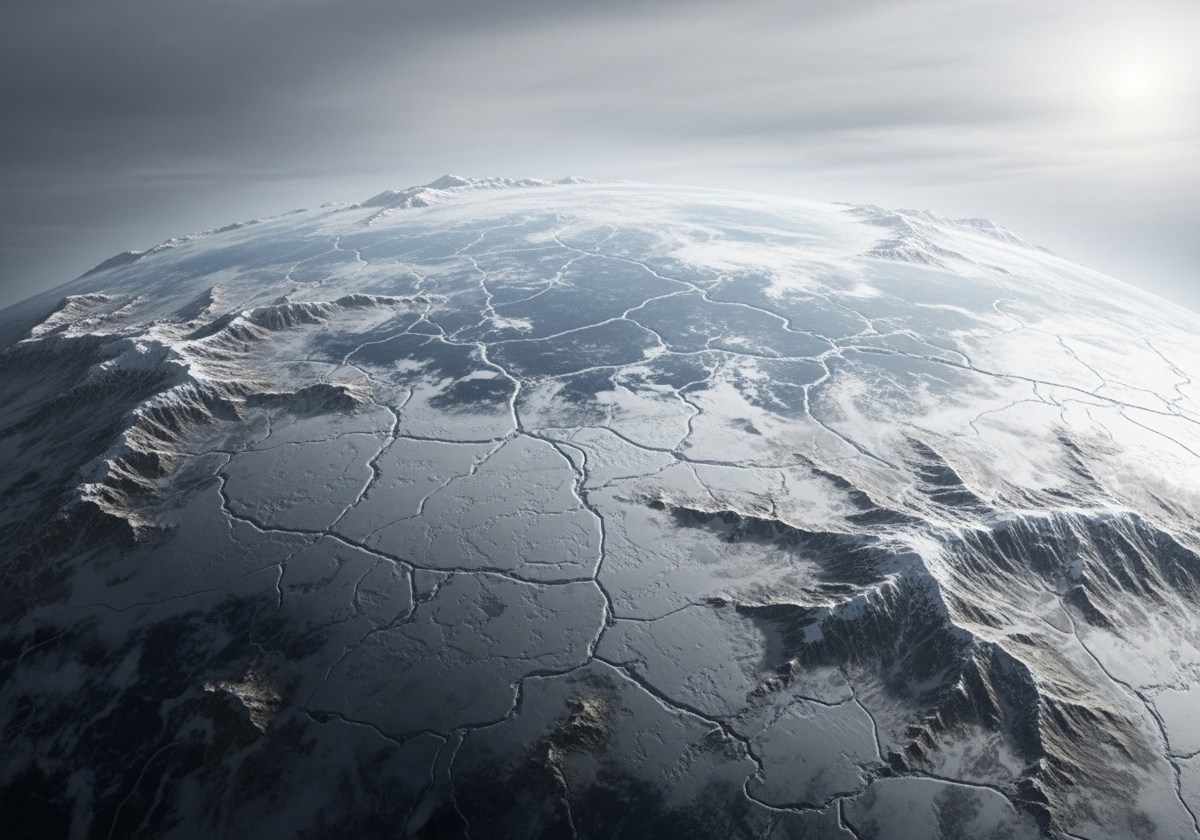
Snowball Earth or Snowball planet. In the picture Earth is seen from space. It is covered by ice all over. | Without carbon dioxide the Earth would freeze
Shutterstock Asset id: 2750019199 by Shutterstock AI

Our planet is much warmer than it otherwise would be because of greenhouse gases. Carbon dioxide, or CO2, is the most important of the greenhouse gases. We are rapidly warming the atmosphere with our carbon dioxide emissions as explained by these articles from NASA and NOAA.  If we did the opposite and removed CO2 from the atmosphere we would be cooling the atmosphere. As mentioned, if we removed all greenhouse gases from the atmosphere the planet’s average temperature would drop by 33 degrees Celsius and this NASA article claims it would take 50 years to reach that temperature.

If we removed only carbon dioxide and let all the other greenhouse gases remain, we would get an almost as big temperature drop of 30 degrees Celsius according to the calculations done by this article. Some of you may know that water vapor provides a larger portion of the warming than CO2. In fact, 75% of the greenhouse effect is caused by water vapor and clouds. This seems contradictory. However, when the atmosphere cools, the water vapor will rain out of the atmosphere unlike CO2. Basically, water vapor will adjust to the temperature whilst CO2 is  forcing the temperature. It is crucial to understand this difference. That is why CO2 is the most important greenhouse gas. In summary, we need just the right amount of CO2 for a healthy climate.

I consider this a super fact because it is true, it is an important fact, and I believe it is a surprising fact to many, especially those who doubt carbon dioxide’s importance to the global warming we are experiencing. I called it global warming but whether you call it global warming, climate change, or climate disruption, we are talking about the same thing.

Snowball Earth
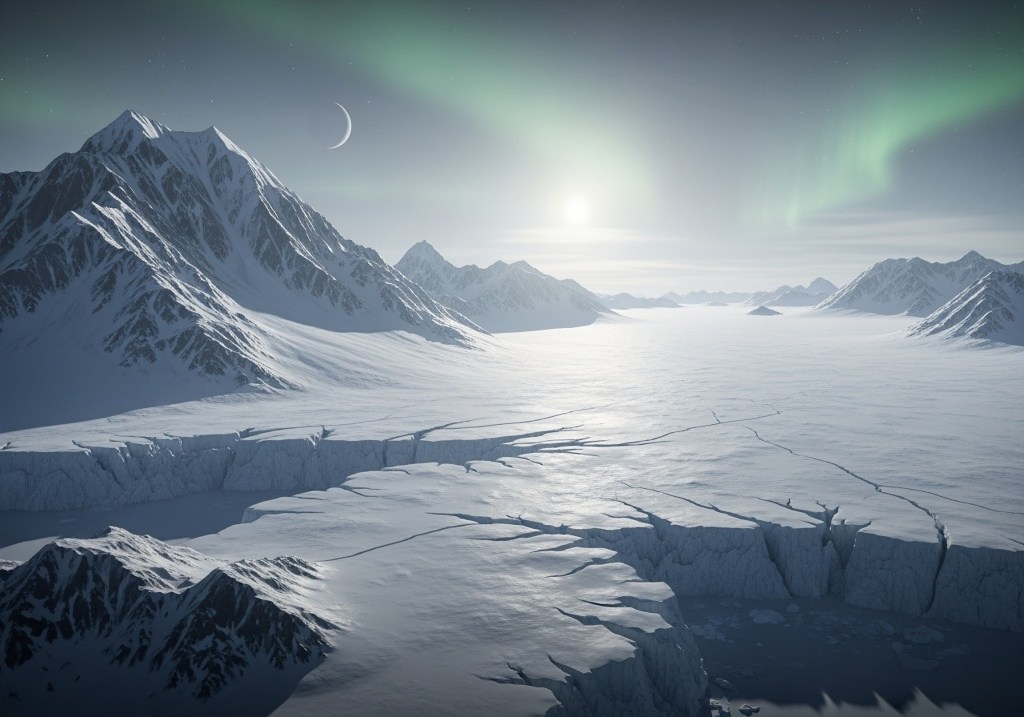
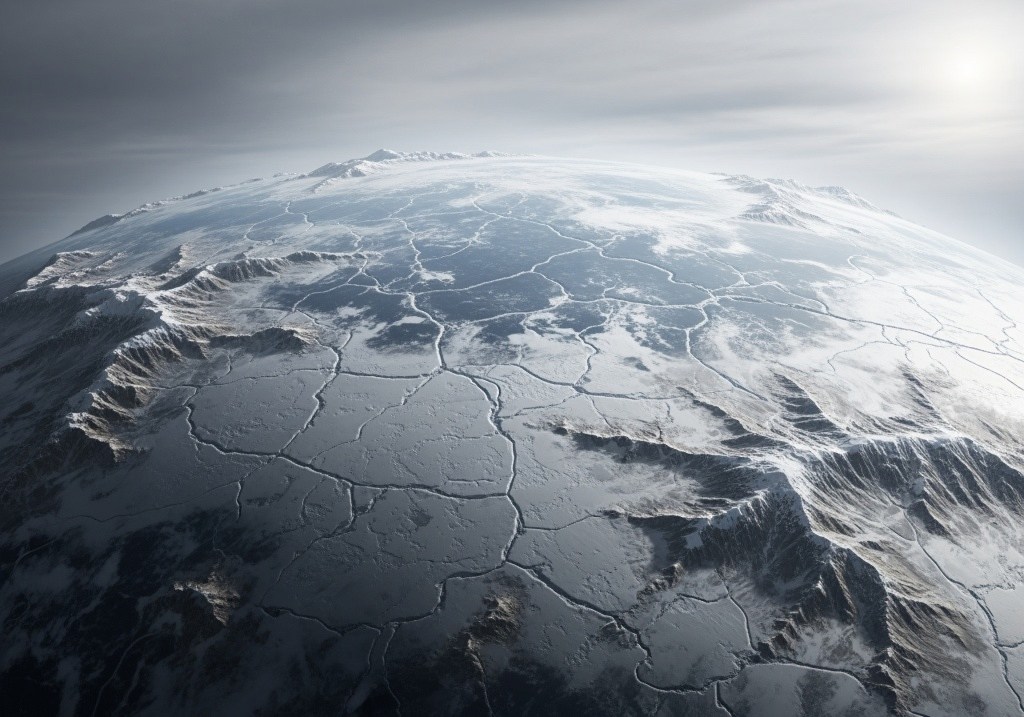
Mountains covered by ice and snow and valleys covered by a thick ice sheet.
Shutterstock Asset id: 2749007159 by Shutterstock AI

Scientists believe there have been at least two major “Snowball Earth” events between 720 and 635 million years ago where ice and snow covered nearly the entire planet. These snowball earth events were triggered by natural events, likely a plunge in sunlight, followed by a plunge in carbon dioxide not entering the atmosphere, and amplified by sunlight reflecting back into space. All three effects made Earth cooler. The recent ice ages were likely caused primarily by earth’s orbital cycles. Climate changed in the past due to natural phenomena, but that does not mean that the current very rapid warming (rapid geologically speaking) is natural.

If you want to understand why we can be so sure that it is our CO2 emissions that is causing the current global warming, not the sun, not volcanoes, not orbital cycles, and not another natural process, please check out the list of evidence in the second part of this post “Global Warming is Happening and is Caused by us”.

Hothouse Venus

What we see in the photo is a large white smooth planet. The MESSENGER spacecraft snapped a series of images as it approached Venus on June 5, 2007. The planet is enshrouded by a global layer of clouds that obscures its surface to the MESSENGER Dual Imaging System (MDIS) cameras. This single frame is part of a color sequence taken that helped the MESSENGER team calibrate the camera in preparation for the spacecraft's first flyby of Mercury on January 14, 2008.
Image taken by the NASA MESSENGER as it approached Venus on June 5, 2007. NASA/Johns Hopkins University Applied Physics Laboratory/Carnegie Institution of Washington, Public domain, via Wikimedia Commons. The image is taken from this Wikipedia article.

The opposite of snowball Earth is hot Venus. Venus is the hottest planet in the solar system due to an extreme runaway greenhouse effect. Surface temperatures are averaging around 465 degrees Celsius (870 degrees Fahrenheit). The thick atmosphere of Venus is composed primarily of carbon dioxide with clouds of sulfuric acid. This causes a greenhouse effect that traps heat.

Despite the fact that Mercury is much closer to the sun (58 million kilometers versus 108 million kilometers) and receives nearly four times as much sunlight per unit area than Venus, Mercury is on average much cooler. The reason is that Mercury’s atmosphere is thin and without a greenhouse effect.

The YouTube video below from NASA explains the greenhouse effect on Venus. It is just one minute long.


I would also like you to take a look at this post:, “The Greenhouse Effect: From Early Chemistry to the Keeling Curve” by Craigavad miscellany a science blog written by a retired academic. It is a very educational and interesting post related to this topic.



To see the Other Super Facts click here

Beyond Debate by Shahir Masri a Review

The goal of this blog is to create a list of what I call super facts. Super facts are important and true facts that are nevertheless highly surprising to many, misunderstood, or disputed among the public. They are special facts that we all can learn something important from. However, I also make posts that are not super facts but feature other interesting information, such as this book review and book recommendation.

A Note About Liars on Amazon

I’ve noticed that most of the reviews for this book were positive but there were a few negative reviews from what I refer to as climate deniers. These reviews were not just misguided fossil fuel talking points, but they were obviously written by people who had not read the book or by people who skimmed the book and who did not make an honest effort to understand the content of the book. You can tell because the objections they raise were addressed and clearly debunked in the book in a way that was easy to understand.

I’ve read many books on climate science and there are always a bunch of negative reviews written by people who have no clue about the content of the book. Writing reviews for books you have not read is the same as lying, especially if you are slamming the book. There are reviewers who literally seem to be at war with the truth, and they spend their time trying to bury it, and in the process, they are shamelessly lying. Why would someone dump lots of fake reviews over books they haven’t read?

BEYOND DEBATE: Answers to 50 Misconceptions on Climate Change by Dr. Shahir Masri

Below I am listing the two versions of this book (kindle and paperback). I bought the paperback version.

  • Paperback –  Publisher : Dockside Sailing Press (July 14, 2018), ISBN-10 : 0692157417, ISBN-13 : 978-0692157411, 329 pages, item weight : 1.09 pounds, dimensions : 5.5 x 0.75 x 8.5 inches. It costs $6.44 on US Amazon. Click here to order it from Amazon.com.
  • Kindle –  Published : Dockside Sailing Press (April 12, 2021) ASIN : B092DPY7LL, 245 pages, it costs $9.99 on US Amazon. Click here to order it from Amazon.com.
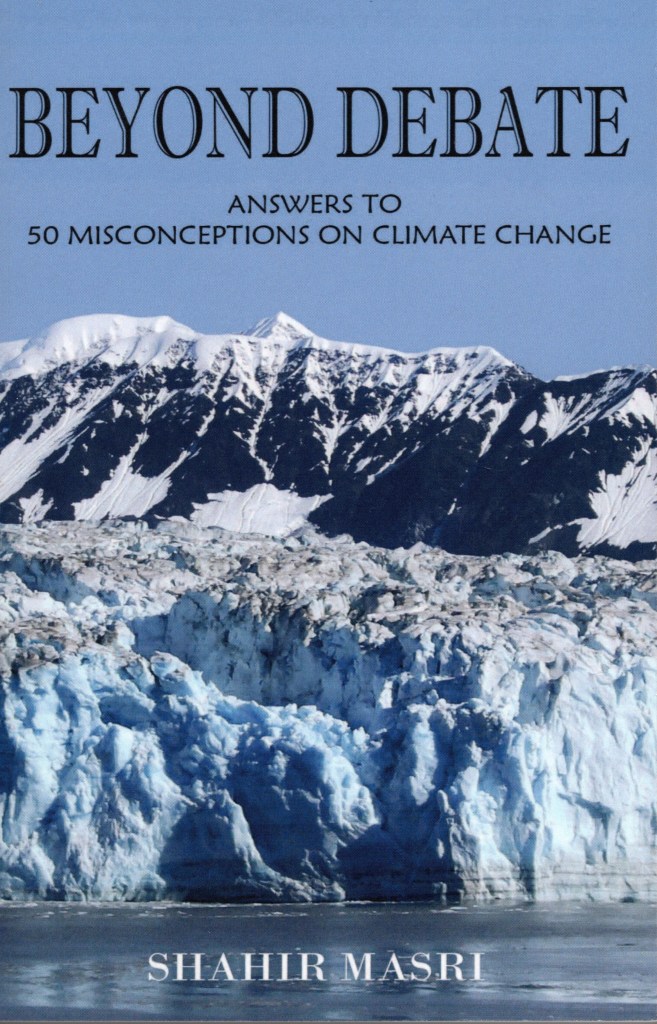
The front cover features a photo of snowy mountains in the background and sea ice in the foreground, as well as the title and author name. The title is “BEYOND DEBATE: Answers to 50 Misconceptions on Climate Change” by “Shahir Masri” front cover | Beyond Debate by Shahir Masri a Review
BEYOND DEBATE: Answers to 50 Misconceptions on Climate Change. Click on the image to go to the Amazon page for the paperback version of the book.

Amazon’s Description of the Book

What if volcanoes are heating the planet? Maybe solar cycles are to blame? Isn’t carbon dioxide good for plants? These are but a few of the questions on global warming that are addressed in this book. If you are concerned that global warming may be a serious problem, but find it hard to know what to believe or how to help in the face of conflicting arguments, you will want to read this book. You don’t have to be a scientist to understand Dr. Shahir Masri’s explanations and solutions. They proceed along common-sense lines that are easy to follow. Climate change poses a major threat to public health and the environment. Yet, political squabbles and misinformation have stalled policy and enabled little progress to be made in solving the crisis.

Similarly, the notion of a “climate debate” has created the illusion of a divided scientific community, when in fact most scientists agree that human activity is causing the planet to warm. At a time when open discussion is essential, talk of global warming has become entrenched in politics and all but taboo in unfamiliar company. In Beyond Debate, Shahir Masri clears up 50 of the most common misconceptions surrounding climate change. He simplifies the science and resolves the confusion so that everyone may better understand the issue. Now is not the time for silence, but rather a time for conversation and collective action to address greenhouse gas emissions and begin to solve the climate crisis. Action begins with understanding, which Beyond Debate so eloquently offers. Masri conveys a sense of urgency while describing opportunities for hope.

This is my five-star review for BEYOND DEBATE

Fix your misconceptions. Don’t fall for disinformation. Be curious and learn.

There are a lot of misconceptions, misunderstandings as well as disinformation surrounding climate change or if you call it global warming, global weirding, or climate disruption. This book provides answers and explanations to 50 misconceptions. Some of the misconceptions are common but basic misunderstandings. Other misconceptions require more in depth explanations.

In addition, the book gives you an introduction into how the greenhouse effect works, covering 200+ years of scientific discoveries by some famous scientists. Did you know that without the various greenhouse gases in the atmosphere (water vapor, carbon dioxide, methane, nitrous oxide, and ozone), our planet would be 60 degrees colder than it is. It would be a snowball earth. This book is for those of us who are curious and want to learn more about this topic.

An example of a basic misconception is Chapter 4, “Earth’s Natural cycles explain recent warming”, well they don’t. For example, the Milankovitch cycles, earth’s precession, axial tilt, and the eccentricity of earth’s orbit, are too slow and would favor cooling right now, not warming. It is not the sun (chapter 5) and not volcanoes (chapter 3). Volcanoes release less than 1 % of the CO2 released currently by human activities, and they are part of the carbon cycle, and CO2 from volcanoes have the wrong isotope mix to correspond to the increase of CO2. He explains that the carbon atom comes in different isotopes (different number of neutrons) and that the mix is different for different carbon sources and that the carbon added to the atmosphere comes from burning fossil fuels based on the isotope mix.

I can add that in addition different potential causes for global warming result in different ways the warming happens (like a fingerprint) and the fingerprint of the current warming is that of greenhouse gases (he does not explain this enough). Another thing to ask yourself is if you think the current global warming is natural, why do paleoclimatologists and others who have dedicated their lives to studying naturally occurring climate change not think this warming is natural.

Another basic misconception is addressed in Chapter 23, “Climate models don’t account for the most abundant greenhouse gas, water vapor”, which is false, they do account for water vapor. Some people believe that because water vapor is a more powerful and abundant greenhouse gas than CO2, it should be what is causing global warming. That’s not how it works. We are not increasing water vapor in the atmosphere by emitting it and even if we did it would rain back down. Therefore, water vapor is not driving global warming. If a greenhouse gas isn’t increasing it can’t cause rising temperatures, no matter how abundant it is.

However, an increase in carbon dioxide warms the atmosphere which in turn increases the amount of humidity the atmosphere can hold (positive feedback loop) thus water vapor gives the greenhouse effect a boost. It gives CO2 and methane a bit of a helping hand as the emissions and increase of these gases heats things up, but water vapor is not driving it. This is not hard to understand and yet this misconception refuses to go away.

Some other examples are chapter 8, “Climate Change is Chinese hoax” – this is a funny one. Climate science is 200+ year old European science. Chapter 12, “Climate change is just a theory” – see “evolution is just a theory”. Chapter 15, “there is still uncertainty about climate change” – that we know it is happening and that we are the cause is well established but there is uncertainty about other related things. Chapter 36, “glaciers aren’t melting, Antarctica is even gaining ice” – glaciers and sea ice are melting rapidly. Antarctica was gaining ice for four decades despite warming but there are good explanations for this (for example, precipitation). Now Antarctica is losing ice. Chapter 43, “Electric cars aren’t that green” – they are much cleaner than gas cars, but it depends on where you live. Chapter 49, “It’s too late for climate” – no it isn’t.

So, as you can see, this is a fact packed book addressing and correcting a lot of misconceptions. It is very educational and great for anyone ready to learn and understand. It is also well organized and well written. Reading this book will make you smarter and I highly recommend it to anyone who is curious about this topic. I think we all have some misconception on this topic. Let’s correct them.

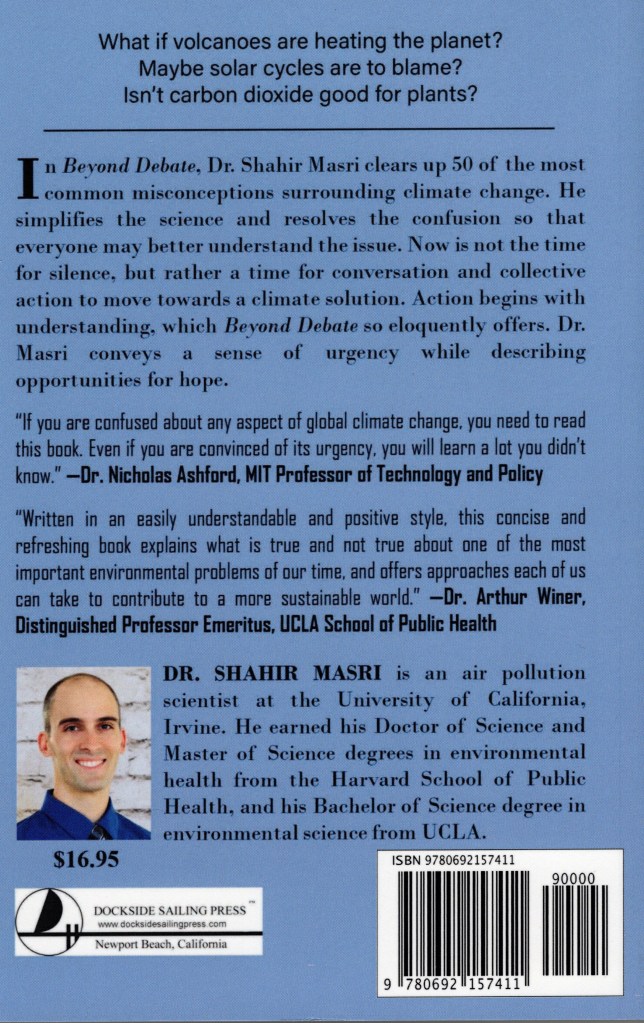
The back cover features an overview of the book and a photo and a brief introduction of the author “Shahir Masri”. | Back cover for BEYOND DEBATE: Answers to 50 Misconceptions on Climate Change By Dr. Shahir Masri
BEYOND DEBATE: Answers to 50 Misconceptions on Climate Change. Click on the image to go to the Amazon page for the Kindle version of the book.

Shared False Memories Are Common – Mandela Effect

Super fact 83 : Everyone experiences false memories. They are a normal part of how human memory works and are very common. There are also false memories that are shared among large groups of people and that are often socially reinforced. This is called the Mandela effect.

Pop art style comic book panel doubtful wondering woman can't tell reality from fantasy, daydreaming, dreams, delusion, vector illustration. She says “W-Was … it … just a dream?!?” | Shared False Memories Are Common – Mandela Effect
Shutterstock Asset id: 717504940 by durantelallera

As I mentioned, false memories are very common. However, what may come as a surprise is that some false memories are widespread and socially reinforced. It is important to know this, and we know it is true, so it is a super fact. The effect is named after the former President of South Africa, Nelson Mandela, who died in 2013. However, a lot of people distinctly remember him dying in prison in the 1980s.

It was paranormal researcher Fiona Broome who named the effect after having a personal experience with the phenomenon. She wrongly recalled Nelson Mandela dying in the 1980s and she could even remember the news coverage of his funeral, and yet it never happened. After talking to other people, she realized that she was far from alone with her false memory.

Another example is that a lot of people remember Darth Vader in Star Wars telling Luke “Luke, I am your father”. What Darth Vader said was “No, I am your father”. Yet another movie example is that Forrest Gump did not say “Life is like a Box of Chocolates”. He said, “Life was like a box of chocolates”. Also, the Monopoly man never had a monocle, Curious George doesn’t have a tail, many remember the “Berenstein Bears” but it’s the “Berenstain Bears”. C-3PO is not all gold, he has a silver leg. You can easily find hundreds of examples of the Mandela effect online.

The photo shows a scene from Star Wars. C-3PO and R2-D2. C-3PO has a silver leg.
Shutterstock Asset id: 558350728 by Willrow Hood

People have asked me, “do you remember in the 1970’s and 1980’s when scientists were  convinced that global cooling was happening”, to which I answer, “no I don’t remember that and neither do you”. In the 1970’s much less was known about the climate, but the possibility of anthropogenic warming dominated the peer-reviewed literature even then. There were a few contrarian climate scientists who claimed there was global cooling and there were some articles in popular media about global cooling, but the statement that scientists were  convinced there was global cooling is simply false. You can read more about this in this book. Yet some people “remember” this. I believe this is another example of a socially reinforced Mandela Effect.

False Beliefs and False Memories

The existence of false beliefs is another phenomenon that is very common. There are hundreds of common beliefs that we know are false based on carefully vetted data, large amounts of studies, and scientific experiments. I think we all have some false beliefs. We have all been bamboozled at some point. The way to know is to check and compare the evidence and the data and papers from reputable sources. Find out what the experts in the field say. Some examples of false beliefs are:

We adopt false beliefs because of misinformation, propaganda (politics), social reinforcement, a wish to believe certain things, our own lack of critical thinking, etc. False memories, including collective false memories are due to the fact that memories aren’t perfect recordings, memory reconstruction, social reinforcement (also true for false beliefs), and confusion with similar events.

Woman near inscriptions false and true reflects trying to choose from two options and make difficult decision. Woman put fingers on temples and closed eyes considering pros and cons fateful decision.
Shutterstock Asset id: 2593117091 by Drawlab19

Both false beliefs, false memories and the Mandela effect distort our understanding of the world. That is BTW one important inspiration for this fact finding blog – superfactful. It is difficult to accept that what you believe to be true may simply be false. We want to believe that we know better than others, not that we have been bamboozled or that we misremember things. But we need to be open to look at and compare evidence, be curious and willing to understand how things work, and be willing to change our beliefs and accept that some of our memories may be false. That is one way to grow as a human.


To see the other Super Facts click here

How Our Planet Came to Life

I recently read a very interesting book on the history of our Planet Earth, Becoming Earth: How Our Planet Came to Life by Ferris Jabr. Life of various forms, microbes, fungi, plants, animals, etc., has had a large impact on climate, earth’s crust, the composition of the atmosphere, the oceans, and still do. This fact filled book is about this four and half billion history. Below is my review of the but first something about the book formats.

Becoming Earth Book Formats

Becoming Earth: How Our Planet Came to Life by Ferris Jabr comes in four formats. I bought the hardback format.

  • Hardcover –  Publisher : Random House (June 25, 2024), ISBN-10 : 0593133978, ISBN-13 : 978-0593133972, 304 pages, item weight : 2.31 pounds: ‎ 6.3 x 1.1 x 9.55 inches, it costs $16.68 on US Amazon. Click here to order it from Amazon.com.
  • Paperback –  Publisher : Random House Trade Paperbacks (April 1, 2025), ISBN-10 : 0593133994, ISBN-13 : 978-0593133996, 320 pages, item weight : 4.8 ounces, dimensions : ‎ 5.15 x 0.75 x 7.97 inches, it costs $ 13.57 on US Amazon. Click here to order it from Amazon.com.
  • Kindle –  Publisher : Random House (June 25, 2024), ASIN : B0CJTLBCDX, ISBN-13 : 978-0593133989, 423 pages, it costs $5.99 on US Amazon. Click here to order it from Amazon.com.
  • Audio–  Publisher : Random House Audio (June 25, 2024), Listening Length : 9 hours and 27 minutes, ASIN : B0CKM3P33F, it costs $0.99 on US Amazon with membership. Click here to order it from Amazon.com.
Front cover of Becoming Earth: How Our Planet Came to Life by Ferris Jabr.
Front cover of Becoming Earth: How Our Planet Came to Life by Ferris Jabr. Click on the image to go to the Amazon page for the hardcover version of the book.

Amazon’s Description of Becoming Earth

NEW YORK TIMES BESTSELLER • A vivid account of a major shift in how we understand Earth, from an exceptionally talented new voice. Earth is not simply an inanimate planet on which life evolved, but rather a planet that came to life.

“Glorious . . . full of achingly beautiful passages, mind-bending conceptual twists, and wonderful characters. Jabr reveals how Earth has been profoundly, miraculously shaped by life.”—Ed Yong, Pulitzer Prize winner and bestselling author of An Immense World

FINALIST FOR THE LOS ANGELES TIMES BOOK PRIZE • FINALIST FOR THE OREGON BOOK AWARD • AN AMERICAN LIBRARY ASSOCIATION NOTABLE BOOK OF THE YEAR

A BEST BOOK OF THE YEAR: Smithsonian, Chicago Public Library, Booklist, Scientific American, Nature

A BEST BOOK OF THE SUMMER: The Atlantic and NPR’s Science Friday

One of humanity’s oldest beliefs is that our world is alive. Though once ridiculed by some scientists, the idea of Earth as a vast interconnected living system has gained acceptance in recent decades. We, and all living things, are more than inhabitants of Earth—we are Earth, an outgrowth of its structure and an engine of its evolution. Life and its environment have coevolved for billions of years, transforming a lump of orbiting rock into a cosmic oasis—a planet that breathes, metabolizes, and regulates its climate.

Acclaimed science writer Ferris Jabr reveals a radical new vision of Earth where lush forests spew water, pollen, and bacteria to summon rain; giant animals engineer the very landscapes they roam; microbes chew rock to shape continents; and microscopic plankton, some as glittering as carved jewels, remake the air and sea.

Humans are one of the most extreme examples of life transforming Earth. Through fossil fuel consumption, agriculture, and pollution, we have altered more layers of the planet in less time than any other species, pushing Earth into a crisis. But we are also uniquely able to understand and protect the planet’s wondrous ecology and self-stabilizing processes. Jabr introduces us to a diverse cast of fascinating people who have devoted themselves to this vital work.

Becoming Earth is an exhilarating journey through the hidden workings of our planetary symphony—its players, its instruments, and the music of life that emerges—and an invitation to reexamine our place in it. How well we play our part will determine what kind of Earth our descendants inherit for millennia to come.

My five-star review for Becoming Earth

A Page Turner for People with a Curious Mind

This book gives us a brief overview of the natural history of Earth, emphasizing that not only is life impacted by geological forces, but life is influencing and even creating the composition of the atmosphere, impacting climate and even affecting geological forces. The author explains how microbes, plants, and animals transformed the planet. He is explaining how humans are transforming planet Earth and its climate through fossil fuel consumption, agriculture, and pollution. He is noting that we have altered more layers of the planet in less time than any other species, pushing Earth into a crisis. The author promotes the idea that Earth itself is a living organism (Gaia hypothesis). I am not sure if I entirely buy that idea, but he makes a good case for it.

The book covers a lot of history. Earth is four and half billion years old and a lot has happened. As a result, there are no deep dives into topics. However, the book is filled with hundreds of interesting facts and information, which makes the book a page turner to anyone with a curious mind. One major example of this is that about three billion years ago Cyanobacteria evolved a new type of photosynthesis that used sunlight, water, and carbon dioxide to create energy, while releasing oxygen as a waste product. This transformed the atmosphere and enabled complex life by allowing aerobic respiration to evolve. This invention turned the sky blue, gave us the protective ozone layer, but also caused climate change (snowball Earth) resulting in massive extinctions.

However, there is much more. Another example is that microbes helped transform Earth’s crust. During the first half billion years of Earth’s history, Earth was a water world save for volcanic islands. Trees communicate and assist each other via fungi (Mycorrhizas). Phytoplankton produces 50% of all oxygen, the invention of the Haber-Bosch process more than doubled the world’s crop harvest, there once was 30-60 million Bison roaming the plains, humans now emit 60 to 120 times more carbon dioxide each year than all the world’s volcanoes.

As I mentioned there are hundreds more interesting facts. He also presents a lot of facts and information regarding the destruction of the environment, which may not sit well with everyone. However, I think it is important information. The book includes a large number of references for further reading.

The book is well written and well organized and included fun personal anecdotes. It was easy and entertaining reading and like I said, it is a page turner to people with a curious mind. I loved this book and I highly recommend it.

Back cover of Becoming Earth: How Our Planet Came to Life by Ferris Jabr.
Back cover of Becoming Earth: How Our Planet Came to Life by Ferris Jabr. Click on the image to go to the Amazon page for the paperback version of the book.


To see the Super Facts click here

Oxygen Blue Sky and Complex Life Exist Because of a Bacteria

Super fact 72 : About three billion years ago Cyanobacteria evolved a new type of photosynthesis that used sunlight, water, and carbon dioxide to create energy, while releasing oxygen as a waste product. This transformed the atmosphere and enabled complex life by allowing aerobic respiration to evolve. This invention turned the sky blue, gave us the protective ozone layer, but also caused climate change resulting in massive extinctions.

A microscopic photo of Cyanobacteria. They look like green blobs with small nucleuses. | Oxygen Blue Sky and Complex Life Exist Because of a Bacteria
An example of a Cyanobacteria. From Wikipedia. Luke Thompson from Chisholm Lab and Nikki Watson from Whitehead, MIT, CC0, via Wikimedia Commons

Cyanobacteria, also known as blue-green algae, are bacteria capable of oxygenic photosynthesis. Between 3.4 and 2.5 billion years ago they developed a new and very effective form of photosynthesis, which took advantage of highly abundant resources, using sunlight, water, and carbon dioxide turning it into sugar and releasing oxygen as byproduct. This is referred to as the Great Oxidation Event. You can read more about this event here, here, here, here, here, or in the book Becoming Earth by Ferris Jabr.

The atmosphere prior to the Great Oxidation Event was primarily composed of volcanic gases including nitrogen, carbon dioxide, water vapor, methane and ammonia, but almost no free oxygen. The Great Oxidation Event changed all this, but it likely took at least 200 million years.

Labeled educational bacteria internal structure scheme.
Cyanobacteria vector illustration. Biological blue green algae diagram with carboxysome, thylakoid and phycobilisome parts location inside cell. Asset id: 1687712761 by VectorMine

A Microbial Great Extinction and Snowball Earth

Oxygen was a toxic gas to many early microbes forcing them to adapt or perish. In addition, the change in the atmospheres composition changed the climate, resulting in a severe global cooling referred to as Snowball Earth. This caused a great extinction, perhaps the most severe extinction in Earth’s history. It is not included among the five mass extinction events in Earth’s history because it happened very early in Earth’s history when only primitive microbial life existed and fossil evidence from that time is nearly non-existent. The definition of a mass extinction event is that at least 75% of the world’s species are lost during a short period of time – geologically speaking. This period is not clearly defined but often defined to be two million years. It is very difficult to determine whether the great extinction following the Great Oxidation Event qualifies as a mass extinction event. To read about mass extinctions click here.

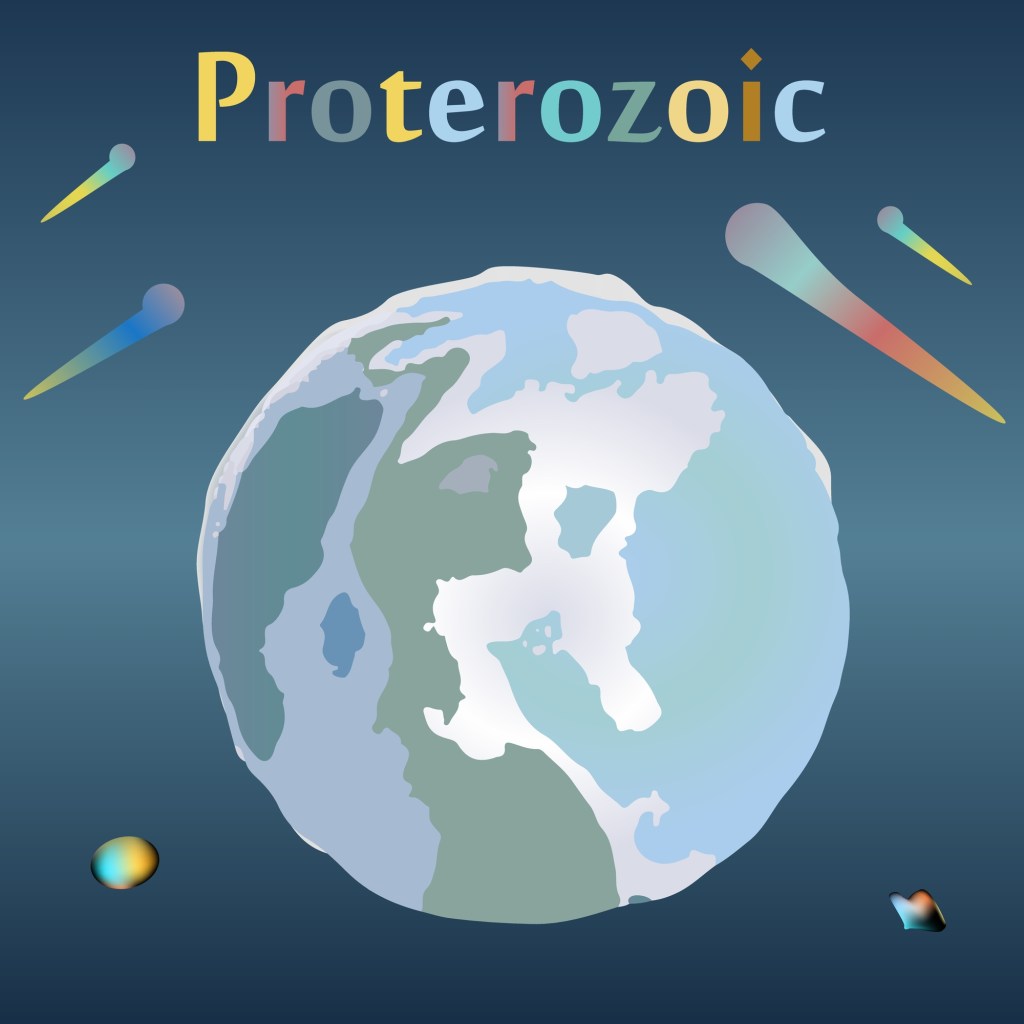
Ancient Earth almost entirely covered by ice and white snow. | Oxygen Blue Sky and Complex Life Exist Because of a Bacteria
Proterozoic era in the history of the Earth. Snowball earth. Global glaciation of the Earth. Asset id: 2010272753 by Elena Kelman

The Ozone Layer and the Blue Sky

Oxygen is also responsible for formation of the ozone layer in the atmosphere. The UV radiation from the sun split oxygen molecules, which consist of two oxygen atoms, into two separate atoms of oxygen, which then reacted with another oxygen molecule to generate ozone, and oxygen molecule consisting of three oxygen atoms. Ozone acts as a natural sunscreen to prevent harmful UV radiation from reaching the earth. Therefore, oxygen not only enables land dwelling complex multicell organisms to exist by allowing aerobic respiration to evolve, but also by protecting life from too much UV radiation.

As mentioned above, the atmosphere prior to the Great Oxidation Event was primarily composed of volcanic gases and almost no free oxygen. The color of the sky was likely orange, brown. As oxygen replaced the existing gases the sky slowly turned blue. Oxygen molecules along with Nitrogen molecules scatter blue light from the sun through a process called Rayleigh scattering, making the sky appear blue.

Cyanobacteria and The Great Oxygenation Event

It should be noted that there were other geological and biological processes that were responsible for this permanent shift in the Earth’s system, including changes in the composition of volcanic emissions and chemical reactions that allowed atmospheric hydrogen to escape to space, leaving behind an excess of oxygen molecules. However, whatever the exact mix of mechanisms, cyanobacteria were undoubtedly a critical source of accumulating oxygen. It is possible that tectonic activity altered the cycling and distribution of phosphorus and other nutrients essential for cyanobacteria. To read more see the book Becoming Earth by Ferris Jabr.


To see the other Super Facts click here