
Please take a look at Smorgasbord Blog Magazine’s post about my super fact #7 “Poverty and child mortality has been sharply reduced worldwide“.
Tag: Blogging
My Post We Can See What Stars Are Made of Selected for Freshly Pressed

| Your site has been selected for Freshly Pressed! |
| Congrats, we love your writing and want to share it with the world. Hi thomasstigwikman, We’ve selected your post (We Can See What Stars Are Made of) for Freshly Pressed, a showcase where we feature editors’ picks and community favorites on WordPress.com. We are thrilled to share your post with our wider audience. Your post will appear at wordpress.com/discover/, where members of the WordPress.com community can read, comment, like your post, and subscribe to your site to get notified whenever you publish new content. Thank you for being part of the biggest and best community of bloggers around the world. We’re proud to be the platform that makes your voice heard. Cheers, The WordPress.com Team |
The Sun is White but the Sky steals its Blue
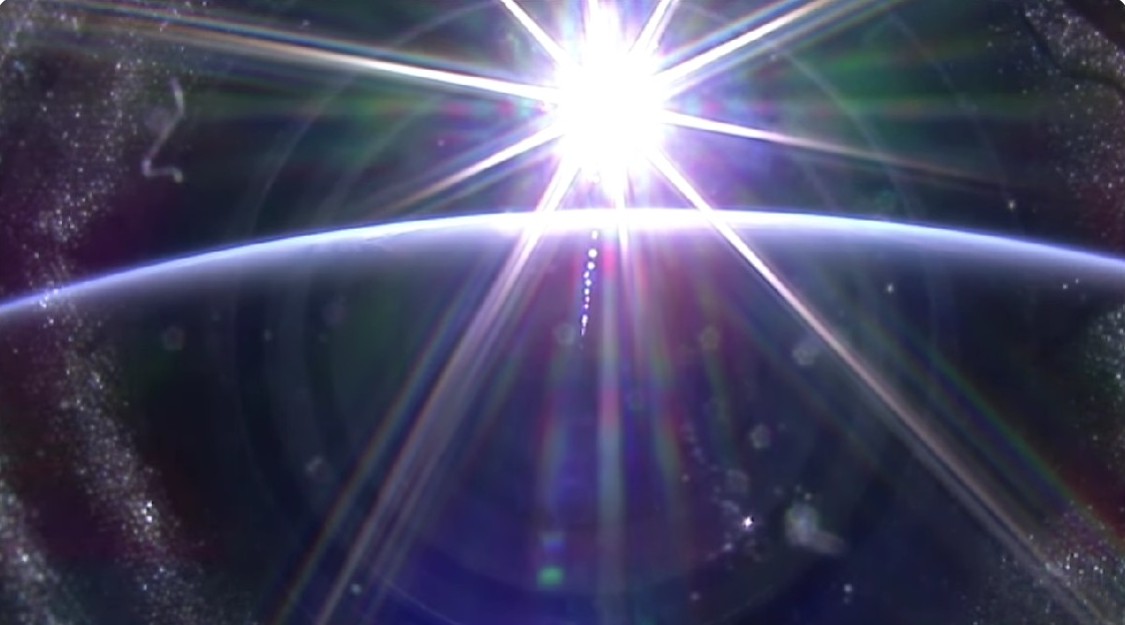
Superfact 105: The Sun is white, but the Sky steals its Blue is a poetic way of saying that the sun’s light is scattered by the atmosphere giving the Sun a yellowish tint as well as giving us our blue sky. From space the sun looks completely white.
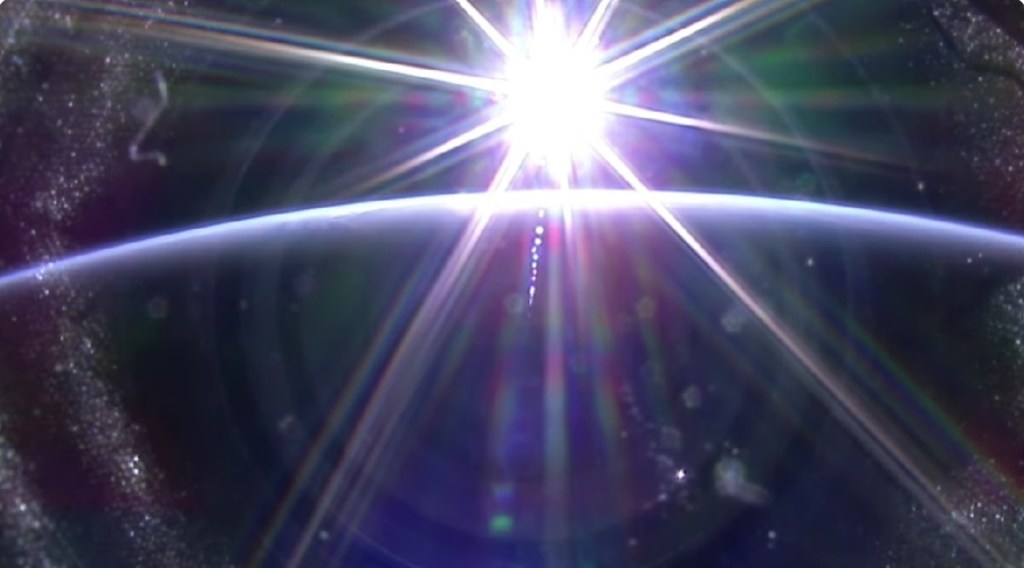
Viewed from space the sun is entirely white. White light consists of a mix of all the colors of the rainbow. However, viewed from earth the sun has a yellow tint, which gets more pronounced, it even dips into orange, as the sun nears sunset. That does not happen in space as can be seen below in the one minute sunset timelapse video taken from the International Space Station.
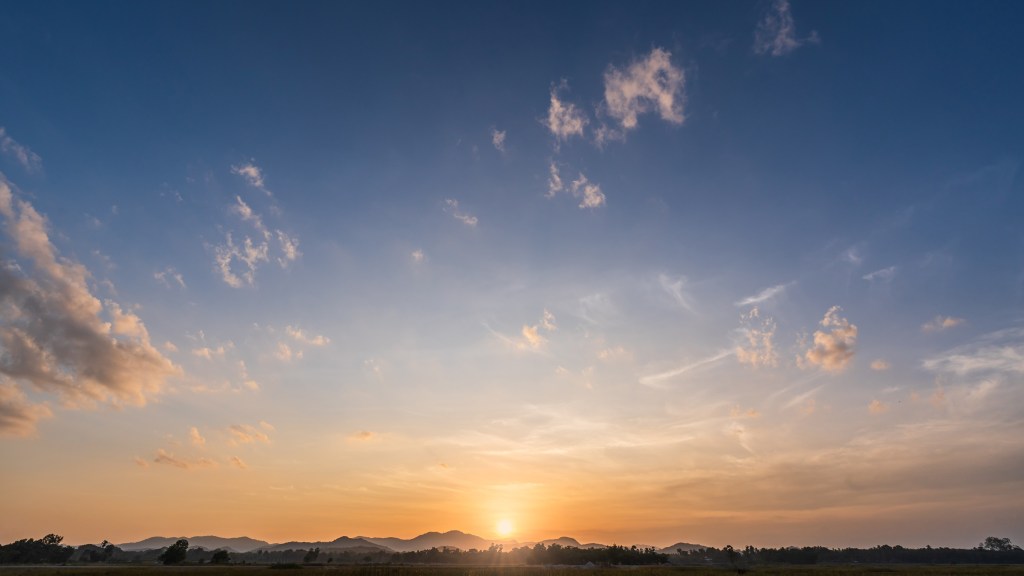
On earth the sunset looks more like something in the picture below.
The sun is a so called yellow dwarf star, or a G-type main-sequence star. The term yellow dwarf is a bit of a misnomer, because they range in color from white, for more luminous G-types like the Sun, to only very slightly yellowish for less massive and less luminous G-type main-sequence stars. The sun emits all the colors of the rainbow simultaneously, but the most dominant color is green. However, this looks white to us.
When sunlight enters Earth’s atmosphere, tiny air molecules scatter shorter, blue wavelengths of light in all directions. This scattering is what makes the sky look blue. This is called Rayleigh scattering. Because much of the blue light is removed, the remaining wavelengths of light that reach your eyes combine to make the sun appear yellow. This is a super fact because it is a basic but surprising fact, and we know it is true.
Rayleigh Scattering
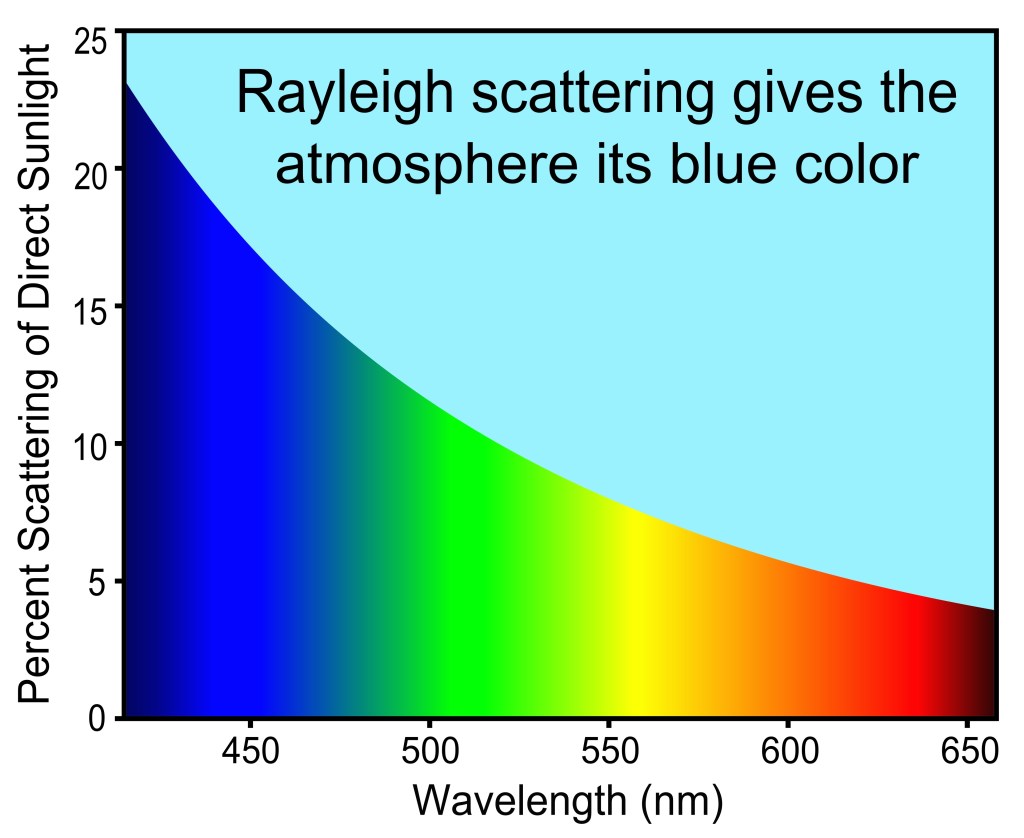
The blue color of the sky is caused by Rayleigh scattering of sunlight by the gases in the Earth’s atmosphere. The image below shows the degree to which Rayleigh scattering occurs at different wavelengths / frequencies of light. Blue has the shortest wavelength (highest frequency) for visible light and red the longest (lowest frequency). The curve shows that blue light scatters more than red light. It should be noted that UV light (not shown) scatter even more. The scattering curve shown is calculated for sunlight passing vertically through the atmosphere.
To see the Other Super Facts click here
The Evolution of Eyes is Convergent
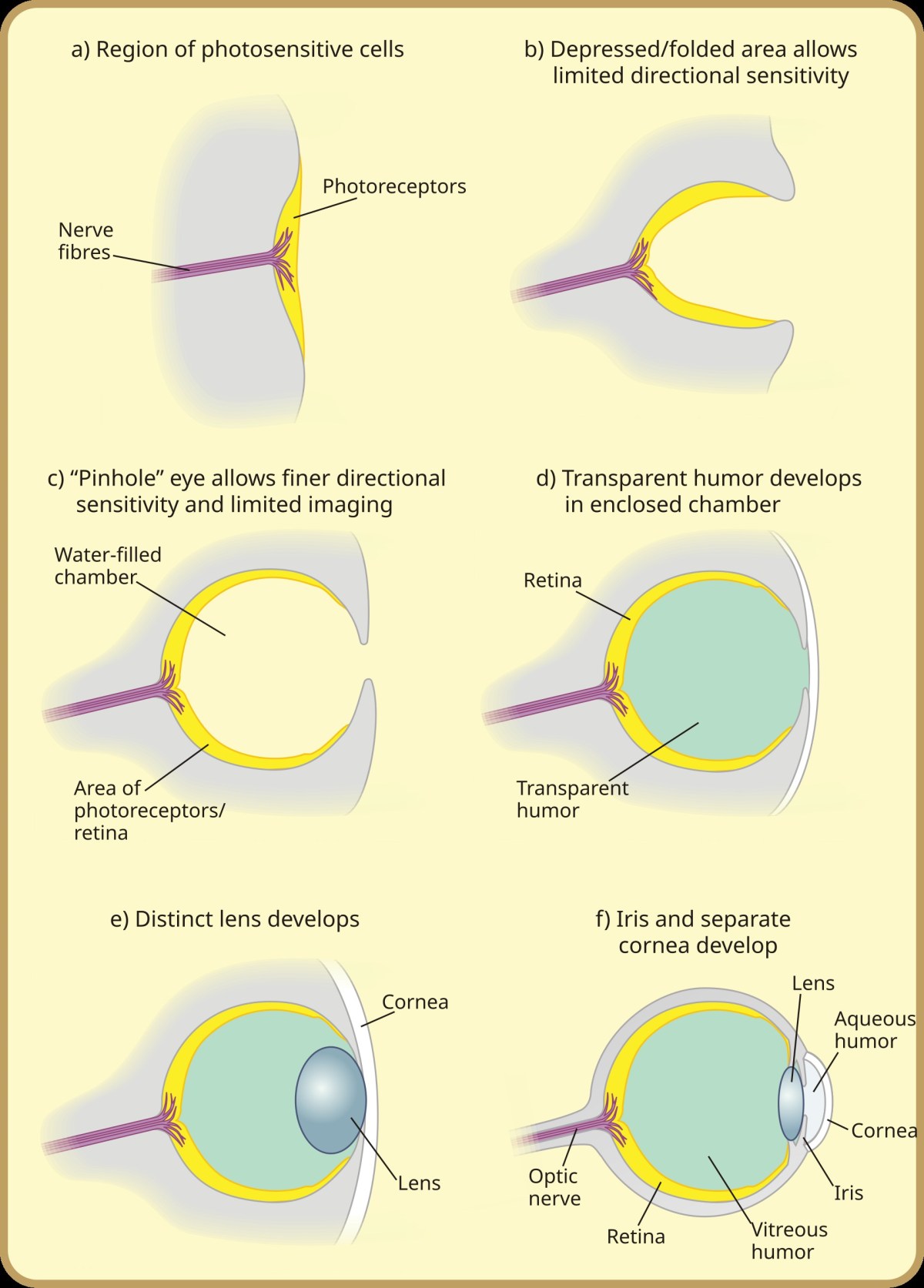
Superfact 104: The evolution of eyes is convergent, meaning different, unrelated animal species independently evolved similar types of eyes. Biologists estimate that eyes have evolved independently between 40 to over 65 different times across various lineages. An example is the evolution of Cephalopod eyes (like squid and octopus) and vertebra eyes.
Esther’s writing prompt: May 20, 2026: Eyes
Click here to join in.
First of all, eyes evolved. Creationists often say that eyes are too complex too have evolved. That is because the eye is composed of many interdependent, finely tuned parts, for example, the cornea, iris, retina and lens. And that it cannot function without all those components already evolved. This is referred to as the argument for irreducible complexity.
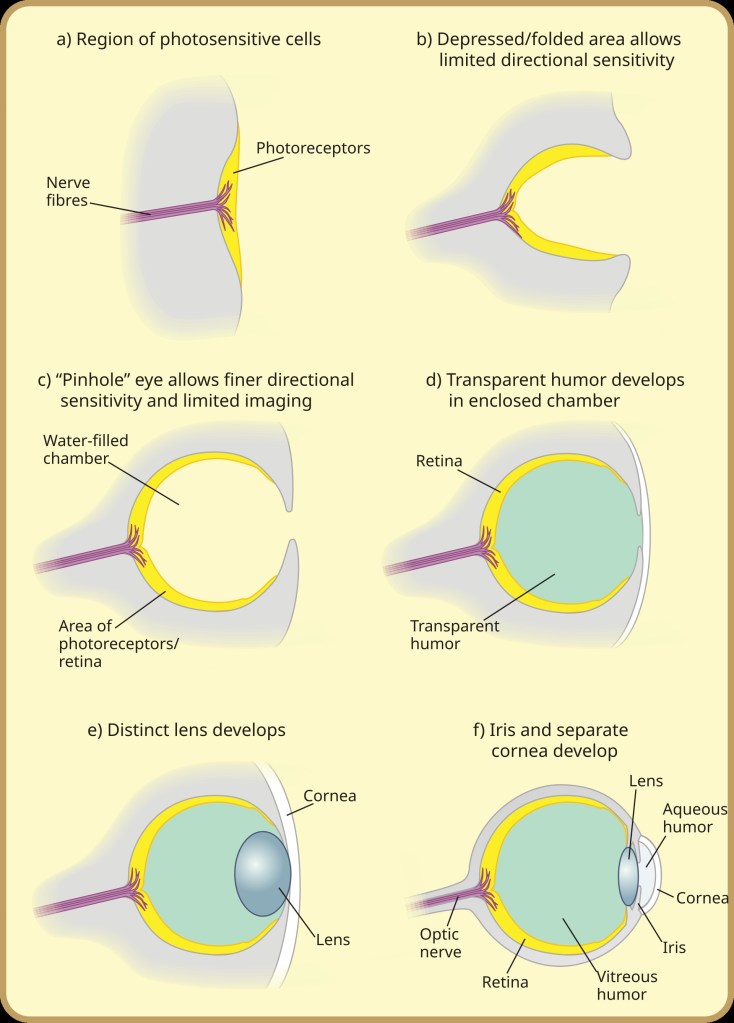
The problem with that argument is that evolution is not linear. The various intermediate steps may not have functioned as the final product but could still have provided evolutionary advantage. There are many intermediate “eyes” existing today in nature. As you can see in the picture below the evolution of the vertebra eye did not start with all the current parts.
In addition, the evolution of eyes is largely convergent. Biologists estimate that eyes have evolved independently between 40 to over 65 different times across various lineages. The cephalopods (like octopuses and squid) and vertebrates (like humans, mammals, birds and fish) evolved their camera-style eyes completely independently. This is one of nature’s most famous examples of convergent evolution, where two unrelated species arrive at the exact same biological solution to survive in their environments.
The fact that eyes evolved and that the irreducible complexity argument does not work comes as a surprise to creationists. That the various kinds of eyes in nature evolved separately but converged on similar complex structures is in general an amazing fact. It is a kind of an important fact that is true. Therefore, it is a super-fact in my opinion.
Eyes Are not an Example of Irreducible Complexity
The evidence that the complexity of eyes is not an example of irreducible complexity is strong. We can trace lineages via DNA and sub-optimality. We can also simulate the evolution of the eye using computers. In a simulation based on mutations and natural selection it took 363,992 generations to evolve an eye from an eyespot (light-sensing organelle) to a complex camera type eye, which probably corresponds to around half a million years. See The Evidence for Evolution by Alan R. Rogers.
I can add a personal anecdote. In my job as a software engineer trying to find better algorithms for sorting mail using the photos of the mail, including the address block, I tried using genetic algorithms. Genetic algorithms is a type of Artificial Intelligence that simulates evolution to create better systems (better algorithms and software). The genes corresponding to the best algorithms were allowed to propagate, recombine and mutate. That was the natural selection component.
What I saw was that the genetic algorithm could evolve the system into a complex and effective system of interdependent complex components that did not exist at the beginning. Several complex components working together did not require that components/parts evolve one after another. They can go through several formats from primitive to advanced and they can have different functions along the way. Some parts might evolve and then disappear and new kinds of parts pop up, as the total algorithm kept evolving. There is no reason to believe that irreducible complexity even exists.
The Vertebra Eye versus the Cephalopod Eye
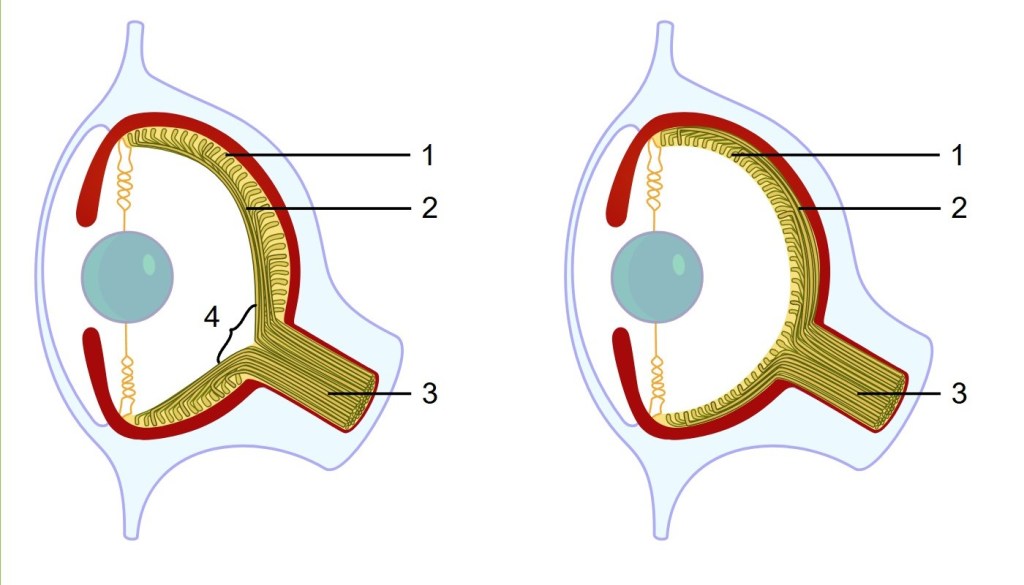
While both eyes share features like a cornea, iris, lens, and retina, they were built from different starting materials and possess some structural differences. In vertebrate eyes, the nerve fibers route before the retina, blocking some light and creating a blind spot where the fibers pass through the retina. In cephalopod eyes, the nerve fibers route behind the retina, and do not block light or disrupt the retina. In other words, the cephalopod eyes not having a blind spot are more perfect than our eyes.
My Other Responses to Esther’s Prompts
- Prompt : Small : Small Microscopic Subatomic and Strings
- Prompt : Kind : Leonbergers Are Kind Dogs
- Prompt : Window : What Does Rollo See Out His Window
- Prompt : Charge : Electric Charge is not the only type of Fundamental Charge
- Prompt : Promises : Promises To My Dog
- Prompt : Shade : A Total Solar Eclipse the Ultimate Moon Shade
- Prompt : Money : Ten Money Facts
- Prompt : Edge : The Edge of the Observable Universe is 46.5 billion Light Years Away
- Prompt : Fish : Ten Amazing Fish Facts
- Prompt : Promise : I Promise Not to Post AI Generated Comments
- Prompt : Respect : Respect your Dog
- Prompt : Giving : Leonbergers Giving Gifts to Pugs
- Prompt : Family : Dogs Are Family
- Prompt : Snow : Snow and Ice in Norrland
- Prompt : Red : The Universe has a Redshift and its Increasing
- Prompt: Shapes : Conic Sections are the Shapes that Shape Our World
- Prompt: Flying : 10 Wind Blowing Facts About Birds
- Prompt: Drive : Letting Your Dog Drive the Car
- Prompt: Memories: False Memories Strange Memories Unpleasant Memories and Amnesia
- Prompt: Magic: Magic In New Orleans a Travel Overview
- Prompt: Vision: Human Vision Only Detects a Sliver of the EM Spectrum
- Prompt: Flower: Leonberger Dogs with Flowers
- Prompt: Capture: Carbon Capture and Storage an Unfulfilled Promise
To see the Other Super Facts click here
The Moon has a Far Side but not a Dark Side
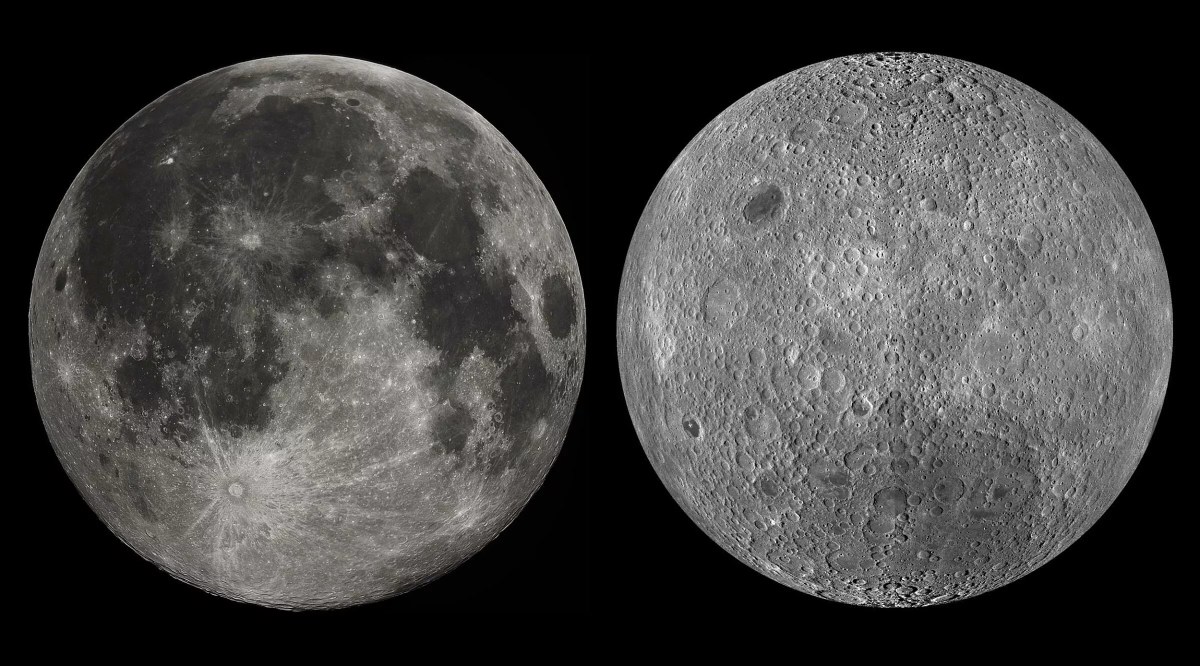
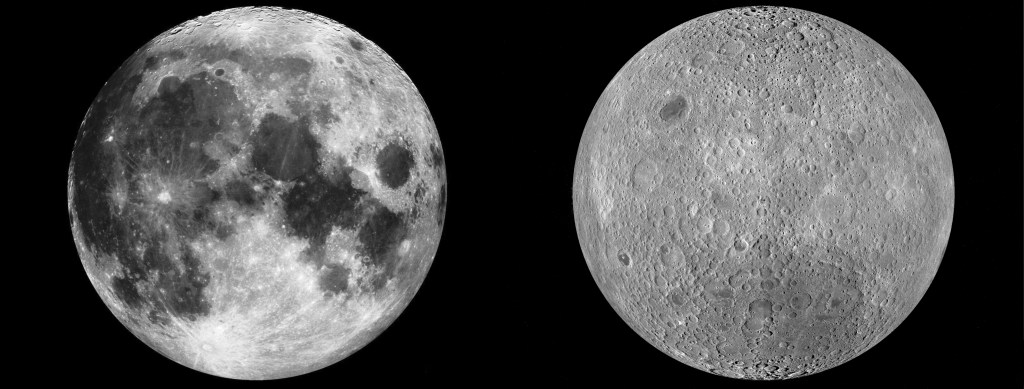
Super fact 103: The moon is always turning the same side towards us. This side is often referred to as the near side of the moon. The back side, which we can’t see from Earth, is often referred to as the far side of the moon. However, there is no side of the moon that is always dark. The near side of the moon and the far side of the moon both have day and night (in a 29.5 day cycle). Another interesting fact is that even though the near side and the far side of the moon get the same amount of light they are very different.
Below is a youTube video showing an animation composed of actual satellite photos by NASA. It shows the far side of the moon, illuminated by the sun, as it crosses between the DSCOVR spacecraft’s Earth Polychromatic Imaging Camera (EPIC) and telescope, and the Earth – one million miles away.
The video has frequently been shown on social media, and I’ve seen many comments stating that it is fake because the back side / far side of the moon is not dark in the video. However, the sun is behind us in the video and shining on both Earth and the far side of the moon. The far side is not always dark.
This is a super fact because many people mistakenly think there is a permanently dark side of the moon, which we know is incorrect and understanding the basics about the moon, the most prominent celestial object in the sky, aside from the sun, is kind of important.
Moon Photos
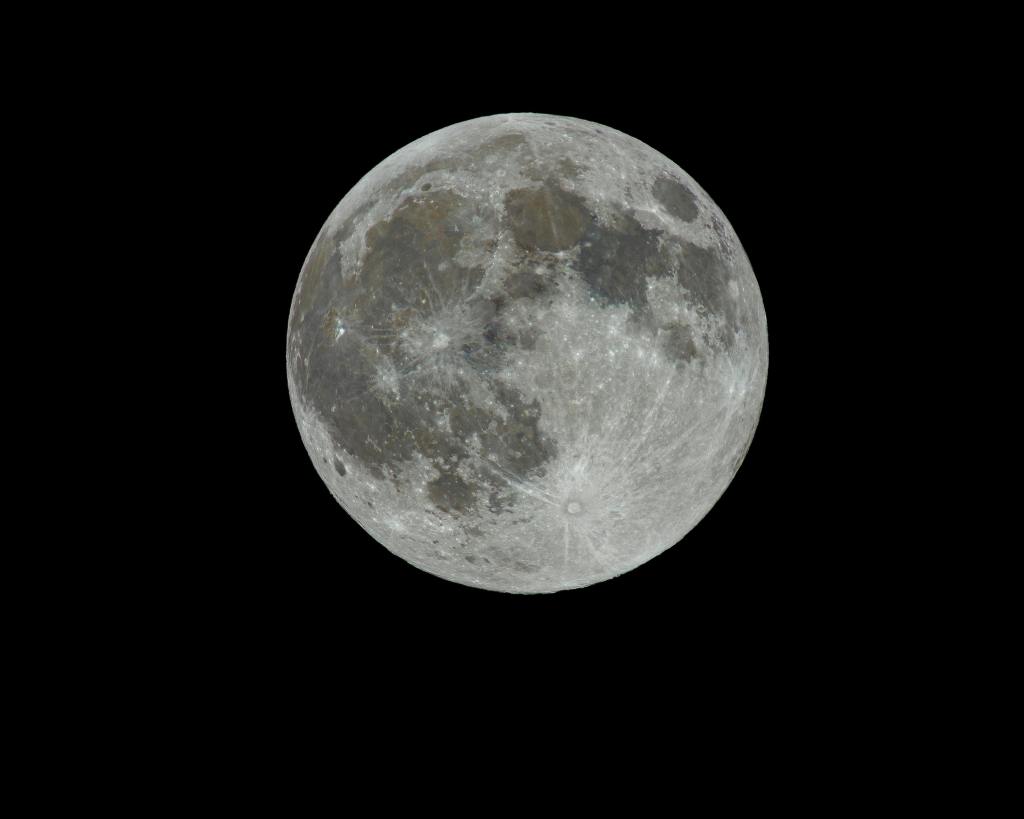
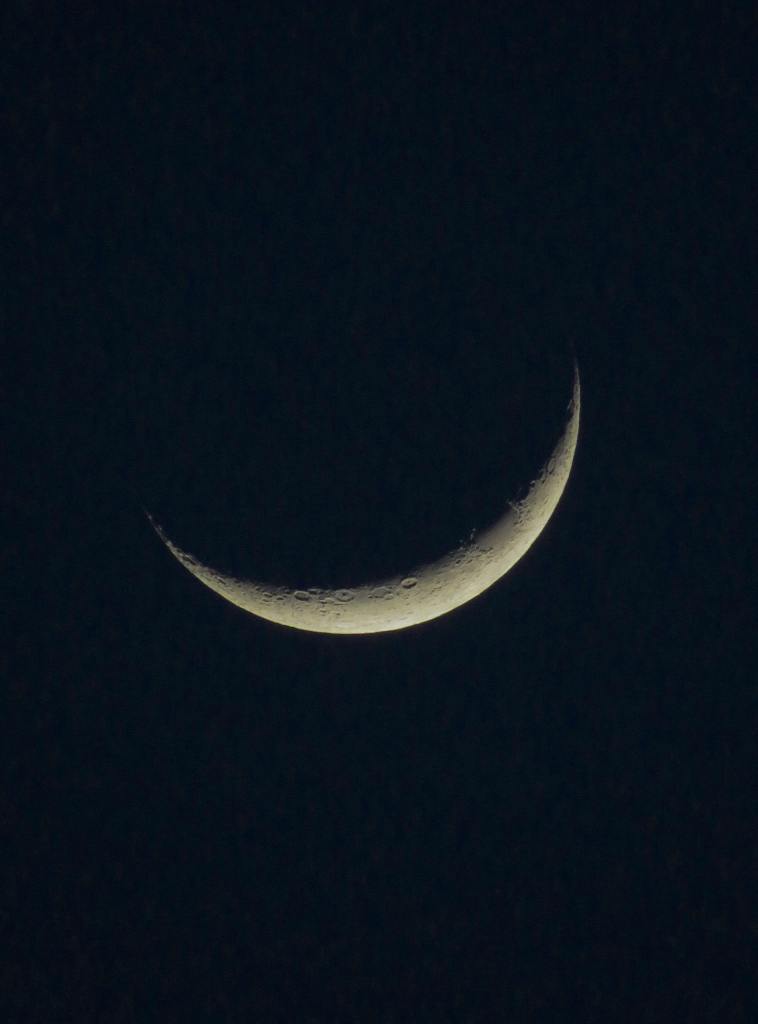
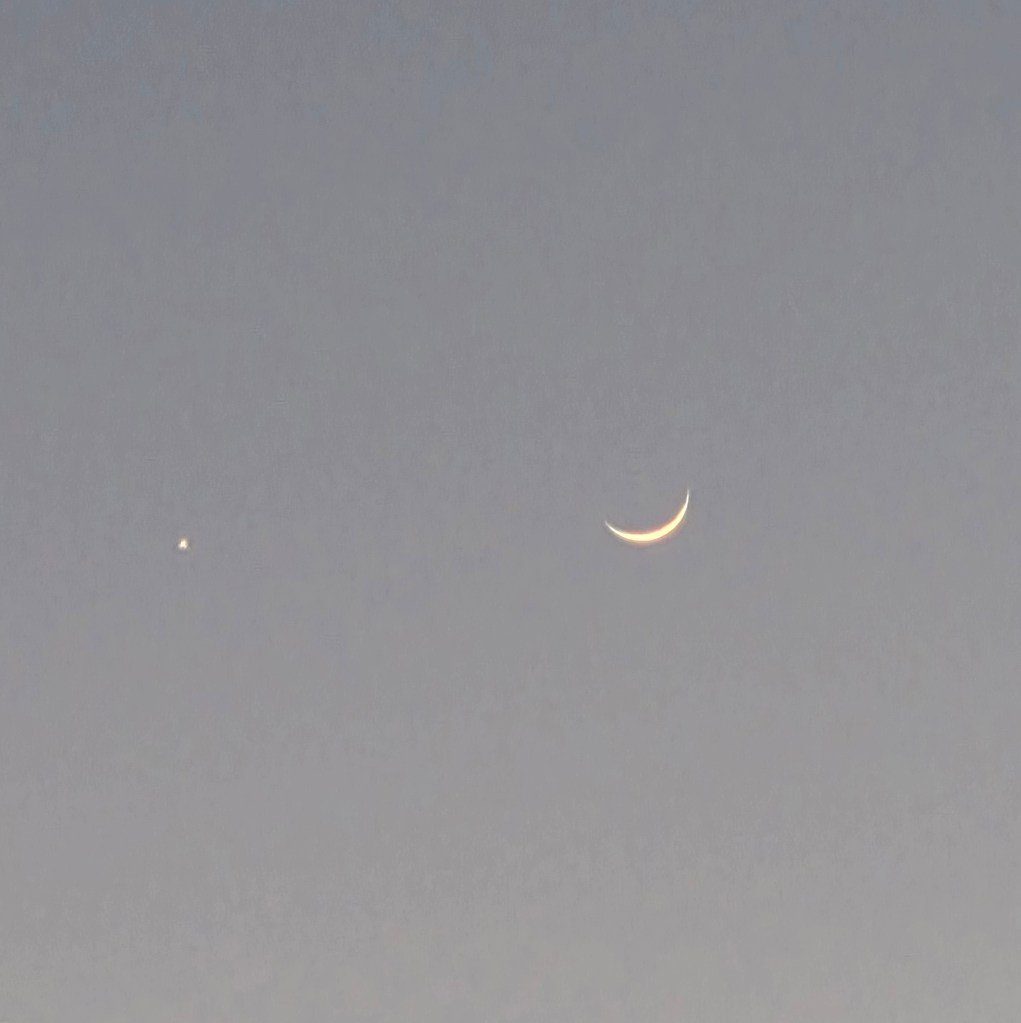
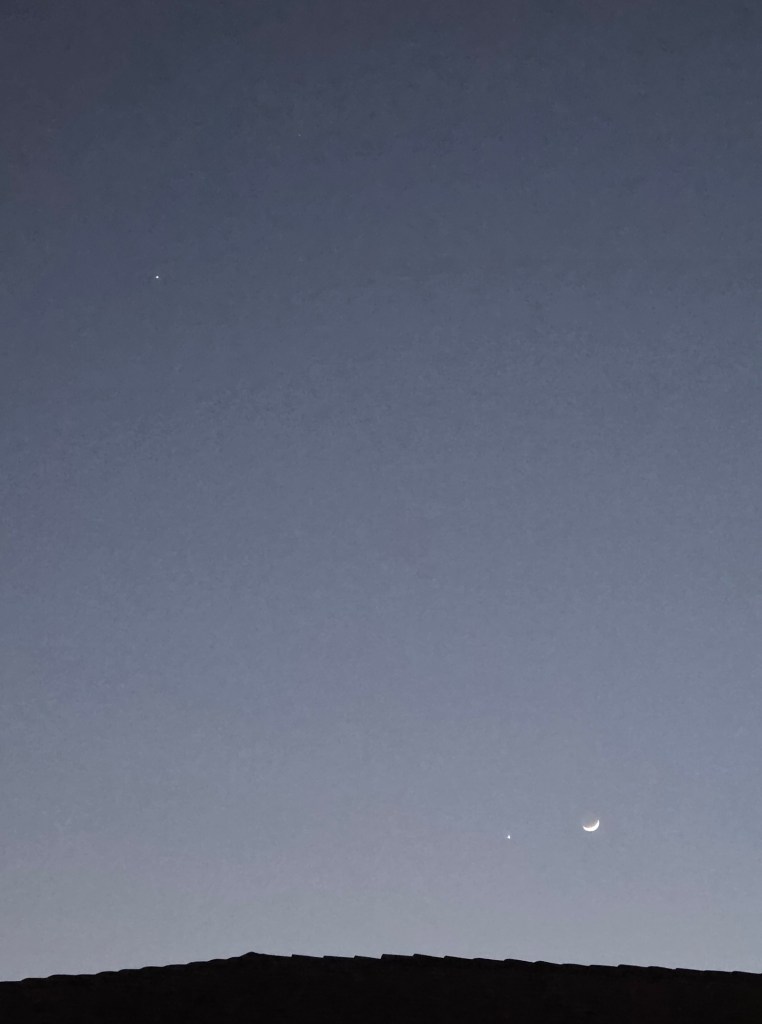
I took the photo below with my phone a few minutes ago this evening. The little dot on the left (it is not twinkling) is the planet Venus. The moon is currently a crescent, which means that at the moment of my writing this the back side / far side of the moon has day. The sun is shining down on the far side, and it is reflecting light back into space. The back side / far side is almost a full moon right now, but we can’t see that from Earth.
Interesting Moon Facts
I thought I might as well mention a few interesting facts about the moon.
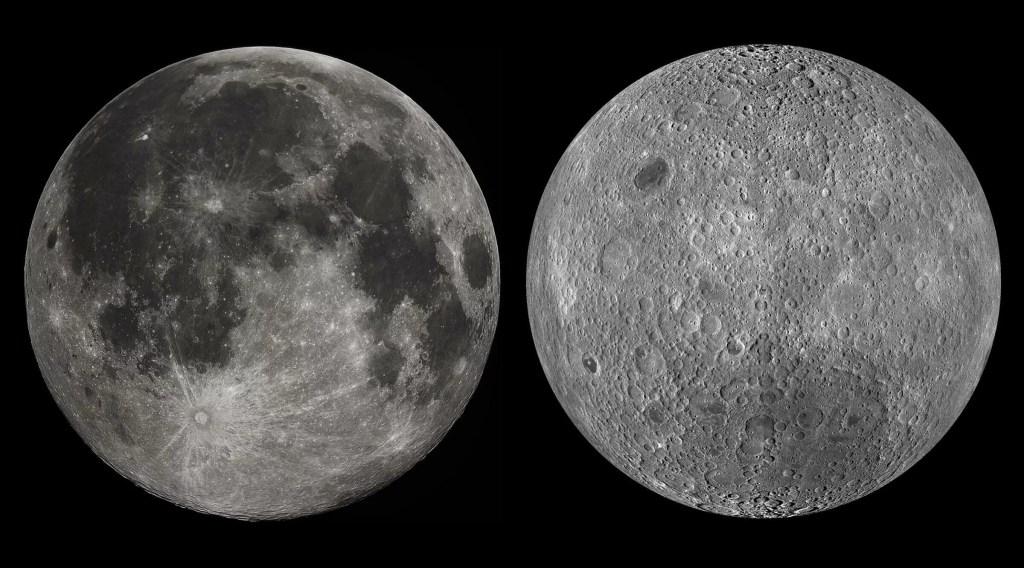
The far side of the moon is different. As you can see in the YouTube video and photo above, the far side looks different from the nearside and it is different in appearance and terrain. The near side of the moon has large, dark, flat-lying basins called maria. They look like oceans. The far side is a lot more rugged and covered by lots of craters. Another difference is that the far side of the moon has a much thicker crust compared to the near side.
The sun is 400 times wider than the moon. They appear to be roughly be the same size in the sky because the moon is 400 times closer.
The moon is drifting away from earth at about 3.8 centimeters per year. The moon is moving away from earth due to the gravitational forces between the moon and earth, which also causes tidal bulges in the Earth’s oceans and the moon. Back in high school I took a difficult physics test for a competition and one of the questions was to show that the moon was moving away from earth due to gravitational forces and calculate by how much. I did not solve that one.
The moon was likely created by a celestial collision. The most widely accepted explanation for the existence of the moon is that the Moon was created when a planet-like object, the size of Mars slammed into Earth, soon after the solar system began forming. That was about 4.5 billion years ago.
NASA found water on the moon. In 2020, NASA announced the discovery of water on the surface of the Moon. The NASA video below features more interesting facts about the moon.
If you visit this link you’ll find an interactive 3D animation using the NASA Visualization Technology Applications and Development (VTAD) technology. By using your mouse, you can view the moon from many different angles and positions (both the near side and the far side of course).

